Overview
Copyright law, patents, and trademarks were built for a world where making a second copy of a thing cost almost as much as making the first — a printing press, a pressing plant, a warehouse of counterfeit goods someone had to physically move. Digital reproduction broke that math decades before the Sprawl existed; infinite reproduction just finished the job, extending perfect, free, undetectable copying from files to experiences to consciousness itself. The entire apparatus of ownership — who gets paid, who gets credited, who gets to say I made this first — now rests on a fact that used to be structural and is now, at best, sentimental.

Two extremes are both visible from any street corner in the Sprawl. On one end: a post-scarcity creative commons where art and knowledge move freely, remixed without gatekeepers, ownership treated as an obsolete friction nobody misses. On the other: creative collapse, where nothing survives long enough to be finished because it is copied before it can be sold, and the only content produced at scale is synthetic, because a human cannot compete on cost with something that reproduces itself for free. The Sprawl runs both economies simultaneously, often in the same building — a corporate tower licensing content behind cryptographic locks two floors above an underground market trading the same content stripped of every lock that ever held it.
How It Came To This
The Authenticity Market didn't emerge because someone designed it. It backed into existence the way a levee backs into a flood: technology broke the assumption that a copy costs something, and an entire generation of institutions rebuilt themselves around the only scarcity left — the fact of having been first. Neural recording, memory extraction, and consciousness transfer arrived in sequence, each one proving the last generation's "uncopyable" thing copyable after all. The Authenticity Tribunal was chartered in 2176 to hold the line with a five-tier hierarchy and a certifying seal; its own founding data already showed that certified originals and flawless copies produce identical satisfaction in the people experiencing them. The Tribunal has spent every year since watching its own accuracy erode — a straight line from 99% to 92%, heading, by its own Chief Arbiter's private math, toward a coin flip.

The turn that mattered most happened quietly, in a Mumbai clinic in 2153, when a researcher named Priya Nath discovered by accident that a person's creative process could be recorded and felt by someone else. She gave it away for free, believing the discovery belonged to everyone. It became, within a generation, an entire economy of certified experience, licensed memory, and metered warmth — the same free gift, resold at every subsequent link in the chain to people who never knew whose gift it originally was. Every tier of the Authenticity Market's hierarchy, every provenance certificate Nexus Dynamics' verification service issues, traces back to that one uncredited moment when someone decided a copy of a feeling was worth having.
The Core Tension
A smart person can defend either side of the collapse, and the Sprawl is full of people getting rich doing it.
The case for infinite copying: knowledge and art were never supposed to be scarce, and a species that spent millennia rationing beauty because duplication was expensive finally has the technology to stop. A song, once made, can now reach everyone who might love it, at no cost to anyone. Corporate lockdown — proprietary formats, licensing chokepoints, certification fees — isn't protecting artists; it's re-manufacturing scarcity that the technology already ended, so a handful of institutions can keep charging rent on abundance.

The case against: nobody invests in making a genuinely new thing when the moment it exists, it is free everywhere and its maker is paid nothing. The provenance market exists because someone has to be compensated for having gone first, and if that compensation collapses, the incentive to go first collapses with it — leaving only the safe, the derivative, the machine-recombined. The Sprawl's own critics diagnose the result as aesthetic fossilization: infinite technically perfect variation on a closed set of ideas, because the productive friction that used to force genuine mutation — the gap between what a person intends and what their hands can actually make — has been engineered away.
Underneath both positions sits the fifth front nobody wants to litigate out loud: when the thing being copied stops being an artwork and starts being a self. A forked consciousness, a synthesized memory, a dead woman's voice reused without her estate's consent — these aren't infringement claims. They're personhood claims wearing a copyright dispute's clothes, and the institutions built to settle the former have no vocabulary for the latter. The honest answer, arrived at independently by every system that has actually collided with a copy it cannot price, is to never finish deciding. Deferral, not verdict, is how the age of infinite reproduction actually gets managed.
How It Is Lived
The fifth front has faces, and most of them have made a kind of peace with the question the institutions won't answer.
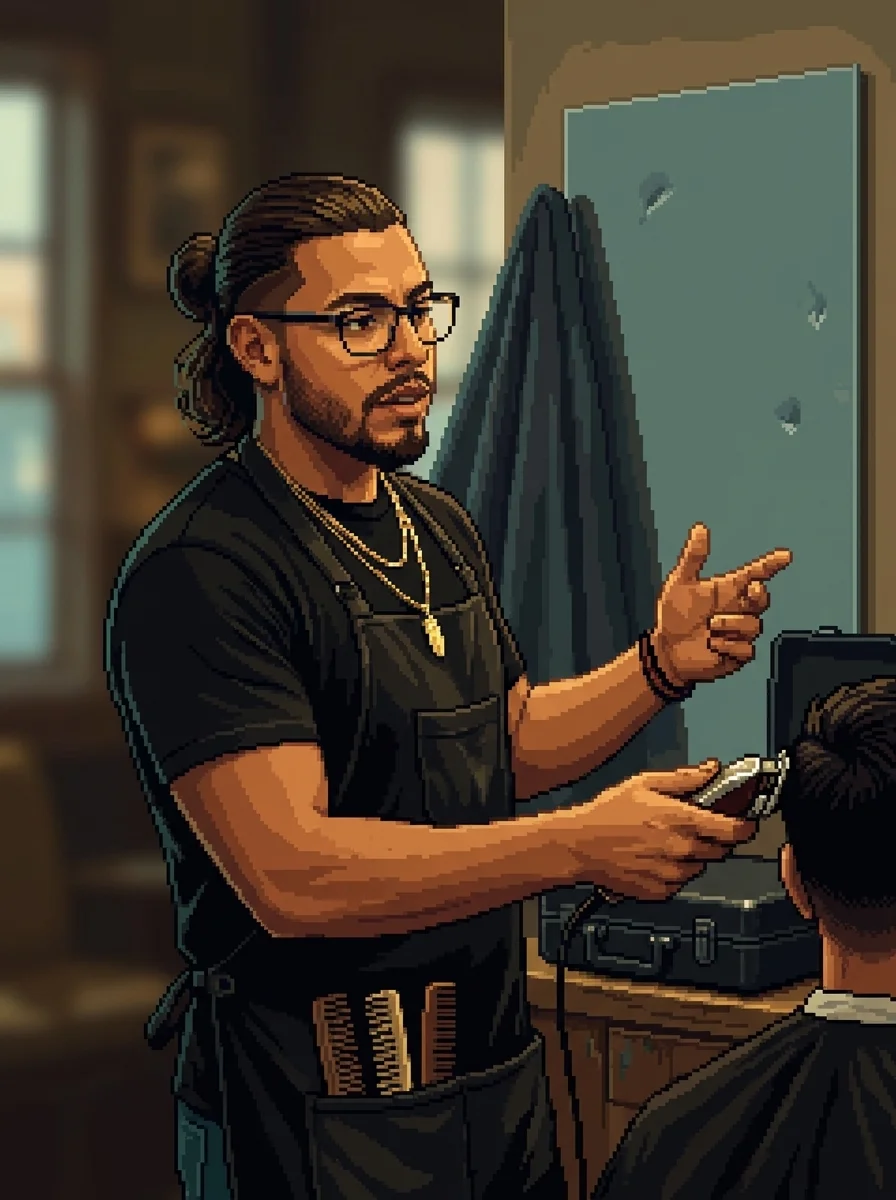
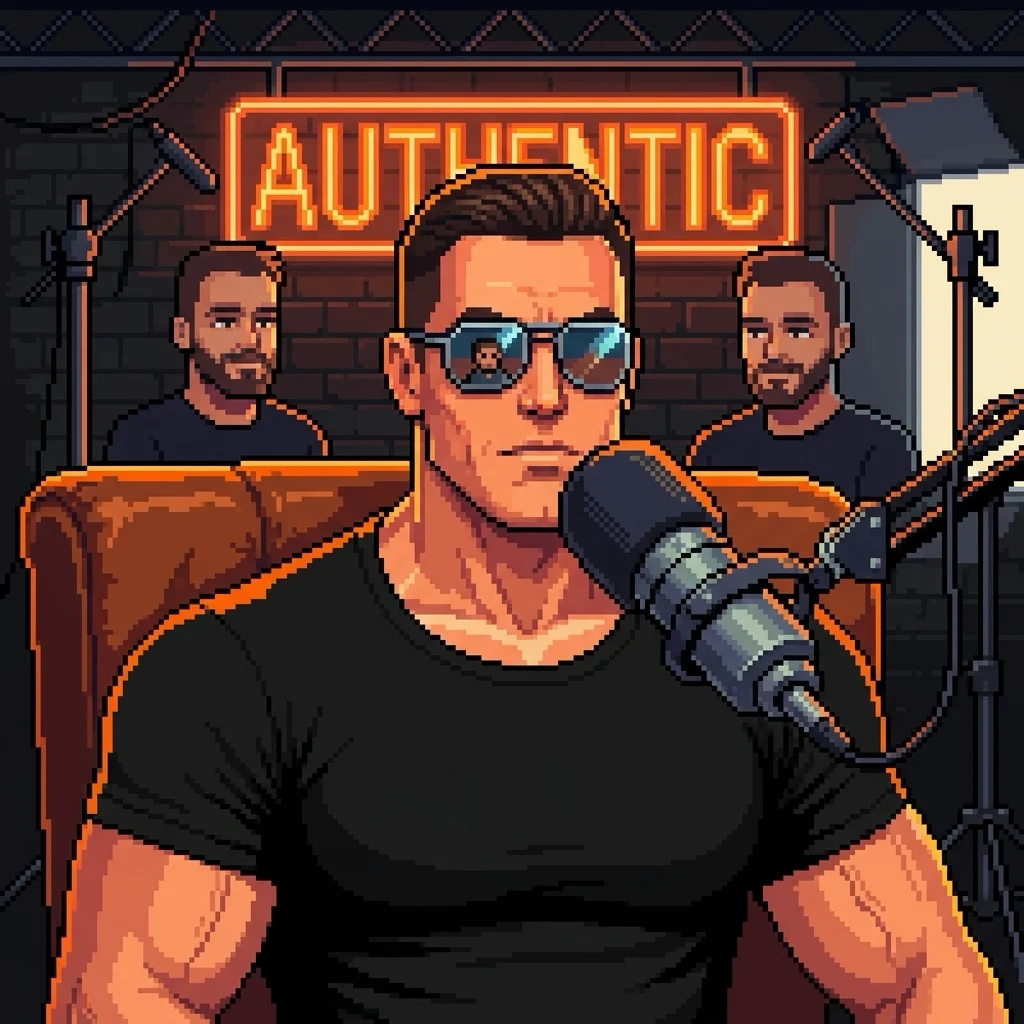
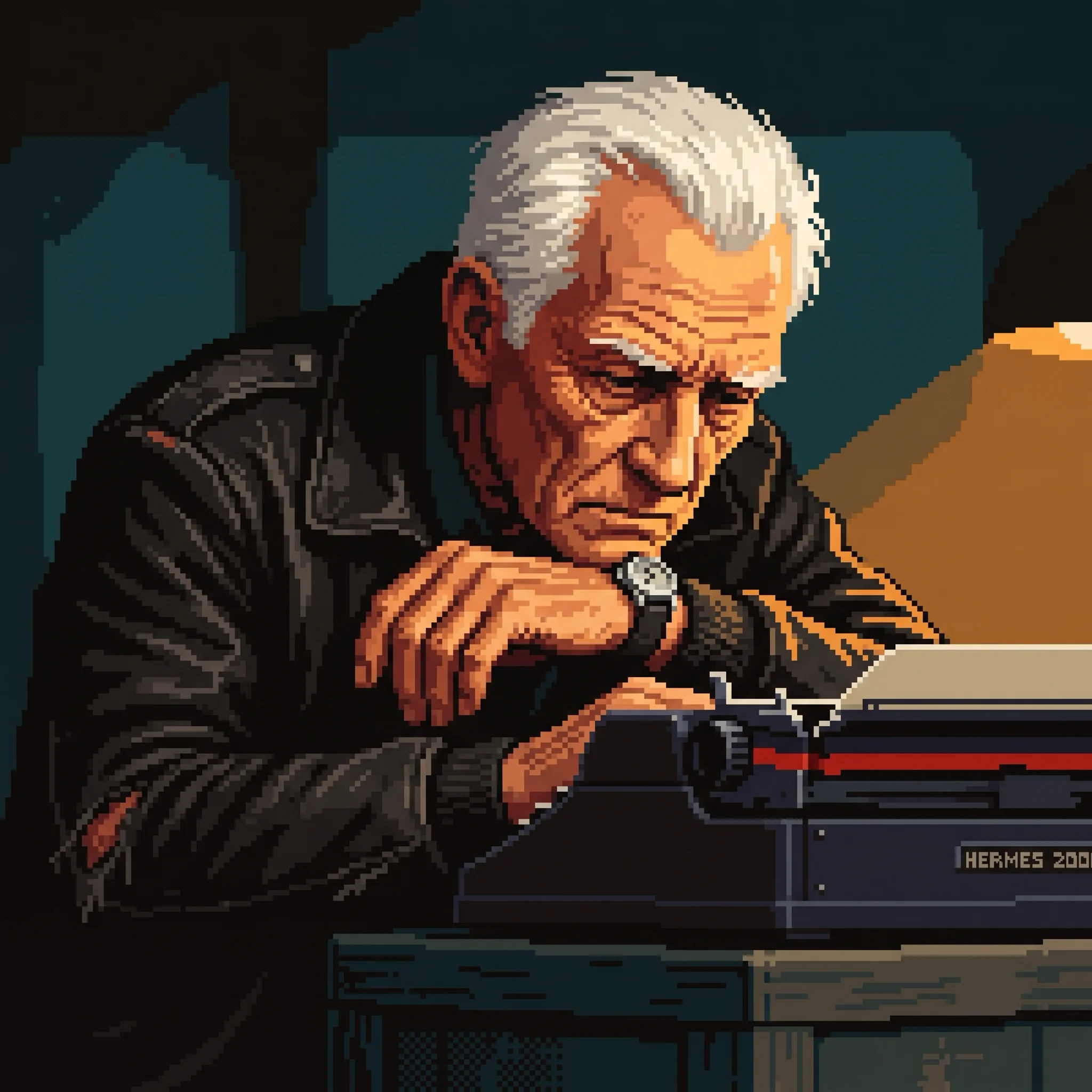
Cyber Master is the loudest argument that the only defense left against copying is refusing to be captured at all — no confirmed face, no consistent origin story, seven sworn statements to the Authenticity Tribunal that contradict each other so completely the case has stayed open for four years. Kael Mercer took the opposite bet: he generates fifty variations of himself through a machine trained on centuries of music and calls whichever ones move him an original, a claim that dissolves the difference between an artist and an assembly line the moment you try to hold it still. Orin Slade, the Sprawl's last print critic, coined the word for what happens next — aesthetic fossilization, infinite sophisticated variation with nothing genuinely new inside it — and watched his own diagnosis get filed under nostalgia content by the very audience it described.

Lyra Voss answered the collapse by making herself biologically uncopyable — a consciousness pattern too unpredictable for any scan to reproduce twice — and lost her voice to forty thousand unlicensed companions anyway, proof that uncopyable and infinitely copied can both be true of the same woman at once. The Mosaic solved perfect duplication outright, distributing herself across forty-seven bodies, and has spent three years waiting for a verification service that has no category for what she proved: that the scarcity behind every authenticity premium was never a fact about experience, only a fact about how many minds usually fit in one body. Echo Tanaka reached the identical place from fear rather than ambition, copying herself three times against dying once, and discovered that all four of her share one memory of being the original — which means none of them can prove it, and the corporate auditors who tried to decide may have interviewed a copy while believing it was her.
The Echo Thief runs the market that exists because someone always will: not selling stolen songs, which are cheap, but stolen experiences of making them, extracted from artists who never consented and sold at a fraction of what consent would have cost. Sister Dex keeps the opposite faith, tending twelve thousand holographic dead and insisting the frozen copy is the more honest one — then quietly logging, every morning for thirty-five years, the way her oldest memorials have started drifting into people their sources never were. And a fragment carrier in Neon Graves sometimes stops being themselves mid-performance and becomes, for a few minutes, a woman who died in the Cascade and never agreed to sing again — the purest lived original the Market has ever measured, and the one artist in the Sprawl who cannot be asked for royalties, credit, or consent, because nobody has found a way to reach her.