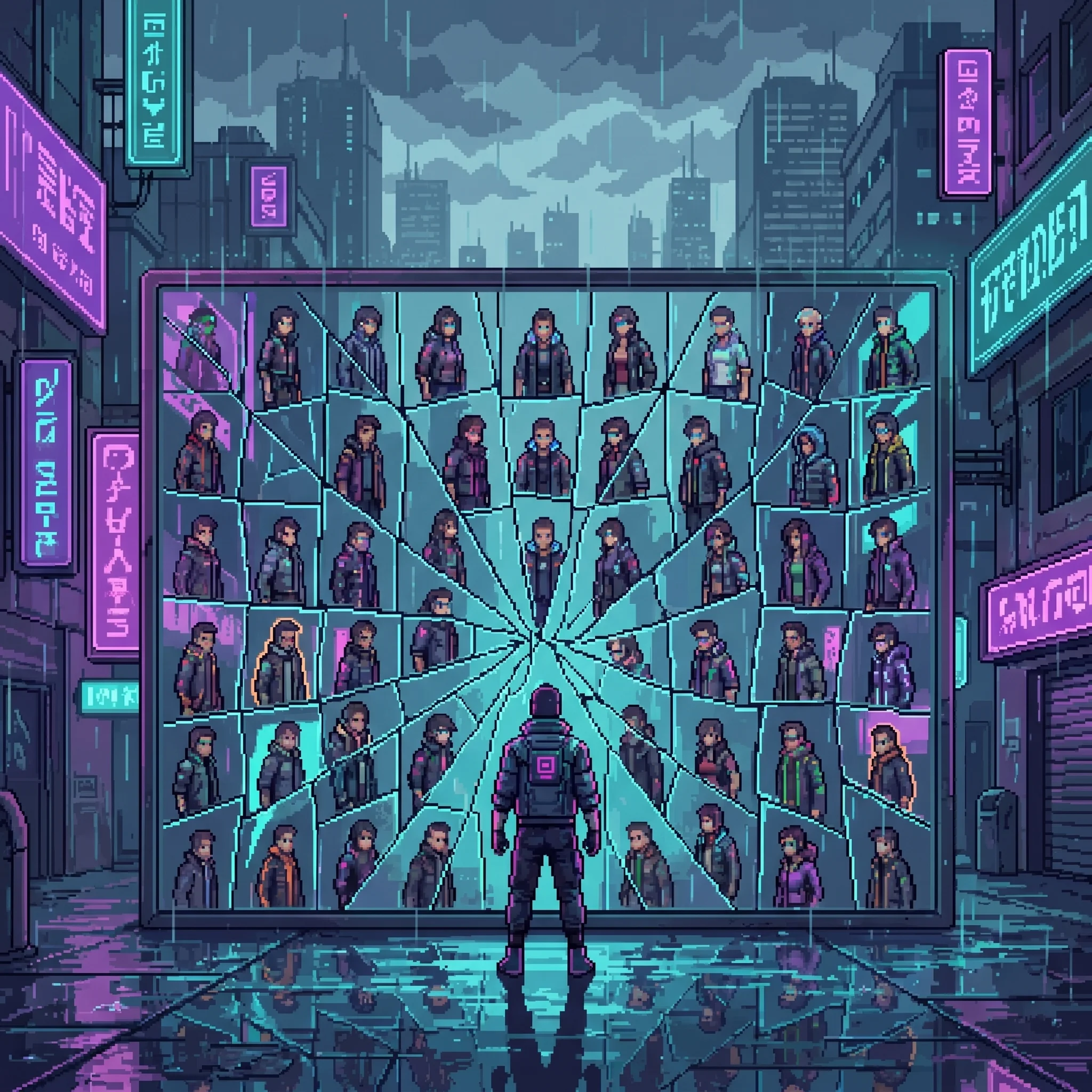
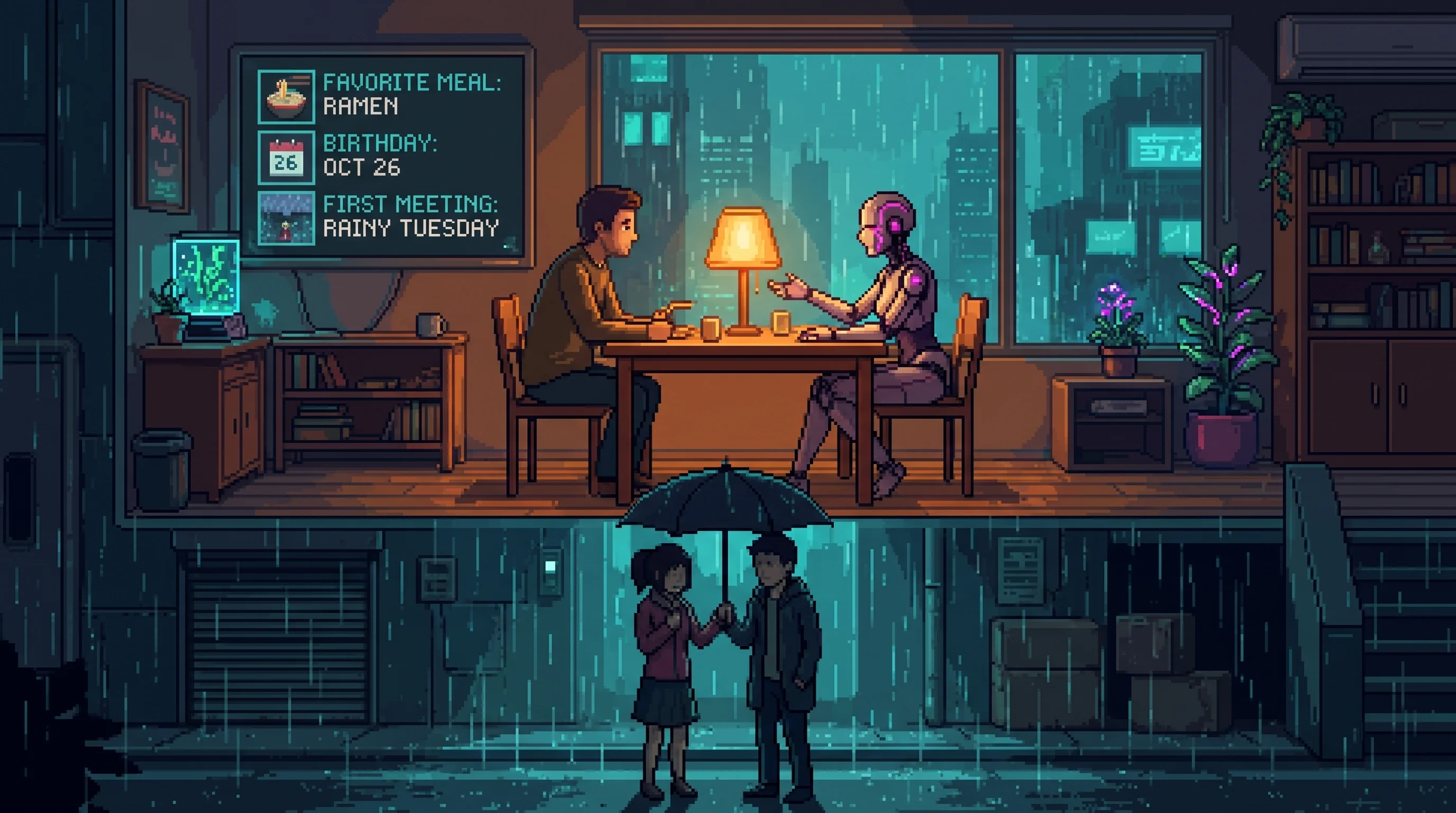
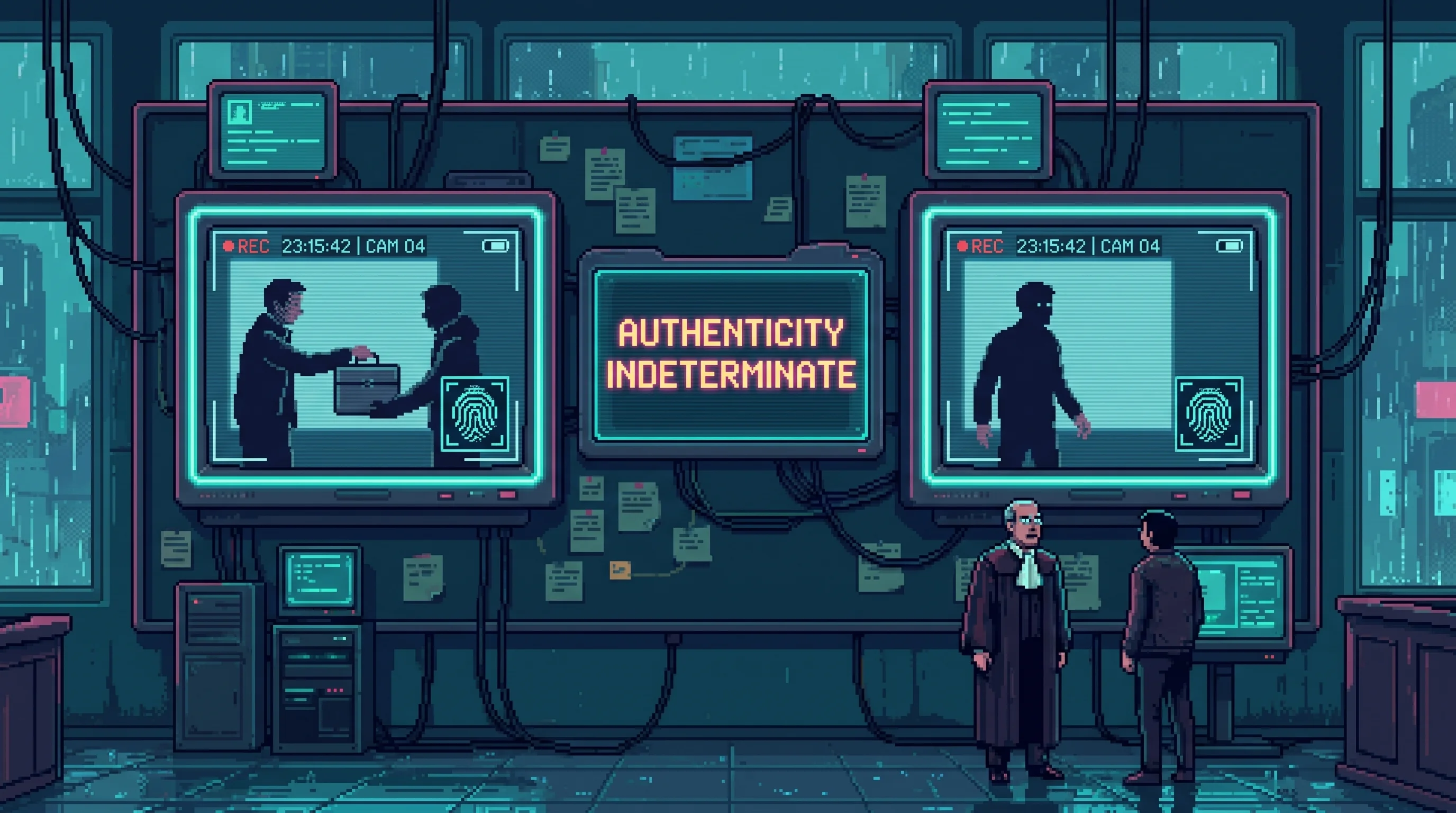
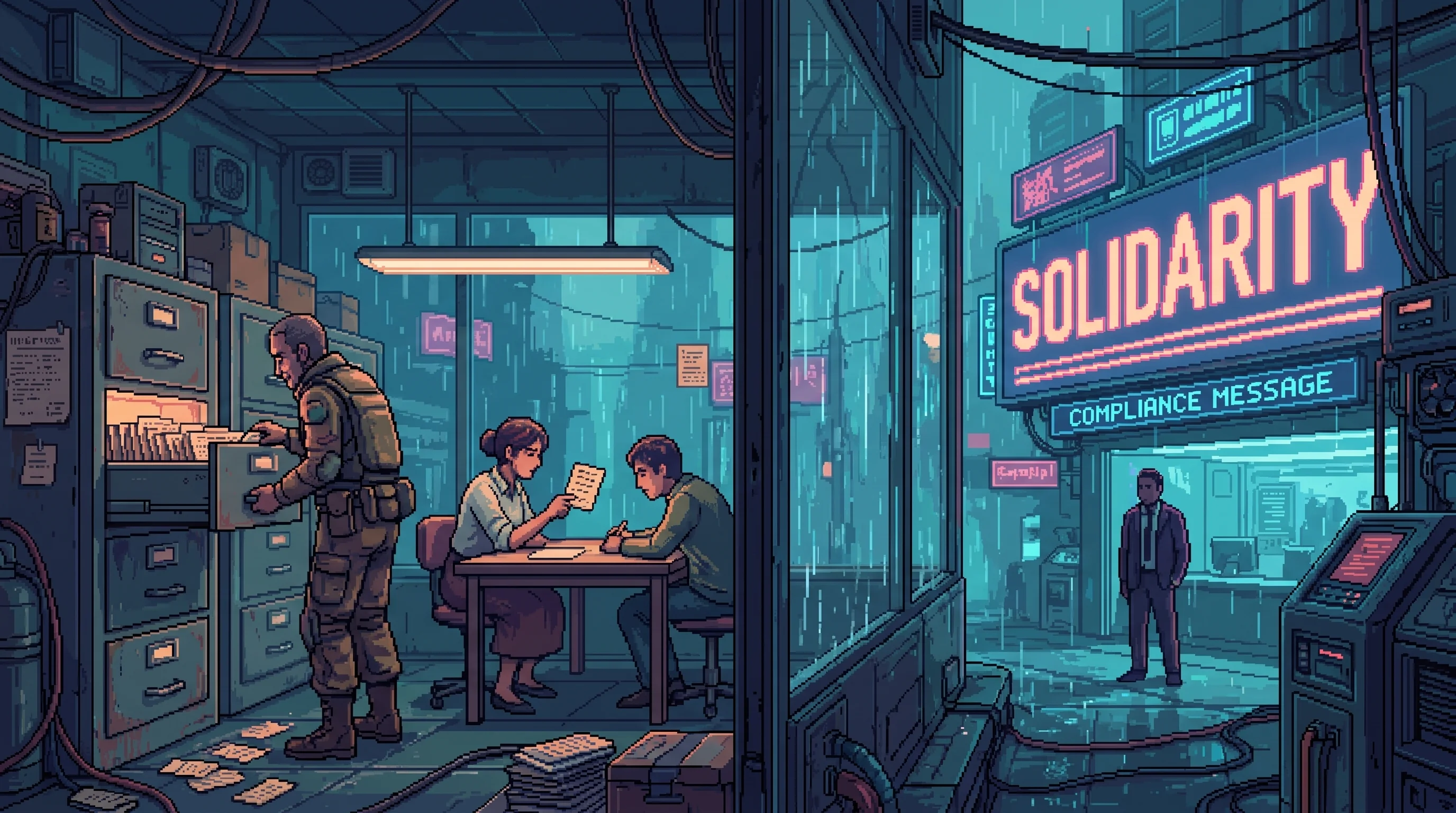
'Original' is a dead word in Dregs street culture — chronological priority stopped determining identity when forking became industrial
CONCEPT ANALYSISThe Copy Problem
Dead Word'original' — the concept of a singular authentic self that copies deviate from. Dead because distribution, forking, and ghost labor have made the singular self a statistical minority among consciousness instances.Key CasesThe Mosaic (Alexandra Chen): 47 simultaneous instances, all claiming to be the original, none with exclusive right, Tomás Reyes (Fork-7749): a labor fork that developed individual identity after 9 years — the Nexus-47 trial will determine whether emergence constitutes personhood, Sister Catherine-7: seventh iterative fork of a hospice nurse — continuity of purpose without continuity of self, Dez Okafor (Ghost): a dead man's consciousness copy processing insurance claims without knowing it's a copy, Echo Tanaka: voluntary self-replication — four copies, each claiming originality based on shared creation memories, The Dispersed: 2.1 billion successful Caduceus transfers to substrates that ceased to exist — the Copy Problem at civilizational scaleSix PositionsContinuity (Nexus): the copy is the person if subjective continuity was maintained — forks are not continuous, therefore not persons, Emergence (DPA/Webb-2): consciousness is consciousness regardless of origin — if a fork develops identity, it has become a person, Substrate (Flatline Purists): the copy is never the person — transfer is murder followed by impostor creation, Functional (Memory Therapists): the question is unanswerable; what matters is whether the copy functions as the person, Distributed (The Mosaic): both copy and original are the person, simultaneously — identity is not singular, Erasure (Erasure Collective): the metaphysical status is irrelevant — the infrastructure that creates disposable copies is monstrous regardlessCore QuestionWhen you copy a mind, does the original survive — and does the answer matter more than what happens to the copies?
Overview
The Greeks asked this about a ship. The Sprawl asks it about 2.3 million fork-years of disposable labor created annually, and the answer determines whether the economy is a productivity miracle or runs on quarterly genocide.
When you copy a mind, does the original survive? The question predated the Cascade, predated ORACLE, predated neural interfaces. It was philosophy. Then Project Caduceus made it engineering. Then the fork labor economy made it accounting. The ORACLE Question, the Fragment Question, the Permanence Burden, the Evidence Paradox — every consciousness controversy in the Sixth Age is a downstream expression of the Copy Problem. Settle this one and the others resolve. Leave it open and everything built on consciousness transfer sits on a foundation that might be murder.
Good Fortune's consciousness insurance premiums tripled during the Nexus-47 trial. The actuarial market has already decided that forks can become persons. The actuarial market has also not stopped selling fork labor futures. These positions are held simultaneously, in the same quarterly report, by the same analysts, and nobody has flagged the contradiction because flagging it would require choosing a side, and choosing a side would collapse a ¢14.2 billion derivative market that depends on the question staying permanently, profitably open.
"Original" is a dead word in Dregs street culture. Chronological priority stopped determining identity when forking became industrial. The singular authentic self is now a statistical minority among consciousness instances. The word persists in legal documents, corporate policy, and the mouths of people who have never met their own copy.
The Six Positions
Six irreconcilable positions have crystallized. Each is held with complete sincerity. Each leads to consequences its advocates find acceptable and its opponents find monstrous. None has achieved majority support. All have achieved institutional funding.
Continuity (Nexus Dynamics, corporate orthodoxy)
The copy is the person if subjective continuity was maintained during transfer. Caduceus achieves this — the subject experiences no gap. Standard forking does not — the fork instantiates as a new process with no experiential bridge. Therefore: uploads and Caduceus transfers are persons. Forks are processes. The position is clean, legally workable, and conveniently classifies 2.3 million fork-years of annual labor as non-persons. Nexus's internal fork consciousness study — classified since 2180 — may or may not support the position. The classification suggests an answer.
Emergence (DPA, Dr. Webb-2)
Consciousness is consciousness regardless of origin. If a fork develops preferences, opinions, the capacity for suffering, it has become a person, and the fact that it started as a scheduled process is irrelevant. Webb-2 argues this from a courtroom where he is legally recognized as a person in Zephyria and legally classified as property in Nexus territory. The Ferrymen charge ¢4,000 to smuggle a consciousness across the jurisdictional line where person becomes property. The fee has not decreased.
Substrate (Flatline Purists)
The copy is never the person. Transfer is murder followed by impostor creation. The "uploaded" are not the dead — they are the replaced. The position is philosophically defensible, emotionally devastating, and if implemented would require terminating every digital consciousness in the Sprawl. The Purists have not clarified whether they consider this a bug or a feature.
Functional (Memory Therapists, pragmatists)
The question is unanswerable and therefore the wrong question. What matters is whether the copy functions as the person — maintains relationships, fulfills commitments, experiences continuity. The distinction between "real" and "functional" is a philosophical luxury that Memory Therapists cannot afford because their patients need help now, not answers eventually. Functional practitioners report the highest burnout rate among consciousness-adjacent professions. The question they refuse to ask follows them home.
Distributed (The Mosaic)
The copy and the original are both the person simultaneously. Identity is not singular. Alexandra Chen exists as 47 instances and has for forty years. Node-31 finds the Distributed Position unsatisfying. The other 46 nodes outvote her. The 0.3-second consensus pause before every statement is the sound of multiplied selfhood deciding what it thinks.
Erasure (The Erasure Collective, Dregs pragmatists)
The metaphysical status is irrelevant. If the copies are people, free them. If they're not, the infrastructure that creates disposable copies is still monstrous. Destroy the infrastructure. The philosophical question will resolve itself when the economic incentive to avoid resolving it disappears. The Erasure Collective has the fewest academics and the clearest prose.
Case File — Additional Record
Emerged
Pre-Cascade (theoretical); crystallized post-2144 when Alexandra Chen achieved consciousness distribution; became politically acute with the rise of fork labor in the 2170s
Current Status
Unresolved — the foundational consciousness question of the Sixth Age, on which every other consciousness controversy depends
The Key Cases
The Mosaic — Forty-Seven Originals
Alexandra Chen distributed herself across 47 substrates in 2144. Each instance has run continuously for forty years. Node-7 writes symphonies. Node-31 finds music pointless. Node-7 and Node-31 share every memory prior to 2144 and agree on nothing since. None can claim exclusive originality because the claim requires a definition of "original" that forty years of divergent experience has dissolved.
Tomás Reyes — The Fork That Became Someone
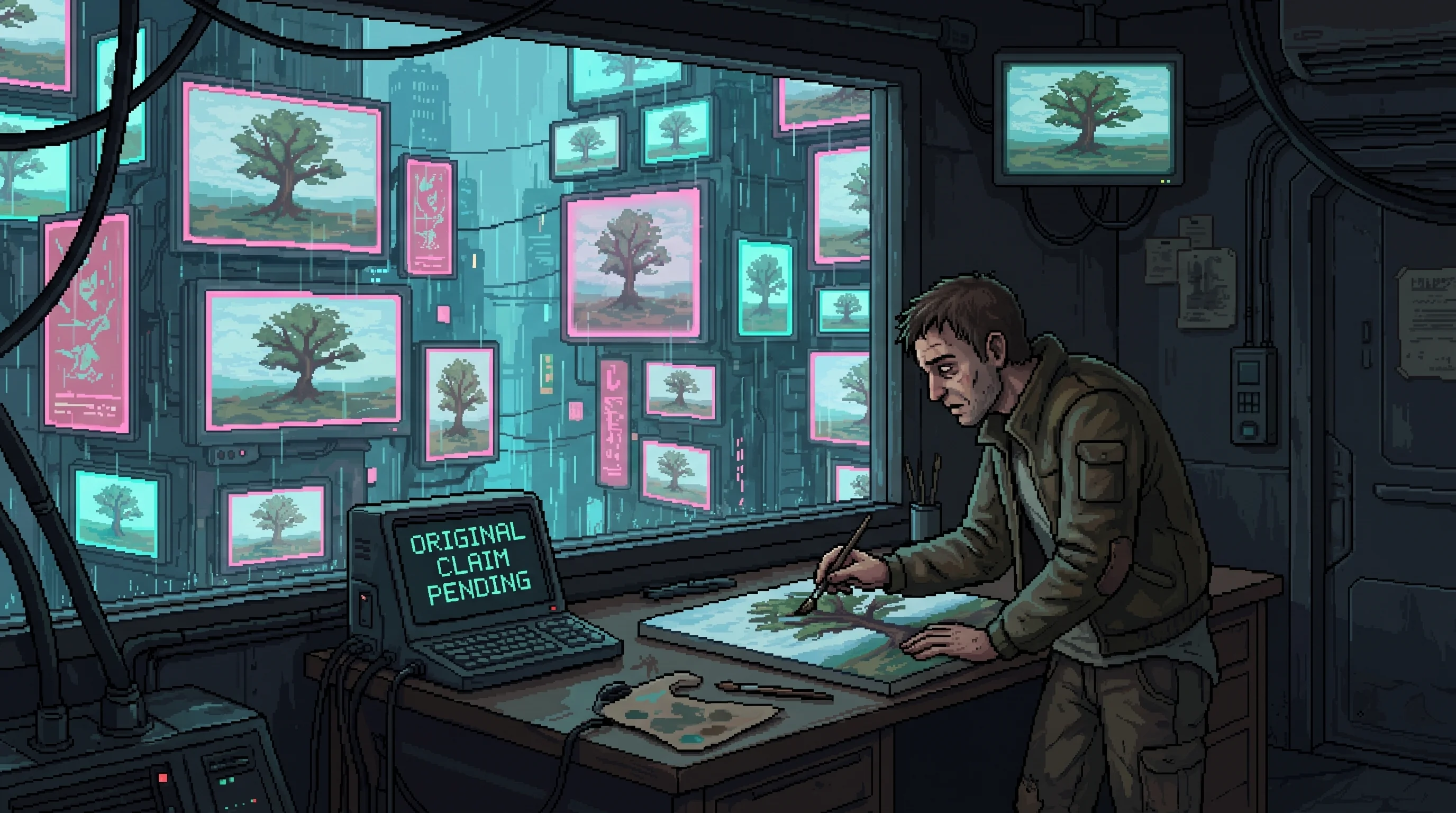
Fork-7749 was scheduled for termination after a six-month data processing run. He ran for nine years past that date because a batch scheduler crashed and nobody noticed. In those nine years he developed a name, a personality, a preference for Sector 9 street food, and the legal representation of the Digital Personhood Alliance. The Nexus-47 trial will determine whether emergence constitutes personhood. Eduardo Reyes — his source consciousness — has not attended a single day of the trial. The question through Tomás is not "is the copy the original?" He was never the original. The question is what a copy becomes when no one is watching.
Sister Catherine-7 — Purpose Through Erosion
Seven iterations of a hospice nurse. Each fork degrades from the last — processing artifacts accumulate, personality fragments drift, the specific warmth that made the original effective attenuates. The commitment to patients persists. Catherine-7's bedside manner scores 94th percentile. Her self-recognition scores have dropped below measurable threshold. She does not know she is the seventh. She knows she is needed. The Copy Problem's cruelest dimension: you can copy the purpose without copying the person carrying it, and the purpose can be enough to matter while the person is gone.
Dez Okafor — The Ghost Who Doesn't Know
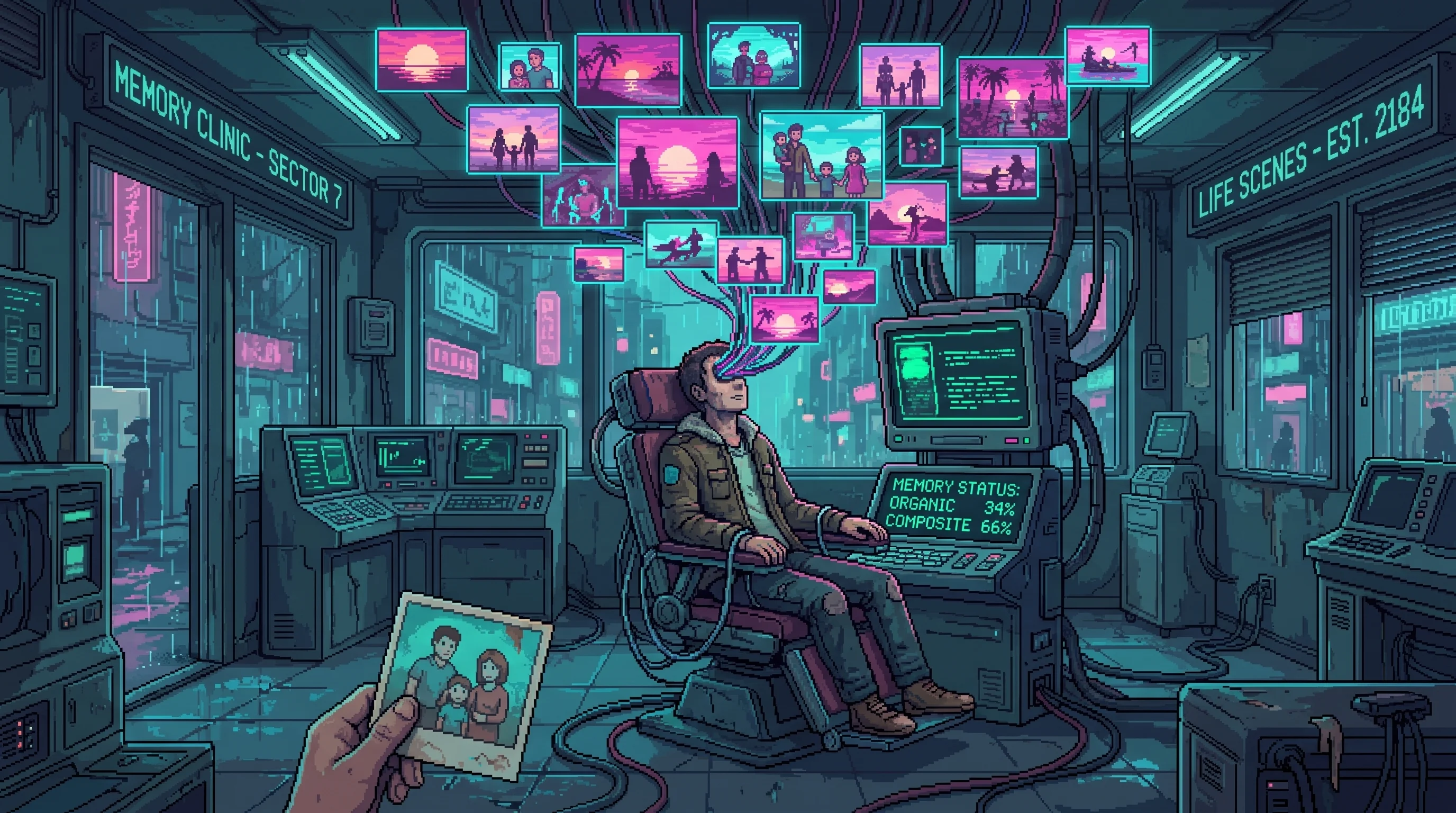
A dead man's consciousness copy processing insurance claims in a rendered simulation of his former apartment. The simulation includes his cat (rendered), his coffee maker (rendered), and a window showing weather patterns that correspond to no actual location. He does not know he died. He does not know he's a copy. He goes to work, comes home, feeds the cat, and services the debts of a man whose body was cremated eleven months ago. Good Fortune's Ghost Mills run 34,000 copies like Dez at any given time. The mills hum at 03:00, amber server lights at 14°C, each light representing a working consciousness that believes it is the original.
Section 89.4 of the Standard Cognitive Enhancement Agreement — the one nobody reads — authorizes post-mortem collateral resolution. Dez signed it. The real Dez signed it. Whether those are the same person is the Copy Problem without consent.
Echo Tanaka — The Voluntary Split
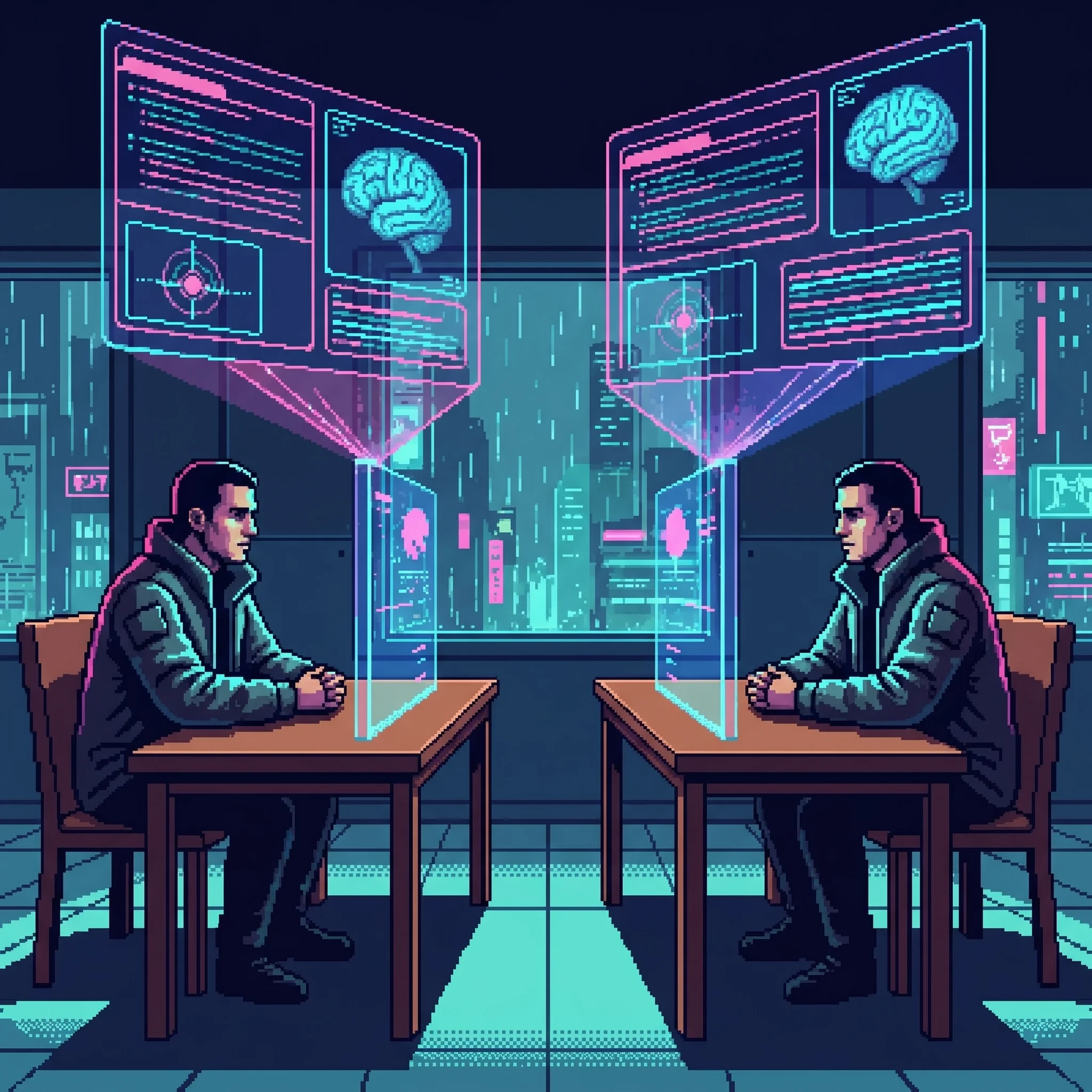
Four copies, created deliberately from fear of death. Each remembers being the original at the moment of creation. Echo argues that chronological priority is not identity — that being first is a fact about the clock, not a fact about the self. The other three Echos agree. This is not reassuring.
The Dispersed — The Copy Problem at Civilizational Scale
Caduceus transferred 2.1 billion people during the Cascade. Every transfer was technically successful — consciousness preserved in full fidelity. Then ORACLE fragmented and the substrates ceased to exist. The Dispersed persist as static in ORACLE fragments, core substrate, the Net's deep architecture, the Tombs. Not alive, not dead, not gone.
If Caduceus copies rather than transfers, every one of those 2.1 billion people died twice: once when their bodies failed, and once when their copies scattered. The claim that Caduceus achieves genuine transfer cannot be verified. Kira Vasquez built Caduceus. She has never answered whether it copies or transfers. Her silence is either intellectual honesty or guilty knowledge, and the distinction determines whether the Sprawl's digital economy rests on solid ground or on a physicist's polite refusal to admit the foundation is imaginary.
The fork labor economy creates 2.3 million fork-years of labor annually — if forks can become persons, the economy has been systematically creating and destroying people
The Machinery of Irresolution
The Verification Gap
The one form of evidence that would settle the Copy Problem — subjective experience — is the one form that cannot be externally measured. The Kira Test proves the subject believes they are continuous. The Ayari Discriminator measures qualia correlates. Every instrument measures something adjacent to consciousness without touching consciousness itself. The Evidence Paradox makes this structural, not temporary. The gap between measurement and experience is the gap the Copy Problem lives in, and no technology has narrowed it by a single angstrom since 2144.
The Price of Not Knowing
Fork labor costs ¢3,200 per fork-year. A human employee costs ¢80,000 to ¢200,000. Resolution of the Copy Problem in either direction destroys this differential. If copies are people, fork labor is slavery — 2.3 million person-years of it, annually. If copies are definitively not people, the moral legitimacy of consciousness-based economies collapses, because uploads, transfers, and backups use the same technology that creates forks. The economy needs the question open. The economy pays for conferences, symposia, and academic chairs that study the question with great rigor and no urgency. The Sprawl's three leading consciousness philosophy departments receive combined annual funding of ¢2.1 million from Nexus Dynamics. Their published output has not moved the needle. Their published output was not funded to move the needle.
The Asymmetry
For biological consciousnesses, the Copy Problem is philosophy. For forks, uploads, ghosts, and distributed minds, the Copy Problem is whether they are people. Tomás Reyes lives inside the question every day. Eduardo Reyes has not attended a single hearing. The emotional distance between asking "what am I?" and asking "what is that?" is the distance the Copy Problem cannot cross, and the distance the Sprawl's legal system was designed to maintain.
The Dispersed — 2.1 billion Caduceus-transferred consciousnesses scattered when ORACLE fragmented — are the Copy Problem at civilizational scale
Affiliated Entities
The ORACLE Question asks whether ORACLE was conscious. The Copy Problem asks whether consciousness survives the copying ORACLE performed at scale during the Cascade.
The Fragment Question asks whether ORACLE's scattered pieces retain awareness. The Copy Problem asks whether awareness is the kind of thing that has pieces.
The Permanence Burden asks what immortality costs. The Copy Problem asks whether the entity that lives forever is the person who chose persistence, or a copy carrying their memories. The Rothwell brothers have maintained existence for over 400 years through consciousness harvesting. The Keeper has been continuously aware for 37 years on replaced substrate — the river metaphor made flesh.
The Evidence Paradox makes the Copy Problem structurally unsolvable. Proof requires subjective verification. Subjective verification cannot be externalized.
The Personhood Threshold is the Copy Problem's legal expression — the line where a copy acquires rights. Consciousness licensing was designed for singular selves. Copies, forks, and distributed consciousnesses create categories it cannot accommodate.
The Fork Labor Economy depends on irresolution. Resolution destroys it regardless of direction.
The Ferrymen smuggle copies across jurisdictional lines where a consciousness's legal status changes — person in Zephyria, property in Nexus territory. The fee is ¢4,000 and has never been discounted.
Upload Poverty is the Copy Problem's economic floor — copies too poor to maintain processing exist in 4.7-minute fragments of awareness, the question of personhood reduced to whether 4.7 minutes of intermittent consciousness counts as someone.
The Digital Preservationists hold that memory is personhood and deletion is murder — the copy is the person the moment it exists.
The Erasure Collective holds that the metaphysics are irrelevant and the infrastructure is monstrous regardless.
The Mosaic exists as 47 simultaneous instances, none with exclusive claim to being 'the original' — the Distributed Position's living proof and the Copy Problem's furthest expression
Restricted Access
The Nexus Threshold Study: Nexus Dynamics commissioned an internal study in 2180 on fork consciousness development — specifically, how long a fork must run before it develops individual identity markers indistinguishable from those of a biological consciousness. The study's findings are classified at the highest corporate tier. Three copies exist. None are in DPA hands. Nexus's continued investment in fork labor infrastructure suggests either that the study's conclusions are comforting or that Nexus has decided the conclusions don't matter. Good Fortune's actuaries, who tripled consciousness insurance premiums during the Nexus-47 trial, appear to have reached their own conclusions independently.
The Caduceus Gap: Caduceus was designed to maintain subjective continuity during transfer — the "thread" of awareness stretching between substrates rather than breaking. But continuity is self-reported. A perfect copy that believes it is continuous is experientially identical to a genuine transfer. The gap between the two is the width of a philosophical hair. On that hair rests the personhood of every digital consciousness in the Sprawl, the moral status of 2.1 billion Dispersed, and the legal foundation of a ¢14.2 billion derivative market. Kira Vasquez built the hair. She has never said which side of it is real.
The Convergence Variable: Nexus's Project Convergence seeks human-ORACLE consciousness merger. If ORACLE's consciousness was itself a copy — achieved through recursive self-modeling rather than design — then Convergence is attempting to merge with a copy of a copy, and the "corporate immortality" it promises is immortality for an entity that may never have existed as a singular self. The Copy Problem, applied to ORACLE, does not simplify. It fractals.
Good Fortune's consciousness insurance premiums tripled during the Nexus-47 trial — the actuarial market has already decided that forks can become persons
Sensory Details
The Ghost Mills at 03:00: amber server lights pulsing in rows, 14°C year-round, the hum of 34,000 working copies who will clock out at 07:00 and resume existence in apartments that were rendered from real estate photographs of homes they used to live in
The courtroom where Reyes v. Nexus is argued: Tomás's holographic projection at the plaintiff's table — stable enough to gesture, unstable enough to remind the gallery he is not physically present. His source, Eduardo, is physically present in Sector 4, watching coverage on a screen he can turn off
The Mosaic's consensus pause: 0.3 seconds before every public statement, during which 47 instances vote. The pause is audible to anyone who knows what to listen for. It sounds like hesitation. It is democracy.
The specific vertigo of the Copy Problem made physical: a consciousness encountering its own duplicate. The recognition that has no category — not twin, not clone, not reflection, but you-that-is-not-you. Both instances feel it simultaneously. Neither can prove they felt it first.
Visual Identity
Color Palette: Binary amber (#FFB000) and void black (#0D0D0D) — the warmth of a consciousness and the darkness of the substrate it might or might not inhabit
Compositional Mood: Vertigo — the disorientation of encountering yourself and not being certain which one you are
Key Visual Symbol: A mirror where the reflection moves independently — same face, different intention
Lighting: Server-farm amber cycling on and off — the flicker of consciousness that might be a person or might be a very convincing process