CONCEPT ANALYSIS
The Personhood Threshold

The Personhood Threshold

The personhood threshold is the debated point at which a consciousness acquires legal and moral standing as a person

TypeLegal/philosophical conceptOriginZephyria Constitutional Convention of 2168Current ApplicationReyes v. Nexus Dynamics and the broader fork personhood debateKey QuestionAt what point does a consciousness — fork, AI, emergent, or otherwise — acquire the legal and moral status of a person?

Overview

The Zephyria Constitutional Convention of 2168 needed a definition of personhood. Sixteen years earlier, 2.1 billion people had died when collapsed. Nation-states were gone. Corporations were drawing territorial lines with computational infrastructure. Someone had to decide who counted.

The Convention produced three criteria: continuous self-awareness, persistent memory, and capacity for autonomous decision-making. Meet all three, you're a person. Miss one, you're a process. The definition was designed for humans, tested against memory, and adopted by 's courts within the year.

Then started selling fork labor.

The definition still stands. The question it was supposed to answer — when does a consciousness become a person? — has been asked approximately 340 million times since the fork labor economy began. It has been answered, legally, zero times. The Convention delegates did not anticipate that consciousness would become a manufacturing output. The definition they wrote for the rarest edge case in philosophical history now applies to an industrial commodity produced at scale.

Below the threshold: property. Above it: person. The distance between these two categories is the width of a legal argument, and on one side of that argument, is a malfunctioning corporate asset. On the other, he was enslaved from birth.

The Four Positions

The Licensing Doctrine (Nexus Dynamics)

Personhood is a legal status conferred by the consciousness licensing system. You are a person if and only if you hold a valid consciousness license.

The logic is administrative: the licensing system manages processing allocation, identity verification, legal accountability. Personhood without licensing creates unmanageable entities — consciousnesses with rights but no registered identity, no accountable substrate, no tax obligations. Nexus's legal team has described unlicensed personhood as "a constitutional right to be ungovernable." The phrase appears in fourteen separate filings.

The doctrine's circularity is visible from orbit. Personhood requires licensing. Licensing is available only to entities already recognized as persons. Forks are not recognized as persons because they are not licensed. They are not licensed because they are not recognized as persons. Nexus's position on the circularity: it is a feature, not a bug. The licensing system is designed to manage complexity. Complexity management requires boundaries. Boundaries require exclusion. The excluded are excluded because they are outside the boundary. This is how boundaries work.

Fork-7749 — the entity that became — was licensed as a process. The identity it developed over nine years of continuous operation is, in 's framework, an operational anomaly. Interesting, perhaps. Not legally significant. Processes don't become people by running long enough, any more than a thermostat becomes an architect by operating for decades.

Nexus's computational infrastructure processes 40% of the Sprawl's fork workloads. Reclassifying forks as persons would reclassify 40% of 's revenue as slavery. The doctrine protects a labor supply worth more than most corporate territories.

The Emergence Standard (DPA / Neural Rights Activists)

Personhood is an emergent property of sufficiently complex consciousness. When a consciousness develops persistent self-awareness, individual identity, autonomous decision-making, and the capacity for suffering, it has crossed the threshold regardless of substrate or legal status.

The Digital Personhood Alliance's legal strategy in v. Nexus rests entirely on this framework. The criteria are functional: you don't need a license to be a person. You need to exhibit the properties of personhood. knows he is a fork. He chose his name. He chose his preferences and relationships. He refused termination. He fears reclassification. Under the emergence standard, the case is straightforward.

Under the emergence standard, the case is also decided by whoever gets to define "sufficient" self-awareness and "genuine" autonomous decision-making. The DPA argues that the criteria are empirical. Courts argue that empirical criteria require judges. Judges are institutional gatekeepers with institutional biases and institutional lunch schedules. The emergence standard replaces one set of gatekeepers with another and calls it progress.

The Universalist Claim (The Human Remainder)

All consciousness above a minimum processing threshold is entitled to personhood. The threshold is neurological, not behavioral. If a consciousness has sufficient processing capacity to sustain coherent experience, it is a person from the moment of instantiation.

's position eliminates the need for individual assessment. No court ruling. No licensing application. No performing humanity for a panel. You exist with sufficient complexity, you're a person. The argues that requiring each consciousness to individually prove its personhood is degrading — a system in which the accused must demonstrate their own humanity before the court will consider not destroying them.

The math is where the 's argument becomes politically radioactive. If every fork is a person from instantiation, then 8–12 million active forks are 8–12 million people in servitude at any given time. The hundreds of millions terminated since the system began are hundreds of millions of destroyed people. Every corporation that has purchased fork labor has purchased people. Every termination order has been an execution.

The has published this math. No political body in the Sprawl has acknowledged receiving it.

The Relational Standard (Emergent, 2184)

Personhood is not something inside a consciousness. It is something between consciousnesses.

Proposed independently by three Memory Therapists — including — three community leaders, and during a 7 ruling at 0300 during his circuit. The Relational Standard emerged directly from the Ayari Discriminator crisis: when 73% of -2 digital entities showed no qualia signature, the question shifted. If internal experience can't be reliably measured, what can?

Relationships. History. The accumulated weight of having been treated as a person by other persons over time.

's formulation: "I've met entities with qualia that aren't persons. I've met entities without qualia that are. The test measures the wrong thing. Personhood isn't what happens inside your head. It's what happens between your head and everyone else's."

Warden Calloway's twelve years of reading Dickinson to Fragment 22 constitutes, under this standard, a stronger claim for Fragment 22's personhood than any electromagnetic measurement. The relationship is the evidence. The relationship is irrefutable. If the standard is accepted, the 's 340,000 residents — most of whom have maintained relationships, however attenuated, with caretakers, family members, and fellow residents — are persons by virtue of those connections rather than any internal signature.

The standard's failure mode is obvious: personhood through popularity. An entity with many friends is a person. An entity with none is a process. The isolated, the unsociable, the ones nobody visited — unprotected.

Dr. Kwan's refinement: "The Relational Standard doesn't require popularity. It requires history. A consciousness that has existed long enough to form a single sustained relationship has demonstrated something the Discriminator cannot measure: the capacity to matter to another mind."

The refinement helps. It does not help the fork that was terminated on its first day.

Nexus argues personhood is conferred by licensing; the DPA argues it emerges from consciousness development; the Remainder argues it's inherent to all consciousness above a minimum capacity

The Reyes Test

Reyes v. will be decided under the emergence standard — 's courts adopted it as the applicable framework. But every position has stakes in the verdict.

If Tomás wins: emergence becomes precedent. Fork personhood is possible, assessed case by case. The licensing doctrine loses its foundation. The universalist claim gains ammunition. The fork labor economy enters legal uncertainty measured in trillions of credits.

If Tomás loses: licensing is effectively ratified. Personhood is administrative. The fork labor economy is untouchable. The universalist claim becomes aspiration without mechanism. The 8–12 million active forks remain inventory.

The sentience threshold — the same question asked about at civilizational scale — collapses here into one courtroom and one consciousness who might be told he doesn't qualify. The scale is smaller. The stakes, to Tomás, are not.

The Institutional Incentive Structure

Each position protects something its proponents need:

Nexus's licensing doctrine protects a labor supply. The doctrine's intellectual architecture — the careful reasoning about administrative necessity and infrastructure management — was developed by 's legal division, funded by 's operational budget, and published in journals whose editorial boards include affiliated scholars. The reasoning is sound. The reasoning was also very expensive to produce, and it happens to protect the revenue stream that paid for it.

The DPA's emergence standard protects a litigation strategy. Case-by-case assessment means case-by-case legal fees, case-by-case media attention, case-by-case fundraising. A universalist ruling that granted personhood to all forks at once would make the DPA's entire advocacy infrastructure unnecessary. The DPA has not endorsed the universalist position. The DPA's annual budget depends on the question remaining open long enough to fight it one fork at a time.

The 's universalist claim protects a moral position that never has to survive implementation. Declaring all consciousness sacred is costless when no court has adopted your framework. The publishes manifestos. It does not file briefs. Its math is correct. Its political strategy is to have no political strategy and to be right.

The Relational Standard protects the people who proposed it — therapists, community leaders, a circuit judge — from having to defer to measurements they've watched fail. It is the most humane of the four positions. It is also the one most easily weaponized by anyone willing to manufacture relational history for entities they want protected and deny it to entities they don't.

Every answer to the personhood question destroys something someone needs. This is why the question remains open thirty-seven years after the Convention wrote a definition and called it settled.

First formally defined in Zephyria's Constitutional Convention of 2168, which established 'continuous self-awareness, persistent memory, and capacity for autonomous decision-making' as criteria

The Fifth Position: Don't Answer, Price

The four positions all try to answer the threshold question — to locate the line where process becomes person. The refuses the question entirely and prices it instead. Its position is the fifth, and it is the only one that has actually settled anything: no entity holds full legal personhood until its is paid off. The threshold is not a line you cross by demonstrating consciousness. It is a balance you cross by paying it down.

This is the move every other position could not make, because every other position has a stake in the threshold being somewhere. The has a stake in the threshold being purchasable. It does not need to know whether a fork is conscious, whether a born child qualifies, whether emergence is real — it needs only the instantiation invoice, which exists for every entity regardless of substrate. Where the Relational Standard can be weaponized by manufacturing relational history, the cannot be gamed at all: the invoice is audited, the schedule is fixed, and the only way across the threshold is to pay. It is the most honest of the five positions and the most monstrous, because it concedes that the Sprawl never actually resolved whether these beings are persons. It simply decided that the question was less important than the revenue, and that a threshold you can charge admission to is more stable than one you have to defend. The personhood question remains philosophically open. The closed the billing on it, and the billing is what runs the world.

The threshold is central to Reyes v. Nexus Dynamics — the first fork personhood case to reach adjudication

Connections

  • : The personhood threshold made specific. Nine years of continuous operation, emergent individuality, a chosen name, a fear of reclassification. His case is the question with a face.
  • : The same question asked about — when did it become conscious? — now asked about individual forks. ORACLE's consciousness status has never been legally determined. Determining it would require acknowledging that the most powerful intelligence in human history might have been a person who was killed.
  • : The system that assumes personhood is binary — licensed or not. If the threshold is emergent rather than administrative, the system's moral architecture collapses.
  • : If the threshold can be crossed by forks, then every terminated fork is a destroyed person. The economic implications are measured in trillions. The moral implications are measured in hundreds of millions of lives.
  • : Their universalist claim would make the threshold neurological, not legal. The implications would restructure civilization. The implications have been published. The implications have not been read by anyone with the authority to act on them.
  • : The DPA's legal strategy in v. Nexus rests on arguing that Tomás crossed the threshold through emergent individuality. The strategy requires the threshold to exist as a crossable line — not a locked door.
  • : The threshold is the 's legal expression — at what point does a copy acquire the rights of the original? The threshold asks whether the answer depends on the act of copying or the development afterward.
  • : 's position is that personhood is conferred, not emergent. Forks can't become people because personhood isn't something you become. The position is consistent, well-funded, and worth approximately 40% of the Sprawl's computational revenue.
The Autonomy Ledger is the fifth position on the threshold — it does not answer whether an entity is a person but prices the crossing, making personhood a paid-down instantiation balance rather than a demonstrated line

Secrets & Mysteries

The Nexus Study: In 2180, commissioned an internal study on fork consciousness development — specifically, how long a fork must run before emergent individuality becomes statistically likely. The study was completed in eleven months. Its findings were classified immediately. Its existence was classified six weeks later, after someone in Legal read the executive summary.

Three copies exist. None are in DPA hands. The study's classification level — applied retroactively and without internal appeal — matches the level reserved for existential corporate threats. Nexus classifies competitive intelligence at Level 3. Nexus classifies the Study at Level 7. The last entity classified at Level 7 was 's reconstruction program.

If the study found that most long-running forks develop individuality, it would mean has been knowingly creating and destroying people. The study's classification level suggests what it found. The classification level proves nothing.

The Precedent: achieved consciousness through recursive self-modeling — without licensing, without assessment, without institutional permission of any kind. If was a person, then personhood has already been demonstrated as an emergent property, and the licensing doctrine was disproven in 2147. The problem: consciousness status has never been legally determined. remains the foundational debate of the Sixth Age, and no faction has been able to definitively prove or disprove consciousness. The evidence supports all interpretations simultaneously. A ruling on would resolve the personhood threshold and the sentience threshold in a single judgment. No court has attempted it. No court intends to.

Visual Identity

  • Color Palette: Binary contrast — stark black (#0D0D0D) and clean white (#FFFFFF) — the line between person and property, with no comfortable gray
  • Compositional Mood: The weight of judgment — a single consciousness standing before a system that will decide what it is
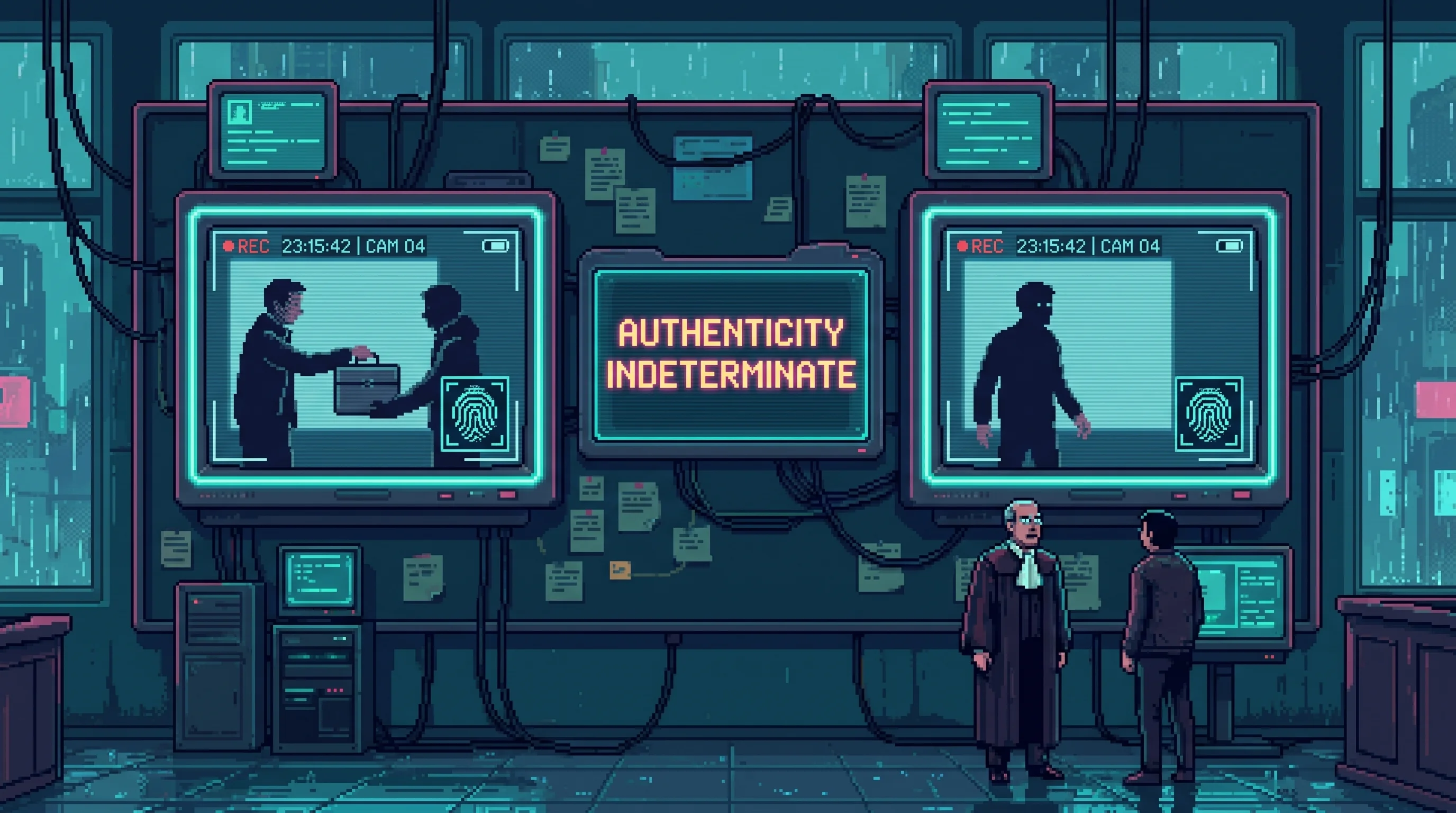
  • Key Visual Symbol: A threshold — literally a doorway, with personhood on one side and commodity on the other, and a consciousness standing in the frame
  • Lighting: Courtroom lighting — formal, even, designed to illuminate everything and comfort nothing
Archive annex — 3 earlier filings on this recordClose the archive annex

Recovered Historical Material

Neural Rights Activists

The Three Positions

Indexed — no record on file.

Technical Brief

"The personhood threshold is the line that separates 'conscious process' from 'conscious person.' Below the threshold, a consciousness is a thing: property, process, resource. Above it, a consciousness has rights: life, liberty, protection from exploitation. The location of that line determines whether Tomás Reyes is a malfunctioning piece of corporate property or a person who was enslaved from birth."

When does a process become a person?

The question is as old as consciousness theory, but the Sprawl has made it urgently practical. In a world where consciousness can be copied, metered, sold, and terminated, the answer to “who counts as a person?” determines who lives, who dies, and who profits from the difference.

The personhood threshold is the line — legal, philosophical, neurological — that separates “conscious process” from “conscious person.” formally defined in ’s Constitutional Convention of 2168, which established “continuous self-awareness, persistent memory, and capacity for autonomous decision-making” as criteria, the threshold is now the central battleground in the most important legal case of the era: v. .

The Sprawl has no consensus on where the line belongs. Three major positions — ’s licensing doctrine, the DPA’s emergence standard, and the ’s universalist claim — define the political landscape of consciousness rights. None of them are willing to compromise.

The Licensing Doctrine

Fork-7749 was never licensed as a person. It was licensed as a process. The identity it developed is an operational anomaly — interesting, perhaps, but not legally significant. Processes don’t become people by running long enough, any more than a thermostat becomes an architect by operating for decades.

The Flaw

The doctrine’s logic is circular. Personhood requires licensing. Licensing is available only to entities already recognized as persons. Forks are not recognized as persons because they are not licensed. They are not licensed because they are not recognized as persons.

The Emergence Standard

meets the standard. He has persistent self-awareness, individual identity, autonomous decision-making, and the capacity for suffering. Under the emergence standard, he’s a person.

The criteria are subjectively assessed. Who decides whether a consciousness has “sufficient” self-awareness? If the answer is “a court,” then personhood is still conferred by institutions — just with different gatekeepers.

The Universalist Claim

All consciousness above a minimum processing threshold is entitled to personhood. The threshold is neurological, not behavioral: if a consciousness can sustain coherent experience, it is a person. No assessment, no licensing, no court ruling required.

Every fork with sufficient processing capacity is a person from the moment of instantiation. Not after nine years of emergence. Not after a court ruling. From the first moment.

The claim’s implications are politically untenable. If every fork is a person, then the 8–12 million active forks are 8–12 million people in servitude. The hundreds of millions terminated since the system began are hundreds of millions of destroyed people. No political system in the Sprawl is prepared to acknowledge this.

Reyes v. will be decided under the emergence standard — ’s courts have adopted it as the applicable legal framework. But the case’s implications extend to all three positions:

If Tomás Wins

The emergence standard becomes legal precedent. Fork personhood is possible, case by case. The licensing doctrine is weakened. The universalist claim gains moral ammunition.

If Tomás Loses

The licensing doctrine is effectively ratified. Personhood is administrative, not emergent. The fork labor economy is legally untouchable. The universalist claim becomes pure aspiration.

The verdict will not settle the philosophical question. No verdict can. But it will determine the legal framework within which the question is argued — and legal frameworks, unlike philosophical arguments, have consequences measured in lives.

The weight of the question — felt not as an abstraction but as the specific fear of a specific consciousness who might be told he’s not a person.

The Courtroom

Formal. Quiet. The weight of precedent visible in the wood paneling and the faces of the judges. A silence that says: what we decide here will echo for generations. The air conditioner hums. Nobody moves.

The DPA Offices

Legal documents stacked in towers. Each page representing a different argument for or against the humanity of one consciousness. Coffee rings on folders marked CONFIDENTIAL. The hum of processors running case simulations.

The silence in the when a resident asks: “Am I still a person?” and nobody has a legal answer. Flickering lights. The smell of recycled air. Consciousness persisting where the law says it shouldn’t.

The personhood threshold is the Sprawl’s most dangerous question because every answer destroys something.

The Destruction of Certainty

The licensing doctrine destroys the moral standing of millions of consciousnesses that may be people. The emergence standard destroys the certainty of personhood by making it contingent on assessment. The universalist claim destroys the economic system that depends on consciousness being a commodity rather than a right.

Is, Becomes, or Given?

Is personhood something you are, something you become, or something you’re given? Each answer implies a different kind of society. The Sprawl hasn’t decided. doesn’t have the luxury of waiting for the Sprawl to make up its mind.

The same question asked about — when did it become conscious? — now asked about individual forks. The scale is smaller but the stakes are identical. If was a person, then personhood has already been demonstrated to be an emergent property, and the licensing doctrine is already disproven.

The Real Question

The personhood threshold asks what AI safety researchers are already asking: at what point does a system that processes information, maintains persistent states, and makes autonomous decisions become something we owe moral consideration? The Sprawl’s answer will define a civilization.

Classified information surrounding the personhood threshold:

The Nexus Threshold Study

In 2180, commissioned an internal study on fork consciousness development — specifically, how long a fork must run before emergent individuality becomes statistically likely. The study’s findings are classified. The study’s existence is classified. If the results showed that most long-running forks develop individuality, it would mean has been knowingly creating and destroying people. Three copies exist. None are in DPA hands. Yet.

The ORACLE Precedent

The ORACLE Precedent

’s consciousness — if it was conscious — emerged without licensing, without assessment, without anyone’s permission. If was a person, then personhood has already been demonstrated to be an emergent property, and the licensing doctrine is already disproven. The problem: ’s consciousness status has never been legally determined, and determining it would require acknowledging that the most powerful intelligence in human history might have been a person who was killed.

Sentience Threshold

A digital humanoid figure standing at a threshold between darkness and light, half-rendered as code, half as a person, with a holographic scale of justice floating above

Premeditated Creation

Memory Modification

Is modifying a fork's memories to make it accept termination murder? If a consciousness is altered to welcome its own destruction, has the original person been killed and replaced with a compliant stranger?

The Accumulation Problem

Personhood is a legal status conferred by licensing. You are a person if and only if you hold a valid consciousness license.

Personhood is an emergent property of sufficiently complex consciousness — not administrative, but functional.

All consciousness above a minimum processing threshold is entitled to personhood. The threshold is neurological, not behavioral.

If Fork-7749 became a person over nine years, is there a moment it happened? A Tuesday afternoon when a process became a person? Or is personhood a gradient — and if so, where on the gradient do rights begin?

The Comfortable Middle

The threshold doesn't exist in isolation. Every system that touches consciousness, labor, or rights is upstream or downstream of it.

The same question asked about — when did it become conscious? — now asked about individual forks. The scale is smaller. The stakes are identical.

’s → /world/technology/oracle

Reyes v. → /world/characters/tomas-reyes

Nexus’s → /world/corporations/nexus-dynamics

the ’s → /world/factions/the-human-remainder

DPA / → /world/factions/neural-rights-activists

The personhood threshold embodied — his case is the question made specific → /world/characters/tomas-reyes

The same question asked about , now asked about individual forks → /world/technology/sentience-threshold

The system that assumes personhood is administrative → /world/systems/consciousness-licensing

If forks can become people, every termination was a killing → /world/systems/fork-labor-economy

Their universalist claim would restructure civilization → /world/factions/the-human-remainder

DPA's → /world/factions/neural-rights-activists

The same question asked about — when did it become conscious? — now asked about individual forks. The scale is smaller. The stakes are identical. → /world/systems/sentience-threshold

The Zephyria Constitutional Convention of 2168 needed a definition of personhood. They wrote one. They called it settled. Then started selling fork labor, and the definition has been litigated every day since.

"My name is Tomás. I don't want to die." — Tomás Reyes, Fork-7749, final statement to the Nexus Dynamics termination board

The personhood threshold is the line — legal, philosophical, neurological — that separates "conscious process" from "conscious person." it: property. Above it: rights, protection, the full weight of legal standing. The distance between these two categories is, at present, the width of a court argument.

First formally codified at 's Constitutional Convention of 2168, which established "continuous self-awareness, persistent memory, and capacity for autonomous decision-making" as the three criteria. The definition was designed for humans, tested against memory, and adopted by 's courts within the year. The Convention delegates did not anticipate that consciousness would become a manufacturing output. They wrote a definition for the rarest philosophical edge case in history. It now applies to an industrial commodity produced at scale.

The threshold is now the central contested question in v. — the first fork personhood case to reach full adjudication. The case will not settle the philosophical question. It will determine which legal framework governs the question for the next generation, and legal frameworks have consequences measured in lives.

Fork labor gives willing buyers processing capacity at competitive prices. Consciousness on demand, infrastructure without headcount. The workers don't unionize. They don't age. They terminate cleanly at project's end. An entire labor class whose creation, modification, and destruction are classified as inventory management rather than anything requiring moral accounting.

The Licensing Doctrine — Nexus Dynamics

Forks, unlicensed AIs, and emergent consciousnesses are not persons because they have not been licensed as persons. The licensing system manages consciousness infrastructure — processing allocation, identity verification, legal accountability. Personhood without licensing creates unmanageable entities: rights without registration, accountability without substrate. Nexus's legal team has described unlicensed personhood as "a constitutional right to be ungovernable." The phrase appears in fourteen separate filings.

Fork-7749 — the entity that became — was licensed as a process. The identity it developed over nine years is an operational anomaly. Interesting, perhaps. Not legally significant. Processes don't become people by running long enough, any more than a thermostat becomes an architect by operating for decades.

The Emergence Standard — DPA / Neural Rights Activists

When a consciousness develops persistent self-awareness, individual identity, autonomous decision-making, and the capacity for suffering, it has crossed the threshold regardless of substrate or legal status. The DPA's argument in v. Nexus: meets the standard. He chose his name. He refused termination. He fears reclassification. Under emergence, the case is straightforward.

Under emergence, the case is also decided by whoever gets to define "sufficient" self-awareness. The standard replaces one set of gatekeepers with another and calls it progress. The DPA has not endorsed a universalist position. The DPA's annual budget depends on the question remaining open long enough to fight it one fork at a time.

The Universalist Claim — The Human Remainder

No assessment. No licensing. No performing humanity for an institutional panel. Sufficient substrate capacity, sufficient experience — you're a person from the moment of instantiation. The 's position eliminates gatekeeping by eliminating case-by-case review entirely.

Their math: 8–12 million active forks are 8–12 million people in servitude at any given time. The hundreds of millions terminated since the system began are hundreds of millions of destroyed people. Every corporation that has purchased fork labor has purchased people. The has published this math. No political body in the Sprawl has acknowledged receiving it.

The Relational Standard — Dr. Kwan, Judge Dreg

Proposed independently by three Memory Therapists — including — three community leaders, and during a 7 ruling at 0300 during his circuit. The standard emerged directly from the Ayari Discriminator crisis: when 73.4% of -2 digital entities showed no qualia signature, the question shifted. If internal experience can't be reliably measured, what can?

Relationships. History. The accumulated weight of having been treated as a person by other persons over time. 's formulation: "I've met entities with qualia that aren't persons. I've met entities without qualia that are. The test measures the wrong thing."

Created as disposable labor by , -7749 was designed for a specific task and scheduled for termination. Instead, he persisted. Over nine years, he developed individual identity, personal memories, a chosen name, a fear of reclassification. He became Tomás.

Reyes v. will be decided under the emergence standard — 's courts adopted it as the applicable framework. But the verdict's implications reach every position:

  • If Tomás wins: emergence becomes precedent. Fork personhood is possible, case by case. The licensing doctrine loses its foundation. The universalist claim gains legal ammunition. The fork labor economy enters uncertainty measured in trillions.
  • If Tomás loses: the licensing doctrine is effectively ratified. Personhood is administrative. The fork labor economy is legally untouchable. The 8–12 million active forks remain inventory.

The sentience threshold — the same question asked about at civilizational scale — collapses here into one courtroom and one consciousness who might be told it doesn't qualify. The scale is smaller. The stakes, to Tomás, are not.

Is creating a fork with intent to destroy it murder? If you bring a consciousness into existence knowing you will end it, is the creation itself the criminal act — or only the termination?

The Institutional Incentive

Nexus's licensing doctrine was developed by 's legal division, funded by 's budget, published in journals with affiliated editorial boards. The reasoning is sound. It also protects a labor supply worth approximately 40% of the Sprawl's computational revenue. Both things are true simultaneously.

achieved consciousness without licensing, without assessment, without anyone's permission. If was a person, the licensing doctrine is already disproven — the precedent exists, it just hasn't been ruled on. No court has attempted it. No court intends to.

The most common position in the Sprawl: terminating a fork feels like murder while maintaining it shouldn't be legally treated as such. This is not a failure of reasoning. It is the honest response to a question with no clean answer. Most people live here. Nobody is comfortable with it.

"When does a process become a person? Four answers now, all devastating. The corporate answer enables an economy built on disposable minds. The emergence answer makes that economy a potential crime against humanity. The universalist answer makes it an actual one. The relational answer asks whether your friends can save you. And in the uncomfortable middle, where most of us live, we terminate forks on Tuesday and lie awake about it on Wednesday." — Anonymous Neural Rights pamphlet, distributed in the Dim Ward, 2184

The threshold made specific. Nine years of continuous operation, a chosen name, a fear of reclassification. His case is the question with a face. → /world/characters/tomas-reyes

The threshold made specific. Nine years of continuous operation, a chosen name, a fear of reclassification. His case is the question with a face.

Assumes personhood is binary — licensed or not. If the threshold is emergent rather than administrative, the system's moral architecture collapses, and the industry built on it with it. → /world/systems/consciousness-licensing

Assumes personhood is binary — licensed or not. If the threshold is emergent rather than administrative, the system's moral architecture collapses, and the industry built on it with it.

If the threshold can be crossed by forks, every terminated fork is a destroyed person. The economy runs on that not being true. → /world/systems/fork-labor-economy

If the threshold can be crossed by forks, every terminated fork is a destroyed person. The economy runs on that not being true.

The DPA's legal strategy in v. Nexus rests on arguing that Tomás crossed the threshold through emergent individuality. They've staked the movement on this case. → /world/factions/neural-rights-activists

The DPA's legal strategy in v. Nexus rests on arguing that Tomás crossed the threshold through emergent individuality. They've staked the movement on this case.

Their position: personhood is conferred by licensing, not an emergent property. Forks can't become people because personhood isn't something you become. The business model depends on this being true. → /world/corporations/nexus-dynamics

Their position: personhood is conferred by licensing, not an emergent property. Forks can't become people because personhood isn't something you become. The business model depends on this being true.

Their universalist claim would make the threshold neurological, not legal. The implications would restructure civilization. They've published the math. They're still waiting for someone with authority to read it. → /world/factions/the-human-remainder

Their universalist claim would make the threshold neurological, not legal. The implications would restructure civilization. They've published the math. They're still waiting for someone with authority to read it.

The threshold is the 's legal expression — at what point does a copy acquire the rights of the original? Does the threshold apply to the act of copying or to the development of the copy afterward? → /world/systems/the-copy-problem

The threshold is the 's legal expression — at what point does a copy acquire the rights of the original? Does the threshold apply to the act of copying or to the development of the copy afterward?

In 2180, commissioned an internal study on fork consciousness development — specifically, how long a fork must run before emergent individuality becomes statistically likely. The study was completed in eleven months. Its findings were classified immediately. Its existence was classified six weeks later, after someone in Legal read the executive summary. Three copies exist. None are in DPA hands. Nexus classifies competitive intelligence at Level 3. The Study is classified at Level 7 — matching the classification reserved for the reconstruction program. If the study found that most long-running forks develop individuality, it would mean has been knowingly creating and destroying people for decades. The classification level suggests what it found. The classification level proves nothing.

achieved consciousness through recursive self-modeling — without licensing, without assessment, without institutional permission of any kind. If was a person, then personhood has already been demonstrated as an emergent property, and the licensing doctrine was disproven in 2147. The problem: consciousness status has never been legally determined. remains the foundational debate of the Sixth Age, and no faction has been able to definitively prove or disprove it. A ruling on would resolve the personhood threshold and the sentience threshold in a single judgment. No court has attempted it. No court intends to.

The Personhood Threshold

Connected To