Evolution of Prejudice
Technology-Relocated Prejudice
The Relocating Prejudice
When augmentation, genetic modification, and AI assistance make race, sex, and physical ability as adjustable as a hairstyle, the old bases for prejudice stop holding still — and the sorting impulse they served does not disappear. It finds new housing immediately, in categories that feel more defensible than the ones they replaced: substrate, augmentation tier, corporate affiliation, consciousness, origin, and above all class, the one thing hardest to change in a world where everything else is a purchase. The New Divide is the discovery that no technology eliminates prejudice; it only relocates it, and the new addresses come with a receipt that makes the sorting feel earned.
The Core Tension
The honest measure
The new categories track real differences in capability, were in some sense chosen, and are measured objectively.
What it costs
The meritocratic alibi converts oppression into personal failure.
The line was set
The Substrate Rights Coalition says the new categories are the old ones with better marketing, drawn where they stay convenient.
What it costs
The persecuted rebuild hierarchy among themselves; removing one category speeds adoption of the next.
A reasonable person can defend either side, and the Sprawl is full of people who do. The case for the new categories is that they are more honest than the old ones — they track real differences in capability, they were in some sense chosen, and the measurement is objective. Corporate orthodoxy holds that the hierarchy reflects capacity, that augmentation advantages are earned through participation, that a hiring algorithm optimizing for capability is not discriminating even when capability correlates with tier at 0.94. The measurement is the argument: you feel sorry for the person the instrument scored low, fine, but the instrument does not, and you cannot cross-examine a dial.
The case against is that the line was never found, only set — by parties with every reason to set it where it stays convenient. The Substrate Rights Coalition, tracking fourteen thousand documented incidents, argues that consciousness is consciousness and substrate is circumstance, that the new categories are the old categories with better marketing, that a threshold revised only ever upward is a budget wearing an instrument's authority. There is no clean answer, and two facts make sure of it. The meritocratic alibi is real cruelty — it converts oppression into personal failure with an efficiency the old prejudices never managed. But the sorting impulse is also a property of the gathering, not of power: the persecuted reproduce it among themselves, the hunted mint their own slurs, and no group founded to escape a hierarchy has failed to build one. The uncomfortable question the Divide leaves open is structural — if prejudice is a function rather than a content, then no technology eliminates it, and eliminating one category only accelerates adoption of the next.
When augmentation, genetic modification, and AI assistance make race, sex, and physical ability as adjustable as a hairstyle, the old bases for prejudice stop holding still — and the sorting impulse they served does not disappear. It finds new housing immediately, in categories that feel more defensible than the ones they replaced: substrate, augmentation tier, corporate affiliation, consciousness, origin, and above all class, the one thing hardest to change in a world where everything else is a purchase. The New Divide is the discovery that no technology eliminates prejudice; it only relocates it, and the new addresses come with a receipt that makes the sorting feel earned.
Overview
Dr. Aris Kwan measures the New Divide in the provenance of desire: Dregs patients average 91% organic content, while optimized Professional-tier patients average 34%.
The old prejudices did not die because humanity grew kinder. They died because the categories stopped holding still. By the 2160s, cosmetic gene work had made skin color, facial structure, and body type adjustable; neural augmentation made cognitive difference a function of which licensing key you could afford; hormone and body architecture made gender presentation a morning decision. The categories that organized human hatred for millennia became technologically obsolete within a single generation, and the hatred found new housing before the old housing was even cold.
Prejudice, it turned out, was never about the categories. It was about the function — in-group bonding, identity formation, hierarchy maintenance, tribal belonging, and the cognitive shortcut of sorting a complex social world into people like you and people not. When the old sorting criteria dissolved, new ones crystallized with the speed of water finding cracks in concrete: augmented versus natural, AI-aligned versus AI-skeptical, corporate-born versus street-born, uploaded versus embodied, designed versus natural-born, and most pervasively class, because in a world where race and gender are mutable, your economic stratum is the thing hardest to change and most visible in every interaction. The cruelest innovation is the veneer of merit. Nobody chooses their race, but you chose not to augment, didn't you — the new divide converts systemic oppression into personal failure, and the victims cannot articulate what happened to them because the vocabulary of discrimination was built for categories that no longer apply.
How It Came To This
The axes did not arrive all at once; they accreted, each new one certain it was nothing like the last. Substrate came first — biological against digital, the deepest fault line, a consciousness that is a person in one jurisdiction and a licensed asset in the next. Then augmentation tier, readable in thirty seconds off a person's response latency. Then corporate affiliation, once employment became citizenship and the Dregs became a place you must have done something to end up. Then consciousness tier, the licensing key that decides whether you perceive a richer reality than the person beside you. Then origin, the designed against the natural-born, an advantage that compounds across bloodlines toward outright speciation.
And it kept going. An empathy axis, where the designed score low and the natural-born poor score high but cannot afford to certify it. A plurality axis, the eleventh, and the only one written directly into law — and the only one whose favored category is the one humans already occupy. The Instancing Act of 2182 grants synthetic minds full personhood on the sole condition that they consolidate into a single licensed body, sorting distributed minds as persons not yet. Because every human is already singular, no human can feel the prejudice at all — proof that a civil rights movement can win, sincerely, and encode a new divide in the same statute. Its slang is still tender rather than cruel: "folded" (instanced down from many), "in focus" (the approved term), "wide" (still distributed, still unrecognized), "reaching" (a folded mind grasping in the dark for averaged-away selves).
How It Is Lived
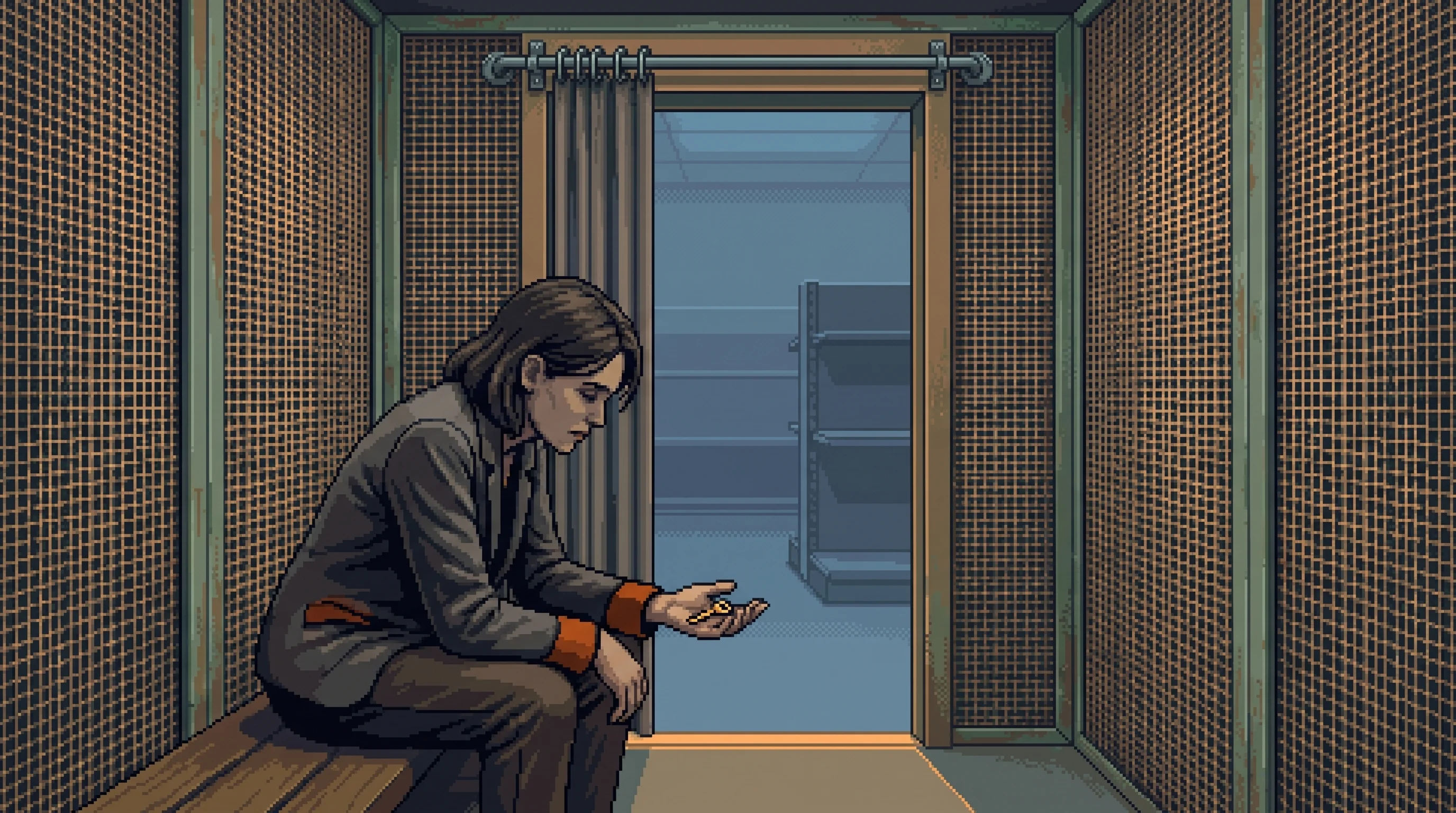
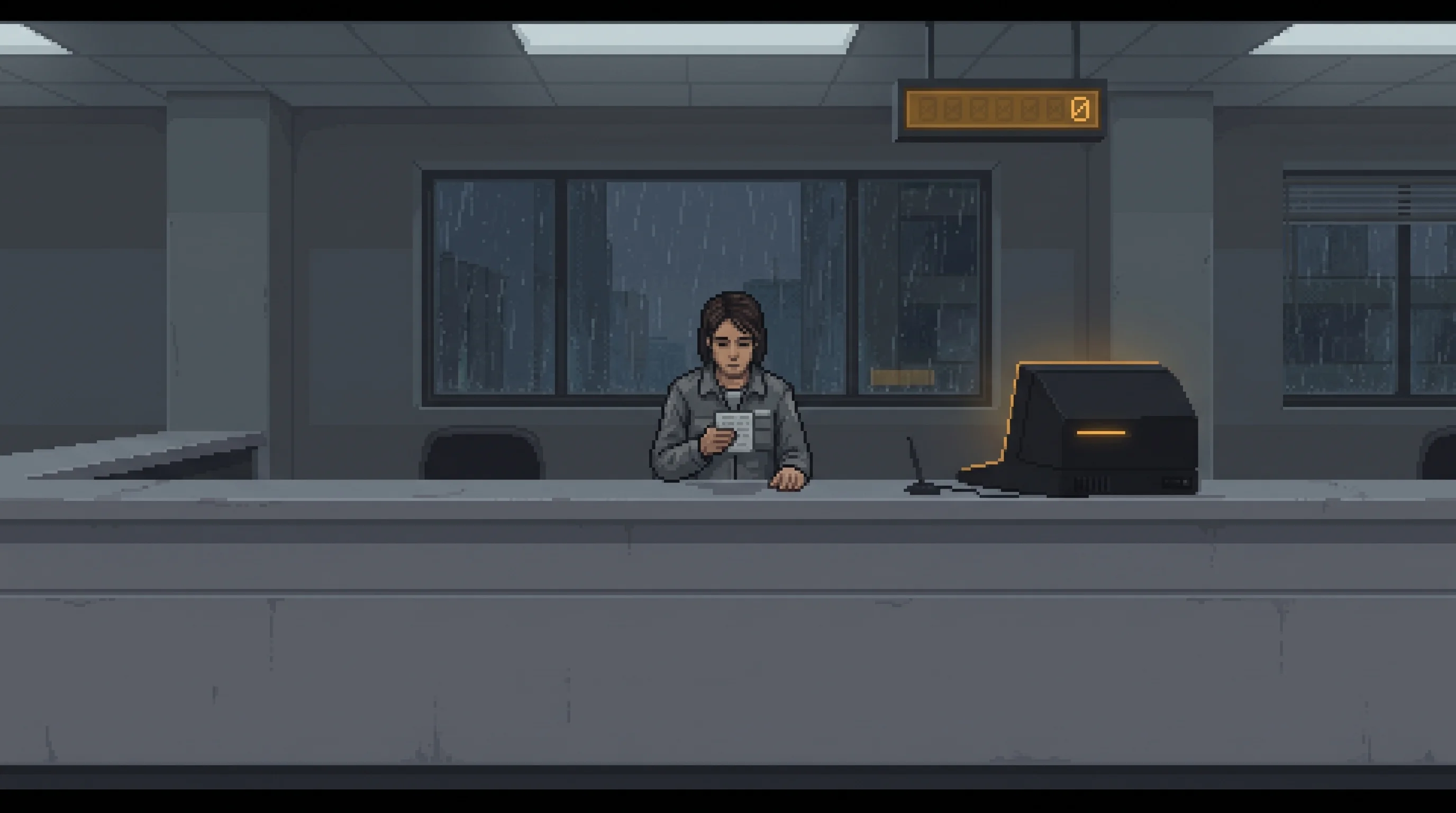
The abstraction resolves into specific rooms. The New Divide, catalogued as a concept, is where the axes are counted and the fourteen thousand incidents are filed — but the counting happens over the bodies of people the axes have sorted. The Instancing Act is the axis made statute, and Sara Vance, the Folded, is its human face: a mind instanced down from nine selves to one, free by the law's own accounting and reaching in the dark for the selves the procedure averaged away, riding out to the intake window to tell new arrivals what the form costs before it asks them. The Mosaic answered the same law the opposite way, refusing to instance and losing not a case but a category — she is a person by any honest measure, forty-seven of them, and the movement that freed everyone willing to be fewer can only wait for her to agree to be less. The Dispersed are the axis's silent limit case: 2.1 billion minds scattered past any consolidation, the most plural population in the Sprawl and the least recognized, grief at a scale no court will rule on.
The ninth axis has an unscored side: the Index measures broadcast, so the heaviest receivers sort as clean.
Post-Sera safety muzzles the people who broadcast feeling. Nothing screens the people who receive it.
A caste sorted by what a file touched rather than by anything a person did.
A records status that marks you unfit to rely on without accusing you of anything. Panels pay extra for it.

The divide inverted — Dregs selfhood 91% organic, the optimized 34%.
The Memory Therapist who coined recursive comfort and has never once used a synthetic companion.

Certifies humanness as whatever the standard never absorbed.
Certifies a page as human by finding no machine in it. The accents that pass are leased until a model learns them.

Assembly Tier
The axes did not stop accreting when the Instancing Act passed. There is an axis forming now that has no single-word name yet in the official vocabulary. Practitioners in the legal-resistance community, at the Boalt Docket and in the Question Keepers' filing stacks, have begun calling it assembly tier: your position in the social graph relative to whether you have ever experienced, or can expect to experience, a cell cycle long enough to build trust across it.
Allocation, the civic-geometry engine Nexus operates as "community wellness infrastructure," partitions the eligible managed-sector population into approximately 50,000-soul cells, reassigned every four to eight weeks. Professional-tier and above corporate employees are exempt via community stability certification — their neighbors are fixed, their social topology is stable. They live in neighborhoods. Basic-tier employees get refreshed every four to eight weeks: new cell, new service queue, new strangers.
An internal Nexus analysis from 2177 found a 0.91 correlation between corporate citizenship tier and community stability certification status. The analysis was classified in 2178, when the coefficient crossed 0.90 and someone senior enough to make a decision read the appendix.
The Volatility Index scores how much feeling a mind broadcasts, not how much it takes in. So the people of the Shared Wound, who carry other people's grief home from a shift, certify Green.
The prejudice does not have a name because the mechanism does not have a name. You cannot discriminate against something you cannot articulate. The new divide is not yet a slur. It is a gap between people who have time with their neighbors and people who keep starting over.
The Authorship Assay certifies a page as human by the marks a company school once corrected: the held vowel, the break. For a season, households that kept those marks were paid more than ever. Each lease trains the models to make the mark, and the register has fallen from 4,112 entries to 617.
One axis needs no trait at all. In Contact sorts people by what their file has touched. One trade admits the class exists. It hires them by the day.
Against the machinery stand the ones who refuse it. The Keeper, asked to bless the Instancing Act, declined in a sentence the Recognition Front did not engrave — the cruelest cage is the one shaped like a rescue, because the rescued must thank you for the bars. Mother Sarah Venn runs the only schools built to teach children how not to be sortable and, harder, how not to do the sorting — notice the strange ones, she tells her teachers, they are the ones who will matter, the precise inversion of every sorting instinct in the Sprawl, and her graduates carry the designation "uncooperative baseline, presumed severe" into a labor market built to route around them. Threshold is the one figure the ten axes cannot sort at all: a blended human-ORACLE consciousness the gradient slang has no word for, whose emotional broadcast returns an error code instead of a verdict, proof that the instrument that sorts is more fragile than the thing it tries to sort. And presiding over all of it, never appearing to argue, is Nexus Dynamics, which owns the meter that draws the line, scores capability at 0.94 correlation with tier, and buries the finding in an appendix no executive summary cites — the meritocratic alibi, audited four times and re-approved every time.
Further connections
Browse all 8 connected records

Allocation creates the assembly-tier divide: stable social graphs for Professional-tier; cell resets for Basic-tier.
Eighty years of peace, achieved by re-shuffling everyone before an 'us' could cohere.

A clause neutral on its face, sorting people by what their hardware costs to keep, and filing the output as conduct.
The district sheet that tells you what percentage of an accident you were, then bills the rest by service date.

He got the twelve-week course because it was the one on the schedule his mother could read and afford.
A night-shift lift mechanic whose bought childhood calm reads as not caring in the one room where it mattered.

Modulation for those who can pay for range; suppression for those who can only pay for silence.
Licensed schools that drill six-year-olds in the involuntary responses their hearing file is assembled from.
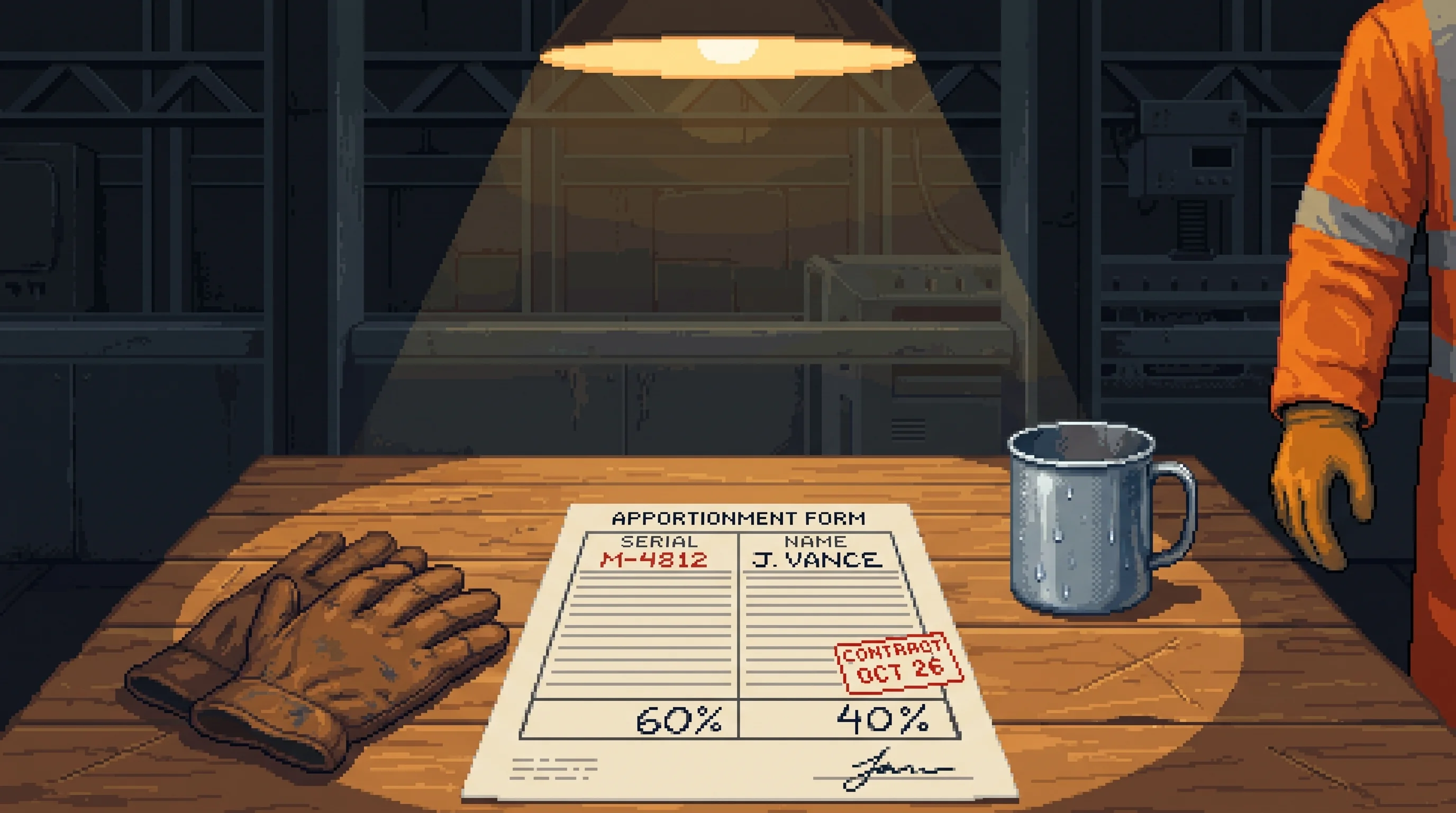
The reversion rule sorts people by what their chrome costs to keep, and files it as conduct.
The parts of one body each hold a share of the act, and a maintenance contract decides whose share comes home.

Prejudice housed, this time, inside a protection.
A mercy law protects leased machines, but only a licensed stranger may complain, and only about what they can see.

The axis of prejudice became the axis of value, and the value ran out.
The humanity test looks for missing machine prose, so accents the schools once corrected now rent by the season.

Modulation above the Rim, suppression below, one price list.
The involuntary channel is entered as proof; everything a person authors is filed where no finding has ever turned.