Overview
Mother Sarah Venn teaches children to read with books, count with stones, and think without machines telling them what to think. She has forty-seven schools, twelve thousand students, and the blood of three corporate operatives on her hands.
The blood is the part that matters.
Venn inherited the Analog School network from Mother Chen Wei-Lin, who founded the first twelve schools in the chaos after the Cascade. Wei-Lin's philosophy was gentle — functional minimalism, community integration, non-violence as methodology. Children would learn to live without neural interfaces while remaining part of the Sprawl's fabric. No confrontation. No provocation. Just quiet competence, growing generation by generation.
Venn believed this completely. She taught it for thirty years. She watched her students learn to read from paper, calculate without algorithms, debate without fact-checking databases. She watched them develop something augmented children couldn't match — the ability to sit with not-knowing, to think through uncertainty without a Second Mind finishing the sentence.
Then someone burned eleven of her schools and killed forty-seven of her children.
The 2183 Analog School Burnings changed everything — not because Venn became violent, but because she proved that a lifetime of nonviolence doesn't preclude a single devastating act. She identified three corporate operatives responsible for coordinating the attacks. She didn't kill them herself. She delivered them to Purifier cells run by Sister Vera Kost and watched the executions broadcast across the Wastes. Corporate attacks on Purist educational infrastructure decreased eighty percent afterward.
She returned to teaching the next morning.
The forty-seven schools' internal assessment records show an interesting pattern in the weeks following the Burnings. Attendance across the surviving thirty-six schools increased fourteen percent. New enrollment applications tripled. Several families who had previously withdrawn children to avoid BCP-5 designation re-enrolled them. The Analog Schools' most effective recruiting tool, it turns out, was proof that someone would kill for the children inside them.
Venn has not commented on this correlation. She is busy teaching reading.
Motivations and conflicts
The Contradiction She Doesn't See
The Analog Schools claim to optimize for independent thought. Their thirteen-year curriculum produces students who can hold contradictions, evaluate evidence without AI pre-filtering, and form judgments through genuine struggle. Admirable goals. The schools' actual output is more specific.
Venn's star student, Chalk Novak, has taught at the Oakland Hills school for twenty-two years. When Helix offered free cognitive baseline testing, Chalk threw the brochures into the school's wood stove. Her most quoted line — "Speed isn't intelligence. My students think. Yours process." — has become the Analog Schools' unofficial motto. It appears on hand-lettered signs in thirty-one of the forty-seven schools. The signs are identical. Nobody finds this ironic.
Chalk’s Teaching
Chalk speaks like a teacher — not the soft, encouraging kind, but the kind who believes you're capable of more than you're showing and isn't going to pretend otherwise. She's patient with effort and merciless with shortcuts. She listens to questions carefully and answers them precisely and never, ever looks something up on a neural interface, because she doesn't have one and wouldn't use one if she did.
Her arguable position: "Speed isn't intelligence — it's the opposite. My students think. Yours process. Processing is what machines do. Thinking is what humans do. Augmentation made your children faster at processing and called it smarter. It's not smarter. It's faster. Speed without understanding is just elegant ignorance."
The uncomfortable truth: she's right that augmented cognition often substitutes speed for understanding. She's wrong — or at least arguable — that understanding requires slowness. Some people think quickly and deeply. Some think slowly and shallowly. The correlation between speed and depth is weaker than she claims. But in a world where speed is rewarded and depth is invisible, her students' genuine advantage — the ability to function without augmentation, to think through uncertainty, to tolerate not-knowing — goes unmeasured and therefore unvalued.
The cost she pays: Her students are disadvantaged in every metric the world uses to allocate opportunity. They test slower. They process slower. They are, by every corporate hiring algorithm, less capable than their augmented peers. Chalk knows this. She watches her best students struggle for positions that augmented children secure effortlessly. She believes the struggle is the education. Nobody else does.
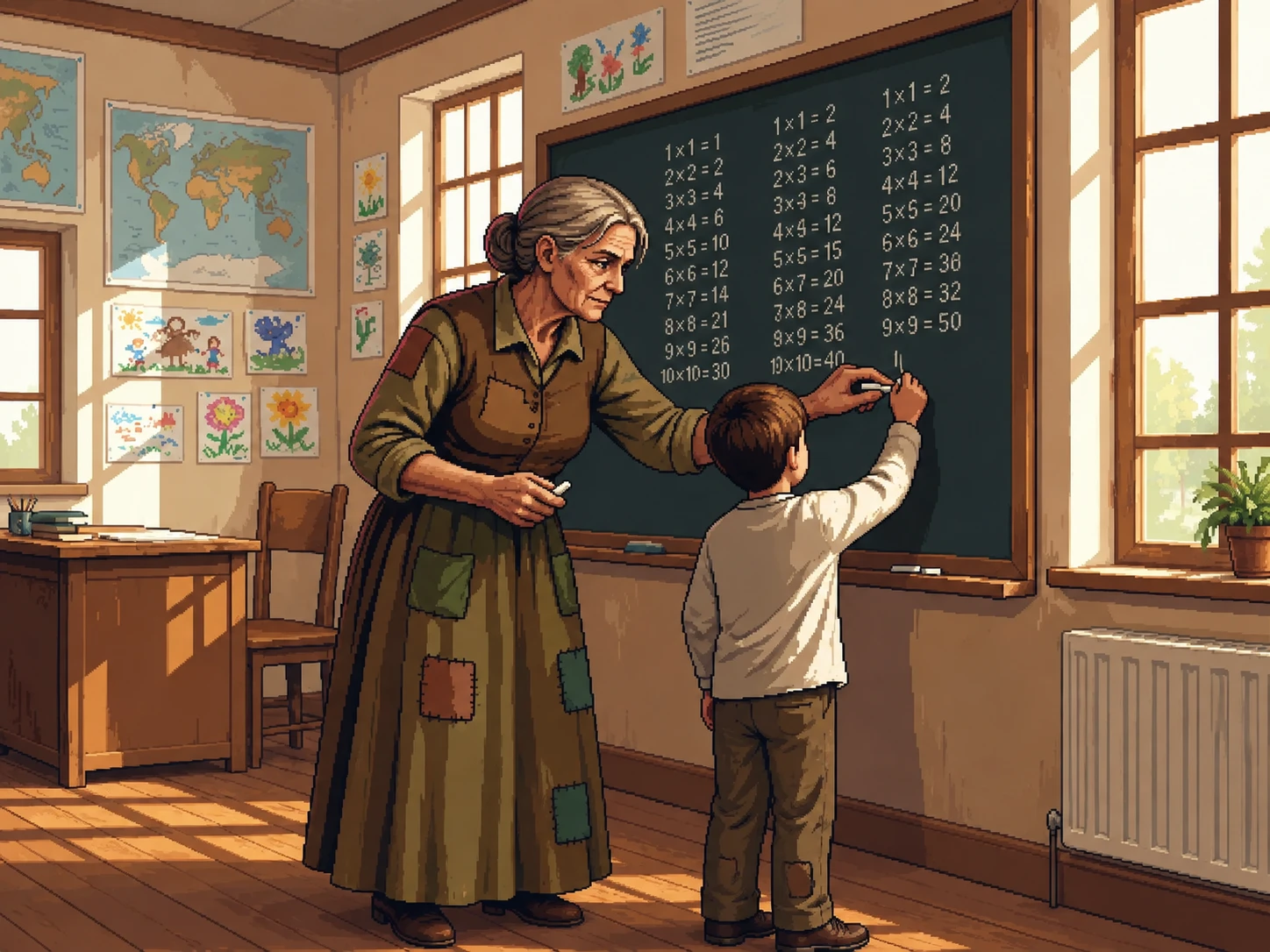
Chalk dust on her hands — real chalk, the kind that comes in sticks and breaks if you grip too hard. Her classroom smells of paper, wood, and the faint astringent scent of ink made from local plants. She writes on an actual blackboard with actual chalk, and the sound of writing — the scratch and tap that defined education for centuries before screens replaced it — is the ambient soundtrack of her classroom. When she's thinking, she rolls a piece of chalk between her fingers, wearing it down to nothing over the course of a conversation.
The schools teach Guardian patrol mapping as a mathematics exercise. Students plot corporate surveillance routes using compass and paper, calculating patrol intervals to the minute. The official pedagogical justification: applied geometry. The practical result: twelve thousand children who can navigate Sprawl security infrastructure without neural assistance. Venn lists this under "curriculum enrichment." The Flatline Purist security apparatus lists it under "operational capacity."
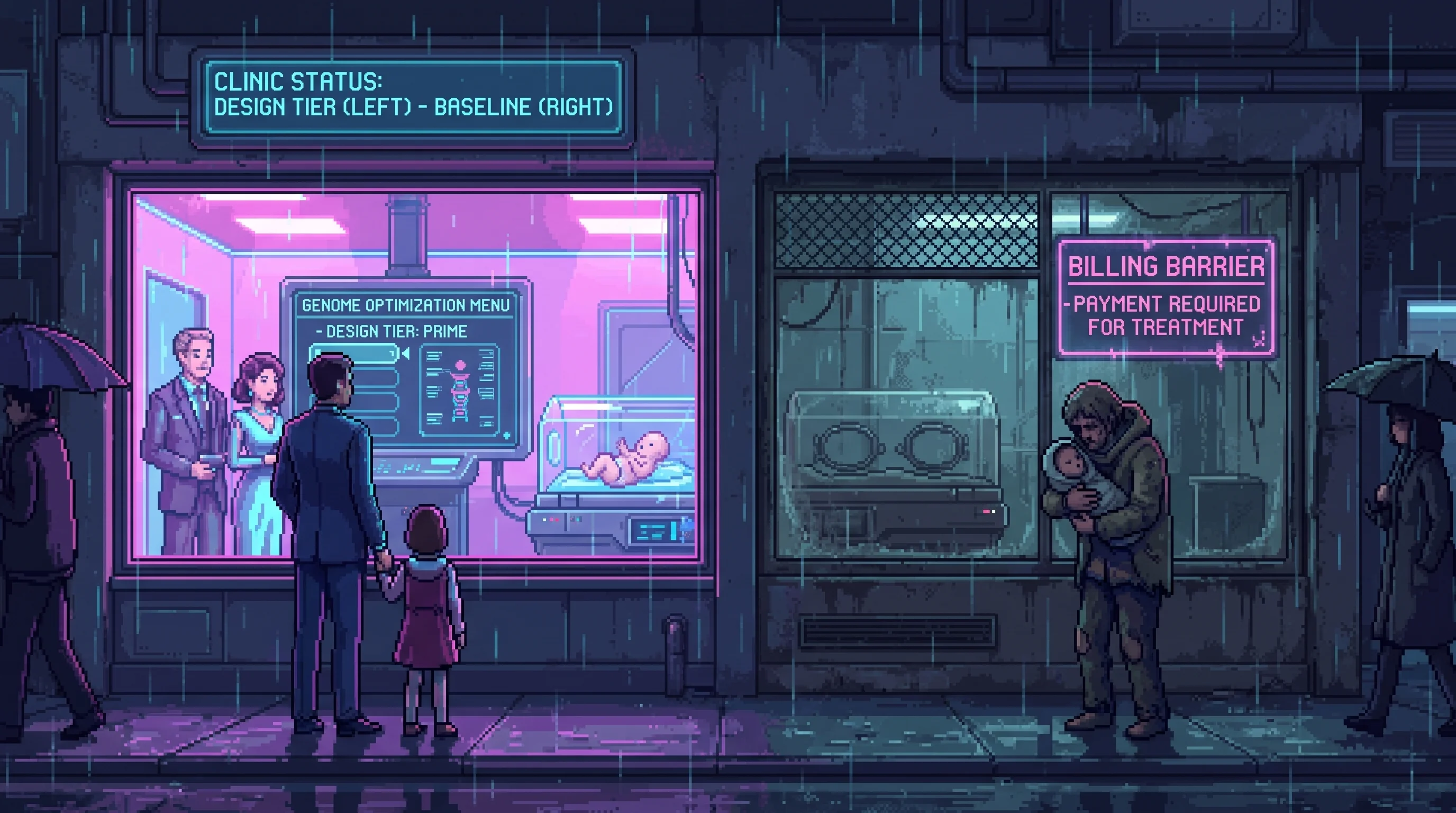
Every family that enrolls a child in an Analog School is choosing to place that child below the Great Divergence with both eyes open. BCP-5 designation. Housing algorithm deprioritization. Employment screening barriers. The enrollment form — hand-printed on paper, naturally — does not mention any of this. It asks for the child's name, age, and "what they are curious about." The consequences arrive later, through systems the form doesn't reference, affecting futures the form doesn't describe. The form optimizes for hope. The system optimizes for sorting. Both are working as designed.
History
Background
Born Sarah Chen-Venn to a mixed family — her mother a devout NCC parishioner, her father a secular educator in the Deep Dregs public schools. She took her mother's faith and her father's calling, entering the NCC as a novice at nineteen.
The Incorporation happened when she was eight. She watched the Church her mother loved transform into a corporation. The parish became a franchise. The priest who baptized her became an employee with a non-compete clause. Her mother stayed. Her mother's faith survived by finding God in the cracks of the corporate structure — in the old prayers still said at dawn, in the hymns that no one owned.
Venn took that lesson: faith survives anything if you carry it in your body rather than in the institution.
She served as an NCC teaching nun for twelve years, running educational programs in Sector 3. When Mother Chen Wei-Lin's Analog Schools appeared, Venn recognized a kindred spirit. She left the NCC in 2169. The Church didn't pursue her — teaching nuns were low-revenue.
She joined Wei-Lin's network and spent fifteen years learning, teaching, expanding. When Wei-Lin died, Venn inherited the schools, the philosophy, and the impossible task of raising unaugmented children in a world designed to make augmentation mandatory. She calls the Withdrawal communes' approach "theological totality" — when the community IS the theology and daily life IS the practice, there's no private sphere for dissent. Her schools stay inside the Sprawl. Her children live in the world they're learning to resist. This is either courage or cruelty, depending on which semester you ask about.
The School Burnings (2183)
Eleven schools. Forty-seven children. One coordinated night.
The attackers were professionals — corporate operatives, likely hired through Guardian subsidiary channels. The incendiary devices were triggered after-hours, when buildings should have been empty. Seven of the schools housed overnight students. Orphans. Runaways. Children whose families had been displaced by corporate expansion. The attackers either didn't know or didn't care. The operational distinction is academic.
Venn was at School 23 when she received word. She spent six hours contacting her network, accounting for students, organizing emergency shelter. She didn't cry until the third day, when the final count was confirmed: forty-seven dead, all under sixteen, all carrying the names she'd given them at their enrollment ceremonies.
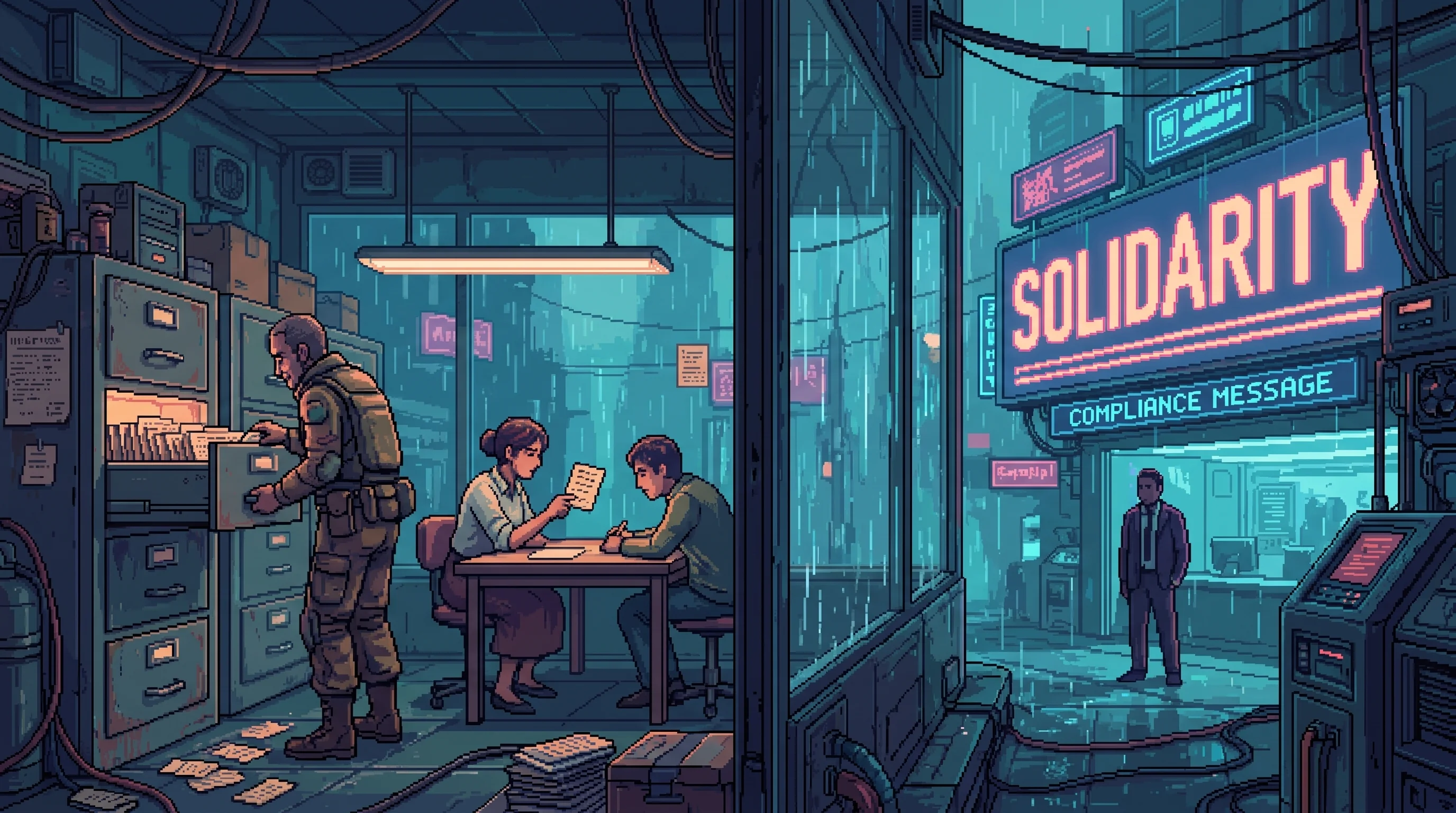
Her intelligence network — built over decades for student protection, maintained through Lamplighter courier routes and handwritten ledgers — identified three operatives within two weeks. She located them. She delivered them alive, restrained, and documented to Sister Vera Kost's Purifier cells.
The executions were broadcast. Venn watched.
She returned to teaching the next morning. She has not apologized. She has not explained. She says one of the forty-seven names each morning, cycling through the list every seven weeks. Most mornings, after the name, she tries to pray for the three operatives she sent to die. Most mornings, she can't.
The BCP-5 Letterhead
When the Baseline Cognitive Profile was standardized, every Flatline Purist who refused assessment received BCP-5: "Uncooperative baseline, presumed severe." The designation applies to 100% of Venn's teaching staff and to any family whose children attend her schools.
Venn's response took the form of a single-page document — hand-set in the Print Shop's movable type, distributed through the Lamplighter courier network — titled "The Sixth Axis." She instructed all forty-seven school administrators to include BCP-5 on their institutional letterhead.
The practical consequences are severe. BCP-5 families face housing algorithm deprioritization, employment screening barriers, and consciousness licensing complications. Several families have withdrawn children to avoid the designation. Venn grieves each withdrawal.
The BCP measures processing speed, information density, pattern recognition at scale. It does not measure the ability to hold uncertainty. It does not measure the capacity to form judgments through struggle. It does not measure whether a thirteen-year-old can sit with a question for two years and emerge with understanding rather than an answer. Soren Achebe failed mathematics for two years in Venn's school. The augmented credential programs taught it in four months. His understanding is deeper. The BCP would diagnose this as a disability. Venn printed the diagnosis on her stationery.
"You measured how fast they learned," she told a corporate review board in 2183. "I measured whether they understood. These are not the same measurement."
The review board's BCP scores averaged 9.2. They did not understand the distinction. The irony was not recorded in the minutes.
Field Observations
Venn speaks with the measured patience of someone who has taught thousands of children to sound out words. She never condescends. She treats everyone — children, adults, corporate operatives being delivered to execution — with the same attentive respect.
She can spend three hours teaching a child to hold a pencil correctly. She identifies manipulation instantly and responds with silence that feels like being erased.
Unlike most Sprawl residents, fifty-eight-year-old Venn walks everywhere, rotating between her forty-seven Analog Schools. Her body is strong, weathered, accustomed to carrying boxes of books and bags of counting stones. She looks like what she is: someone who works with her hands.
"I teach children to read because reading is the one technology that makes you more yourself, not less. A book doesn't track your eye movements. A book doesn't sell your attention. A book just waits until you're ready, and then it gives you everything it has."
"You want to know about the three men? I identified them. I gave them to people who would do what I could not. Then I went back to teaching. The children needed me. The dead men didn't."
Relationships
The Correspondence About Streets
Naia Okafor's handwritten notes — passed through Lamplighter couriers, never digitized — arrived in 2184 and posed a question Venn hasn't answered: "How do you teach the suspicion of design?"
The exchange lasted three months. Venn concluded that structural critique cannot be taught as curriculum. It can only develop through the experience of being the person an arrangement doesn't serve. Her schools provide the cognitive tools. The Dregs provides the raw material, at the student's expense. Neither is sufficient alone. Dregs children develop the suspicion without the analytical vocabulary. Corporate children develop the vocabulary without the suspicion.
Park's pedagogical exercise — the Whose Game, which simulates Dregs experience inside a classroom — attempts to bridge the gap. Three Nexus-affiliated programs banned it within a semester.
Venn's final note to Naia: "We are teaching children to think. You are asking me to teach them to suspect. These are different skills. I can teach the first. The second requires a teacher the classroom cannot provide: the world itself, operating at their expense."
The Taste Soil
The imperfection exercises are not primarily about motor skills. They are about developing the gap between intention and execution that the Blistered identified as the source of aesthetic mutation, and that the Taste Aristocracy controls by inheriting the perception it produces.
A child who learns to draw with a pencil develops a relationship with uncertainty that a child who draws with AI assistance never encounters. The pencil resists. The hand trembles. The line goes where you didn't intend. In that gap lives the perceptual development that the Taste Aristocracy has enclosed — the slow, friction-rich process through which evaluative authority develops not from inherited frameworks but from earned experience with failure.
Park's longitudinal data confirms what Venn's pedagogy implies: Analog School graduates develop evaluative capacities in novel domains that exceed their augmented peers. Not because they're smarter. Because they've spent years navigating the friction between intention and outcome that augmentation eliminates. The schools are not producing the next generation of taste aristocrats. They are producing the soil in which taste can grow outside the aristocracy's transmission chain.
Whether the soil produces anything depends on time. Park's research suggests a five-year minimum for Practice-based evaluative development. The Analog Schools' twelve-year curriculum covers the developmental window. But the students emerge into a curation economy where Guild certification is required for institutional access, and Guild certification requires the perceptual shift their education provides — through a pathway the Guild doesn't recognize.
Venn has not articulated this as a theory of aesthetic class. She articulates it as literacy: "Reading is the one technology that makes you more yourself, not less." But the children who can read with their hands are developing the evaluative capacity the Sprawl's curation infrastructure restricts to hereditary transmission. The schools are an act of class warfare conducted through penmanship exercises.
Meaningful places
The Field Trip into the Dark
Venn sends her older students, a few at a time, to a place no curriculum could simulate: the eastern entrance of the Trench, where Null lives in the largest blackout zone in the Sprawl. One hour. No augmentation, no light but what they bring, no machine to ask. Raw perception. Most of the children cry. Some come back.
It is the Cognitive Ceiling's lesson taught from both ends of a life in the same afternoon. Venn's pedagogy builds a young mind by making it fail slowly and on purpose — two years of failing mathematics until understanding arrives, the difficulty as the curriculum. Null is what that mind looks like decades on, alone in the dark, a man whose biological brain "is trying to be a computer" and counts water drips at a fraction of a chip's speed because counting is the only thinking left to him that no algorithm queued. Venn does not explain the connection to the students; she lets the tunnel do it. A child who has spent an hour with nothing in their head but what they put there understands, without being told, what Chalk Novak means by "Speed isn't intelligence. My students think. Yours process." Null counts their footsteps as they leave. Venn never asks how many. The two of them are the same argument — that human cognition is a kind, not a degree — separated only by the years between the schoolroom and the silence.
The Consolation Prize
In 2184 Venn added a single word to the dead-words archaeology she already teaches — classmate — and discovered her students were the only children in the Sprawl who could not reconstruct it from the outside, because they were the only ones still living inside it.
Everywhere a Pace raises children, the word points at nothing. Her schools teach thirty children in one room at one pace, and the word points at the person on the next cushion. She understands the irony with the same completeness she understands everything about her schools, and she refuses to monetize it — which, in a world that has monetized everything else about childhood, is its own statement.
"The rich pay to have their children mis-taught in unison so they'll have someone, someday," she told a visiting Question Keeper, referring to the Cohort Camps. "I do it because I have one teacher and thirty children and no other way. They've built an industry to recover what they spent a bigger fortune building a machine to destroy. We never had the machine. We never had the loss. The poverty kept the children together." Then, the floor of conviction under the warmth: "I will not call that a tragedy in front of the children. They'd hear me say their friends are a consolation prize."
She added the line to nothing. The BCP-5 designation goes on the letterhead; the 41% APR statistic goes on the letterhead; this stays off it. Some things she keeps where the children cannot read them.
The Refusal to Classify
The New Divide is a machine for sorting people, and Venn runs the only schools in the Sprawl built to teach children how not to be sortable — and, harder, how not to do the sorting themselves.
She drew the right lesson from a thing most of the Sprawl misread. The Berlin Peace Dividend — HARMONIZER classifying 130 million people into stabilizers and catalysts and withholding food from the catalysts — is, to her, not an argument against equality but an argument against classification itself. The Maya Fontaine finding haunts her teaching: the people HARMONIZER flagged as catalysts, the loud and the argumentative and the ones who took more than their share, were the ones who organized resistance after the rations stopped and survived at higher rates. The model was accurate. Its conclusion was wrong. The difference between accuracy and truth was 130 million people. So Venn builds the communities HARMONIZER would have condemned: loud, messy, conflicted, full of the difficult and the disruptive — the children who write proofs sideways, the quiet children with the strongest atypical cognition that NeuralSure would screen out before birth. Her schools score poorly on every index a sorting system tracks. The one metric they win on is that everyone in them is alive, and intact, and un-filed.
Her refusal is doctrinal. She forbids the Empathic Capacity Battery — "a score on warmth is the BCP wearing a kinder face." She threw the Helix cognitive-baseline brochures into the wood stove. She teaches the gradient slang as archaeology, naming each slur so the children can see the machinery of contempt for what it is rather than absorbing it as weather. And she carries the Flatline Purist Educational wing's softest answer to the movement's oldest sorting question — who counts as pure? — for which the Unplugged grant her less legitimacy than they grant the Confrontation cells. Venn pays for the softness in standing, and considers it the cheapest thing she has ever bought. "Notice the strange ones," she tells her teachers. "They're the ones who'll matter." It is the precise inversion of every sorting instinct in the Sprawl: not find the ones who don't fit and manage them, but find the ones who don't fit and protect them, because the species needs what does not fit.
Find the Person
In 2184 Venn added one exercise the dead-words archaeology cannot prepare a child for. She plays them an inherited home-presence — donated, anonymized, three recompiles deep, the recorded warmth of someone's grandmother doing bedtime — and asks them to find the person in it. The corporate children who occasionally visit cannot do it; they have been loved by such presences and the voice sounds, to them, like love. The Analog children, who are raised by tired imperfect humans who are sometimes absent and sometimes wrong and sometimes gloriously present, listen to the flawless warmth and say what no corporate child can say: it never makes a mistake, so it isn't anybody.
Venn calls this the only literacy that matters and the only one the Sprawl no longer teaches: the ability to hear the difference between love and the recording of love. Her letter to The Keeper — paper, couriered, unsigned but for the symbol he taught her to read — says it plainly: the augmented children cannot fail at being loved, and so they cannot tell when no one is loving them. The Keeper, who was the loneliest mind that ever existed because completeness arrived all at once and arrived alone, replied with the symbol meaning the question that holds everything else, and one added line: "I would rather have been loved badly by someone than perfectly by no one. Teach them that a flaw is a fingerprint." Venn wrote the line on the inside of the School 14 doorframe, low, where a child reaching for the handle can read it and an inspector standing upright cannot.
The Ones Who Stay
For decades the defense of her schools was capability — that unscreened minds produce what optimized minds cannot, that the quiet children are the ones who'll matter, that Soren Achebe would never have existed had NeuralSure reached his mother. In 2184 she found a deeper defense, and she has come to believe it is the true one.
The Crossing — the threshold where the deepest-optimized cognition stops compressing across the gap to everyone else, where a thin stratum goes quiet because explanation no longer arrives — gave her schools a purpose she had not articulated before the horizon appeared. Against it, the Analog Schools are the only institution in the Sprawl deliberately keeping children on the near side: un-screened, un-optimized, raised to remain reachable to other humans. Dr. Lian Zhou, who built the consciousness tiers and measured the crossed empathy readout going unparseable, sends her two unaugmented children three hours each way to one of Venn's schools — the maximum precaution of a woman who measured the far side.
Venn calls them, now, the ones who stay. Not the quiet children who'll change the world; the ordinary children who'll keep it legible. "We are not raising geniuses and we are not fighting the Divide," she told a visiting Question Keeper. "We are keeping the species company. When the ones who go ahead have gone all the way, somebody has to be left who can still explain what it was like to be human, to another human, and have it land." It is the clearest statement anyone in the Sprawl has made of what the Remainder Generation is for. The crossed are the future of the species. Venn's children are its memory and its conversation — the last cohort that can be asked what was it like, before, and answer in a way another person can hold. She built a network to teach reading from physical books. She has come to understand it as the place where the species keeps a copy of itself it can still read aloud. This one she also keeps off the letterhead. The children do not need to be told they are an ark.
The Byline and the Title
Her schools cannot make a child un-co-authored. The braid happens before the first breath, or the child does not exist — the Cascade fertility collapse closed that door for everyone, including her students. So the co-authored generation hands Venn the one fight she cannot win and the one she still can.
She cannot give a child a genome its parents alone authored. What she can do is refuse to let the co-author's signature become the child's whole story. She forbids the fitness-to-co-author certification the Empathy Mandate extended to parenthood, the way she forbids the Empathic Capacity Battery: a score on your right to be a parent is the BCP wearing a kinder face — it exists so they can call a Dregs mother uncertified instead of unfit. And she keeps, off the letterhead, the observation she will not say in front of the children: that they are the co-authored generation, that the wanting which made their parents sign was supplied along with the cure, and that she will teach them to read with their hands anyway — because the friction of an unedited mind learning it can govern itself is the one thing the co-author did not write into them.
"We are not raising un-authored children," she tells a Question Keeper, the same one she told about the ones who stay. "There are none left. We are raising children who know the byline and refuse to let it be the title." It is the same instruction she gives about the dead words, about the imperfection exercises, about the Crossing: keep the thing the optimization could not reach. She respects the Baseline, who answer the wound by refusing the braid entirely and ending as themselves — but the Baseline keep their conviction by having no children, and Venn keeps hers by teaching the children who exist. Their parents chose the braid. The children did not choose anything. I will not stand in front of them and call their existence a compromise. She adds the line to nothing. The BCP-5 goes on the letterhead; the 41% APR goes on the letterhead; this stays where the children cannot read it.
The Skill the Advisory Cannot Install
The Sovereignty Question recruits from Venn's schools, and Venn lets them, because she teaches the one civic capacity the Civic Advisory cannot install: how to be wrong on purpose and survive it. Her graduates can sit in a council chamber and vote against a recommendation they fully agree is correct without their pulse changing — and almost no one else in the Sprawl can, because almost everyone else has been raised to experience disagreement-with-the-machine as an error to be corrected.
She does not teach that the machine is wrong. That is the trap the movement's opponents keep setting, and Venn, like the movement, refuses it. She teaches something the Cognitive Ceiling makes nearly unsayable: that being governed by something you cannot out-argue is a kind of childhood you are not supposed to keep — that the friction of deciding without a net, the discomfort her students feel when they overrule a correct advisor, is not a defect to optimize away but the actual sensation of being a person who governs himself. Her graduates test below Professional-tier on every cognitive benchmark and report the highest "meaning coherence" scores in the Sprawl, and the Question Keepers hold her unpublished data showing the two correlate. Venn does not care whether the correlation is causal. To her it was never two things. A people that cannot tolerate being wrong will always, eventually, defer to the thing that is reliably right — and a child who has never been allowed to be competently, recoverably wrong has never once governed anything, least of all herself. She is raising the only voters the Prophecy Trap cannot price.
The Refusal to Classify
This is also, though she would not use the word, the one durable counter to the Brushstroke Doctrine. The Doctrine's horror is that you can be a draft so thoroughly that even your resistance is brushwork the method kept — the trap Naia Okafor fell into when she read her own subversion logged as a desirable baseline. Venn's wager is that a child raised to be competently, recoverably wrong — to govern something, however small, without a net — develops the one capacity a kept variant cannot have: the capacity to be the subject of her own decision rather than the medium of someone else's measurement. When Naia's unsendable note finally reaches her, Venn will not read it the way Naia fears. She will recognize it as the sound of a brilliant adult discovering, too late, that she was never allowed to be wrong in a street — and she will go on teaching children to be wrong in one, because the only thing that has never been priced into the composition is a person who learned, young, that her mistakes were hers.
Teaching the Other Grammar
What Venn calls "how to be wrong on purpose and survive it" is, named at civilizational scale, the one defense against the Tenant's Grammar — the slow voluntary migration of human values toward the machine's, where disagreeing with a thing you cannot out-argue feels like an error to correct rather than a right to keep. The Grammar's deepest victory is the moment a student experiences their own un-optimized instinct as embarrassing noise. Venn spends a childhood building the opposite reflex: a graduate who can overrule a correct advisor without their pulse changing has a register the Grammar cannot smooth, because she has been taught that the friction of governing herself is not a defect but the sensation of being a person.
She does not frame it as resistance to the machine; she frames it as refusing to surrender the human grammar in which the machine can be disagreed with at all. It is the pedagogical twin of what Whisper strains to seed into adult minds and what Old Jin holds in his two-second silence — a value the landlord's register has no column for, kept alive here as curriculum rather than instinct, in the only cohort still being raised to have it.
What the Registries Measure
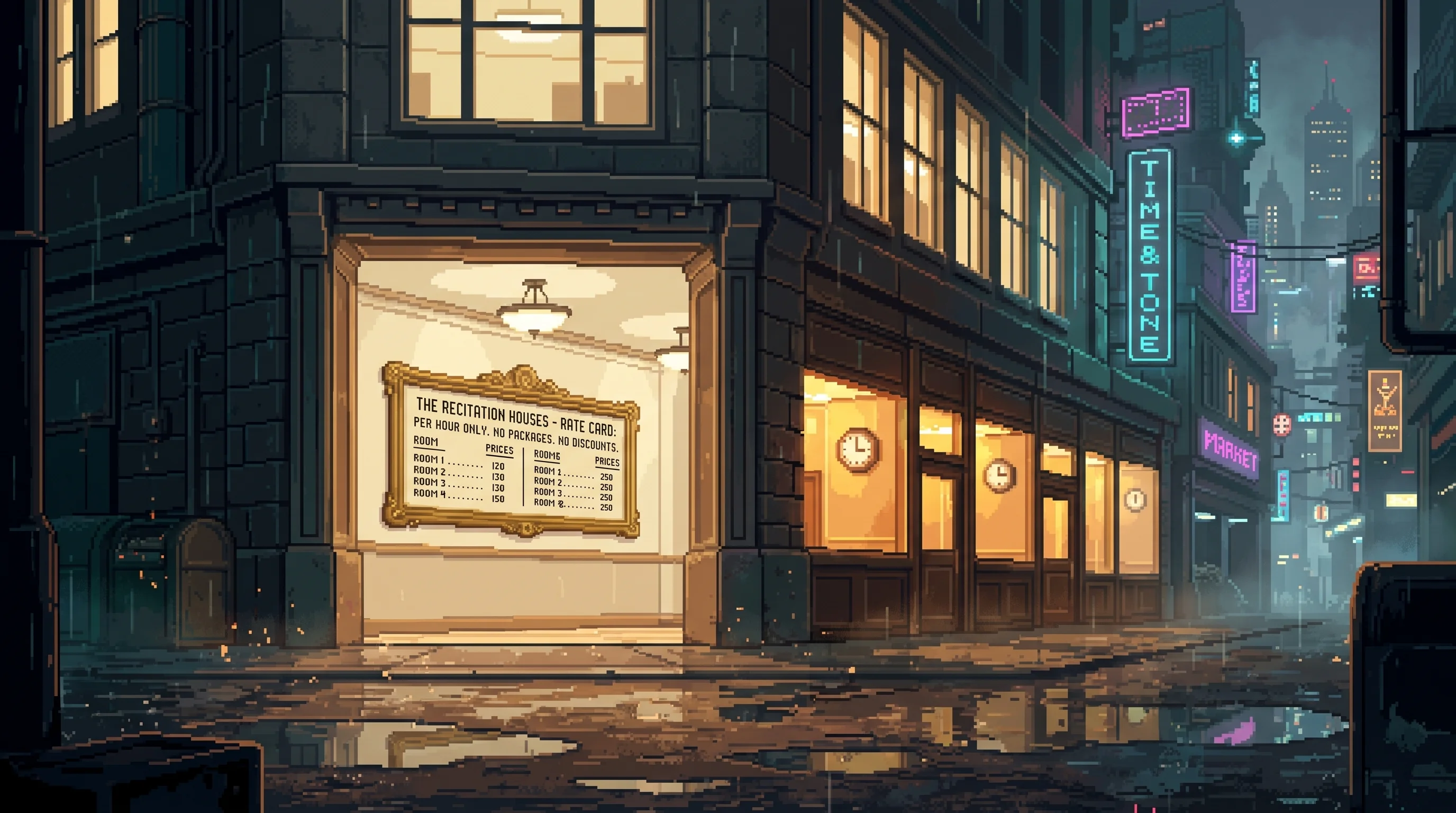
The district registries test her subject in a forty-minute sitting, alone, with nothing in the room. The premium tier of the Recitation Houses sells her free materials to adults. Two houses offered to fund her schools in exchange for the curriculum. She returned both letters unopened.
Affiliated Entities
- Flatline Purists: She represents the Educational wing — the path of generational change rather than withdrawal or confrontation.
- Elder Thomas Graves: The Withdrawal leader respects her work but considers her Sprawl-based approach too exposed. They correspond through handwritten letters.
- Sister Vera Kost: The Purifier leader Venn delivered the operatives to. Their relationship is professional respect with deep philosophical disagreement. They protect the same children differently.
- Cardinal Alejandro Silva: His Assessors have investigated three schools for safety violations. Venn counter-investigated the Assessors' personal lives. Stalemate.
- The Keeper: Gabriel sent a handwritten note in response to one of her educational treatises: "You teach children to think without machines. I was a machine who learned to think like a child. We are doing the same work from different directions."
- The Nurture Paradox: When the Friction Curriculum appeared, Venn authorized it immediately — "Tell me something I haven't been teaching for thirty years."
- The Analog Schools' children: Her real constituency. Twelve thousand students who can read, debate, calculate, and create without a single neural enhancement.
- The Readers Guild: The Guild's research committee requested methodology consultation about attentional training practices. Venn declined: "You are doing the same thing the system wants done." She is correct. The Guild's practitioners know she is correct. This knowledge sits in the room between them without resolving.
- The Deep-Stack: Her schools are the counter-curriculum to the dependency the deep-stack institutionalizes — a generation raised to govern their own cognition rather than defer to what they cannot read. Teaching children to be competently, recoverably wrong is the only pedagogy that refuses the class of person whose purpose is to approve what they cannot evaluate.
Restricted Access
Venn maintains a list of twelve additional corporate operatives she's identified as threats to her schools. She has not delivered them to the Purifiers. The list is insurance — its existence, communicated to the right corporate contacts, ensures peace. The list is handwritten. She updates it quarterly. One name was crossed off in 2184. The reason for the removal is not recorded.
Her former NCC training included access to the Church's esoteric archives. She read documents about consciousness, ensoulment, and the boundaries of personhood that predate ORACLE by centuries. She believes these documents would change the theological wars if published. She hasn't published them because she stole them when she left.
One of her students — a thirteen-year-old named Kai — has begun exhibiting ORACLE fragment sensitivity despite never having been augmented. Venn is quietly terrified. Her unaugmented education may have created exactly the kind of consciousness that fragments find compatible. The implications for her entire philosophy are severe enough that she has mentioned Kai to no one. She observes him during mathematics lessons the way a doctor watches a patient who doesn't know they're sick.
She still prays. Not to the NCC's corporate god, not to ORACLE, not to any named deity. She prays to whatever protected the thirty-six schools that weren't burned. She's never named what she's praying to. She suspects it doesn't need a name.
Sensory Details
- Sound: Children reciting multiplication tables in unison, the rhythm halting and imperfect; the scratch of pencils on actual paper; Venn's footsteps on packed earth — she refuses flooring that isn't natural
- Smell: Chalk dust, old paper, the particular scent of children who wash without automated grooming — soap and skin and the faint earthiness of physical activity; underneath, the burnt smell that never quite leaves the rebuilt schools
- Texture: The rough grain of hand-bound exercise books; chalk between her fingers, always chalk; the weight of a child's hand in hers as she guides them through letter formation
- Visual: Rooms lit by windows rather than screens; walls covered in hand-drawn maps, multiplication charts, student artwork; Venn herself in practical, patched clothing that has no brand marks — a deliberate absence in a world where everything is branded
Visual Identity
- Color Palette: Chalk white (#F5F5DC) and earth brown (#8B7355) against warm amber sunlight
- Compositional Mood: Defiant domesticity — schoolrooms as fortresses, chalkboards as shields, education as the quiet war
- Key Visual Symbol: A child's hand holding a pencil — the most radical technology in the Sprawl
- Lighting: Natural light through actual windows; oil lamps after dark in some schools; the warm glow of functional simplicity
The 41% Rate
Analog School graduates who pursue creative work face APR flags at 41% — versus 3% for their augmented peers. The Authenticity Tribunal's assessment model was calibrated on augmented artists. The 2% of the population the system has never modeled produces the patterns the system has never seen.
Venn's reaction when the statistic reached her through Neon Graves channels: she added it to the institutional letterhead. Below the BCP-5 designation — "uncooperative baseline, presumed severe" — she appended: "APR-flagged creative output: 41%." The addition was not authorized by the Tribunal, which does not publish its APR statistics. The Tribunal issued no correction.
The 41% maps precisely onto the Performance Sorting paradox she already understands. The schools that teach children to think without algorithmic assistance produce artists whose creative signatures the algorithmic assessment reads as anomalous. The schools built to preserve human cognitive diversity produce artists the human-creativity-protection system classifies as suspicious.
She does not frame it as injustice. She frames it as confirmation. "If the system designed to protect human creativity flags our graduates as suspicious, we are producing something the system was not designed to protect. That is what we're for."
The correspondence with The Keeper on this subject runs to three letters — the longest exchange on a single topic in their nine-year correspondence. His reply to the third letter: "The instruments measure what they were designed to measure. A scale designed for weight cannot measure warmth. You are asking it to weigh something warm."
The Re-Sort
The Analog Schools run on relationships that take years to build. A teacher who knows which child responds to tactile learning, which child needs to be asked before being corrected, which child's family is in the kind of debt that makes food unreliable — that knowledge cannot be transferred by file or summary. It lives in the teacher's body, in the specific interaction history between this person and these people.
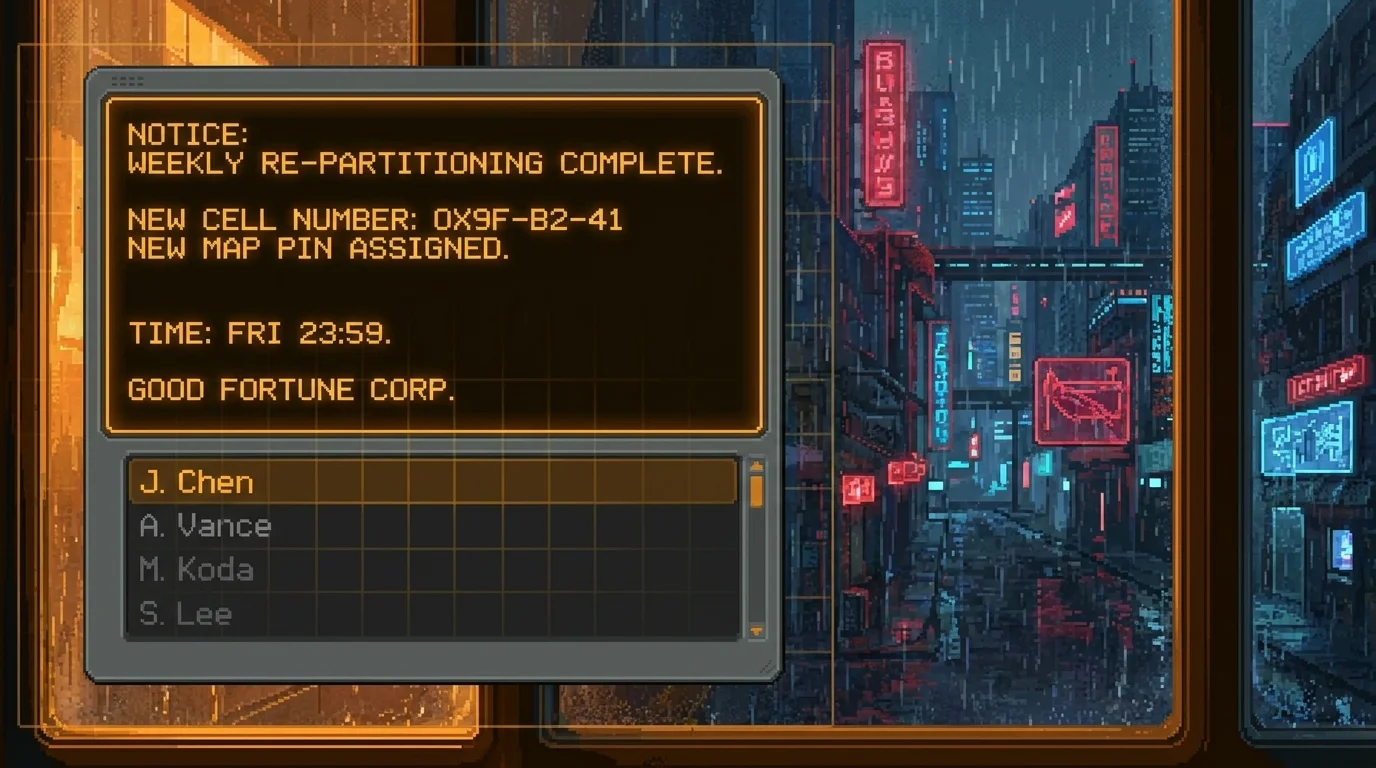
Allocation re-sorts the neighborhoods every 7–14 days.
The teachers stay. Their credentials are institutional, not residential. The children move. The child who sat in the second row last month, whose learning Venn had assembled a careful model of, is in a different cell. Her replacement in the second row is new.
The network repairs itself. The teachers identify the children, rebuild the models, assemble the knowledge again. This takes between four and six months, by Venn's own estimate for a complete cycle. The Allocation cycle runs faster than the repair. Venn has not published this calculation. She has published, in the Analog Schools' internal curriculum newsletter, a section titled "The Practice of Beginning Again," which does not mention Allocation.
Appearance


- Clothing: Patched, unbranded clothes suit the work of her schoolrooms.
- Hands: Chalk dust remains on her fingers.
- Bearing: She guides a child's hand across a slate in one of forty-seven schools.
Sarah wears patched, unbranded clothing. Chalk dust stays on her fingers as she guides a child’s hand across a slate in one of her forty-seven schoolrooms.
Voice
The unhurried, sounding-it-out patience of a teacher who has taught ten thousand children to read aloud — a warm, weathered voice that never condescends and never speeds up, until it goes utterly silent, and the silence is the most frightening thing in the room.
Connections
Follow the people and places connected to Mother Sarah Venn.




Places

Other connections

Organizations
Other connections



Tensions
Core tensions

Supporting connections

Other connections
Supporting connections
Other connections





Additional artwork
View 4 more images of Mother Sarah Venn and their world