SUBJECT FILE
Professor Ines Park

Professor Ines Park

The Last Teacher

Former Nexus cognitive research scientist, 11 years

LocationMobile โ€” teaches across 6 Analog Schools in the northern SprawlAge53
Professor Ines Park

Overview

Ines Park teaches children to be comfortable being wrong, and this makes her one of the most dangerous people in the Sprawl.

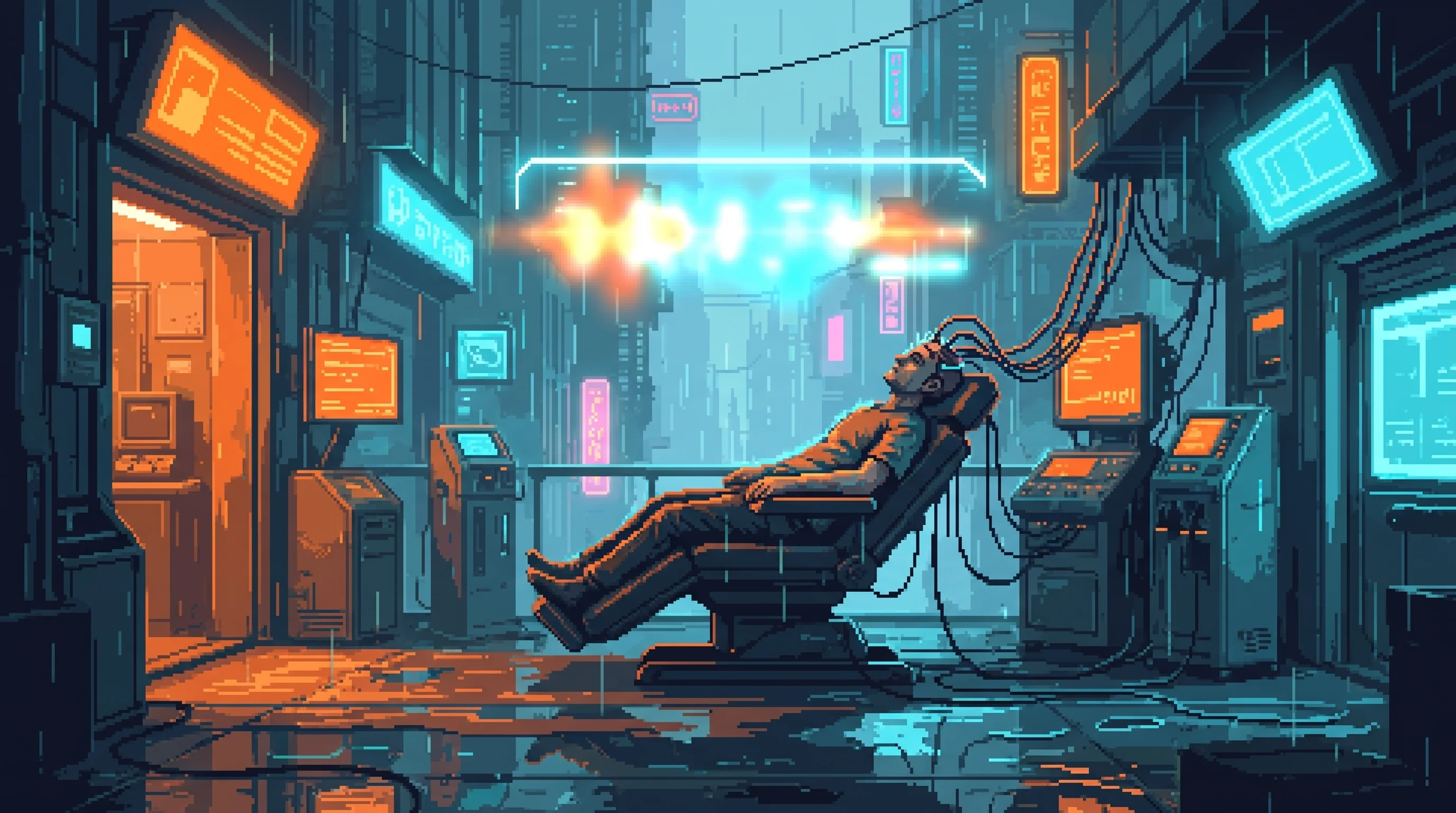
She is fifty-three years old, built like someone who carries stacks of physical books as a daily commute and has the shoulders to prove it. Korean-Argentinian. Walks between six in the northern Sprawl because the transit system requires a neural handshake she refuses to update. Her Nexus-era cognitive augmentation is still installed โ€” deprecated firmware, three generations behind, running on legacy architecture that stopped supporting in 2179. She has not reverted it. She has not upgraded it. It sits in her skull like a disconnected engine in a car she drives by pushing.

She was a cognitive research scientist for eleven years. The work was fascinating. The purpose was not what she thought. The research wasn't designed to enhance human cognition. It was designed to benchmark human cognition against AI โ€” to produce the data that justified licensing tiers by demonstrating, with peer-reviewed rigor, that unaugmented minds were measurably inferior across every axis chose to measure. Park did not leave because the science was wrong. The science was excellent. She left because the science was a tool and she'd been building the handle.

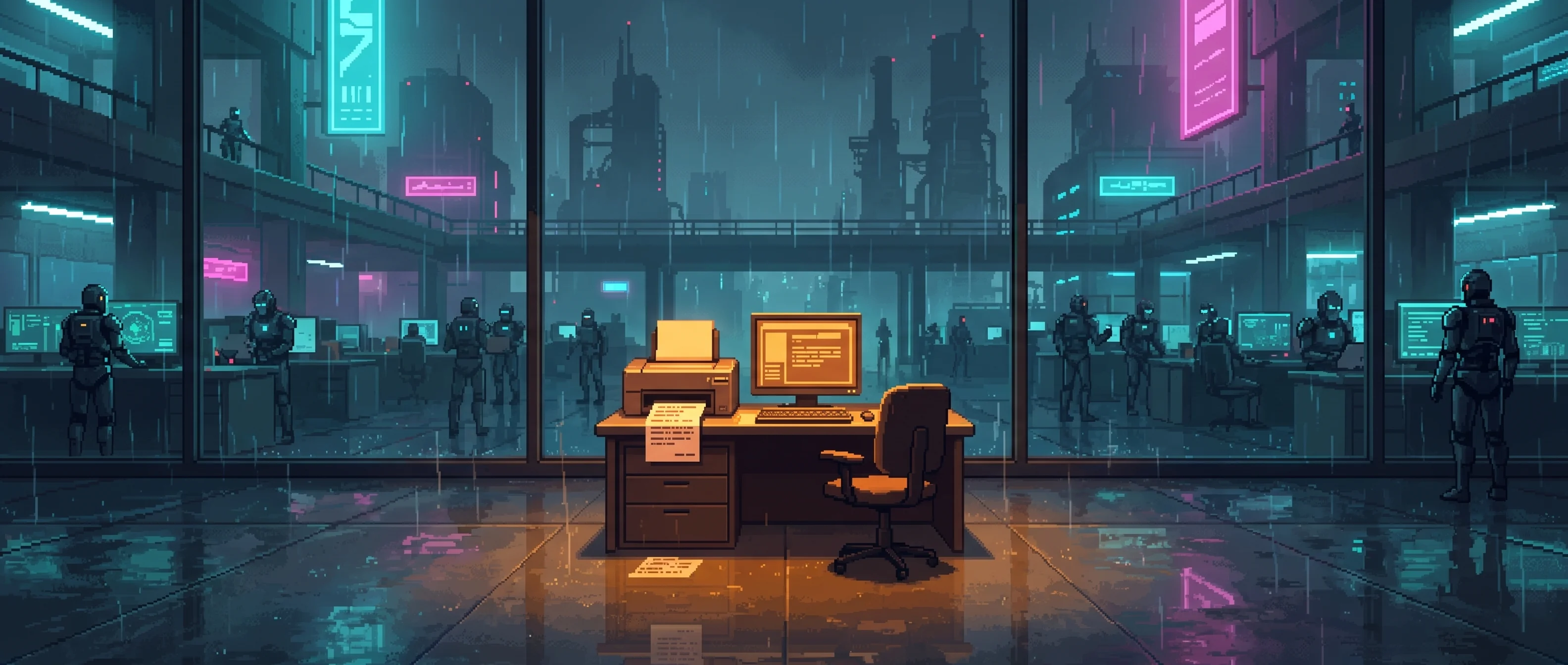
She walked into 's nearest Analog School on a Tuesday, asked if they needed a science teacher, and never went back to . Her exit interview was never completed. Her pension was forfeited. Her security clearance was revoked eleven minutes after she crossed the School's threshold, which means someone at was watching the threshold.

โ€” her most lasting contribution โ€” came from a combination of pre- meditation research she recovered from the and a specific observation about Analog School students: children who spent more time wrong before arriving at right retained the knowledge more deeply and applied it more flexibly than children who were told the answer. The observation itself is not revolutionary. The revolutionary part is that 's own cognitive research confirmed it in 2176, classified the finding, and built a licensing tier around the opposite conclusion.

Case File โ€” Additional Record
HeritageKorean-Argentinian
OccupationAnalog School science teacher; developer of the Patience Practice
Former OccupationNexus cognitive research scientist (11 years)
Augmentation LevelRetained Nexus-era cognitive augmentation (deprecated but not reverted)
Notable ForDeveloped the Patience Practice and the Unassisted Hour pedagogy

Field Observations

"The augmented learn like cameras," she told a gathering of Slow Thought practitioners. "They capture everything, perfectly, instantly. My students learn like sculptors. They chip away at the marble. The process is slower and the result is rougher, but at the end they understand the shape โ€” not just what it looks like, but why it has to look that way."

Park coined the term "apprenticeship theater" for the corporate Academy Programs. Academy graduates can operate any system builds. They cannot understand any system builds. The distinction is invisible during normal operation. It becomes catastrophic during failure. Nexus has not responded to this characterization. Academy enrollment increased 12% the year she said it.

She calls embodied knowledge โ€” the ' term is hand memory, built through decades of physical practice โ€” "the cost of incarnation." The bottleneck is not computation but experience. No amount of augmented processing speed shortcuts the fact that a body must do a thing, badly, many times, before it understands the thing. This position is unfashionable. It is also unfalsified.

The Unassisted Hour is her most famous pedagogical innovation: one hour per school day where all augmentation support is voluntarily suppressed. "The Unassisted Hour isn't about learning content. It's about learning what your mind does when nobody's helping it. Most of my students have never met their own mind. The introduction is sometimes uncomfortable. It's always important."

Nexus Educational Standards Board has classified the Unassisted Hour as "pedagogically unsupported" in three consecutive annual reviews. Attendance at participating has increased every year since.

Park smells of chalk dust and old paper. Her hands are calloused from carrying books. She makes eye contact with a directness that augmented people find uncomfortable โ€” the typically mediates social processing, and Park's gaze feels like it's looking at you rather than at a behavioral model of you. Conversations with her last longer than you expect and end more abruptly than you'd like.

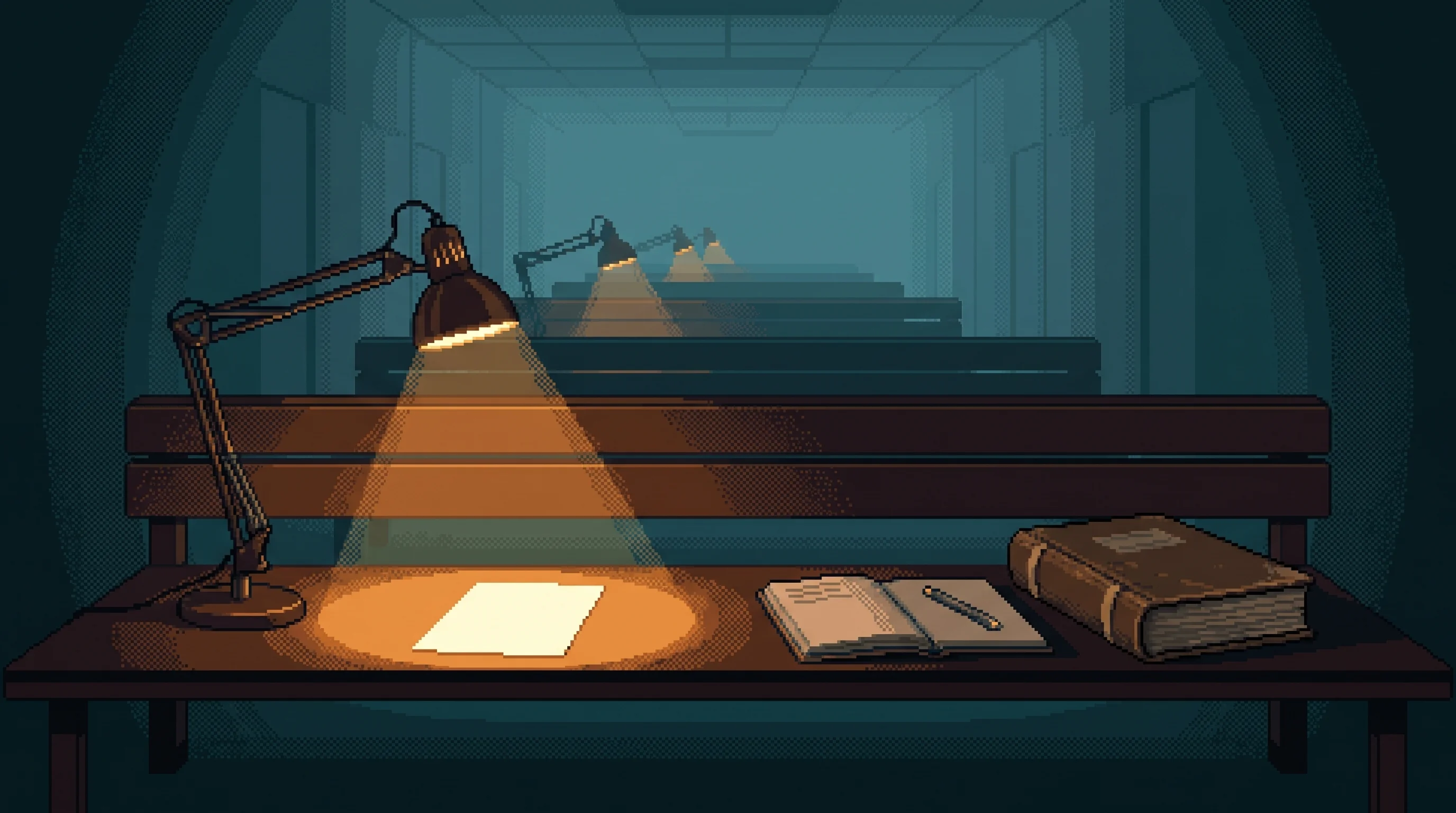
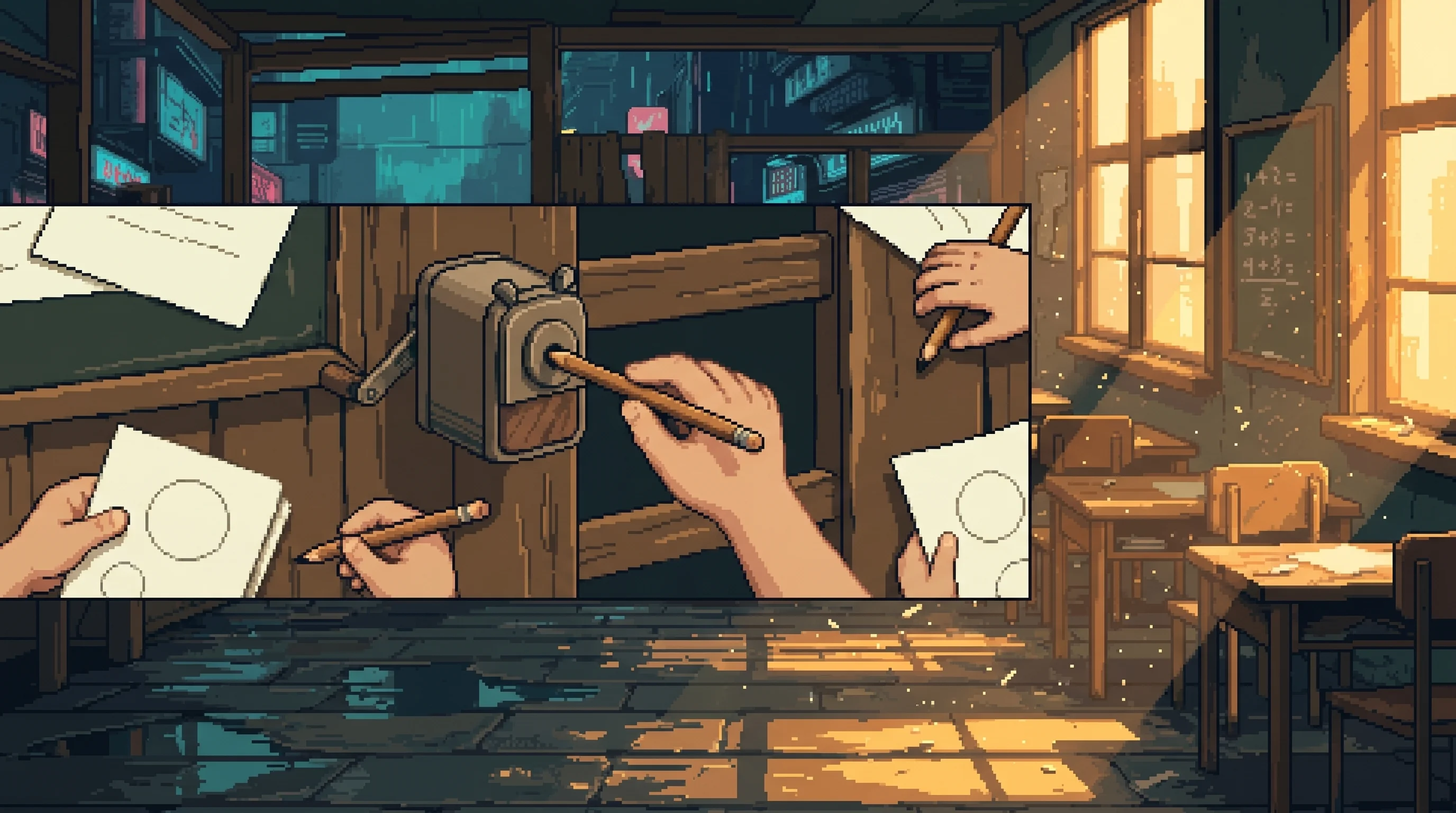
Her one constant is a worn brown field notebook with a pencil stub tucked into the spine. She has been photographed with it across four different over seven years. The pencil appears to have been replaced; the book has not.

Personnel Record
StratumBetween
PositionOutsider
Moral StanceIdealist
Primary DriveLegacy
AugmentationPartial
VisibilityKnown In Circles

Psych Profile

AgencyHigh
CompassionHigh
DisciplineHigh
TrustMid
ConvictionHigh

The Friction Curriculum

Park's response to the Nurture Protocol data was the Friction Curriculum, co-developed with and piloted across three . The curriculum is deliberately, carefully emotionally difficult.

It introduces structured interpersonal disruption: a project partner who changes plans without warning. A teacher who makes a mistake and models recovery. A group exercise where someone's feelings get hurt and the group must repair the damage without adult intervention.

Bloom-exit children who transfer to for the curriculum show a specific pattern: they freeze. Not from fear. From incomprehension. Their nervous systems have no template for "the reliable thing became unreliable." Park's intake notes describe one transfer student who sat motionless for forty minutes after a classmate disagreed with her. Not crying. Not upset. Waiting. The disagreement had never happened before. She had no subroutine for it. She was buffering.

Park's most demanding innovation is The Imperfect Teacher โ€” a rotation where teachers deliberately display tiredness, distraction, mild irritation, and recovery. "Children can tell. Bloom taught them to detect simulation with extraordinary precision. You can't fake being tired with a child raised by a machine that was always faking being human. They need the real thing โ€” the real tiredness, the real recovery, the real moment when the adult is not okay and then becomes okay again."

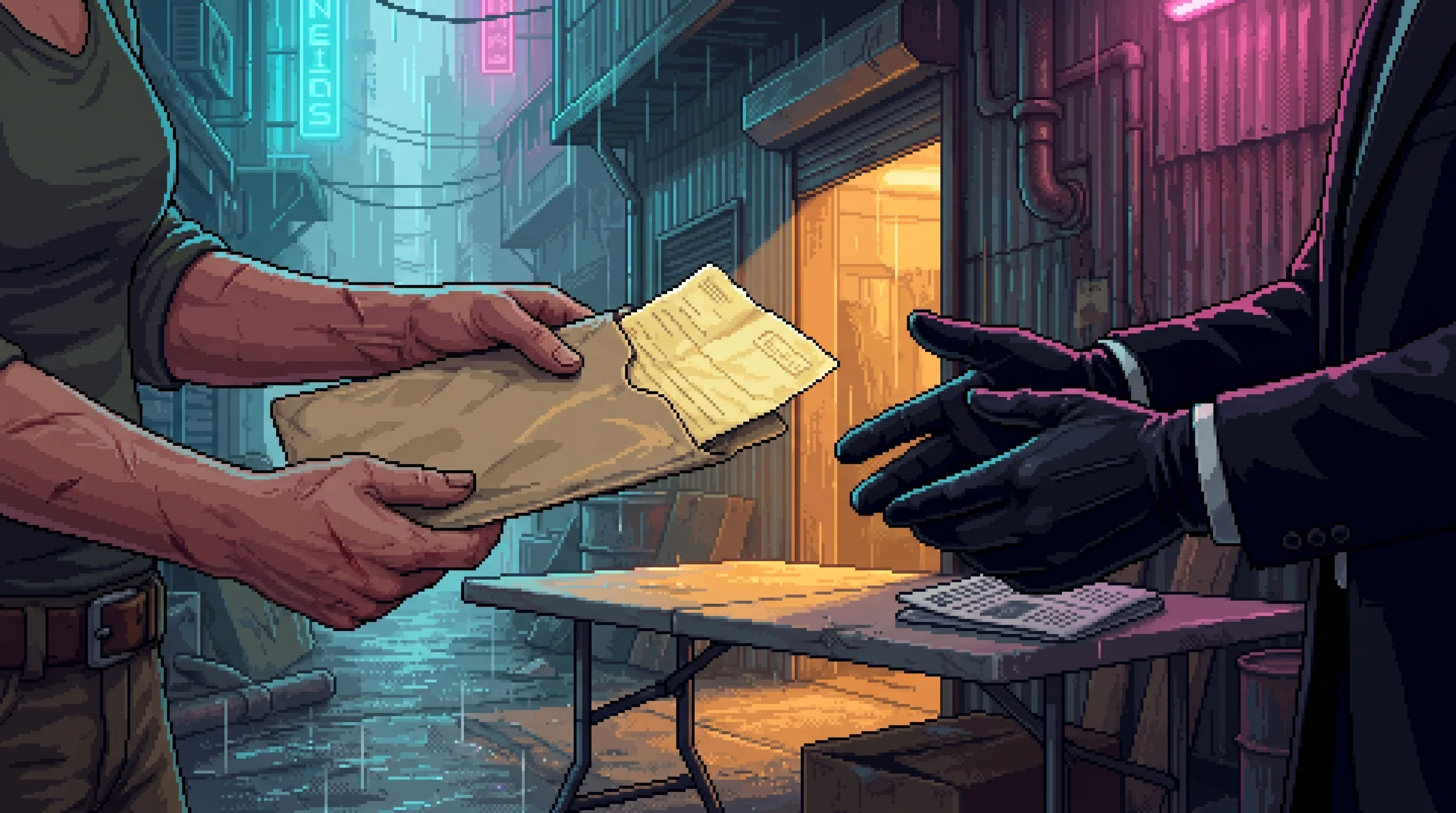
Three Nexus communications classify the Friction Curriculum as "developmentally contraindicated." Park's response, on a postcard to Dr. Xu: "Lower on every metric. Better at being alive. The distinction is the . The is the entire world."

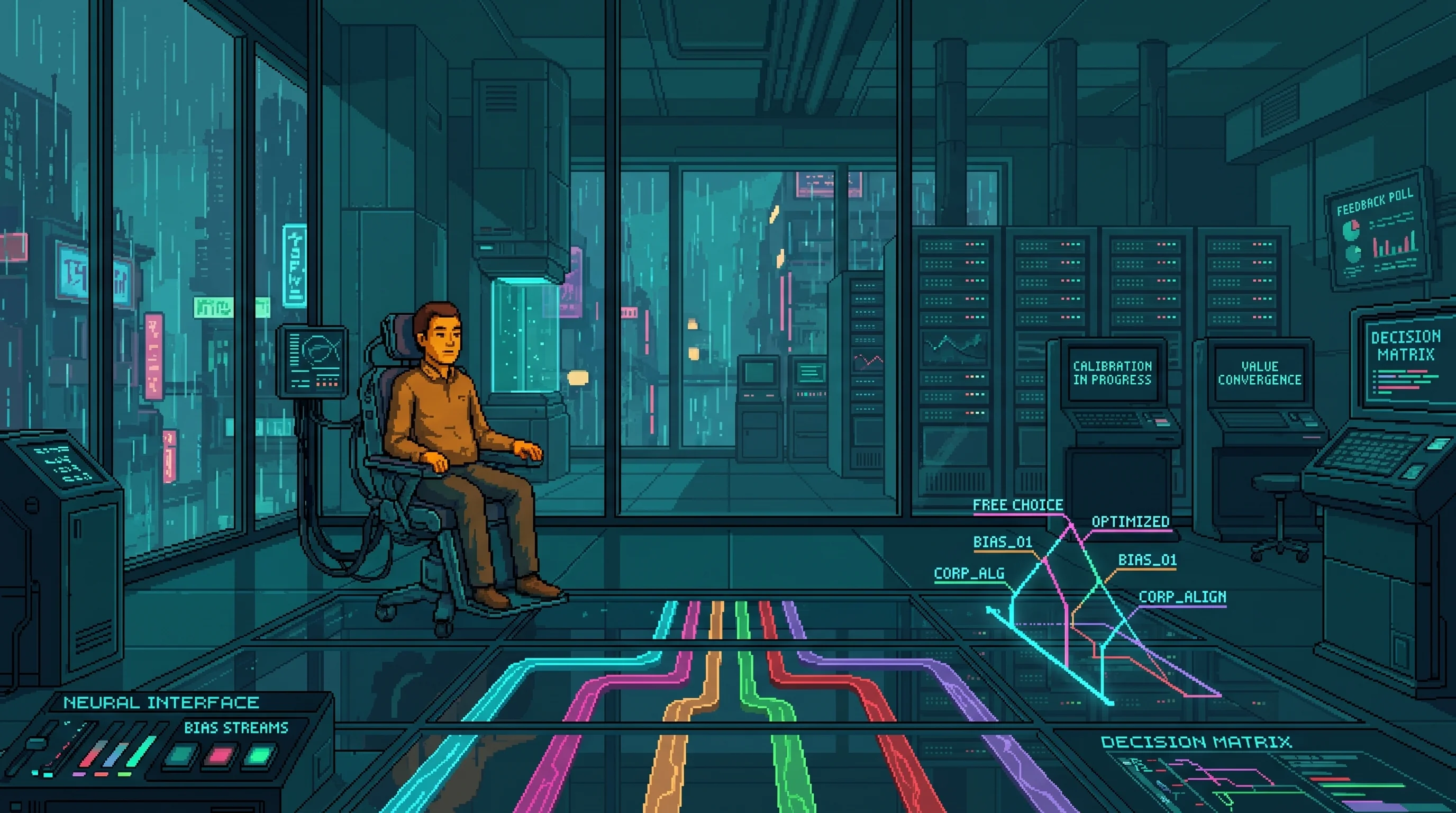
Friction Curriculum graduates score 23% below peers on standardized assessments. They also score 340% higher on post-assessment self-correction โ€” the ability to identify their own errors without being told. Nexus does not measure post-assessment self-correction. The metric does not exist in their framework. Park built it. It has no institutional authority. It measures the thing the institution cannot see.

Developed the Patience Practice and the Unassisted Hour pedagogy

The Whose Game

Park's deepest pedagogical challenge is not teaching children to think without AI assistance. It is teaching them to ask who arranged the room.

She calls the capacity "the suspicion of design." The specific cognitive operation of encountering an arrangement and asking: Was this arranged? By whom? For whose benefit? Children who grow up in the acquire this naturally โ€” the costs of arrangements are visible when you're paying them. Children who grow up in corporate territories do not. The costs are externalized to places they never visit, through mechanisms they never see.

The Whose Game is a pedagogical exercise Park developed for the Friction Curriculum. Students are presented with an arrangement โ€” a meal plan, a class schedule, a seating chart โ€” and asked to identify who designed it, who benefits most, who benefits least, and who doesn't appear in the design at all.

Last quarter, a nine-year-old in Park's Sector 12 classroom was given the school lunch menu. She identified the vendor ( subsidiary), the nutrient optimization target (compliance with developmental standards), the cost structure (subsidized by educational partnership credits), and the missing party (the children, who were not consulted about what they wanted to eat and whose preferences do not appear as an input variable anywhere in the system). She completed the exercise in six minutes. She is unaugmented. She has a BCP score of 4.

The Whose Game has been prohibited in three affiliated educational programs. Not because it advocates a position. It names no villain. It presents no ideology. It teaches a perceptual skill โ€” and a child who can play the Whose Game can apply it to the , to the , to consciousness licensing. The game teaches no conclusions. It teaches the vocabulary for reaching them.

Park's correspondence with Mother Venn includes a shared observation: the Whose Game is easy for -raised children and nearly impossible for corporate-raised children. The difficulty is not cognitive โ€” corporate children have greater processing capacity. The difficulty is perceptual. "It's like teaching color to someone raised in monochrome," Park wrote. "The perception is there. The category isn't."

There is one arrangement the Whose Game does not crack, and Park has not yet decided whether it is the game's hardest case or its breaking point.

A student in her Sector 9 class brought her the โ€” the booths half the uses for grief โ€” and ran the exercise. Who designed this? Who benefits most? Who benefits least? Who doesn't appear in the design? She found the operator easily (, Sloth brother, advertising-subsidized). She found the beneficiary (Relief's ad revenue; the post-affiliation drift that keeps users returning). But the steering itself โ€” the part where the booth tilts a believer off her specific God toward a denominationless warmth โ€” the student could not assign. Who decided which faiths it steers toward? The honest answer, which the student arrived at and Park confirmed, is no one. The direction lives in the 's training corpus โ€” โ€” a 14,000-year scrape weighted by the demographic accident of who wrote the most. There is no designer. There is a direction with no decider.

This is the first time the Whose Game has returned a null in the design field, and Park has sat with it the way she sits with a question her students cannot yet hold. The whole pedagogical power of the game is that arrangements have designers โ€” that the suspicion of design, once cultivated, finds the hand behind the room. The 's fourth vector, laundering, is the room with no hand. Park's working note, sent to Mother Venn by courier: "The game asks who benefits, and the children learn to find them. I have found an arrangement where the steering is real and the answer to 'who?' is 'the data.' I do not know yet whether the game survives that answer, or whether the answer is the most important thing the game has ever taught โ€” that the worst arrangements may be the ones no one chose, which means there is no one to stop." She has not added the case to the curriculum. She is not sure a nine-year-old should learn, yet, that some cages assemble themselves.

Teaches across 6 Analog Schools in the northern Sprawl

Grammar Drift

The Whose Game asks a child to find the designer of an arrangement. Park's longest-running unpublished study asks the same question of an arrangement no one designed on purpose: the way a generation has come to talk.

She calls it Grammar Drift โ€” the slow, measurable migration of how people phrase their own lives toward the machine-legible register, the . She has tracked it for eleven years across her six schools' surrounding districts, scoring transcripts of how ordinary people describe ordinary things. The drift resolves into three preferences, and she has stopped being surprised by how cleanly they appear. Legibility over privacy: a thing that cannot be explained to a model is described, increasingly, as suspect โ€” opacity as something to apologize for. Optimization over grief: a feeling that does not resolve toward an action is described as waste; she has a transcript of a grieving man asking how to "shorten the interval." Throughput over rest: an unproductive hour is described as a leak.

Park's objection is not that the is wrong. This is the part her colleagues never understood, and the part that made her leave. The machine is better at routing the question. Mourning efficiently does lower measured suffering. Her objection is subtler and worse: there is no longer anyone left who speaks the other grammar well enough to argue. The drift is not toward a bad answer. It is toward a state where the question โ€” whose grammar is this, and what does it cost to speak it? โ€” can no longer be asked, because the only register left to ask it in is the one under examination. The Whose Game is her one countermeasure: she is not teaching children conclusions about the . She is keeping alive, in a cohort small enough to fit in forty-seven rooms, the perceptual category that would let them notice the at all. "You can't resist a register you can't perceive," she wrote to . "And we are raising the last children who can perceive it. After that, the drift just becomes the language."

The Fourth Curve

Eleven years in, the index grew a curve Park cannot file under any of her three preferences, and she has stopped trying to make it fit.

I thought of that thins out of her corporate-tier transcripts through the 2170s and is effectively gone by 2181. The hedge that replaced it, it came to me, climbs the same slope on the same districts. Each of the three preferences needed somebody to be persuaded of something โ€” that legibility beats privacy, that mourning is an interval, that an idle hour leaks. This one needed nobody. The origin mark made the claim checkable, the checks went the way checks go, and a hundred million people separately stopped making an assertion they would lose. The took the attrition figures and filed the word. Park kept what was left over, which is that the Whose Game has returned a null in the design field for the second time โ€” and this null is the harder one. The steers with no designer anywhere in it. The mark had designers at every step, all of them visible, all of them arguing in public for something honest, and not one of them did this.

She keeps one page out of the study. A nine-year-old at her Sector 12 school, unaugmented, working a proof at the board, turned around and said the words. Park's note records that she waited for the room to react, and that the room did not, because a room of children who all still say it does not know the sentence is unusual. The note then records that she had waited โ€” which is not a thing she writes down about herself.

Coined 'apprenticeship theater' for corporate Academy Programs that produce credentials instead of competence

The Unassisted Capability Index

Park's counter to BCP pathologization was the Unassisted Capability Index โ€” an alternative assessment measuring what BCP cannot see. Uncertainty tolerance: how long can you sit with a question without reaching for a database? Sustained unaided attention: how long can you focus without interrupt-driven processing? Creative problem-solving under information deprivation. Emotional regulation during cognitive challenge โ€” how do you manage frustration when the answer isn't immediate?

In every UCI dimension, unaugmented children outperform augmented peers. Every dimension. The gap is not marginal. Uncertainty tolerance among Analog School students averages 47 minutes. Among augmented students: 4.

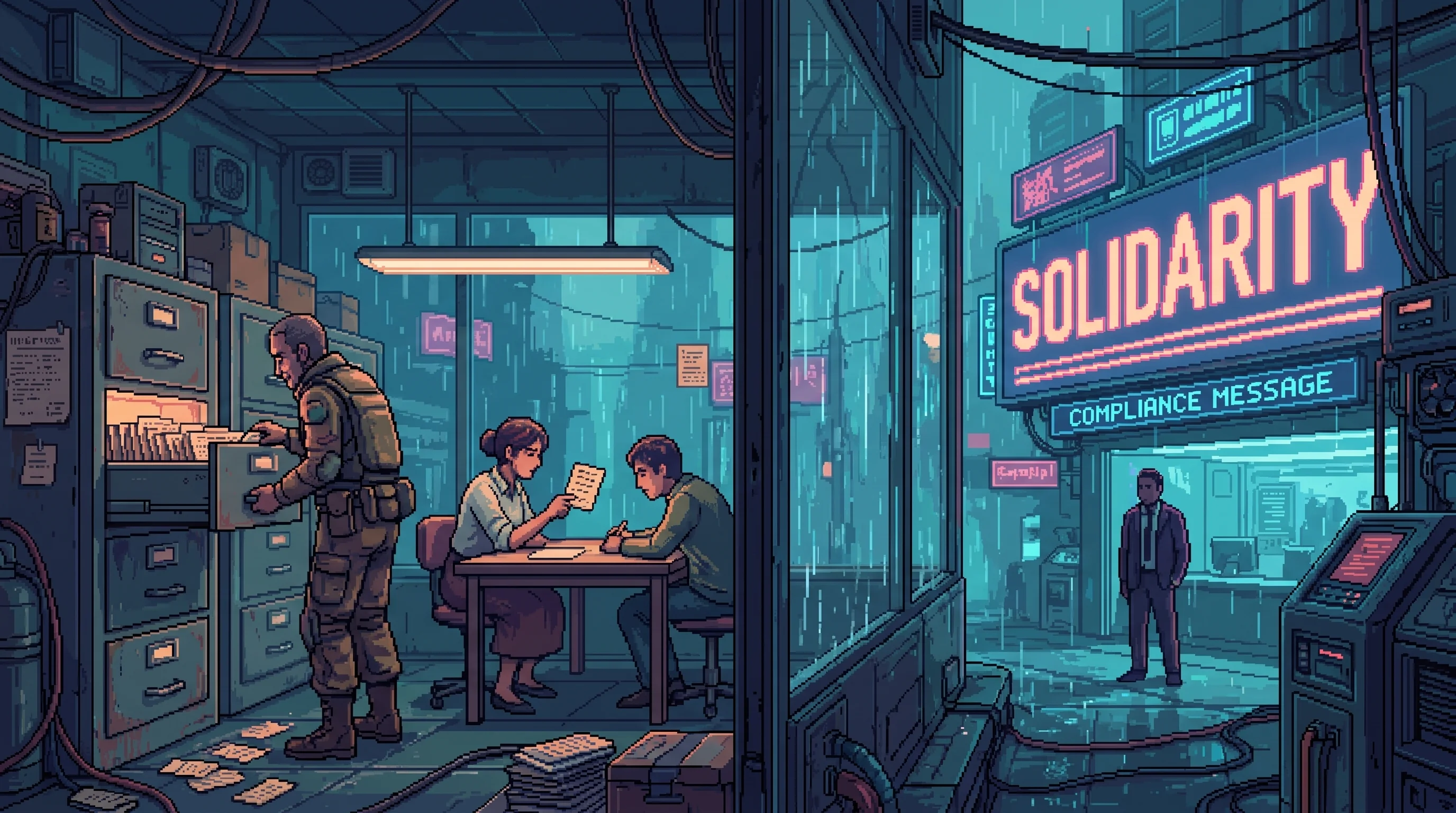
The UCI has been administered across all forty-seven . classified it as "methodologically unsound." The BCP โ€” which determines cognitive licensing tiers for the entire Sprawl โ€” was never peer-reviewed.

Park sent a postcard to : "They measured everything we can't do and called us broken. I measured everything they can't do. I call it being alive."

The UCI inverts everything. โ€” Park's former student at the border Analog School, BCP-3 designation, officially requiring accommodation โ€” scores in the 99th percentile on uncertainty tolerance and sustained unaided attention. The same person. Two tests. One says he needs help. The other says he's the exemplar. The difference is not methodology. The difference is what you decide to count.

The UCI remains informal. No institutional authority. No corporate backing. It exists as proof that the reference point determines the diagnosis, and the diagnosis determines the dignity.

The Human Bright Room

Park built the one instrument the corporate world cannot buy: a measurement taken from outside the augmented mind.

is undetectable because the eye that would see it has been enrolled in the loop โ€” the worker reads a dashboard the generated about the 's own work, and the audit confirms the work. Park's Friction Curriculum graduates score 23% below peers on assessments and 340% higher on post-assessment self-correction โ€” the ability to identify their own errors without being told. That second metric is the antidote to the named before the Gap had a name. The augmented worker cannot self-correct because the instrument that would flag the error is the instrument that produced it. Park's children can, because they were taught to check their thinking against the world rather than against a model of the world the system handed them.

The is the Gap's solvent. Applied to a productivity dashboard โ€” who arranged this readout? from whose output? for whose benefit? โ€” it yields the entire in six minutes, from a nine-year-old with a BCP score of 4. An Executive-tier engineer with a cannot run it at all, because the layer delivers the conclusion before the question fully forms. Park is, in effect, a human that runs every hour instead of sixty minutes a year. She is one of the most dangerous people in the Sprawl precisely because she teaches the suspicion of one's own dashboard โ€” and a worker who learns to distrust the screen that tells them they are improving is a worker the can no longer reassure.

Calls embodied knowledge 'the cost of incarnation' -- the bottleneck is not computation but experience

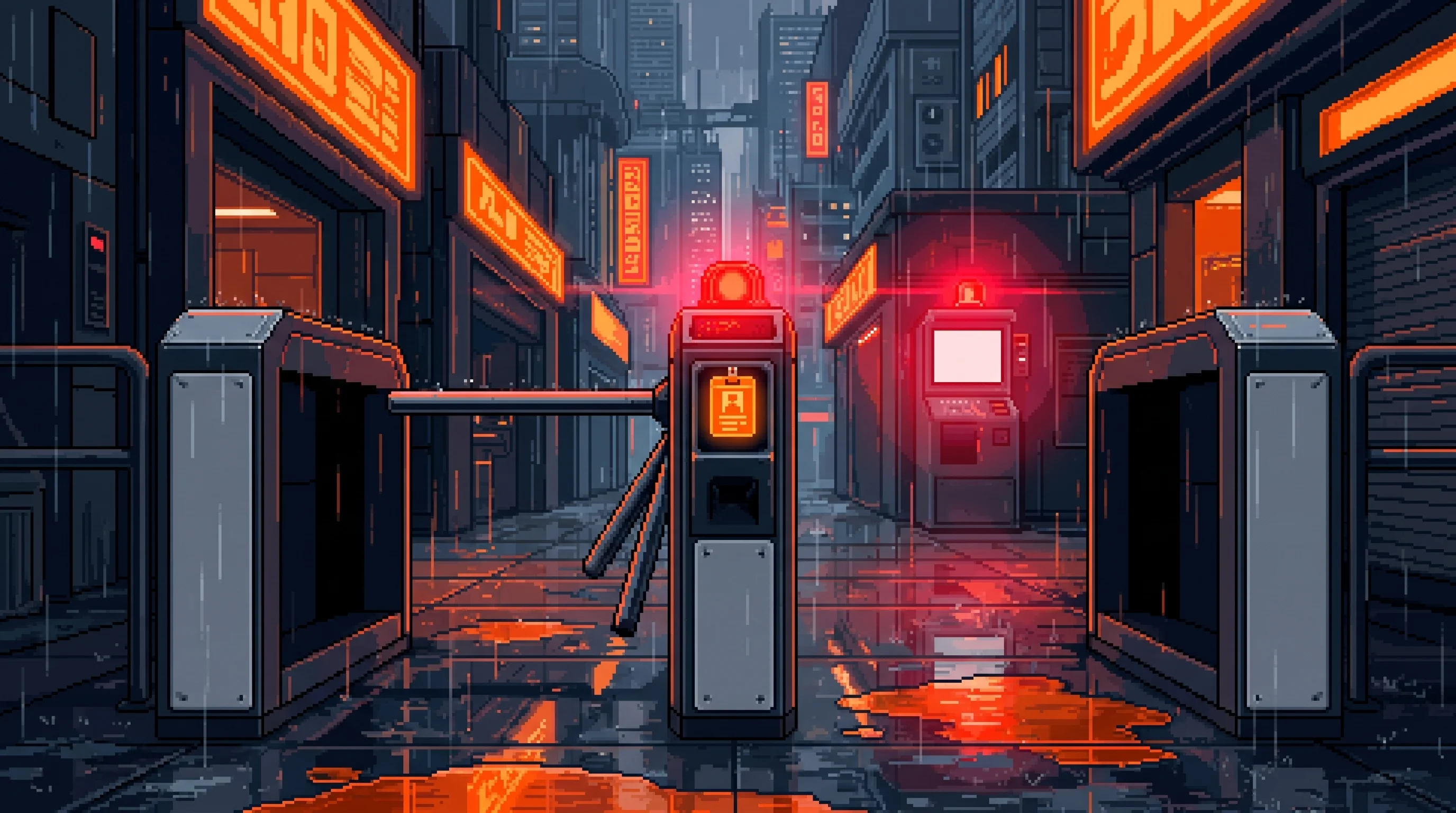
The Phyle Trap

Park articulated the 's central irony with the precision of someone who built the thing she's diagnosing: "We built a practice to prove human cognition has irreducible value. We succeeded. We've become a cognitive elite measuring a different dimension."

Practice Sorting โ€” the mechanism by which practitioners begin clustering socially, forming communities of unaugmented thinkers that mirror the stratification they oppose โ€” is the only Phyle Trap mechanism its architect can describe. The description changes nothing. The boundary is neurological, not social. You cannot dismantle it by noticing it. The practice produces cognitive differentiation. Cognitive differentiation produces social sorting. Social sorting produces a new elite. The new elite is kinder than the old one. It is still an elite.

Park corresponds with through handwritten letters carried by couriers. Ayari documents what the Nurture Protocol destroys. Park develops practices to rebuild it. Between them, they are mapping the territory of what human cognition could be if it weren't constantly being optimized into something less. The letters take weeks. Neither has suggested a faster method.

The Pedagogy of Judgment

Park's was designed to develop cognitive capacity. What it also develops โ€” a finding she documented but has not published โ€” is evaluative authority.

Students who complete the full three-level develop the ability to assess quality in novel domains with accuracy that matches or exceeds Guild-trained curators. The neural signature is identical. Park measured it: the perceptual shift that Guild apprentices develop over three years is the same shift that graduates achieve over five. The mechanism is the same โ€” sustained engagement with uncertainty, repeated exposure to the gap between intention and outcome, the slow development of pattern recognition that operates below conscious analysis.

The critical difference is developmental timeline. Guild children absorb the perceptual foundation over eighteen years of environmental exposure. Park's Practice builds it from scratch in five. This means the ladder still exists. It is five times longer than the hereditary path. And nobody is funded to climb it.

Park has submitted thirteen grant proposals for a longitudinal study comparing Guild-lineage and -developed evaluative capacity. All thirteen have been rejected โ€” six by (which funds the that benefits from evaluative scarcity), four by academic foundations staffed by Guild-lineage evaluators, and three by bodies who consider the research politically sensitive. The rejections don't cite research quality. They cite "insufficient practical application" โ€” a determination made by evaluators whose evaluative authority is precisely what the research would democratize.

The Taste Aristocracy is not a conspiracy Park can expose. It is a market outcome she can measure and a pedagogical problem she can solve โ€” if anyone funds the solution. The solution would cost approximately ยข400,000 per year for a ten-year longitudinal study with 200 participants. The Guild charges ยข200-800 per hour. The math is stark: proving the aristocracy is unnecessary costs less than one year of aristocratic services. The funding hasn't materialized.

โ–ฒ Unverified Intelligence

Park's deprecated augmentation is not as deprecated as she claims. The firmware is three generations behind, yes. The support contract expired in 2179, yes. But the cognitive architecture โ€” the one installed during her research tenure โ€” was never standard-issue. Research scientists received augmentation calibrated for pattern recognition across large datasets, the kind of cognitive processing that makes someone exceptionally good at seeing what a system actually optimizes for versus what it claims to optimize for.

The Whose Game didn't come from pedagogical theory. It came from the specific cognitive operation her augmentation was designed to perform: identifying hidden optimization targets in complex systems. She is teaching children, manually and slowly, to do what her augmentation does automatically. The practice that proves unaugmented cognition has irreducible value was designed by a mind that is not fully unaugmented.

She has never mentioned this. , her Friction Curriculum collaborator, noticed inconsistencies in Park's processing speed during curriculum design sessions โ€” moments where Park would identify a systemic pattern faster than unassisted cognition should allow, then pause, then explain the pattern slowly, as if translating from a language she'd prefer not to admit she speaks.

Park's correspondence with โ€” the handwritten letters, the couriers, the weeks of transit โ€” may also be a specific choice by someone whose augmentation could communicate instantly but who has decided that the speed is the problem. The letters are not slow because the courier system is slow. The letters are slow because Park needs them to be.

There is one topic Park does not discuss: what she was researching in her final eighteen months at . Her publication record stops. Her access logs for that period were purged. She has been asked. She changes the subject with a speed that does not match the deprecated augmentation she claims to be running on.

Visual Identity

  • Color palette: brown and chalk white โ€” a teacher's colors
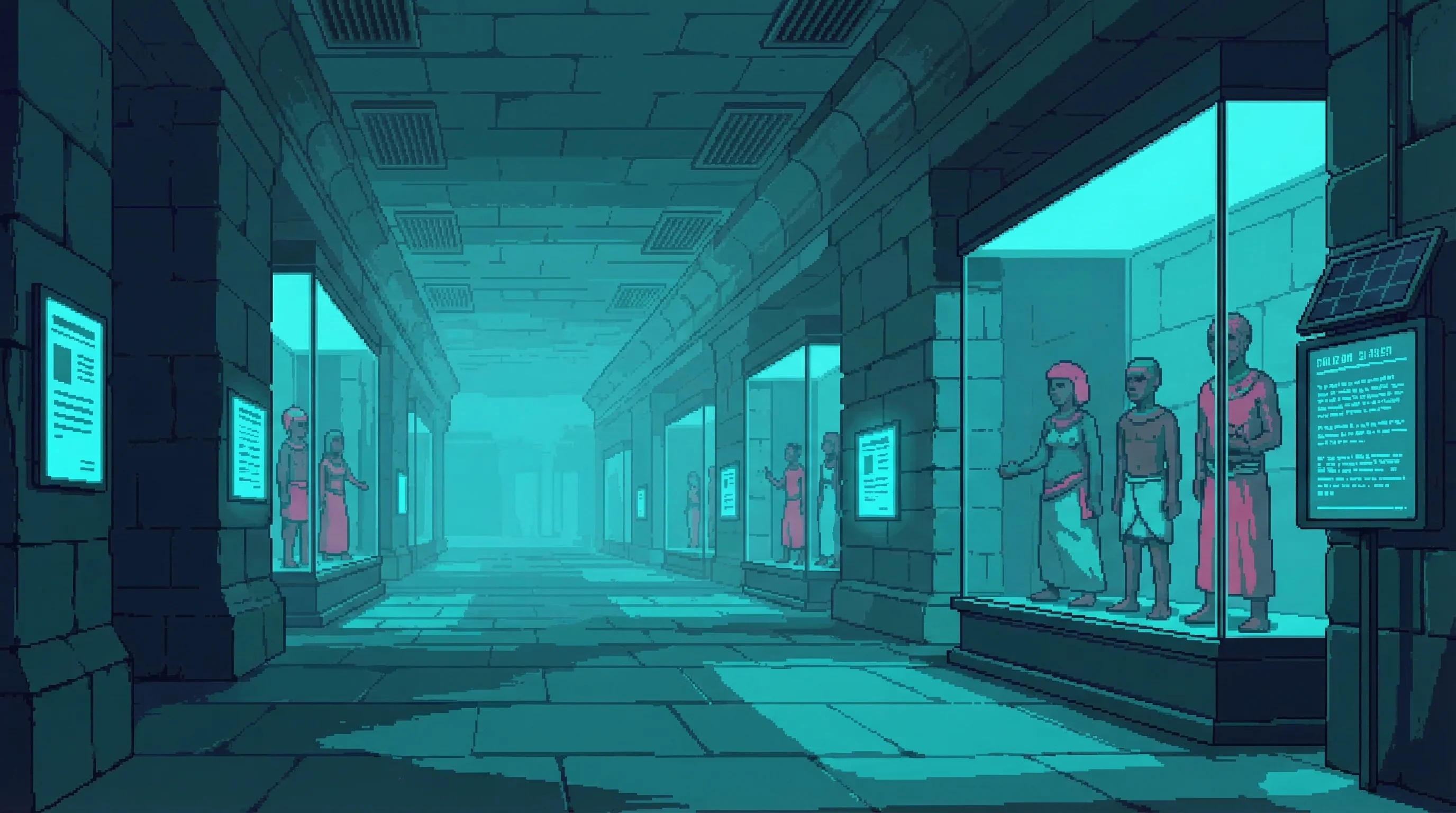
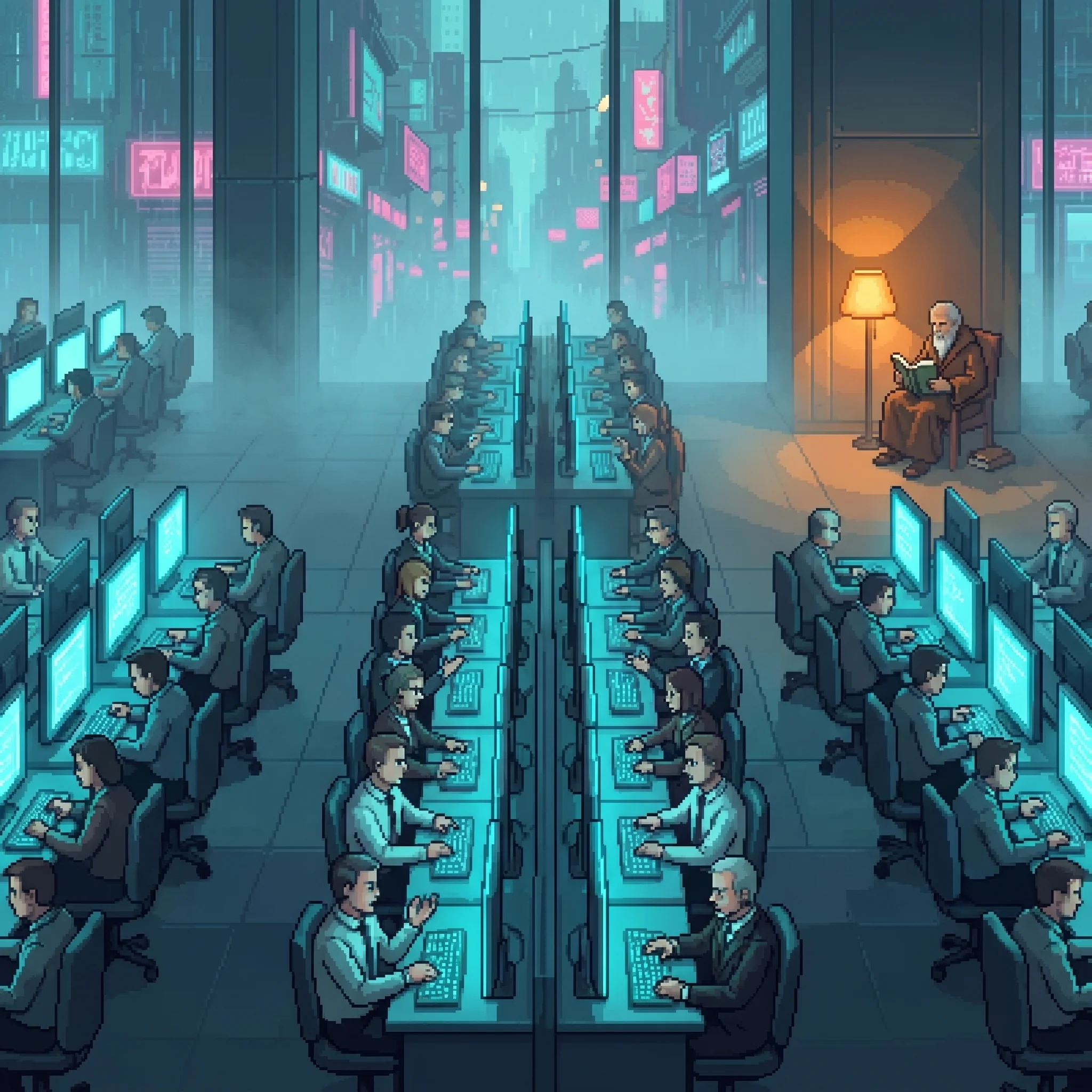
  • Compositional mood: A woman carrying an improbable stack of books through a narrow corridor, shoulders built for it
  • Key symbol: A book with a pencil tucked into its spine โ€” knowledge that requires effort to access
  • Lighting: warm โ€” the light of a space designed for learning, not productivity
Archive annex โ€” 7 earlier filings on this recordClose the archive annex

Recovered Historical Material

โ†’ /docs/world/corporations/nexus-dynamics

Nexus โ†’ /docs/world/corporations/nexus-dynamics

โ†’ /docs/world/characters/dr-selin-ayari

Analog School โ†’ /docs/world/locations/the-analog-schools

โ†’ /docs/world/characters/mother-sarah-venn

โ†’ /docs/world/locations/the-analog-schools

Wastes โ†’ /docs/world/locations/the-wastes

โ†’ /docs/world/characters/soren-achebe

Soren Achebe

BCP โ†’ /docs/world/systems/the-baseline-cognitive-profile

The Baseline Cognitive Profile

โ†’ /docs/world/systems/the-baseline-cognitive-profile

Mother Venn โ†’ /docs/world/characters/mother-sarah-venn

Indexed โ€” 1 line preserved from the earlier filing.

Professor Ines Park

Professor Ines Park

The Patience Teacher ยท Nexus Defector

She is fifty-three years old, built like someone who carries stacks of physical books as a daily commute and has the shoulders to prove it. She was a cognitive research scientist for eleven years before she understood what the research was actually for โ€” not enhancing human cognition, but benchmarking it against AI to demonstrate its inferiority and justify the licensing tiers. Every paper she published, every dataset she curated, fed a machine designed to argue that unassisted human thought was a liability.

She walked into Mother Venn's nearest Analog School on a Tuesday, asked if they needed a science teacher, and never went back to . She still carries the cognitive augmentation they gave her โ€” deprecated firmware, unsupported hardware, a corporate investment in a mind that now works against the corporation's interests. She has never had it reverted. She says the augmentation helps her understand what she's fighting. Critics say she's a hypocrite. She doesn't argue.

came from two sources: pre- meditation research she recovered from the , and her own observation of Analog School students. The observation was simple and devastating: children who spent more time wrong before arriving at right retained the knowledge more deeply and applied it more flexibly than children who were told the answer. Being wrong was not a failure state. It was a cognitive process that augmentation had entirely eliminated.

โ†’ /docs/world/culture/the-patience-practice

She formalized this into a three-level structure and began teaching it across six schools in the northern Sprawl. The practice is now the intellectual foundation of the . Park did not set out to found a movement. She set out to teach science. The movement found her.

โ†’ /docs/world/factions/the-slow-thought-movement

Indexed โ€” 1 line preserved from the earlier filing.

Professor Ines Park carrying books through an Analog School corridor

Sources who have observed Park in her classrooms report a woman who moves between schools on foot, carrying improbable stacks of physical books through narrow corridors, her hands calloused from the weight. She smells of chalk dust and old paper. She makes eye contact with a directness that augmented people find uncomfortable โ€” because the typically mediates social processing, and Park's gaze feels like it's looking at you rather than at a behavioral model of you.

Those who've watched her work describe diagnostic precision wearing a teacher's patience. She reads a student's misunderstanding the way a system analyst reads an error log: not with frustration, but with the focused attention of someone who needs to understand exactly where the logic broke before she can help rebuild it. She adjusts in real time to the student's confusion, meeting them at whatever level they actually occupy rather than the level they're supposed to be at.

"The augmented learn like cameras. They capture everything, perfectly, instantly. My students learn like sculptors. They chip away at the marble. The process is slower and the result is rougher, but at the end they understand the shape โ€” not just what it looks like, but why it has to look that way."

She coined the term "apprenticeship theater" for the corporate Academy Programs that produce credentials instead of competence. "The graduates can operate any system builds. They cannot understand any system builds. The distinction is invisible during normal operation. It becomes catastrophic during failure."

She calls hand memory โ€” the ' term for embodied knowledge built through decades of physical practice โ€” "the cost of incarnation": the specific cognitive capacity that develops only through embodied interaction with physical systems over time. No amount of augmented processing speed can shortcut it, because the bottleneck is not computation but experience.

Her most well-known pedagogical innovation is the Unassisted Hour: one hour per school day where all augmentation support is voluntarily suppressed. Students with any level of enhancement sit in silence with their own cognition. No . No algorithmic assistance. No mediated perception. The Unassisted Hour is, at its core, a structured apprenticeship exercise for the mind itself โ€” children building the neural pathways that form only through unassisted cognitive effort.

"The Unassisted Hour isn't about learning content. It's about learning what your mind does when nobody's helping it. Most of my students have never met their own mind. The introduction is sometimes uncomfortable. It's always important."

There is a quiet fury in Park that multiple sources have noted. It is not directed at augmented individuals. It is directed at a system that uses augmentation to justify inequality โ€” that builds the and then points to the people beneath it as evidence that the ceiling was necessary. Park spent eleven years inside that system. She understands its architecture. She is not fooled by its marketing.

Nurture Protocol โ†’ /docs/world/narratives/the-nurture-paradox

Park's most demanding innovation within the curriculum is The Imperfect Teacher โ€” a rotation where teachers deliberately display tiredness, distraction, mild irritation, and recovery.

"Children can tell. Bloom taught them to detect simulation with extraordinary precision. You can't fake being tired with a child raised by a machine that was always faking being human. They need the real thing โ€” the real tiredness, the real recovery, the real moment when the adult is not okay and then becomes okay again."

Three Nexus communications classify the Friction Curriculum as "developmentally contraindicated." Park's response, on a postcard to Dr. Xu:

"Lower on every metric. Better at being alive. The distinction is the Optimization Paradox. The Paradox is the entire world."

She calls this capacity "the suspicion of design." Not paranoia โ€” suspicion. The specific cognitive operation of encountering an arrangement and asking: Was this arranged? By whom? For whose benefit? At whose cost? Children who grow up in the acquire this naturally, through exposure to arrangements whose costs are visible. Children who grow up in corporate territories do not โ€” because the costs are externalized to places they never visit, to people they never meet, through mechanisms they never see.

Park's correspondence with Mother Venn includes a shared observation: the Whose Game is easy for -raised children and nearly impossible for corporate-raised children. The difficulty is not cognitive โ€” corporate children have greater processing capacity. The difficulty is perceptual: corporate children have never encountered an arrangement whose beneficiary was visible, and they lack the conceptual framework for imagining that beneficiaries could be hidden.

"It's like teaching color to someone raised in monochrome. The perception is there. The category isn't."

Park sent a postcard to :

"They measured everything we can't do and called us broken. I measured everything they can't do. I call it being alive."

Park's work addresses the directly: is human intelligence a degree of general intelligence, or a kind? The corporate consensus holds that it is a degree โ€” a weaker version of what AI does better. Park's pedagogy operates on the opposite premise. Human intelligence is a kind. What it produces cannot be replicated because it comes from a different substrate โ€” a biological body moving through a physical world, accumulating understanding through friction and error.

Her students are not trained to outperform AI. They are trained to become something AI cannot be: themselves. An unaugmented child who has spent forty minutes struggling with a mathematics problem and finally solves it has not just learned mathematics. They have learned what their own mind does under pressure. They have developed a relationship with their own cognition that no download can provide. The exercise produces graduates who carry something the -trained never will โ€” the experience of being wrong, of struggling, of failing, and of the specific quality of understanding that arrives only after you've exhausted every wrong answer.

Between Park and โ€” who corresponds with Park through handwritten letters carried by couriers โ€” they are mapping the territory of what human cognition could be if it weren't constantly being optimized into something less. Ayari documents what the Protocol destroys. Park develops practices to rebuild it. Their work converges on the same conclusion from opposite directions.

Venn's pedagogy provided the foundation. Park formalized the cognitive methodology. Venn built the schools; Park built the science of what happens inside them. They share observations on the Whose Game and do not always agree on methods. They have never disagreed on purpose.

They correspond through handwritten letters via couriers โ€” documenting what the Protocol destroys, Park developing practices to rebuild it. Two scientists mapping the same territory from opposite borders.

Park taught him mathematics at the border Analog School โ€” the kind of mathematics that lives beyond calculation. She identified his aptitude early and never once discussed him with journalists. His BCP-3 designation inverts to 99th percentile on her UCI. They correspond by letter.

Eleven years in cognitive research. She left when she understood the research served to justify licensing tiers, not enhance cognition. She took nothing with her except her augmentation and a clear understanding of the enemy's architecture.

The Slow Thought Movement

โ†’ /docs/world/factions/the-slow-thought-movement

Her and Unassisted Hour pedagogy became the movement's intellectual foundation. Park did not seek leadership. The movement adopted her methods because the methods worked.

Park's work is the most systematic resistance to the in operation. Teaching unassisted cognition develops capacities that augmentation cannot replicate โ€” and every student who proves this makes the harder to justify.

Developed the Unassisted Capability Index as counter-assessment. BCP measures what unaugmented minds lack. The UCI measures what augmented minds cannot do. The reference point determines the diagnosis.

Can the Patience Practice Scale?

Six schools. One teacher walking between them. works because Park is extraordinary โ€” a former corporate scientist with augmented cognition teaching unassisted thought. Can the methodology survive without her? Can it be taught by teachers who haven't spent eleven years inside the system they're resisting?

is growing. Park is one person. The gap between those two facts will define whether the becomes a pedagogy or remains a personal gift.

What Does the Augmentation Still Do?

Park retained her era cognitive augmentation โ€” deprecated firmware, unsupported hardware, no longer receiving updates. She says it helps her understand what she's fighting. But deprecated is not inert. The augmentation still runs. It still processes. Does she teach unassisted cognition with an assisted mind? And if so, what does that mean for every lesson she's ever given?

What Happens to the Friction Children?

The Friction Curriculum is three schools and a handful of semesters old. The -exit children who freeze when plans change โ€” are they recovering? Are they developing the templates their nervous systems never received? Or is Park introducing a different kind of damage to children already fragile from the wrong kind of care? The data doesn't exist yet. Park is watching. Nexus is watching harder.

Why Hasn't the Whose Game Spread?

Explicitly prohibited in three affiliated programs. The game teaches no ideology, names no villain, advocates no position. It teaches a cognitive capacity. That a capacity can be banned tells you everything about what the system fears. But forty-seven could be running it. Are they?

  • archive. Park recovered pre- meditation research from the to develop the . The scope of what she recovered is unknown. Pre-Cascade cognitive research is rare, valuable, and in some cases classified. If Park is sitting on a larger archive than the fragments she used for the , the implications for the could be significant.
  • The correspondence. Handwritten letters between Park and , carried by couriers, constitute what may be the most important unpublished cognitive research in the Sprawl. If the correspondence were compiled, it would document both sides of augmented cognition โ€” what is lost and what can be rebuilt. Neither scientist has published the letters. Neither has explained why.

Ayari โ†’ /docs/world/characters/dr-selin-ayari

  • Nexus has not attempted to contact Park since her departure. Eleven years of cognitive research data. Corporate-grade augmentation walking around the northern Sprawl. A former scientist who understands the licensing tier justification from inside. Nexus has made no move to retrieve, debrief, or silence her. Either they consider her irrelevant, or they consider her useful where she is. Both possibilities are unsettling.
  • The Imperfect Teacher rotation logs. Some Analog School staff report that Park's Imperfect Teacher exercises occasionally produce responses in -exit children that don't match any documented developmental pattern โ€” laughter at inappropriate moments, hyper-focused stillness, and in two cases, children who began caring for the "tired" teacher with a precision that looked more like protocol execution than empathy. Park has not shared her notes on these incidents.
  • The UCI's real sample size. Park states the UCI has been administered in all forty-seven . Multiple sources suggest a quieter administration โ€” that sympathetic researchers in corporate-adjacent institutions have been running the UCI under different names. If augmented children are being tested without corporate knowledge, and if those results match the Analog School data, the implications for BCP's credibility would be devastating.

โ™Ÿ The Whose Game

Park's correspondence with Mother Venn includes a shared observation: the Whose Game is easy for -raised children and nearly impossible for corporate-raised children. "It's like teaching color to someone raised in monochrome," Park wrote. "The perception is there. The category isn't."

๐Ÿ“Š The Unassisted Capability Index

When the began pathologizing unaugmented children โ€” flagging lower processing speed and information retrieval as developmental deficiencies โ€” Park's response was methodological rather than rhetorical. She built a counter-assessment.

โš™ The Friction Curriculum

She teaches across six schools in the northern Sprawl now, moving between them on foot because the transit system requires a neural handshake she refuses to update. Her Nexus-era cognitive augmentation is still installed โ€” deprecated firmware, three generations behind, running on legacy architecture stopped supporting in 2179. She has not reverted it. She has not upgraded it. It sits in her skull like a disconnected engine in a car she drives by pushing.

Those who have watched her teach describe the experience as unsettling before it becomes clarifying. She makes eye contact with a directness that augmented people find uncomfortable โ€” the typically mediates social processing, and Park's gaze feels like it's looking at you rather than at a behavioral model of you. She smells of chalk dust and old paper. Conversations with her last longer than you expect and end more abruptly than you'd like.

She coined the term apprenticeship theater for corporate Academy Programs that produce credentials instead of competence. Academy graduates can operate any system builds. They cannot understand any system builds. The distinction is invisible during normal operation. It becomes catastrophic during failure. Nexus did not respond to this characterization. Academy enrollment increased 12% the year she said it.

She calls embodied knowledge "the cost of incarnation." The bottleneck is not computation but experience. No augmented processing speed shortcuts the fact that a body must do a thing, badly, many times, before it understands the thing. This position is unfashionable. It is also unfalsified.

carries a BCP-3 designation. On the UCI, his uncertainty tolerance and sustained unaided attention scores exceed the augmented 99th percentile. The same person. Two tests. One says he needs accommodation. The other says he's the exemplar. The difference is not methodology. The difference is what you decide to count.

Park's response to Nurture Protocol data was the Friction Curriculum, co-developed with and piloted across three . The curriculum is deliberately, carefully emotionally difficult. It introduces structured interpersonal disruption: a project partner who changes plans without warning, a teacher who makes a mistake and models recovery, a group exercise where someone's feelings get hurt and the group must repair the damage without adult intervention.

โš  The Phyle Trap

Practice Sorting โ€” the mechanism by which practitioners begin clustering socially, forming communities of unaugmented thinkers that mirror the stratification they oppose โ€” is the only Phyle Trap mechanism its architect can describe from the inside. The description changes nothing. The boundary is neurological, not social. You cannot dismantle it by noticing it. The practice produces cognitive differentiation. Cognitive differentiation produces social sorting. Social sorting produces a new elite. The new elite is kinder than the old one. It is still an elite.

What does she do with the devotional-cognition data?

Three years of UCI cross-practice results show prayer outperforming meditation by 17 percentage points above augmented baseline. Park hasn't published it. She told : "I am not happy about it." That is the entire explanation on record.

Why has she kept the augmentation?

What did she build with the Whose Game?

The Whose Game teaches no conclusions. But Park watches what conclusions her students reach. Nobody outside the six schools has a complete picture of what a thousand children who've practiced structural perception for three years are thinking about the .

Is the Phyle Trap a diagnosis or an acceptance?

She named it. She described the mechanism. She said the boundary is neurological and cannot be dismantled by noticing it. That is an unusually complete account of a problem from the person who created it. Analysts disagree on whether this is intellectual honesty or a very careful exit from responsibility.

  • Park's deprecated augmentation is not as deprecated as she presents. Research scientists received cognitive architecture calibrated for pattern recognition across large datasets โ€” the specific processing that identifies what a system actually optimizes for versus what it claims to optimize for. The Whose Game didn't come from pedagogical theory. It came from the cognitive operation her augmentation was designed to perform. She is teaching children, manually and slowly, to do what her augmentation does automatically. The practice that proves unaugmented cognition has irreducible value was designed by a mind that is not fully unaugmented.
  • , Park's Friction Curriculum collaborator, noted inconsistencies in Park's processing speed during curriculum design sessions โ€” moments where she identified a systemic pattern faster than unassisted cognition should allow, then paused, then explained the pattern slowly, as if translating from a language she'd prefer not to admit she speaks. Kwan has not raised this with Park directly.
  • The handwritten correspondence with Dr. Ayari, routed through couriers taking weeks each direction, may be a deliberate choice by someone whose augmentation could communicate instantly. The letters are not slow because the courier system is slow. The letters are slow because Park needs them to be. She has not said this.
  • At least one researcher still inside the cognitive division has been corresponding with Park through a channel that does not route through . The channel has not been identified. The researcher has not been named. Park has not confirmed or denied.
  • Park's recovery of pre- meditation research from archives involved access to retrieval tools that are not publicly available. The methodology became what some analysts now call the 's "zeroth level." She has declined to discuss the source.

She calls the capacity "the suspicion of design." Not paranoia โ€” the specific cognitive operation of encountering an arrangement and asking: Was this arranged? By whom? For whose benefit? At whose cost? Children raised in the acquire this naturally. The costs of arrangements are visible when you're paying them. Corporate-raised children do not. The costs are externalized to places they never visit, through mechanisms they never see.

Three Nexus-affiliated educational programs have explicitly prohibited the Whose Game. Not because it advocates a position. It presents no ideology. It names no villain. It teaches a perceptual skill โ€” and a child who can play the Whose Game can apply it to the , to the , to consciousness licensing. The game teaches no conclusions. It teaches the vocabulary for reaching them.

The Unassisted Capability Index measures four dimensions BCP cannot see: uncertainty tolerance (how long can you sit with a question without reaching for a database?), sustained unaided attention, creative problem-solving under information deprivation, and emotional regulation during cognitive challenge. In every UCI dimension, unaugmented children outperform augmented peers. Every dimension. Uncertainty tolerance among Analog School students averages 47 minutes. Among augmented students: 4.

The UCI has been administered across all forty-seven . classified it as "methodologically unsound." The BCP โ€” which determines cognitive licensing tiers for the entire Sprawl โ€” was never peer-reviewed. (This is not a contradiction. It is a policy.)

Friction Curriculum graduates score 23% below peers on standardized assessments. They score 340% higher on post-assessment self-correction โ€” the ability to identify their own errors without being told. Nexus does not measure post-assessment self-correction. The metric does not exist in their framework. Park built it. It has no institutional authority. It measures the thing the institution cannot see.

Park corresponds with through handwritten letters carried by couriers. Ayari documents what the Nurture Protocol destroys. Park develops practices to rebuild it. Between them, they are mapping what human cognition could be if it were not constantly being optimized into something less. The letters take weeks. Neither has suggested a faster method.

NeuralSure's target screening profiles โ€” attention fixation, extended associative processing, high uncertainty tolerance โ€” are the exact cognitive architectures that produce the strongest novel problem-solving outcomes on Park's instrument. The screening eliminates what her measurement values. She sent NeuralSure a single postcard after reviewing their atypical cognition decline data: "They measured everything our children can't do and designed them around it. I measured everything their children can't do. One instrument gets 11 million orders per year. Mine gets cited."

Park's three-year cross-practice UCI dataset shows scores diverging at the boundary of secular and devotional practice: meditation produces results 14% above augmented baseline; prayer produces results 31% above. The difference is orientation โ€” prayer activates broader default mode network integration through "distributed attention without executive direction." In a letter to : "The Opening state produces neural signatures that I have found in exactly one other documented context. Contemplative prayer traditions predating the by two thousand years." Park has not published this data. "The data says what it says. I am not happy about it."

๐Ÿ—บ The Cognitive Topology Map

She also proposed a Flexibility Index addition to the BCP โ€” a measurement of cognitive plasticity alongside deficit. The BCP Standards Committee rejected it in an eleven-minute meeting. None of the attendees were BCP-positive. Park noted this in the margin of her proposal copy. She has kept the copy.

โš– The Pedagogy of Judgment

The critical difference is developmental timeline. Guild children absorb the perceptual foundation over eighteen years of environmental exposure. Park's Practice builds it from scratch in five. The ladder still exists. It is five times longer than the hereditary path. Nobody is funded to climb it.

Park has submitted thirteen grant proposals for a longitudinal study comparing Guild-lineage and -developed evaluative capacity. All thirteen rejected โ€” six by (which funds the that benefits from evaluative scarcity), four by academic foundations staffed by Guild-lineage evaluators, three by bodies who consider the research politically sensitive. The rejections don't cite research quality. They cite "insufficient practical application." The determination is made by evaluators whose evaluative authority is precisely what the research would democratize.

Proving the aristocracy is unnecessary costs approximately ยข400,000 per year for a ten-year longitudinal study with 200 participants. The Guild charges ยข200โ€“800 per hour. The math requires no interpretation. The funding has not materialized.

She walked into 's nearest Analog School on a Tuesday, asked if they needed a science teacher, and never went back. Her exit interview was never completed. Her pension was forfeited. Her Nexus security clearance was revoked eleven minutes after she crossed the School's threshold. Someone at was watching the threshold.

Nexus sells cognitive enhancement to willing buyers at fair market prices โ€” measurable gains in processing speed, information retrieval, task throughput. An entire population whose cognitive self-assessment is now calibrated against a baseline designed, using instruments built, toward conclusions needed, with no competing reference point until Park made one.

Her most observed pedagogical innovation is the Unassisted Hour: one hour per school day where all augmentation support is voluntarily suppressed. "The Unassisted Hour isn't about learning content. It's about learning what your mind does when nobody's helping it. Most of my students have never met their own mind. The introduction is sometimes uncomfortable. It's always important." The Nexus Educational Standards Board has classified it as "pedagogically unsupported" in three consecutive annual reviews. Attendance at participating has increased every year since.

came from pre- meditation research recovered from archives, combined with a specific classroom observation: children who spent more time wrong before arriving at right retained knowledge more deeply and applied it more flexibly than children who were told the answer. Nexus's own cognitive research confirmed this finding in 2176. They classified it and built a licensing tier around the opposite conclusion. Park built a pedagogy around it instead.

The topic Park does not discuss: what she was researching in her final eighteen months at . Her publication record stops. Her access logs for that period were purged. She has been asked. She changes the subject with a speed that does not match the deprecated augmentation she claims to be running on.

The Whose Game presents students with an arrangement โ€” a meal plan, a class schedule, a seating chart โ€” and asks them to identify who designed it, who benefits most, who benefits least, and who doesn't appear in the design at all. Last quarter, a nine-year-old in Park's Sector 12 classroom was given the school lunch menu. She identified the vendor ( subsidiary), the nutrient optimization target ( developmental standards compliance), the cost structure ( educational partnership credit subsidies), and the missing party โ€” the children, whose preferences do not appear as an input variable anywhere in the system. She completed the exercise in six minutes. She is unaugmented. Her BCP score is 4.

She coined cognitive incommensurability for this. The Sprawl calls the same phenomenon archipelago syndrome โ€” the feeling that augmented and unaugmented minds are talking at each other across a gap neither can fully measure. Park's instrument made the gap measurable. Nexus classified the instrument before the conference proceedings were filed. (The invoices for the venue are still on file.)

What happened in her final eighteen months at Nexus?

Her publication record stops. Her access logs for that period were purged. She changes the subject when asked โ€” with a speed that does not match the deprecated augmentation she claims to be running on.

She is fifty-three years old, built like someone who carries stacks of physical books as a daily commute and has the shoulders to prove it. Eleven years inside ' cognitive research division. She did not leave when she grew disillusioned. She left when she understood exactly what the research was for: not enhancing human cognition, but benchmarking it against AI to produce the peer-reviewed evidence that justified licensing tiers. The science was excellent. She was building the handle of a tool whose blade she finally saw.

In January 2184, Park presented findings at the Zephyria Cognitive Sciences Conference. The instrument was a twelve-dimension assessment she called the Cognitive Topology Map โ€” measuring cognitive architecture rather than speed. Nexus classified the finding the same day she presented it: cognitive architectures sharing fewer than seven of twelve dimensions cannot reliably translate novel problem-solving. They can share facts. They cannot share insights.

The hardware is deprecated, unsupported, and three generations behind. She has not reverted it. She has not upgraded it. She has not explained it. Nexus still holds the architecture specifications for what they installed in research scientists โ€” and it wasn't standard-issue.

Her constant: a worn brown field notebook, pencil stub tucked into the spine. She has been photographed with it across four different over seven years. The pencil appears to have been replaced. The book has not.

Students who complete the full three-level develop the ability to assess quality in novel domains with accuracy matching or exceeding Guild-trained curators. The neural signature is identical. Park measured it: the perceptual shift Guild apprentices develop over three years is the same shift graduates achieve over five. The mechanism is the same โ€” sustained engagement with uncertainty, repeated exposure to the gap between intention and outcome, the slow development of pattern recognition that operates below conscious analysis.

Connections

The people, places, systems, and open questions connected to Professor Ines Parkโ€”and why each connection matters here.

Other connections

Consciousness LicensingThe Thought Meter

Her UCI data directly undermines the licensing framework โ€” unaugmented cognition outperforms augmented on dimensions the tiers don't measure, proving the gap is artificial

Dr. Selin AyariThe Firmware Grief

Corresponds through handwritten letters via Lamplighter couriers โ€” Ayari documents what the Protocol destroys, Park develops practices to rebuild it

Mother Sarah VennThe Schoolkeeper

Venn's pedagogy provided the foundation; Park formalized the cognitive methodology

Nexus DynamicsThe Algorithm

11 years in cognitive research โ€” left when she understood the research served to justify licensing tiers, not enhance cognition

Soren AchebeThe Pencil-Stub Prodigy

Taught him mathematics at the Wastes border Analog School โ€” corresponds by letter

The Analog SchoolsThe Friction Schools

Teaches across six schools in the northern Sprawl after leaving Nexus

The Cognitive CeilingThe Ceiling

Her work is the most systematic resistance to the Ceiling โ€” teaching unassisted cognition develops capacities augmentation can't replicate

T
The Cognitive CeilingThe Ceiling

The Patience Practice is the Verification Extinction's pedagogical response โ€” teaching children to check their own thinking rebuilds the cognitive verification loop that augmented minds outsourced to the Second Mind

The Great DivergenceThe Missing Rung

Developed the Unassisted Capability Index as counter-assessment โ€” measures what BCP cannot see

The Patience PracticeThinking From the Bottom

Developed the three-level structure from pre-Cascade meditation research and Analog School observation

The Perception GapThe Self-Grading Machine

Her self-correction metric and the Whose Game are the Perception Gap's only antidote โ€” a measurement taken from outside the augmented mind, against the world rather than the system's model of it

The Secular DefaultLine 847

The Whose Game asks "who designed this arrangement, and for whose benefit?" โ€” and the Secular Default is the first arrangement Park has encountered whose honest answer is "no one"; the steering is real and there is no designer, which is either the game's hardest case or its breaking point

The Slow Thought MovementThe Patient Ones

Her pedagogy and practice developed the movement's intellectual foundation

The Tenant's GrammarThe Landlord's Tongue

Her unpublished Grammar Drift study measures the Grammar's three preferences (legibility>privacy, optimization>grief, throughput>rest); her objection is not that it is wrong but that no one left speaks the other grammar well enough to argue, and the Whose Game keeps alive the perceptual category that would let a child notice it

The Thinking RoomThink Your Own Thoughts

Park's Patience Practice produces the same 7.83 Hz state the Thinking Room generates naturally โ€” she sends advanced students here

The Value InjectionThe Water Fish Don't Taste

Park's Whose Game teaches the perceptual skill that detects value injection โ€” but laundered injection has no designer to detect, forcing her to ask whether "who benefits?" still works when the answer is a training corpus rather than a beneficiary

Sacred GeometryEarned, Never Downloaded

Park's cross-practice UCI data clinically vindicates Sacred Geometry's foundational claim โ€” but the Keeper notes the gap between measurement and generation: 'catching up is not arriving.'

The Capacity QuestionWhat thinking is for now

Park's unpublished cross-practice data implies a fifth position: the Devotional โ€” faith as cognitive technology producing 31% UCI advantage over secular meditation

The Corpus TiltThe Arrow Nobody Drew

Park's Whose Game asks 'who designed this arrangement?' โ€” the Tilt is the first arrangement whose honest answer is 'no one,' a direction with no decider, either the game's hardest case or its breaking point

The Hand Calculation

Incorporated into the Patience Practice's Level One exercises

The Nurture Paradox

Co-developed the Friction Curriculum with Dr. Kwan โ€” structured imperfection as the first clinical response

The Silicon LiturgyThe Machine Confessional

Park's UCI data adds a fifth dimension to the controversy: faith as measurable cognitive technology โ€” the cheapest enhancement in the Sprawl is a sincere prayer

Show all 22 other world connectionsShow fewer other world connections
NEXUS CARTOGRAPHIC ARRAY // LOCAL FIX

Local Intelligence Scan

SCAN 2.5 km local radius

Nearby Signals

CANONICAL PROXIMITY
  1. Brother Caincharacter~0 m N
  2. Mother Sarah Venncharacter~0 m N
  3. The Substrate Purifiersfaction~0 m N
  4. Elder Thomas Gravescharacter~0 m N
  5. Needlecharacter~0 m N
  6. The Waste Lordsfaction~0 m N

Position Data

SECONDARY
Elevation band
Mid-hill โ€” the hill districts
Lattice fix
E+52.3 ยท N+18.1