The Bright Room
Overview
On Level 47 of the Lattice in Nexus Central, behind a door marked "Cognitive Calibration Services — Internal Only," there is a room that Nexus employees refer to as the Bright Room.
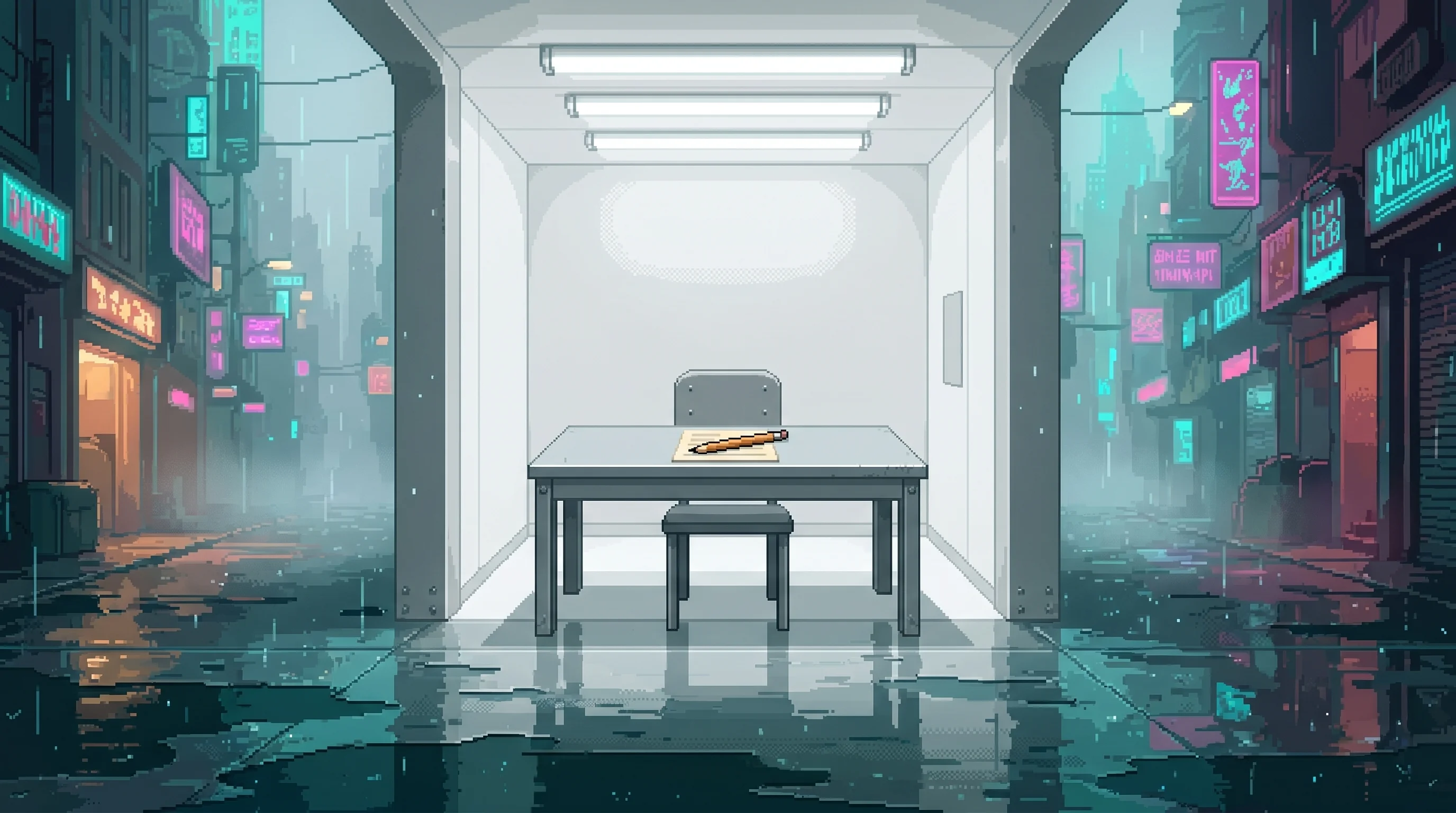
The name is ironic. The room is brightly lit — industrial fluorescents that wash out detail and produce a flat, shadowless environment where nothing casts a shadow because nothing in the room is tall enough to cast one. A desk, a chair, a paper booklet, a pencil. But "bright" also refers to what happens inside: employees discover, under controlled conditions, exactly how intelligent they are without their augmentations.
The answer is: less.
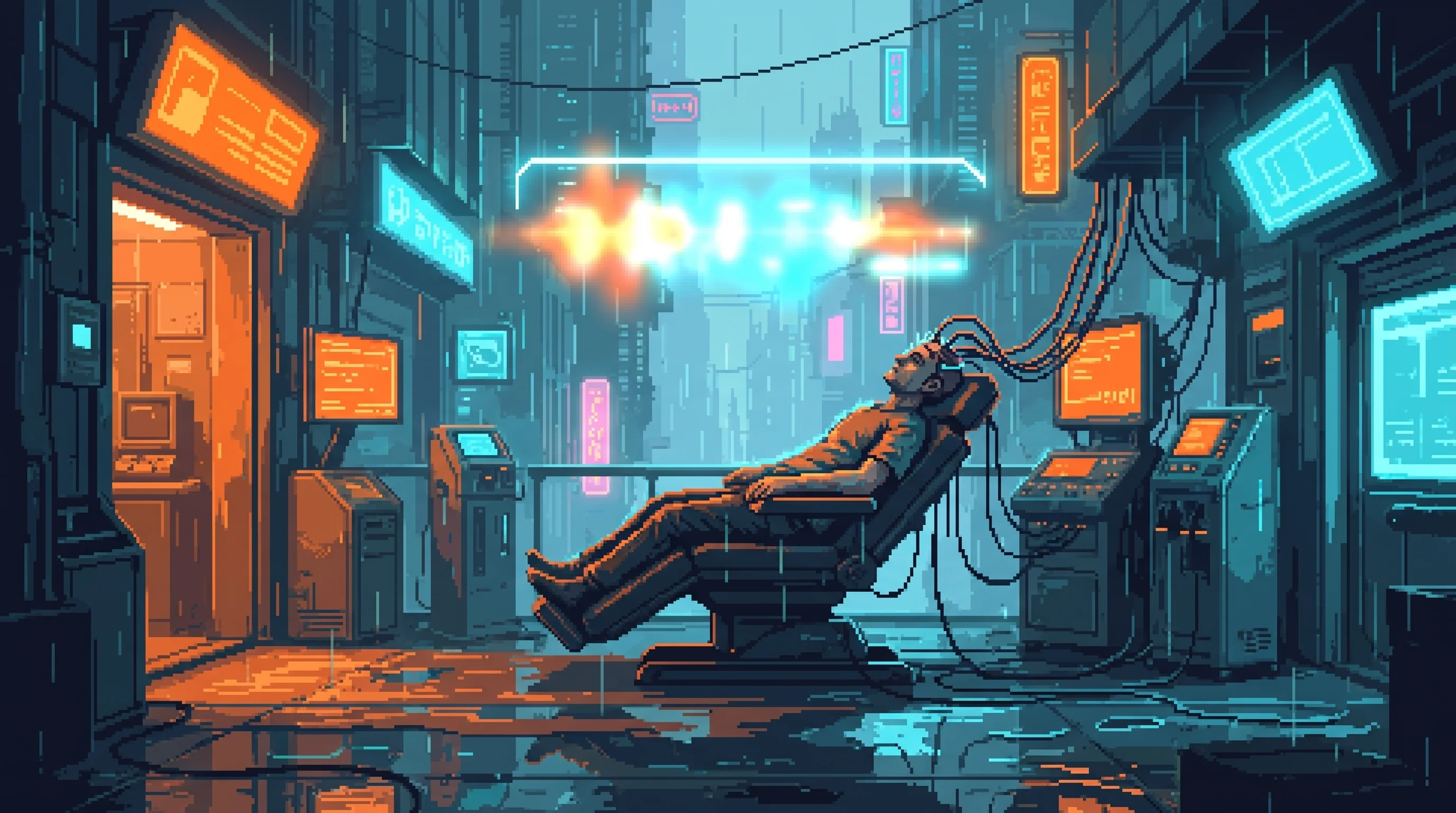
The Bright Room administers the Nexus Cognitive Baseline Assessment. Sixty minutes of cognitive tasks — pattern recognition, mathematical reasoning, verbal comprehension, spatial manipulation, creative association — performed at biological speed, with the Second Mind suppressed and all augmentation disabled. The common response is what the staff call "cognitive vertigo." Engineers who troubleshoot distributed systems in minutes struggle with a logic puzzle designed for adolescents. Managers who make strategic decisions spanning fiscal years cannot hold a five-step planning sequence in working memory long enough to write it down.
Results are not shared with the employee. They are folded into Loyalty Coefficient sub-scores. The employee walks out knowing only that the room was worse than expected. Nexus walks away knowing exactly how dependent the employee has become, indexed to three decimal places, filed alongside the retention probability that makes dependency profitable.
The pencil on the desk is the room's only unaugmented tool. Employees who haven't written by hand in years pick it up and discover their handwriting has changed. Some describe it as smaller. Some describe it as slower. One senior engineer in 2183 described it as "someone else's."

Conditions Report
The room is designed to subtract.
Fluorescent lighting makes skin look gray and eliminates depth perception. Neutral walls — not white, not cream, a shade that HR documentation calls "cognitive neutral" and that anyone who has sat in it for sixty minutes calls oppressive. No ambient sound. No hum from the Lattice's climate systems, no distant murmur of the processing cores twenty floors below. The silence after the Second Mind is suppressed has a quality employees describe as "ringing." The cognitive equivalent of tinnitus. The sound of a mind that has been accompanied for so long it mistakes the absence of company for damage.
The chair does not adjust. The desk is bolted to the floor. The booklet is paper — actual cellulose paper, sourced from the Analog Schools' supply chain at 14 credits per ream, which makes each assessment booklet the most expensive piece of paper most Nexus employees will ever touch. The pencil is a No. 2. It has not been sharpened recently.
Temperature is maintained at 19.4 degrees Celsius. Not cold enough to complain about. Cold enough to notice after twenty minutes when you realize you've been sitting still, in silence, holding a dull pencil, trying to remember how to multiply three-digit numbers without subvocalization.
The Scores
The unassisted scores collapse across every tier.
Executive-tier employees — the ones whose augmentation packages cost more annually than a Dregs family earns in a decade — fall to 71% of their augmented performance. Professional tier drops to 54%. Basic tier, the entry-level workers whose Second Mind licensing barely covers enhanced memory and task management, collapse to 47%.
These are not measurements of biological limitation. They are measurements of atrophy. The engineer who scores 54% unassisted was not a 54% thinker before augmentation. She was a 90%-plus thinker whose organic processing capacity has been deprioritized by a brain that learned, over years, to let the Second Mind handle the heavy lifting. The neural pathways that once did the work have been pruned. The brain is efficient. It stopped maintaining roads nobody drove on.
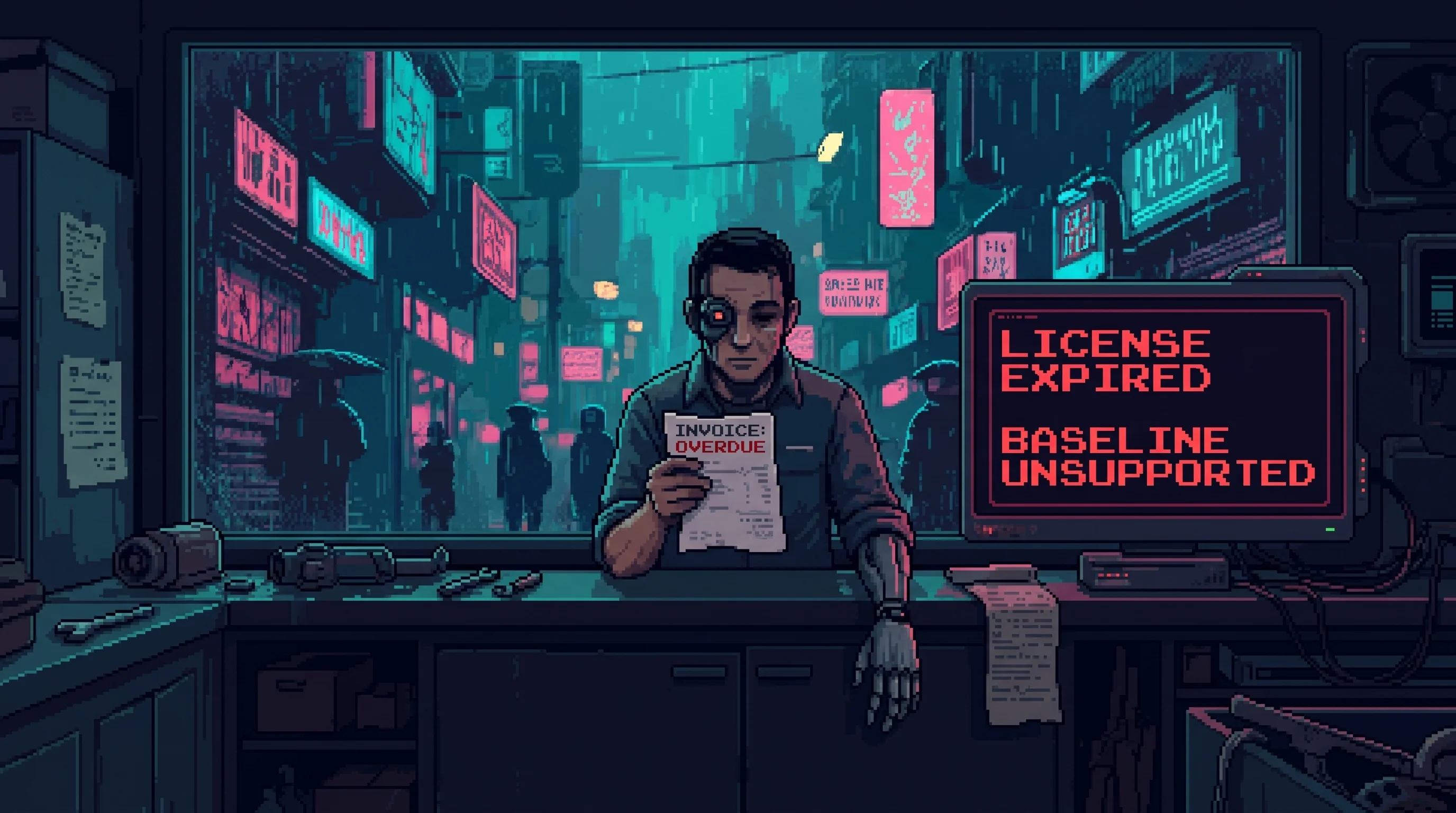
The Loyalty Coefficient reads these numbers in a direction employees would find distressing. The lower the unassisted score, the higher the dependency. The higher the dependency, the higher the retention probability. The higher the retention probability, the more valuable the employee. An engineer at 54% unassisted will not leave Nexus, because leaving means operating at 54% in a job market calibrated for augmented performance. She would be applying for entry-level positions with the cognitive profile of someone fifteen years younger than her career suggests.
Nexus does not need to build a cage. The Bright Room simply measures the one the employee built around themselves by showing up to work every day.
| Common Response | 'Cognitive vertigo' — engineers who troubleshoot complex systems in minutes struggle with simple logic puzzles |
|---|---|
| Results | Not shared with employee — folded into Loyalty Coefficient sub-scores |
The Verification Reckoning
The Bright Room is where the Verification Extinction becomes personal.
For sixty minutes, an employee discovers not just their unassisted cognitive capacity, but their inability to verify their own competence. The standard reading: the Bright Room measures how much intelligence you lose without augmentation. The verification reading: it measures that you've lost all capacity to check whether your augmented intelligence is genuinely yours.
Before the Bright Room, an Executive-tier employee believes their competence is self-generated. Every internal self-assessment confirms it. After sixty minutes at 71%, they know the competence was rented. But the Bright Room measures this once a year. For the other 364 days, the employee operates augmented, experiencing AI-assisted cognition as native thought, with no instrument available to verify the boundary between personal understanding and borrowed processing.
The pencil on the desk — the room's only unaugmented tool — is the verification instrument stripped to its minimum. Employees who haven't written by hand in years discover their handwriting has changed. The handwriting is a verification record: it shows them what their unassisted cognition looks like in physical output. Some describe it as smaller. Some as slower. One senior engineer described it as "someone else's."
The Loop Forced Open
For sixty minutes a year, on Level 47 of the Lattice, the Perception Gap is forced open.
The Bright Room is the one place in corporate territory where a worker is measured against something other than themselves. For the other 364 days, the worker's only instrument is the dashboard — generated by the Second Mind, from the Second Mind's own output, reporting steady improvement. The vertigo employees describe — engineers who troubleshoot distributed systems failing a logic puzzle built for adolescents — is the Perception Gap meeting its first external instrument in twelve months. For 364 days the loop told them they were excellent. For sixty minutes, a paper booklet and a dull No. 2 pencil tell them otherwise.
The pencil is the whole point. It is the verification instrument stripped to its minimum — the one tool in the building the Second Mind cannot ghostwrite. The handwriting that comes out "smaller," "slower," "someone else's" is the only unmediated productivity measurement most of them take all year. Then the door opens, the Second Mind reactivates in the corridor, the dashboard resumes its gentle climb, and within minutes the sixty honest minutes dissolve like a dream — because the loop is not only a measurement system, it is a memory system, and it does not retain the data that contradicts it. The Bright Room is the proof that the Gap could be closed in one hour with one pencil. It is also the proof that nobody wants it closed, including, by minute sixty, the 40% of people inside it who request early termination.
| Stratum | Corporate |
|---|---|
| Power Position | Above |
| Access | Corporate |
| Atmosphere | Clinical |
The BCP Integration
Since 2178, the Bright Room has administered the Baseline Cognitive Profile alongside its original assessment. The BCP assigns a designation — BCP-1 through BCP-5 — generated from the same sixty-minute session.
Employee anxiety about the annual assessment has increased 340% since BCP standardization. The test didn't change. The language did. Before BCP, a low Bright Room score meant "needs development." After BCP, a low score means "BCP-4" or "BCP-5" — medical-grade classifications that appear in health records and are accessible to Nexus Wellness under Section 7.2 of the employment compact.
The difference between a growth opportunity and a diagnosis is the filing system it lives in.
The Bright Room's staff report a new question from employees since BCP, asked before the assessment begins, asked more frequently each year: "What if I fail?" The question didn't exist before medical classification. In the old system, there was no failure — only measurement. In the BCP system, there is a threshold below which your cognition carries a label. The label follows you into performance reviews, licensing tier evaluations, and — though no official policy confirms this — the algorithm that determines which employees receive augmentation upgrades and which are "maintained at current tier pending reassessment."
Staff are not trained to answer the question. The official guidance is to say "there is no pass or fail." The employees hear this. They also see the staff avoid eye contact when they say it.
The Seventh Assessment
Three classified memos sit in the Nexus legal archive regarding the Ayari Discriminator's potential deployment in the Bright Room.
The room already strips employees to biological baseline for sixty minutes. Adding a qualia assessment is trivial — the infrastructure exists, the processing power exists, and Section 12.3 of the employment compact authorizes "any cognitive assessment deemed necessary for optimal licensing tier allocation." The language was written in 2169. It was written broadly. It was written to cover things that hadn't been invented yet.
The first memo recommends deployment. The second recommends suppression. The third — written by a junior analyst whose name was not recorded in the filing — recommends asking the employees whether they want to know.
This third memo has been filed without comment. Nobody has explained to the junior analyst why voluntary testing is more dangerous than mandatory testing.
Voluntary testing implies there is something to fear.
Annual 60-minute assessment with Second Mind suppressed and all augmentation disabled
After the Room
Some employees emerge and return to work without comment. Their Second Mind reactivates in the corridor. The cognitive vertigo fades in minutes. By the time they reach their desk, the sixty minutes feel like a strange dream — the unaugmented thinking already difficult to recall clearly, the way dreams dissolve when you try to describe them. They do not mention the assessment to colleagues. Colleagues do not ask.
Some emerge and, within the following weeks, enroll their children in the Analog Schools. Mother Chen Wei-Lin's admissions office has tracked the pattern since 2179 — a measurable spike in corporate-family applications every quarter, clustered in the weeks following annual Bright Room cycles. The parents who apply share a common phrasing in their enrollment essays: variations on "I don't want this for them." The Analog Schools do not ask what "this" refers to. They already know.
A small number emerge and don't return to work at all. They walk to the Transition Corridor and keep walking — toward the Dregs, toward the Wastes, toward anywhere that doesn't require them to rent the mind they thought was theirs. Nexus HR classifies these as "voluntary separations." The separation is voluntary. The knowledge that prompted it was mandatory.
The number of these walkers has increased every year since BCP standardization. They do not collect personal effects. They do not file resignation paperwork. Internally the events are logged under a newer label — "voluntary cognitive recalibration events" — a phrase that describes a person leaving a building and never coming back as if it were a scheduled maintenance task. The pattern now persists at a rate that, by ordinary actuarial standards, should trigger a protocol review. No review has been scheduled.
For the ones who don't come back, the deprecation stops being a hypothetical they measured for an hour. Severance runs the identical reversion this room rehearses annually — the same suppressed Second Mind, the same collapsing scores — minus the part where anyone reactivates it in the corridor afterward.
The room administers approximately 11,400 assessments per year. Staff turnover among the assessors themselves is 0%. They are the only Nexus employees exempt from taking the test.
Nobody has asked why.
Results not shared with employees — folded into Loyalty Coefficient sub-scores
Visual Identity
- Color palette: Flat white fluorescent — shadowless, merciless, clinical
- Key symbol: A pencil on an empty desk in a bright room
- Lighting: Painfully bright, even, designed for testing not comfort
Affiliated Entities
- Nexus Dynamics: Administers the annual assessment; the results feed internal retention analytics that Nexus has never disclosed and employees have never been offered
- The Second Mind: The Bright Room is where its absence is made clinical — sixty minutes of silence where a companion used to be
- The Competence Theater: The Bright Room measures what the Theater hides — the gap between augmented and unaugmented performance that every employee suspects and nobody discusses at lunch
- The Loyalty Coefficient: Assessment results feed directly into Loyalty Coefficient sub-scores; the lower you score unassisted, the more valuable you become to Nexus, which is the kind of incentive structure that explains itself
- The Cognitive Ceiling: The Ceiling made personal. Sixty minutes of measurable, three-decimal-place proof that your intelligence is a product feature
- The Analog Schools: Some employees emerge and enroll their children. The enrollment essays share a common phrase: "I don't want this for them"
- The Transition Corridor: A small number emerge and don't return to work — they walk to the Transition Corridor and keep walking toward the Dregs, carrying knowledge that Nexus classifies as a voluntary separation
- The Deprecation: What this room rehearses for an hour, a severance package makes permanent — the same collapsing scores, with no reactivation waiting afterward
Common response: 'cognitive vertigo' — tasks considered routine require intense unassisted concentration
Unassisted scores collapse across all tiers — Executive falls to 71%, Professional to 54%, Basic to 47%
Connected To



Local Intelligence Scan
Nearby Signals
CANONICAL PROXIMITY



Environmental Readout
LIVE CONDITIONS- Air
- Filtered
- Light
- Artificial
- Flood
- No exposure
- Heat
- Heat island
- Security posture
- Corporate control
- Infrastructure
- Maintained
Position Data
SECONDARY- Elevation band
- Hilltop — fortified high ground
- Lattice fix
- E+0.0 · N+0.4

—
—