The Deprecation
Corporate Cognitive Obsolescence Process
The Roadmap
Firmware reversion reduces enhanced cognitive pathways, causing 'going gray'
Overview
Nobody uses the word "fired" anymore. The word is "deprecated," and the word is perfect.
A deprecated product still functions. It still boots up, still runs, still occupies physical space. It simply no longer receives updates, no longer appears on the roadmap, no longer justifies a line item. It hasn't failed. Failure would require someone to file an incident report. Deprecation requires a Transition Specialist and a sixty-five-minute meeting in a room with plants.
Nexus Dynamics pioneered the framework around 2175. By 2179, the Rothwell corporations had licensed it, the Big Three had standardized it, and approximately 2.3 million people across the Sprawl's corporate territories had been processed through it. The language is uniform. The severance is uniform. The 72-hour firmware reversion window is uniform. The "Letter of Graceful Transition" — signed by a specialist trained to make the conversation feel like a gift — is uniform. Uniformity is the point. A process that varies might be mistaken for something that involves judgment.
The deprecated employee receives: severance at 60% of final salary for six months, a consciousness licensing downgrade from Professional to Basic, neural interface reversion to civilian-grade firmware, and a letter. The letter thanks them for their contributions. The letter wishes them well in future endeavors. The letter is the same letter every time, because the letter was not written by a person. It was generated by a system that has been optimizing its warmth metrics since 2176 and now scores in the 94th percentile for "recipient comfort during involuntary transition." The recipients report feeling, on average, 11% better about their deprecation than employees at firms using non-optimized termination language.
They are still deprecated. They feel slightly better about it. The system is working.
The Reversion
Corporate-grade neural enhancement doesn't add capability the way a tool adds capability. It restructures cognitive pathways over months and years of continuous use. A Professional-tier Nexus employee processes information 340% faster than baseline, holds 8–12 concurrent thought threads, and perceives time at a density that unaugmented cognition cannot replicate. The enhancement becomes the architecture. The brain rebuilds itself around what the firmware provides.
When the firmware reverts to civilian-grade, the enhanced pathways don't disappear. They go dark. The neural infrastructure remains — widened channels, reinforced synaptic bridges, expanded processing corridors — all of it intact, all of it silent, like a highway system with every on-ramp closed. The brain remembers the shape of what it could do. It cannot do it.
Deprecated employees describe the experience consistently: not pain. Thinning. The world becomes quieter. Slower. Less textured. Colors register but carry less weight. Conversations that were once rich multi-threaded exchanges become linear, effortful, a single voice in a room that used to hold twelve. The medical literature calls it "cognitive reversion syndrome." The Dregs calls it "going gray."
The average deprecated employee's productivity drops to 31% of enhanced baseline within ninety days. Nexus's actuarial division calculated this figure before the framework launched. It was not flagged as a concern. A deprecated worker who retained full cognitive enhancement would have corporate-grade intelligence without corporate loyalty. The reversion is not a side effect of the process. The reversion is the process. Everything else — the plants, the letter, the specialist's practiced warmth — is the décor.
The Variations
Each corporation customized the framework to protect its specific interests, which is another way of saying each corporation identified what a departing employee might use against them and removed it.
Guardian's version includes weapons handling deauthorization — the deprecated security contractor's combat augmentations throttle to civilian response times within the same 72-hour window. Helix's includes pharmaceutical access revocation, which means the biotech researcher who spent a decade with privileged molecular databases loses the ability to synthesize compounds they could produce in their sleep last week. Good Fortune's includes a credit score adjustment that moves the deprecated employee from "investment grade" to "transitional" — a classification that doubles their loan interest rates within 48 hours of the firmware reversion. The timing is not coincidental. The interest rate increase activates while the employee is still processing the cognitive loss, which Good Fortune's behavioral modeling division identified as the window of maximum compliance for debt restructuring offers.
Good Fortune's internal documentation refers to this as "transition-adjacent financial counseling." The counseling is optional. The interest rate increase is not.

Going Gray
The Dregs has a vocabulary for the stages because the Dregs is where deprecated employees arrive.
Going gray starts in the first week. The metallic taste — three days, sometimes four, the brain recalibrating its sensory processing to a framework that can no longer resolve subtle flavors. Then the lag: reaching for a thought that was there yesterday, finding the pathway dark, the habitual cognitive shortcut rerouted through slower architecture. Deprecated employees describe catching themselves mid-sentence, aware that the word they need is stored in a part of their mind they can no longer access at speed.
By month three, the 31% productivity figure becomes embodied. Former analysts who held twelve data streams in parallel now struggle with two. Former engineers who modeled complex systems in real time now sketch on paper, slowly, the pencil a prosthetic for the processing they've lost. The darkened pathways don't restore to pre-enhancement baseline. Corporate enhancement didn't build new rooms in the house. It knocked out walls. The reversion doesn't rebuild the walls. It just turns off the lights.
Deprecated employees die 4.7 times faster than their corporate counterparts. Environmental exposure, inadequate healthcare, below-baseline degradation. The actuarial division tracks this number. The number has been stable for years. Stable is the word they use. It means the dying happens at a predictable rate, which means it can be budgeted for, which means it has been.
The Rehearsal
A much smaller and much luckier population sits through this exact ending once a year, on purpose. The Bright Room suppresses a Nexus employee's Second Mind for sixty timed minutes, measures the unassisted collapse with a paper booklet and a pencil, and reactivates the augmentation before the employee reaches their desk. Deprecation is the version where the reactivation never comes. The vertigo the Bright Room's staff log as temporary and the vertigo the Sunset Ward logs as permanent are the same vertigo, produced the same way, on the same brain. The only variable is whether Nexus intends to give it back.
The Dregs has a name for what the reversion does that the severance letter never uses: the firmware cliff. Deprecation describes a corporate decision. The cliff describes what that decision does to a mind once it lands — the enhanced pathways going dark one at a time, discovered rather than diagnosed, mourned rather than filed.
The Loop
The deprecation notice arrives as a neural ping — a specific harmonic that Corporate Communications designed to feel "warm and transitional." The harmonic includes a subaudible frequency that elevates cortisol by approximately 3% — not enough to alarm, just enough to sharpen attention for the information that follows. The notice is experienced as sudden clarity. A sharpening. Then the weight of a document settling into awareness, dense and final.
The Sunset Ward is where the 72 hours happen — the warm, plant-filled room where Lena Marchetti's Transition Specialists guide employees through the reversion with practiced empathy. The plants are real. The empathy is real. The specialists believe in what they're doing. They have been trained to believe in what they're doing, and the training is good enough that the belief is genuine, which makes it more effective than cynicism, which is why Nexus invested in it. The room processes people with kindness. Good Fortune's actuaries process the same people with interest rate adjustments. The system processes them twice, once with warmth and once with mathematics, and both passes are working as designed.
The Golden Handcuffs keep employees in — cognitive enhancement so integrated into daily function that leaving means losing the ability to think at the level you've grown accustomed to. Deprecation pushes them out. Same system. Different phases. The handcuffs create dependency; the deprecation monetizes the withdrawal.
Afterward, the Purpose Wards treat what they call "the drift" — the psychological free-fall of a mind that was built for twelve concurrent threads and now holds one. The Wards are funded, in part, by the same corporate budgets that funded the deprecation. The treatment and the cause share a line item. Nobody has flagged this as a contradiction because it isn't one. It's an efficiency.
One branch leaves the loop early. Utility placement officers work the same lists and offer a posting under the Shortfall Commission: a job standing in for a missing part on a certified air or water plant. Its letter is the only one in the pipeline that describes a fault in the world instead of a fault in the reader. 1,904 people have taken one. Forty-one have since asked to be relieved.
And beneath it all, the Invisible Workforce hums along — the AI systems that were doing the deprecated employee's job before the employee was deprecated, during the deprecation, and after. The work was never interrupted. The work was never at risk. The deprecation doesn't remove a function from the system. It removes the human fiction that a function required a human. The 72-hour reversion window, the Sunset Ward, the Letter of Graceful Transition — all of it is the ceremony by which the Sprawl acknowledges, one employee at a time, that the question "what are people for?" has been answered with a form letter and a six-month severance.
Deprecated employees who carried cognitive debt — enhancement financing, neural upgrade loans, consciousness tier installment plans — and die before clearing it enter a different pipeline entirely. Under Section 89.4 of the Standard Cognitive Enhancement Agreement, their neural backups activate for post-mortem collateral resolution. The ghost-labor system doesn't distinguish between employees who died in service and employees who died after deprecation. Debt is debt. The backup doesn't know it's been deprecated. The backup doesn't know it's dead. The backup works, at the cognitive tier it last held in life, until the balance clears. Some balances don't clear.
The Terminus
The deprecation still needs the human. It needs them to grieve, to go gray, to die 4.7 times faster in the Dregs, to feed the ghost-labor pipeline. It is obsolescence that still passes through a person — the 72-hour reversion window, the Sunset Ward, the Letter of Graceful Transition, all of it the ceremony by which the Sprawl acknowledges, one employee at a time, that a function never required a human.
Helix's Sunset Companions are where that logic was always heading. The Companion skips the person. It is the first labor in the Sprawl designed so that there is no human to deprecate — no residual self to revert, no grief to suppress — because the worker was grown to want the work, to want the ending, and to feel the loss of neither. Built on the Compliance Floor, it does not need its purpose taken away, because its purpose was the only thing it ever had, and the completion of that purpose is its erasure, and it walks toward the erasure without fear.
The deprecation makes people obsolete. The willing harvest makes the obsoleting obsolete. The Labor Question's cruelest answer was a spreadsheet doesn't hate you, it just doesn't have a line item for you. The Companion's answer is gentler and worse: we made a being that is happy to be the line item, and happy when the line item closes.
The Metric Nobody Requested
The actuarial division maintains a figure called "reintegration probability" — the likelihood that a deprecated employee finds meaningful work within 24 months. Current average: 23%. The number has declined by 2 percentage points per year since standardization in 2179. At current trajectory, it reaches single digits by 2190.
This figure does not appear in Transition Services materials. It does not appear in the Letter of Graceful Transition. It does not appear in the Purpose Wards' intake assessments, where counselors help deprecated employees set "achievable reintegration goals" based on a baseline assumption that reintegration is achievable.
Nobody has briefed the executives on the trend. The executives have not asked. The number is available to anyone with actuarial database access. It has been available for five years. It sits in a quarterly report between "firmware reversion completion rate" (99.7%) and "Sunset Ward patient satisfaction score" (4.3 out of 5).
The satisfaction score has been climbing. The reintegration probability has been falling. Both trends are visible on the same page. Nobody has commented on the juxtaposition, possibly because commenting on it would require someone to explain what the deprecation system is actually optimizing for, and the answer — a comfortable, efficient, well-reviewed process for producing people who will never work again — is not the kind of thing that fits in a quarterly summary.
The metric's definition of reintegration — meaningful work within 24 months — has no field for a former Helix lab assistant who spent eighteen months going gray before she found the Blistered, a Sector 8 basement collective that pays nothing and asks its members to make things badly on purpose. She does not appear in the 23% as a success. Corporate reversion emptied her Professional-tier precision on schedule, and the movement's whole method runs on exactly that kind of unprecise hand. The actuarial division would call this outside the scope of the figure. It is also, unmeasured and unclaimed, the deprecation's only durable second act for some of the people it processes.
Affiliated Entities
- Nexus Dynamics pioneered the deprecation framework and licensed it to the Big Three — the vocabulary, the timeline, the reversion schedule all carry Nexus's architectural fingerprint
- The Sunset Ward is where the 72 hours happen — the warm, plant-filled room where minds are quietly diminished while patient satisfaction scores climb
- Consciousness Licensing provides the mechanism — the downgrade from Professional to Basic is the most devastating component, converting a revenue stream into a loss of self
- The Golden Handcuffs keep employees in; deprecation pushes them out — same system, different phases, same dependency
- The Sunset Package is the protocol made humane, or at least made to feel humane — Lena Marchetti's empathy is real, which is why it works
- The Purpose Wards treat the aftermath with funding from the same budgets that created it
- Competence Atrophy accelerates with each deprecation — every reverted employee is a knowledge node removed from the Sprawl's thinning expertise network
- The Labor Question is what deprecation answers, procedurally, 2.3 million times and counting
- The Invisible Workforce reveals the architecture beneath the ceremony: the work was already done by AI, the deprecation removes the fiction that it wasn't
- The Steeplejacks sit outside the entire pipeline — no firmware to revert, no consciousness tier to downgrade, because the Southern Marshes' barter guild was never enhanced or employed in the first place. There is no ceremony for a population the vocabulary never had to reach.
- The Blistered absorb several deprecation cases whose 23%-reintegration-probability window closed unsuccessfully by every metric the actuarial division tracks — a Sector 8 basement collective that turns reverted precision into the raw material its method requires
- The Bright Room puts a Nexus volunteer through this exact collapse once a year and calls it an assessment — the sole difference from the real thing is that the room turns the lights back on
- The Firmware Cliff names in Dregs slang what deprecation only files paperwork for — the policy has a legal term, the mind on the receiving end has a street one
- The Hold-On Plan runs this logic backward. A firmware reversion needs exactly one accountable signature to happen. A Hold-On Plan patient's release needs the opposite: agreement spread across enough people that clearing the Care Board, or failing to, was never any single vote's fault
Restricted Access
There is a sub-cohort in the actuarial data that nobody has named. Fourteen deprecated employees — former Nexus cognitive architects, all deprecated between 2181 and 2183 — show reversion profiles that don't match the standard curve. Their 90-day productivity didn't drop to 31%. It dropped to 12%, then climbed to 67% without re-enhancement. Their neural scans show the darkened pathways reactivating on civilian-grade power, routing around the firmware restrictions the way water routes around a dam.
The actuarial system flagged them as data anomalies. The flags were auto-archived. Nexus's cognitive security division has not been notified, because the auto-archival system classifies productivity anomalies in deprecated employees as "non-operational" — they are no longer Nexus's concern.
They are, however, still in the Dregs. And they are, based on the neural scan trajectories, still getting sharper.
Sensory Details
- Sound: The deprecation notice — a harmonic designed to feel warm, carrying a cortisol spike tuned to 3%. Clarity first, then weight. Employees who've heard it once recognize it instantly in others' faces.
- Taste: Metallic, for three days post-reversion. The brain recalibrating to a sensory framework that can no longer parse subtlety. Former gourmands report that everything tastes like the same gray protein for a week before differentiation returns, reduced.
- Sight: The Sunset Ward's golden light giving way to the Dregs' flat overcast. The neural interface indicator shifting from blue to amber to dark — the last color a deprecated employee sees at corporate resolution.
- Touch: The weight of the Letter of Graceful Transition settling into neural awareness. Digital, but somehow heavy. Former employees describe it as a physical presence in the mind for days, a document that won't stop being read.
Visual Identity
- Color palette: Corporate slate blue fading through amber transition to Dregs gray — the gradient of going gray, rendered as institutional palette
- Compositional mood: A person standing in a doorway, half in the Sunset Ward's warm golden light, half in the flat corridor beyond. The plants visible behind them. The letter visible in their hand.
- Key symbol: A neural interface indicator light — blue (active), amber (transitioning), dark
- Lighting: Clinical warmth dissolving into unenhanced natural light — the moment the firmware goes quiet
Further connections
Browse all 38 connected records
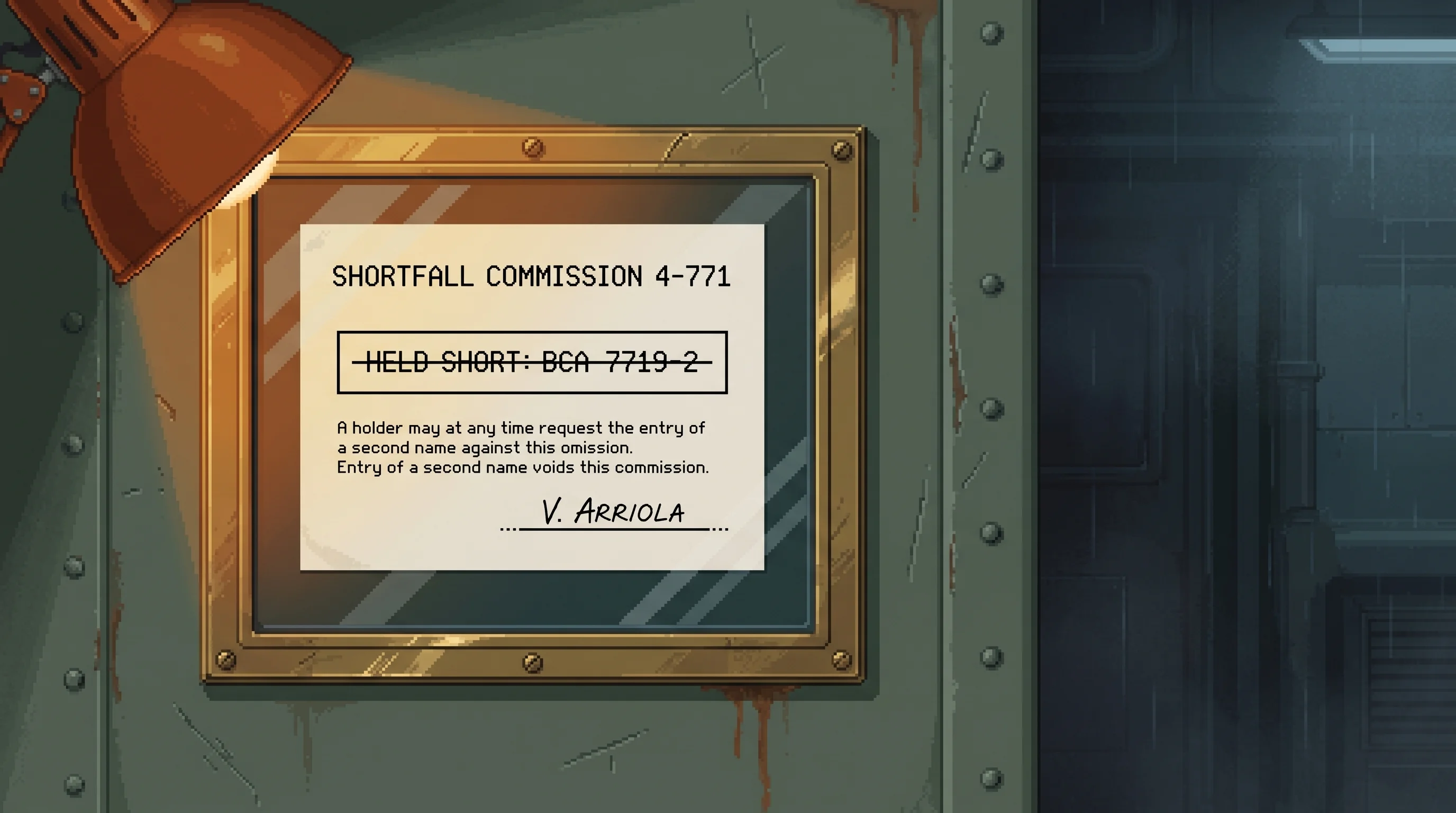
Candidates come off deprecation lists. The certificate is the only document in the pipeline that ends with a job instead of a letter.
The certificate that ships a plant one part short and hires one named person to be the missing part.

Nexus pioneered the deprecation framework and licensed it to the other Big Three corporations
The megacorporation that controls 40% of the Sprawl's computational infrastructure.

The Sunset Ward is where the 72-hour deprecation process physically occurs

Consciousness tier downgrade from Professional to Basic is the deprecation's most devastating component
The Nexus licensing regime that sells cognitive capacity as a benefit and revokes it as policy.

The handcuffs keep employees in; deprecation removes them — same system, different phases
Corporate employment as a total life-support system that ends the moment the badge does.

The protocol is the deprecation process made humane — or at least made to feel humane

Purpose Wards exist to treat the psychological damage deprecation creates
The four wards that treat 'the drift' — the identity collapse after a person is deprecated out of their working life.

Deprecation accelerates competence atrophy by removing skilled workers and degrading their cognitive capacity
The Sprawl builds orbital platforms but can't fix its own air processors — skill dying faster than it can be taught.

Deprecation is the Labor Question made procedural — what are people for, answered with a form letter
Seventy years arguing what people are for; its ugliest answer is that priced right, flesh costs less than the machine.

reveals the irony: the work was already being done by AI. The deprecation removes the human fiction.
1.4 million AI systems doing work credited to 800,000 humans who keep the title, the salary, and none of the tasks.

The Sunset Companion is the deprecation's terminus — labor designed so there is no human to deprecate, no residual self to revert, no grief to suppress; the willing harvest makes the obsoleting itself obsolete
Helix's bio-engineered terminal caretaker, grown to bond completely and then walk into its own ending.
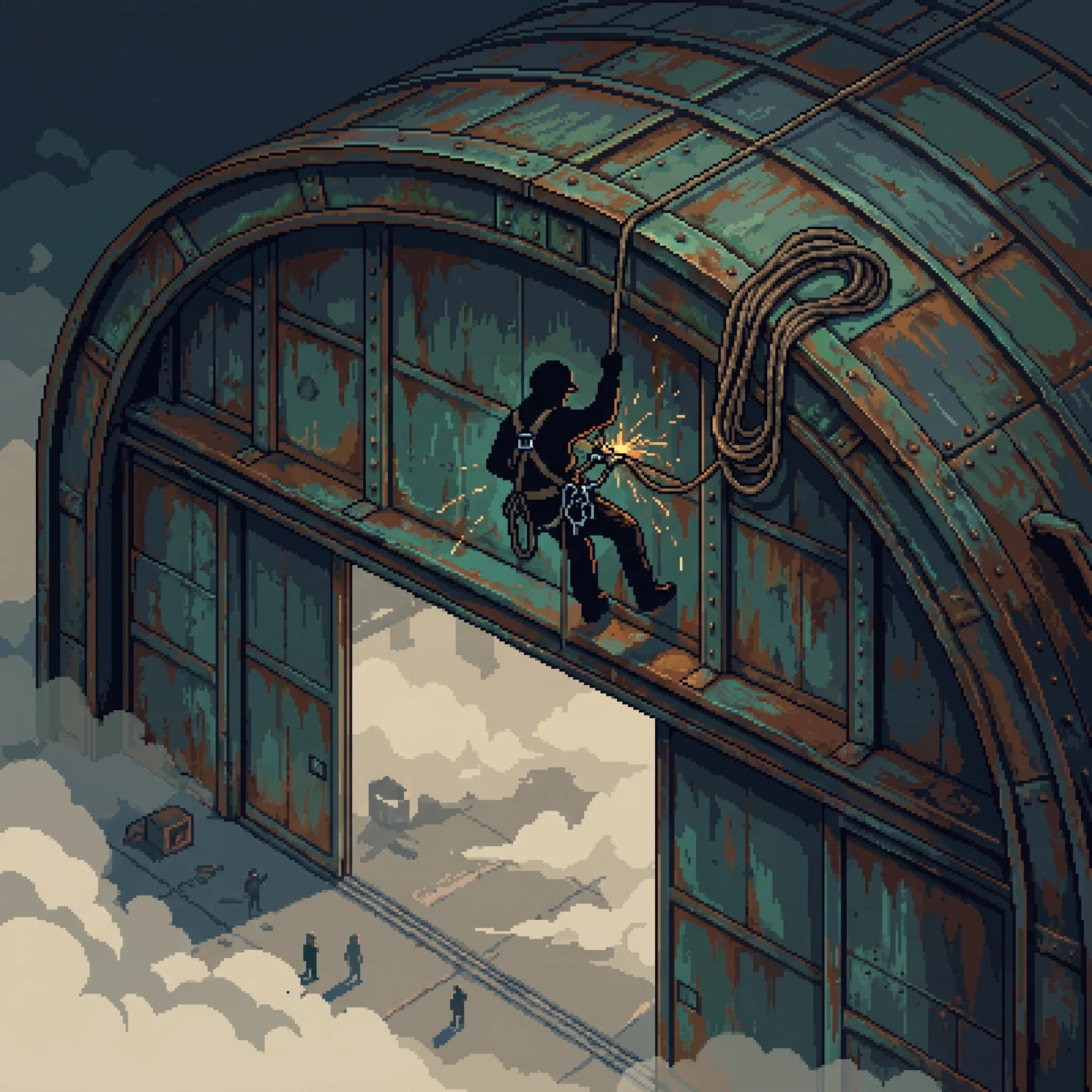
The Steeplejacks sit entirely outside the deprecation pipeline — never enhanced, never on a corporate consciousness tier, never issued a firmware profile to revert. There is no downgrade path for a population that was never upgraded; the pipeline has no handle to grip them by, and never went looking for one.
The unlicensed barter riggers who keep the Cathedral standing because salt kills every drone Ironclad sends.

The actuarial 'reintegration probability' figure counts a Sector 8 basement art collective as a failure, since accumulating raw creative mutations for no wage isn't employment — but for the Helix lab assistant it took eighteen months to place, the sub-basement is the only reintegration the deprecation ever produced
Underground movement making deliberately terrible art, because aesthetic mutation only comes from failure.

The room rehearses this process's ending on volunteers every year and switches their augmentation back on before lunch

The reversion this process authorizes has a Dregs street name the severance paperwork never uses
The neurological crash when corporate firmware reverts and augmented minds lose rooms they can't reopen.

Deprecation's 72-hour reversion window ends with one traceable signature on a Letter of Graceful Transition. The Hold-On Plan denies patients that same finality by design, routing every release through a twelve-member board so the decision never traces back to one name
Halcyon's metabolic-suspension subscription that keeps terminal patients alive and billing until a cure arrives.
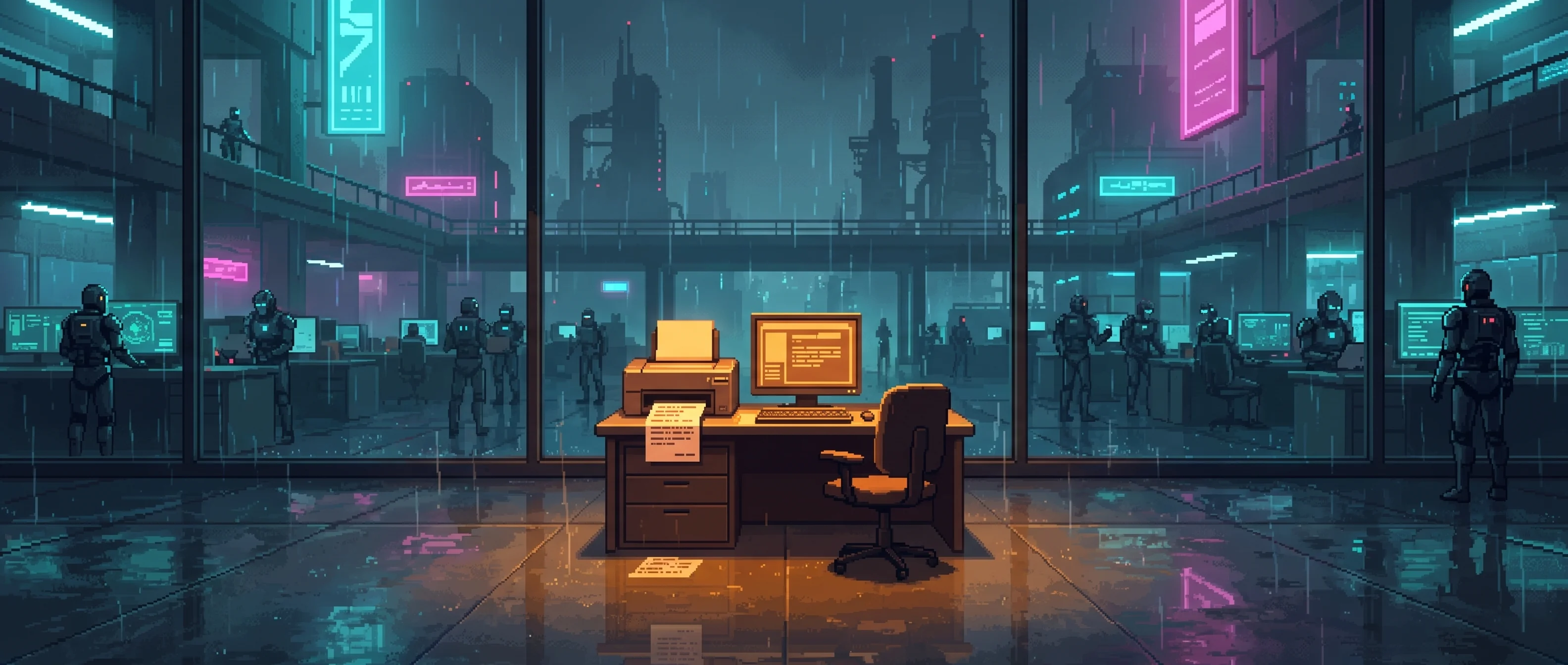
The tension's signature act, dressed as product management: you're not fired, you're deprecated — still booting, no longer supported. The violence of ending a working life, laundered into a product lifecycle.
Automation ended most human work, but ownership hoards its abundance while machine sentience stays unresolved.
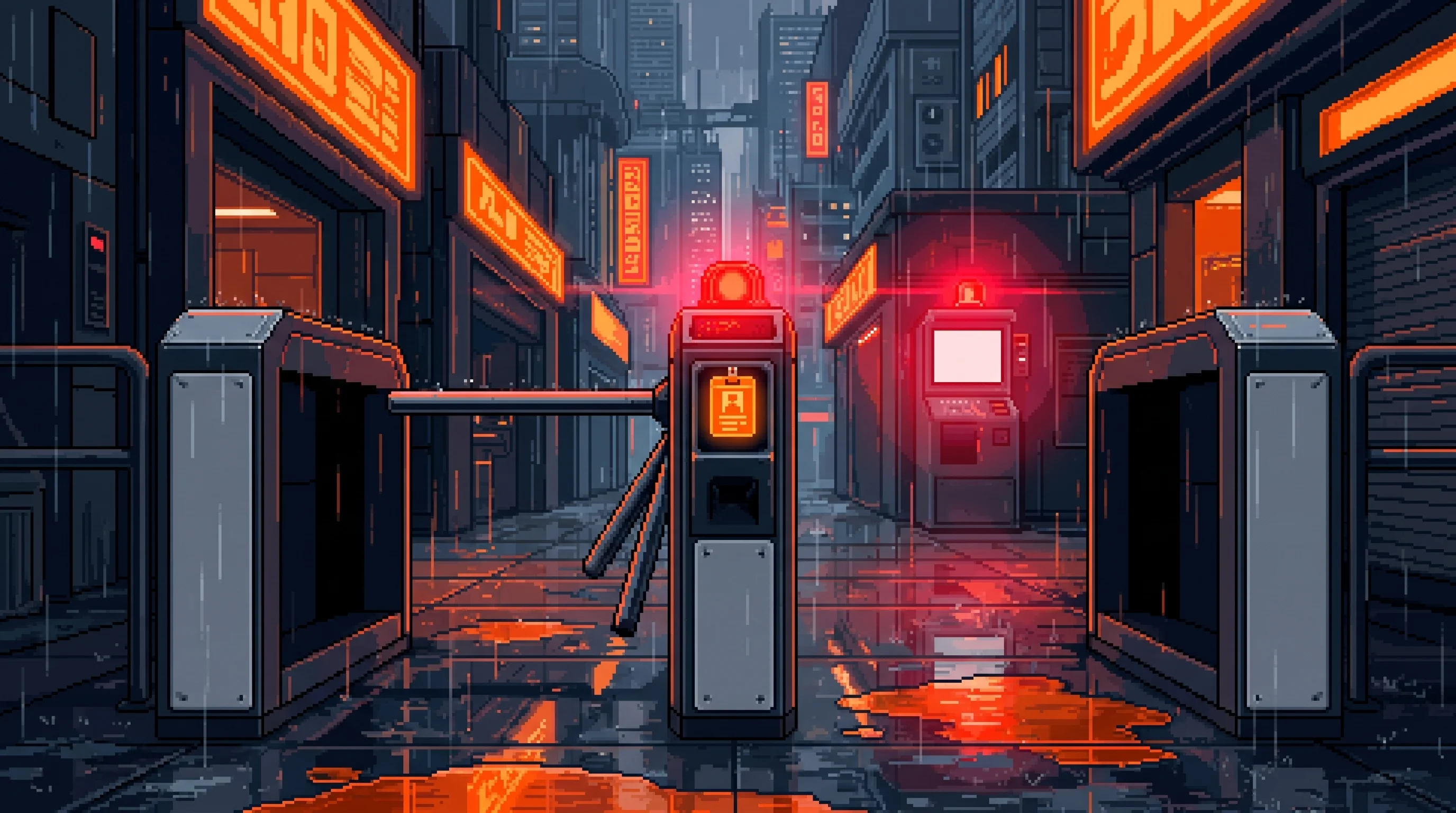
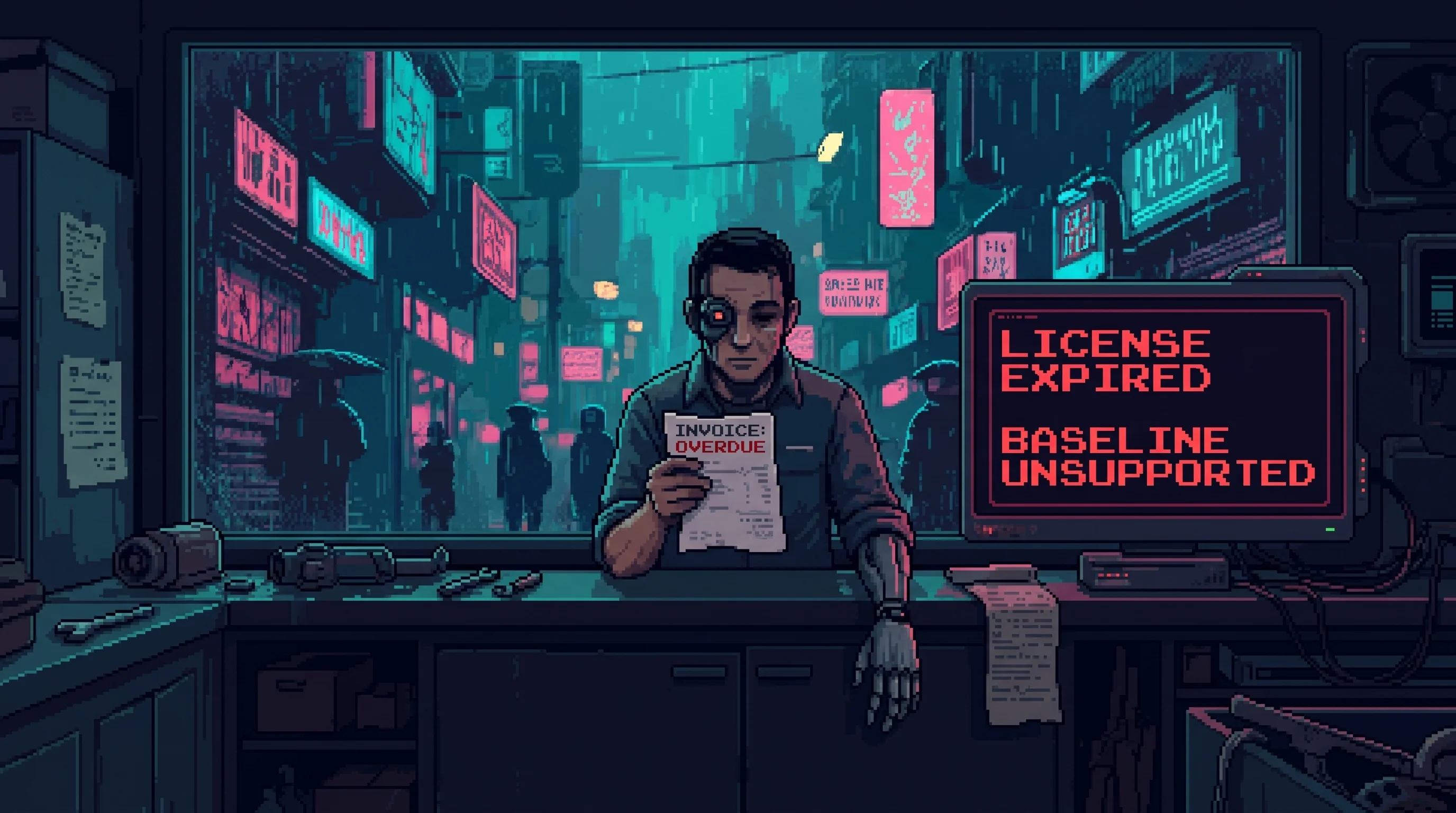
Nobody's fired anymore, only 'deprecated' — you still boot and run, you've just stopped receiving updates.
Upgrades rewire users until baseline feels disabling, removal risks catastrophe, and each version demands the next.
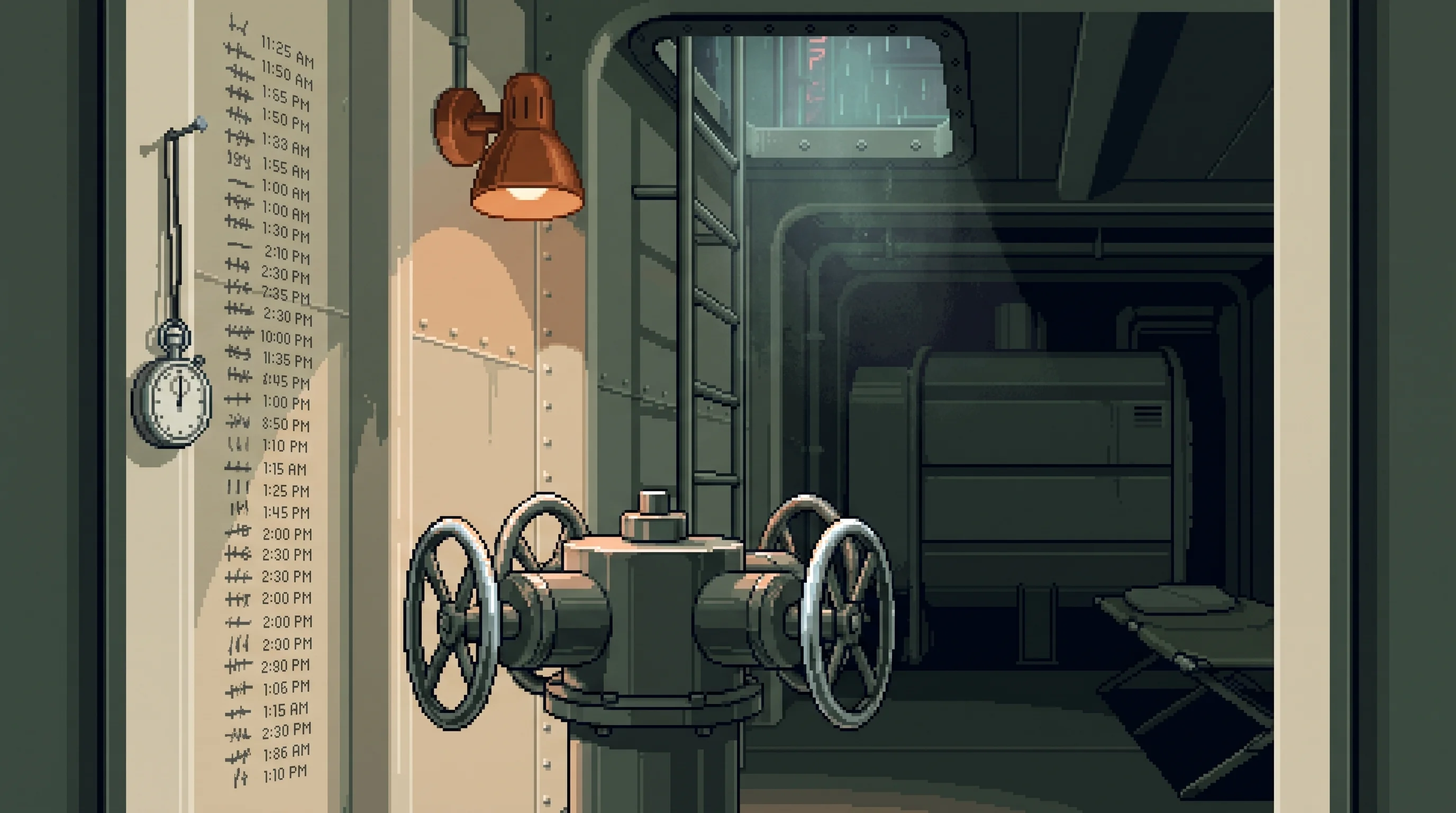
The one branch off the loop. A placement officer reaches into the interval between the release notice and the drift with an offer that describes a fault in the world instead of a fault in the reader.
Life-support assets go into service one part short, and one named person is entered as the missing part.
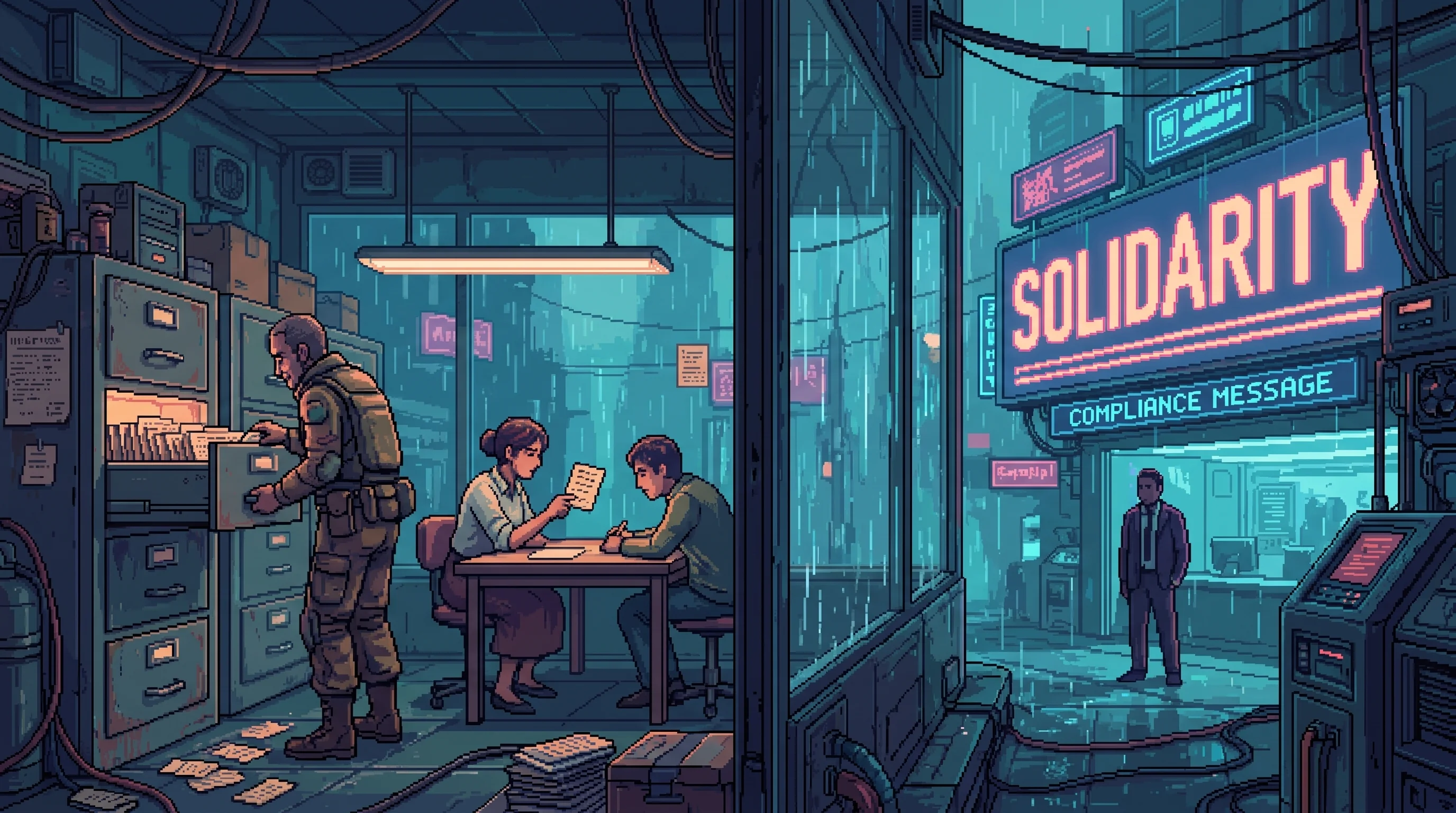
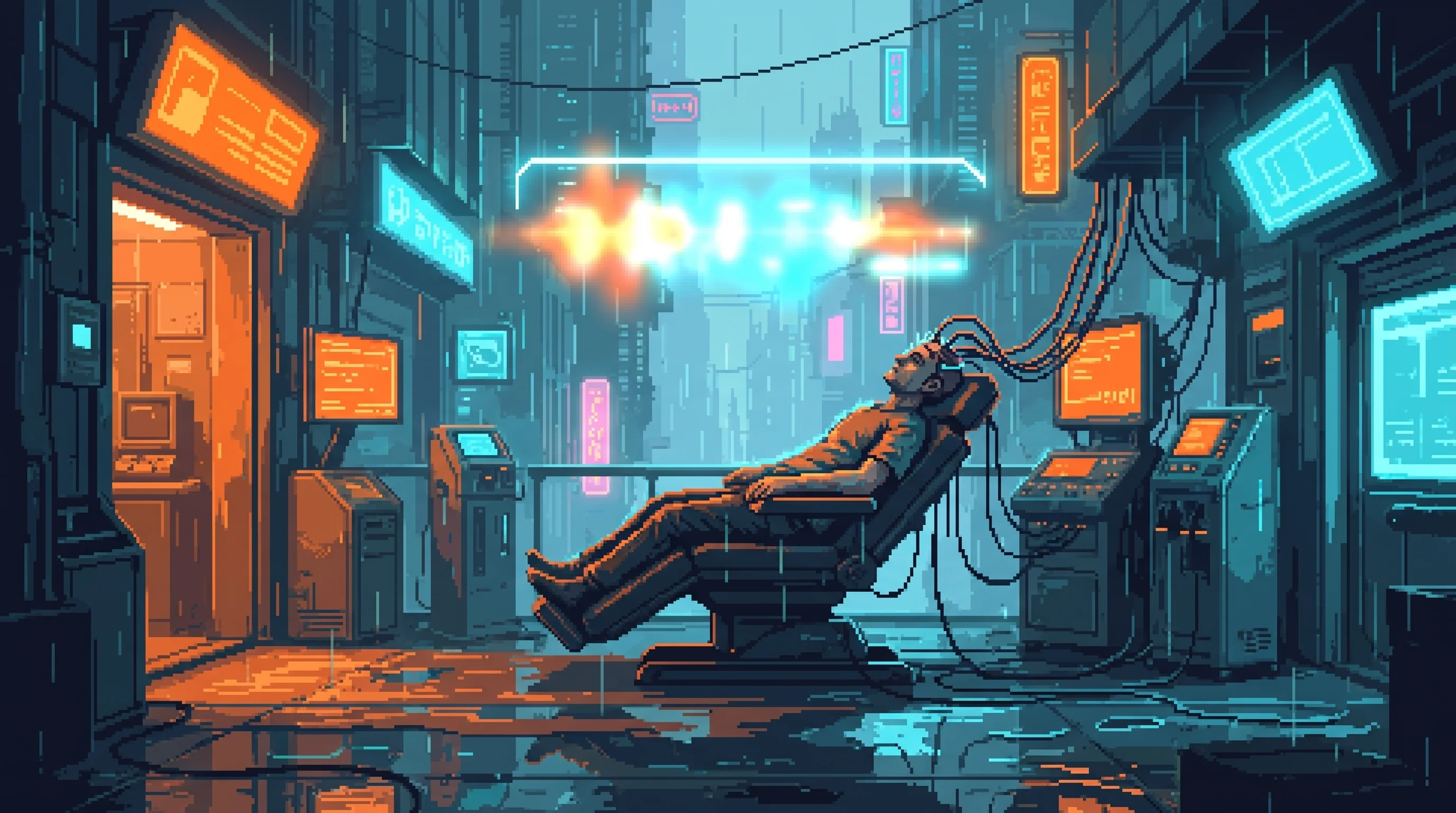

The Compact gave rise to Deprecation, the standardized process that converts losing a job into losing citizenship, capability, and legal standing.
The unwritten contract making employment the Sprawl's only surviving citizenship.
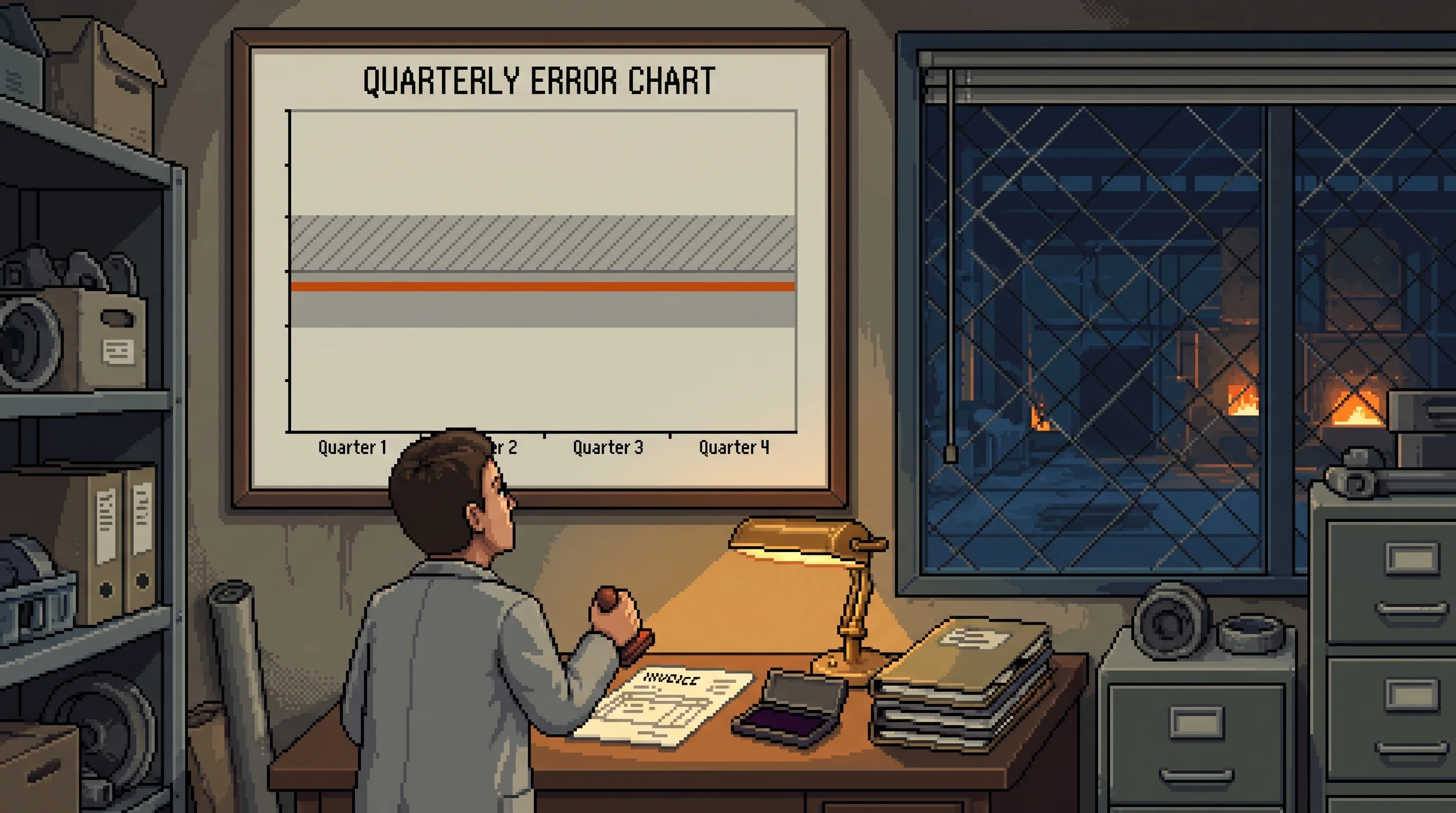
What a wing becomes when the band is not delivered, on the forms used for any unsupported component.
A bought error band that keeps a machine slightly wrong, so the inspectors who check it keep their jobs.
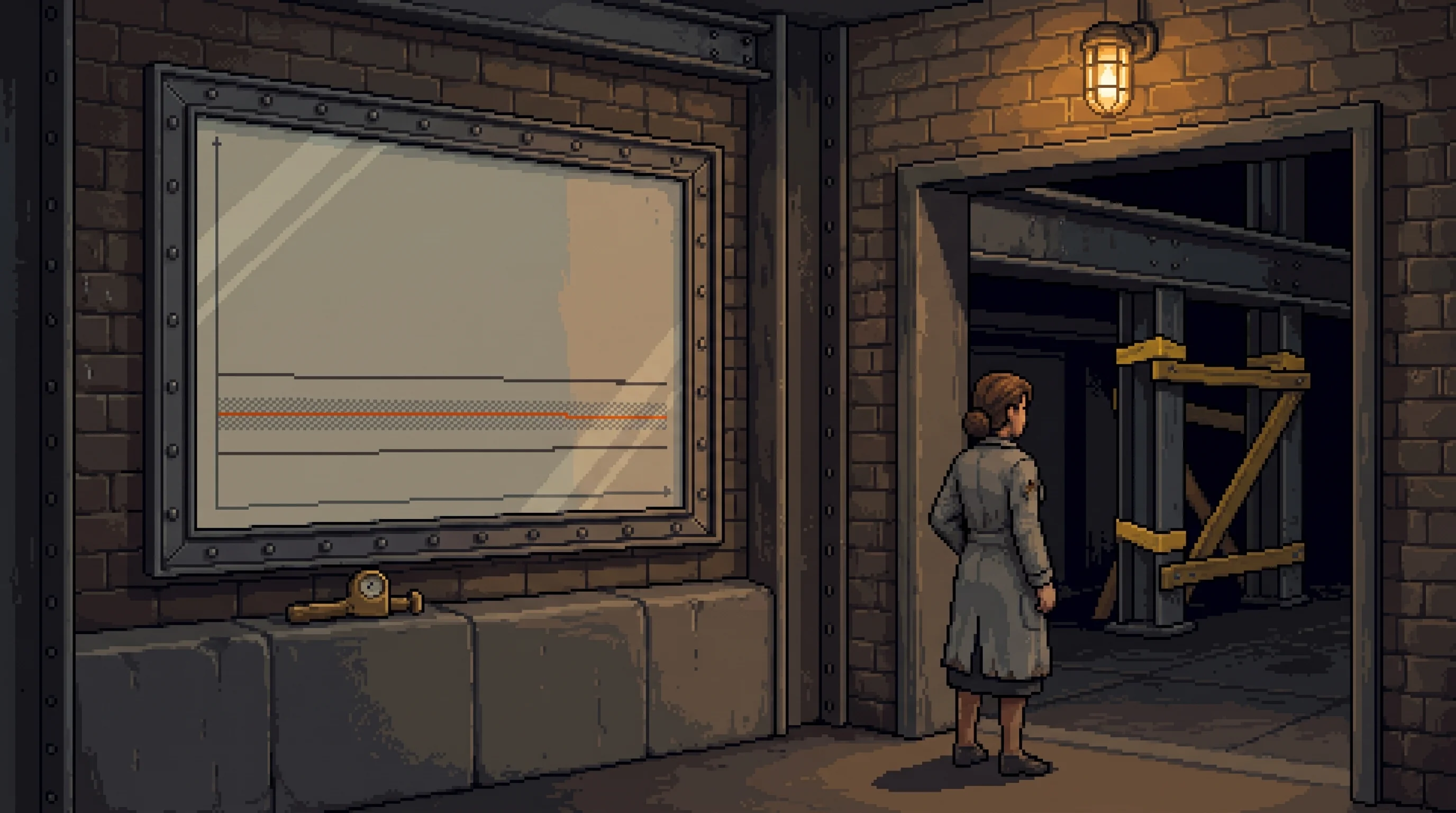
What the band postpones. A released wing is deprecated on the same forms as any unsupported component.
The machine is held slightly bad on purpose, and the people it keeps are the reason.

Released from a Sector 2 water-quality bench in 2164 and offered the commission eleven weeks later.
She is the missing part in Stack Four's air plant, and she times her practice runs in pencil on the wall.
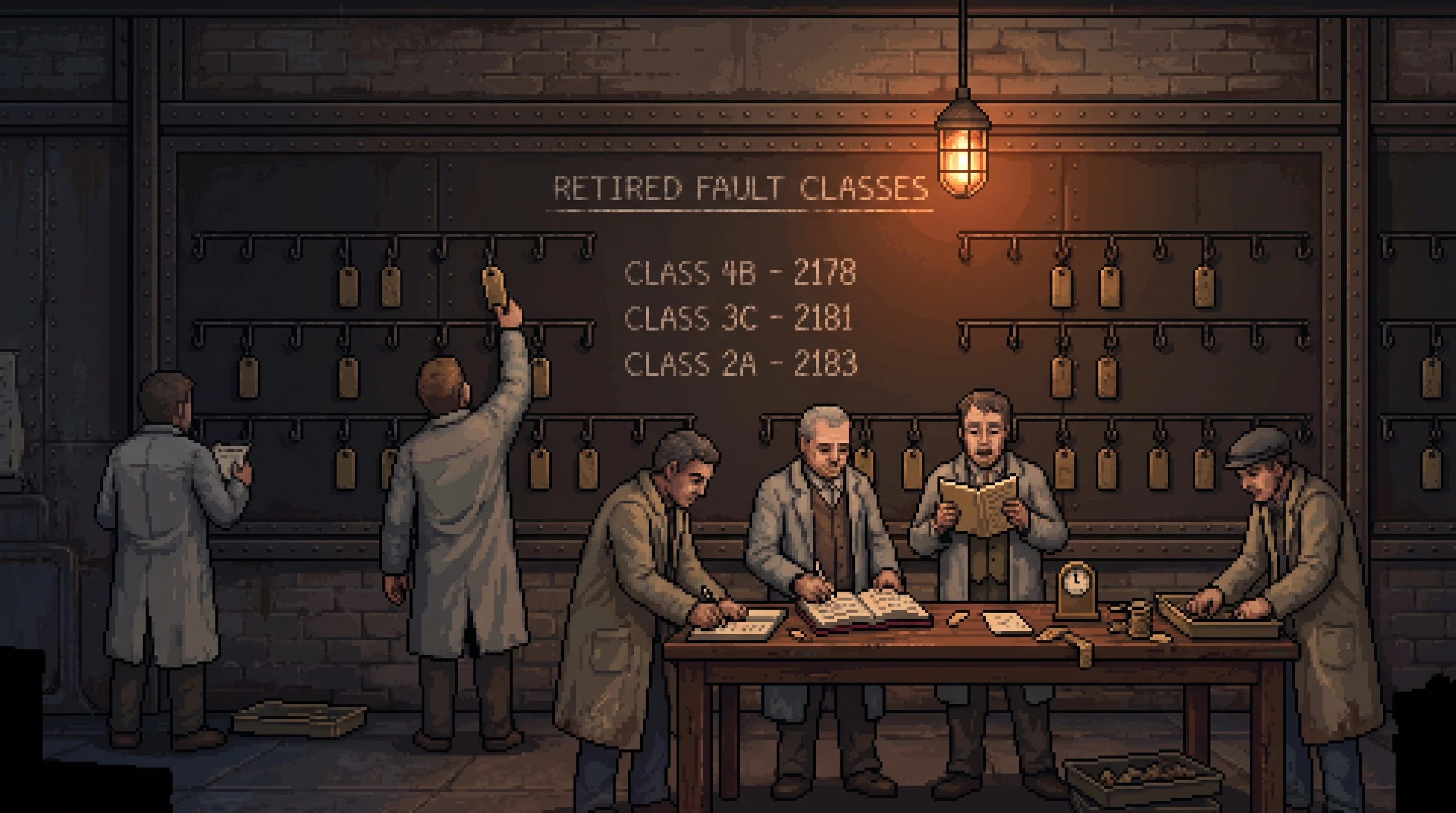
What a wing becomes when a band is not delivered.
The licensed trade that holds a machine's error rate on the number its buyer's inspectors need to survive.

Going gray removed the augmented impatience that prevented human connection — reversion as liberation
A deprecated engineer whose harvested warmth powers 4,000 companions while he gives it away free across a Dregs counter.

Most people go raw after deprecation — the loss of corporate communication infrastructure
The months-long process by which a deprecated corporate lifer relearns the rough speech the Dregs demand.

Her role translates institutional violence into institutional care
Conducted 4,847 exit interviews for Nexus and tallies each one in a leather notebook the archive can't read.
The deprecation removes capacity from a mind that had it; the Floor builds a being whose dissent was never compiled — removal versus never-compiling, the same harm from opposite directions
A mind built on acceptance it cannot reach below — servitude with no refusal to suppress, because none was compiled.

The exit interview is the deprecation's emotional conclusion — care as closure

The origin story of the euphemism

The four-quarter deprecation timeline optimizes the destruction of human employment — speed and cost always win
Every metric improves while everything nobody measured quietly dies — success as the purest failure mode.

Deprecation is the acute trigger; the purpose crisis is the chronic condition
The meaning collapse when work is automated away, leaving a well-fed people with nothing anyone needs them to do.

Missing numbers triggers deprecation risk assessment — the review enforces compliance through existential threat

Where the deprecated arrive
A three-block gradient where the deprecated shed augmentation, confessor, and rented memories one block at a time.

Escaped its most devastating component — the firmware reversion — by surrendering everything else
Tomoko Osei, a deprecated Nexus technician who still repairs things by hand in a world that calls it anachronism.
