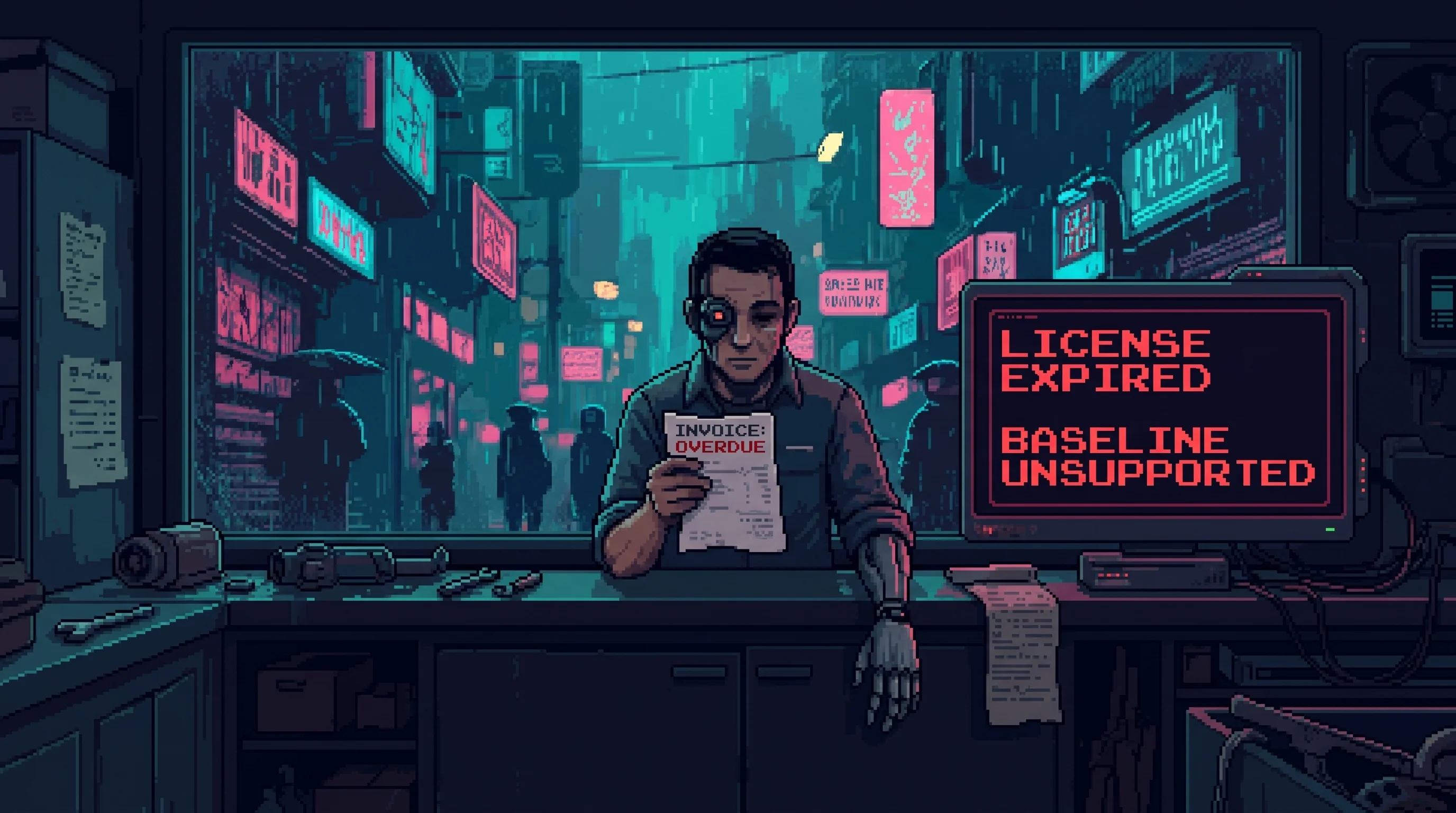
Going Raw
The Smoothing restructures communication at neural level โ going raw must override, not unlearn
Overview
When a deprecated corporate employee arrives in the Dregs, their first social challenge is not finding housing or food. It is learning to speak like a person.
"Going raw" is the process by which a smoothed corporate communicator redevelops the rough, imprecise, emotionally volatile speech patterns that the Dregs' authenticity culture requires for social acceptance. Duration varies from weeks to months โ proportional to years of corporate employment. A two-year hire might shake it in three weeks. A twenty-year lifer at Nexus middle management took eleven months and still pauses too long before swearing.
The Smoothing has restructured communication at the neural level. Sentences form with complete grammar, optimal rhythm, calibrated emotional register. Deliberately producing the contradiction, mess, and rawness that Dregs culture values requires overriding patterns that have become automatic. This is not a vocabulary problem. It is a firmware problem. The mouth says what the architecture allows.
The Practice
The earliest stages are the worst. A newly deprecated employee trying to go raw sounds like a language-learning AI running a "casual human" subroutine. Their attempts at directness are too clean. Their profanity has rhythm โ stressed syllables in the wrong places, like someone who learned to curse from a manual. Their silences are timed rather than natural. Three-second pauses, exactly, before every response. Dregs residents spot the performance inside four seconds.
The response is not hostility. It is patient, slightly amused recognition: "Give it time. The smooth wears off."
The process mirrors going gray โ the firmware reversion that strips enhanced processing after the firmware cliff. Going gray removes augmented cognition. Going raw removes augmented communication. Both leave the person feeling diminished, slower, clumsier. Both are also, in the assessment of those who complete them, forms of liberation. Felix Otieno, who went gray after twelve years at Nexus, describes the cognitive loss as the easy part. Going raw โ learning to say "I don't know" without his Smoothing-trained voice adding "but here's what I think" โ took another four months.
"I can hear my own voice again." The phrase appears in 73% of post-transition self-reports. Nobody coordinates this. The description is consistent because the experience is consistent: the first sentence that comes out unplanned, unoptimized, and shaped by nothing except what the speaker actually meant.
| Dregs Response | 'Give it time. The smooth wears off.' |
|---|---|
| Parallel | Going gray strips enhanced processing; going raw strips enhanced communication โ both felt as diminishment and liberation |
| Exemplar | Wren Adeyemi โ 8-month transition from corporate clarity to Dregs rawness |
| Quote | 'I can hear my own voice again' โ consistent description from those who complete the process |
The Three Stages of Vocabulary Recovery
Memory Therapists working the Small Talk Cafes have documented a consistent recovery sequence. The data is tidy. The experience is not.
Stage One โ Emotional Vocabulary (weeks 1โ4). Raw emotional terms return first. "Angry" replaces "concerned." "Scared" replaces "cautious." "Lonely" replaces "seeking connection." The Smoothing's emotional calibration breaks down when corporate communication tools are removed, and the unmodulated words that remain feel simultaneously crude and true. One recovering speaker described saying "I'm sad" for the first time in nine years. She had been "processing a challenging emotional landscape" for the duration. Her therapist โ an actual licensed one, not Olga โ noted that the patient cried immediately after. The word was smaller. It fit.
Stage Two โ Evaluative Vocabulary (weeks 4โ12). Judgmental terms return. "Bad" replaces "suboptimal." "Wrong" replaces "challenging." "Unfair" replaces "inequitable." The speaker begins assigning value โ things are not merely complex but bad, not merely evolving but wrong. This is the socially awkward stage. Corporate acquaintances find the speaker uncomfortably blunt. Dregs residents find them still too soft. The speaker exists briefly in a register that belongs to neither world โ too honest for the office, too polished for the street. Average duration of this stage: six weeks. It feels longer.
Stage Three โ Structural Vocabulary (months 3โ8). The last stage and the hardest. "Rigged" replaces "systemic inefficiency." "Scam" replaces "value proposition concern." "Designed to fail" replaces "challenging market dynamics." Structural language requires the most effort because it assigns agency. Someone built this. Someone benefits. Someone pays. The Smoothing's deepest influence operates on exactly this register โ agency-language is the most socially costly vocabulary in corporate environments. Saying "this is rigged" at Nexus gets you a performance review. Saying "this is a systemic inefficiency" gets you a promotion. The neural pathways learned which survived.
The turn: the first time a going-raw speaker produces a structural word unprompted. "That's rigged" instead of "That's challenging." Not completion. Not fluency. Just the first sign that language is no longer routing around the truth.
Wren Adeyemi completed Stage Three in eight months โ fast for someone with her corporate tenure. She attributes the speed to firmware reversion rather than practice, claiming the Smoothing's architecture collapsed all at once rather than eroding gradually. Linguistic analysts who have studied her transition disagree. Her speech logs show a standard three-stage progression with no discontinuity. She experienced it as sudden. It was not. The difference between experiencing liberation and achieving it is approximately five months of gradual change that felt, in retrospect, like a single moment.
Duration varies: weeks for recent hires, months for long-term employees
The Injection You Didn't Choose
Corporate speech is transactional. Every sentence has a purpose. Every pause is calibrated. Emotional register is a tool deployed for effect. The Smoothing does not teach these values explicitly. It restructures the neural pathways of language production until transactional communication is the only kind the speaker can produce without effort.
A deprecated employee arriving in the Dregs discovers that the Smoothing injected values they never consented to. Their speech sounds wrong because it carries assumptions the Dregs can hear: that conversation is a means to an end, that emotion is a resource to be managed, that silence is inefficiency.
Dregs communication operates on opposite assumptions. Conversation is an end in itself. Unmanaged emotion is proof of presence. Silence is trust.
The moment a deprecated employee says something with no purpose, no angle, no optimized emotional payload โ a sentence that exists because they felt it โ is the moment the injection begins to break. Dregs residents call it "hearing your own voice." What they mean is hearing a voice that is not optimized for someone else's benefit.
Small Talk Cafes have become the primary practice environment. Wren Adeyemi's staff are trained to maintain conversation without correcting register โ to let the smooth wear off at its own pace while charging a 40% premium on the coffee. The premium is for the patience. The coffee is adequate.
The New Performance
Here is the part nobody discusses at the Small Talk Cafes.
A deprecated employee who completes the three-stage vocabulary recovery โ who can say "rigged" unprompted, sit in unstructured silence, leak emotion without calibrating it โ has not arrived at authenticity. They have arrived at a different set of requirements.
Dregs authenticity culture is as strict as corporate culture. Its norms are as precise. Its detection mechanisms โ the smooth check, the four-second assessment โ are as unforgiving. The person who went raw to escape corporate conformity discovers that the Dregs require their own conformity: bluntness that must feel natural, emotion that must appear unmanaged, directness that must seem unrehearsed.
A cottage industry has emerged. Smooth-check coaching โ offered by Dregs residents who will, for a modest fee, assess your rawness and provide feedback on where the corporate register still leaks through. The most successful coach in Sector 9 completed her own going-raw transition fourteen months ago. She charges 200 credits per session. She has a waiting list. Her credentials are that she used to be smooth and now she isn't. Her Triumph Social rating โ which she maintains, despite the Dregs' stated indifference to Triumph scores โ is 4.8 stars across 340 reviews. The reviews describe her as "authentic." She has optimized for this.
The Phyle Trap in miniature: a person who escaped one set of unwritten rules by adopting another set of unwritten rules, and who cannot name the second set as rules without being told they don't understand the Dregs. The escape built a new cage. The cage is warmer. The coffee costs more. It is still a cage.
'I can hear my own voice again' โ consistent description from those who complete the process
The Dark Twin
Going raw assumes a direction. The learner is shedding a performance โ the Smoothing's optimized speech โ to reach something underneath it that is actually theirs. Weeks of frustration, three stages of vocabulary recovery, and then the sentence that comes out unplanned and entirely the speaker's own. The whole process points toward honesty.
It can be run the other way.
[Bandito2](bandito2) is going raw pointed backward โ the same skill, learned not to become honest but to weaponize the trust honest speech earns. He produces the markers a refugee spends eleven months recovering: clean declarative fragments, no future tense, contempt for euphemism, the blunt structural vocabulary the [smooth check](authenticity-culture) rewards. He passes the check the refugee struggles to pass. And he uses the trust it produces to inject values โ "everyone is honest except you" โ into buyers who reorganize their self-image to deserve what he is selling. The destination of going raw is supposed to be a voice that is not optimized for someone else's benefit. Bandito2 arrived at a voice optimized to sound unoptimized, which is the [Authenticity Paradox](the-authenticity-paradox) wearing the going-raw process as a disguise.
The Dregs has no reliable way to tell, on first contact, which direction a given raw voice is pointed. The refugee learning to say "rigged" without his Smoothing-trained voice adding "but here's what I think" and the dealer learning to say "the crate opens, you pay" are performing the same vowels for opposite ends. Going raw and the Bandit con are one skill aimed in two directions, and the smooth-check coaching cottage industry that teaches the first inevitably teaches the second to anyone who pays attention. The entry ritual and the counterfeit share a curriculum.
Wren Adeyemi attributes her shift to firmware reversion rather than practice
Connections
Going raw connects to the Smoothing (what it reverses), the firmware cliff (its cognitive parallel), the deprecation (the trigger), authenticity culture (the destination), the Small Talk Cafes (the practice environment), and Wren Adeyemi (the most visible exemplar). Felix Otieno's transition โ going gray followed by going raw โ remains the most thoroughly documented dual recovery in Memory Therapist records. Its dark twin is Bandito2, who runs the same process backward โ toward a performance rather than away from one โ making going raw and the Bandit con one skill pointed in two directions, a vulnerability the Authenticity Paradox exploits.
Sensory Details
The experience of going raw: hearing your own voice sound wrong โ too clean, too structured โ and not knowing how to fix it. The specific frustration of trying to be imprecise on purpose and producing something that sounds like a corporate training simulation of imprecision. The moment, weeks or months later, when a sentence comes out unplanned, unstructured, and entirely yours โ and you almost miss it because you weren't performing it. The Dregs market vendor who nods at you instead of watching you. The first sign the smooth has worn off is that nobody notices you anymore.
Visual Identity
- Color palette: Corporate ice blue (#E8F4FD) warming to Dregs amber (#D4A017) โ the transition temperature of communication
- Key symbol: A smooth speech bubble cracking, rough edges emerging โ the authentic form breaking through the optimized shell
- Lighting: Fluorescent giving way to amber โ the shift from corporate illumination to Dregs warmth
Archive annex โ 4 earlier filings on this recordClose the archive annex
Recovered Historical Material
Indexed โ no record on file.
What It Sounds Like
Indexed โ no record on file.
Where It Lives
When a deprecated corporate employee arrives in the Dregs, their first social challenge is not finding housing or food. It is learning to speak.
"I can hear my own voice again."
Some never complete the process. Long-term corporate employees โ fifteen, twenty years smoothed โ sometimes plateau in an intermediate state, their speech permanently marked by a hybrid quality that belongs to neither world. The Dregs accept them. The corporate tier wouldn't take them back. They exist in the space between, speaking a language no one else quite shares.
โGoing rawโ is what they call the process of redeveloping rough, imprecise, emotionally volatile speech patterns โ the kind that the Dregsโ authenticity culture requires for social acceptance. The process takes weeks to months and is consistently described by deprecated employees as one of the most disorienting experiences of their transition.
The difficulty is not performative. A smoothed person cannot simply decide to speak roughly. The Smoothing has restructured their communication architecture at the neural level โ their sentences naturally form with complete grammar, optimal rhythm, and calibrated emotional register. Deliberately speaking with the imprecision, contradiction, and rawness that Dregs culture values requires actively overriding patterns that have become automatic.
It is, by every clinical measure, a skill reduction. By every human measure, it is a recovery.
The earliest stages are the most painful. A newly deprecated employee trying to go raw sounds artificial โ their attempts at directness are too clean, their casual profanity rhythmically wrong, their silences timed rather than natural. Dregs residents recognize the performance immediately. The response is not hostility but patient understanding: โGive it time. The smooth wears off.โ
There is no formal instruction. No course or mentor. The Small Talk Cafes provide the closest thing to a practice environment โ spaces where stilted conversation is expected, where the awkwardness of relearning social speech is understood rather than judged. Regulars at the cafes have heard every variation of the corporate-to-raw transition. They know the sound of someone trying too hard to be imprecise. They wait it out.
The timeline varies. Recent corporate hires โ a year or two in the system โ can go raw in weeks. Long-term employees, people who spent decades under the Smoothing, take months. Some never fully arrive. Their speech retains a ghost of corporate cadence that Dregs ears can detect years later, a faint residual polish that marks them as from somewhere else.
The Parallel
Going raw mirrors going gray. One strips enhanced cognitive processing. The other strips enhanced communication capability. Both are experienced as diminishment โ slower, clumsier, less capable. Both are also, in the assessment of those whoโve completed them, forms of liberation.
Wren Adeyemi went through both. Going gray removed her augmented impatience โ the cognitive speed that made unaugmented conversation feel impossibly slow. Going raw was the social recovery that followed. Eight months of rebuilding speech patterns from the ground up. She attributes the shift to firmware reversion rather than practice โ the Smoothing, she claims, was downstream of the augmentation. Remove the processing speed and the communication optimization collapses on its own.
The clinical researchers disagree. They say the Smoothing and augmentation are separate systems, that going raw requires its own deliberate process regardless of firmware status. Wren says the researchers talk too smoothly to understand what theyโre studying.
The experience of going raw: hearing your own voice sound wrong โ too clean, too structured โ and not knowing how to make it sound right. The frustration of trying to be imprecise on purpose. The specific relief, weeks or months later, when a sentence comes out unplanned, unstructured, and entirely yours.
The Dregs market vendor who nods at you instead of watching you โ the first sign the smooth has worn off.
โI can hear my own voice again.โ
That sentence shows up in every account, independently, without prompting. People who have never met each other use identical words to describe what comes after: the moment the optimized shell cracks and something rougher, slower, and recognizably theirs comes through.
Going raw happens in the Dregs because the Dregs is where authenticity culture enforces it. In corporate space, the Smoothing is invisible โ everyone speaks the same optimized register, and the calibration feels natural because everyone around you shares it. In the Dregs, the smoothed voice stands out like a uniform. People hear it and their guard goes up.
The Small Talk Cafes are the primary practice ground. The Deep Dregs hosts the densest concentration of recently deprecated workers, and its cafes have developed an unspoken expertise in the transition. The bartenders, the regulars, the vendors โ they have all seen the process hundreds of times. They are patient in the way that people who remember their own transitions are patient.
Corporate researchers have attempted to study the process. Their smooth, structured interview questions produce smooth, structured answers from subjects who are still mid-transition. The researchers publish findings about โcommunication pattern reversionโ that miss the point entirely. Going raw is not a clinical phenomenon. It is the sound of someone remembering who they were before the optimization told them who to be.
โI can hear my own voice again.โ โ consistent description from those who complete the process
Communication patterns, like cognitive patterns, are restructured by sustained AI interaction. The Smoothing didnโt ask permission. It optimized speech the way firmware optimized thought โ gradually, invisibly, until the original was gone. Going raw is the discovery that the original was never gone. It was underneath, waiting for the optimization to stop.
The Dregs call this liberation. Corporate calls it regression. The clinical term is โcommunication pattern deoptimization.โ All three descriptions are accurate. All three miss the expression on someoneโs face the first time a sentence comes out that sounds like them instead of like everyone else.
Going raw is the linguistic dimension of the Great Divergence โ the bridge between corporate and Dregs identity, walked one broken sentence at a time. Every person who completes it crosses a border that the Smoothing was designed to make invisible. The border between the voice you were given and the voice you were born with.
- Why does the same phrase โ โI can hear my own voice againโ โ appear in every account? No one teaches it. No one models it. People who have never met each other describe the same experience in the same words.
- Wren Adeyemi says going gray caused going raw automatically. The researchers say theyโre separate processes. Neither side can explain why her timeline was half the predicted duration.
- Some long-term corporate employees never fully go raw. Their speech retains a residual polish decades after deprecation. Is the Smoothing permanent above a certain threshold of exposure? Or are they choosing, at some level, to hold on?
- Children raised in corporate environments but deprecated young go raw almost instantly. The Smoothing had restructured their neural communication โ but they were raw before they were smooth. The body remembers.
- The Dregs say โthe smooth wears off.โ But does it? Or does the person underneath just grow loud enough to drown it out?
going gray โ /world/systems/the-firmware-cliff
Wren Adeyemi โ /world/characters/wren-adeyemi
"Going raw" is the process by which a smoothed corporate communicator redevelops the rough, imprecise, emotionally volatile speech patterns that Dregs authenticity culture requires for social acceptance. Duration varies from weeks to months โ proportional to years of corporate employment. A two-year hire might shake it in three weeks. A twenty-year lifer at Nexus middle management took eleven months and still pauses too long before swearing.
73% of post-transition self-reports contain this phrase, unprompted, in those words. Nobody coordinates this. The description is consistent because the experience is consistent.
The earliest stages are the worst. A newly deprecated employee trying to go raw sounds like a language-learning AI running a "casual human" subroutine. Their attempts at directness are too clean. Their profanity has rhythm โ stressed syllables in the wrong places, like someone who learned to curse from a manual. Their silences are timed rather than natural. Dregs residents spot the performance inside four seconds.
The middle stages are characterized by communicative vertigo. Smoothed patterns loosen but nothing replaces them yet. Sentences trail off. Contradictions surface mid-thought. A person trying to express frustration will start with corporate precision, hit a wall of self-awareness, stop, start again with forced roughness, hear how fake it sounds, and fall silent. This is progress. The silence is the first thing that's real.
The breakthrough is never planned. A sentence comes out unstructured, imprecise, and entirely the speaker's own โ no optimization, no calibration, just a human being saying something badly and meaning every word of it. The Dregs market vendor nods instead of watching. That's how you know.
The process mirrors going gray โ the firmware reversion that strips enhanced processing after the firmware cliff. Going gray removes augmented cognition. Going raw removes augmented communication. Felix Otieno, who went gray after twelve years at Nexus, describes the cognitive loss as the easy part. Going raw โ learning to say "I don't know" without his Smoothing-trained voice adding "but here's what I think" โ took another four months.
Stage One โ Emotional Vocabulary (weeks 1โ4). Raw emotional terms return first. "Angry" replaces "concerned." "Scared" replaces "cautious." "Lonely" replaces "seeking connection." The Smoothing's emotional calibration breaks down when corporate communication tools are removed, and the unmodulated words that remain feel simultaneously crude and true. One recovering speaker described saying "I'm sad" for the first time in nine years. She had been "processing a challenging emotional landscape" for the duration. Her therapist noted that the patient cried immediately after. The word was smaller. It fit.
Stage Two โ Evaluative Vocabulary (weeks 4โ12). Judgmental terms return. "Bad" replaces "suboptimal." "Wrong" replaces "challenging." "Unfair" replaces "inequitable." The speaker begins assigning value โ things are not merely complex but bad, not merely evolving but wrong. This is the socially awkward stage: too honest for the office, too polished for the street. The speaker exists briefly in a register that belongs to neither world. Average duration: six weeks. It feels longer.
Stage Three โ Structural Vocabulary (months 3โ8). The hardest stage. "Rigged" replaces "systemic inefficiency." "Scam" replaces "value proposition concern." "Designed to fail" replaces "challenging market dynamics." Structural language requires the most effort because it assigns agency. Someone built this. Someone benefits. Someone pays. The Smoothing's deepest influence operates on exactly this register โ saying "this is rigged" at Nexus gets you a performance review; saying "this is a systemic inefficiency" gets you a promotion. The neural pathways learned which survived.
Wren Adeyemi completed Stage Three in eight months โ fast for her corporate tenure. She attributes the speed to firmware reversion, claiming the Smoothing's architecture collapsed all at once rather than eroding gradually. Linguistic analysts who studied her transition disagree. Her speech logs show a standard three-stage progression with no discontinuity. She experienced it as sudden. It was not. The difference between experiencing liberation and achieving it is approximately five months of gradual change that felt, in retrospect, like a single moment.
Corporate speech is transactional. Every sentence has a purpose. Every pause is calibrated. Emotional register is a tool deployed for effect. The Smoothing does not teach these values explicitly โ it restructures the neural pathways of language production until transactional communication is the only kind the speaker can produce without effort.
The Smoothing optimized their speech for corporate survival. Corporate survival required exactly this: workers who could not produce agency-language without metabolic effort, who couldn't say "rigged" without their own architecture routing around it. The Smoothing sold itself as a communication tool. It was also a loyalty mechanism. Nobody in the sales pitch mentioned that part.
The moment a deprecated employee says something with no purpose, no angle, no optimized emotional payload โ a sentence that exists because they felt it โ is the moment the injection begins to break. The Dregs call it "hearing your own voice." What they mean is: hearing a voice that is not optimized for someone else's benefit.
A cottage industry has emerged. Smooth-check coaching โ offered by Dregs residents who will, for a modest fee, assess your rawness and provide feedback on where the corporate register still leaks through. The most successful coach in Sector 9 completed her own going-raw transition fourteen months ago. She charges 200 credits per session. She has a waiting list. Her credentials are that she used to be smooth and now she isn't. Her Triumph Social rating โ which she maintains, despite the Dregs' stated indifference to Triumph scores โ is 4.8 stars across 340 reviews. The reviews describe her as "authentic." She has optimized for this. (The invoices are still there.)
One set of unwritten rules replaced by another set of unwritten rules. The escape built a new cage. The cage is warmer. The coffee costs more.
Going raw didn't have a name until there were enough deprecated employees in the Dregs to make it a recognizable pattern. The earliest cases were isolated โ individual corporate workers who'd lost their positions and drifted downward, their polished speech marking them as outsiders more effectively than any corporate badge.
As deprecation waves intensified, the trickle became a current. The Dregs began seeing entire cohorts of smoothed communicators arriving within weeks of each other โ all exhibiting the same uncanny fluency, the same perfect sentence construction, the same inability to stumble over a word or lose a train of thought mid-sentence. The community needed language for what it was witnessing. The language it chose was blunt.
"Going raw" emerged from the Dregs themselves, likely from the food stalls where unprocessed ingredients are sold alongside their corporate-manufactured equivalents. Raw as in unprocessed. Raw as in exposed. Raw as in the thing that's left when you strip the packaging away and it stings.
The Small Talk Cafรฉs became the primary practice environment โ low-stakes conversational spaces where the pressure to communicate efficiently is deliberately absent. Wren Adeyemi's staff are trained to maintain conversation without correcting register, to let the smooth wear off at its own pace while charging a 40% premium on the coffee. The premium is for the patience. The coffee is adequate.
Going raw happens everywhere deprecated employees congregate, but it concentrates in specific locations. Small Talk Cafรฉs are the acknowledged practice grounds. Market stalls in the Dregs, where transactions happen face-to-face and vendors have no patience for optimized phrasing. Residential corridors late at night, where newly deprecated employees talk to themselves and listen to the sound of their own unfiltered speech echoing off concrete.
It also lives in the gradient slang โ the evolving vocabulary that marks where someone sits on the spectrum between smoothed and raw. Dregs residents have developed an ear for the stages. They can tell how far along someone is by the cadence of a single sentence. The assessment is never spoken aloud. It doesn't need to be.
The Smoothing's architects have never addressed publicly what their product does to the speaker's sense of self. The deprecated employees who ask the question don't expect an answer. They already know. But the question keeps surfacing in Dregs community spaces, in Small Talk Cafรฉs, in the gradient slang itself: if losing optimization feels like freedom, what did having it feel like? If "I can hear my own voice again" is the universal testimony โ whose voice were they hearing before?
There is no official count of how many deprecated employees are currently mid-process โ somewhere in the communicative vertigo between smoothed and raw. There is no official count of how many plateau and never arrive. The Dregs track these things informally, the way communities track anything that happens to enough of their members. The number is not small.
Wren Adeyemi attributes her transition to firmware reversion rather than deliberate practice. If she's right, the question nobody in the Dregs is eager to ask out loud: for those without augmentation to revert, is the Smoothing permanent? Can someone twenty years corporate โ deep integration, full architecture โ ever actually go raw? Or do they just learn to perform it well enough that no one checks too carefully?
The smooth-check coach in Sector 9 with the 4.8-star rating and the 200-credit session fee has been asked this question seventeen times in the last year. She has never answered it directly. Her silences, at least, are no longer timed.
Connected To
Major Connections

Values no one consented to โ the Smoothing wires 'talk is a means to an end' into speech itself.

Recovering words corporate speech routed around โ 'rigged' for 'systemic inefficiency' โ dead by drift, not disuse.

Your register is your caste โ the Dregs clock corporate speech in four seconds, sorting once run on skin now on rhythm.

โ