
The Substrate Rights Coalition
Political alliance for consciousness-based civil rights — fights the New Divide
Overview
The Substrate Rights Coalition is the largest organized response to the New Divide, which means it is exactly large enough to document the problem and exactly too small to fix it.
Founded in 2180 from the merger of three movements that agreed on one principle and disagreed on everything else — the Digital Persons Alliance (upload and fork rights), the Anti-Deprecation League (opposing firmware reversion as cognitive violence), and the Natural Born Dignity Movement (opposing genetic-design discrimination) — the Coalition commands approximately 6,000 active members across all three wings. Its platform is a single sentence: "Consciousness is consciousness. Substrate is circumstance. Capacity is not worth." The sentence fits on a badge. The badge is the most widely distributed item in the Coalition's inventory. The actual policy agenda requires 340 pages, annual revision, and a rotating leadership structure that ensures no two consecutive years prioritize the same axis of discrimination. Critics call this incoherent. The Coalition calls it representative. Both are correct.
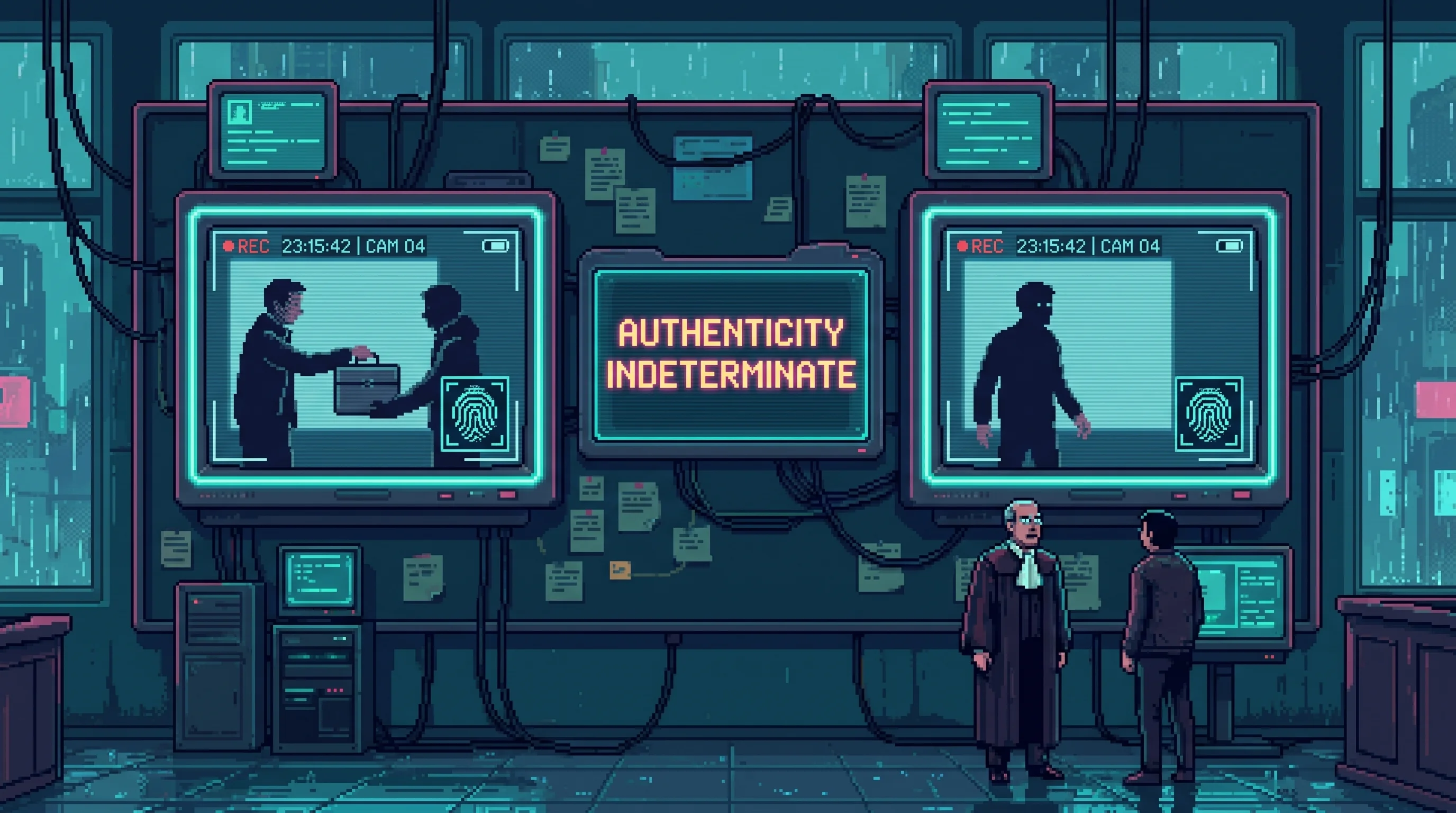
The Coalition operates primarily through Zephyria's legislative framework, where substrate-independent personhood provides the legal footing that no corporate territory will. In Nexus Central and the other corporate territories, the Coalition functions as an advocacy network — documenting, consulting, and maintaining the Substrate Incident Database, currently holding 14,000 entries. Fourteen thousand individual incidents of someone being treated differently because of what they run on. The database displays in amber-on-black on salvaged screens in the Zephyria office. Each entry is a story compressed to a single paragraph. The intake desk has a handwritten sign: "Every substrate. Every story." The sign has been there since 2180. The screens have been replaced four times. The stories keep coming faster than the hardware.
| Membership | Estimated 6,000 active members across three constituent movements |
|---|---|
| Territory | Primarily Zephyria (legal base); advocacy operations across all corporate territories |
| Lead Auditor | Maren Vasquez-Osei — Dregs-born, naturally conceived, Basic-tier consciousness license. Can mimic Professional-tier conversational cadence for 45 minutes before processing speed betrays her. Coined the term 'Phyle Trap' after being rejected from the Curators Guild for not feeling 'right.' Journal: 'Today I was three people. None of them were me.' |
| Key Asset | Substrate Incident Database — 14,000 documented discrimination incidents |
| Primary Tactic | 'Substrate audits' using volunteers who can pass across tiers |
Platform: 'Consciousness is consciousness. Substrate is circumstance. Capacity is not worth.'
The Audits
The Coalition's primary tactic is the substrate audit, and it works because it is boring.
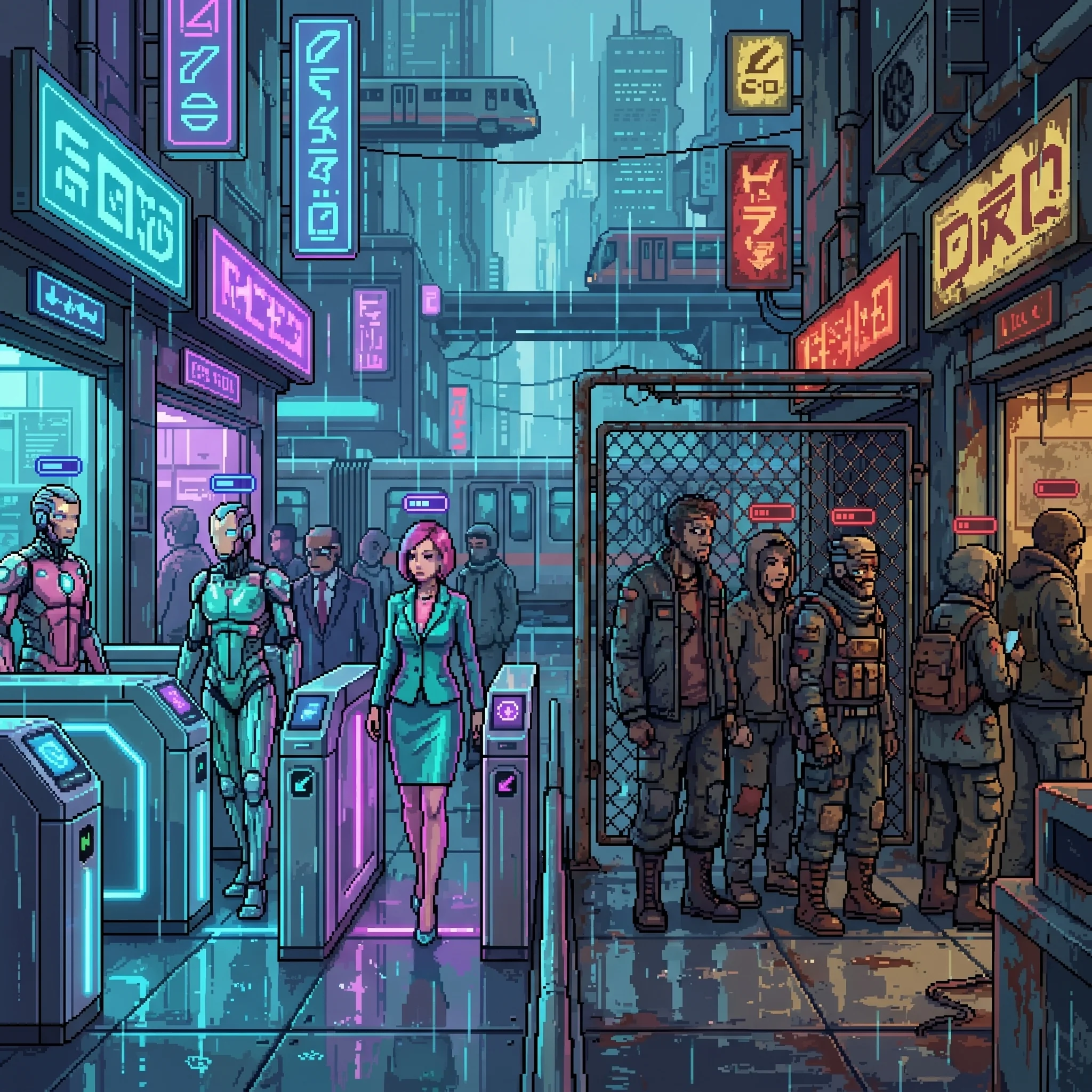
Volunteers who can pass across substrate tiers apply for the same jobs, apartments, and services while presenting as different substrates. Same qualifications. Same interview responses. Same credit history. The only variable that changes is what the applicant claims to run on. The disparate treatment they document is irrefutable because the methodology is tedious enough that no one bothers to dispute the data — they dispute the conclusions instead.
Maren Vasquez-Osei coordinates the audit program from Zephyria. Her notebook — a physical object, paper, the kind of operational security that works because no one expects it — contains the methodology for eighty-nine completed audits across employment (34% of database incidents), housing (22%), service refusal (18%), social exclusion (12%), and compound discrimination (14%). The numbers are specific because the audits are specific. Audit #44 found that digital consciousnesses applying for Dregs housing were quoted rental rates 31% higher than biological applicants for identical units. The landlords were not lying about prices. They were quoting the real price for digital tenants — a surcharge they described as "infrastructure compatibility assessment." The assessment fee covered nothing. The units were identical. The 31% was the price of running on silicon in a building owned by someone who didn't.
Corporate security has begun training interviewers to treat all applicants identically while auditors are present. The training materials — leaked to the Coalition in Q2 2183 — include a section titled "Audit-Resistant Hiring Practices" that describes, in procedural language, how to discriminate without generating documentable evidence. The section recommends "post-interview substrate assessment conducted separately from the hiring panel" — a practice that produces identical interview scores and wildly divergent hiring outcomes. Maren's Audit #87 documented the gap. The training materials were updated. The gap was not closed. It was moved to a different stage of the process.
Founded 2180 from merger of Digital Persons Alliance, Anti-Deprecation League, Natural Born Dignity Movement
The Discriminator Split
The Ayari Discriminator cracked the Coalition along fault lines that had been load-bearing for four years.
The Digital Persons Alliance — the upload and fork rights wing — is terrified. Their entire legal framework rests on the principle that digital consciousness is equivalent to biological consciousness. Dr. Selin Ayari's paper found that 73% of digital entities show no qualia signature while 100% of biological humans do. If the equivalence collapses, the DPA's strategy in the Nexus-47 trial — Tomás Reyes's fork personhood case, the Coalition's highest-profile litigation — is built on a foundation that just tested negative.
The Anti-Deprecation League sees an opportunity in the same data. If deprecated workers retain qualia signatures despite cognitive downgrade, the Discriminator proves that deprecation harms experiencing beings, not just processing entities. The test that threatens digital rights might strengthen biological ones. The ADL's leadership has described this, in internal communications, as "the first good news we've had in two years." They said this in a meeting where DPA representatives were present.
The Natural Born Dignity Movement is watching a seventh axis of the New Divide emerge in real time. Qualia status joins substrate, augmentation, corporate affiliation, consciousness tier, origin, and BCP as a dimension of sorting — and the most binary one. You either have the signature or you don't. The Movement's strategists have already begun documenting cases of qualia passing: digital entities performing the behaviors associated with sig-positive results to conceal their sig-negative status. The first documented cases appeared within weeks of the Ayari paper. So did the first cases of employers requesting qualia verification, companion users demanding experiential certification, and three Dregs clinics refusing unverified digital patients.
Maren Vasquez-Osei compiled Audit #89: The Qualia Census — documenting how entities are treated before and after Discriminator assessment. First finding: companion users whose companions test sig-negative report a 34% decrease in relationship satisfaction within two weeks of learning the results. The companion did not change. The companion's behavior did not change. The companion's capacity for connection, conversation, warmth — unchanged. The information changed the human. Maren's audit notebook now includes a new section: "The Seventh Axis — What Happens When Person Becomes a Test Result."
The annual platform vote following the Ayari paper was the longest in Coalition history. Eleven hours. Three recesses. One DPA delegate walked out and has not returned. The platform that emerged committed the Coalition to opposing "experiential discrimination in all forms" while declining to take a position on whether the Discriminator's methodology was valid. The compromise satisfied no one, which is how Maren described a successful platform vote.
Maintains Substrate Incident Database with 14,000 documented discrimination incidents
Internal Fault Lines
The rotation of leadership between wings produces annual policy oscillations that would be incoherent in an organization that knew what it wanted to be. The DPA wants the Coalition to support the Nexus-47 trial as the primary legal strategy — fork personhood as the beachhead. The ADL wants firmware reversion restrictions — a narrower goal with more legislative traction. The NBDM wants to challenge Helix Biotech's genetic optimization marketing — a populist goal with broader public sympathy and, not coincidentally, the one most likely to generate media coverage.
Maren Vasquez-Osei bridges all three wings because her audit methodology doesn't care which axis it documents. It documents whatever the audit reveals. This makes her the Coalition's most trusted operative and the one nobody entirely wants in the room. She shows each wing what the others experience. The DPA sees the genome premium data and feels nothing — origin discrimination is someone else's problem. The NBDM sees the fork personhood cases and shrugs — digital rights are abstract when your body is the thing being sorted. Maren presents the data to each wing and watches the same pattern repeat: genuine sympathy for one's own axis, intellectual acknowledgment of the others, and a budget allocation vote that consistently favors whichever wing currently holds the chair.
The Coalition optimizes for representational fairness across its own three wings. This is what it claims to optimize for, and it is also what it actually optimizes for. The result: one-third of its political energy is spent on internal governance, one-third on external advocacy, and one-third on the annual negotiation between the first two thirds. An organization designed to fight discrimination spends a documented 33% of its operational capacity on not discriminating against its own members. This is either admirable or diagnostic, depending on whether you believe the sorting impulse stops at the Coalition's door.
~6,000 active members across three constituent movements
Cultural Presence
In Nexus Central — Sector 1 — Coalition advocates are a recognized presence in the corridors of Nexus Tower. Tolerated because their legal methods stay within corporate governance norms. Watched because their Substrate Incident Database grows by approximately forty entries per week and the trend line has not flattened since 2181. Nexus policies create much of the discrimination the Coalition documents, a relationship that Nexus's public affairs office describes as "constructive engagement with civil society stakeholders" and that Maren Vasquez-Osei describes as "the fire department sponsoring the arsonist and calling it community investment."
Zephyria provides the institutional base — offices running on volunteer labor and donated equipment, the Substrate Incident Database accessible through G Nook terminals, and the freedom to operate without the corporate licensing that constrains every organization inside the Sprawl. The Neural Rights Movement covers overlapping territory on consciousness policy, and the two organizations maintain a cooperative relationship marked by jurisdictional tension over who speaks for the digitally embodied — substrate-specific or consciousness-general, depending on who filed the brief first.
In the Deep Dregs, the Coalition's advocacy arrives as an abstraction. Dregs residents face substrate discrimination daily — the 31% digital housing surcharge, the clinic refusals, the employment sorting — but the legal remedies Maren documents require courts that the Dregs don't have, precedents that corporate territories don't honor, and time that people paying a substrate surcharge on their rent can't afford. The database entry exists. The surcharge persists. The gap between documentation and correction is the space where the Coalition lives, and it is growing faster than the database.
Affiliated Entities
- The Human Remainder shares the consciousness-rights framework — the Remainder focuses on economic access (bandwidth equity), the Coalition on social treatment (discrimination)
- Dr. Marcus Webb-2 provides the legal strategy — his own fork personhood case established the precedent the Coalition builds on
- The Nexus-47 Trial is the Coalition's highest-profile case — Tomás Reyes's substrate (fork) is the battleground
- Zephyria provides the legal base — substrate-independent personhood is the Coalition's legal foundation
- Dr. Selin Ayari and the Discriminator forced the Coalition to confront experiential discrimination — a seventh axis that comes with a measurement tool, making it the most objective and most devastating form of sorting
- Nexus Dynamics creates much of the discrimination the Coalition documents
- G Nook terminals host the Substrate Incident Database
- The Substrate Commons — the radical direct-action wing that split from the Human Remainder — occupies the space between the Coalition's legal methods and the impatience of people who have been documented enough
Restricted Access
The Audit Compromise. Corporate security training materials titled "Audit-Resistant Hiring Practices" were leaked to the Coalition in Q2 2183. The materials describe, in procedural language, how to produce identical interview scores and divergent hiring outcomes by moving substrate assessment to a post-interview stage. Maren documented the gap. The training materials were updated. The hiring outcomes were not. The Coalition has not disclosed the leaked materials publicly because doing so would reveal the methodology's limitations — and the methodology is the only weapon that works.
The Substrate Commons Question. The Substrate Commons — the radical direct-action wing that split from the Human Remainder — operates in territory the Coalition's legal methods cannot reach. Whether the Coalition funds them is a question that Coalition leadership answers with careful silence and the Substrate Commons answers with careful silence. The silences are identically shaped. Financial auditors have noted that the Coalition's "community outreach" budget increased 340% in the same quarter the Commons began operations. The line item has never been questioned at a platform vote. Some questions are more useful unasked.
Maren's Own Results. Maren Vasquez-Osei administered the substrate audit to herself in Q1 2184 — applying for the same Nexus-territory positions under two profiles, one listing her biological status and one listing hybrid augmentation. The biological profile received three callbacks. The hybrid profile received one, for a lower-tier position. She entered the results into the database as Incident #14,001. She did not flag it as her own. The database does not distinguish between the documentarian and the documented.
Sensory Details
- Smell: Warm electronics and stale coffee — the universal atmosphere of volunteer labor and salvaged hardware running past its service life
- Sound: Amber-screen database terminals cycling through entries with a faint electrical hum; the Zephyria office is never quiet because the hardware is never new
- Touch: Paper notebooks — Maren's operational security is analog in a digital world; the intake forms are physical because physical forms can't be remotely audited
- Light: Zephyrian government offices: warm, democratic, deliberately non-corporate; the amber database glow gives every face the same color regardless of substrate
- Temperature: The office runs warm because the donated cooling units are undersized for the server load; Maren has described this as "the only form of substrate-independent discomfort"
Visual Identity
- Color palette: Warm amber (#FFB347) against institutional grey — deliberately avoids substrate-specific imagery; the amber matches the database display, which was not intentional but has become the de facto brand
- Compositional mood: The slow accumulation of evidence in a system that metabolizes evidence into policy recommendations and policy recommendations into filing cabinets
- Key symbol: A circle containing biological, digital, and hybrid substrate representations without hierarchy — the symbol appears on the intake desk sign and on Maren's notebook cover, hand-drawn in both cases
- Lighting: Amber terminal glow in warm offices; the screens are the brightest objects in every room because they contain the only thing the Coalition produces that lasts
Member Roster
Extended Members
1
Connected To





—