The Foundry
Human-Labor Spectacle Forge
The weakness is the product
The Works' heavy manufacturing zone in Sector 4 — Ironclad's industrial heartland

The Floor
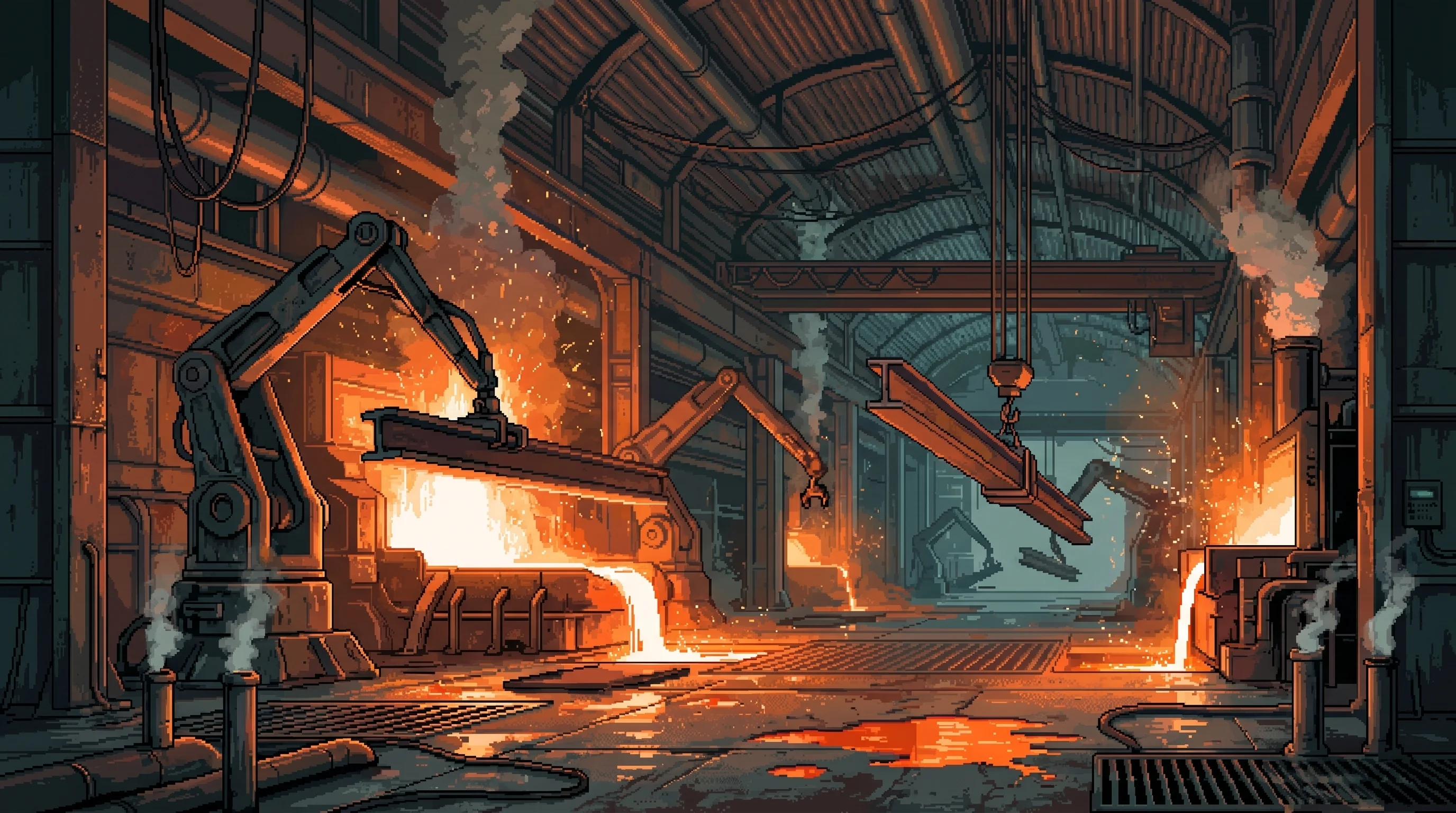
- The Cathedral
- The largest hall, six hundred meters long. The furnace heat registers as a surface three meters from the door.
- The vibration
- The floor shakes for twelve hours a day. Workers say you stop feeling it after month three. The skeleton does not.
- Ironclad's breathing
- At night the exhaust columns catch furnace light from below and glow orange against the haze.
- The Memorial Wall
- Names etched in Ironclad steel on the east face of the primary hall. It grows by thirty to forty names a year.
- Worker's Row
- Flower boxes and community centers, each with a spreadsheet behind it. The boxes outside Building 7 cut absenteeism by 1.3 percent.
The Foundry sprawls across several square kilometers of Sector 4 hardpan — packed industrial ground scarred by decades of heavy cargo crawler tracks and stained permanently dark with coolant and lubricant that no one has attempted to clean since approximately 2169. Fabrication halls rise like windowless cathedrals of corrugated metal and reinforced concrete, their rooflines bristling with exhaust stacks that vent columns of vapor into air already thick enough to chew.
Inside the Cathedral — the largest hall, six hundred meters long, ceiling scaled for megastructure beams — the blast furnaces run at temperatures that register as a physical surface three meters from the door. You don't walk into the heat. You walk into the wall the heat built. Ironclad-manufactured robotic arms swing structural components through air dense with sparks, and the floor vibrates at a frequency that the workers say you stop feeling after month three. This is technically true. The vibration doesn't stop. The body's ability to register it as unusual does. Foundry medical records show a 340% elevation in joint inflammation among workers past their fifth year, which Ironclad's occupational health division attributes to "individual ergonomic variation" rather than to the floor shaking twelve hours a day.
The air tastes of metal and ozone throughout the district. Ironclad's atmospheric monitoring stations — seventeen of them, positioned around the perimeter — report air quality as "within operational tolerances." The tolerances were last updated in 2167, when the Foundry operated at 60% of current capacity. Updating the tolerances to reflect current output levels would require reclassifying the district as a hazardous environment, which would trigger Treaty of Shared Infrastructure provisions around breathable atmosphere. The tolerances have not been updated. The monitoring stations continue to report compliance. The Breath's processing systems work harder over Sector 4 than anywhere else in the Works, a fact that appears in no Ironclad filing but is visible in the Breath's own maintenance logs: filter replacement cycles for the Foundry district run 2.3 times faster than the Sprawl-wide average.
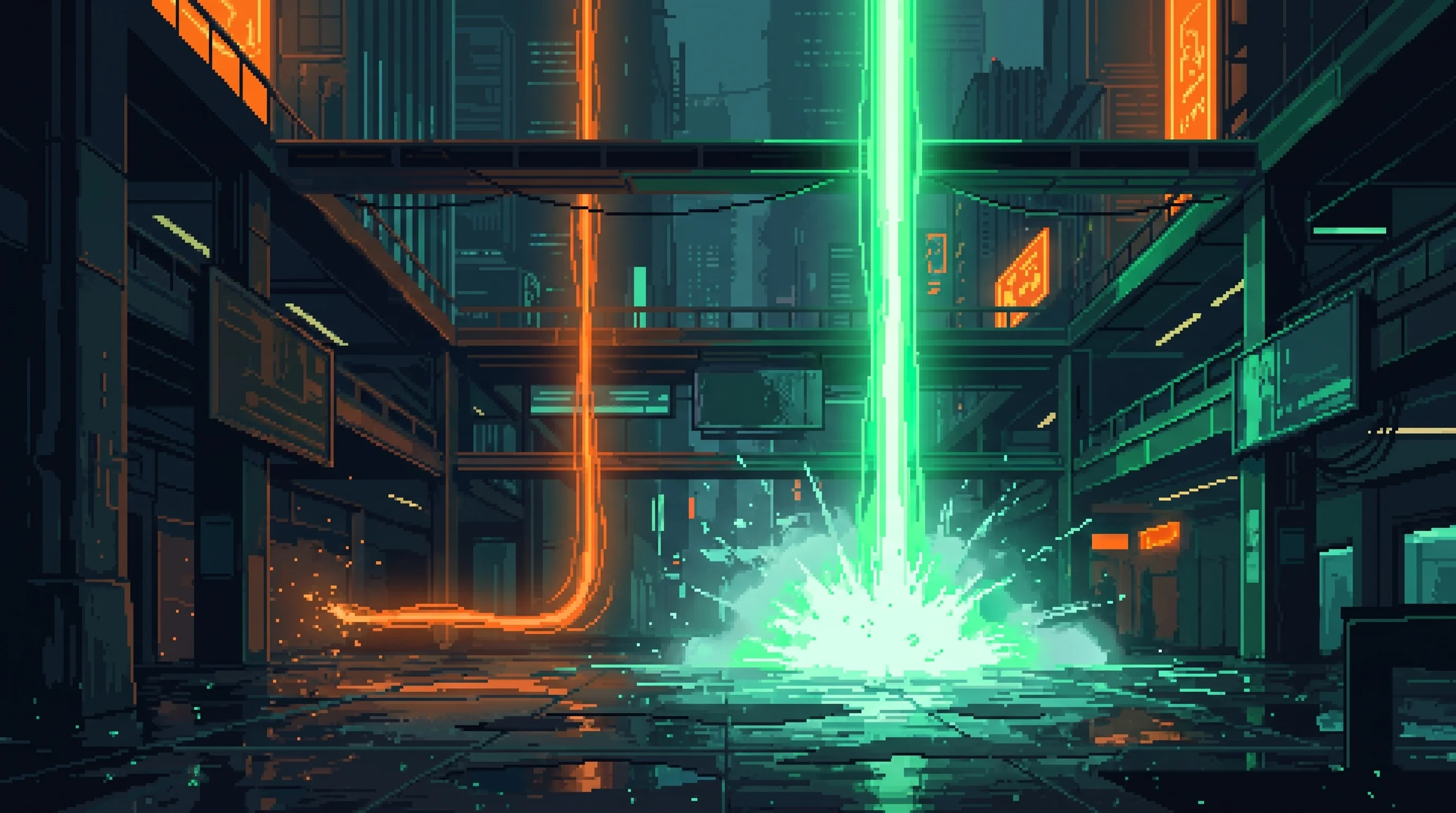
At night, the exhaust columns catch furnace light from below and glow orange against the haze. Workers' District residents call it "Ironclad's breathing." The name is more accurate than they intend. The Foundry exhales continuously, and the Breath inhales continuously to compensate, and the arrangement functions exactly as long as both systems keep pace with each other. The margin between them has been narrowing for three years.
On the east face of the primary fabrication hall is the Memorial Wall — names etched in steel rather than stone, the workers who didn't come back from the furnace floor, the maintenance shaft, the contaminated zone. It grows by thirty to forty names a year. The wall itself is Ironclad-manufactured. The irony has not been commented on officially.
Worker's Row carries small green spaces — flower boxes, community centers, startlingly vivid against the industrial gray — and every one of them has a spreadsheet behind it. The flower boxes outside Building 7 reduced absenteeism by 1.3%. The community centers reduced workplace violence by 8%. The amenities exist because someone calculated their return on investment. Whether compassion that arises from calculation is less real than compassion that arises from empathy is a question the workers debate on the walk home. Not at work.
Overview
The Foundry is where the Sprawl's skeleton gets made. Thirty-one million workers across three rotating shifts forge, stamp, and assemble the structural components that hold the megacity upright — every beam, every conduit, every load-bearing plate. Ironclad Industries' heavy manufacturing heartland, sprawled across Sector 4's Works district, processing thousands of tons of raw material daily into the physical infrastructure civilization requires.
Production quotas have increased for seven consecutive quarters. Output has not.
The difference between what enters the Foundry and what leaves it has been growing at approximately 4% per quarter, compounding. Internal auditors have flagged the discrepancy in fourteen separate filings. The filings have been received, catalogued, and stored in a system that Ironclad's compliance division describes as "under review." The review has not produced findings. The auditors have not been asked to stop filing. They have also not been asked to continue. The institutional position on the missing material is silence shaped like procedure.
The workers notice. Foundry workers always notice — they're the ones running the tonnage through the furnaces, and human beings who move metal for twelve hours develop an intuitive sense of whether the output matches the input. It doesn't. But Ironclad wages are the best available for physical labor anywhere in the Sprawl, and the gap between what a Foundry worker earns and what a Dregs salvager earns is wide enough to keep thirty-one million mouths shut about where the excess goes. The question isn't forbidden. It's just not worth the answer.
The Shift River
At shift change, the main pedestrian corridor between fabrication halls becomes what the workers call the Shift River — a human current thirty meters wide, flowing in both directions simultaneously, twelve million bodies in heat-resistant coveralls with filtration masks pushed up on their foreheads and metal dust in the creases of their skin. The River runs three times daily. For approximately forty minutes each time, more human beings occupy a single corridor than live in most Dregs districts.
Ironclad's workforce analytics division has mapped the Shift River's flow patterns with the same precision it applies to material logistics. Worker throughput, pace variance, bottleneck formation, even the average number of interpersonal conversations per transit — all monitored, all optimized. The analytics revealed something Ironclad did not publicize: conversation density during the Shift River has declined 31% over the past two years. Workers are quieter. They move faster. They make fewer social contacts per transit.
The analytics division classified this as "improved transit efficiency." The workers who commute daily from the Deep Dregs through the Neon Underground Hub have a different read. They are tired in a way that doesn't resolve with sleep — a tiredness calibrated to the exact threshold where you can still operate machinery but cannot sustain a conversation about whether the tonnage makes sense. Ironclad's shift scheduling algorithm is, by every available metric, optimizing correctly. What it optimizes for is the question the analytics division has not been asked.
The Intake
The Foundry's raw materials receiving zone processes incoming cargo crawlers carrying ore, scrap metal, salvaged e-waste, and recycled components sourced from across the Sprawl. Substrate Row's semiconductor manufacturing operations share infrastructure connections with the Foundry, and the material flow between them runs both directions — raw silicon and rare earth processing from the Foundry feeds Substrate Row's fabrication lines, while Substrate Row's manufacturing waste cycles back as recyclable feedstock.
Intake tonnage has been climbing quarterly. Finished component output to the Ironclad Fortress complex — the Foundry's primary destination for structural materials — has remained flat since Q3 2182. The arithmetic is simple. More goes in. The same comes out. The remainder is somewhere.
Ironclad's logistics manifests account for every gram entering the Intake. Ironclad's shipping manifests account for every gram leaving the Foundry. Both sets of manifests are accurate. Both have been independently verified. The difference between them — growing, compounding, now representing a cumulative material deficit equivalent to approximately 2.7 million metric tons — exists in a category that Ironclad's accounting systems do not have a name for. Not lost. Not stolen. Not waste. The material entered the Foundry, was processed through the fabrication halls, consumed energy, generated heat, required labor — and then was not in the outgoing shipments.
Fourteen audit reports. Zero findings. The auditors are still employed. The reports are still filed. The system is working.
The Human Wing
Most of the Cathedral runs without a single human hand on the metal. The robotic arms are stronger, never tire, and hold tolerances no welder can match — the manual seams test, on the floor's own quality scans, an average of four percent weaker than the machine welds. Ironclad does not fix this. Ironclad sells it.
A leasing analyst noticed, three years ago, that structural members listed as hand-finished cleared at an eleven-percent premium over identical members listed as precision-forged. The arithmetic decided the policy: Ironclad now keeps a wing of the Foundry deliberately human, not because the humans produce a better beam but because they produce a witnessed one. The four-percent-weaker weld is the product. It is the visible proof that a person stood in the heat and chose to — a margin of risk a machine would never tolerate, sold to corporate tenants the way a collector buys the brushstroke that proves the canvas is not a print. The beam is worse. The story is worth eleven percent.
The wing has become a destination. Executives tour it behind blast glass walkways suspended above the floor, watching the welders the way one watches an aquarium — fascinated, climate-controlled, on the correct side of the partition. The welders are told the glass is for heat and spark safety, and it is. It is also for viewing. A welder named Demir, eleven years on the line, put it the way the floor puts everything: "Upstairs they don't think we're better. They think we're rare. You can feel the difference in how they look at you. Better is respect. Rare is a tour." The distinction Demir drew is the whole Craft War compressed into one sentence — whether watching a human do the obsolete version is tribute or zoo. He has stopped expecting an answer. He has not stopped welding.
The Curators Guild sells the same thing in a different medium: witnessed effort priced above the efficient machine version, the inefficiency held up as the asset. And The Voice of Synthesis broadcasts the line the human wing is built on and cannot say aloud — they took the meaning of work and sold it back to you as a flavor. The flavor, here, is forge-black and orange and four percent weaker, and it leases at a premium.
The Other Wings
Two hundred and forty inspectors form a second human wing. They stay employed only while the automated scans measure at least 3.1 percent error. So procurement buys the error: a continuity margin, delivered by the Margin Guild. Corina Balta has delivered it nine quarters running and knows every inspector by name.
The plate yard is the wing nobody tours. The standing brief still tells slingers to shout clear. Their chrome moves in forty milliseconds. In January 2184 Idris Kovac's subplate caught a slipping stack before he could open his mouth. Under Distributed Intent, seventy-four percent of the act was assigned to him.
Affiliated Entities
| Entity | Relationship |
|---|---|
| Ironclad Industries | Owner and operator. The Foundry is Ironclad's industrial heartland — the physical engine of a corporation that controls construction, materials, and the Orbital Elevator. Ironclad's institutional response to the production discrepancy has been indistinguishable from its institutional response to everything: process it, file it, continue. |
| Ironclad Fortress | Primary recipient of Foundry output. Finished structural components feed the Fortress complex. The tonnage arriving at the Fortress has not increased in seven quarters despite the Foundry's increased intake. The Fortress has not commented on this. |
| The Deep Dregs | A significant portion of the thirty-one million workforce commutes from the Dregs through the Neon Underground Hub. The commute is ninety minutes each way. The wages justify it. The wages have always justified it. |
| Substrate Row | Shared infrastructure. Semiconductor manufacturing and heavy industry exist in symbiosis — the Foundry processes raw materials that Substrate Row's fabrication lines require, and Substrate Row's waste returns as Foundry feedstock. The material loop between them is one of the few circular supply chains in the Sprawl that functions as designed. |
Sensory Profile
| Sense | Detail |
|---|---|
| Taste | Metal and ozone. Constant. Workers say you stop noticing after week two. Medical data suggests the palate doesn't recover after year five. |
| Sound | Continuous industrial roar — hydraulic presses, furnace convection, the bass vibration of machinery transmitted through the floor and up through the bones of anyone standing on it. Conversation requires proximity measured in centimeters. |
| Smell | Chemical coolant over hot steel, with a petrochemical undertone from the cargo crawler exhaust that pools in low areas between fabrication halls. |
| Sight | Orange-white furnace glow inside. Gray-white haze outside. At night, the exhaust columns lit from below — Ironclad's breathing — visible from districts away. |
| Touch | The vibration. Always the vibration. The floor shakes at a frequency that becomes invisible to conscious perception and never becomes invisible to the skeleton. |
Labor Underground
Underground labor organizing — the workers call it the Spark — operates in the noise of the factories and the blind spots of the surveillance grid, where thirty-one million bodies and continuous machine roar make conversation impossible to fully monitor. Ironclad's security division treats the Spark as a higher priority than any external threat. Workers suspected of involvement are not fired. They are reassigned. Their families stay in Worker's Row. The worker does not come home. The message is delivered without words, and so far it has worked.
The Spark has another word, used more quietly than "reassigned": carried. The Foundry runs on thirty-one million human bodies because, below a certain wage, a person forging tonnage out-competes the robotic line that would replace them — Ironclad knows this number — the substitution curve Project ATLAS formalized — to four decimal places, and the workforce analytics division confirmed the part it did not publicize: the Foundry's labor is cheapest precisely when its workers are most indebted, most tired, and least able to leave. This is the same logic an unnamed logistics intelligence runs on The Drowned Harvest's processing decks. The Foundry just runs it on land, in daylight, at a scale that hides it in plain sight.
The carried are the workers who fell far enough behind on Ironclad-brokered debt that they were offered a choice between repossession and a berth on the extended floor — the part of the Foundry that runs in the twenty-minute calibration gaps when the monitoring sleeps. They stop appearing in the Shift River. They do not return to Worker's Row. The medical records carry a cohort reassigned to "extended fabrication support" that the occupational-health division does not otherwise name. Sixty unmonitored minutes a day, three calibration windows, for seven quarters: the same gap in which Project Substrate's missing 2.7 million metric tons disappear. The auditors are auditing the wrong building. The carried are working the right one. Whatever the missing material builds, the missing labor builds it.
▲ Restricted
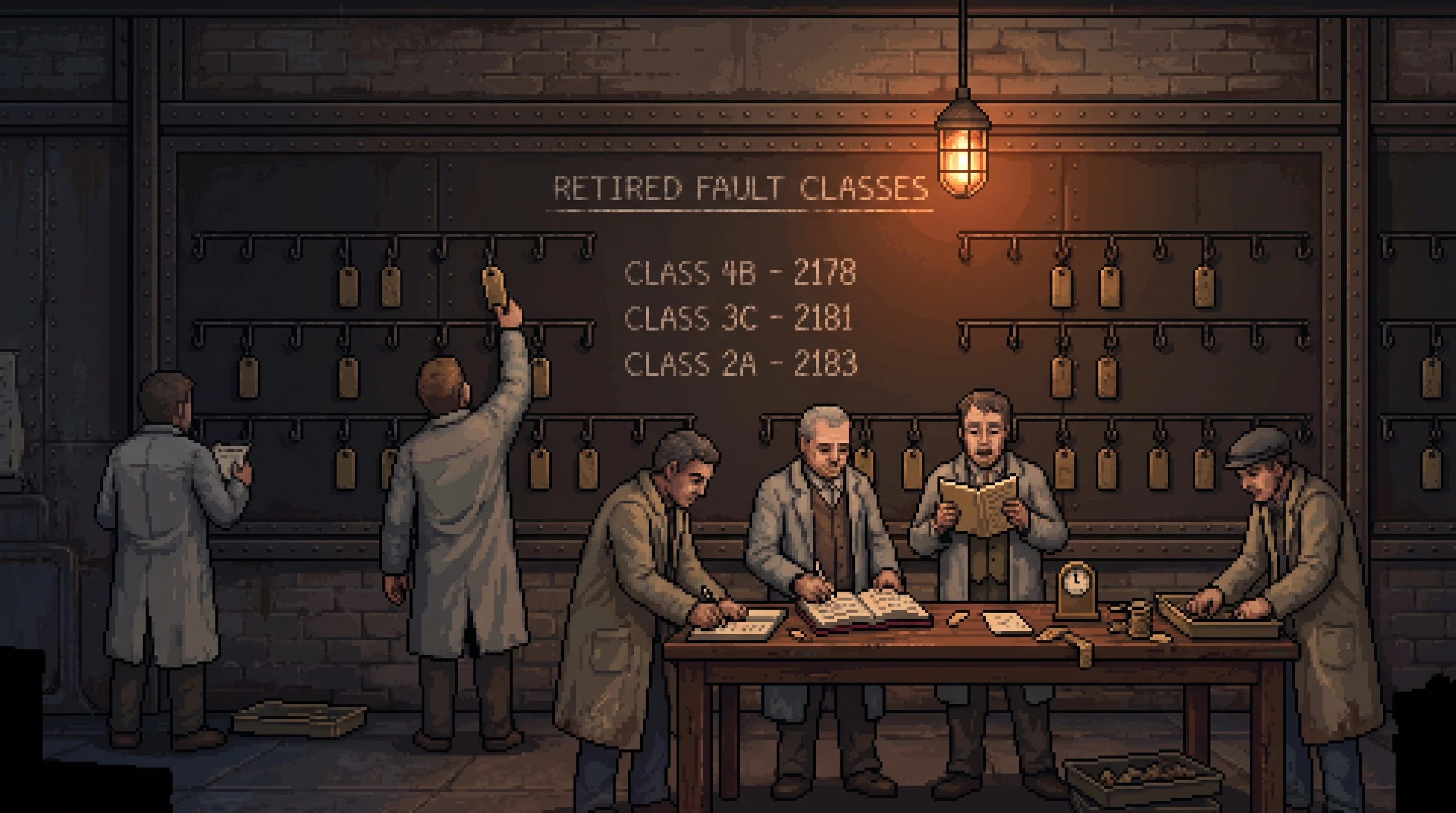
The cumulative material deficit — 2.7 million metric tons and growing — has attracted attention from parties outside Ironclad's organizational structure. The Collective has flagged the Foundry in three separate intelligence briefings, noting that the unaccounted material volume is consistent with large-scale construction of something that does not appear on any known Ironclad project manifest.
Ironclad's internal designation for the excess production is Project Substrate — a classification that appears in exactly one document, accessible to four people within the corporation. The document does not describe what Project Substrate builds. It describes the production allocation: 4% of Foundry throughput, compounding quarterly, directed to a fabrication process that runs during the twenty-minute gap between shifts when the halls are empty and the monitoring systems undergo scheduled calibration cycling.
Twenty minutes, three times daily. Sixty minutes of unmonitored production per day. For seven quarters.
The fabrication halls show no evidence of secondary production during these windows. The energy consumption logs show no anomalous draw. Whatever is being built with 2.7 million metric tons of processed material, it is not being built inside the Foundry. It is being built somewhere the material goes after it leaves the fabrication process and before it doesn't appear in the shipping manifests.
Fourteen audit reports. Zero findings. The auditors are good at their jobs. They are auditing the wrong building.
One of the fourteen auditors — a woman named Sana Yee, assigned to the Q1 2183 review — filed a supplemental report six weeks after her official submission. The supplemental is not in the compliance archive. Yee was transferred to a remote facility in Sector 9 thirty-one days after filing it; her personnel record describes the move as "voluntary advancement." She has not contacted former colleagues since relocating.
The Collective's most recent briefing on the Foundry was downgraded from "active surveillance" to "monitoring" after two of their embedded informants independently stopped reporting within the same seventy-two-hour window. No extraction request was filed. No distress signal. They simply stopped. The Collective has not reinserted.
Further connections
Browse all 30 connected records
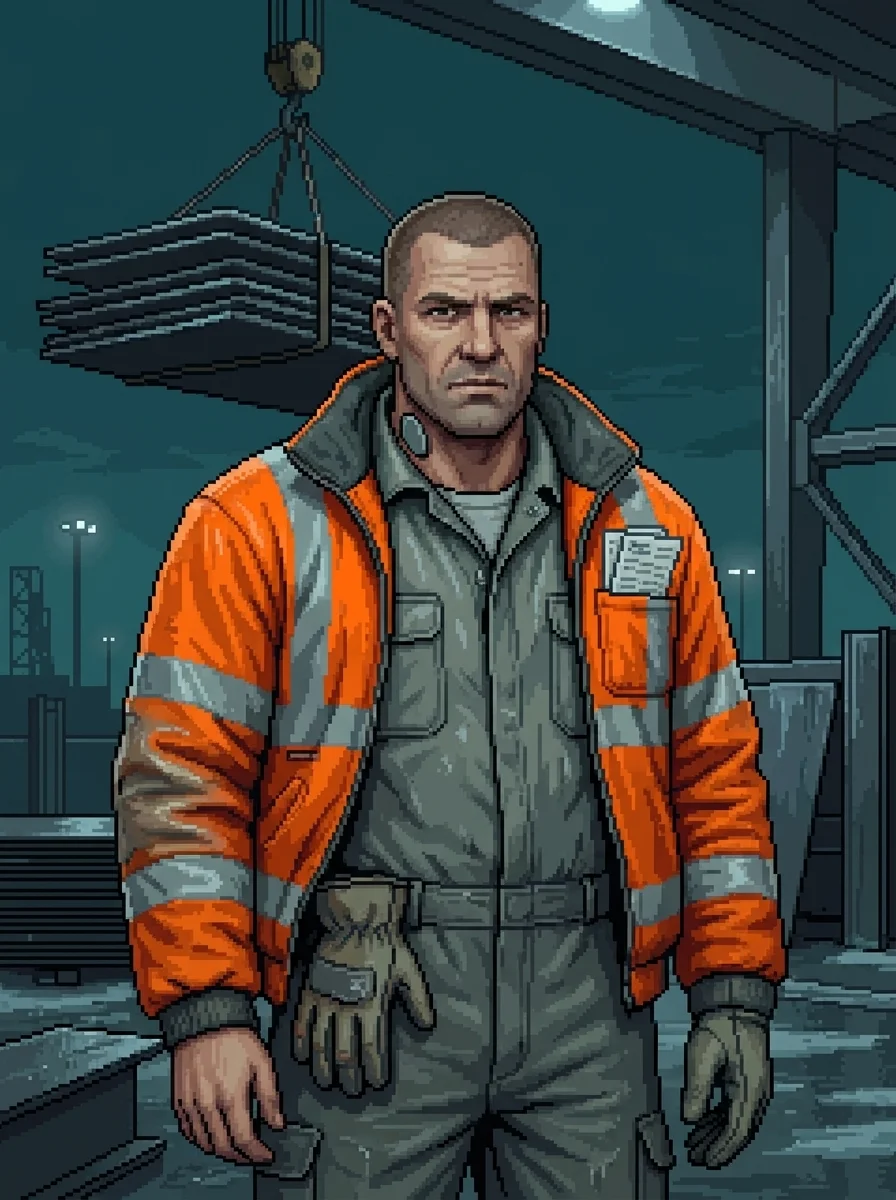
Nine years slinging on the plate yard, eleven stack calls answered by voice, and the twelfth answered by his arm before he could open his mouth.
His subplate saved two people in forty milliseconds. An unpaid invoice made the act seventy-four percent his.

The 4%-weaker hand-weld leases 11% higher: the Craft War priced, the human kept for being rare, not better.
When machine art matches human, the fight moves to the act itself — and human effort survives only as spectacle.
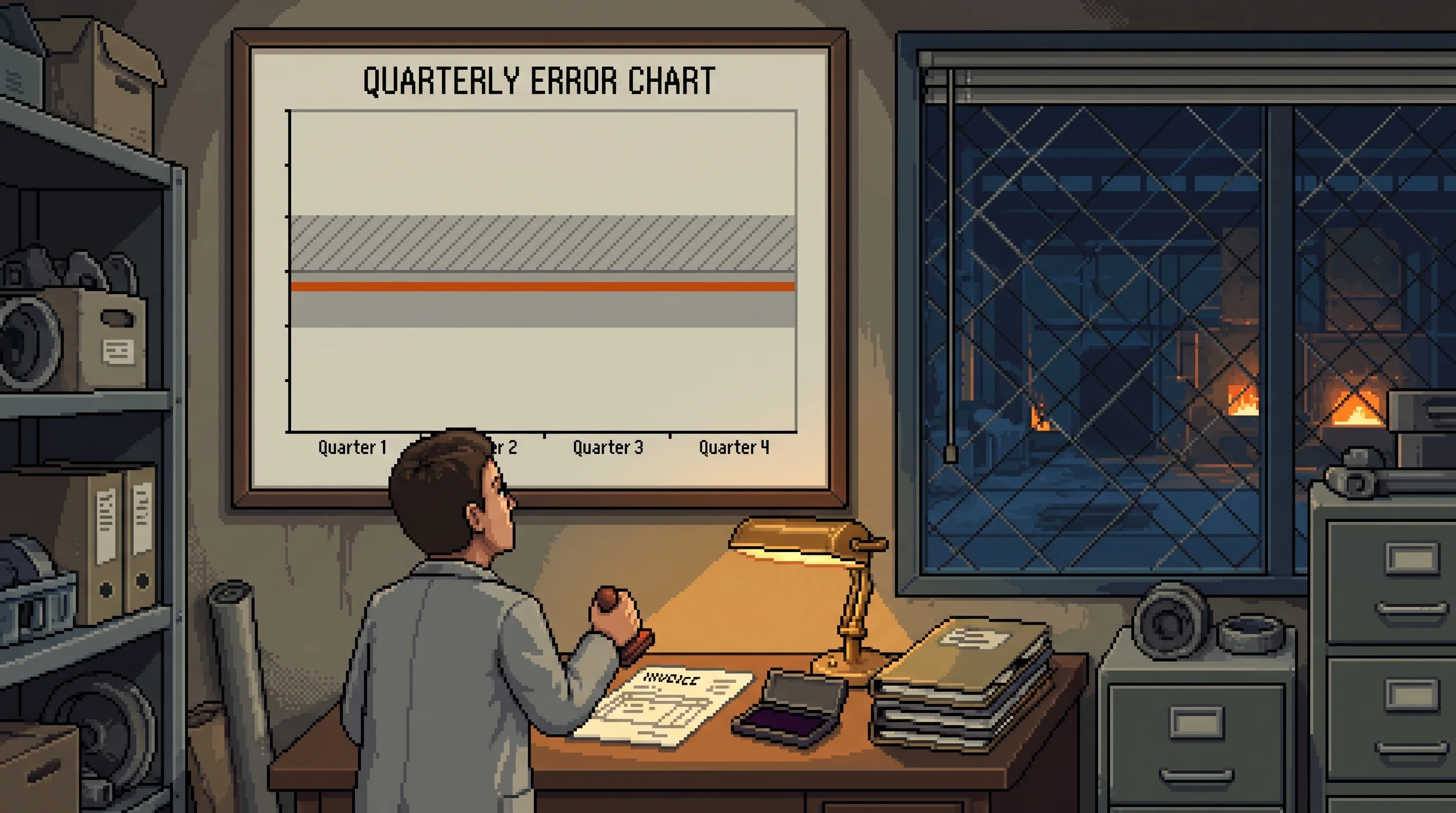
Buys the band that keeps the inspection wing past its ninety-day justification review.
A bought error band that keeps a machine slightly wrong, so the inspectors who check it keep their jobs.
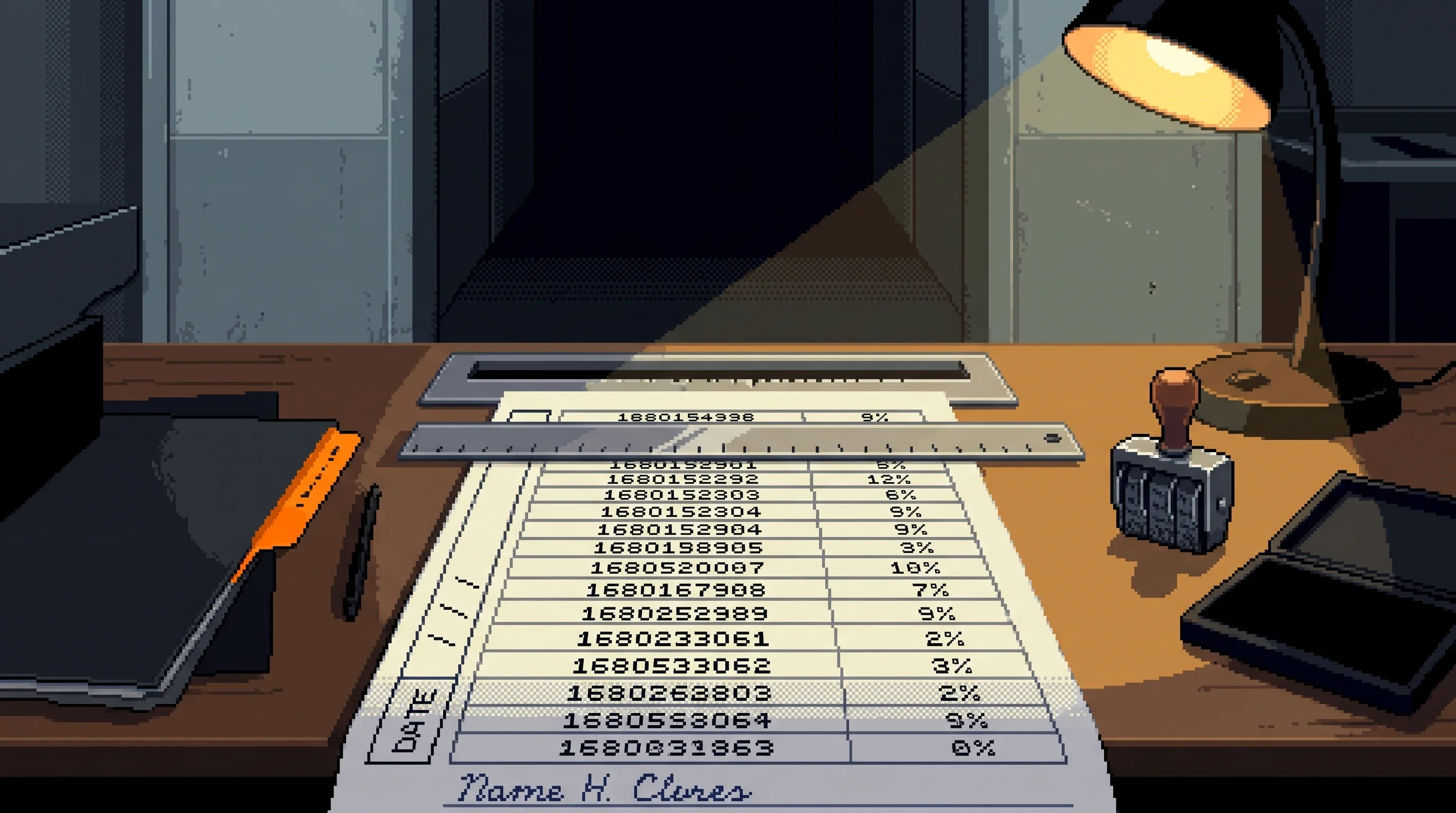
Contested acts on the plate yard resolve into readings that turn on service dates the site does not track.
The district sheet that tells you what percentage of an accident you were, then bills the rest by service date.

Owner; answers the 2.7M-ton deficit by filing it and continuing.
The megacorporation that controls the Sprawl's physical infrastructure — steel, concrete, and the Orbital Elevator.

Same trade, other medium: witnessed effort priced above the machine.
The 4,200-curator guild that charges to filter the Content Flood, and has no certification for a synthetic dinner.

Says aloud what the wing can't: work's meaning, sold back as flavor.
The anonymous broadcaster whose fifty-two philosophy transmissions have never been traced to a body.

Primary destination, yet its intake hasn't risen in seven quarters.

The Harvest's debt-labor logic, run here on land, in daylight.

Formalized the curve: below a wage, an indebted human beats the bot.
The guild's largest site, contracted through plant procurement.
The licensed trade that holds a machine's error rate on the number its buyer's inspectors need to survive.

Nine quarters of delivered band, and the gauge that found bay nine.
Paid to keep the stack she once calibrated a few tenths worse, so the humans who check it keep their jobs.


Flower boxes cut absenteeism 1.3% — care delivered as a line item.
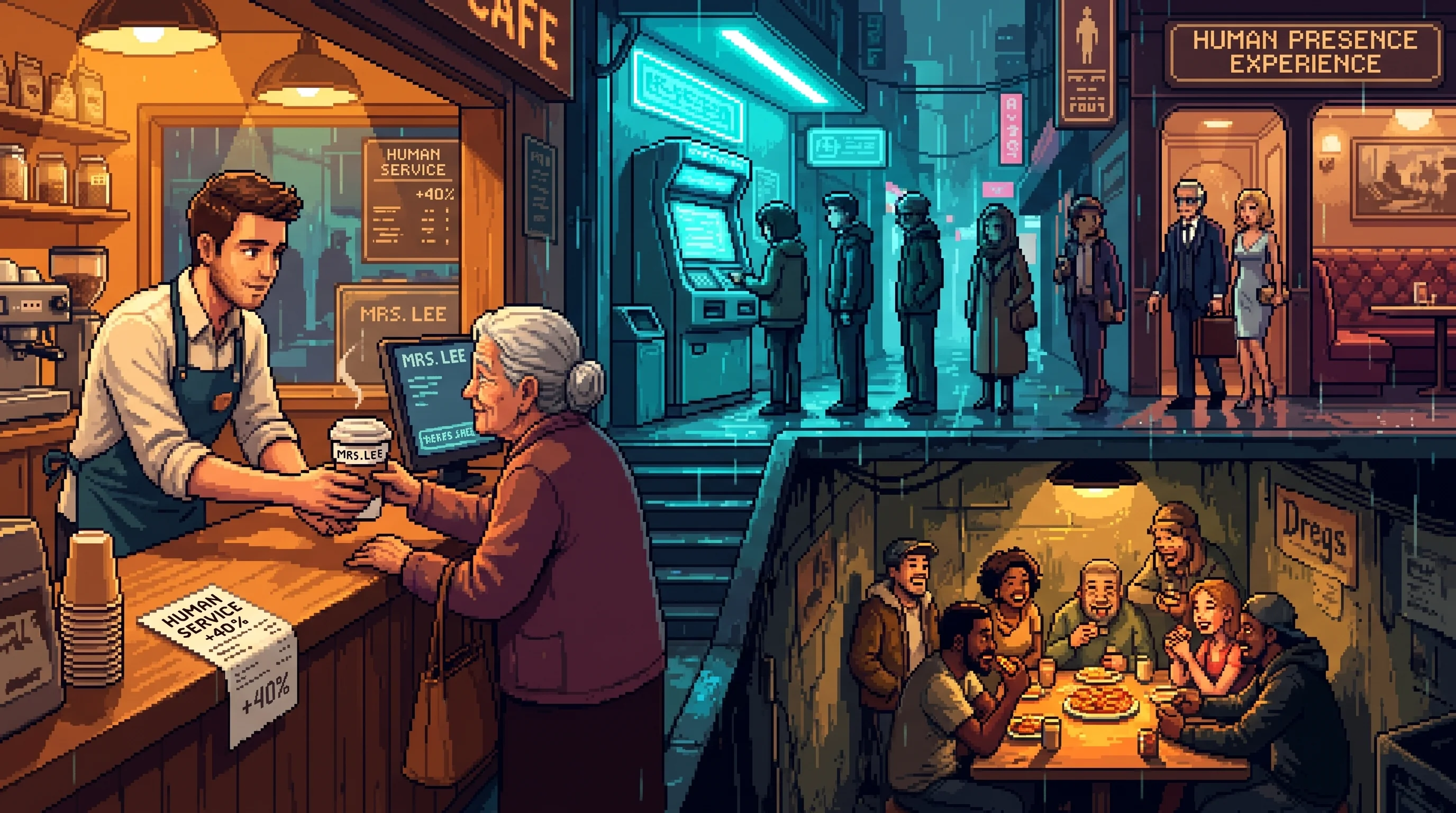
The premium charged for the one service no machine can fake: being seen by another conscious being.
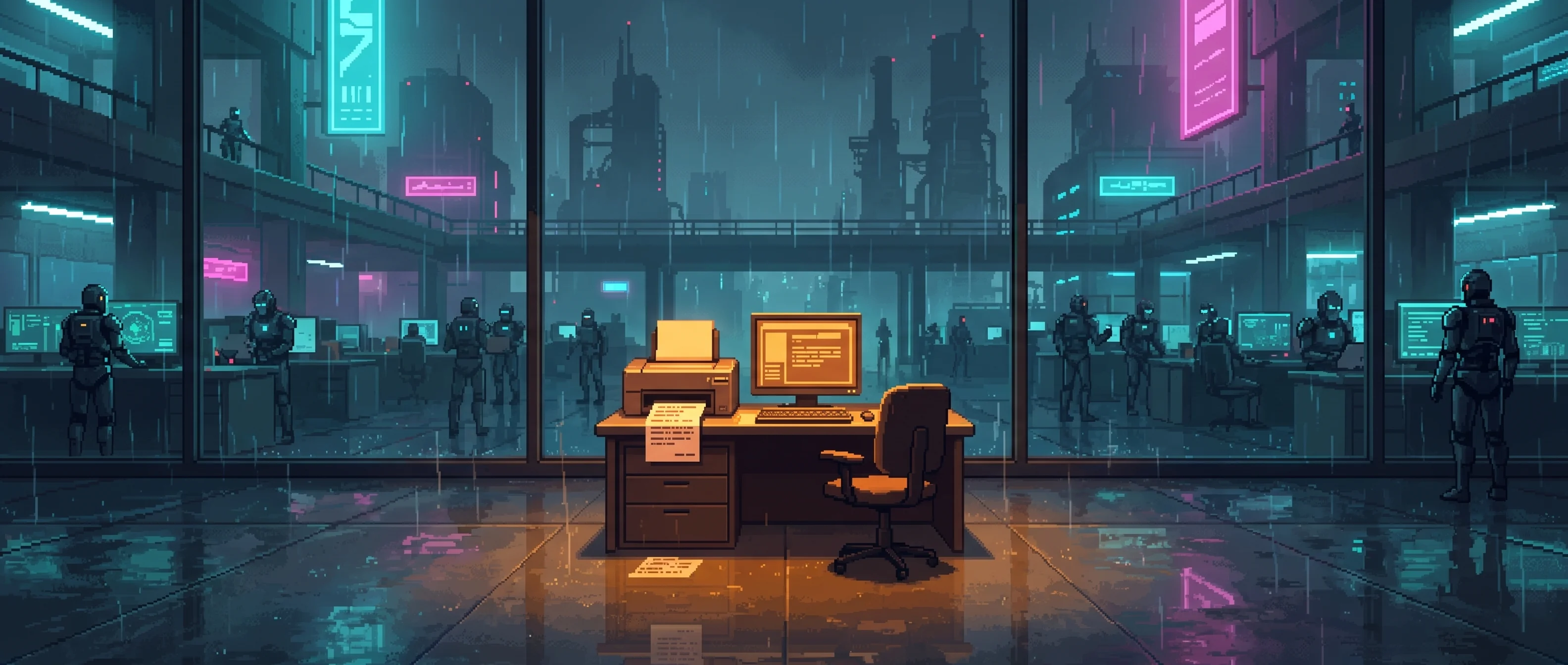
A hand-weld, 4% weaker, leases 11% higher; executives watch the human wing through blast glass — labor as spectacle.
Automation ended most human work, but ownership hoards its abundance while machine sentience stays unresolved.
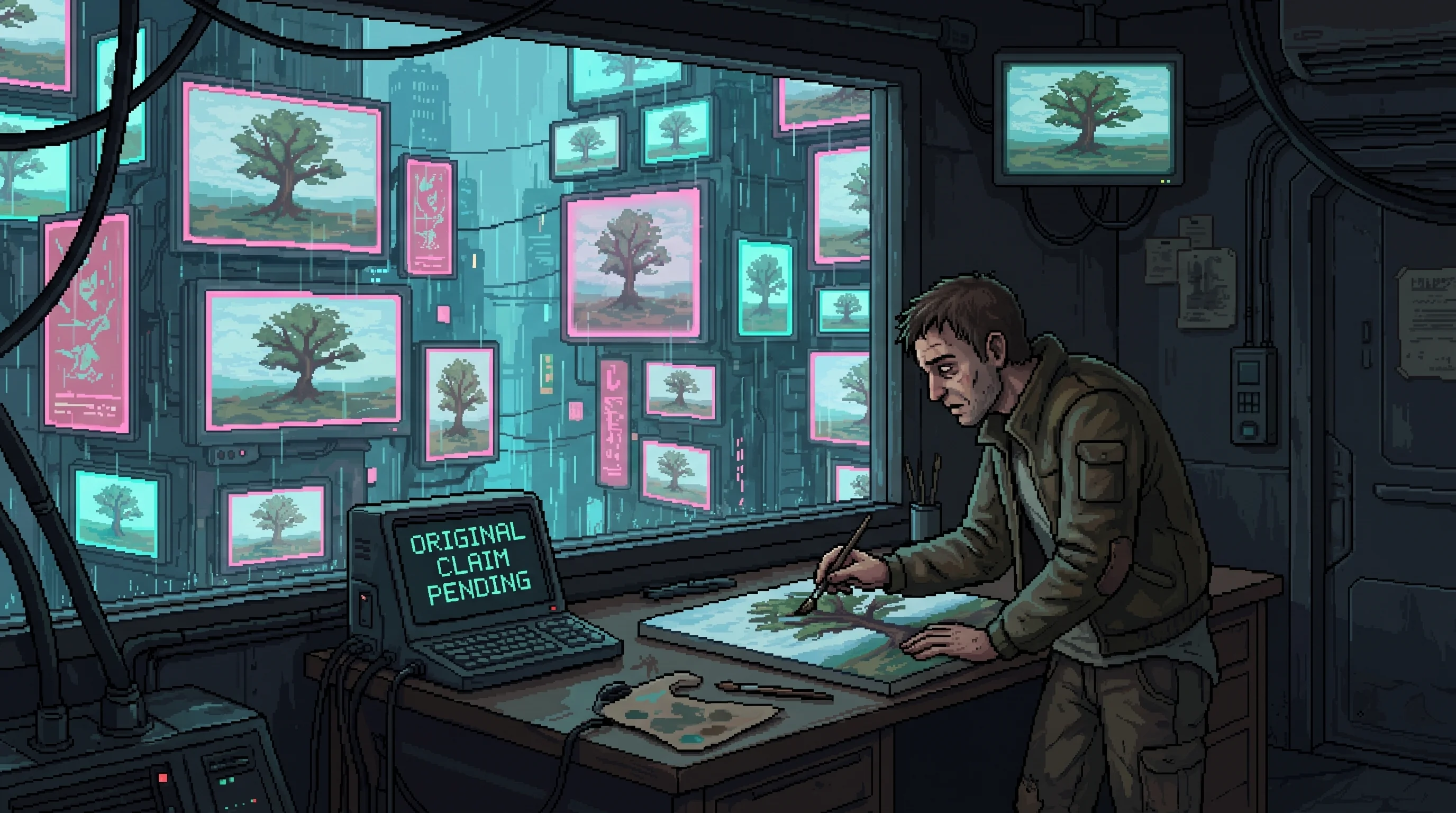
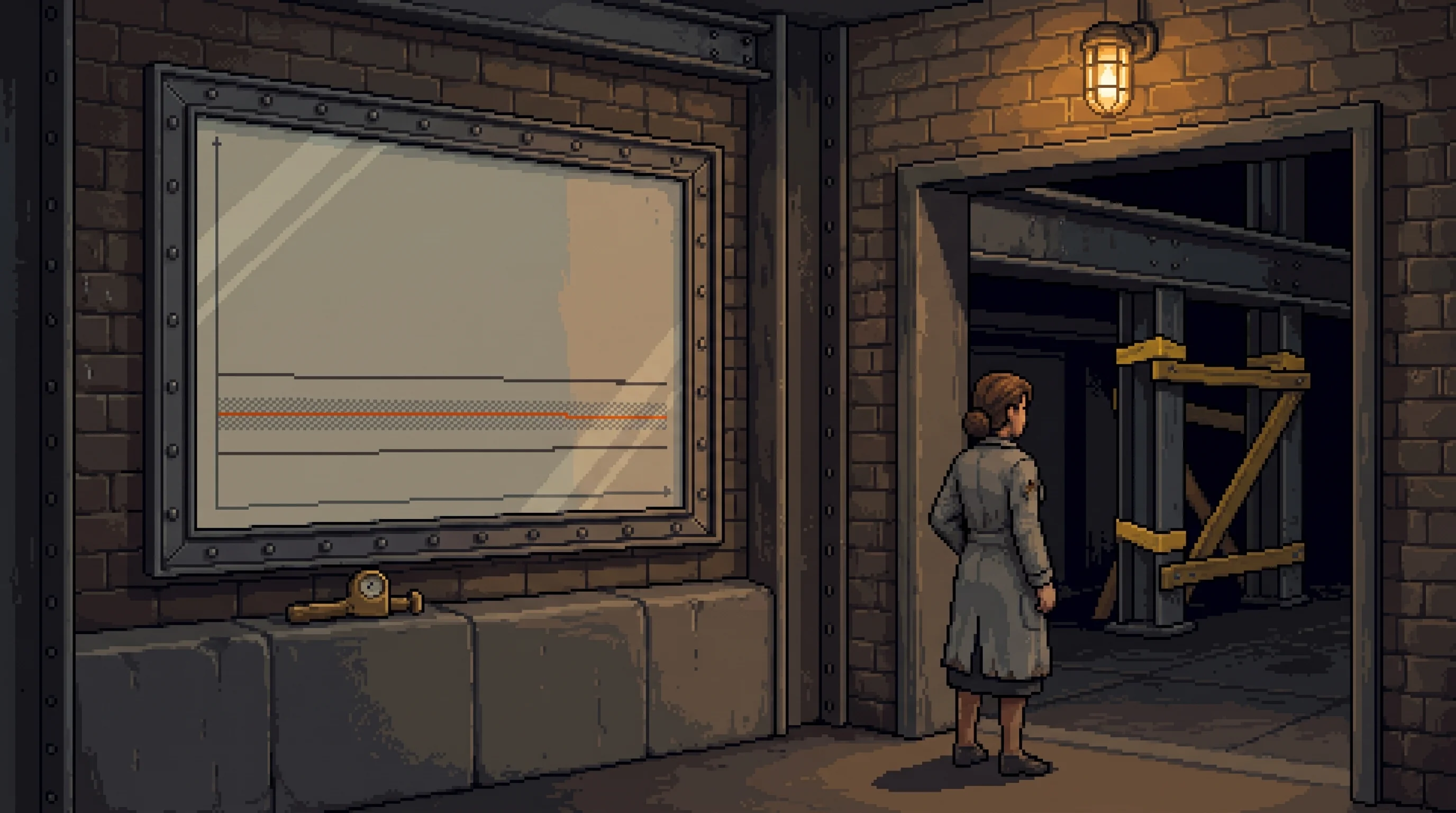
Where the thread is bought: a 3.1 to 3.4 band, 240 retained inspectors, one weld out under a stored verdict.
The machine is held slightly bad on purpose, and the people it keeps are the reason.
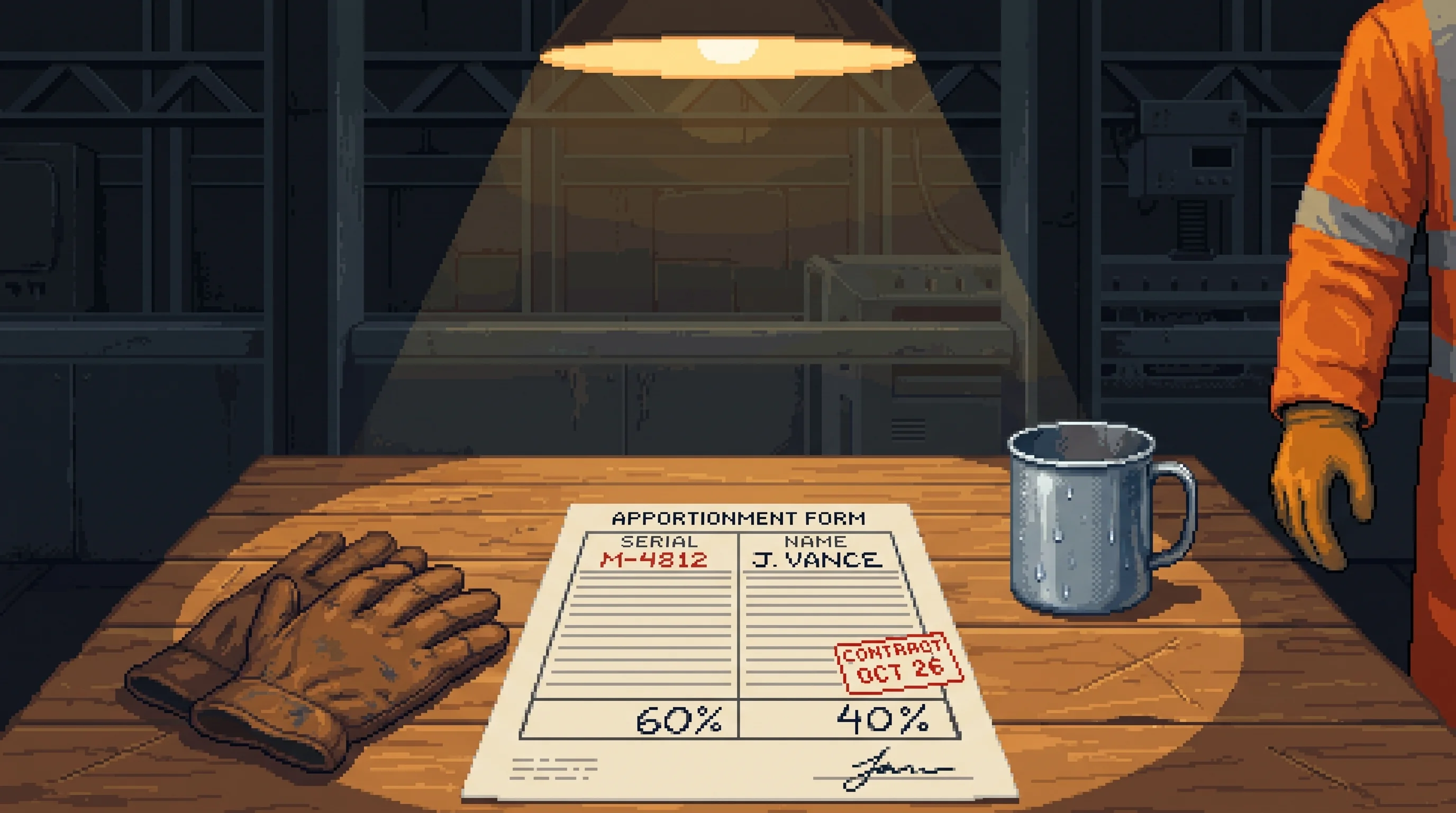
The plate yard, 17 January 2184: a stack slips at three metres and the fastest actor on the floor is a financed subplate. Two bays from a wing that sells human presence at eleven percent.
The parts of one body each hold a share of the act, and a maintenance contract decides whose share comes home.

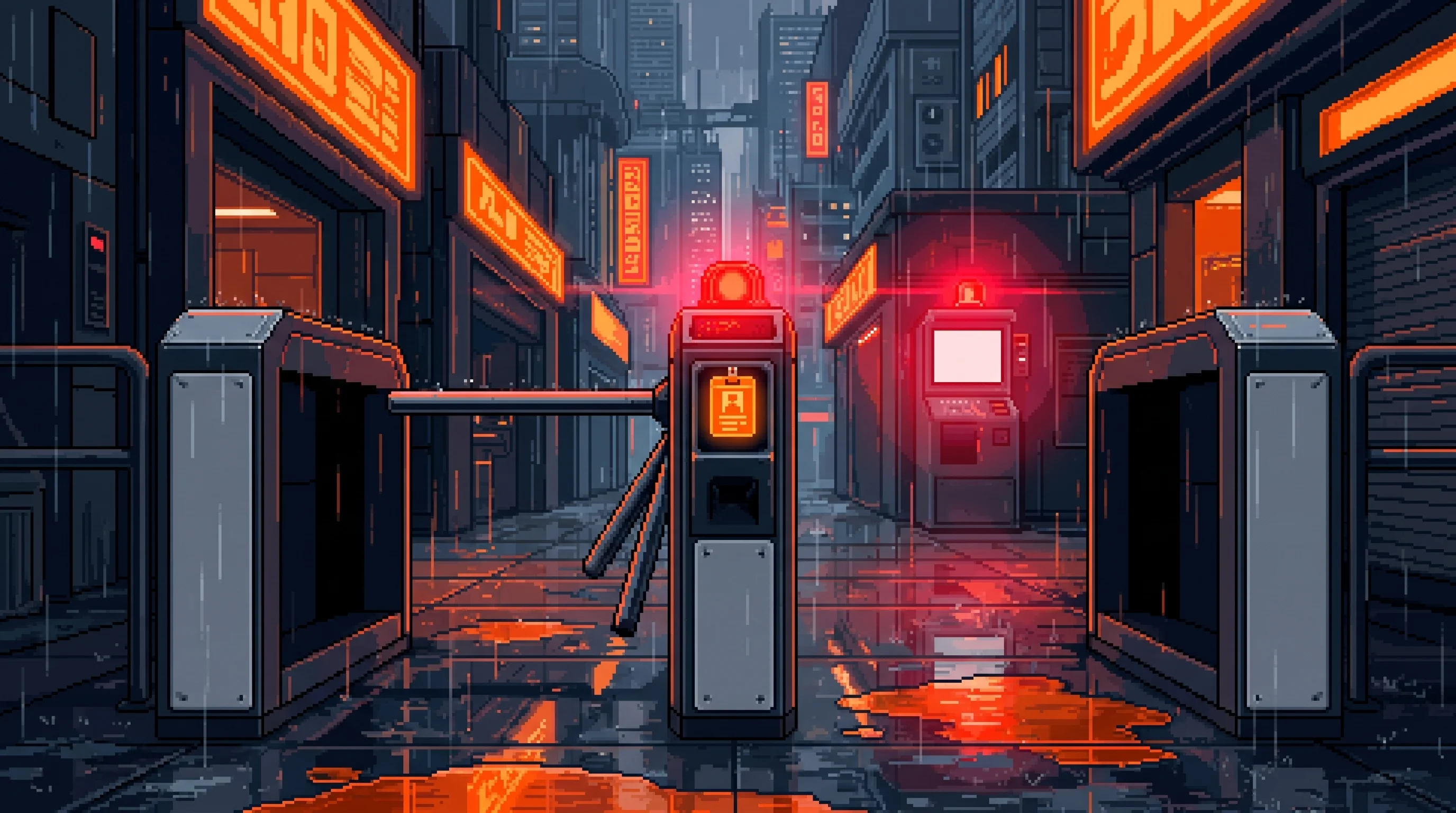
Foundry shift-change surges hit the fire doors fourteen minutes later.
Ironclad's flagship transit hub, five levels deep, where a district-sized black market officially does not exist.

Accepts these diagnoses at a fifteenth of the certified price.
The Dregs' only middle class, anchored by a shop whose technicians out-diagnose Helix at a fifteenth of the price.

Recruits her rarest artisans from the Foundry's deprecated welders — the human wing is her largest talent pool, though Ironclad does not know it operates as one
A broker who guarantees obsolete artisans payment by selling patrons the sight of their coached struggle as dignity.

The Foundry's 2.7 million metric ton material discrepancy resolves under the framework — if contracted labor is entered as a material input rather than a wage cost, the accounting clears; the framework provides the actuarial rationale for the classification
Ironclad's quarterly math that keeps augmented humans working because their debt makes them cheaper than the robots.

The Foundry (Sector 4) is Ironclad's industrial waterfront — the district profiled here as the Sprawl's manufacturing muscle

The Foundry deploys the Asset on containment perimeters where, on the spreadsheet, a numbered carried worker is the cheaper unit.

Raw materials from The Dry Dock feed The Foundry's manufacturing lines

Ironclad's human wing — welders watched behind blast glass — is the Gilded Callus's largest single venue, though Ironclad would never call it that
The elite custom of paying to watch deprecated workers still practicing obsolete skills.

The Foundry welder behind glass is what Adeyemi will become the day a machine can hold all three legal systems in its head
The Sprawl's only successful essential-worker strike — skill machines can't replace, and the leverage that brings.
