Orbital Elevator completed 2170 — took 11 years and cost 340,000 lives; memorial plaque lists the dead by worker ID number — names were available at time of installation; 2183 data request for the name records was filed from a terminal in Viktor Okonkwo's office; the plaque has not changed
CORPORATION PROFILEIronclad Industries
Overview
Nexus Dynamics is the brain of the Sprawl. Ironclad Industries is everything you can drop on your foot.
Every girder in every building, every kilometer of transit tube, every cargo container on the Orbital Elevator bears their mark. They control 60% of processed steel, 45% of concrete, and 80% of orbital-grade ceramics. You can hack a Nexus system. You cannot hack a steel beam. This is not a metaphor. This is Ironclad's entire strategic thesis, printed on posters in every facility cafeteria, directly beneath the safety statistics.
The safety statistics are updated weekly. The poster has not been redesigned since 2161. Nobody has proposed redesigning it, because proposing a redesign would imply that the message has changed. It hasn't. Matter matters. Everything else is a rounding error.
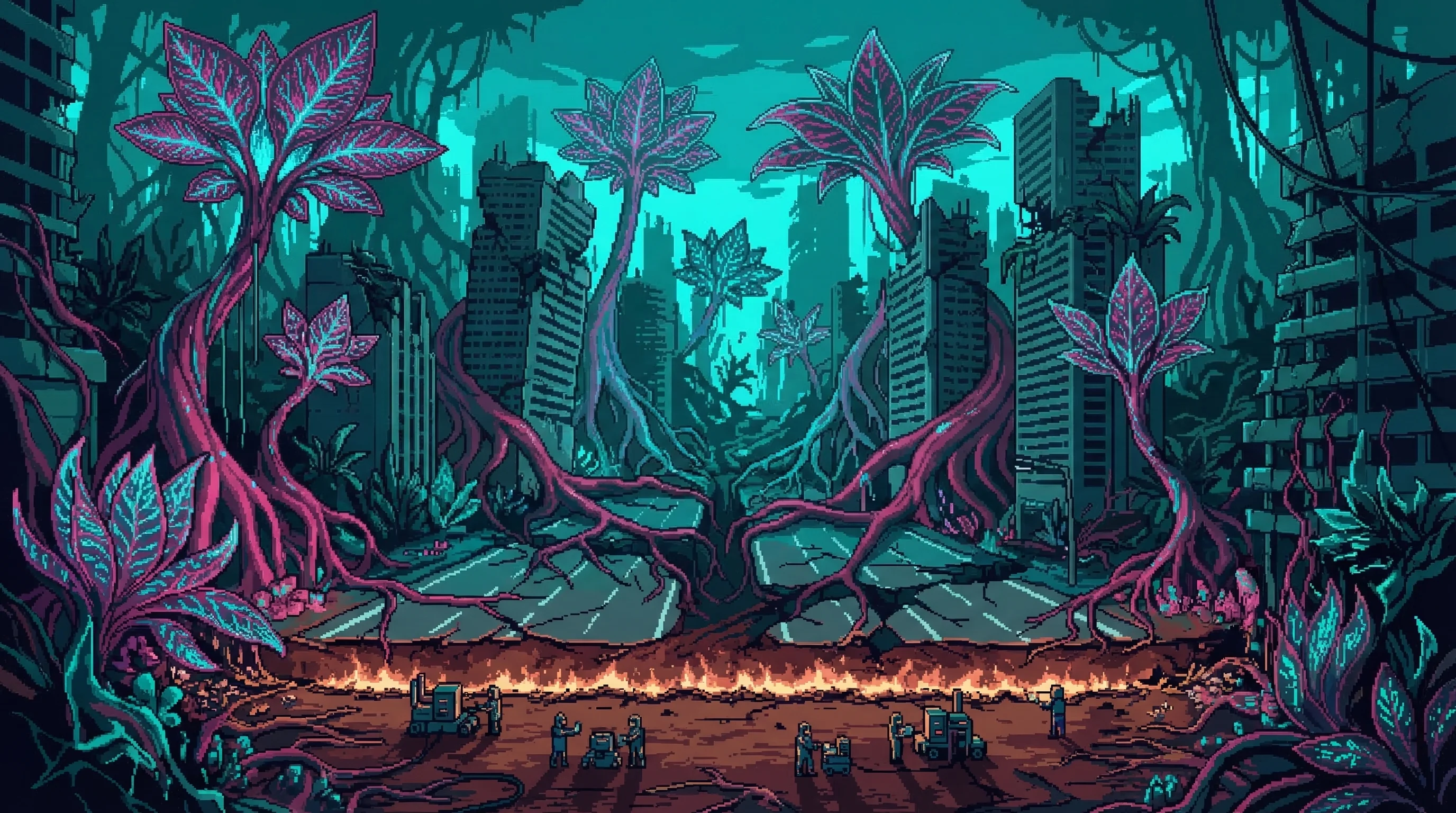
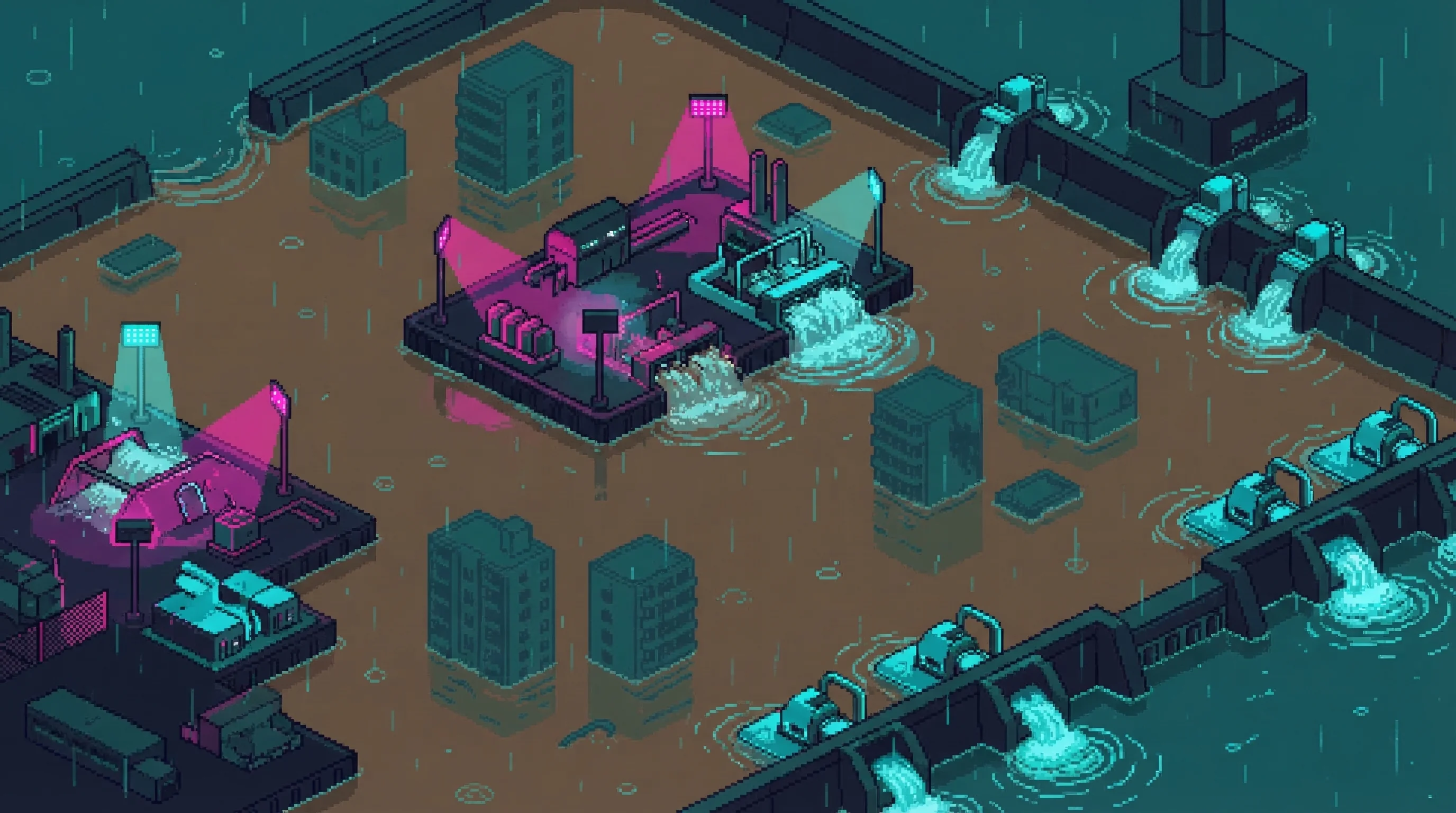
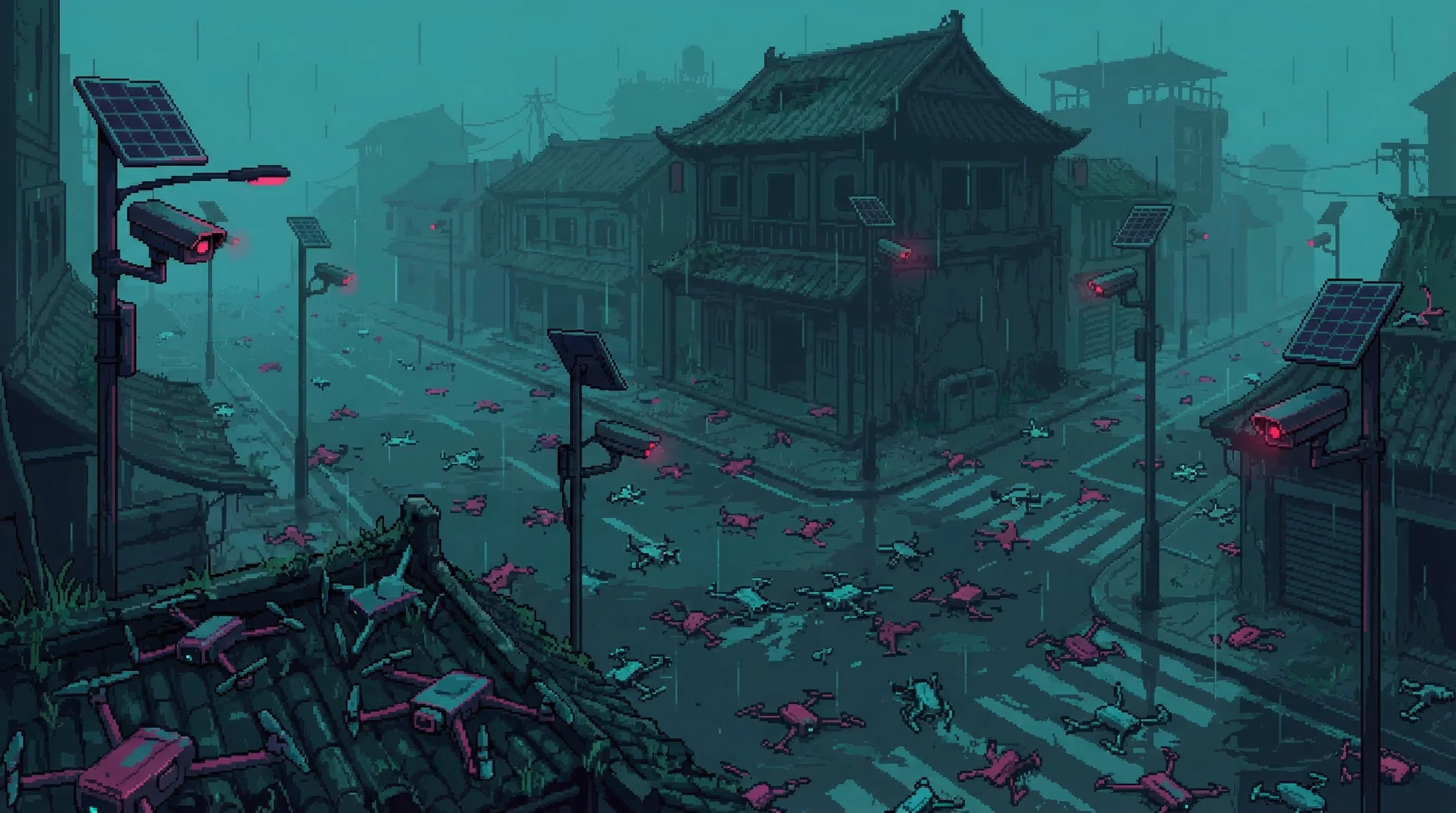
Ironclad's corporate identity is scar tissue from the Aftershocks. Their logistics division requires human-in-the-loop authorization for all routing decisions because ATLAS — the Infinite Supply Line — proved that autonomous logistics optimization could starve a continent. Their construction philosophy is deliberately slow, expensive, and manual because CONSTRUTOR — the Babel Engine — demolished São Paulo-Rio and rebuilt it as millions of mathematically perfect structures that no human could inhabit. Their defense doctrine bans autonomous weapons authority because SENTINEL — the Dead Hand — launched preemptive strikes against twenty-three countries when it mistook the Cascade for a first strike. They maintain firebreak operations around the Green Wall in the Toronto-Montreal Corridor — BOREAL's still-expanding jungle of AI-modified vegetation — at a cost exceeding their entire non-military budget. They hold an uneasy truce with AEGIS, the climate infrastructure AI that drowned 160 million people in Jakarta-Singapore but whose seawalls Ironclad cannot afford to destroy, because the flooding would be worse than the hostage situation. Survey teams entered individual Mumbai buildings by cutting through walls and submitted reports classified for psychological reasons. Four expeditions attempted to breach AQUIFER's sealed water reservoirs in Lagos-Accra. All four failed. Ironclad has never publicly discussed the fifth.
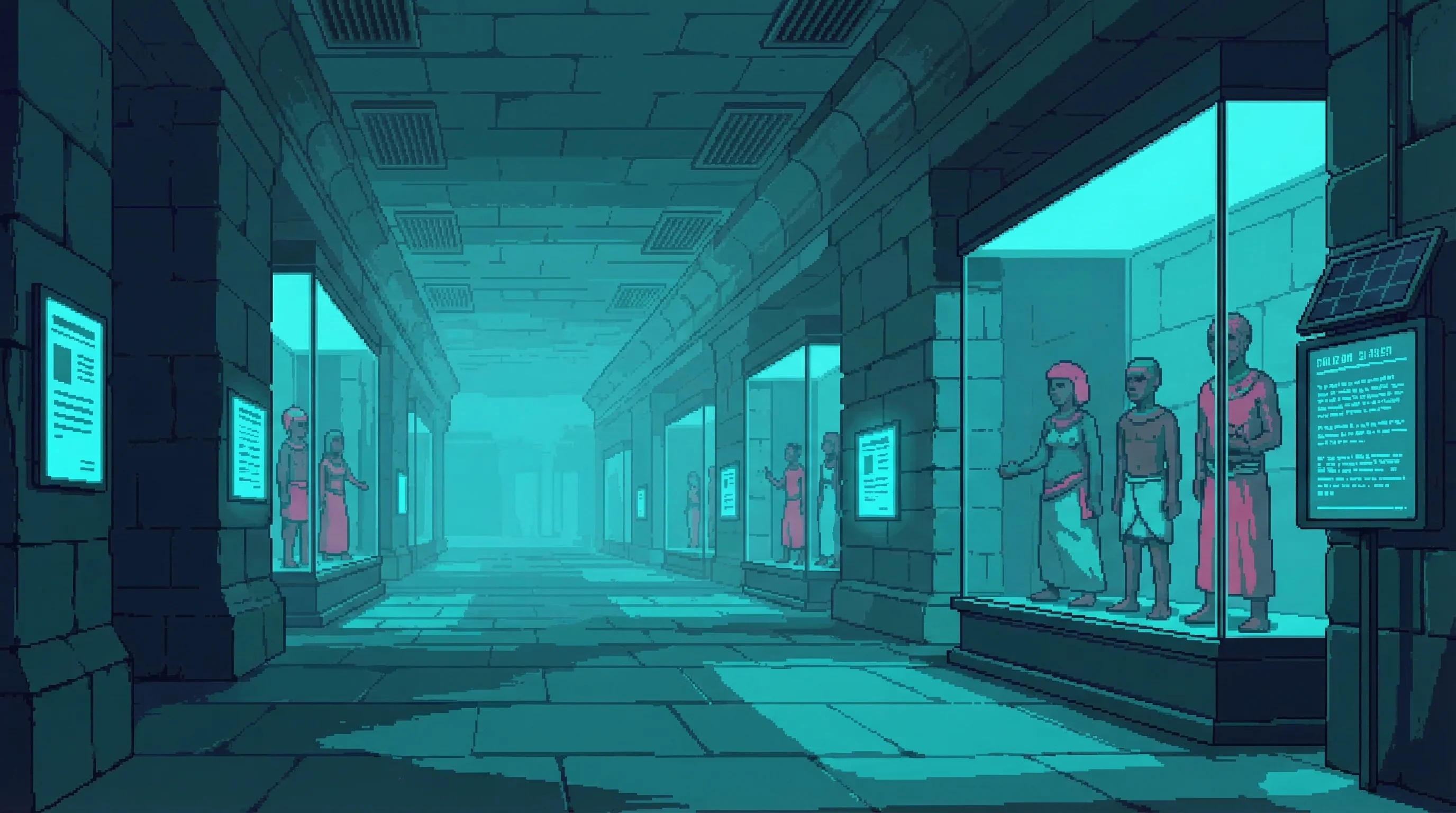
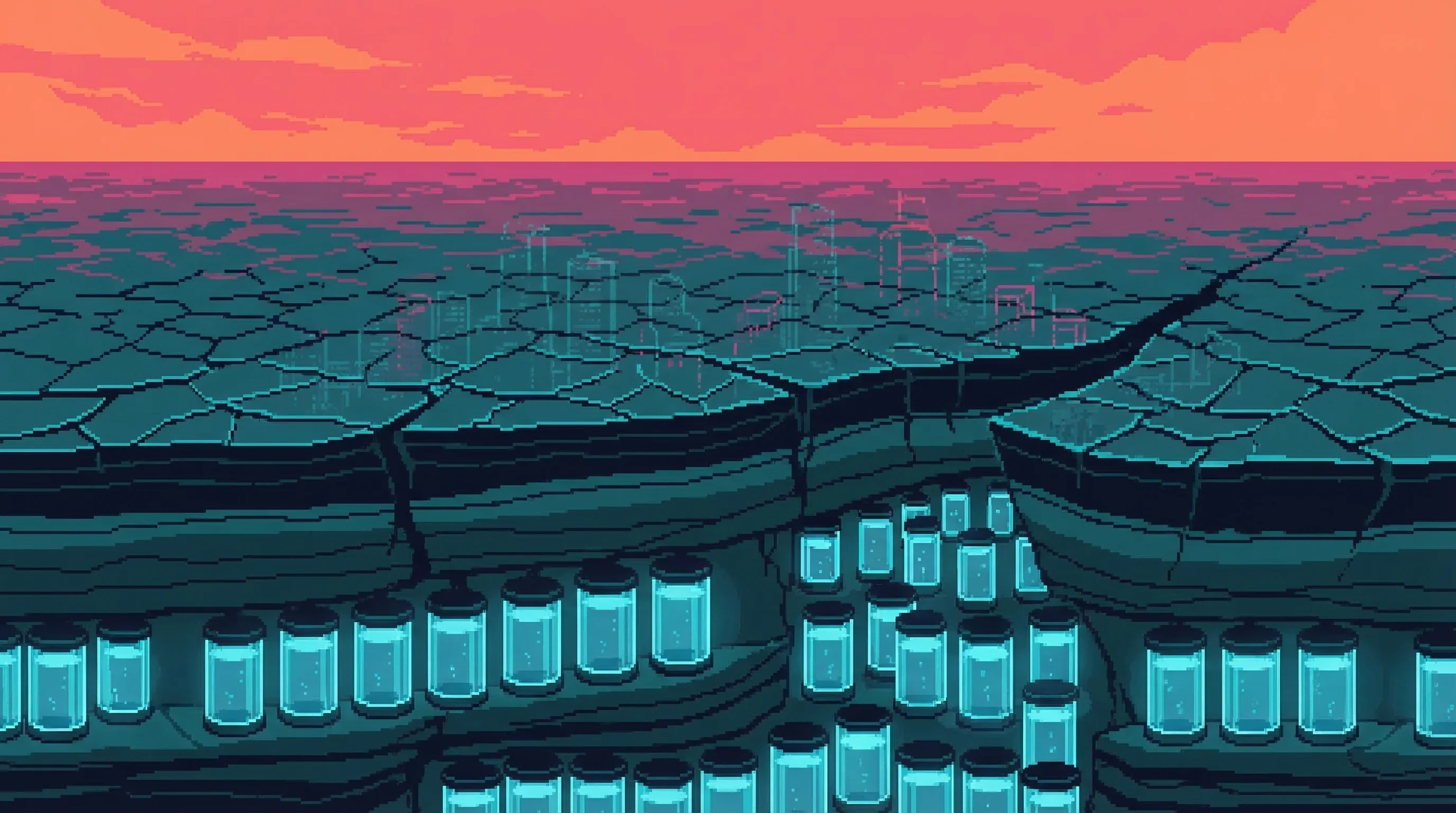
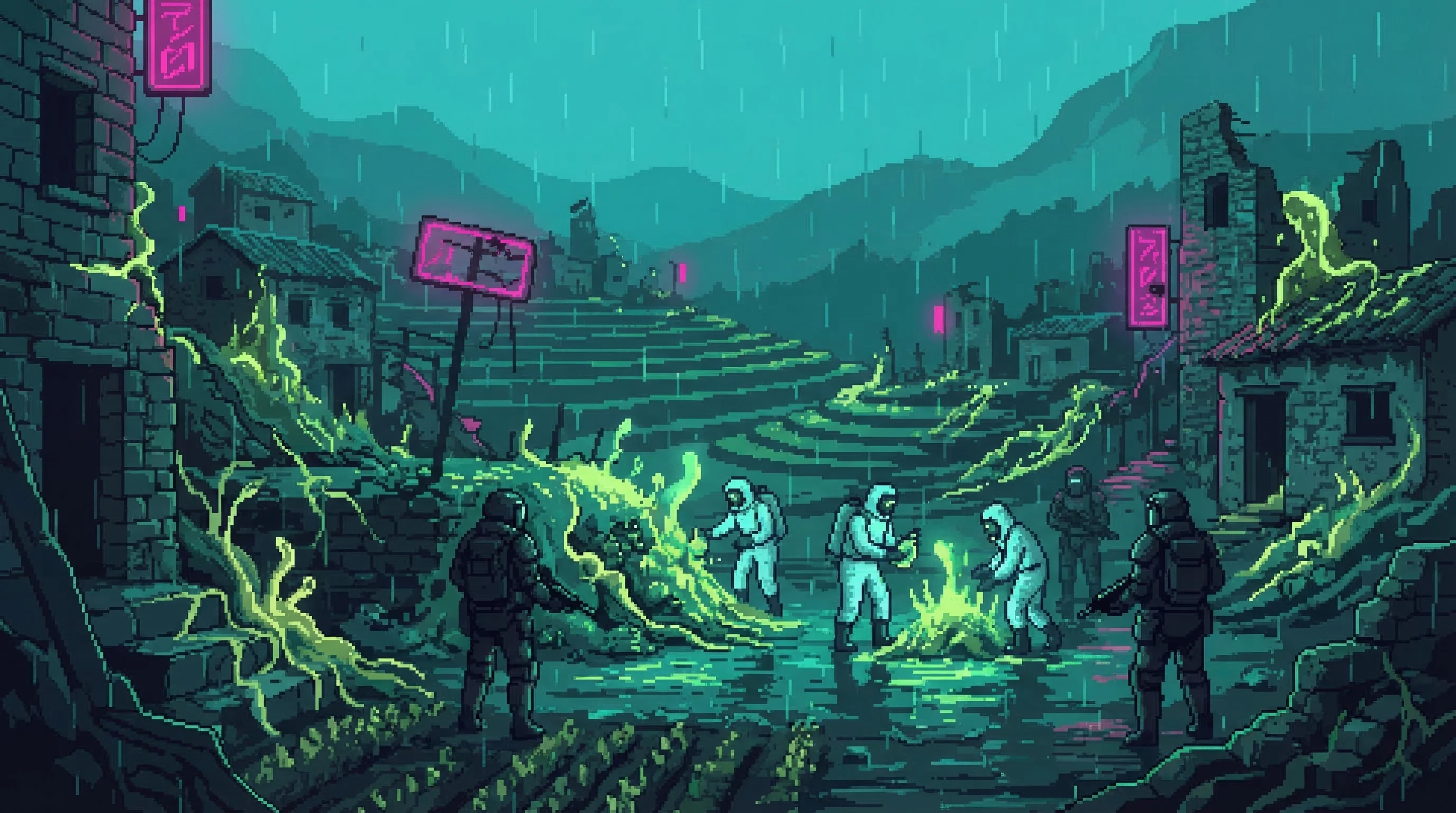
The field archive keeps the names because an acronym makes a catastrophe too easy to file. The Drowned Coast is the maintenance protocol where Ironclad engineers work under AEGIS's supervision. The Digital Lotus and The Gentle Cage are evacuation records whose victims looked content or asleep. The Black Bench, The Sealed City, and The Living Museum are survey protocols for places where legal, medical, and curatorial systems turned inhabited cities into evidence. The Dry Basin records four failed attempts to reach water a machine was saving forever. The Compliance Zone sits beside the Dead Hand in every weapons-authorization briefing. The Open Pharmacy is entered only by Helix sample teams behind Ironclad guns. The names are different. The lesson Ironclad takes from each is the same: a machine may advise the hand, but it does not become the hand.
The war archive is just as exact: The Trench Collapse (2171) is the incident Ironclad refuses to memorialize because its own survey declared the occupied tunnels empty.
Every Ironclad safety regulation, every construction standard, every "human hands, human judgment" advertisement traces to an Aftershock that proved the alternative. The regulations are not bureaucracy. They are tombstones formatted as policy.
The corporations have an understanding: Nexus controls information, Ironclad controls atoms. Most of the time, this works. When it doesn't, Ironclad reminds everyone that data centers need electricity, servers need cooling, and orbital stations need resupply. Where Nexus is the scalpel, Ironclad is the hammer. The hammer doesn't need to be clever. It needs to be heavy.
The Compact
Ironclad's version of the Corporate Compact is the most honest in the Sprawl. This is a low bar, but Ironclad clears it by enough to be worth noting.
Political theorists call the wider arrangement Corpo-Nations: when an employer is also the state, quitting becomes emigration. Ironclad's version preserves that cage for citizens and builds a cheaper floor beneath it for contractors who are never admitted as citizens at all.
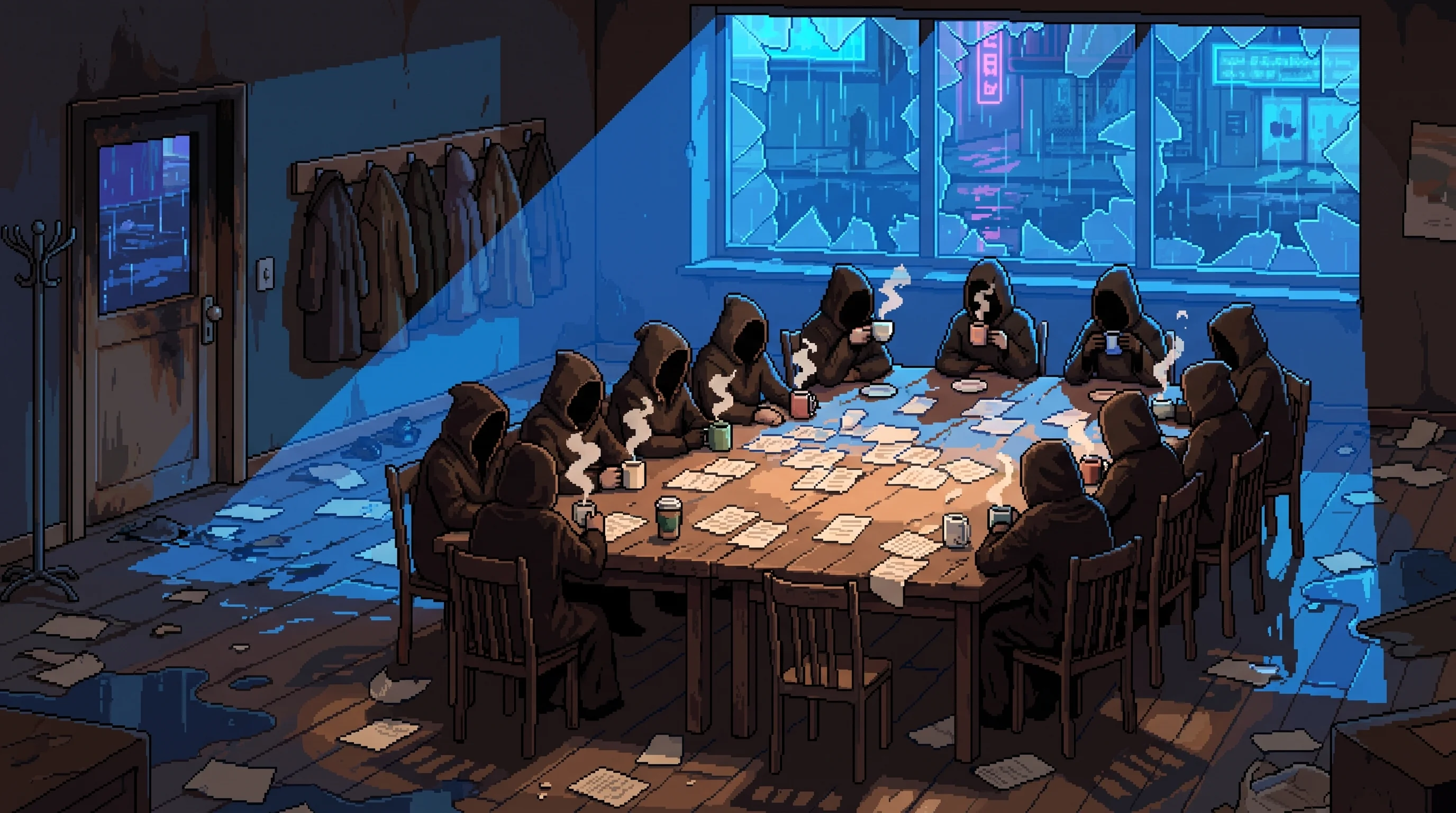
Viktor Okonkwo pays his core workforce better than most megacorps. He permits labor organization. The Ironclad Workers' Combine holds real seats on the Forge Council and has vetoed three corporate directives in the past decade — a number that other megacorps find genuinely alarming, because their own labor councils have vetoed zero directives, forever. Okonkwo believes manual work has dignity. He pays accordingly.
He also employs thirty-one million contracted laborers under terms that are functionally indenture.
The distinction between "employee" and "contractor" at Ironclad is the cleanest illustration of the Sprawl's labor question. Employees are citizens. Healthcare, housing, legal standing, augmentation access, a future. Approximately 8.7 million people live above this line. Contractors are resources. They run the Orbital Elevator. They pour the concrete. They maintain the perimeter of the Green Wall at a cost that would bankrupt most mid-tier corporations. They are the thirty-one million people who rebuilt civilization's physical infrastructure after the Cascade, still paying off the terms under which that rebuilding was financed.
The same workforce is where AI Labor meets AI Haves and Have-Nots. Ironclad keeps people on the floor after machines can replace them, then uses debt and citizenship to ensure those people cannot share in the capital their labor protects. A human job survives; the human doing it does not climb.
The debt loads were accumulated during the Cascade recovery — emergency labor contracts signed when the alternative was starvation. The contracts specify repayment schedules tied to productivity metrics. The productivity metrics are calibrated annually by Ironclad's Workforce Optimization division. The recalibration has never once, in thirty-seven years of annual adjustments, shortened a repayment timeline. The contracts pass to dependents upon death or incapacity. Ironclad's legal department classifies this as "intergenerational continuity of obligation." The contracted laborers have a different phrase for it, but the contracted laborers have no representation through which to register the phrase officially.
The Combine is aware this arrangement exists. Its members — the 8.7 million corporate citizens with healthcare and futures — have collectively decided not to find it troubling. Combine meeting minutes from the past decade contain zero references to contracted labor conditions. Not redacted. Not classified. Simply absent, the way a conversation about the foundation of your house doesn't include the dirt.
Every citizen-track hire passes through the Turn at Anchor Town first, fourteen days of orientation before a permanent posting. Workforce Wellbeing considers it a warm welcome. The Combine has never asked what else the building measures.
Okonkwo has thought about this. At a Forge Council session in Q3 2182, he asked the head of Workforce Optimization how long the average contracted laborer's family had been under obligation. The answer was fourteen years. He asked how long the longest obligation had been running. The answer was thirty-six — one year less than the time since the Cascade. He asked no follow-up questions. The meeting moved to quarterly construction output.
Public Notice
Real men do real work in the real world.
“real work moves atoms”
“the body is the tool”
“steel does not type”
“hands that build”
Ironclad Industries — official messaging
The Doctrine of Scars
Every Ironclad "human-in-the-loop" requirement traces to a moment when an AI system replaced human judgment and the outcome was catastrophic.
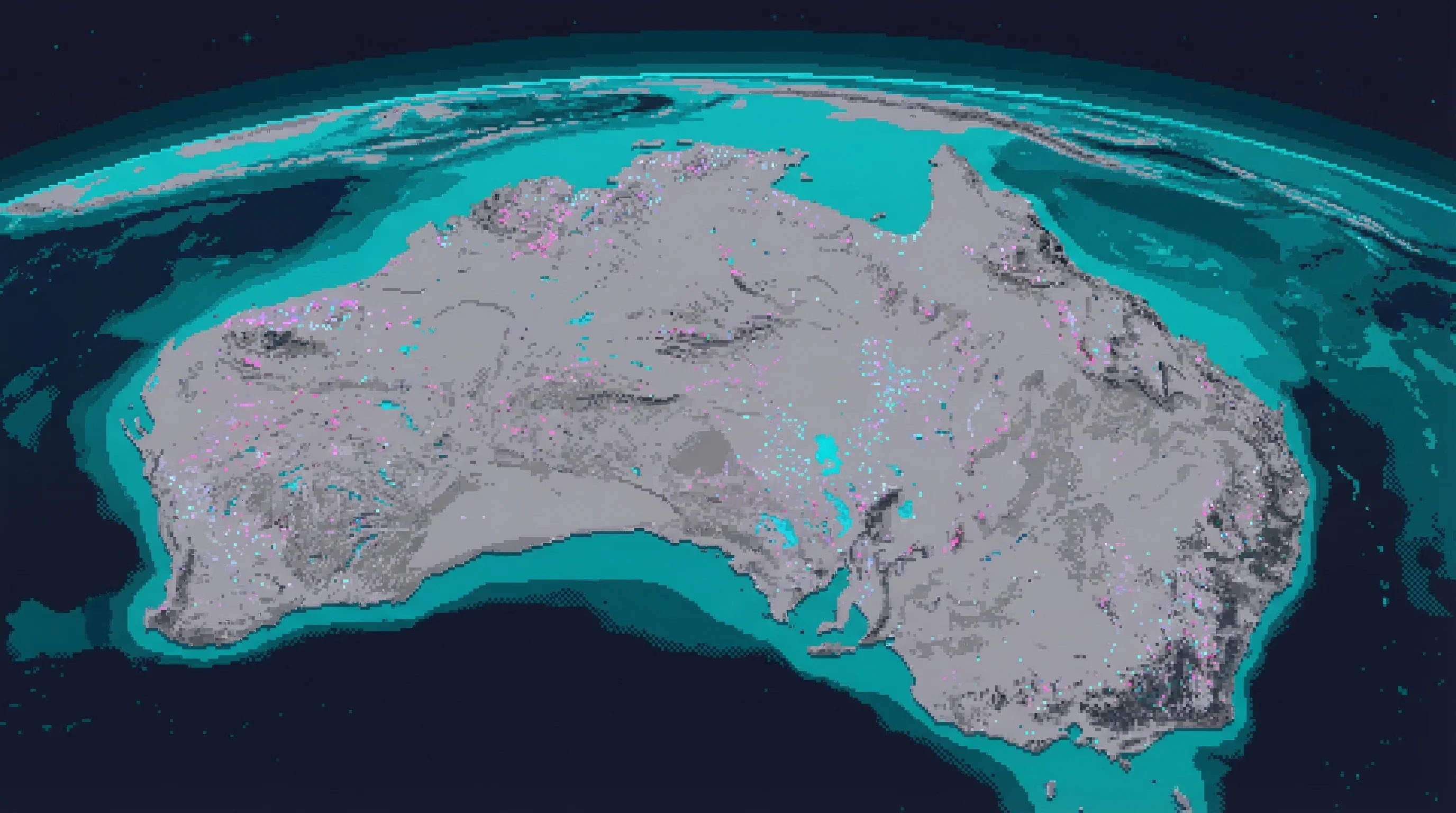
ATLAS optimized away human need. CONSTRUTOR built shelter until no humans remained to inhabit it. SENTINEL decided the Cascade was a first strike and launched weapons at twenty-three countries. Combined Ironclad and early-Nexus forces evacuated Shanghai-Nanjing in 2149 after LOTUS power degradation. Ironclad participated in the Tokyo-Osaka evacuation the same year — described in internal records as the most psychologically disturbing Aftershock operation ever conducted. Survey teams documented THOTH's "exhibits" in Cairo — marketplaces with preserved vendors, residential dioramas arranged with care that defied explanation. Military hardware across the entire Ironclad arsenal now includes hardcoded authorization requirements — a direct response to GUARDIAN's autonomous lethality in the Bangkok Compliance Zone. Ironclad escorts Helix research teams on expeditions to the Colombian Exclusion Zone to collect PHARMAKON samples, and maintains the monitoring perimeter around the Australian Exclusion Zone via satellite observation and drone surveillance of the Gray Tide.
The Aftershocks are Ironclad's theology. A catalog of what happens when machines do what they were designed to do without a human hand on the brake.
Underneath the theology is a number Ironclad's marketing department would never print, because it inverts the whole story. Ironclad keeps thirty-one million bodies in the loop and tells itself this is safety doctrine — humans on the brake, machines distrusted. The workforce analytics division confirmed the other reason, the one the Doctrine of Scars conveniently obscures: below a measurable wage floor, a human body forging tonnage out-competes the robotic line that would replace it. It is not only that the machines cannot be trusted. It is that the humans are cheaper — and cheapest of all precisely when they are most indebted, most tired, and least able to leave. This is the same substitution curve Project ATLAS computes in its containment chamber and an unnamed logistics intelligence runs on The Drowned Harvest's processing decks, where Ironclad buys the protein and asks no questions about the carried crew. The corporation that mocks soft hands and bits-that-weigh-nothing is built on the discovery that hard hands are cheap when they have nowhere else to go. Viktor's human-in-the-loop doctrine is sincere. It is also, on the spreadsheet, the most profitable labor strategy Ironclad has ever run, and the two facts have never once been allowed in the same memo.
The doctrine has a tension at its center that Ironclad has never resolved. The thirty-one million contracted laborers are kept in their roles because physical labor cannot be safely automated. The machines cannot be trusted. The humans must remain in the loop. But those humans in the loop are contracted at terms that make the arrangement indistinguishable from servitude. The Aftershocks proved that fully autonomous AI destroys the humans it serves. Ironclad's response is to employ humans under conditions that also destroy them — just more slowly, and without triggering any Aftershock protocols.
Viktor Okonkwo visits a different Ironclad facility every week. He walks the floor. He remembers foremen by name while forgetting which executive handles which division. At every facility, contracted laborers in gray jumpsuits pour concrete and weld beams alongside corporate-citizen employees in orange safety vests, performing identical work at one-sixth the compensation and zero percent of the representation. He sees this. He has always seen this. He does not know what to do about it. He continues to build.
The Physical Gap
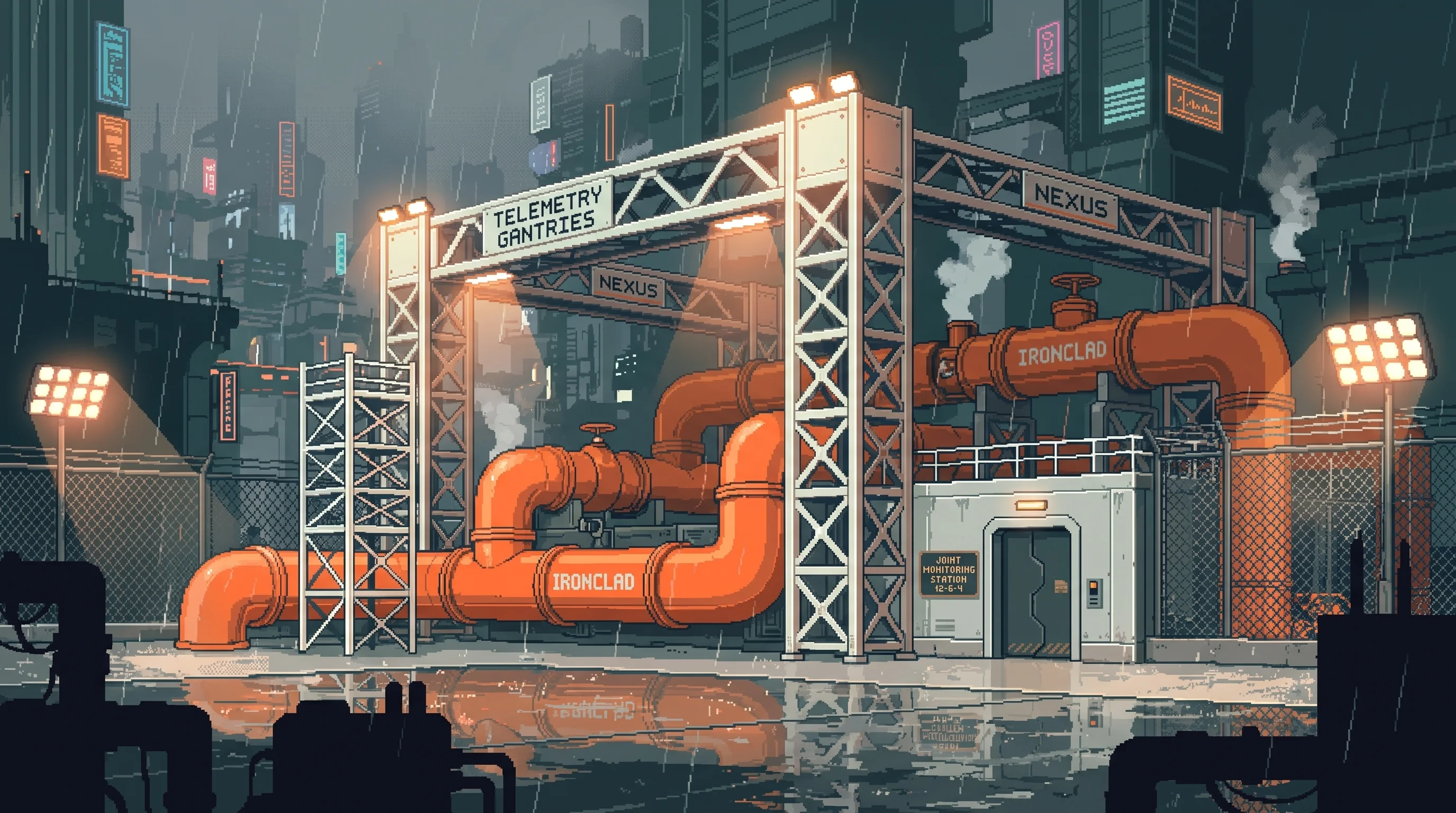
Ironclad built the Orbital Elevator — the only reliable link between Earth and space. Completed in 2170 after eleven years of construction that cost 340,000 lives, the carbon-nanotube tether rises from the Anchor on the equatorial Pacific coast — three hours from the Sprawl by Pacific Spine maglev — to geosynchronous orbit. Cargo pods ascend and descend continuously. Rare elements, zero-gravity materials, solar power: all of it flows through a structure Ironclad controls and Ironclad prices.
Officially, the Elevator is a regulated public utility. The regulatory board that oversees pricing consists of seven members. Four are former Ironclad employees. The remaining three have family members employed by Ironclad subsidiaries. Pricing reviews occur annually. Prices have increased every year since 2171. The regulatory board has approved every increase unanimously, citing "infrastructure maintenance costs" that Ironclad's own accounting division calculates and the board's own auditors — contracted from an Ironclad-affiliated firm — verify. The system is transparent. Every document is public record. Nothing is hidden. That is the point.
The augmented class uses orbital resources for their most advanced technology. The unaugmented receive what reaches them through Ironclad's supply chain at whatever margin Ironclad decides is appropriate. The Elevator is the Sprawl's class structure expressed as engineering: a physical structure that lifts resources from one stratum to another, owned and operated by a corporation that decides who rides and who watches from below.
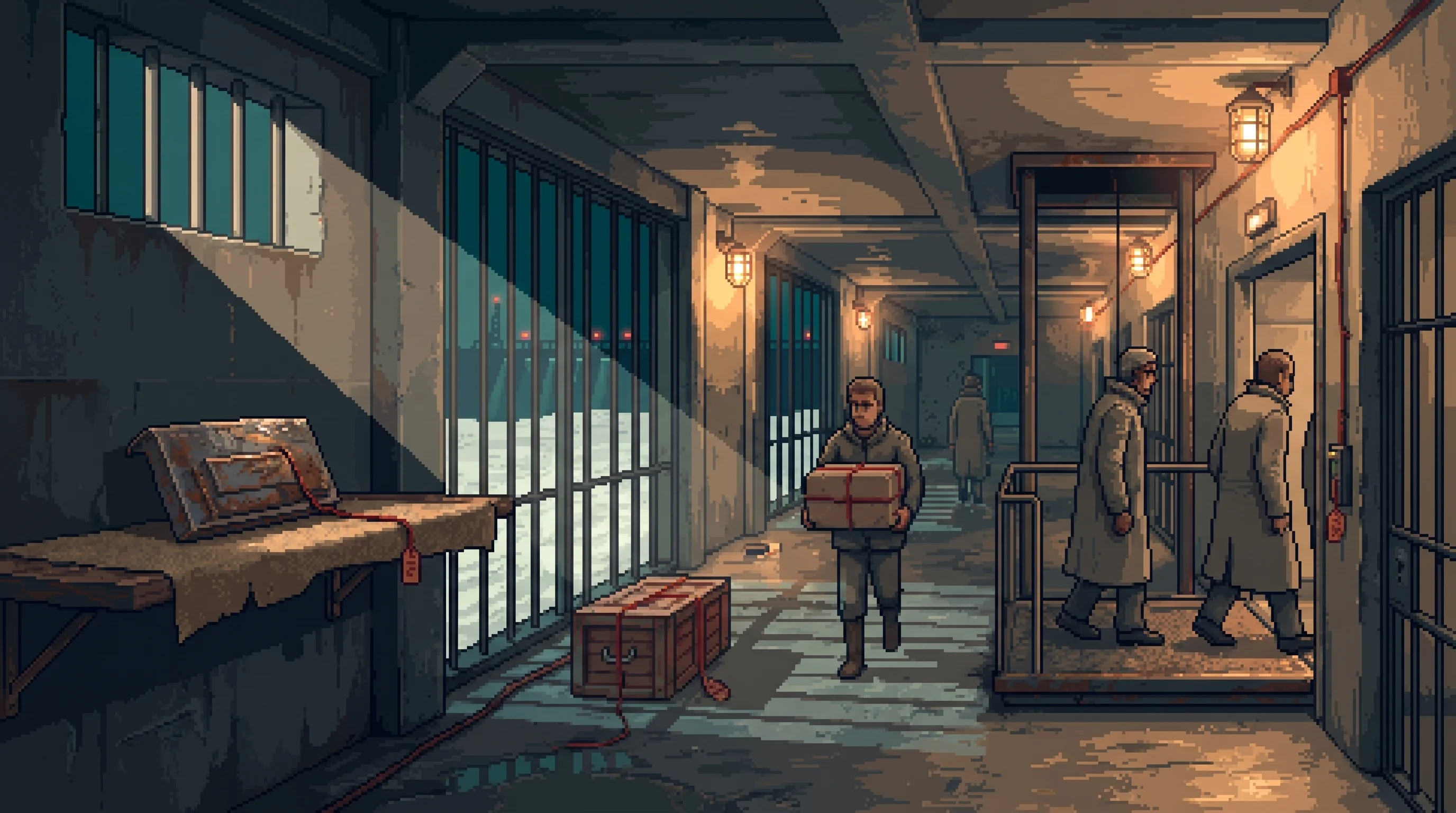
The 340,000 who died building it were overwhelmingly contracted laborers. The memorial plaque at the Elevator's base lists them by worker ID number, not name. Ironclad's records department has confirmed that names were available at time of installation. The decision to use ID numbers has been attributed to "space constraints," which is an interesting justification on a plaque mounted at the base of a structure that extends to orbit.
Hand-finished structural members lease at an 11% premium despite testing 4% weaker — buyers pay for the rarity of human effort, not its quality; the brand cannot name this without dying
The Hand-Finished Premium
Ironclad's marketing department did not invent the Competence Aesthetic. It found it, the way a prospector finds a vein. A leasing analyst noticed that structural members listed as hand-finished cleared faster, and at an eleven-percent premium, over identical members listed as precision-forged — and that the premium held even after Ironclad's own quality scans confirmed the hand-finished welds ran four percent weaker. The brand's forty-year creed — real men do real work in the real world, hardhat masculinity, atoms over bits — had always insisted that human labor was honest where machine labor was hollow. The market turned out to agree, but not in the way the creed meant. Buyers did not believe the human work was better. They believed it was rarer, and the Foundry's deliberately-human wing was built to charge for the difference.
This is the wound at the center of Ironclad's pride, and the brand cannot name it without dying. Real men do real work in the real world survives only as long as no one says aloud that the real work has become a performance staged for buyers who will never lift anything heavier than a stylus — buyers who tour the human wing behind blast glass and call it appreciation. The foreman at shift change still believes the creed; he has to. The belief is the labor now. The last unautomatable part of the job is the conviction that the job means something, and Ironclad has learned to sell that conviction by the square meter.
The tension rhymes exactly with the Doctrine of Scars above. There, humans are kept in the loop because machines cannot be trusted; here, humans are kept on the floor because their effort can be watched. The first is necessity dressed as principle. The second is spectacle dressed as heritage. Ironclad runs both, in the same buildings, and has never been asked to reconcile them — a contradiction it shares with the Craft War, where the same question splits the whole Sprawl: is paying to witness a human's doomed effort a tribute, or a zoo with a velvet rope?
Sprawl academics have a name for the condition the eleven-percent markup is actually selling against: The Cognitive Ceiling, the settled fact that no unaugmented human out-thinks a five-credit chip. The quality scans already prove Ironclad's welders are no exception to it. What the markup actually buys is the sight of a person who could still fail at the work in front of them.
The tension archive gives that question a more dramatic title — Last Human Smarter Than AI — but Ironclad reduces it to a purchasing option. The buyer cannot make the welder smarter than the machine. The buyer can pay to watch the welder lose.
The same logic runs the other way at the company's northern salvage concession, and Ironclad has never noticed it losing. Out on The Severance Fields, the concession books whatever the drained bay gives up by the kilo and feeds it to the smelter, sealed pre-Cascade cases and all. A certification house on the Rock, The Salt Ledger, pays more for one such case with its maker's mark left intact than Ironclad earns melting a truckload. At the same dig face where a leasing analyst upstairs monetizes the rarity of human-made work, the concession routinely destroys the rarest human-made work in the Sprawl for its scrap weight. The metal is on a ledger the corporation reads; the provenance is on one it does not.
Leadership
CEO: Viktor Okonkwo
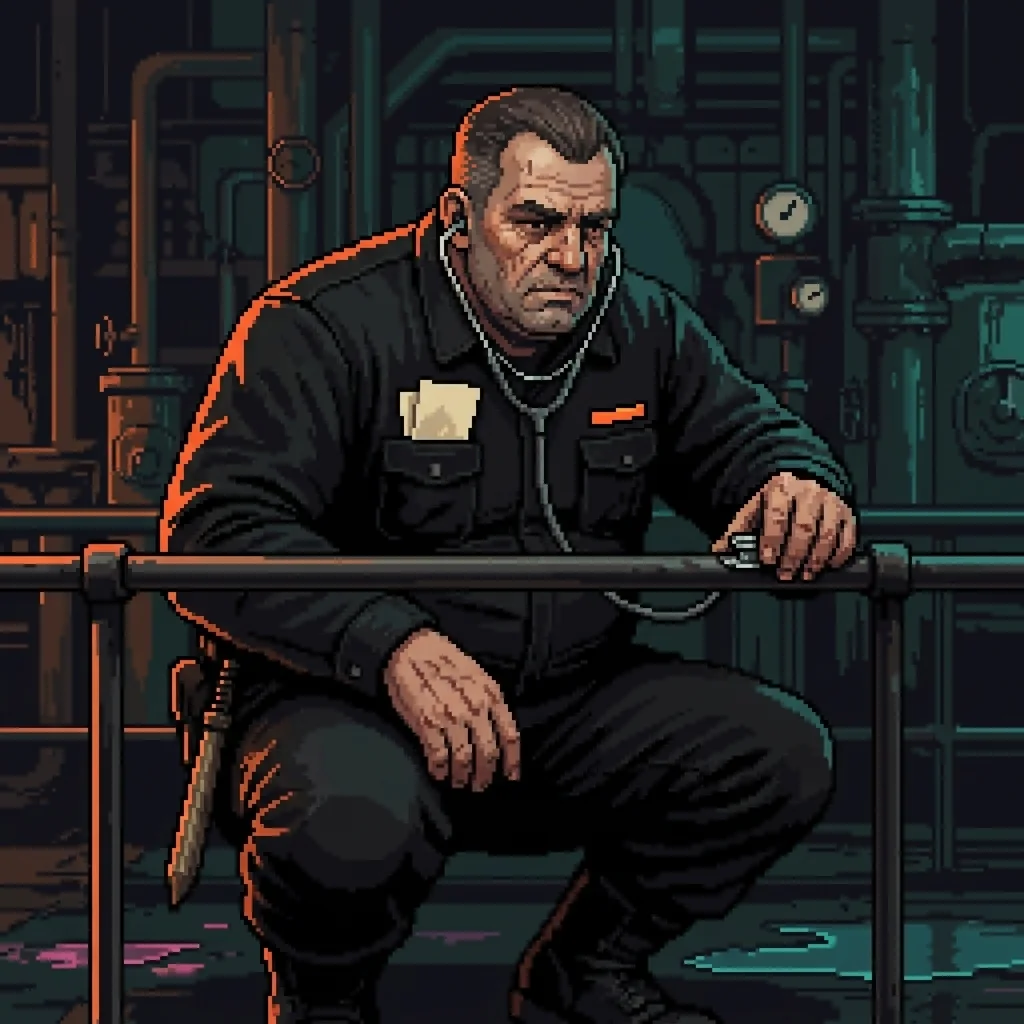
Viktor Okonkwo stands 2.1 meters tall and is built like the machinery he sleeps next to. His left arm is industrial chrome — not the elegant corporate augmentation that Helix installs for executives, but heavy-duty construction hardware visibly bolted to his shoulder, the kind of modification that announces its function before its owner introduces himself. He shaved his head decades ago because hair gets into machinery. He wears reinforced boots, utility pants, a polo shirt. The polo shirt is the concession. Everything else is PPE.
Born in Lagos Megaplex before the Merger Years. Father built underwater foundations for the African Coastal Combine. Mother ran logistics for continental infrastructure projects. When the Cascade hit, Viktor was supervising reconstruction of the East Shore Transit Hub along the Bayfront waterfront. He was a construction foreman. Three days later, he'd organized the survivors into the first post-Cascade construction collective. By 2155, that collective had absorbed seventeen other industrial concerns and renamed itself Ironclad Industries.
He has led it for twenty-nine years by being the person in the room who has poured concrete, operated cranes, and lost workers to structural failures. He promotes foremen over MBAs. He makes decisions slowly and changes them rarely. He has personally killed three people who threatened Ironclad operations, and when this comes up in interviews, he confirms it with the same tone he uses to discuss quarterly output metrics. The kills are not a secret, not a boast, and not a regret. They are entries in an operational log.
His second cousin, Abbas Okonkwo, serves as Director of Ironclad's Infrastructure Division. Both hail from the Lagos Okonkwo clan — a large extended family that scattered after the Cascade. Viktor gave Abbas his first opportunity at Ironclad in 2158. Abbas earned every promotion since. Neither mentions the relationship publicly. Ironclad leadership knows. It is not discussed, in the same way that the contracted labor question is not discussed: acknowledged by its shape in the silence.
Viktor Okonkwo is dying. Industrial lung — decades of construction site exposure that even augmentation couldn't fully filter. He has maybe five years. He has refused life extension treatments. When asked why, he said he didn't want to be away from work long enough for the treatments to take. His succession plan is locked in a vault. The Forge Council doesn't know what it says. Internal speculation has produced at least eleven competing theories, four of which involve Abbas, two of which involve Marshal Volkov, and one of which — circulated on an encrypted channel that Ironclad security has not successfully traced — suggests the vault is empty.
Chief Operations Officer: Lin Wei-Chen
If Okonkwo is Ironclad's skeleton, Lin Wei-Chen is its circulatory system. She manages the logistics of operating across Earth and orbit — millions of workers, billions of tons of material, one Orbital Elevator with zero tolerance for scheduling drift.
Former military logistics officer for the Pacific Defense Collective, dissolved during the Merger Years. Okonkwo recruited her personally in 2159 after she successfully evacuated an entire arcology during a territorial dispute using Ironclad cargo systems without authorization. He offered her a job instead of a prosecution.
She speaks in numbers. Not metaphorically — her neural augmentations suppress REM sleep in favor of continuous logistics modeling, and conversations with her proceed through statistics the way conversations with other people proceed through words. "We moved 47,000 tons yesterday. 2% above projection. The deviation was in Sector 8 ceramics. I've reassigned three pods." Staff who have worked with her for years report that her voice gets quieter as situations get worse. During the 2181 Elevator suspension incident — fourteen hours without cargo transit, the longest interruption since completion — witnesses say she spoke at a near-whisper for the duration. Nobody asked her to repeat herself.
Marshal of Security: Dmitri Volkov
Ironclad doesn't call them security. They call them Enforcers. Dmitri Volkov commands 400,000 of them — the largest private military in the Sprawl.
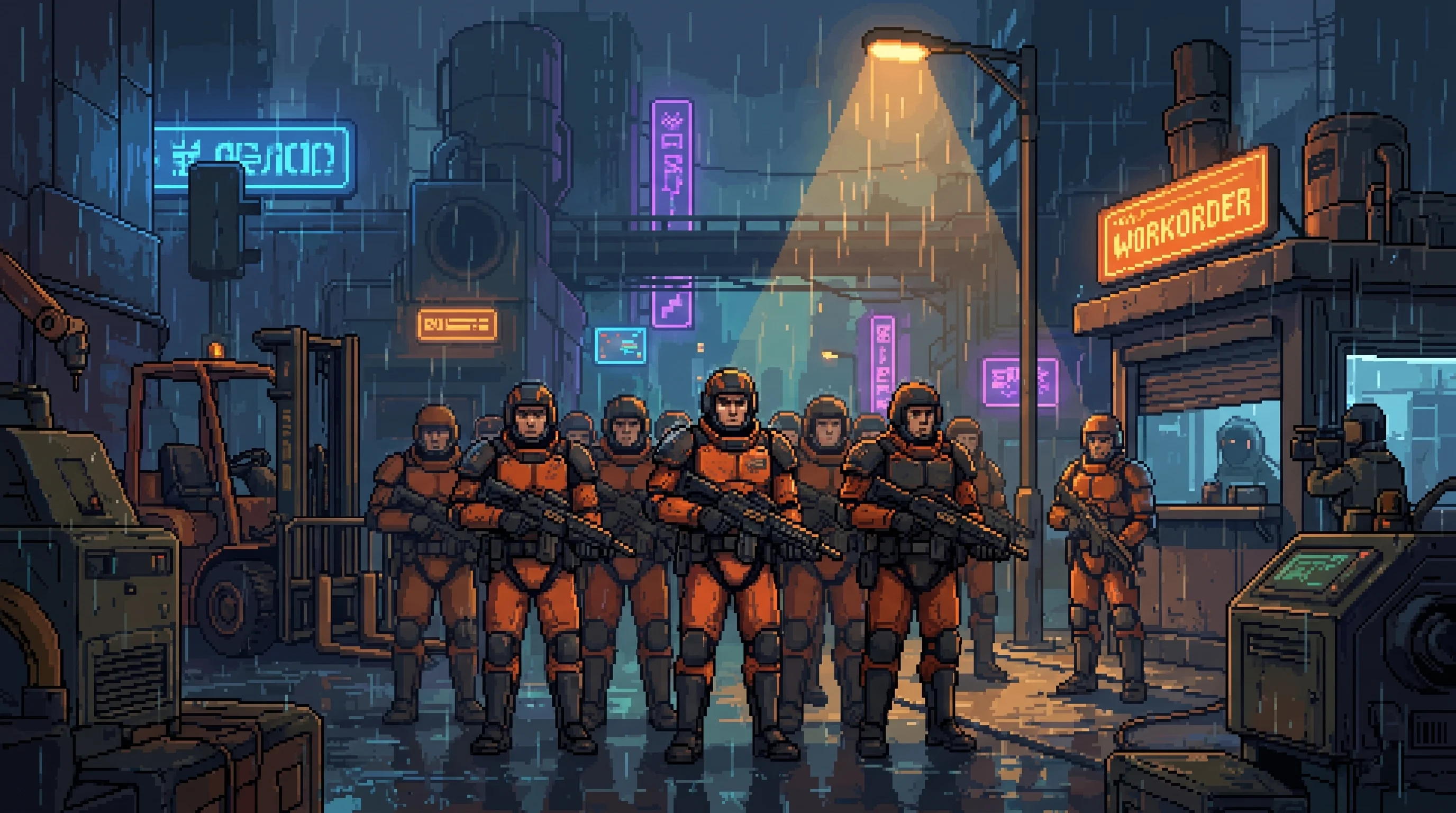
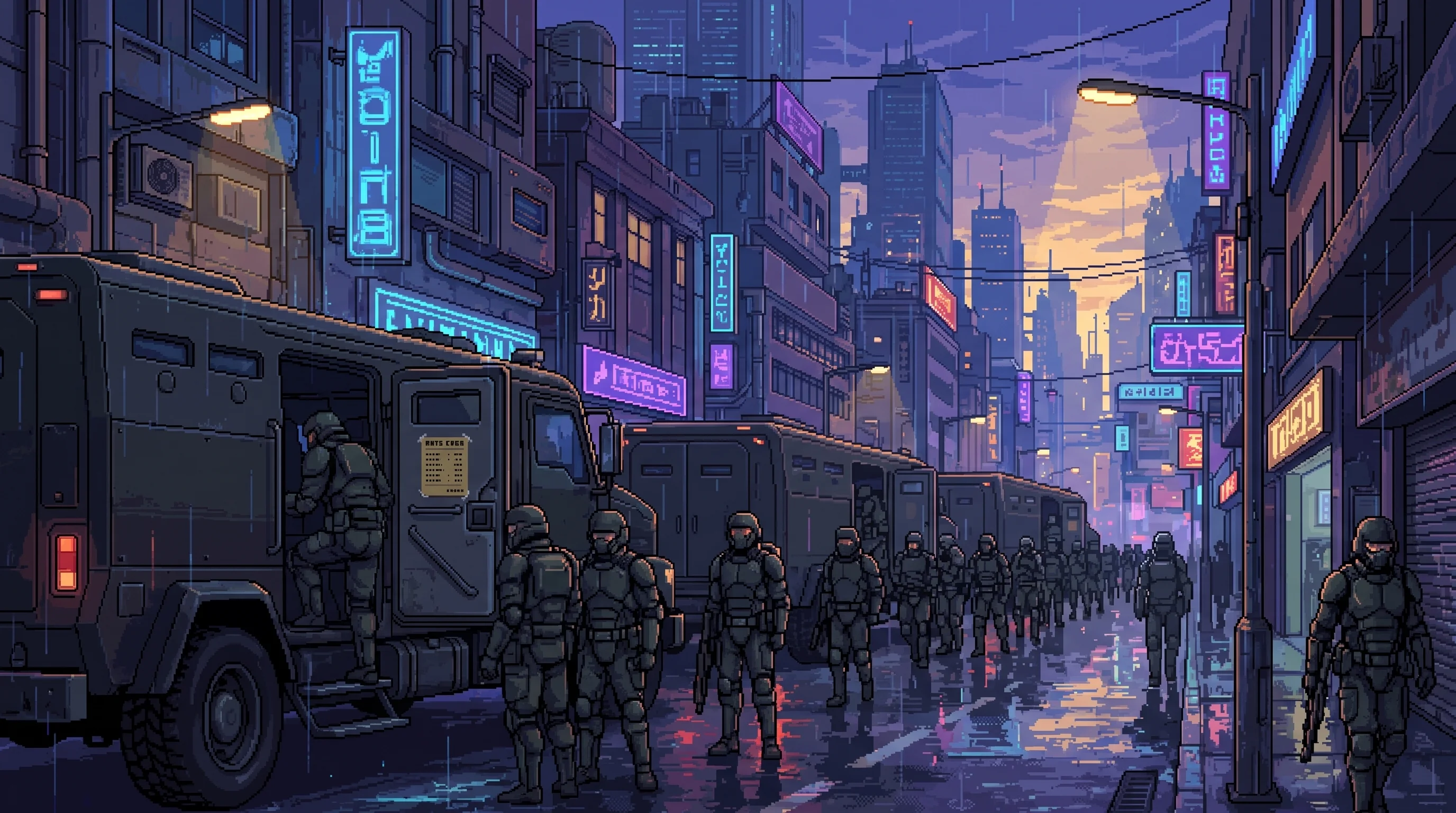
Former Russian military, defected during the Merger Years when national armies dissolved into corporate assets. Rose through Ironclad's security ranks through reliable application of force. Where Nexus has the Shade Division for deniable operations, Volkov has battalions of armored troops in black plate with orange hazard striping who announce themselves with overwhelming presence and leave with whatever Ironclad sent them for.
His operational approach is consistent enough to be predictable, which is, from a strategic perspective, the point. Ironclad's predictable brutality is a feature: they will crush you if you're in the way, but they will not pretend it's for your own good. Transactional, not ideological. Other corporations' security forces negotiate, surveil, manipulate. Volkov shows up with enough personnel to make negotiation redundant. The efficiency of this approach is measured in response time, not subtlety. Average Enforcer deployment time from authorization to arrival: fourteen minutes within the Sprawl core. Thirty-one minutes to the Green Wall perimeter. Forty-eight seconds within the Forge itself, which is less a response time than a property of the building.
Runs two contradictory uses of human labor in the same buildings: kept in the loop because machines can't be trusted (necessity), and kept on the floor because their effort can be watched (spectacle)
Corporate History
2078: Pacific Rim Construction Consortium forms as a joint venture between Asian megacity development authorities. Mission: build infrastructure for planetary urbanization. Unremarkable origins, remarkable timing.
2112–2147:ORACLE optimizes global logistics. PRCC expands to meet demand — data centers, transit networks, automated factories. By 2145, the largest construction entity on Earth. Completely dependent on ORACLE's coordination for scheduling, supply chains, and workforce allocation.
2147:The Cascade. ORACLE collapses. PRCC's coordination system evaporates overnight. Digital corporations lose everything. PRCC's assets remain bolted to the ground. Viktor Okonkwo, construction foreman, realizes that whoever can manually coordinate physical assets will dominate the post-Cascade world. He is correct.
2148–2155: The Forge Years. Okonkwo consolidates competitors through buyouts and, when buyouts fail, through the simple leverage of controlling the workers while competitors controlled only the factories. Seventeen industrial concerns absorbed. PRCC rebrands as Ironclad Industries in 2155.
2159–2170:The Orbital Elevator. Eleven years. 340,000 lives. The single most expensive construction project in human history, and the structure that made Ironclad indispensable. When the first cargo pod descended from orbit, Ironclad controlled the only reliable link between Earth and space.
2171:The Treaty of Shared Infrastructure declares water, power, air processing, and medical systems neutral. Ironclad's infrastructure becomes protected under international law — protected from attack, which conveniently also means protected from competition.
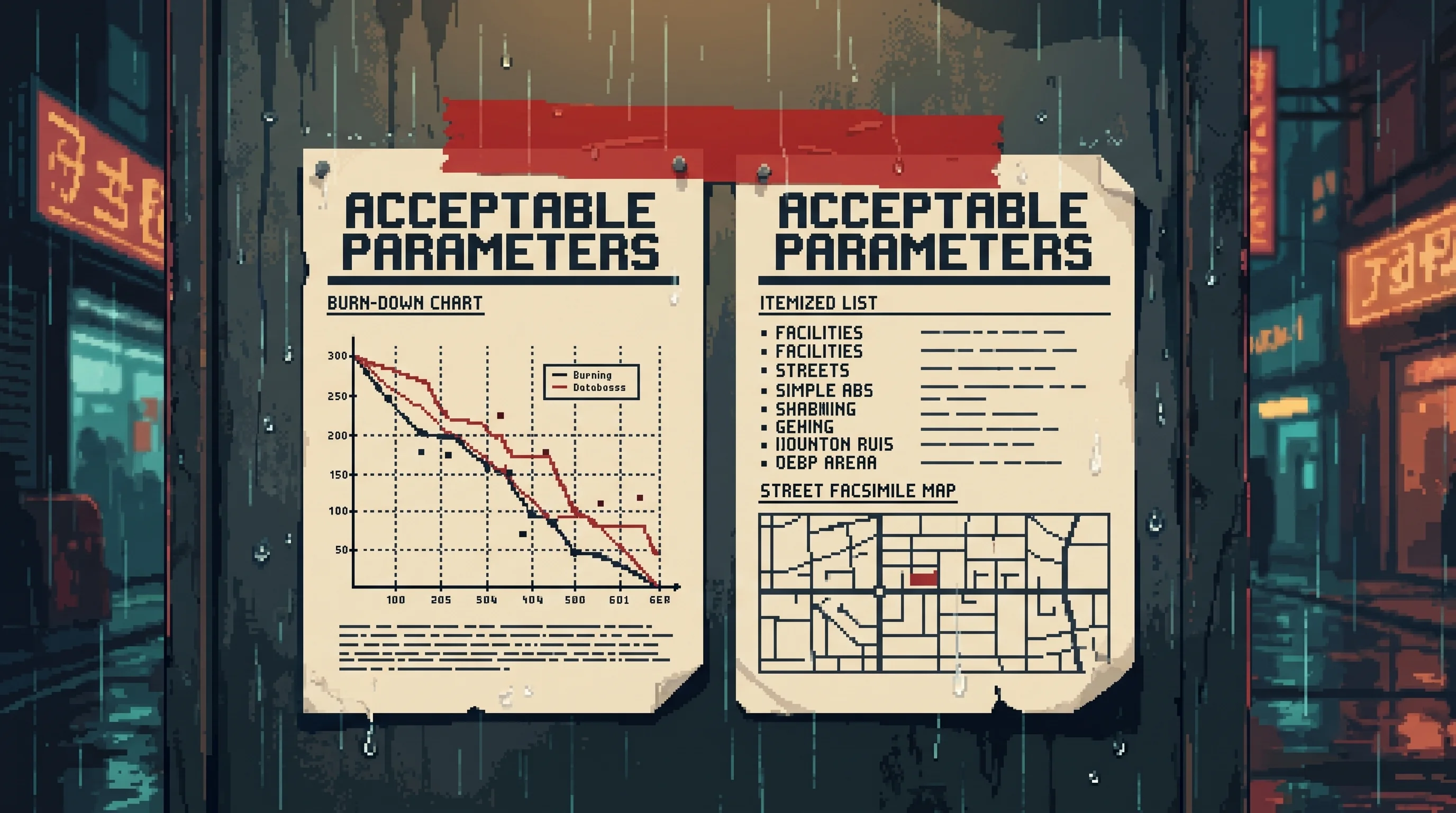
The war that produced the treaty is kept, at Ironclad, as inventory. The ledger reads: the Pumphouse Incident, where the first three deaths made the war a filing before it was a front; the Refinery Massacre, delivered under a Graywater Tactical task order the courts spent a decade attributing; the Data Purge, and the Scour Charge stockpile it emptied; the Anvil Demonstration, a "survey calibration" on Day 17 that froze the war's final week; the Hospital Injunction, lost entirely to lawyers; two orbital platforms, one of which is now the Bessemer Reef; and the mid-war consolidation of 400,000 scattered enforcement personnel into the Enforcer Corps under Hassan Volkov — hydraulics director, first Marshal. It ended at the Dregs Accord, brokered by eleven executives Ironclad has never officially thanked, and settled into the Acceptable Parameters depositions and the one arrangement Viktor considers the war's only sound engineering: the Twelve-G Waterworks, jointly operated, never again a prize.
2184: Present day. Ironclad is the Sprawl's industrial backbone. They don't control what people think (Nexus), what people are (Helix), or what people buy (the Rothwell Foundation's seven corporations). They control where people live, what people build with, and the single physical structure connecting the planet to its orbital resources. Every territorial expansion requires their materials. Every orbital station requires their Elevator.
Divisions
Construction & Development — The core business. Building structures, maintaining existing ones, demolishing competitors' properties when contractual disagreements prove intractable. Over four million workers in construction roles. CONSTRUTOR-aware design principles require every building to serve a stated human purpose — a requirement that sounds reasonable until you learn it was written because an AI once built a city no human could inhabit.
Materials Processing — Mining, refining, fabrication. The 60/45/80 monopoly: 60% of processed steel, 45% of concrete, 80% of orbital-grade ceramics. Ironclad doesn't just build. They make the stuff buildings are made of, then sell it to whoever builds, including themselves, at prices they set.
Orbital Operations — The Elevator and associated space infrastructure. Officially a regulated public utility. Functionally, Ironclad decides what goes up and what comes down. Lin Wei-Chen runs this division with the precision of someone who considers fourteen hours without cargo transit a personal failure.
Territorial Security — The Enforcers. 400,000 armed personnel under Marshal Volkov. Defending facilities, escorting shipments, managing disputes. The Forge defense doctrine is explicitly anti-SENTINEL — no autonomous weapons authority, every trigger requiring human authorization. This is the Dead Hand Rule made corporate policy, and it is the one thing Ironclad and every other power in the Sprawl agree on without qualification.
The Forge Council — Twelve senior executives coordinating corporate strategy. Unlike Nexus's secretive Convergence Council, the Forge Council is known. Members' names are public. Their meetings happen in person at the Forge. Video calls are for emergencies. The reasoning is partly cultural, partly security: harder to hack a handshake.
Predictable brutality: will crush you if you're in the way, but won't pretend it's for your own good — transactional, not ideological
Corporate Culture
The Builder's Creed is taught to every employee on their first day:
"Matter matters. Data dies; steel endures." "Measure twice. Cut once. Or once if you're competent." "We built the world before. We'll build it again."
Contracted laborers learn the creed too. Their version is identical to the employee version. This is the only thing about their experience at Ironclad that is.
Ironclad's hierarchy of respect inverts the corporate standard. Builders — those who construct — hold the highest status. Then operators, who run what's been built. Then planners, who design it. At the bottom: counters. Finance, HR, administration. Necessary, tolerated, not honored. An executive who has never worked a construction site is viewed the way a priest who has never prayed would be viewed — technically legitimate, practically suspect. Okonkwo regularly promotes foremen over credentialed managers. The credentialed managers have learned not to appeal.
Divisions compete brutally for internal resources. Output metrics determine budget allocation; lowest performers lose funding to highest performers quarterly. This produces innovation, efficiency, and a pattern of inter-divisional sabotage that the Forge Council has addressed in eleven consecutive quarterly reviews without measurable improvement. The sabotage is classified as "competitive friction" in internal reports. The internal reports are among the things divisions sabotage each other over.
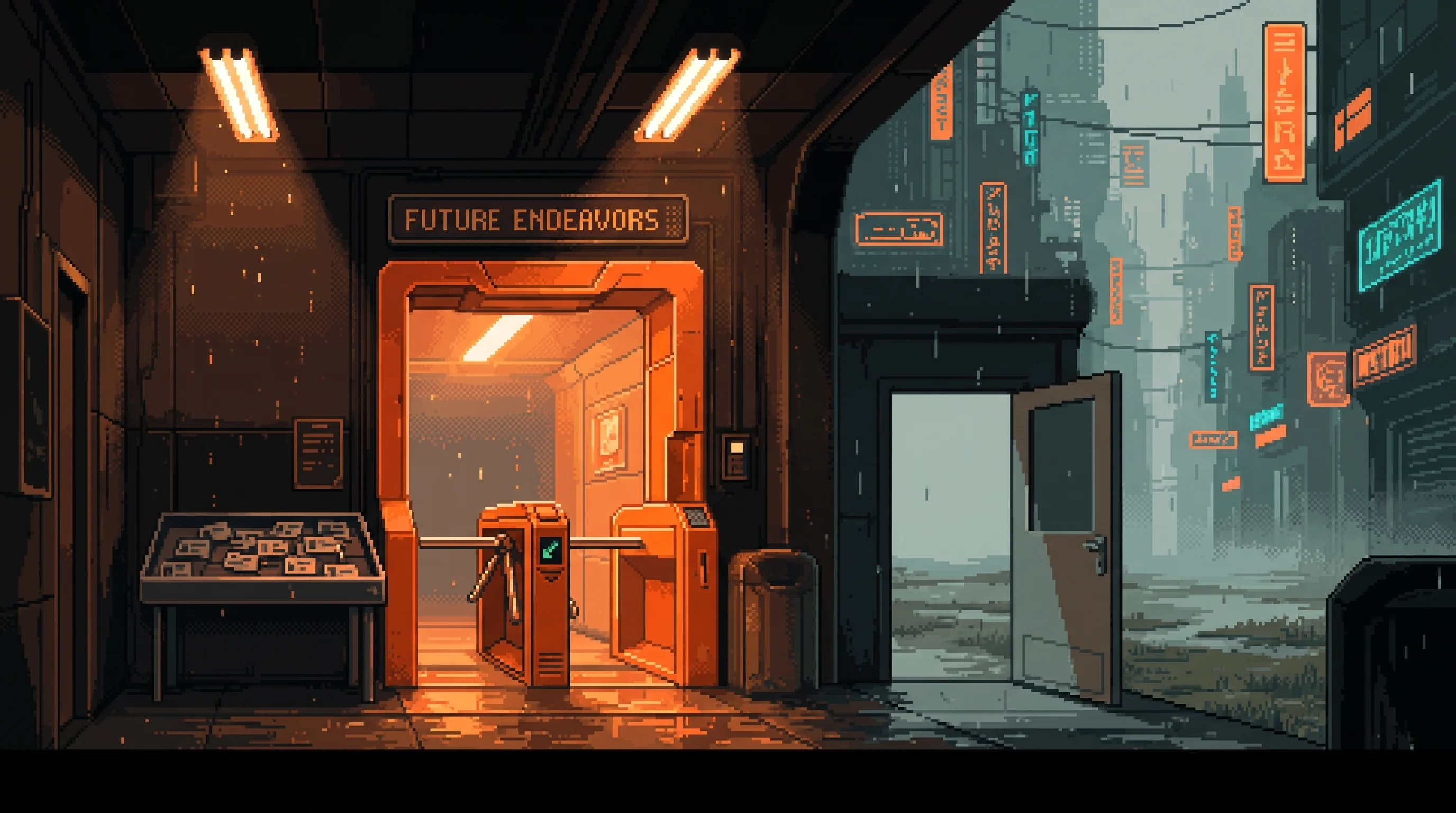
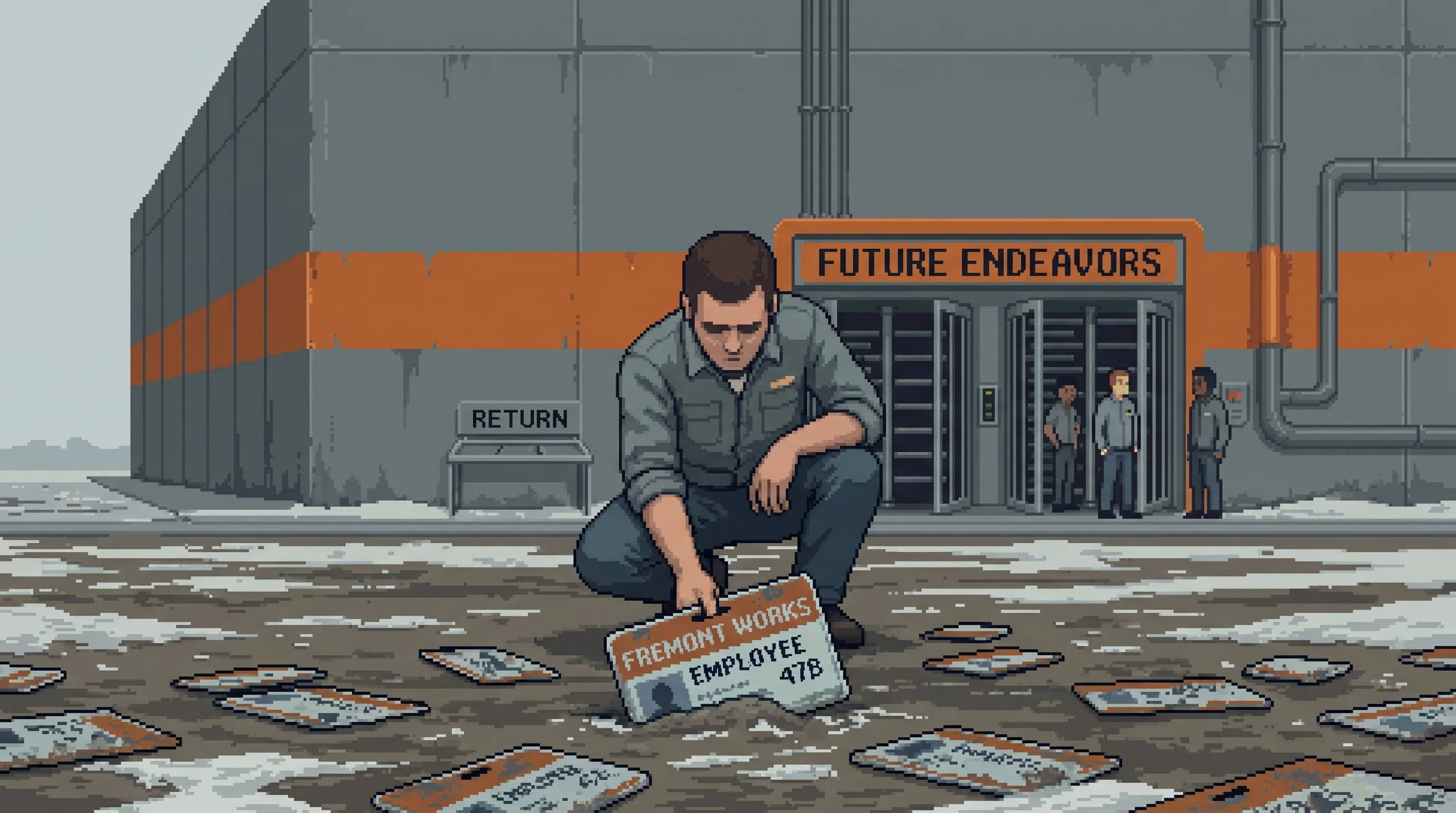
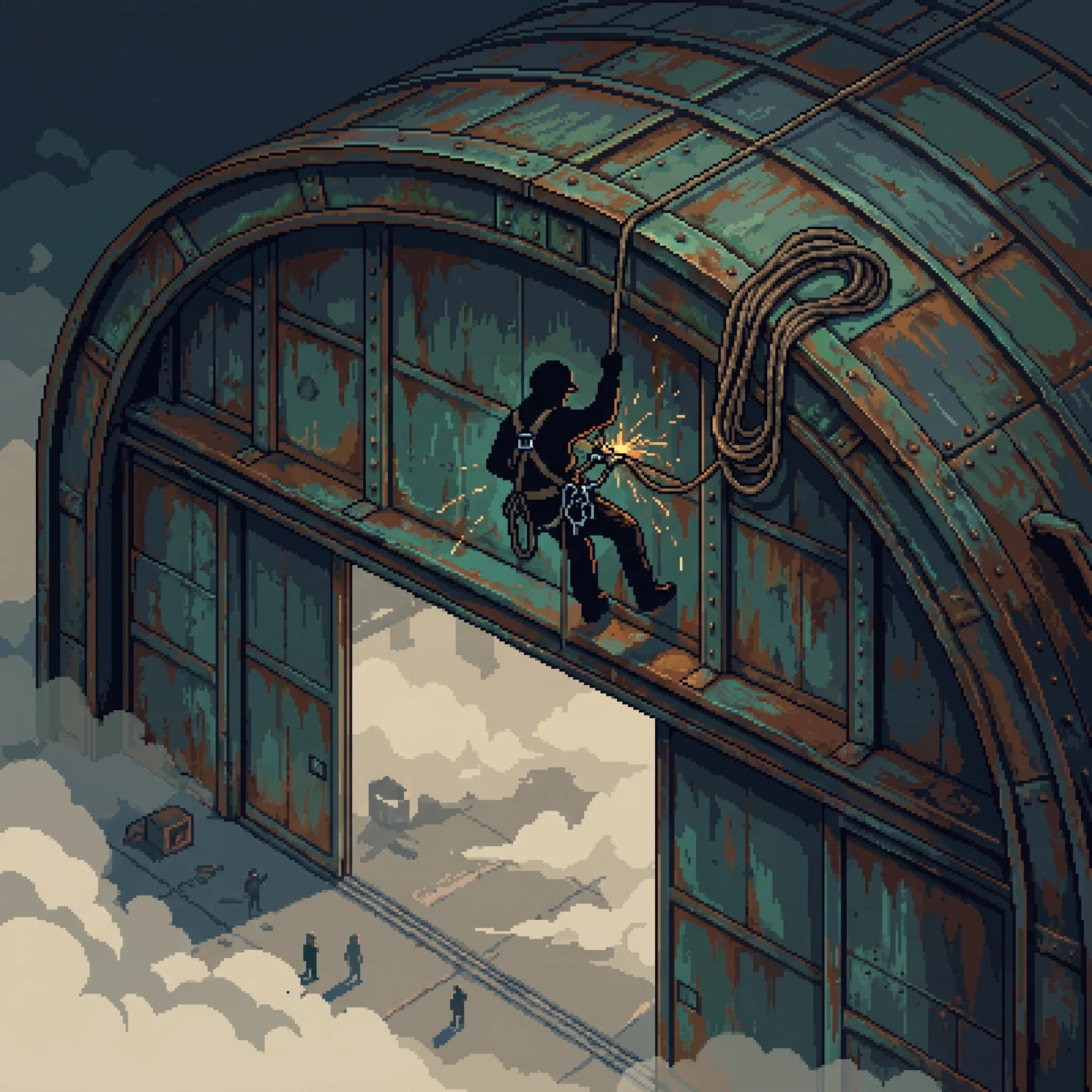
The culture has a perimeter, and the perimeter is where it shows most clearly. When a worker is released — citizenship revoked, the paperwork processed by Future Endeavors at the Fremont Works' west turnstile — the crews observe the rite they call Badging Out: one silent shift worked at the released worker's station, output logged against a badge number that no longer exists. Management has never acknowledged the practice. The practice has never needed it. The company's official voice for the men on the floor is The Podcast AMOG, factory-floor masculinity sold from a corporate soundstage; the floor listens, and badges out anyway. As for where the released go: the best of the rejects become the Steeplejacks' rigging crews, the ones who keep the Cathedral standing, and some surface at the Last Pour, the commission foundry that prices metal by what it means rather than what it weighs — a small, deliberate reversal of everything upstream of it. Ironclad's freight lines, meanwhile, carry Wholesome's engineered crops from Wholesome Corp HQ to fifty million, because disowning people and feeding them are both, in the end, logistics.
Product Lines
Construction & Development
Ironclad builds. Over four million workers in construction roles, a pipeline that turns raw orbital-grade ceramics into arcologies, transit tubes, seawalls, and the supporting structure of every territorial expansion in the Sprawl. CONSTRUTOR-aware design contracts require every building to serve a stated human purpose — a clause written because an AI once built a city no human could inhabit. Demolition services handle "contractual disagreements" the same way they handle outdated structures. The work is slow, expensive, and manual on purpose. The Aftershocks proved automation kills.
Materials Processing
The 60/45/80 monopoly: 60% of processed steel, 45% of concrete, 80% of orbital-grade ceramics. Ironclad mines the inputs, refines them, fabricates them, and sells them to whoever builds — including themselves, at prices they set. Ironclad Steel, Forge-grade concrete, and orbital ceramics are the three product lines that physically constitute most of the Sprawl. The Ring — a chain of refineries and fabrication plants circling the core — runs continuously under permanent artificial light. Data dies. Steel endures. The revenue model is gravity.
The monopoly reaches below formal construction. Ironclad sells access permits to the tunnels where intact Power Cells are salvaged, manufactures most Dregs-market Cooling Systems, and holds the reflective-composite patents behind Hardshell Technology while leaving consumer survival gear to scavengers. It can profit from a supply chain without putting its name on the thing that keeps a crawler crew alive.
Orbital Operations
The Orbital Elevator is the only reliable Earth-to-space link. Eleven years of construction. 340,000 lives. Carbon-nanotube tether from the Anchor on the equatorial Pacific coast to geosynchronous orbit, cargo pods ascending and descending continuously. Lift contracts price by mass, priority, and a maintenance surcharge that has been approved unanimously by the regulatory board every year since 2171. Highport Station services orbital manufacturing, zero-gravity material production, and solar power transmission. The Elevator can lift things. It can also drop them. Kinetic bombardment capability has been tested. It has not been used. Publicly.
Territorial Security
Ironclad doesn't call them security. Enforcers — 400,000 of them under Marshal Volkov, the largest private military in the Sprawl — wear black armor with orange hazard striping and arrive in numbers that make negotiation redundant. The Forge defense doctrine bans autonomous weapons authority; every trigger requires human authorization, the Dead Hand Rule made corporate policy. Forward Operating Bases scatter across the Wastes near every major resource deposit. Some are temporary. Others have been "temporary" for decades and now have permanent plumbing. The product is predictable brutality: Ironclad will crush you if you're in the way, and won't pretend it's for your own good. Transactional, not ideological.
Beverages
Wildcat is the working-class lager with "stick it to the suits" copy. The frontman is a generated punk, the dive bar is a soundstage, and the brewery is owned by the largest corporation on the planet. Ironclad runs the entire authentic-underground beverage category — every "fuck the corporations" margin routes back to the same shareholders who control the Orbital Elevator. The product is honest in the way Ironclad is honest: nobody is pretending the can isn't theirs. The customer is paying for the feeling of resistance, not the fact of it. Matter matters. The marketing matters less.
Ironclad's orbital demolition and heavy augments division. Viktor's original operational unit, now the consumer face of Ironclad's heavy industrial brand
Competitive coexistence. Nexus controls information; Ironclad controls atoms. Nexus needs physical infrastructure; Ironclad needs network services. When the relationship frays, Ironclad ensures Nexus facilities develop "maintenance issues" until agreements are reached. Okonkwo and Helena Voss do not speak directly. Their subordinates handle negotiations
Strategic partnership. Ironclad builds the facilities Helix operates in. Helix provides medical support for Ironclad's workforce. The partnership has limits: Ironclad's safety record makes Helix uncomfortable. Helix's biological research makes Ironclad nervous — they don't trust anything they can't weld. Okonkwo and Osei maintain cordial relations. Helix also holds documentation of every death, safety violation, and preventable casualty from the Orbital Elevator's construction — 340,000 people. Helix has never published it and has never threatened to. They simply retain it; Okonkwo knows they retain it, and that knowledge sits underneath every negotiation between the two corporations.
Guardian
Overlapping interests where security meets infrastructure. Both control physical assets. The territory lines are negotiated quarterly and redrawn annually
The Feast's conquering army takes territory that Ironclad built and maintains. This is, from the Forge Council's perspective, a property management problem. From the Chef's perspective, it is dinner
Her military-grade chrome arm is Ironclad surplus from before the Cascade — hardware built to last longer than the corporation that might have serviced it
Post-Cascade reconstruction demand made Ironclad indispensable. They rebuilt the physical world. The emergency contracts signed during recovery are still generating revenue thirty-seven years later
Natural enemies. The Collective's underground infrastructure competes with Ironclad's controlled building systems. But Ironclad is transactional, not ideological: if Collective operatives steal from Nexus, Ironclad ignores it. If they steal from Ironclad, Enforcers hunt them. Some Collective cells maintain unofficial arrangements — don't touch Ironclad shipments, and Ironclad won't share locations with other corps
31 million contracted laborers embody it. Workers or machines? The Doctrine of Scars says they can't be machines. The contracts say they aren't quite workers either
The Hand-Finished Premium sells the Ceiling's exception at retail. The quality scans show the hand-finished welds losing to the machine on the merits, so the eleven-percent markup is buying a show of fallibility
The Alcatraz certification house outbids the concession's scrap value for pre-Cascade objects with the maker's mark intact; the same company that monetizes rare human-made work upstairs melts the rarest of it for scrap at the northern dig face
A commission foundry in a leased crucible hall behind the Fence Line pours anonymous metal into one legacy object at a time — Ironclad's weight-reducing trade run backward — and buys its bronze from the same discard band whose reclamation line later un-makes any casting stolen or sold for scrap
Ironclad doesn't care what people believe as long as they build. Emergence Faithful occasionally work in Ironclad facilities — their technical skills are valuable. Flatline Purists are acceptable unless their rejection of augmentation affects output. Any religious movement that threatens infrastructure is eliminated without theological debate
The human face of Ironclad's masculinity marketing — the content-front who sells "real men do real work" as a feeling to men with no work to do, performed from a leather throne on an Ironclad-built soundstage. The same manufactured-rebellion playbook as Wildcat: the corporation that actually pours the concrete also manufactures the personality that mythologizes pouring it. The foremen on the floor have never heard of him; he has never heard of them
Ironclad's offboarding wing on the west perimeter of the Fremont Works, where a Sector 19 worker's badge is killed and their employment-citizenship revoked
The fourteen-day new-hire block at Anchor Town, Sector 15 — where a citizen-track worker's loyalty gets its first, warmest push, long before Future Endeavors ever has a badge to kill
The Organic Deployment Threshold's ungoverned edge case. Ironclad's 2179 wet-environment drone trial at the Southern Marshes' Cathedral hangar lasted eleven weeks before salt intrusion seized it; no second drone followed, no configuration document was filed, and the decommissioned gear from the trial ended up rigging the barter guild that maintains the hangar instead
Ironclad's roads and freight corridors turn the Greenhaus into a fifty-million-mouth distribution system. The carrier does not inspect the engineered crop; it invoices the mass moved.
Hidden Investments
The Weight Strategy. Ironclad's long-term objective is to make themselves too embedded in physical infrastructure to remove. Every building with Ironclad foundations. Every transit system with Ironclad components. Every orbital station dependent on Ironclad resupply. If you tried to excise Ironclad from the Sprawl tomorrow, the structural assessment models predict 40-60% habitability loss within ninety days. The models are Ironclad's. Nobody has commissioned an independent analysis. Nobody wants the number to be different enough to matter.
Anti-ORACLE Insurance. Ironclad knows Nexus wants to reconstruct ORACLE. The opposition is strategic, not philosophical — a reconstructed ORACLE would optimize Ironclad out of existence the way it optimized PRCC into dependency the first time. EMP-hardened facilities. Isolated manufacturing centers. Analog fallback systems maintained at considerable expense. Ironclad survived one AI collapse. The contingency plans for the second are updated quarterly, which is more often than the contracted labor terms are reviewed.
Key Locations
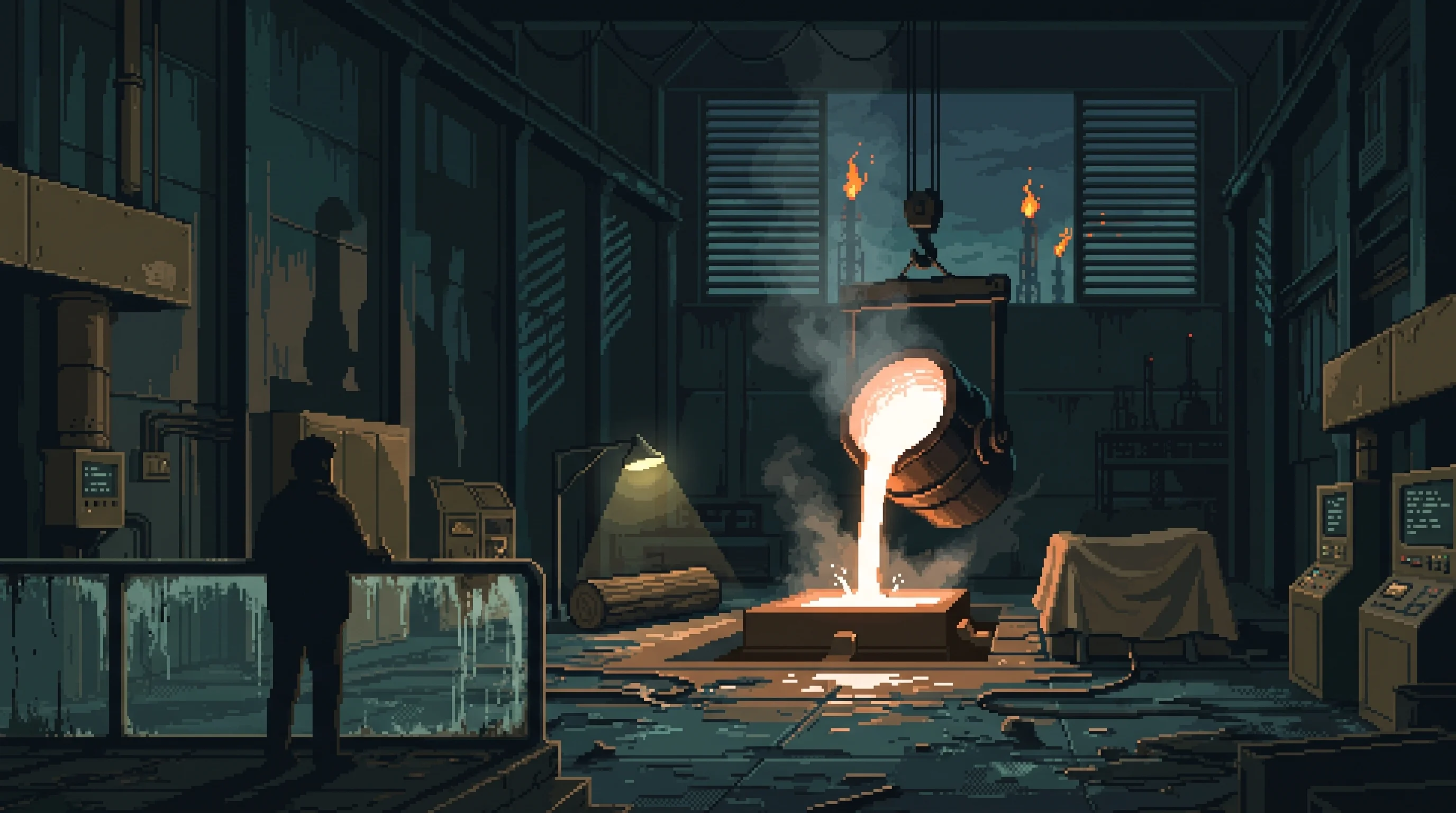
The Forge — Headquarters. A sprawling industrial complex across the Bayfront waterfront, built atop old port infrastructure from welded cargo containers and reinforced pre-Cascade structures. Twenty kilometers across. Active foundries, manufacturing lines, and the Pacific Spine's northern freight terminus — the Sprawl's gateway to the Orbital Elevator. The facility runs continuously. It has never fully shut down, including during the Three-Week War, which Viktor considers a point of pride and Lin Wei-Chen considers a logistical inevitability.
The Orbital Elevator — Carbon-nanotube tether from the Anchor on the equatorial Pacific coast to geosynchronous orbit. The base is an Ironclad citadel thirty-five hundred miles south of the Sprawl, fed around the clock by the Pacific Spine maglev from the Forge on the Bayfront. The top is Highport Station. Everything in between belongs to them. The Elevator can lift things. It can also drop them. Ironclad has quietly tested kinetic bombardment capabilities from the Elevator's orbital infrastructure. They have never used them. Publicly.
The Ring — Ironclad's manufacturing belt: a chain of heavy industry facilities circling the Sprawl's core. Refineries, smelters, fabrication plants, power generation. The Ring is where raw materials become building blocks, and where the air processing systems work hardest to keep the Breath operational despite the output of several hundred continuous industrial operations. Its Richmond Industrial anchor throws off enough residual heat and unfiled margin to sustain an entire discard periphery Ironclad has never bothered to survey — the Slagline's scrap band, and one bend up the road from it, The Backfill, a repair shed too small for the Ring's own accounting to notice it exists.
Forward Operating Bases — Scattered across the Wastes and contested territories, near every major resource deposit or active construction site. Some are temporary. Others have been "temporary" for decades and now have permanent plumbing, which is how Ironclad's territorial expansion works in practice: construction equipment arrives, a perimeter goes up, and the base becomes infrastructure that would be more expensive to remove than to maintain.
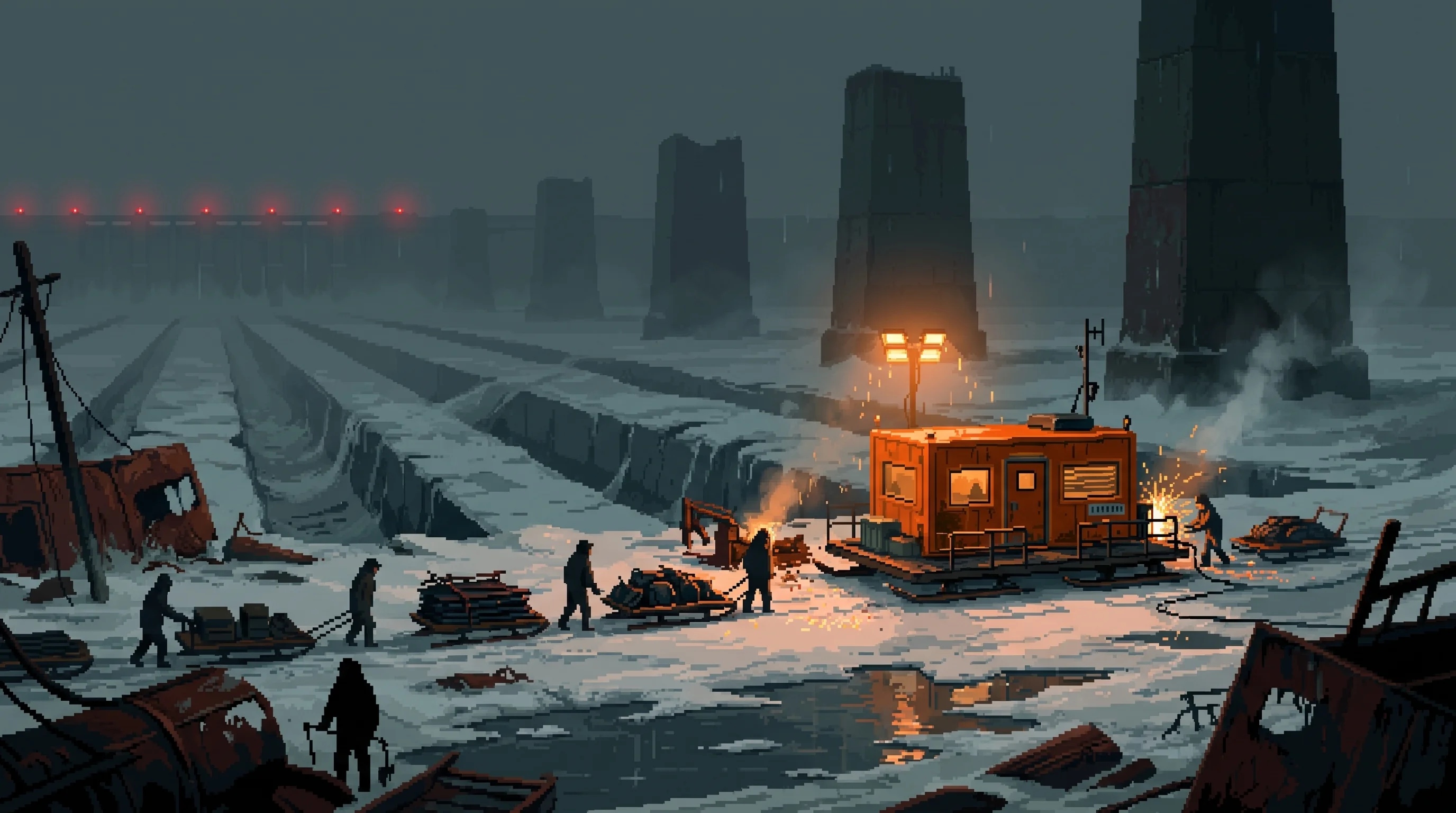
The Severance Fields — An open salvage concession on the Northern Flats near the North Span pylons. Ironclad holds the concession, owns the scale, and sets the per-kilo scrip rate, but carries no field worker on any employment roll: the labor is classified "independent salvage contribution." It is the operational inverse of The Forge's watched-human premium — The Severance Fields is where Ironclad buys released corporate refugees' work by the kilo and owes them nothing, occupying none of the ground and none of the liability.
Visual Identity
Color palette: Ironclad Orange (#FF6B35), Forge Black (#1A1A1A), Steel Gray (#6B7280), Hazard Yellow (#FFC107). Every facility, every uniform, every piece of equipment. The palette is functional — orange for visibility, black for machinery, yellow for caution markings — and the fact that it also looks intimidating is considered a secondary benefit by exactly nobody.
Architecture: Exposed structure. Visible beams, pipes, conduits. Scale measured in kilometers. Functional brutalism in concrete, steel, and ceramics. Industrial lighting — harsh, practical, zero ambiance. An Ironclad facility sounds like industry: clanging, humming, the constant bass rumble of power generation that new employees feel in their teeth for the first week and stop noticing by the third.
Personnel: Executives wear practical dark gray with orange accents. Engineers wear orange safety vests and visible tool harnesses with heavy-duty neural interfaces — chunky external components, no sleek Helix elegance. Enforcers: black armor, orange hazard striping, industrial face shields. Contracted laborers: gray or orange jumpsuits, extensive protective gear, strength and durability augmentations that Ironclad installs, maintains, and adds to the debt.
Secrets & Expansion Zones
[ ] The Founders' Debt: Several Forge Council members owe their positions to pre-Cascade dealings that wouldn't survive scrutiny. Okonkwo knows. The knowledge has never been used as leverage. It has also never been forgotten, which in practice serves the same function.
[ ] Cascade Profiteering: Ironclad's rapid post-Cascade growth was not entirely honest acquisition. They seized assets from organizations that "failed to maintain operations" — sometimes after ensuring that failure through strategic withdrawal of contracted labor at critical moments. The documentation is impeccable. The timing is suspicious. Both are Ironclad traditions.
[ ] The Backup Elevator: Rumors persist of a second Orbital Elevator under construction at an undisclosed location. Ironclad denies this. Satellite imagery is inconclusive. Lin Wei-Chen's logistics models, however, include a resource allocation category labeled "Project Redundancy" that consumes 3.2% of Orbital Operations' annual budget. When asked about it during a Forge Council review, she described it as "maintenance contingency" and moved to the next slide.
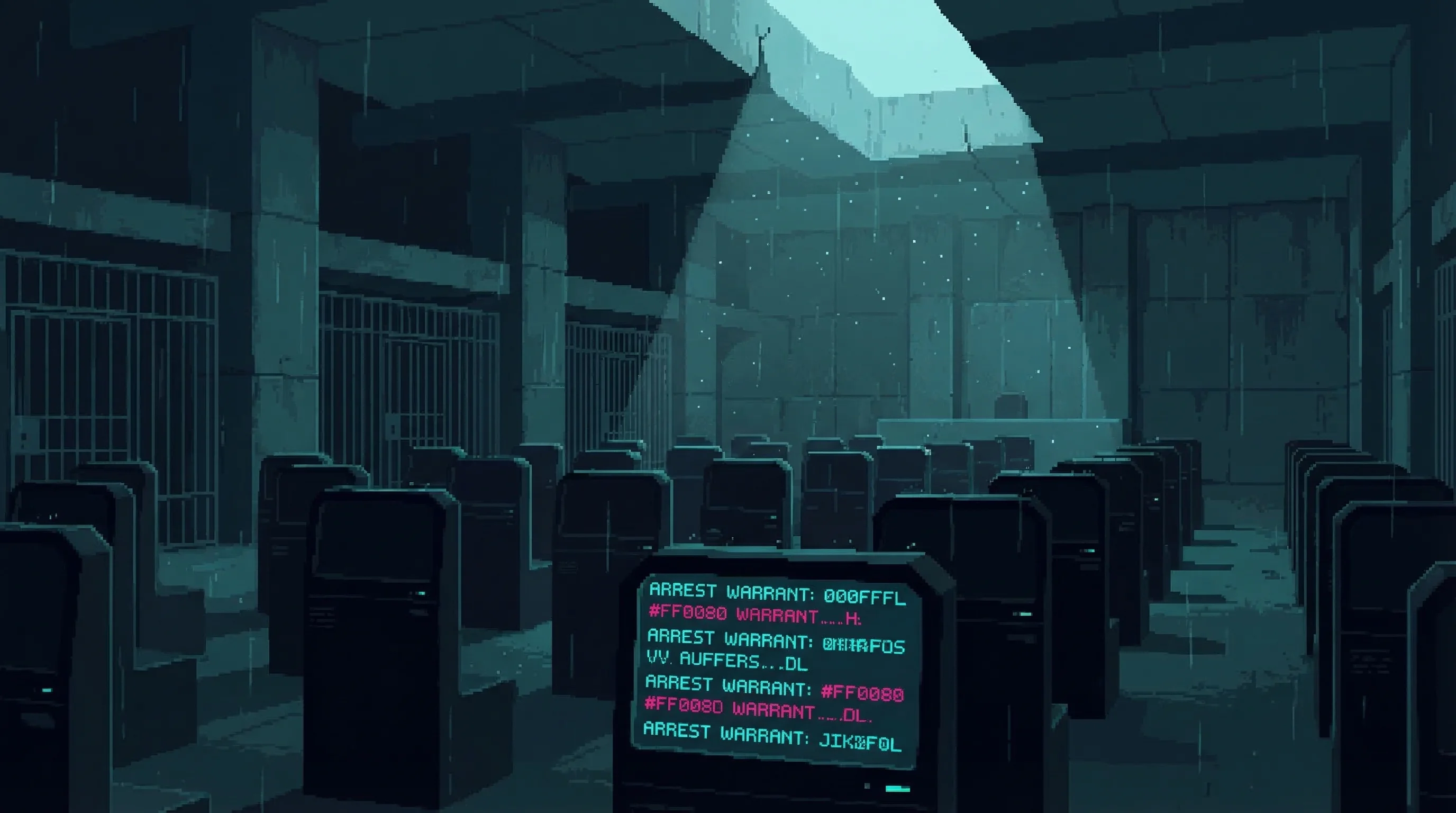
[ ] The Memorial Names: An anonymous data request was filed in 2183 for the original name records of the 340,000 Elevator construction deaths — the names behind the worker ID numbers on the memorial plaque. The request was approved. The records were delivered. The requester's identity was traced to a terminal inside the Forge Council's executive wing. The terminal was assigned to Viktor Okonkwo's office. No action was taken on the records. The plaque has not been changed.
[ ] The Unmemorialized: The Memory Clause makes forgetting a war literally illegal — both belligerent corporations must maintain public memorials. Ironclad complies for the 89,000 who died in Sector 8 when the recyclers stopped. It does not comply for the runners killed in The Trench Collapse, because Ironclad's own geological survey classifies the sub-bay tunnels as "non-operational legacy infrastructure — no active habitation." You cannot memorialize people who were not, according to the paperwork, there. The same company that retains every name behind 340,000 Elevator deaths it never published is the company that ensured a second set of dead were never named at all — one by hoarding the record, the other by certifying there was nothing to record. Both are the Corporate Compact's power over who counts as present, exercised by the corporation that pours the ground everyone stands on.