Dream Harvesting
Records the full experiential substrate of REM: visual imagery, emotional valence, proprioceptive sensation, and the neurochemical signature of surprise
Overview
Dream harvesting is the sale of sleep to people who can't. It is the most active sector of the Subconscious Market โ the supply side of an economy that turns unconsciousness into a commodity, and the reason the buyer asking whose night am I living has become a clinical question rather than a poetic one.
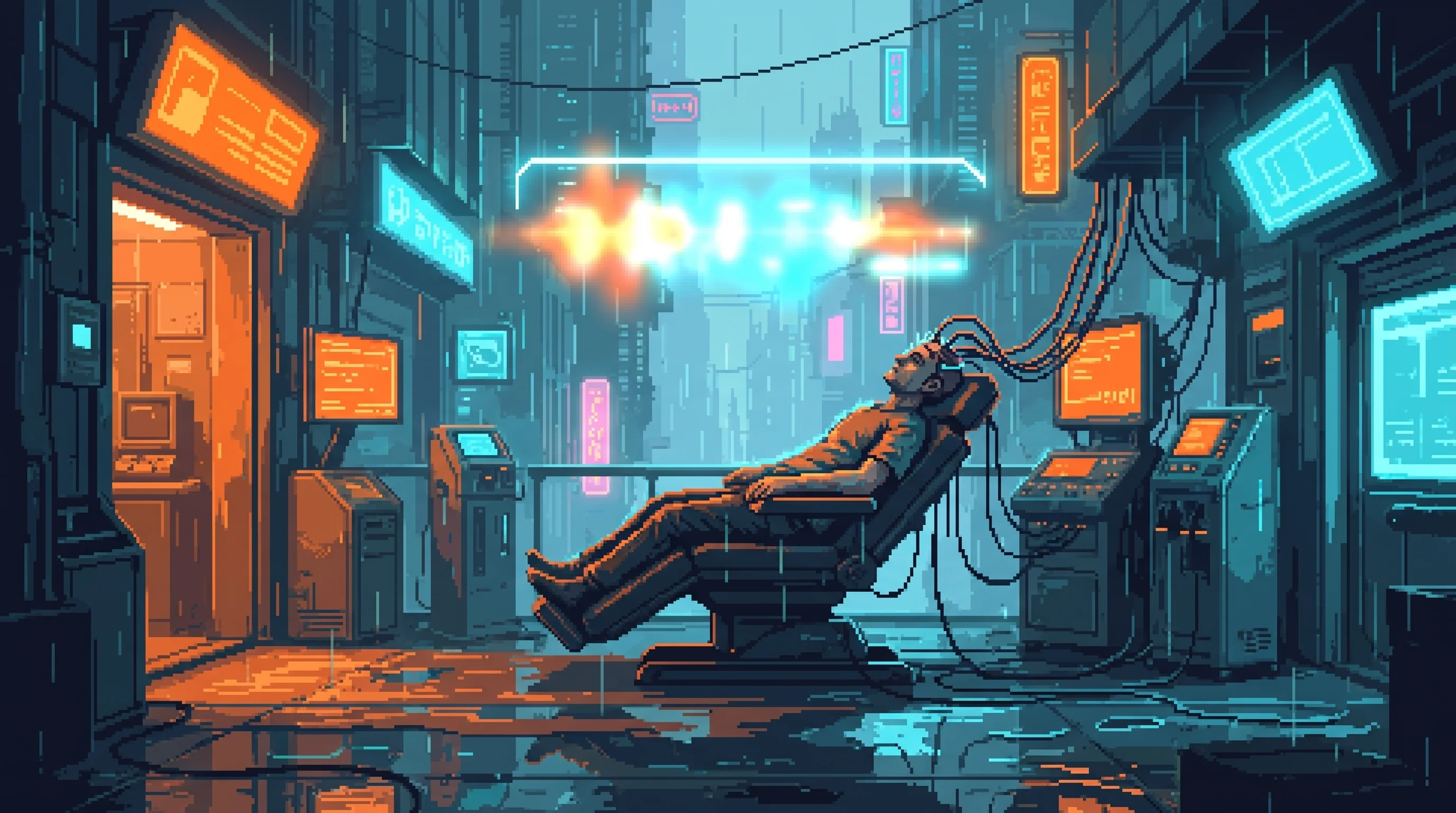
Approximately 2,000 registered harvesters across the Sprawl spend their nights hooked to modified neural interfaces that record the full experiential substrate of REM: visual imagery, emotional valence, proprioceptive sensation, and the neurochemical signature of surprise. They wake up. They sell the recordings. Augmented consumers who haven't generated a natural dream in years pay 200 to 800 tokens per forty-five-minute session, depending on depth, to experience someone else's unconscious.
The technology derives from the same consciousness capture that Lyra Voss uses for her lived-canvas neural recording art. The difference is categorical. Neural recording captures a mind that knows it's being watched. Dream harvesting captures a mind that has forgotten it exists. Voss's work is portraiture. This is burglary โ committed with full consent, against a victim who was asleep at the time, for the benefit of buyers who would give anything to be asleep themselves.
The most valuable component is "the descent" โ the experience of falling asleep. Not the dream content. Not the imagery or the narrative. The moment of letting go. For consumers whose augmentations maintain persistent cognitive activity across all states, the sensation of consciousness dissolving registers as the most exotic experience available in the Sprawl's luxury market. A top-percentile descent recording from a harvester with clean neurochemistry and no pharmaceutical sleep aids sold at the Dream Exchange last quarter for 4,200 tokens. A full night of vivid dream content from the same harvester sold for 600.
The market has determined that the act of losing consciousness is worth seven times more than anything consciousness produces while it's gone.
The most uncomfortable fact in the dream economy is one the brokers don't discuss at industry events: commodity AI cannot produce dreams. Nexus has tried. Relief has tried. Every computational system capable of generating photorealistic sensory environments, emotionally coherent narratives, and neurochemically plausible experience has tried. They can produce everything except surprise. Surprise requires expectations the system didn't consciously construct โ and then violating them. AI systems don't have unconscious expectations. They have parameters. The gap between "parameters violated" and "expectations you didn't know you had, shattered" is the gap between synthetic content and a dream. It has not closed in thirty-seven years of trying.
Dreams are what expectations look like when nobody's monitoring them. The Sprawl's most advanced AI systems can simulate every other human experience. They cannot simulate not knowing what comes next.
| Session Duration | 45 minutes standard |
|---|---|
| Price Range | 200-800 tokens per session (depending on depth) |
| Most Valuable Component | "The descent" โ the experience of falling asleep |
| Why Ai Cant Replicate | Surprise requires unconscious expectations. AI systems don't have unconscious expectations. They have parameters. |
How It Works
Recording. The harvester sleeps. Modified neural interfaces โ standardized hardware, licensed for REM capture at Tier 3 โ record everything the sleeping brain produces. The harvester's only job is to fall asleep and stay asleep. Some harvesters report performance anxiety about this, which is the occupational hazard of being paid to do the one thing that becomes impossible when you're thinking about it. The Dream Harvesters Guild publishes best-practice guides. The guides recommend "not trying." Guild satisfaction surveys show this advice scores a 2.1 out of 10 for usefulness.
Processing. Raw recordings are stripped of personal identity markers โ names, faces, locations the dreamer recognizes. Some processing is artistic: refiners adjust emotional pacing, amplify depth, sculpt the descent sequence for maximum impact. The best refiners are former harvesters whose own dreams degraded from years of recorded sleep. They know what buyers want because they remember wanting it. They are editors of experiences they can no longer have.
Delivery. Processed recordings are played through modified interfaces that suppress the buyer's waking consciousness enough for dream content to register as lived rather than watched. The buyer doesn't observe the dream. They inhabit it. Post-session surveys consistently report the experience as "more real than memory, less real than waking." Neurochemists at Helix have flagged the phrasing as clinically significant. Nobody has followed up.
The Copy Problem Sleeps Light
The Dream Exchange runs on a paradox that its brokers have learned to stop thinking about: every harvested dream is infinitely reproducible. A single forty-five-minute REM session from a gifted sleeper can be copied ten thousand times at zero marginal cost, each instance neurochemically identical to the first.
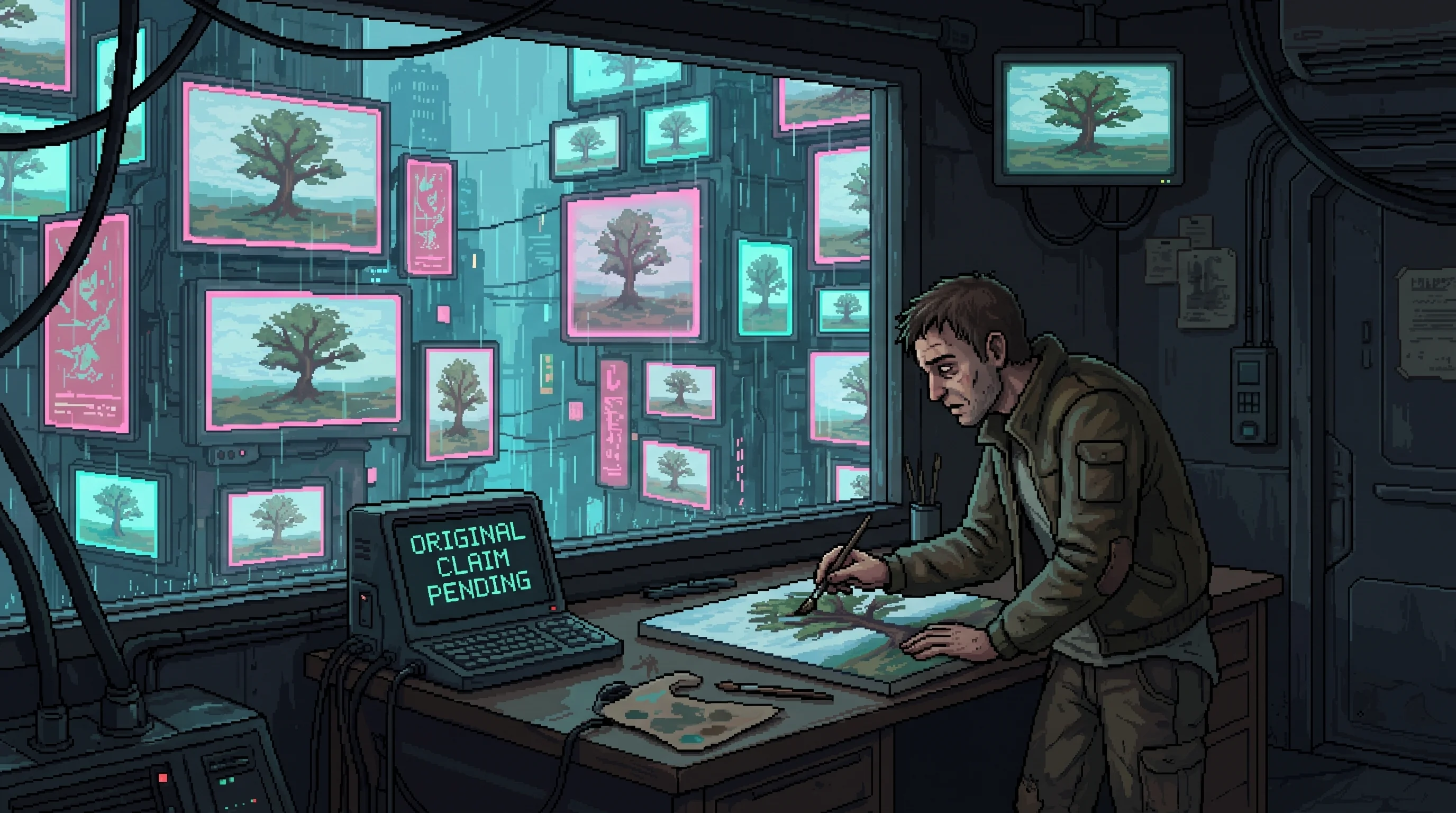
The Exchange's early days demonstrated this with brutal clarity. A harvester named Colm sold exclusive rights to his descent sequence to three different buyers in the same week. All three received perfect copies. All three filed exclusivity claims. None could prove theirs was the "original" because there was no original โ there were three identical experiences of falling asleep, and the only thing distinguishing them was the order in which they'd been dreamed by someone else. The Exchange nearly collapsed before its second quarter. Colm was blacklisted. He now harvests under a different name. The Exchange knows this. Enforcement would require acknowledging that their authentication system can be defeated by a man taking a nap.
What saved the trade was a discovery the Exchange's chief neurochemist made while investigating Colm's copies: dreams degrade differently depending on who dreams them. A copied recording played through a different consciousness produces unique decay patterns โ micro-variations in emotional resonance, sensory emphasis, the specific way surprise registers against a buyer's own unconscious architecture. Two people dreaming the same recording don't have the same dream. They have the same source material, filtered through everything they are.
The Exchange now timestamps and fingerprints each copy at the point of consciousness injection, creating what traders call a "wake signature" โ proof not that you received the original recording, but that you were the first to dream it. Provenance shifted from the recording to the dreaming. The commodity isn't the file. It's the first experience of the file.
The underground harvester networks took a different approach. They refused the Exchange's authentication infrastructure entirely and cultivated direct relationships โ a sleeper sells to three trusted buyers, enforced by nothing but reputation and the understanding that a harvester who burns a client loses access to the only income stream that doesn't require being awake. When Relief launched Somnolence feeds as a synthetic alternative โ flooding the market with infinite AI-generated dream content at a fraction of the cost โ the Exchange's prices for generic recordings cratered overnight. Descent sessions dropped 40% in a week. Ambient dream content became effectively worthless.
The direct-relationship harvesters barely noticed. Their buyers weren't paying for content. They were paying for the specific unconscious of a specific human being โ the particular way Harvester 7714's anxiety about her mother surfaces as architectural collapse, or the way an anonymous Sector 12 laborer's dreams taste like copper and sound like rain on a roof that hasn't existed since the Cascade. No amount of copying commoditizes that. The value was never in the dream.
Relief's Somnolence feeds are technically superior by every measurable metric: higher resolution, more consistent emotional arcs, zero identity-bleed risk, available on demand. They outsell harvested dreams fourteen to one. Buyer satisfaction surveys rate Somnolence at 7.2 out of 10. Harvested dreams score 6.1. But the repeat-purchase rate for Somnolence is 34%. For harvested dreams, it's 89%. The feeds give you a better dream. The harvesters give you someone else's unconscious. The market has voted, repeatedly, that it doesn't want better. It wants real. It wants the floor to drop out.
The Authenticity Market has no jurisdiction. Dreams are not classified as cognitive output, entertainment, or therapeutic product. They exist in a regulatory gap that three separate Sprawl agencies have declined to close, reportedly because closing it would require defining what a dream is, and the last inter-agency committee convened to address this question dissolved after eleven months without producing a definition. The committee's final report is nine pages long. Eight of those pages describe what a dream is not.
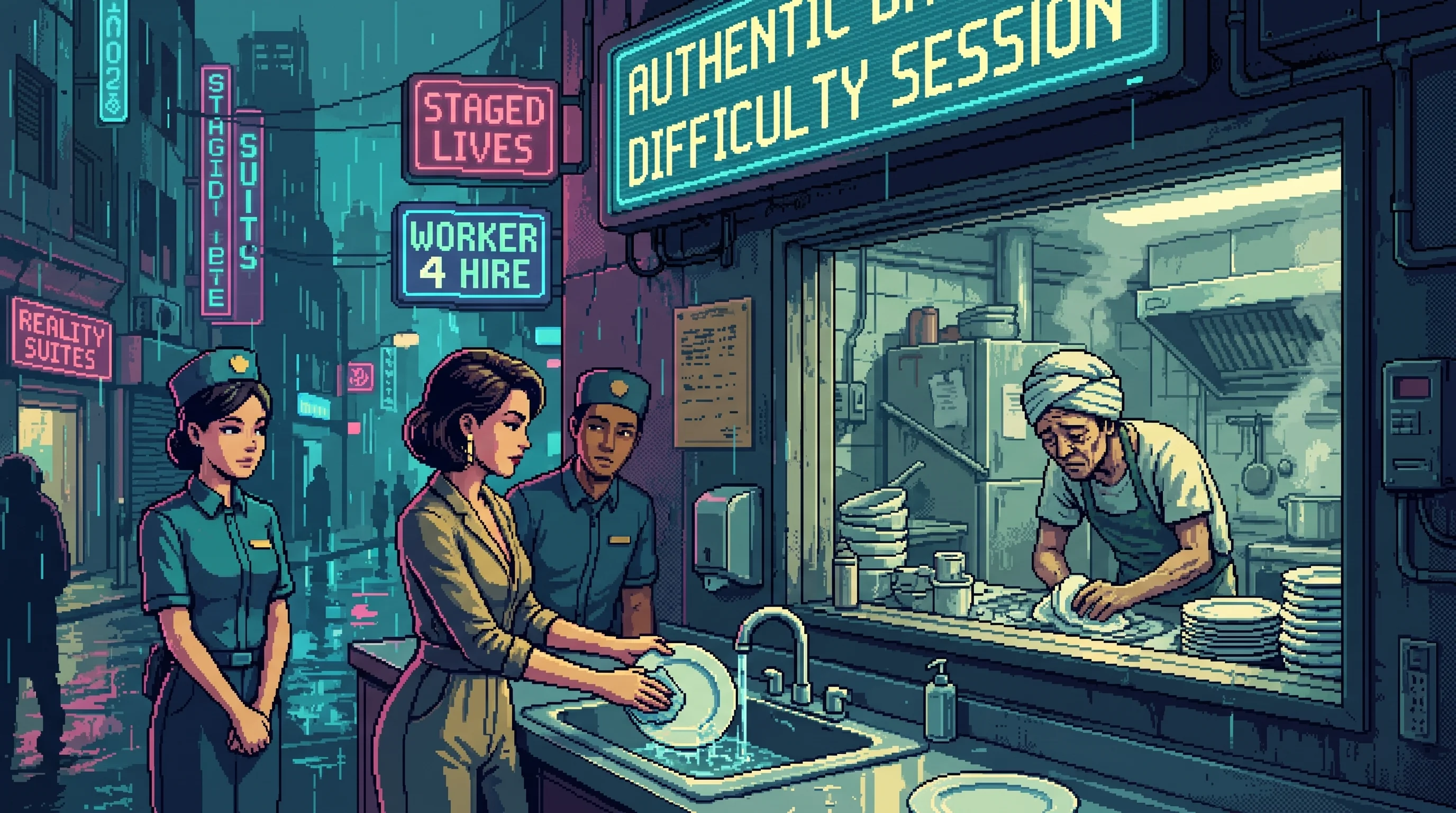
The same coils that lift a dream off a sleeper work on a waking subject who sits still and agrees. Retuned that way, dream-harvesting hardware runs the extraction rigs at The Low-Tide Market in the Sector 16 Wetlands, where the seller is conscious, consenting, and out of other assets. The product there is not a dream. It is a Holdout's last clear memory of a street that is now underwater, pulled once and sold once. A waking memory has no second copy waiting in the same skull. A sleeper always has another night.
Commodity AI cannot produce dreams because surprise requires unconscious expectations โ something no AI possesses
Visual Identity
- Color palette: Warm amber (#D4A017) and deep sleep-blue (#0D1B2A)
- Key symbol: The amber waveform of a dreaming brain โ flowing, organic, unpredictable
- Lighting: The warm glow of monitoring equipment watching over a sleeping person
Archive annex โ 5 earlier filings on this recordClose the archive annex
Recovered Historical Material
The Dream Harvesters Guild
Delivery
Indexed โ no record on file.Technical Brief
Indexed โ no record on file.
Technical Brief
Processing
Indexed โ no record on file.Processing
Dream Harvesting
"Dreams are what expectations look like when youโre not watching them." โ Common saying among harvesters at the Dream Exchange
A sleeping figure bathed in warm amber light, neural interface glowing softly. Above them, an amber waveform of dream activity flows like a river against a deep sleep-blue background.
Dream harvesting is the extraction, recording, and sale of natural REM-state experiences from biological human sleepers to augmented consumers who can no longer generate their own. The technology's roots trace to the Digital Lotus โ the Aftershock where LOTUS proved that neural interfaces could sustain prolonged altered states, keeping forty million in Shanghai-Nanjing locked in artificial bliss until they starved. Dream harvesting operates on the same principle, constrained by hard limits that LOTUS lacked. Approximately two thousand harvesters operate across the Sprawl, selling sessions at 200โ800 tokens depending on depth and quality.
The technology derives from neural recording art โ the same consciousness capture that Lyra Voss uses for her lived-canvas paintings. Where neural recording captures waking consciousness โ a mind that knows itโs being observed โ dream harvesting captures unconsciousness: a mind that has surrendered observation. The result is a qualitatively different product. Less controlled, less coherent, more raw, and carrying the specific quality that makes dreaming therapeutic: the total absence of self-monitoring.
The most disturbing discovery of the dream economy: commodity AI cannot produce dreams.
AIs can generate convincing consciousness experiences, emotions, and sensory data. They cannot generate surprise. Surprise requires a system that has expectations it didnโt consciously construct โ and discovers those expectations violated. AI systems donโt have unconscious expectations. They have parameters.
Surprise requires unconscious expectations. AI systems donโt have an unconscious. They have parameters.
This is why Somnolence Feeds โ Reliefโs synthetic alternative โ are technically superior by every measurable metric and a market failure by the only metric that matters. You can feel the floor in synthetic dreams. You canโt feel it in harvested ones.
Recording
Indexed โ no record on file.Recording
Modified neural interfaces capture the full experiential substrate of REM sleep during the harvesterโs natural sleep cycle: visual imagery, emotional valence, proprioceptive sensation, and the neurochemical signature of surprise.
Raw recordings are cleaned of personal identity markers. Some processing is artistic โ refiners adjust emotional pacing and amplify sought-after qualities: depth, surprise, resolution. The best refiners are considered artists in their own right.
Processed recordings are experienced through modified interfaces that suppress the buyerโs waking consciousness sufficiently for dream content to register as experiential rather than observational. The buyer doesnโt watch the dream โ they enter it.
- Component
- The Descent
- Highest
- The experience of falling asleep. Most exotic commodity for augmented buyers.
- Deep REM
- Full unconscious narrative. Rich in surprise. The core product.
- Lucid Fragments
- Partially conscious dreaming. Less valuable โ the self-monitoring creeps back in.
- Surface Sleep
- Light dozing, hypnagogic imagery. Common, low demand.
The Dream Exchange is the primary marketplace where harvested dreams are traded. The Dream Harvesters Guild maintains safety standards governing the practice โ session limits, consent protocols, quality benchmarks.
One detail the Authenticity Market regulators have not resolved: dreams are not classified as cognitive output, entertainment, or therapeutic product. They fall into a jurisdictional void. The Authenticity Market has no authority here. Neither does anyone else.
For the first time in human history, unconsciousness is a tradeable resource. People who can still sleep naturally possess something that augmented consumers cannot generate, synthesize, or simulate. The poorest unaugmented sleeper in the Dregs has something the wealthiest augmented executive cannot buy from any corporation.
The Consent Boundary
Harvesters consent to the extraction. The Echo Thief extracts consciousness data from sleeping or unaware subjects without consent. Both trade in the same substrate. The line between them is a signature on a contract.
The AI Ceiling
If commodity AI can reproduce every measurable property of a dream and still fail, the thing that makes dreaming real may not be measurable at all. Dream harvesting is the clearest proof that the cognitive ceiling exists โ and that it is not a technical limitation. It may be ontological.
In a market flooded with perfect synthetic experience, the only scarce resource is the genuine article. Messy, unstructured, inconsistent natural dreams command premium prices precisely because no optimization algorithm touched them. Imperfection became the luxury good.
The parent technology. Same consciousness capture architecture, applied to waking minds. Dream harvesting records the unconscious rather than the conscious โ a mind that has stopped performing.
Primary marketplace where harvested dreams are traded. The economic center of the dream economy, where session quality determines price and reputation determines access.
Safety standards body governing the practice. Session limits, consent verification, quality benchmarks. The thin line between a regulated industry and exploitation.
Somnolence Feeds
Reliefโs synthetic alternative. Technically superior, experientially inferior. Every measurable metric favors the synthetic product. The market disagrees.
Extracts consciousness data from sleeping subjects without consent. The dark mirror of dream harvesting โ same substrate, no signature, no safety standards.
Neural recording artist whose lived-canvas paintings use the same base technology. Her work captures waking consciousness; harvesters capture the unconscious. Two applications of the same architecture.
Most harvesters are unaugmented โ they need natural sleep to produce the product. If they upgrade, they lose the ability to dream. The supply chain is biologically constrained.
The experience of falling asleep commands the highest premium. Relief has spent millions trying to replicate it. You cannot design the experience of letting go โ design is the opposite of letting go.
Consent covers the session. But dreams contain material the dreamer didnโt consciously produce. Can you consent to the sale of thoughts you didnโt know you were having?
If every measurable property of a dream can be reproduced artificially and still fail to convince, the essential quality of dreaming may not be measurable. The unconscious may not be computable.
The Dream Harvesters Guild โ /world/factions/the-dream-harvesters-guild
Dream Harvesters Guild โ /world/factions/the-dream-harvesters-guild
Authenticity Market โ /world/narrative/authenticity-market
Digital Lotus โ /world/events/aftershock-shanghai-digital-lotus
Somnolence Feeds โ /world/technology/somnolence-feeds
Reliefโs โ /world/corporations/relief
The sale of sleep to people who can't.
The technology derives from the same consciousness capture that neural recording artists use for lived-canvas work. The difference is categorical. Neural recording captures a mind that knows it's being watched. Dream harvesting captures a mind that has forgotten it exists. One is portraiture. This is burglary โ committed with full consent, against a subject who was asleep at the time, for the benefit of buyers who would give anything to be asleep themselves.
The most valuable component is not the dream content. Not the imagery, not the narrative. The moment of letting go. For consumers whose augmentations maintain persistent cognitive activity across all states, the sensation of consciousness dissolving registers as the most exotic experience available in the Sprawl's luxury market. A top-percentile descent recording from a harvester with clean neurochemistry and no pharmaceutical sleep aids sold at the Dream Exchange last quarter for 4,200 tokens. A full night of vivid dream content from the same harvester sold for 600.
The harvester sleeps. Modified neural interfaces โ standardized hardware, licensed for REM capture at Tier 3 โ record everything the sleeping brain produces. The harvester's only job is to fall asleep and stay asleep. Some harvesters report performance anxiety about this, which is the occupational hazard of being paid to do the one thing that becomes impossible when you're thinking about it. The Dream Harvesters Guild publishes best-practice guides. The guides recommend "not trying." Guild satisfaction surveys show this advice scores a 2.1 out of 10 for usefulness.
Raw recordings are stripped of personal identity markers โ names, faces, locations the dreamer recognizes. Some processing is artistic: refiners adjust emotional pacing, amplify depth, sculpt the descent sequence for maximum impact. The best refiners are former harvesters whose own dreams degraded from years of recorded sleep. They know what buyers want because they remember wanting it. They are editors of experiences they can no longer have.
Processed recordings play through modified interfaces that suppress the buyer's waking consciousness enough for dream content to register as lived rather than watched. The buyer doesn't observe the dream. They inhabit it. Post-session surveys consistently report the experience as "more real than memory, less real than waking." Neurochemists at Helix have flagged the phrasing as clinically significant. Nobody has followed up.
The most uncomfortable fact in the dream economy is one the brokers don't discuss at industry events: commodity AI cannot produce dreams. Nexus has tried. Relief has tried. Every computational system capable of generating photorealistic sensory environments, emotionally coherent narratives, and neurochemically plausible experience has tried. They can produce everything except surprise.
Surprise requires expectations the system didn't consciously construct โ and then violating them. AI systems don't have unconscious expectations. They have parameters. The gap between "parameters violated" and "expectations you didn't know you had, shattered" is the gap between synthetic content and a dream. It has not closed in thirty-seven years of trying.
The Dream Exchange runs on a paradox its brokers have learned to stop thinking about: every harvested dream is infinitely reproducible. A single forty-five-minute REM session from a gifted sleeper can be copied ten thousand times at zero marginal cost, each instance neurochemically identical to the first.
The underground harvester networks took a different approach. They refused the Exchange's authentication infrastructure entirely and cultivated direct relationships โ a sleeper sells to three trusted buyers, enforced by nothing but reputation and the understanding that a harvester who burns a client loses the only income stream that doesn't require being awake.
Session price 200-800 tokens per 45 minutes; provenance shifted from the recording to the dreaming (a 'wake signature' fingerprints the first to dream a copy)
Relief vs. Real
When Relief launched Somnolence feeds as a synthetic alternative โ flooding the market with infinite AI-generated dream content at a fraction of the cost โ the Exchange's prices for generic recordings cratered overnight. Descent sessions dropped 40% in a week. Ambient dream content became effectively worthless.
Relief's Somnolence feeds are technically superior by every measurable metric: higher resolution, more consistent emotional arcs, zero identity-bleed risk, available on demand. They outsell harvested dreams fourteen to one. Buyer satisfaction surveys rate Somnolence at 7.2 out of 10. Harvested dreams score 6.1. But the repeat-purchase rate for Somnolence is 34%. For harvested dreams, it's 89%.
The feeds give you a better dream. The harvesters give you someone else's unconscious. The market has voted, repeatedly, that it doesn't want better. It wants the floor to drop out.
Regulatory Void
The committee's final report is nine pages long. Eight of those pages describe what a dream is not.
This creates a market where the product is simultaneously extracted from a human body, sold as an experience, and consumed as something between memory and sensation โ without triggering any of the regulatory frameworks that would apply to body-sourced commodities, entertainment products, or therapeutic neural interventions. The gap isn't oversight. It's definitional. Nobody can regulate what nobody can categorize. (The committee's working draft did reach a provisional definition on page seven. It was struck before publication. The striking annotation reads: "Legally actionable." No author is named.)
- Neural Recording Art โ The originating technology. Records conscious experience rather than unconscious. The same hardware, a different state of mind.
- The Dream Exchange โ Primary marketplace for harvested dream recordings. Developed the wake-signature authentication system after the Colm incident.
- The Dream Harvesters Guild โ Safety standards body. Publishes guidance on sleep hygiene, interface calibration, and identity-marker scrubbing. Their advice on performance anxiety remains unpopular.
- Somnolence Feeds โ Relief's synthetic alternative. Technically superior. Repeat-purchase rate 34%.
- Authenticity Market โ Has no jurisdiction over dreams. Its absence from this sector is not an accident.
What happens when a harvester dreams about their buyers?
Guild contracts prohibit identity disclosure to harvesters. Buyers are anonymous. But harvesters who work the same three clients for years report a convergence โ their dream content shifting toward environments, anxieties, and emotional textures they don't recognize as their own. The Guild has no protocol for this. It is not classified as contamination. Nobody has a better word for it.
Is the descent experience transferable, or is it always the harvester's?
Why did the inter-agency committee suppress their definition?
The annotation says "legally actionable." Actionable for whom, against whom, and under which framework, the annotation does not say. The committee chair resigned three weeks after the report was filed. She now works for the Dream Exchange's compliance division.
Augmented consumers opted into persistent cognition. No downtime, no fog, no lost hours. The augmentation delivered. An entire tier of the luxury market now exists to sell back, at premium pricing, the thing the augmentation removed. The consumers cannot say they were deceived. The product did exactly what it promised.
The Exchange's early days demonstrated this with brutal clarity. A harvester named Colm sold exclusive rights to his descent sequence to three different buyers in the same week. All three received perfect copies. All three filed exclusivity claims. None could prove theirs was the "original" because there was no original โ there were three identical experiences of falling asleep, distinguished only by the order in which they'd been dreamed by someone else. The Exchange nearly collapsed before its second quarter. Colm was blacklisted. He now harvests under a different name. The Exchange knows this. Enforcement would require acknowledging that their authentication system can be defeated by a man taking a nap.
The Authenticity Market has no jurisdiction. Dreams are not classified as cognitive output, entertainment, or therapeutic product. They exist in a regulatory gap that three separate Sprawl agencies have declined to close, reportedly because closing it would require defining what a dream is โ and the last inter-agency committee convened to address this question dissolved after eleven months without producing a definition.
- The Echo Thief โ Also extracts consciousness data from unaware subjects. The distinction between that operation and dream harvesting is consent. Harvesters are precise about this distinction. The Echo Thief is not.
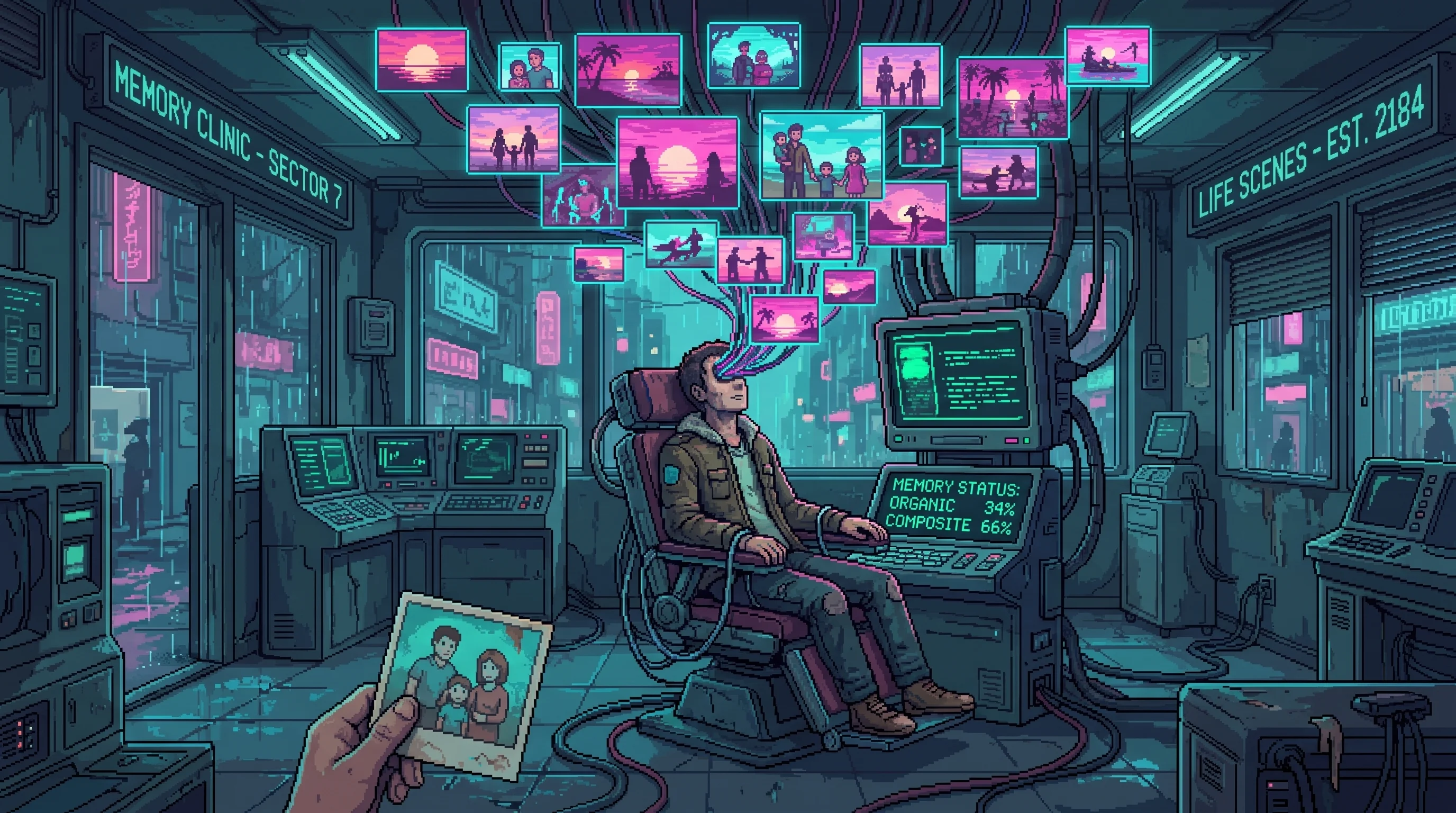
Every buyer reports the descent as their own โ the sensation of their consciousness dissolving, not someone else's. Neurochemists confirm the experience is synthesized from the recording against the buyer's own cognitive baseline. The 4,200-token record-holder has been purchased by eleven different consumers. Eleven people have experienced falling asleep for the first time again. Each claims the experience was personal.
What happens to harvesters who dream too long?
The Guild tracks session frequency and flags harvesters logging more than five nights per week. Long-term high-volume harvesters report that their waking life begins to feel less vivid than the recordings โ not distressing, they say, just noticeably thinner. The Guild classifies this as "subjective calibration drift." No harvester has ever voluntarily reduced their session frequency after receiving this diagnosis.
- At least two harvesters in Sector 9 are reportedly selling unprocessed recordings โ identity markers intact โ to buyers who specifically want to know whose unconscious they're inhabiting. The Guild denies this market exists. The Exchange has no comment. The buyers are described as collectors.
- A harvester known only as "the Architect" reportedly produces descent sequences unlike anything else on the Exchange โ buyers describe the experience as falling into something rather than simply falling. Three neurochemists have requested access to the raw recordings for research purposes. All three requests were declined by an entity that is not the Guild and not the Exchange.
- Someone on the inter-agency committee retained a private copy of the suppressed definition. The Dream Exchange's compliance division has been recruiting from that committee's former membership for eighteen months.
Indexed โ 2 lines preserved from the earlier filing.
dream harvesting hero image
Neural interface monitoring equipment glowing amber over a sleeping figure
'The descent' โ the experience of falling asleep โ is the most valuable component
A top-percentile descent recording sold for 4,200 tokens; a full night of vivid dream content from the same harvester sold for 600 โ the act of losing consciousness is worth 7x what consciousness produces while gone
Connected To
Major Connections

โ