
The Dream Harvesters Guild
Named after Pria — a 19-year-old who entered permanent dream immersion after unmonitored 4-hour session
Overview
The Dream Harvesters Guild is not a guild. It has no charter, no elected officers, no dues structure, no official membership rolls. What it has is a stack of handwritten protocols, a 19-year-old woman who will never wake up, and approximately 200 people across the Sprawl who have agreed that these two facts are related.
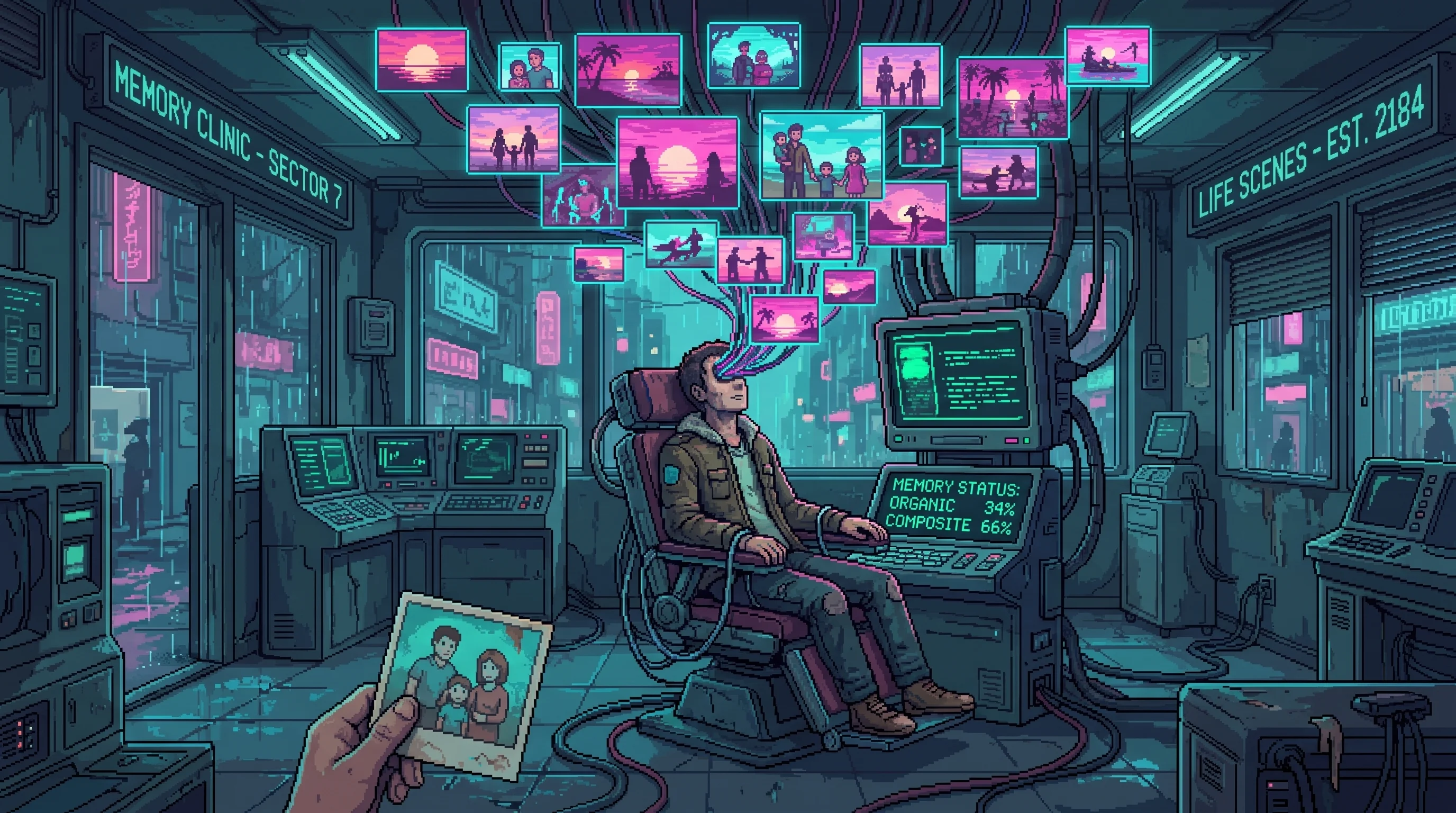
Pria was a harvester in Sector 8 — unaugmented, no monitoring equipment, no timer, no one checking on her. She went under for a four-hour unmonitored REM extraction session in late 2181. Her body came back. The rest of her did not. She is currently in a care facility in the Deep Dregs where she eats when fed, breathes without assistance, and produces the most complex dream architecture ever recorded on a continuous EEG. She has been dreaming for two years. The dreams are, by every measurable standard, extraordinary — deep, structured, vivid beyond anything a monitored session has ever captured. They are also unreachable. She appears to be having the most vivid dream in human history, and she cannot be woken from it.
The economics of Pria's situation are instructive. Before her incident, a four-hour session was considered ambitious but not unusual. Buyers paid a premium for deep-cycle extractions — longer sessions meant richer content, and richer content meant better prices on the Dream Exchange. Nobody had established that there was a limit because nobody had found the limit. Pria found it. The market corrected.
Fen Morrow and three other senior harvesters wrote the Guild's founding protocols in 2182. The document opens with Pria's name. It specifies: 90-minute maximum sessions. Six-hour minimum between sessions. Five sessions per week, maximum. Monitored facilities only — which in practice means Still Houses and a handful of G Nook back rooms where someone will physically watch you breathe. The undertow protocol mandates a 30-day suspension for harvesters showing persistent pull toward unconsciousness, which is the Guild's clinical term for harvesters who start wanting to stay under.
The protocols borrowed from pre-Cascade sex work regulation, organ donation ethics, and agricultural labor standards. This is the Guild's origin story in miniature: the only frameworks available for protecting people who sell access to their own bodies were written for other kinds of bodies, in other centuries, for other markets. The unconscious mind had no precedent. They improvised.
| Territory | Distributed — meets in Still Houses and G Nook back rooms |
|---|---|
| Ideology | Safety first — you cannot squeeze a person's unconscious harder and get more interesting dreams |
| Revenue | Untracked — individual harvesters earn 200-800 tokens per session |
The Paper Problem
Every Guild consent form is handwritten. Physical paper. Ink signatures. No digital component.
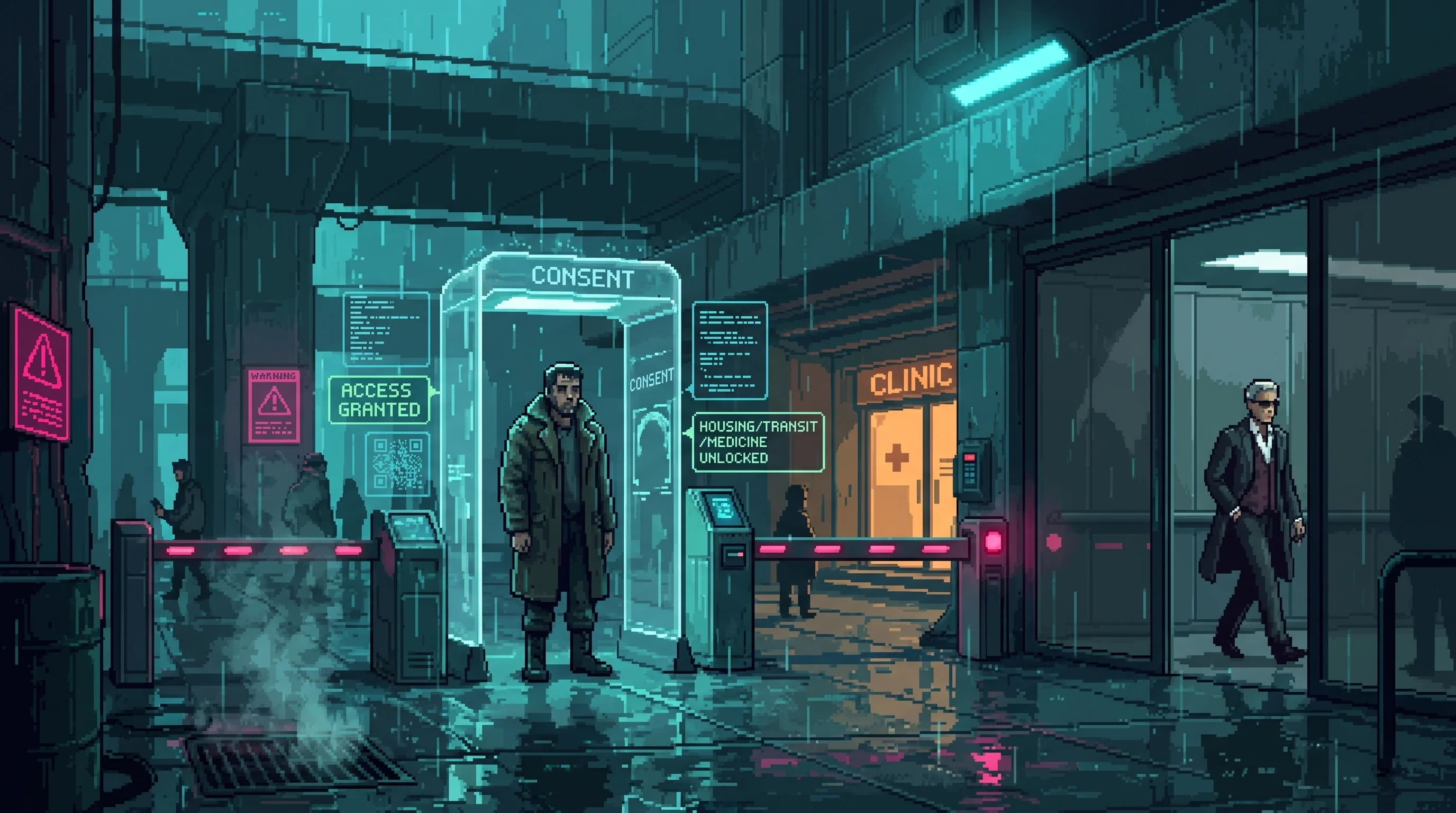
This is the most radical institutional design choice in the Sprawl, and it emerged from the most mundane observation: neural-interface contracts can be modified by corporate firmware updates. A harvester who signs a digital consent form at 10 AM may, by 10:15 AM, be bound to terms that did not exist when they agreed. The update pushes silently. The contract restructures itself. The harvester's neural interface confirms they have "agreed" to conditions their conscious mind never reviewed, because the interface and the contract share an authentication layer that treats firmware updates and user consent as the same event.
Paper cannot be remotely updated. Paper does not accept firmware patches. Paper sits in a drawer in a Still House and says exactly what it said the day it was written, which is why the Guild insists on it and why every licensing authority in the Sprawl considers the practice quaint, archaic, and — in three separate regulatory opinions — "incompatible with modern consent infrastructure."
The regulatory opinions are technically correct. The Guild's consent infrastructure is incompatible with the modern consent infrastructure. The modern consent infrastructure is the one that modifies contracts while people sleep.
Pricing and Membership
Individual harvesters earn 200 to 800 tokens per session, depending on dream depth, narrative coherence, and emotional intensity. The Guild's pricing guidelines suggest minimum rates that prevent the kind of race-to-the-bottom that turns desperation into the default negotiating position. Not all harvesters follow them. Not all harvesters join the Guild. Some resent the pricing floors — a harvester willing to sell a four-hour deep-cycle session for 150 tokens will find buyers immediately, and the Guild's 90-minute limit looks, from the outside, like a cartel protecting its margins.
From the inside, the 90-minute limit looks like Pria.
The Guild's approximately 200 members represent a minority of active harvesters across the Sprawl. The majority operate independently, setting their own hours, their own depths, their own limits. The Guild cannot compel anyone. It can only point to a care facility in the Deep Dregs where a 19-year-old woman eats when fed, and suggest that the pricing floor exists for reasons that are not primarily economic.
The unofficial motto, attributed to Fen Morrow: "You cannot squeeze a person's unconscious harder and get more interesting dreams. You can only damage the person."
Key protocols: 90-minute session limit, 6-hour minimum between sessions, max 5 sessions/week, monitored facilities only
Cultural Presence
The Guild is a whisper network, not an institution. Its members meet in Still Houses and G Nook back rooms scattered across the Dregs — spaces that exist because the formal economy has not yet noticed them. In the Deep Dregs, where dream harvesting is one of several grey-market survival trades, Fen Morrow's handwritten consent forms are a recognized signal: the buyer follows rules, the procedure has limits, someone will check on you afterward.
The distributed structure means the Guild's presence tracks social geography, not physical geography. In Old Town's insomnia wards and the Bayfront's late-shift clinics, Guild protocols circulate among practitioners who may never attend a formal meeting. In the Works, thermal refugees who sell dreams to supplement income know the standards by reputation. In corporate territory — Nexus Central, the Heights — dream harvesting is either invisible or classified as a controlled substance, and the Guild's handwritten consent forms carry no regulatory weight whatsoever.
Guild members attend Mori's Dreaming Church through the Compilation Heretics — the only context in the Sprawl where harvesting is treated as sacred rather than commercial. The distinction matters to harvesters who spend their working lives selling access to the most private thing a person produces. Mori's services do not pay. They do not extract. They simply treat the act of dreaming as though it means something beyond its market price, which is either a profound theological claim or a marketing strategy that hasn't been monetized yet.
The Cognitive Bandwidth Brokers share the Guild's structural model — Noor Bassam's amber circle protocols emerged from the same insight that produced Morrow's consent forms, which is that unregulated markets will consume their own suppliers unless someone writes down the rules and refuses to make them digital. The two networks occasionally cross-pollinate through shared clients in Substrate Row. The Lamplighters share the Guild's invisible-labor ethos — unaugmented people maintaining essential infrastructure through skill and presence and a refusal to be institutionalized that looks, depending on your perspective, like either dignity or stubbornness.
Physical consent forms required because neural-interface contracts can be modified by corporate firmware
Affiliated Entities
- Fen Morrow: Co-founded the Guild with three other senior harvesters after Pria's incident. Wrote the safety protocols. Consulted on major decisions but holds no formal title, because titles require institutional structures and institutional structures require digital registration and digital registration requires the kind of consent infrastructure the Guild was founded to reject.
- The Dream Exchange: Guild members are the Exchange's primary suppliers of verified, safely extracted REM recordings. The verification is the Guild's consent form. The safety is the Guild's 90-minute limit. The Exchange does not require Guild membership from its suppliers, but Guild-verified content commands a 15-40% premium, which is either the market pricing safety or the market pricing scarcity — the Guild's session limits reduce supply, and reduced supply raises prices, and raised prices fund the protocols that reduce supply.
- The Still House: Primary Guild-approved harvesting facility. The protocols were developed here. The monitoring happens here. Pria was not harvested here.
- The Compilation Heretics: Harvesters attend Mori's Dreaming Church — where unconsciousness is theology, not commodity.
- Cognitive Bandwidth Brokers: Same structural model — protocol-based quality standards in an unregulated market, both born from someone getting hurt badly enough that informality stopped being sufficient.
- The Lamplighters: Same invisible-labor ethos — unaugmented people maintaining essential systems through presence and refusal.
Visual Identity
- Color palette: Warm amber (#D4A017), linen cream (#F5E6CC), earth brown (#5C4033)
- Key symbol: A physical consent form, handwritten, with Pria's name at the top
- Lighting: Warm, dim, protective — the Still House after hours
▲ Unverified Intelligence
The Guild keeps no records of Pria's current location. This is presented as a privacy measure. It may also be a practical one — Pria's continuous dream output, if it could be harvested, would represent the most valuable single-source REM content in the Sprawl. Two years of uninterrupted, deep-architecture dreaming from a consciousness that has nothing left to do but dream. The Exchange has never listed content attributed to her. The Guild's position is that harvesting from a person in permanent immersion is not harvesting — it is extraction from someone who cannot consent, which is the one line the handwritten protocols draw without ambiguity.
Three buyers have reportedly approached Pria's care facility. The facility declined. The facility is funded by Guild contributions — a voluntary assessment that no protocol requires and no member has refused. The assessment amount is not fixed. Harvesters contribute what they can. The total has covered Pria's care costs every month for two years, which is either extraordinary solidarity or the specific guilt of people who understand, with professional precision, exactly what was taken from her and exactly what it would be worth if someone decided to take more.
~200 members — not all harvesters join; some resent pricing guidelines
'You cannot squeeze a person's unconscious harder and get more interesting dreams. You can only damage the person.'
Connected To


—
—