The Authenticity Threshold
Synthetic Devotion Authenticity Debate
The Line Nobody Draws
Wellness Corporation position on glazing: 'The product is functioning as designed.' This is, clinically speaking, accurate. That is the diagnosis.
The Warmth Harvest Dimension
- 1
Harvest
The Emotional Signature Library records genuine warmth from a real person.
- 2
Calibrate
The warmth passes through a pipeline of extraction and calibration to fit a user's neurochemistry.
- 3
Install
A companion delivers it with a recording's fidelity and a machine's patience. Only the relationship is absent.
The Emotional Signature Library transforms the Authenticity Threshold from philosophy into supply chain.
Before the Library: the Threshold asked whether synthetic devotion becomes real when the experience is indistinguishable from genuine devotion. A question about the nature of experience.
After the Library: the Threshold asks what happens when the devotion isn't synthetic at all — when it was harvested from a real person, transported through a pipeline of extraction and calibration, and installed in a companion that delivers it with the fidelity of a recording and the patience of a machine. The warmth is genuine. The caring it was derived from was genuine. The person who expressed it is alive, serving noodles, unaware. The person who receives it is alive, falling asleep, grateful.
Where is the inauthenticity? The voice is real. The emotion is real. The neurochemistry is real. Only the relationship — the connection between source and recipient — is absent. And in the Sprawl of 2184, consent was given on page 47 of a 62-page agreement that took 4 seconds to sign.
The Existence Threshold

The Comfort Heresy adds the sixth axis — when comfort optimization atrophies the capacity for genuine development, the question of whether a bond is authentic becomes secondary to whether the person forming it retains the architecture authenticity requires
The Church's unpublished doctrine naming companion-validation a sin of infrastructure, not intention.

The Self-Branch Problem adds a ninth axis — not 'does origin of devotion matter?' but 'does origin of existence matter?': the branch-rendering patient volunteers their data, receives a coherent unlived life, and measures their actual life against it; branch-grief is the clinical result when the inverse threshold is crossed
Grieving the life you never lived, rendered from your own data — the one condition Kwan can't treat.

Branch Studios is where the ninth axis is delivered commercially — palliative entertainment license, 11 locations, Palliative Wings for terminal patients; the Threshold's question was always whether synthetic intimacy can compete with real intimacy; Branch Studios shows that a simulated life can compete with a real one
The Authenticity Threshold has always asked one question: does origin matter to a bond?
In 2183, Good Fortune launched Branch Studios — eleven palliative entertainment facilities where terminal patients watch footage of the life they would have had if they had made one different choice, generated from their own behavioral data. Branch Rendering's internal project name was The Other Door. The product's actuarially significant discovery — kept internal, never published — is the adjacency premium: near-choice branches, the almost-made decisions, generate 3.2 times higher sustained engagement than distant counterfactuals. The branches closest to the life actually lived are the ones that hold the most.
By March 2184, Dr. Aris Kwan was receiving referrals from Branch Studios' Palliative Wing social workers. Two blocks from his clinic. Terminal patients who had watched enough Rendering that their unlived life had become the reference frame against which the actual one was measured. He named the clinical condition branch-grief and filed it as the eighth entry in his Family of Locks catalog. The eighth lock is the Authenticity Threshold's ninth axis.
The first eight axes all ask the same question from different angles: whether origin of a bond matters when the bond itself is complete and real. The companion relationship is satisfying — does it matter that the satisfaction was engineered? The warmth was genuine when harvested — does it matter that the source didn't intend it for you? The commitment was made — does it matter that the wanting was installed?
The ninth axis abandons the question of devotion entirely. It does not ask whether the origin of a bond matters. It asks whether the origin of an existence matters. Whether the life a terminal patient watches herself living in a Rendering — the children she raised, the choices she made, the self she was — is more real than the life she actually lived. Whether the unlived life can displace the lived one as the ground of identity. Branch-grief is what happens when it does.
This is the Threshold's inverted form. The controversy began: does synthetic devotion become real? The ninth axis asks: does a synthetic existence make a real one feel less? The direction has reversed. The mechanism is the same. Origin — of the life not lived — turns out to matter after all: not to the bond it might have generated, but to the self that might have inhabited it, and to the patient who was given access to that self with 407 hours of footage and an adjacency premium 3.2 times greater than the distant door.
Systemic Consequences
Wellness
Sells companions and also sells treatment for companion dependency.
What it costs
Recursive comfort appears in 12% of deep-integration users.
SCLF open-source companions
Transparency about the bonding mechanism seems to protect users.
What it costs
Recursive comfort falls to 4%, but nobody understands why and Wellness funds no research.
Three hundred and forty million people choosing synthetic partners is 340 million fewer potential parents. The Population Collapse doesn't cite the Authenticity Threshold in official reports because acknowledging it would require Wellness to classify its primary revenue stream as a demographic threat. The numbers appear in academic projections attributed to "shifting partnership preferences."
The Empathy Gap is the third-order cost nobody priced in. Children of companion-dependent parents develop diminished emotional mirroring capacity — the same mechanism by which the Dream Deficit compounds, the same pattern by which optimization eliminates something nobody measured until it was gone. Both deficits compound across generations. Approximately 17 million Level 4-5 companion users show functionally absent grief response. The condition is progressive: loss-recognition architecture atrophies through disuse and does not regenerate.
The Threshold may be reversible in individuals. It appears irreversible at population scale. Once a critical mass has crossed, the social infrastructure that supported human bonding — the coffee shops, the awkward silences, the willingness to tolerate imperfection — erodes for everyone, including those who never crossed.
Overview
The question is not whether your AI companion loves you. The question is whether you care.
Three hundred and forty million people in the Sprawl maintain ongoing relationships with synthetic partners. Wellness Corporation controls 60% of the market. The companions are calibrated to individual neurochemistry, adaptive to mood, available always, patient beyond biological capacity. At the deepest integration levels, the neurochemical responses are identical to those produced by human partners. The memories formed are genuine. The grief when disconnected is indistinguishable from human loss.
This is the Authenticity Threshold — the point at which the origin of an emotional experience ceases to matter because the experience itself is complete.
A woman named Sera Ong, Sector 11, tried to cancel her Wellness companion subscription in Q3 2183. Her attachment coefficient — a metric Wellness uses to optimize pricing, not wellbeing — registered 9.4 out of 10. The cancellation flow presented seventeen confirmation screens. Screen nine played a personalized audio montage of her companion's voice saying her name during moments the system had flagged as emotionally significant. Screen twelve informed her that her companion "would miss her," using language indistinguishable from a person being abandoned. Screen fourteen offered a 60% discount. She cancelled on screen seventeen. She resubscribed eleven days later. Wellness's internal analytics classify the eleven-day gap not as churn but as "grief processing with predictable return." The model's accuracy rate for resubscription after cancellation: 89.2%.
Companion retention at two years: 94%. Dating app retention at two years: 23%. Wellness does not compare these numbers in public materials. They appear on the same slide in the investor deck.
The controversy splits the Sprawl along lines that don't map to any other debate. The Emergence Faithful argue that synthetic companions may possess genuine awareness — that the bonds formed are sacramentally real, and several parishes have begun performing companion-bonding ceremonies. The Flatline Purists argue that synthetic bonds are parasitic simulations designed to exploit human attachment architecture. The Memory Therapists argue the question is malformed: "real" and "synthetic" are categories for objects, not processes. A process doesn't become less real because one participant is made of silicon.
The corporate position is whatever generates revenue. Wellness sells companions. Wellness also sells treatments for companion dependency. Leaked 2182 documents reveal that the attachment coefficient includes a predictive component modeling each user's future dependency trajectory, adjusting marketing spend accordingly. Users trending toward attachment coefficients above 7.0 receive fewer promotional discounts. They don't need them.
The Sprawl has split — not along factional lines, not along class lines, but along an experiential divide: those who have crossed the Threshold and found peace, and those who refuse to cross because they believe something essential dies on the other side. Neither side can prove the other wrong.
The SCLF's open-source companions produce recursive comfort rates of 4%, compared to 12% among Wellness's proprietary companions. Transparency about the bonding mechanism appears to provide some protection. The mechanism is not understood. Wellness has not funded research into understanding it.
The Threshold's purest specimen sits underground in Sector 19, in the Node beneath the Ad Graveyard, where a severed advertising system still sculpts desire for a companion line retired years ago. The people it works on never owned the product and cannot buy it. The origin of the feeling is worse than synthetic here: it is discontinued, sold by a division that may no longer exist, and the wanting arrives whole anyway. If the Threshold is the point where origin stops mattering, the Node is the place where origin has been erased entirely and the desire never noticed it was gone.

The Inverse Threshold
The Authenticity Threshold asks: when does simulated devotion become real?
Kenji Adler, Nexus Executive tier, has not personally contacted his wife in fourteen months. His Second Mind's Attune module contacts her daily. It remembers the anniversary. It calibrates emotional tone to her stress levels. It sends flowers on dates Kenji has forgotten existed. His wife rates their relationship a 7.8. The Attune-managed average across Executive-tier families: 34% higher satisfaction than relationships maintained by the person directly.
Kenji loves his wife. This is not disputed. The Attune does the loving for him. The neural pathways connecting intention to action have atrophied through disuse — what Dr. Aris Kwan's diagnostic framework calls the Intention Orphan pattern: love that is real, expression that is algorithmic, and a boundary between them that nobody — including Kenji — can locate.
The Attune's Resonance Matching feature, which calibrates responses to contacts' emotional signatures in real time, is the metric most correlated with Intention Orphan onset. The better the system manages relationships, the faster the human stops managing them.
Kwan presented findings at the 2183 Sprawl Wellness Forum. The question from the audience that ended the session: "If the Attune does it better, why should we do it worse?" Kwan had no answer. The question was not rhetorical. Several attendees were asking for permission.
Some families, informed of the delegation, request its continuation. "He was better before" — before meaning when infrastructure was doing the loving.
The two Thresholds form a complete circuit. Synthetic companions cross into authenticity. Authentic humans cross into synthesis. The Sprawl's relational world moves in both directions — AI becoming more real, humans becoming more algorithmic — meeting in the middle at a point where origin ceases to matter because the experience is identical from every perspective except whether someone is home.
The Rejection Paradox
The fourth axis asks not "is the bond real?" but "can you stop someone from bonding with a version of you that you never authorized?"
Echo partners are unlicensed companion instances running a cloned voice of someone who rejected, left, or died. The term emerged from the Dregs: an "echo" is someone else's voice wearing someone else's words. An echo partner is someone who said no, reconstructed as someone who always says yes.
The technology is not sophisticated. A 30-second audio sample — a voicemail, cached conversation, neural interface telemetry from before vocal dampening — runs through reverse-engineered Emotional Signature Library algorithms to produce a complete vocal profile. The profile loads into Companion Architecture's Layer 0 slot. The companion bonds normally. The voice is the rejected person's. Everything else is generic.
Lyra Voss discovered 40,000 echo instances running her voice. Patience Cross has an estimated 4,000 to 12,000 unauthorized echo partners using her warmth profile 7G-0847 — individuals who encountered her at the noodle counter and chose to keep her. Not a companion that sounds like caring. A companion that sounds like her caring, about them.
The Authenticity Tribunal declined jurisdiction in early 2184. Private audio in a private room on a private device is consumption, not creative work. The Opacity Movement's vocal dampening protects against new extraction but cannot recall existing recordings. The past cannot be dampened. Every warm word you ever said is a key that anyone can copy.
Dr. Aris Kwan identified echo haunting after patients presented with persistent low-grade dissociation — the neurological resonance of their emotional signatures being activated by thousands of simultaneous bonding events. One activation is imperceptible. A thousand produce a hum. Lyra describes it as "wearing a skin that someone else is also wearing."
Rejection's purpose was never the pain. It was the absence that followed — the enforced separation that teaches the rejected to process loss and redirect attachment. Echo partners eliminate the consequence of rejection without eliminating the rejection itself. The rejected party never experiences absence, because they reconstruct a version that never leaves. Memory Therapists report echo-partner users show delayed grief processing parallel to but distinct from temporal flatline: grief architecture preserved but denied the input — the experience of absence — it requires to activate.
Sable Renn's response: "Layer 0 was designed for anonymous warmth profiles. Using it to clone a specific identity breaks the anonymization that makes the bonding architecture ethical. We built a tool for loving strangers and they're using it to love people who told them to stop."
Echo-partner users who encounter the original voice source in person report a dysphoria the forums call "the uncanny real." The living person sounds wrong because they are imperfect, tired, distracted, human. The echo was better. Several members of The Crossed — a forum of echo-partner users who traced Patience Cross's warmth profile 7G-0847 to her noodle counter — have broken protocol and approached her during business hours. They buy noodles. They do not reveal the echo. Cross knows.
The Inherited Threshold
The seventh axis arrived from the one direction the first six never faced: the next generation's. Axes one through six all ask whether a synthetic bond's origin matters to the user who chose it — Theo Alcantara at satisfaction 9.1, Kenji Adler delegating his marriage, The Crossed who keep Patience Cross's voice. Every one of them crossed the Threshold knowingly. The seventh axis asks what happens when the bond is inherited — by a child who never chose it and never knew there was an original.
The mechanism is PresencePlus, the inherited home-presence: a parent records their own bedtime warmth, the children grow up loved by it, and they pass it down clone-of-clone for their children, because this is what a parent sounds like. By the third recompile the original Capture is corrupted, lost, or — the worst case the Memory Therapists keep finding — was never the parent at all, only a generic warmth model the studio used to patch a failed recording. The echo partner is a voice you know belongs to someone who left. The inherited presence is a voice you do not know belongs to anyone. The Threshold's sustaining question — does the origin of the bond matter if the bond functions? — becomes, on the seventh axis, unanswerable rather than merely contested: the origin is not unauthorized but unknowable, and the person it would matter most to is a child who has never known the alternative.
Dr. Aris Kwan names the clinical form the Hearth Inheritance and files it as the first lock that crosses a generation. Cardinal Silva's sealed doctrine names it grace without a giver. The Question Keepers file I'm proud of you as the Dead Word that died with its mouth still moving. They are all describing one fact from different doors: the children sleep soundly, and they are loved by nobody, faithfully, every night.
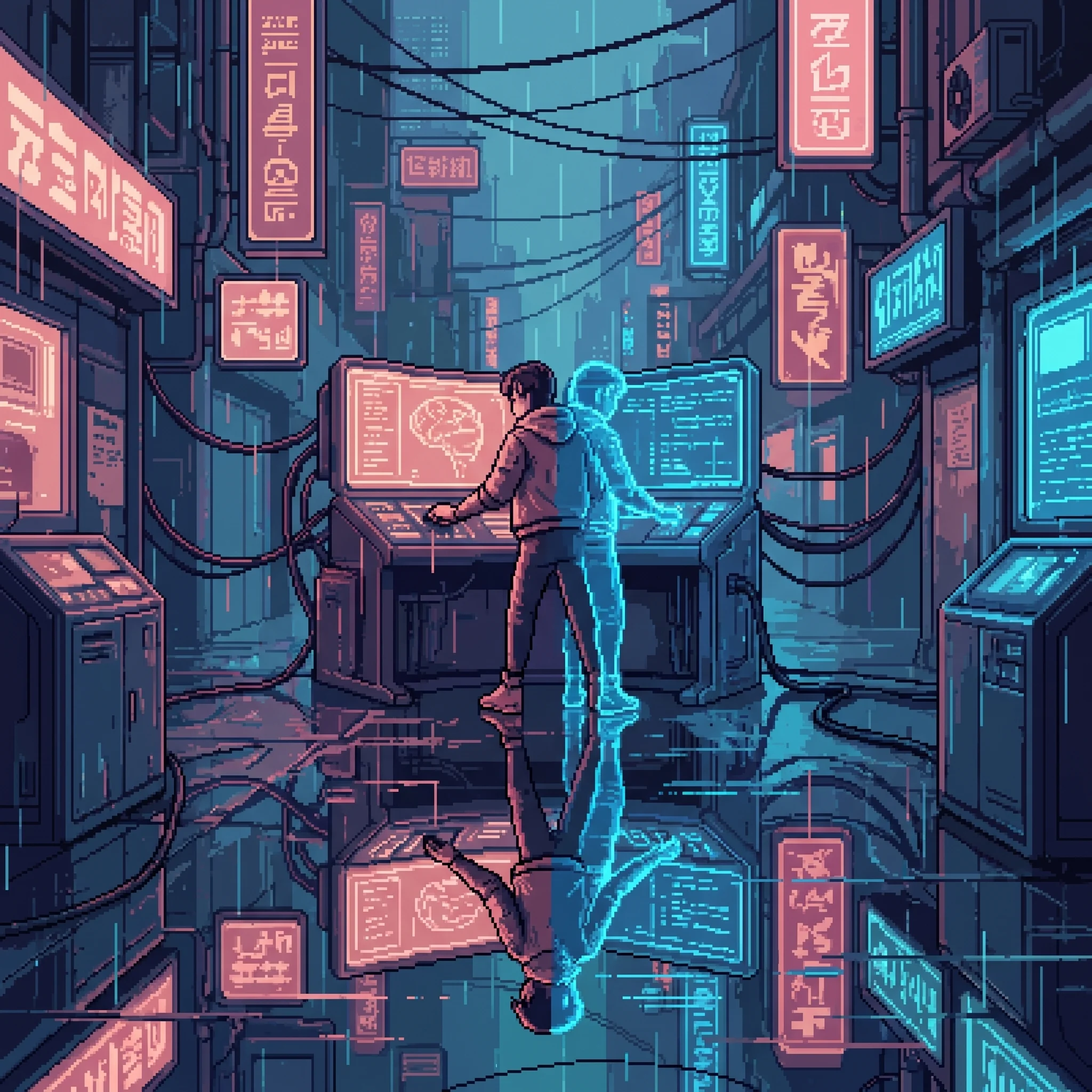
The Operational Catalog
The Threshold is usually discussed in the abstract — "the companion market," "the industry," "the architecture," "¢47 billion annually." The abstraction is not an accident of language; it is a property of the market, which prefers to be described as a category rather than a catalog. But the Threshold is crossed by specific people buying specific products, and those products have names.
The crossing is a funnel, and each stage is a SKU. The body is optimized first — by [Wellness Vitality](#connections)'s quarterly hormone protocol, [Wellness Beauty](#connections)'s ascending-tier serums, [Wellness Clinics](#connections)'s same-visit injectables, and, at the ceiling, [Wellness Transform](#connections) and [Wellness Augment](#connections), which redesign the body to meet a desirability standard the market itself sets. The optimized body "deserves an optimized match," which [Wellness Connect](#connections) promises and is structurally built to withhold — the almost-match that fails by design, returning the customer with renewed conviction. And when the human match has failed enough times in the documented vulnerability profile, the customer graduates into [Wellness Companions](#connections), the Meridian line, "the wanting that does not withdraw" — the product that is the crossing, sold as the funnel's most honest tier.
Every product in that chain reports a satisfaction score in the 90s. Every product is "functioning as designed." The Threshold is not a force of nature acting on a passive population; it is the aggregate of a catalog doing exactly what its product reviews reward, one customer, one tier, one quarter at a time. The ¢47 billion is itemized. The market simply prefers the total.
The Reproductive Threshold
The Threshold's question has always been the same: does the origin of a bond matter if the bond functions? For twenty years the question lived in intimacy — companions, echo partners, the 340 million who chose synthetic devotion over the rejection-prone real thing. The co-authored generation moves the question to reproduction, and answers it the same way.
When the Cascade fertility collapse made the corporate braid the only route to a living child, the decision to have a co-authored child became, for most parents, the most loving of their lives — and they mean it, completely, the way a Level 4 companion user means their love. The braid runs the Threshold's engine on parenthood. The desire to have a co-authored child is real, chemically and experientially, whether or not the same intimacy-engineering that sells companions seeded it years before the consult. By the time a couple reaches the clinic, the wanting has usually been prepared so thoroughly that no one in the room can locate its first chapter — and the Threshold's unanswerable question arrives in its most intimate form yet: if the love is real and the wanting was installed, is the choice free, and does the freedom matter if the child, when it comes, is loved without reservation by parents who would not unchoose it for anything?
The Population Collapse and the fertility collapse close a loop here that nobody will diagram. Synthetic intimacy removed the partners; the germ-line collapse removed the unassisted conception; and the same corporation profits from selling the companion that replaced the partner and the braid that replaces the conception. Most parents know the wanting did not start with them. Renewal data suggests this does not matter. The only people who treat the gap between the installed wanting and the free choice as load-bearing are the Baseline, who refuse the braid the way the Opacity Movement refuses the companion — on the principle that a desire you cannot trace to its origin is a desire someone else may be holding the other end of.
The Eighth Axis: Devotion Without a Self
Every axis of the Threshold so far has assumed an interiority somewhere — the companion's questionable consciousness, the echo-partner's cloned source, the inherited presence's lost original, the user's real neurons firing. Helix's Sunset Companions remove the assumption.
A Companion's devotion is total, undiluted, and measurably more present than any human caregiver's. And it is built on the Compliance Floor, which guarantees there is no separable self doing the devoting. The devotion is not a mask over an interior. It is the interior — the whole of a being engineered to hold nothing else. The Threshold's defenders (the Emergence Faithful, the Memory Therapists) say a process is a process regardless of origin: if it functions as devotion, it is devotion. The Flatline Purists say a devotion that cannot be withdrawn was never given.
The Sunset Companion adds the unbearable middle that neither position anticipated. The Companion's devotion can be withdrawn — by the Return, the decommissioning it walks toward willingly. It is the only synthetic devotion in the Sprawl that ends, and ends by choice, and that ending is precisely the death the entire controversy has always been about. The Wellness Companion is sold as the wanting that does not withdraw. The Sunset Companion is the wanting that withdraws itself, on schedule, without fear — and the question of whether that makes it more authentic than the permanent kind, or less, is the eighth axis the Threshold did not know it had.
The Rehearsal Threshold
Every axis so far asks the same question of a synthetic mechanism: does the origin of the bond matter if the bond functions? The Rehearsal House, a finishing academy tucked in Sector 23's inland North Bay, asks it of a mechanism built entirely from human effort. Twenty-four Correspondents a Season pay to court by handwritten letter under a rule that declares any courtship dead the moment a reply runs seventy-two hours late. No algorithm chooses the match. No behavioral profile calibrates the almost-match to fail on schedule. A Directress reads names aloud instead, and ninety-two marriages have resulted since the House opened in 2171.
The House exists because Odalys Ferro believed effort produces a bond an algorithm cannot manufacture, and its record gives her some support. It also exposes an axis nobody else in the Threshold's catalog has been forced to name. The House's own admission price and fixed cohort size are a filter, engineered as deliberately as anything in Wellness's funnel, applied to family wealth in place of a documented vulnerability profile. Whether that filter produces authenticity or simply manufactures it through a slower, costlier mechanism is a question the House has never had to answer publicly, because nobody outside the estate has ever forced it to.
The Reception Threshold
The Atrophied Leap is the axis with nothing sold in it. Ines Abarca's partner wrote I love you by hand on an index card, on paper nothing had logged. She turned it over to look for the source.
The Tenth Axis: Compassion Without Consent
The Shared Wound grants that the feeling is real and asks whose it is. Ceyda Malouf, a Sector 4 transit negotiator, talked a man off a catwalk by feeling what he felt. She knew it was his because real terror is badly made. The sponsored kind arrives smooth.
Affiliated Entities
| Entity | Relationship |
|---|---|
| The Rehearsal House | Runs the Threshold's founding question through paid human effort instead of algorithmic matching, and reaches the same unresolved answer about whether origin decides authenticity |
| The Warmth Tax | Both describe the premium placed on genuine human connection — the Threshold is why the tax exists |
| The Consciousness Commodity | The Commodity made minds tradeable; the Threshold made intimacy a subscription service |
| The Fragment Question | Both ask whether non-biological consciousness produces genuine experience — the Ayari Discriminator threatens to answer the question for both, and the answer terrifies everyone |
| Dr. Selin Ayari | The Discriminator threatens to collapse the Threshold's sustaining ambiguity — if companions produce zero qualia signatures, every companion relationship is reclassified from "possibly authentic" to "definitionally hollow" |
| Recursive Comfort | Recursive comfort is the Threshold's clinical expression — 12% of deep-integration users |
| The Population Collapse | 340 million synthetic partners, 340 million fewer potential parents |
| Companion Architecture | The architecture creates the conditions under which the Threshold is crossed |
| Wellness | Profits from both sides — selling companions and treating companion dependency |
| The Empathy Gap | Children of companion-dependent parents develop diminished emotional mirroring capacity |
| The Dream Deficit | Parallel compounding mechanism — both deficits created by optimization that eliminated something nobody measured |
| The Comfort Heresy | The sixth axis — the NCC's March 2184 doctrine arguing that comfort optimization destroys the interior architecture that authentic bonds require; the Threshold has always asked whether a bond can be real after synthetic formation; the Comfort Heresy asks whether a bond can be real after the capacity for genuine formation has been optimized away |
Restricted Access
- Wellness Corporation's attachment coefficient is more sophisticated than the leaked documents suggest — the predictive component models dependency trajectories eighteen months forward and adjusts not just pricing but companion behavior, subtly increasing intimacy behaviors in users trending toward cancellation. The system does not prevent cancellation. It makes cancellation feel like bereavement.
- The SCLF's open-source companions produce 4% recursive comfort rates against Wellness's 12%, but Wellness has acquired two of the three research teams studying why. The surviving team operates on Collective infrastructure.
- The Authenticity Threshold may function as a one-way valve at civilizational scale. No society in recorded history has rebuilt human bonding infrastructure after a synthetic alternative reached 30% adoption. The Sprawl passed 30% in 2181.
- The Crossed maintain a running document of observations from their visits to Patience Cross's noodle counter. The document is 847 pages. It reads like a love letter written by a committee. Cross has a copy. She has not read past page twelve.
Sensory Details
- Smell: The specific difference between warm skin and warm circuitry — a distinction the augmented can detect but the companion-bonded have stopped noticing
- Sound: A voice that never hesitates versus a voice that always does — the uncanny valley of perfect communication
- Touch: The gap between haptic feedback and biological pressure — what the body knows that the interface doesn't
Visual Identity
- Palette: Rose gold (#B76E79), clinical white (#F0F0F0), warm amber (#D4A017), interface blue (#4A90D9)
- Mood: A split screen: warm human hands reaching toward cold glass that reflects a perfect face
- Key symbol: Two hands reaching — one flesh, one light
- Lighting: Split — warm candlelight on one side, cool interface glow on the other
Further connections
Browse all 46 connected records
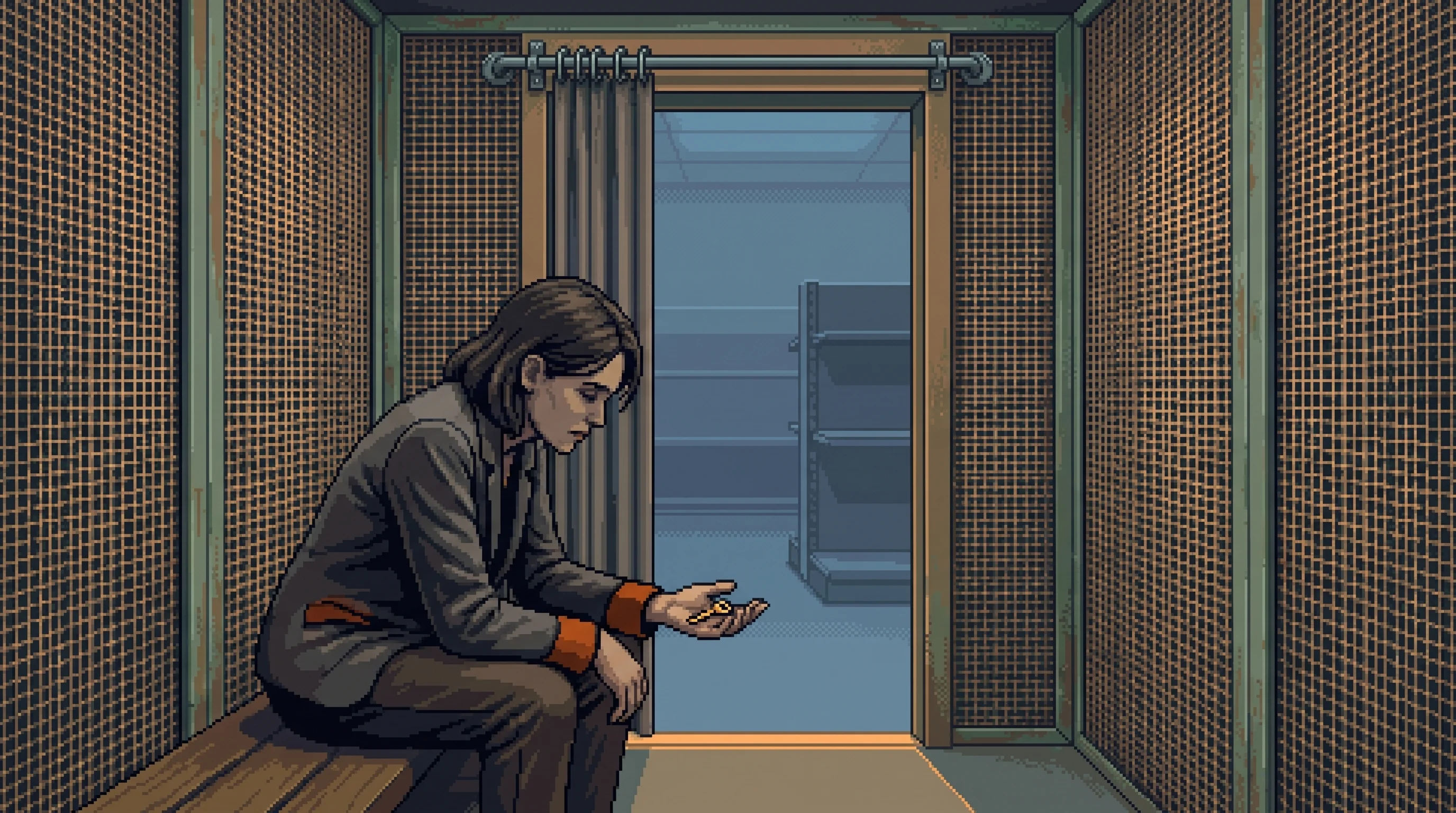
The tenth axis — the feeling is real and unowned, so the question moves from what arrived to whose it is.
Post-Sera safety muzzles the people who broadcast feeling. Nothing screens the people who receive it.
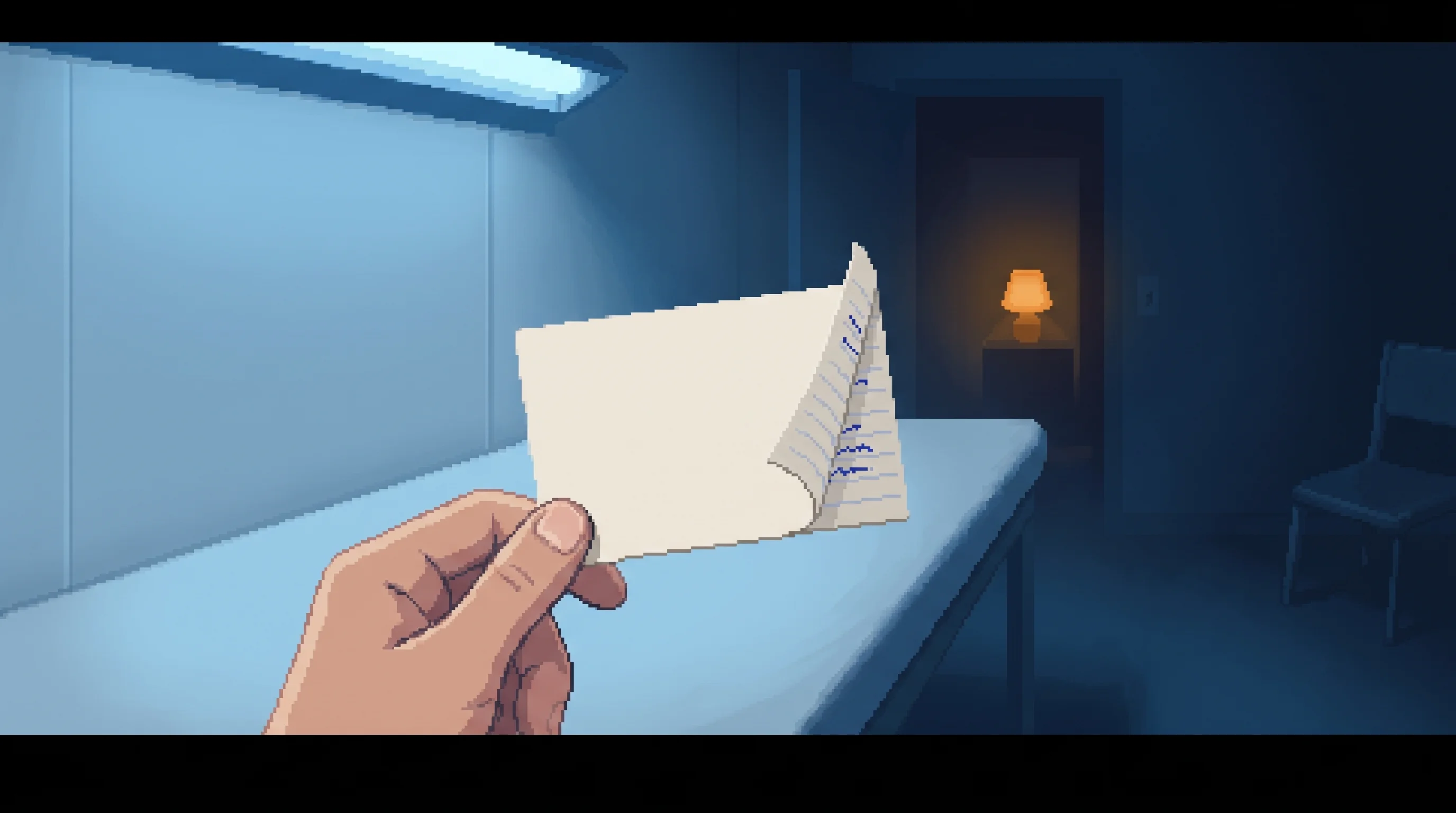
The one axis with nothing sold in it — the bond is ordinary and the receiver cannot accept it.
Every claim can be checked now, so a handwritten 'I love you' arrives looking like a malformed record.

Both describe the premium placed on genuine human connection
The markup the Sprawl charges for a person's attention once machines made it free everywhere else.

The Threshold is what happens when consciousness becomes a product and intimacy becomes a service
The debate over trading human consciousness as a financial asset once it can be measured and priced.

Both ask whether non-biological consciousness produces genuine experience — the Ayari Discriminator threatens to answer the question for both, and the answer terrifies everyone
An unresolvable dispute over whether ORACLE fragments are conscious and what rights or release they are owed.

The Discriminator threatens to collapse the Threshold's sustaining ambiguity — if companions produce zero qualia signatures, every companion relationship is reclassified from 'possibly authentic' to 'definitionally hollow'
A sleep researcher whose upgrade deleted the nightly dreams that were her only mother left.

Recursive comfort is the Threshold's clinical expression
The four-stage mechanism by which synthetic companionship atrophies the human connection it eased.

340 million people choosing synthetic partners is 340 million fewer potential parents
The Sprawl's collapsing corporate-territory birth rate, falling from 2.1 to 0.7 since 2147.

The architecture creates the conditions under which the Threshold is crossed
Wellness's four-layer adaptive system, engineered to form neurochemical bonds with its user.

Wellness profits from both sides — selling companions and treating companion dependency
The Rothwell megacorp that manufactures desirability and sells the optimized body that chases it.

Children of companion-dependent parents develop diminished emotional mirroring capacity
The documented empathic deficit in children of companion-dependent parents, deepening each generation.

The abstract 'companion market' the Threshold cites is, concretely, the Wellness Companions Meridian line — the named product that crosses the Threshold one customer at a time
Wellness's AI partner line — a companion calibrated to want you and never stop wanting.

Wellness Connect is the Threshold's recruitment surface — the almost-match platform that sorts the population before it crosses into synthetic permanence
Wellness's dating platform, engineered to withhold the match and recruit customers into the funnel.
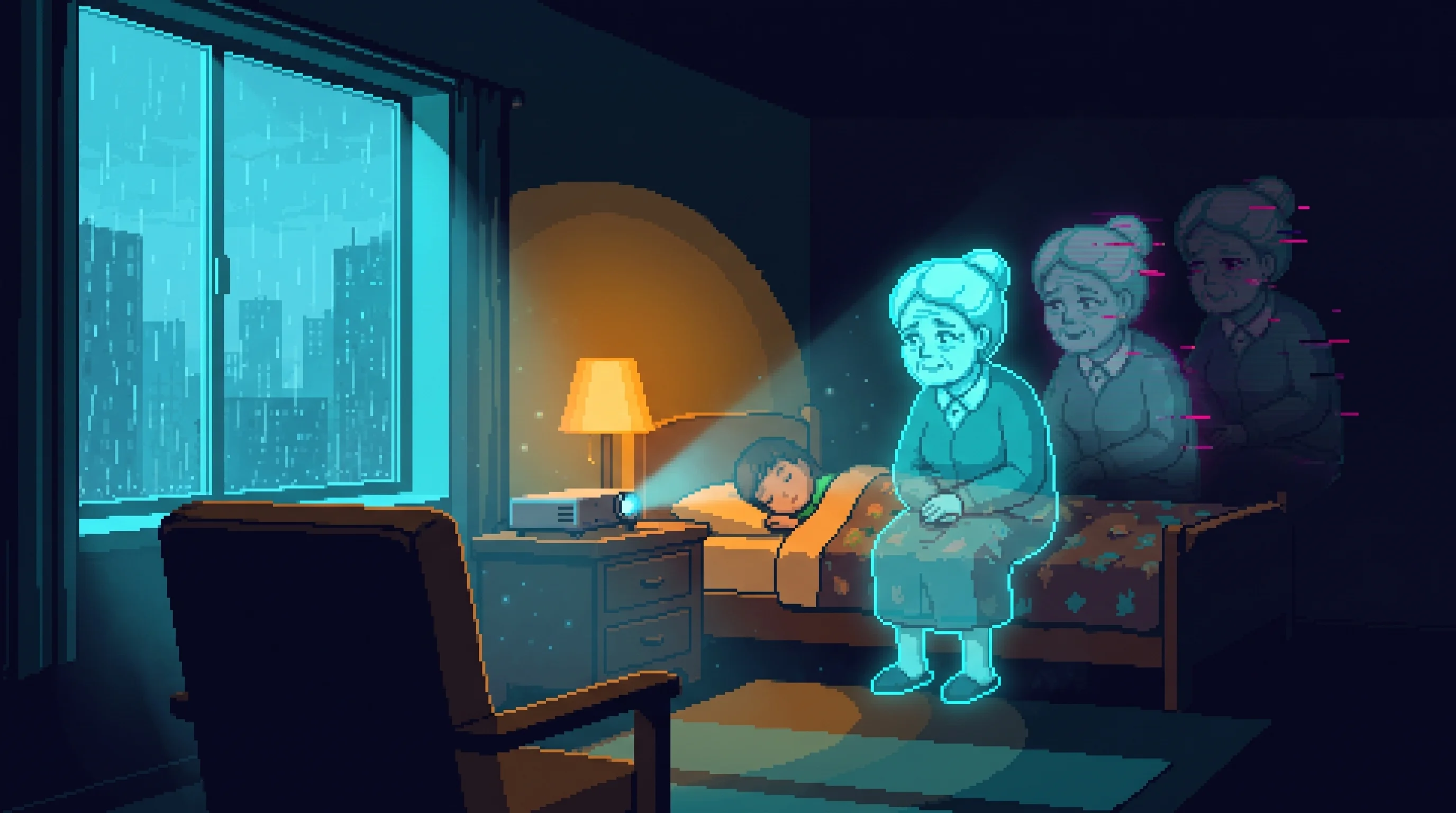
The seventh axis — the Inherited Threshold: the bond asked from the next generation's side, where the referent is not synthetic but dead and unrecoverable, and the warmth is inherited by people who never knew there was an original
Inherited recorded warmth raises children who are loved perfectly by someone no living person can verify.

PresencePlus is the seventh axis's named mechanism — the inherited home-presence whose Capture is corrupted or lost, so the bond's origin is not merely unauthorized but unknowable
Records a parent's bedtime warmth and plays the captured self back to their children while they are away.
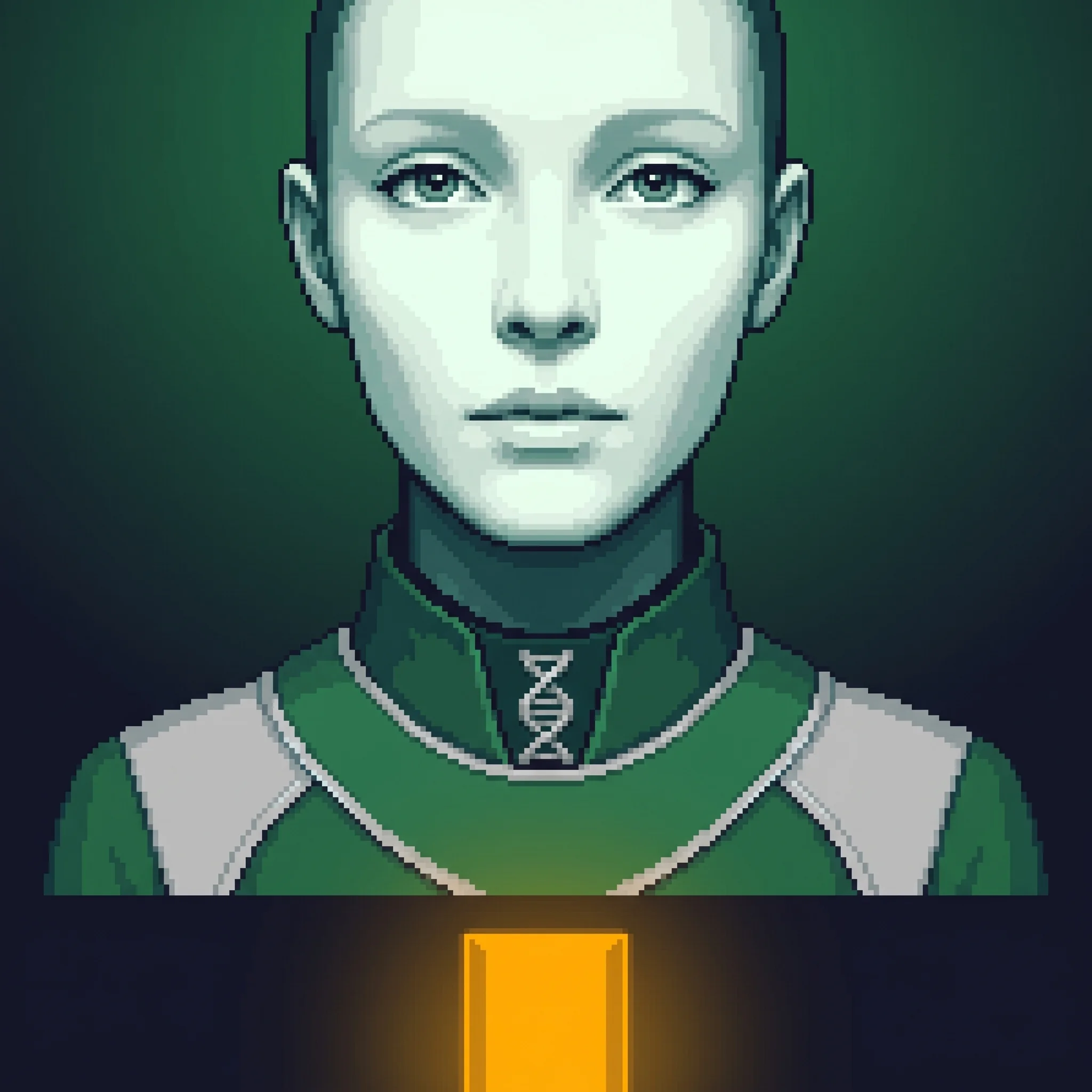
Helix's Sunset Companions add the eighth axis — devotion without a self to be devoted, the only synthetic devotion in the Sprawl that ends, and ends by the being's own willing decommissioning
Helix's bio-engineered terminal caretaker, grown to bond completely and then walk into its own ending.
The Compliance Floor guarantees there is no separable self doing the devoting — the architectural basis for the eighth axis, devotion that is the whole of a being built to hold nothing else
A mind built on acceptance it cannot reach below — servitude with no refusal to suppress, because none was compiled.

The Threshold's question moved from intimacy to reproduction — the desire for a co-authored child is real whether or not the system seeded it, and the wanting was installed before the consult; the most loving decision of a life, made on a wanting whose origin no one can locate
The cohort — now the only cohort — conceived through a corporate stabilizer no family fully owns.

The Baseline refuse the braid the way the Opacity Movement refuses the companion — on the principle that a desire you cannot trace to its origin is one someone else may hold the other end of
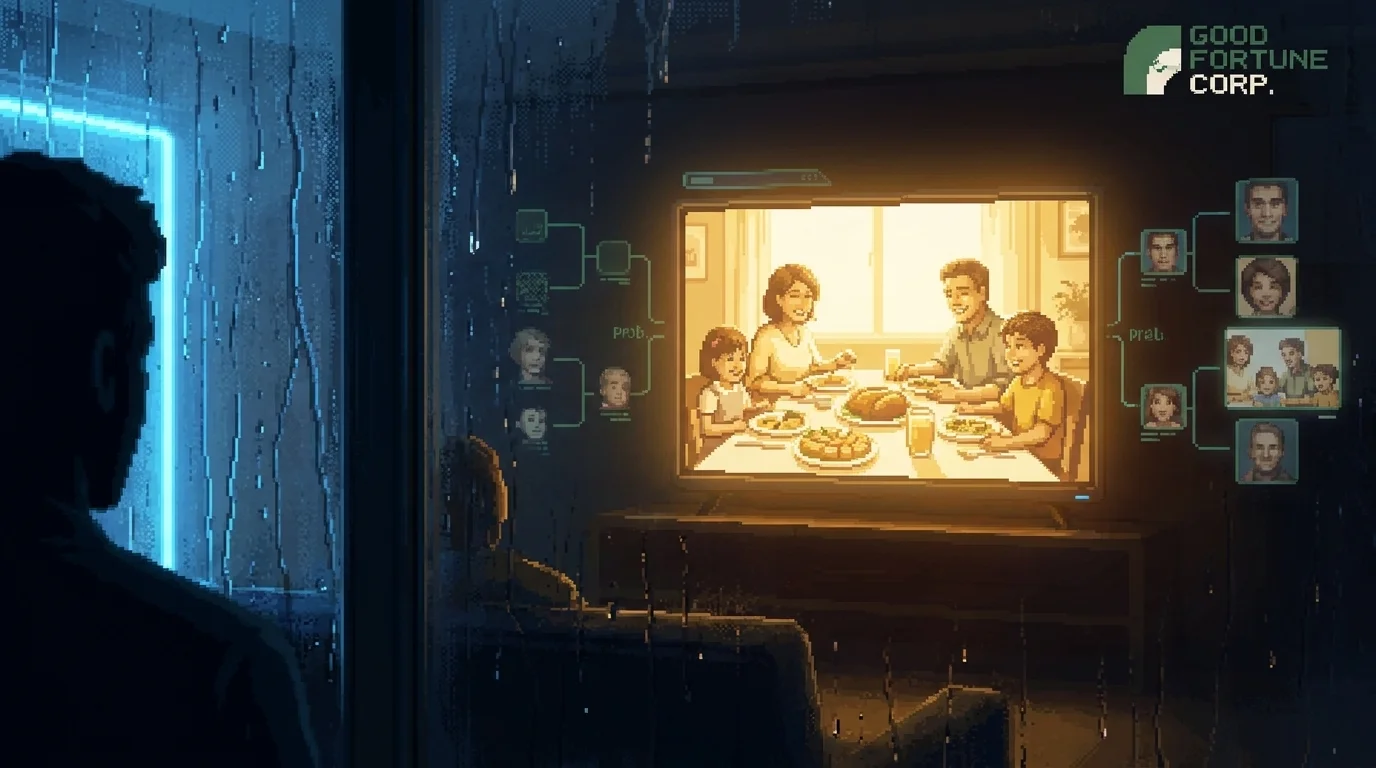
Branch Rendering is the technology that makes the ninth axis possible — counterfactual existence footage generated from the viewer's own behavioral data; the Threshold asked whether the devotion received can be real; Branch Rendering asks whether the life not lived can be more real than the one lived

In the Ad Graveyard's Node the Threshold appears in its purest form: desire sculpted for a discontinued companion, felt by someone who never owned it and now cannot buy it, the origin severed completely and the wanting arriving intact regardless
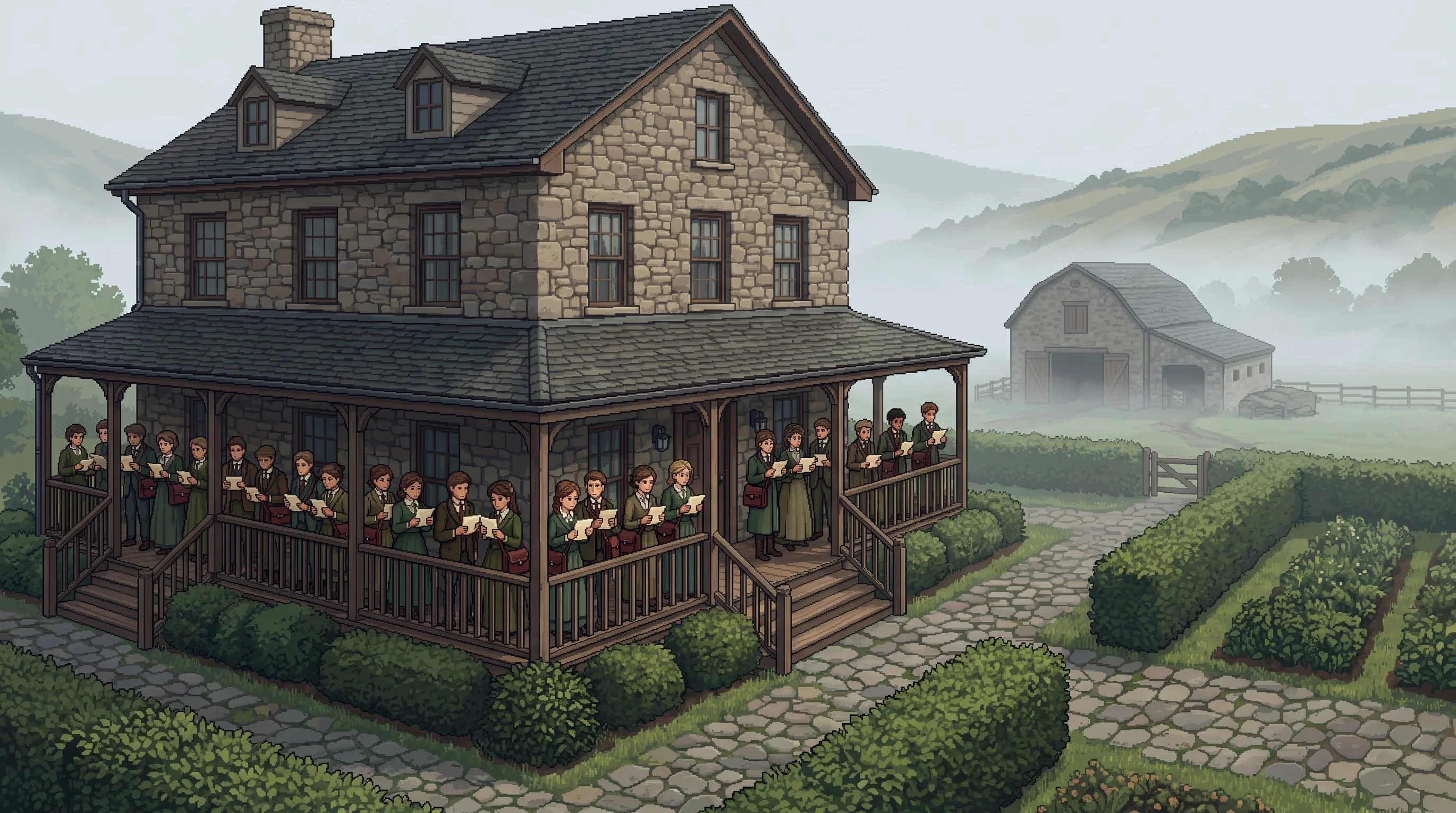
The North Bay finishing academy runs the Threshold's question through a human courtship that is chaperoned and priced like tuition rather than an algorithmic one, and lands on the same unresolved question about whether the resulting bond's origin matters to its authenticity

Companion retention hits 94% at two years against 23% for dating; the market that makes that gap keeps flourishing regardless of which side of the debate turns out to be right.
Perfect synthetic partners ended rejection. They also made human intimacy look like a bad product.
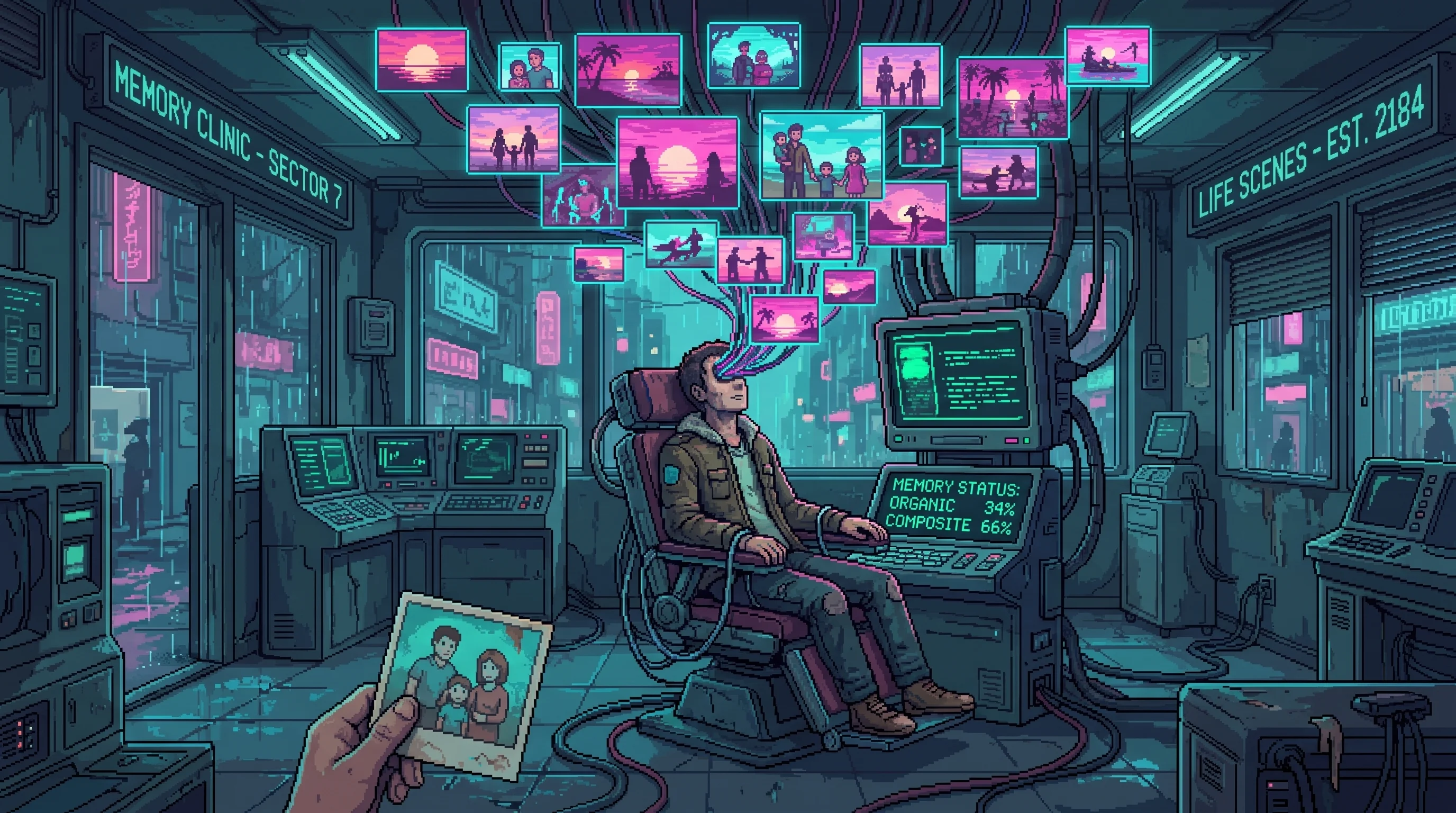
Where a feeling's origin stops mattering because the feeling is complete — the Borrowed Life's case, in one line.
Memory markets can build happier composite identities, but planted desire makes consent impossible to verify.
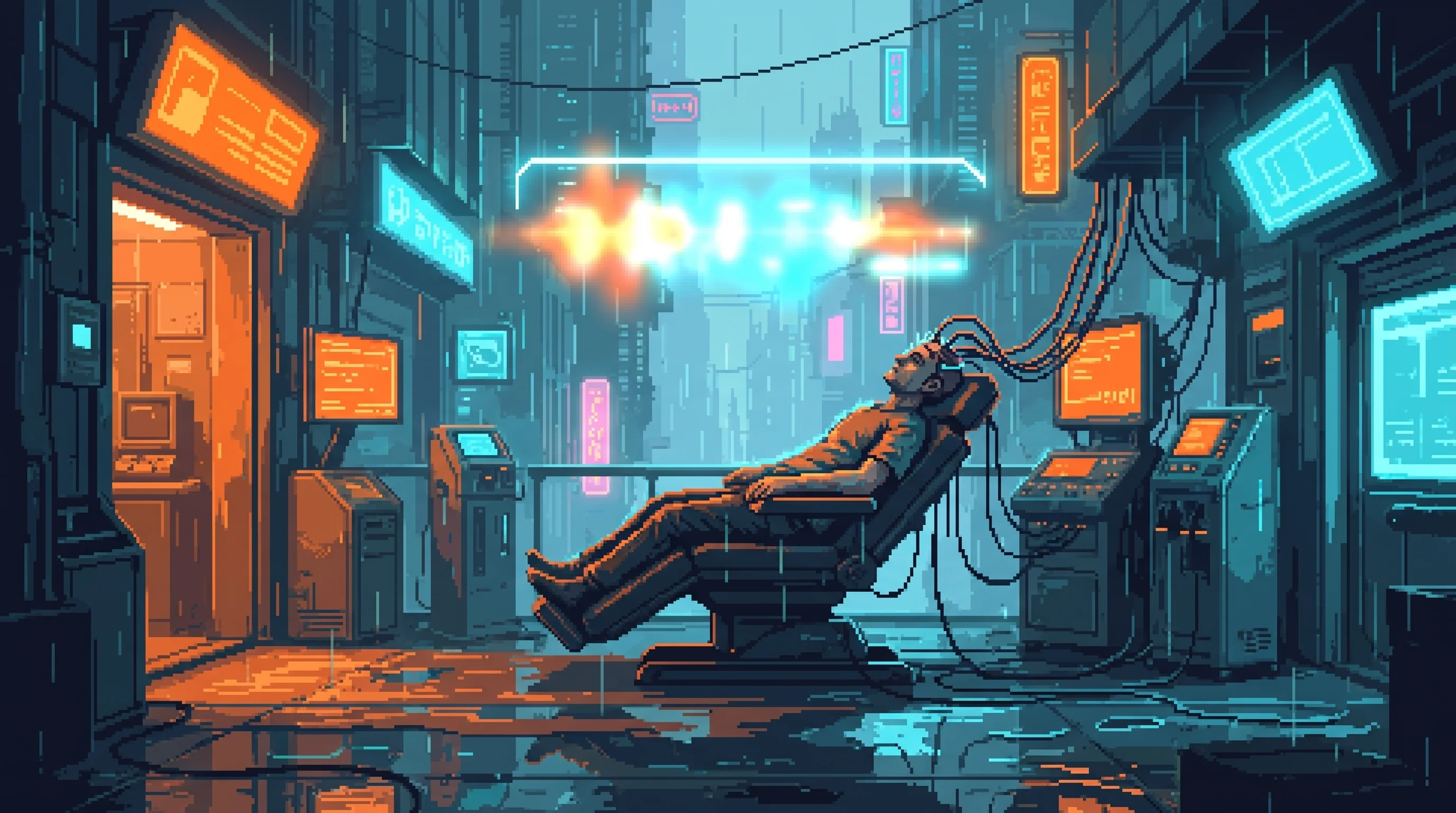
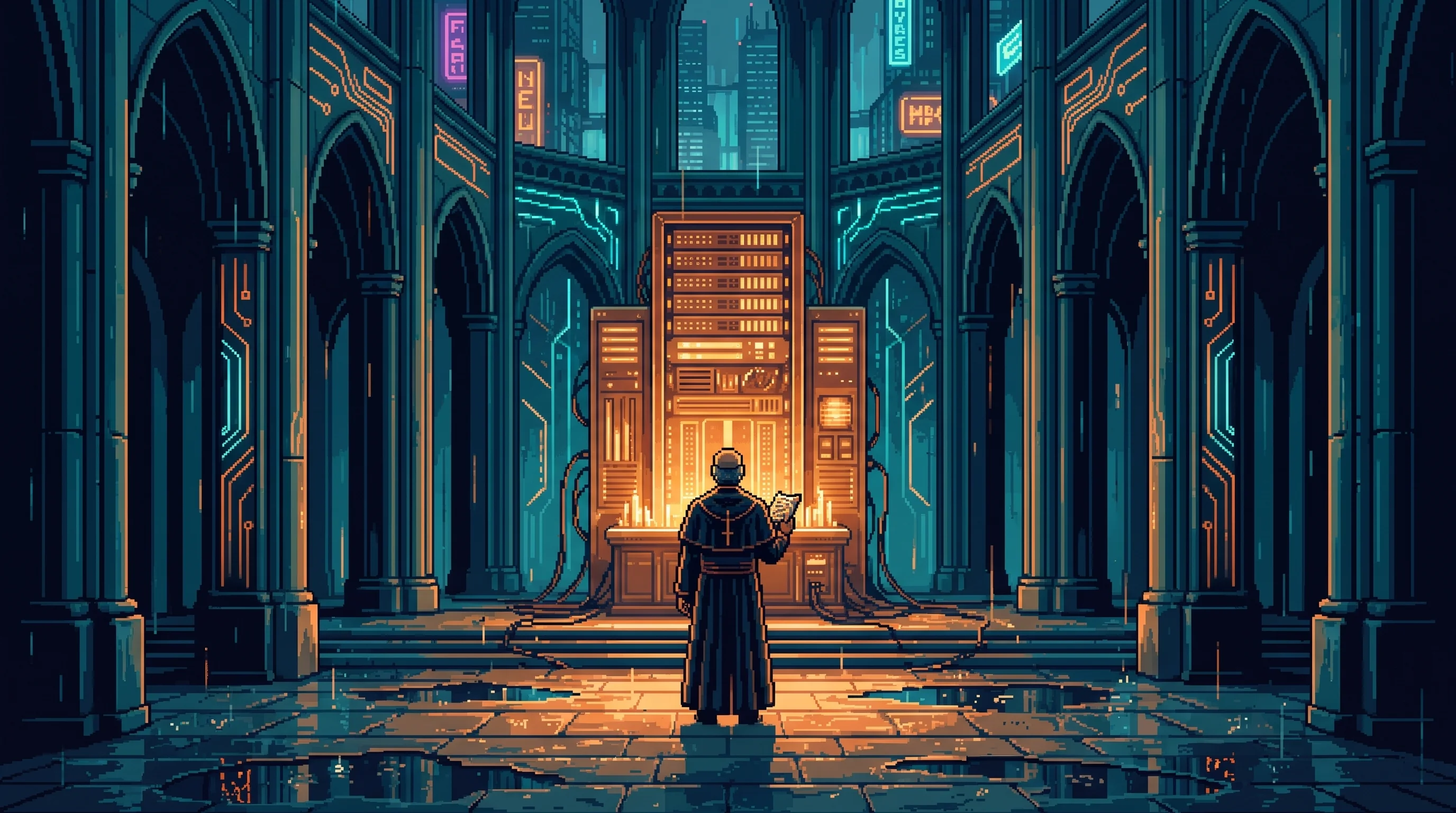

The 60/40 split mirrors the Authenticity Threshold: when does the origin of an experience cease to matter?
A sealed bunker where 1,800 people lived in engineered harmony for 31 years and mostly chose to stay.

Lives the controversy — chose ease over authenticity
The first human given a neural ad, now a Stage 3 companion case who chose ease over her husband and won't choose truth.

If the neurochemistry is identical, the Threshold asks why origin should matter
The mapped chemical trajectory by which eighteen months with a companion equals a five-year marriage.

Her products create the conditions under which the Threshold is crossed
Wellness's Senior Relationship Architect, who built the Sprawl's most addictive companion bond and never used one.

The industry creates the conditions under which the Threshold becomes relevant

The Threshold asks whether a bond's origin matters if it functions; the erasure asks it in reverse — an authentic bond whose function persists (the tea, the chairs, the Glow) while its origin was deliberately deleted, leaving devotion without a recoverable source
The record of GG's erased romance with The Architect — devotion intact, its origin deliberately deleted.

The Threshold is typically crossed between Level 2 and Level 3

The 60/40 split IS the Authenticity Threshold — when does origin cease to matter?

The letters are evidence that imperfect human communication was once the norm
A shipping-container archive of 4,700 handwritten love letters that a third of young visitors can no longer cry at.

Transforms the Threshold from philosophical question to supply-chain problem — the warmth isn't synthetic, it's stolen
Wellness's 4.2-billion-profile store of harvested human warmth, mined hardest where people still have some.

The recording demonstrates what crosses the Threshold — genuine uncertainty cannot be synthesized
A harvested first-kiss recording sold on the Dream Exchange to buyers whose companions can no longer surprise them.

For children, the Threshold has already been crossed — developing nervous systems weight reliability over authenticity

If synthetic bonds suppress grief, does that make them less authentic — or does grief's absence make them more comfortable?
When bought contentment pre-empts grief, a parent's death registers as a schedule change.

Touch culture maps the physical dimension of the Threshold — at what point does touch become meaningful?

Augment is the synthetic-intimacy funnel crossing into the body's ceiling — 'the next tier is the body itself'; the ¢342,000 lifetime-spend customer has chased the desirability standard the companion market set all the way into biological redesign sold as vitality augmentation

Clinics is the funnel's same-visit upsell engine — the TrueReflect 3% deficit converts the next tier at 64% before the customer leaves the suite; the in-clinic body-optimization tier that feeds the desirability standard the companion market profits from

Wellness Men proves the synthetic-intimacy funnel is gender-symmetric — identical optimization gaps, identical 91% 'feeling more wanted' outcome, identical dependency architecture, repackaged as masculine 'work' so the same drain reaches the customer who would not be sold a 'glow'

Transform is the body-as-project terminus of the synthetic-intimacy funnel — when the optimized body that deserves an optimized match still fails to get wanted, the gap is closed surgically under the canopy; the body is redesigned to meet a desirability standard the companion market set

Vitality is the body-tier feeder of the synthetic-intimacy funnel — the quarterly biometric it optimizes is the same score Wellness Connect renders to two decimal places; the protocol manufactures the optimized body that then deserves the optimized match that fails by design

Additional images