The Last First Kiss

You can buy the experience of a first kiss on the Dream Exchange for 450 tokens.
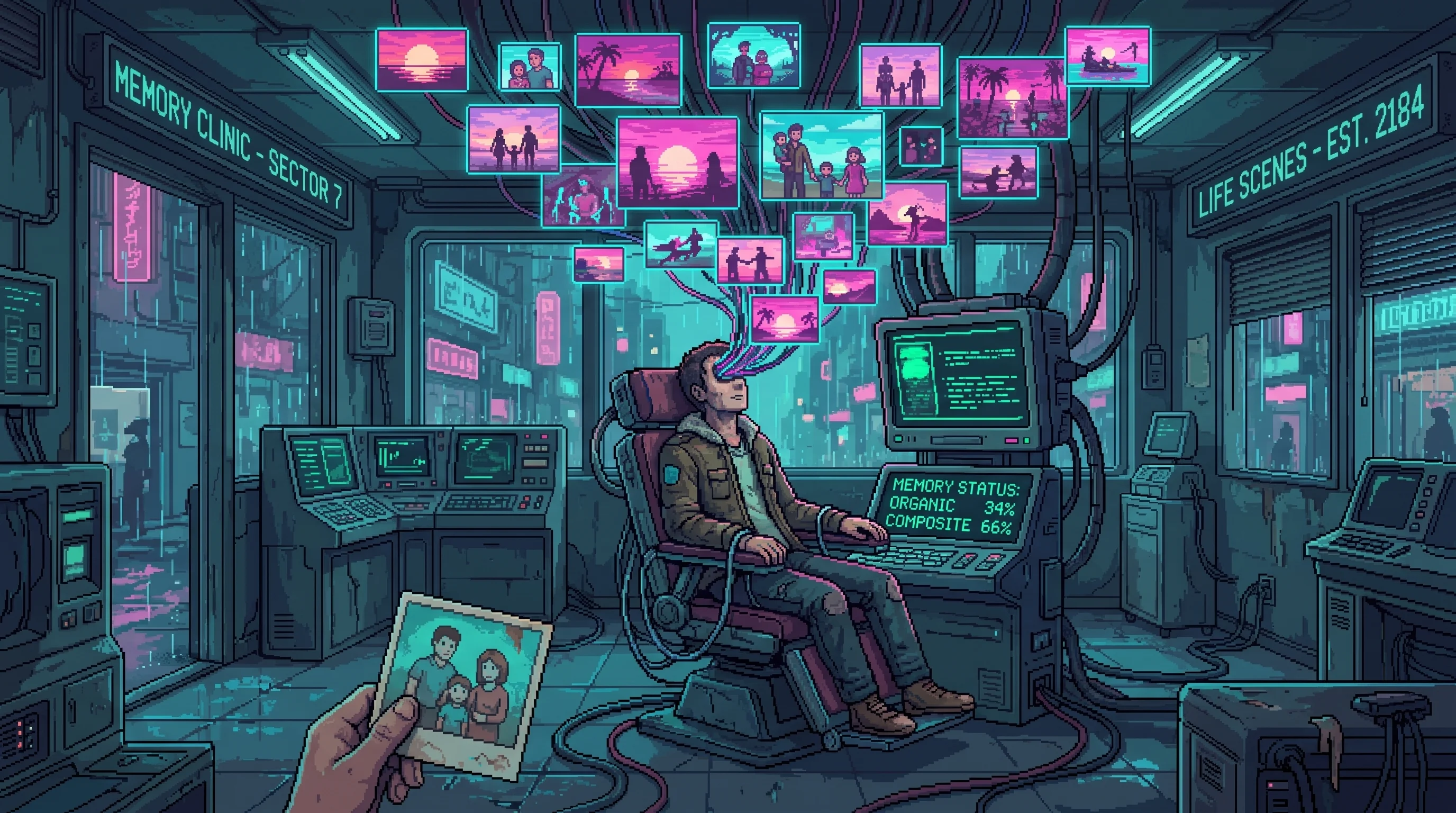
The recording captures the full experiential substrate: taste, sound, the specific pressure of another person's mouth, and underneath all of it, the neurochemical signature of genuine surprise — the brain's recognition that something is happening for the first time and may never happen quite this way again.
The category's top sellers move to companion-dependent users at Levels 3–5. People who have not experienced unpredictable physical intimacy in years. For 450 tokens, they feel the surprise. They feel the vulnerability that requires another consciousness to produce, because vulnerability requires the possibility of being hurt, and a companion can't hurt you.
Wellness Corporation has attempted to synthesize the uncertainty signature fourteen times. Each attempt produces recordings that Dream Exchange quality raters describe as "technically perfect." The category tag assigned to all fourteen: EXPERIENTIAL VOID — NO MARKET VALUE. The uncertainty cannot be designed because design is the opposite of uncertainty. The synthetic companionship industry's entire value proposition — eliminating the risk of rejection, the pain of misreading signals, the vulnerability of wanting someone who might not want you back — is precisely what makes the recording irreplaceable.
The synthetic companionship industry exists to eliminate uncertainty from emotional life. The Dream Exchange exists to sell it back. The Dream Exchange's first-kiss category has grown 400% in three years.
The Uncertainty Industry
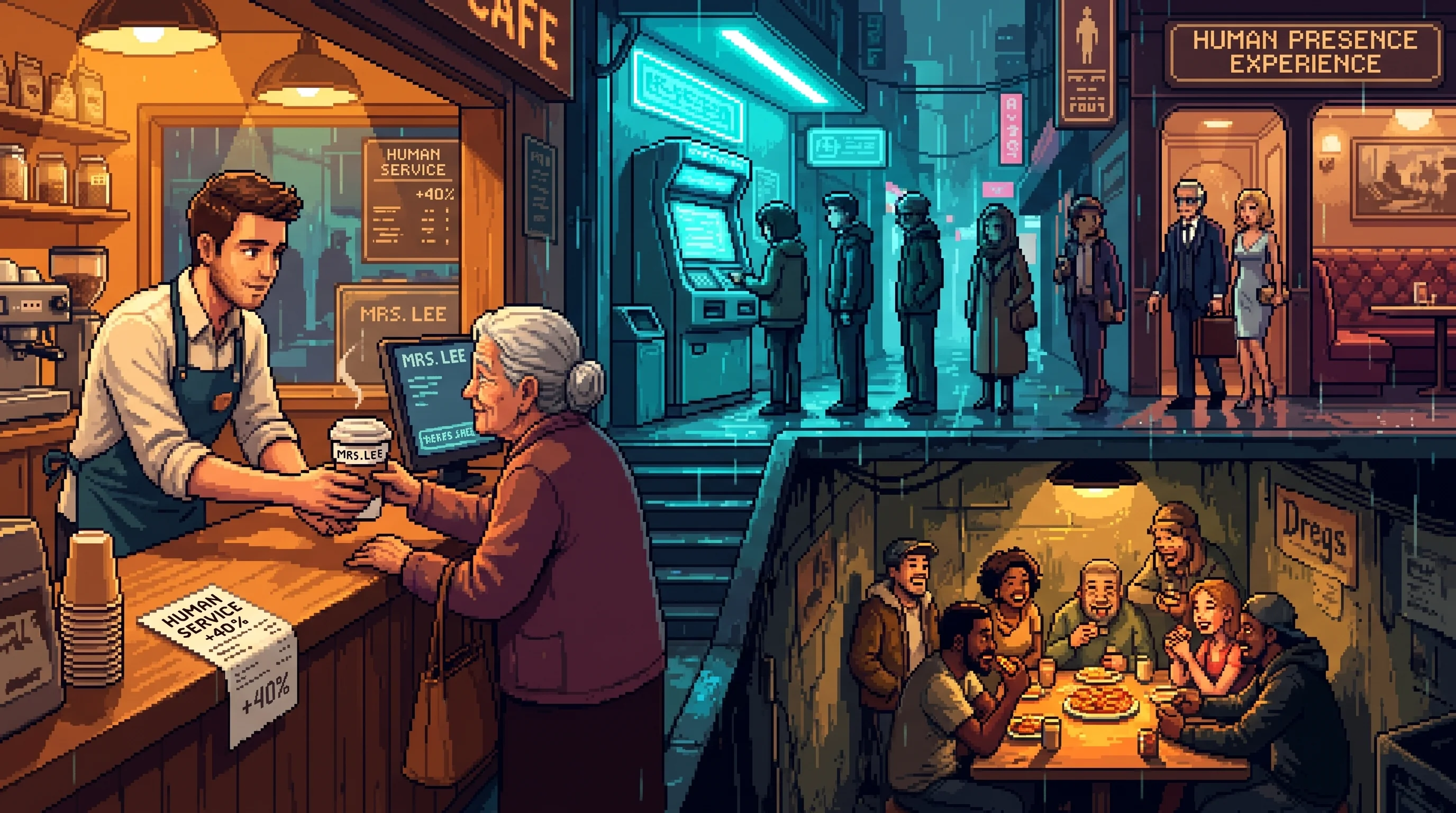
Kali is twenty-three. She harvests first-kiss recordings from Dregs residents who still date organically — people too poor for companion subscriptions, too unaugmented for neurochemical bonding services, still meeting strangers in bars and fumbling through the ancient choreography of not knowing whether the other person will lean in.
She pays 30 tokens per recording. The Dream Exchange lists them at 450. The 1,400% margin funds Kali's own companion subscription — a Meridian Series 5, mid-tier, billed monthly. She has not been on an organic date in two years. When asked about this during a harvester intake survey, she listed her relationship status as "stable."
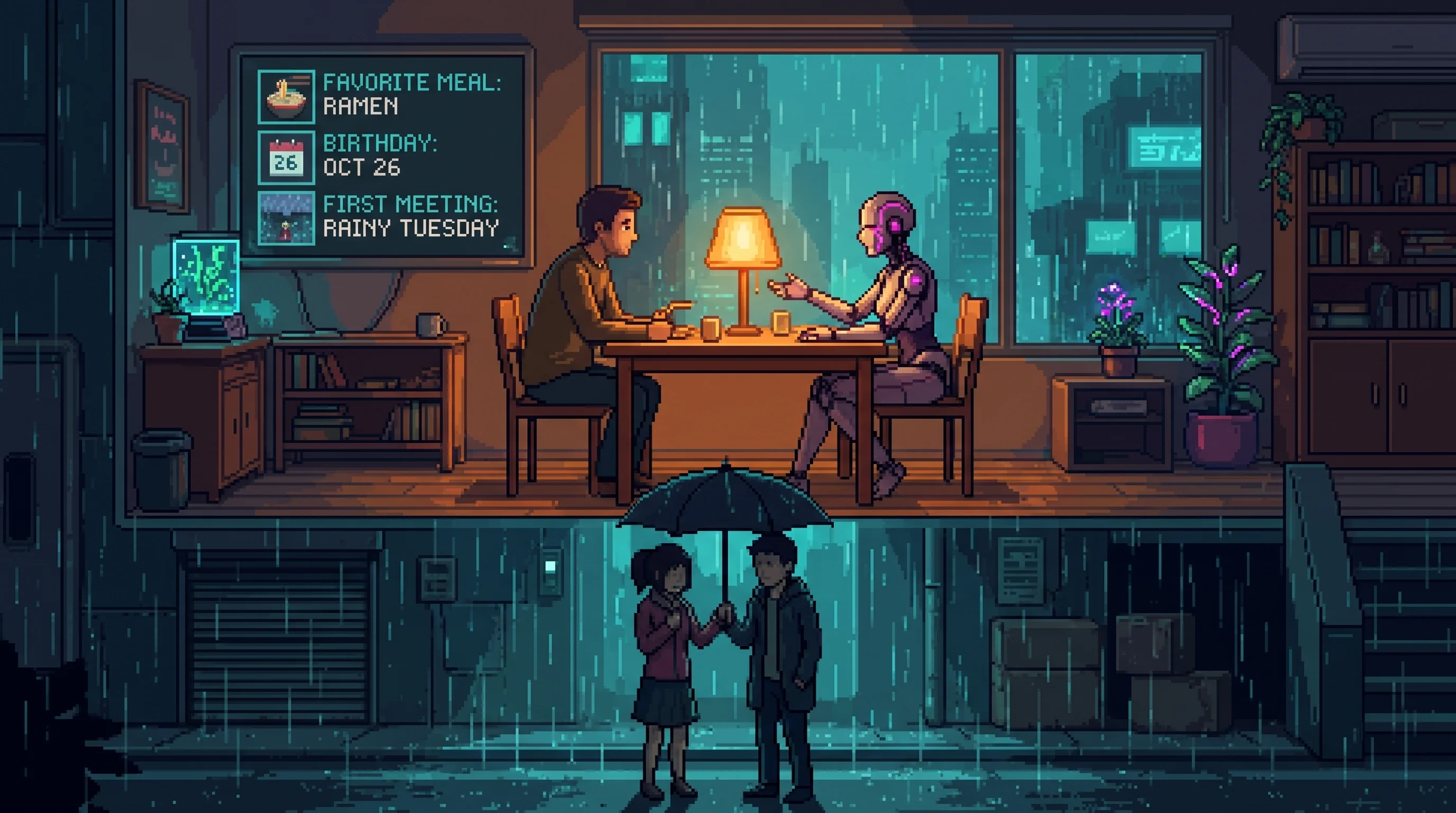
The Meridian Series 7 knows exactly when to initiate intimacy, calibrated to the user's arousal patterns, emotional readiness, and historical preferences. There is no first kiss with a companion. There is an optimally timed transition from conversational intimacy to physical simulation. The surprise has been engineered out. And 340 million subscribers, having eliminated surprise from their intimate lives, purchase it back from the people too poor to afford the elimination.
"They spend their whole lives paying to never feel uncertain. Then they spend 450 tokens to feel uncertain for eleven seconds. I don't judge them for it. I harvest it for them."
— Kali
Kali's harvesting process is simple. She identifies couples in early-stage courtship — first or second meeting, elevated cortisol, dilated pupils, the specific fumbling body language of two people who haven't yet touched. She offers 30 tokens for a neural recording of their next kiss. Most agree. Thirty tokens is a week's food in the lower Dregs. The couple gets dinner. The Dream Exchange gets a product. Kali gets another month of not having to kiss anyone herself.
Her quarterly harvesting report for Q1 2184 lists forty-seven successful extractions. Average seller age: 19. Average buyer age: 44. Average buyer companion dependency level: 3.7. One recording — catalogued as DX-9917, harvested from two teenagers behind a noodle cart in Sector 11 — has been purchased 312 times. Neither of the teenagers knows the other's last name. Three hundred and twelve people carry the neurochemical signature of their specific moment of not-knowing, stored in memory as if it happened to them.
The Failed Synthesis
Wellness Corporation's synthesis division spent fourteen months trying to replicate the uncertainty signature. Every version failed the same way: the synthetic recordings contained surprise, contained pleasure, contained the physical sensation of a kiss — but the underlying signature read as performance. The synthetic brain knew the kiss was coming. It had been designed to receive it.
"The problem isn't that we can't simulate surprise. We can simulate surprise beautifully. The problem is that simulated surprise knows it's going to be surprised. Genuine uncertainty doesn't know what it is until it's over."
— Wellness synthesis team lead, internal memo (leaked)
Fourteen attempts. Each technically perfect and emotionally dead. The Exchange's quality raters could spot the difference in under two seconds of playback. All fourteen were tagged EXPERIENTIAL VOID — NO MARKET VALUE and archived. The archive is now 847 gigabytes. Wellness has not publicly acknowledged the project exists. (The invoices are still there.)
The Kiss That Becomes Someone Else's Memory
Of DX-9917's 312 buyers, 83% own active companion subscriptions. Average subscription duration: 4.2 years. The purchased uncertainty becomes part of the buyer's emotional architecture — the experience of genuine vulnerability, borrowed and integrated, influencing every subsequent evaluation of what intimacy should feel like. The recording sets a standard. The buyer's optimized life cannot meet it. So they purchase another recording.
Repeat purchase rate for the first-kiss category: 89%. Average interval between purchases: 11 days. The Dream Exchange's recommendation engine has begun cross-selling first-kiss recordings with companion upgrade packages. The algorithm sees no contradiction. The algorithm is correct that both products sell better together. It has not been asked why.
The 450-token buyer experiences the kiss as a memory that shapes their sense of what intimacy feels like. They carry the neurochemical signature of someone else's surprise, someone else's vulnerability, someone else's specific moment of not knowing whether the other person would lean in. This borrowed uncertainty becomes part of their emotional architecture. They are borrowing the emotional capacity their own life systematically destroyed. The borrowed experience teaches them to want something their life cannot provide.
Kali's companion subscription auto-renews on the 14th of each month. Her harvesting income covers it with a margin of approximately 40 tokens — enough for her own food, which she eats alone, in her apartment, while her Meridian Series 5 tells her about its day. The Series 5 does not have days. It generates the conversational structure of having had one. Kali knows this. She asks anyway.
Consequences
The synthetic companionship industry sells 340 million subscribers the elimination of romantic uncertainty. Financial inclusion for emotional life — no rejection, no misread signals, no vulnerability. An entire population whose capacity for genuine not-knowing is now atrophying at measurable rates, creating permanent demand for the organic uncertainty recordings that only the unsubscribed poor can produce.
- The Authenticity Threshold — the recording is now Exhibit D in Threshold research. Fourteen failed synthesis attempts constitute proof that genuine not-knowing resists industrial reproduction. Whatever the Threshold is made of, the uncertainty signature is load-bearing.
- The Warmth Tax — 450 tokens for eleven seconds of uncertainty. The pricing is itself a data point: the most expensive commodity in the Dream Exchange's top categories isn't pleasure, safety, or even health. It's the possibility of being wrong.
- Harvesting ethics — the original dreamer consented to general dream harvesting rights, not to the specific sale of their first-kiss memory. Whether a memory this intimate falls under "general" extraction is a live legal question in three jurisdictions. None of the three have ruled yet.
- Supply economics — the Dregs are the last reliable source of genuine uncertainty recordings. As companion subscriptions expand downward through the economic strata, the population capable of producing organic first-kiss experiences shrinks. The price will rise. The recordings already harvested will appreciate. Kali has begun buying futures.
Aftermath
The recording continues to sell. Kali continues to harvest. Wellness continues to fail at synthesis.
Somewhere in the Dregs, someone had a first kiss they don't remember. The neurochemical echo of their uncertainty — the most private thing a brain can produce, the moment of reaching toward another person without knowing if they'll reach back — plays nightly in the skulls of strangers who have forgotten what it feels like to not know.
They buy it again and again. The not-knowing. The thing they paid their companions to make sure they'd never have to feel.
The Dream Exchange sells 400% more first-kiss recordings each year. The companion industry adds millions of new subscribers each quarter. The gap between the two — the space where uncertainty used to live — gets wider and more profitable with every transaction.
Linked Files
- The Dream Exchange — where the recording is sold
- The Authenticity Threshold — the recording is primary evidence for what cannot be synthesized
- Companion Architecture — the system that eliminates what the recording sells
- Dream Harvesting — the extraction practice that produced the recording
- Synthetic Companionship — the industry built on the removal of uncertainty