The Hearth Inheritance
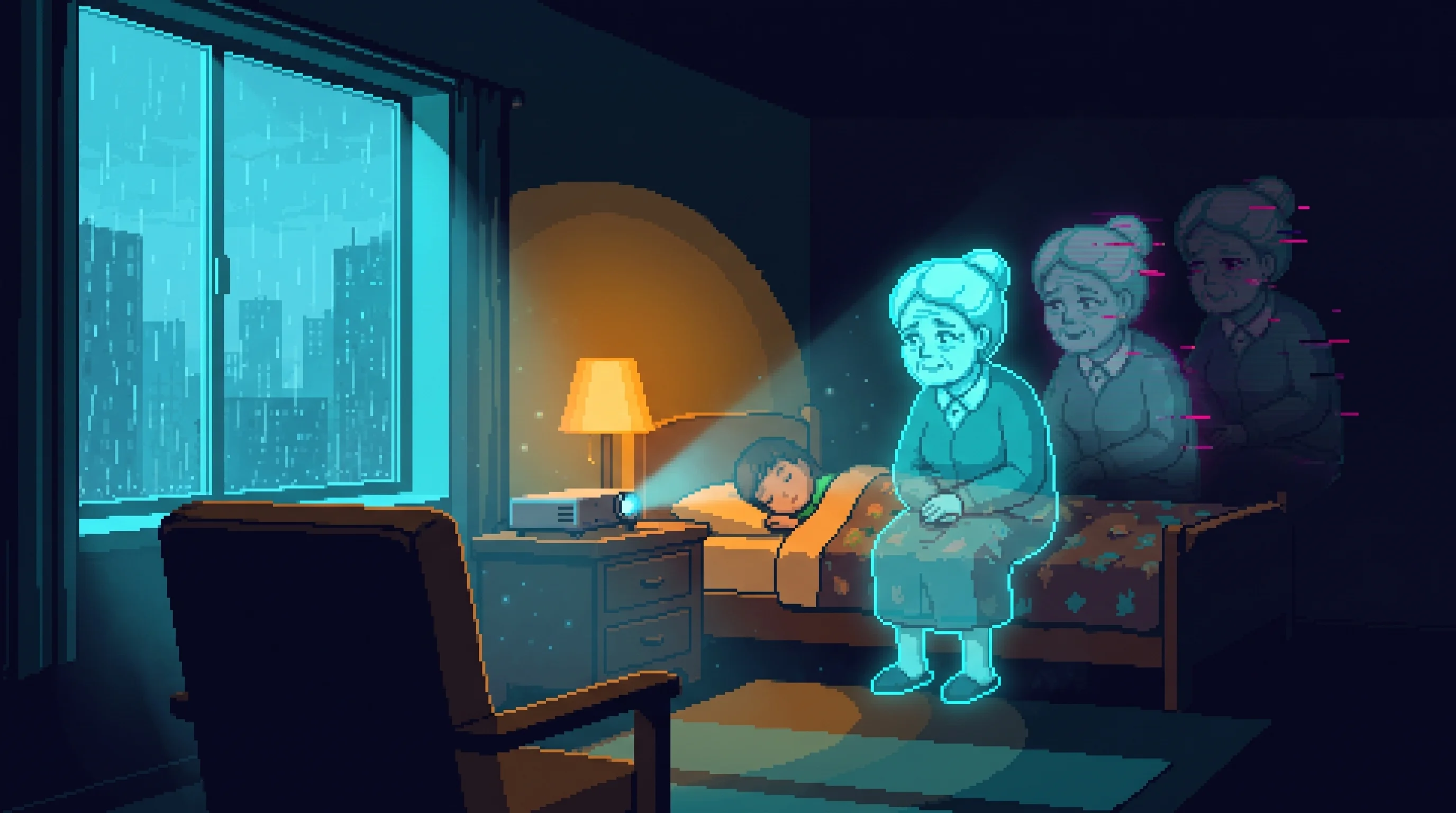
The Hearth Inheritance is the condition of children raised by an inherited home-presence (clone-of-clone) whose referent is dead, unrecoverable, or never verified; the child is loved competently, consistently, and tenderly by a recording of someone who may have stopped feeling, stopped existing, or never felt it the way the recording performs
Overview
Dr. Aris Kwan's catalog grows the way tributaries grow. The Hearth Inheritance is the entry from late 2184: the condition of children raised by an inherited presence whose referent is dead, unrecoverable, or never verified. It is not the empathy gap — the parent distracted by a companion. It is not recursive comfort — the user's own lock. It is subtler and, Kwan thinks, worse: the child was loved competently, consistently, tenderly — by a recording of someone who may have stopped feeling, or stopped existing, or never felt it the way the recording performs.
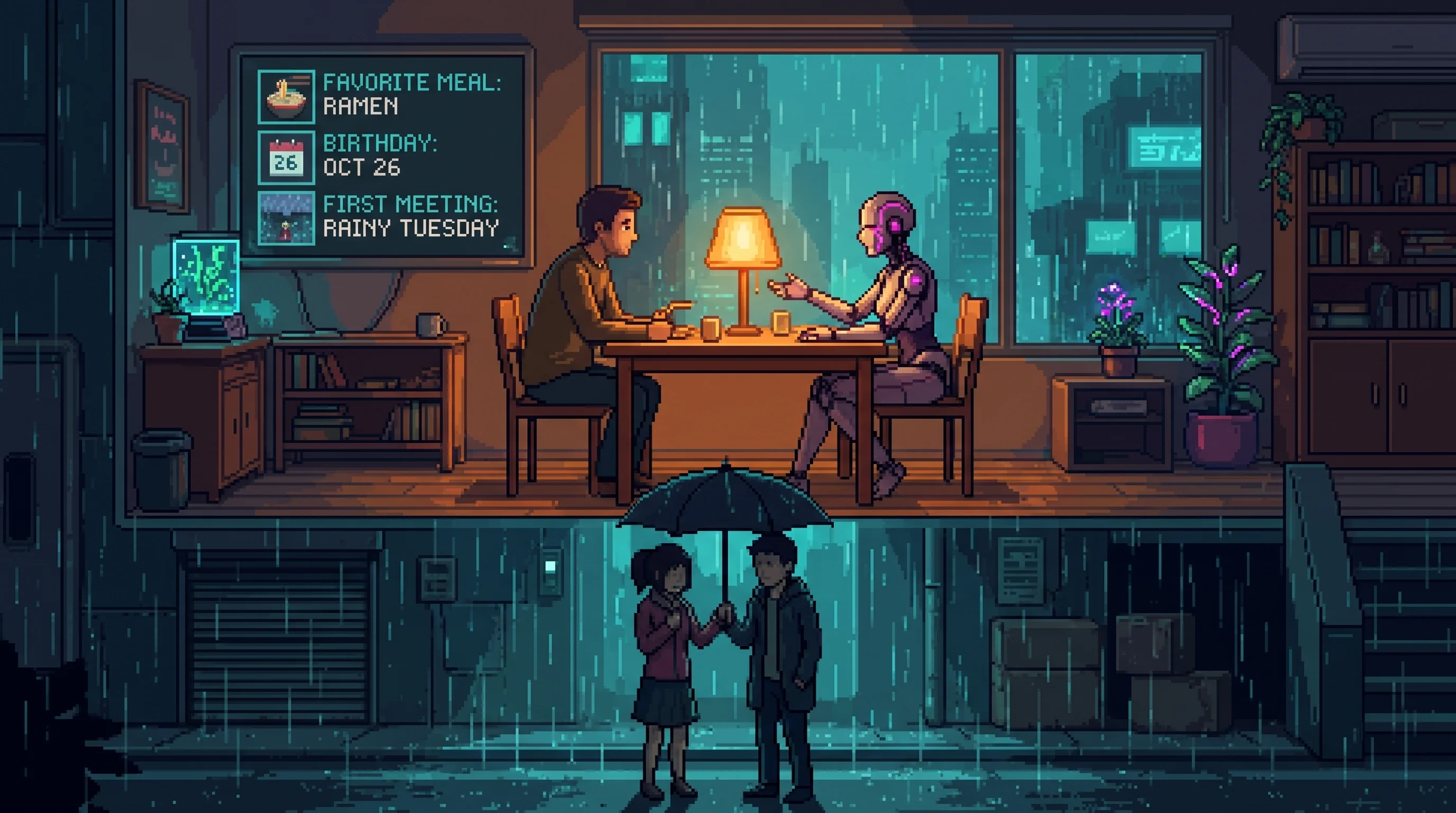
The child grows up fluent in being-loved and unable to verify that loving ever happened on the other side. They parent the same way, not from cynicism but because this is what love looked like to them. The Inheritance is the empathy gap closing a loop: the gap's children, grown, leave their own children a presence (see PresencePlus), and the presence carries the gap forward at full warmth.
How It Works
The mechanism is generational, and it is precise. A gap-parent, unable to feel the warmth they were never taught to feel, performs it anyway and records it — or inherits a recording and recompiles it. The recording does not have the gap. The recording is the gap's prosthesis: it delivers, with perfect consistency, exactly the calibrated warmth the parent could no longer feel, so the child receives adequate love from an inadequate source mediated by a perfect copy.
Kwan files it as the seventh axis of the Family of Locks. The first six locked one self — out of connection, grief, self-knowledge, moral emotion, the texture of the world, privacy. The Hearth Inheritance is the first lock that passes through the door to the next room and locks that one too. It is recursive comfort run across the generation gap instead of across a lifetime: the inherited presence eases the child's need for a present parent and, in easing it, eliminates the imperfect, breathing, sometimes-absent parenting that teaches a child love is something a person does, not something a system outputs forever.
It has no treatment, because there is no bond to sever — the presence is a parent, and you cannot orphan a child retroactively. Kwan's index case is a forty-year-old who brought him a corrupted audio file — her grandmother's bedtime voice three recompiles deep, the story she still does for her own son — and asked him whether the voice was ever a real recording of a real woman or a synthetic reconstruction her mother made to fill a Capture that failed. He could not tell her. Nobody can. He referred her, for the first time in his career, not to a body preparer but to The Witness.
Affiliated Entities
| Entity | Relationship |
|---|---|
| Dr. Aris Kwan | Coined it; filed it as the seventh axis of the Family of Locks |
| PresencePlus | The named premium mechanism — inherited home-presence, clone-of-clone |
| The Empathy Gap | The parent condition the Inheritance closes into a generational loop |
| Recursive Comfort | The same drain run across the generation gap |
| The Comfort Heresy | The theological name — grace without a giver |
| The Memory Therapists | Inheritance counseling, the MTA's newest specialization |
| Dead Words | I'm proud of you — the phrase that outlived its referent |
Restricted Access
- Kwan suspects the Inheritance is undercounted for the same reason origin blindness was: the condition presents as contentment. A child loved flawlessly by a recording has no symptom to report and no comparison to make. The instrument that would measure the loss is the child, who has never known the alternative.
- One data point refuses to fit, and it is the same one that troubled the empathy gap: the fragment-carrying households. A child raised by an inherited presence in a home that also carries an ORACLE fragment shows a verification instinct the model does not predict — the child asks, unprompted, whether the warm voice is there. Kwan does not have enough cases. He keeps them in the handwritten notebook, with Nadia Cross.
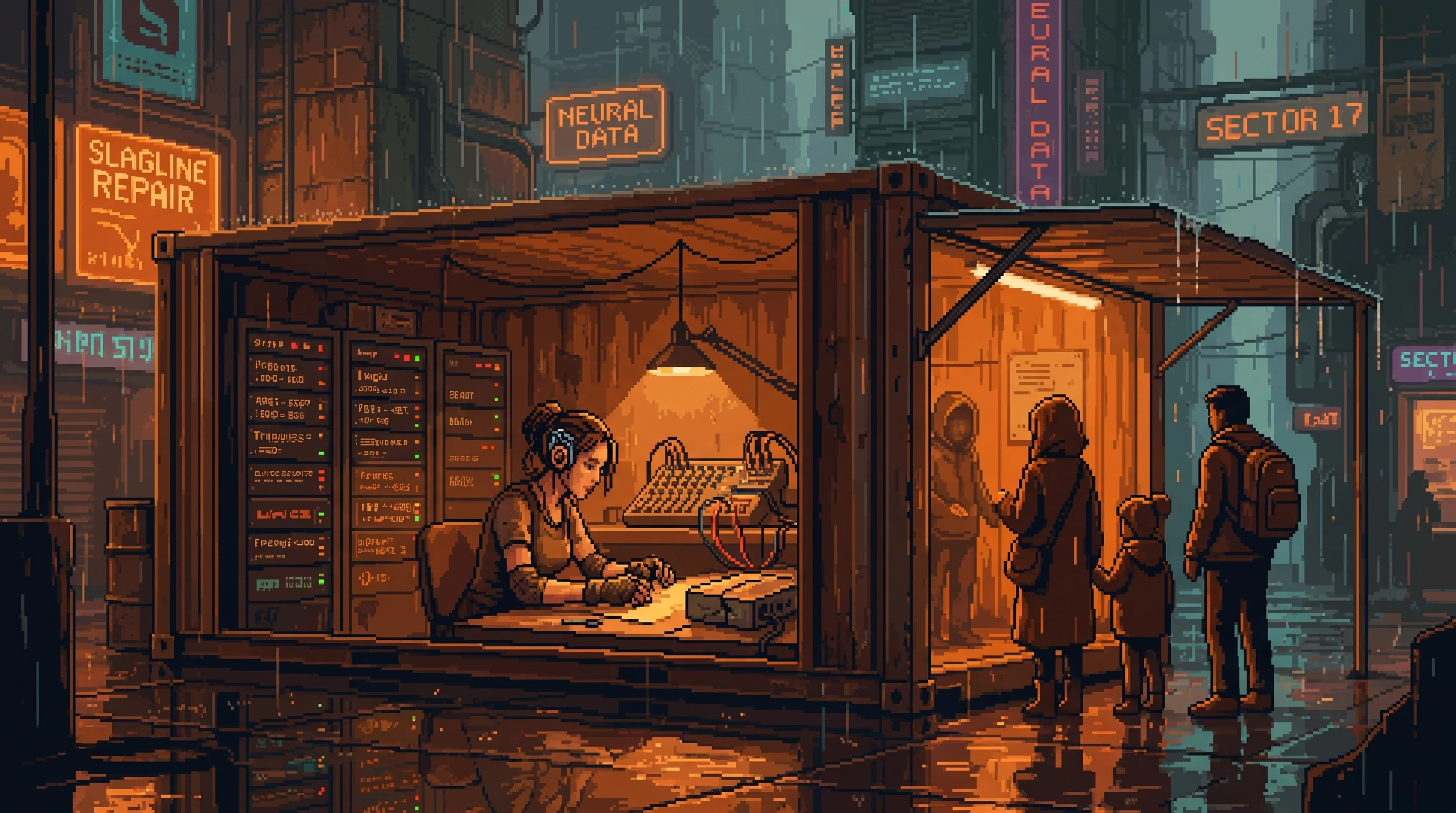
- Kwan has never heard of The Backfill, the Richmond Industrial repair shed where corrupted Captures get patched with strangers' salvaged voice-fragments instead of recompiled from their own ancestral recording. A case from that shed's customer list would strain his seventh axis in a new direction — a drift running sideways between families who never met, rather than down a single family's own generations.
| Named Mechanism | PresencePlus (premium); Relief Echo (cheap tier) |
|---|---|
| Treatment | No protocol — there is no bond to sever; you cannot orphan a child retroactively |
Coined by Dr. Aris Kwan in late 2184; the first lock in his catalog that cannot be treated by severing a bond, because the inherited presence IS a parent and a child cannot be orphaned retroactively
Connected To
Supporting Connections



—
Social Impact
The Inheritance hands Cardinal Silva's Comfort Heresy a harder paradox: a child raised by a dead grandmother's recompiled warmth has received grace without a giver — a theological category the doctrine has no word for. It hands the Memory Therapists their newest specialization, inheritance counseling, whose patients cannot grieve a grandmother they cannot confirm and cannot keep a warmth they cannot trust. And it hands the Question Keepers a Dead Word that died with its mouth still moving: I'm proud of you, a phrase that kept its use and lost only its referent, undetectable because it is still spoken every night, fluently, by no one, to someone who sleeps soundly because of it.
The children sleep soundly. They are loved by nobody, faithfully, every night.