The Memory Therapists Association (MTA)
Corporate-Funded Memory Therapists
The Mind Menders
Memory Therapists treat conditions that couldn't exist before the Cascade — memory integration, modification aftermath, identity disruption
Quick Facts
| Attribute | Value |
|---|---|
| ----------- | ------- |
| Type | Professional organization |
| Founded | 2165, formalized from informal practitioner networks |
| Membership | ~4,200 licensed practitioners, ~12,000 associate members |
| Headquarters | The Continuity Center, Zephyria |
| Specializations | Integration therapy, extraction recovery, retention disorder, origin blindness, modification counseling |
| Hotline Volume | ~2,000 calls/month |
| Known For | Treating conditions that couldn't exist before the Cascade |
| Session Cost | 200–500 credits (full practitioner), 75–150 credits (associate) |
Overview
The Memory Therapists Association is a professional organization of approximately 4,200 licensed practitioners dedicated to helping people whose minds have been edited, extracted, implanted, or otherwise treated as infrastructure.
They are very good at what they do. What they do is repair damage caused by the same corporations that license them to practice.
The MTA was formalized in 2165 from informal networks of psychologists, ripperdocs, and corporate counselors who had noticed, independently, that treating a patient whose childhood has been sold for parts requires a different framework than treating one whose childhood was merely difficult. By 2184, the Association maintains a headquarters in Zephyria, certification standards across the Sprawl, and a founding charter that opens with the line: "We exist because human consciousness has become mutable, but human suffering has not." The charter is displayed in every MTA waiting room. Beneath it, in most Nexus Central offices, hangs the corporate licensing agreement that determines which kinds of suffering the practitioner is permitted to address. The two documents have never been formally reconciled.
The MTA walks an impossible line: providing healing in a system designed to commodify minds. Their annual report uses the phrase "patient-centered care" 147 times. Their revenue breakdown shows 61% of practitioner income derives from corporate wellness contracts. The remaining 39% comes from private patients, most of whom were damaged by the programs those corporate contracts support.
Nobody at the MTA finds this contradictory. The ones who did left during the Schism of 2176.
The Three Founders
Dr. Elara Okonkwo (2098–2181) watched ORACLE-integrated patients experience simultaneous memory cascade failures in a Lagos hospital that lost power during the Cascade's first hours. Mass psychological trauma with no precedent, no treatment protocol, no name. Her paper "The Fragmented Self: Treating Memory Discontinuity" gave it all three. Every MTA practitioner trained since 2166 has read it. Most cite it in their first session notes. Okonkwo herself considered it "a field guide to a country I hoped wouldn't exist for long." It has been in continuous print for nineteen years.
Marcos "Ghost" Delgado (2107–2172) was a Sector 3 ripperdoc who noticed his memory extraction clients developing a specific syndrome: they remembered selling their memories but couldn't process the loss. The self built on those memories partially collapsed, and the collapse looked nothing like any existing diagnostic category. His protocols for extraction counseling remain standard practice. Delgado was assassinated by unknown parties in 2172 — suspected corporate retaliation for his advocacy against forced extraction. His case file remains open with the same investigative priority as approximately 4,000 other unsolved murders in Sector 3 that year.
Dr. Sun Wei-Lin (2095–present) defected from Nexus after witnessing the development of coercive memory interrogation techniques. She is 89 years old. She serves as the Association's ethical conscience, which in practice means she is the person who says the things the charter says and watches the room decide whether they can afford to listen. Her understanding of how corporations weaponize memory modification shaped the MTA's advocacy positions. Her understanding of how corporations fund memory therapy shaped her expectations about how far that advocacy would get.
What They Treat
The MTA treats conditions that couldn't exist before the Cascade. This is their founding purpose, their professional distinction, and their market niche. The conditions keep multiplying faster than the treatment protocols.
Integration Therapy
Implanted memories arrive without context. A surgical skill package provides the knowledge but not the years of residency. An emotional implant provides the grief but not the relationship that earned it. The recipient knows something that "they" never experienced.
Dr. Chen Mei-Ling received a surgical skill package after neural damage ended her natural training. She could perform procedures perfectly. She described it as "my hands know what to do while I watch." MTA therapist Dr. Yusuf Osei spent three years bridging the gap between Chen's identity and her hands. Her testimony before the Corporate Medical Board — describing what it's like to possess skills you didn't learn, to save lives with borrowed competence — changed industry approaches to skill implantation counseling. The feeling she described has since entered MTA clinical vocabulary as "the borrowed hands feeling." It appears in 23% of integration therapy case notes.
Treatment approaches include bridging (connecting implanted memories to genuine experience), ownership transfer (claiming borrowed memories as authentically yours), and dissonance management (living with the awareness that some of what you know was purchased). The success rate is encouraging. The demand is accelerating faster than the success rate.
Extraction Recovery
Memory extraction leaves holes. Some are obvious — gaps in timeline, missing people. Some are subtle — emotional responses that no longer have sources, skills that rely on deleted training memories, a flinch at a sound you can't explain.
Marcus Webb sold his combat memories to survive the aftermath of the Three-Week War. He came to the MTA unable to understand his own trauma responses. He would panic at triggers he couldn't remember. Therapist Elena Cruz spent two years helping him process trauma he no longer remembered experiencing. Her paper "Trauma Without Memory: A Therapeutic Framework" is required reading for MTA certification. The paper's central finding: the body remembers what the mind has sold. The market has no mechanism for extracting flinch responses, elevated cortisol, or the way a hand reaches for a weapon that memory says was never carried.
Retention Disorder
Under legal retention orders, natural memory processing can't occur. Memories can't fade, can't be recontextualized, can't soften at the edges the way healthy memories do over decades. The patient carries unchangeable trauma at full resolution indefinitely.
One patient — identity sealed, case number 2167-RC-001 — is among the few living Cascade survivors legally required to preserve their 72-hour memory since 2147. Twenty years of unchanged horror at full sensory fidelity. The MTA therapists assigned to the case rotate every eighteen months to prevent burnout. The patient continues to function. The word "function" is doing considerable work in that sentence. The case is cited in MTA training as evidence of what therapy can achieve under forced retention, and in MTA advocacy materials as evidence of what forced retention does to the people therapy is trying to help. Both uses are accurate.
Treatment includes compartmentalization training, temporal anchoring (creating equally vivid positive memories as counterweight), and meaning reconstruction (changing what the memory means without changing the memory itself). Some practitioners prescribe emotion-dampening pharmaceuticals. This is controversial within the MTA. It is effective. These two facts coexist without resolution.
Origin Blindness
The MTA's newest specialization, developed in response to Dr. Aris Kwan's identification of a condition that has no symptoms.
Origin blindness is the clinical inability to distinguish between preferences formed through lived experience and preferences installed through algorithmic interaction. Unlike memory implantation, which patients know occurred, or extraction, which leaves identifiable gaps, origin blindness presents as contentment. Patients are functional, satisfied, and unaware. They arrive at the MTA not because something feels wrong but because something feels uncanny — a persistent sense that their life, while pleasant, is being lived by someone who happens to share their body.
Kwan's diagnostic methodology — the Origin Trace — maps preference provenance: tracing each stated preference to its origin event or flagging it as potentially installed. The finding that restructured the MTA's understanding of its own mission: the average Professional-tier employee shows 34% organic preference content by age 30.
Among Dregs residents: 91%.
The gap is the Borrowed Life measured in identity. The people who can afford MTA treatment have the least organic selfhood left to treat. The people with the most intact identities can't afford a session.
Treatment involves structured backward-tracing through memory architecture, guided exposure to novel experiences without AI mediation — patients visit Dregs markets, attend Analog School events, sit in the Noise Floor — and a daily practice Kwan calls "the 34% exercise": identify one preference you can trace to a specific lived experience. Build awareness of the distinction between organic wanting and installed wanting. The distinction, once visible, cannot be unseen.
Some MTA members argue that origin blindness treatment is paternalistic. Installed preferences produce genuine satisfaction. Demonstrating their algorithmic origin causes harm without benefit. Kwan's response, delivered at the 2183 annual conference to a room that did not applaud: "The satisfaction is real. The agency is not. A person who doesn't know why they want what they want is a person whose choices are being made for them." The room's silence was noted in the conference proceedings as "extended discussion."
Conviction Blindness
The MTA's newest and hardest specialization, and the one that has divided the Association more sharply than the Schism of 2176.
Origin blindness, as Kwan first mapped it, operates on preferences — tastes, brand loyalties, the architecture of wanting. The Axiom Market raised the stakes by selling the same installation one register deeper: not what a person wants, but what they believe — faith, politics, their peace with their own circumstances — manufactured by The Conviction Wholesalers and bought in cohort-scale lots by buyers who never meet the rewritten.
The Origin Trace works on conviction the way it works on preference: a real belief has a rough origin — the day it was almost the opposite, the fight, the doubt — and an installed conviction arrives seamless, a wanting with no first chapter, a certainty with no other side. But the treatment does not transfer. Kwan's clinical note, circulated among practitioners and never published, names the wall: "With preferences, the Excavation gives the patient back a self that wanted different things. With convictions, I am asking a person to grieve the self that believed different things — and the installed self, who is satisfied, does not want to grieve, and is not wrong to refuse."
The Contentment Package is the case the MTA cites in every training cohort. A patient sent to the Continuity Center after a Package — usually by a relative who noticed the light go out — presents as enlightened. Satisfied with everything. The Origin Trace flags it instantly: the contentment has no origin, no day it was earned, no circumstance it was a response to. The Excavation has, to date, succeeded in restoring the capacity to mind something in roughly one in five Package patients, and four out of five of those, having regained the ability to object, ask the therapist to install the contentment back. The MTA has no protocol for that. It has a debate, at every annual conference, about whether it should.
Inheritance Counseling
The MTA's newest specialization, opened in late 2184 after Dr. Aris Kwan's identification of the Hearth Inheritance, helps people who were raised by an inherited home-presence — the PresencePlus Capture, recompiled clone-of-clone down the family — decide whether to verify, recompile, or release it. The treatment has no protocol, because the patient's grief has no object. They cannot grieve a grandmother they cannot confirm. They cannot keep a warmth they cannot trust. The most common presenting complaint is not sorrow but a specific vertigo: I was loved every night and I do not know by whom, or whether anyone was there at all.
MTA practitioners report that the verify path is the cruelest. A high-fidelity restore can sometimes recover enough of the original Capture to determine whether it was a real recording of a real ancestor or a synthetic patch — and roughly a third of the time the answer is the one no patient wants: there was no ancestor in the file, only a generic warmth model the studio used to fill a gap, and the grandmother the patient bedtimed their own children with was never anyone. The MTA charter line gets a new gloss in the inheritance-counseling case notes: human warmth has become inheritable, but human love has not. Sixty-one percent of practitioner income still comes from the corporations that built the presences. Nobody at the MTA finds this contradictory.
Branch-Grief Intake
The MTA's most recent intake category has no protocol because no practitioner has agreed on whether one is possible.
Branch-grief — named by Kwan in February 2184 as the eighth lock in his Family of Locks catalog — arrives through referrals from Good Fortune's Branch Studios Palliative Wings. The clinical presentation: a terminal patient who has been watching Branch Rendering footage of their unlived counterfactual life, generated from their own behavioral data, and who can no longer evaluate their actual life without measuring it against the Rendering. The unlived life is better. The actual life is what they have left.
The treatment challenge is structural. Every other entry in the MTA's catalog assumes a practitioner can, with enough work, return the patient to a state closer to their actual self. Integration Therapy helps borrowed knowledge feel authentic. Extraction Recovery finds where the body's memory persists. The Excavation traces preferences to their origin. Inheritance Counseling helps patients decide what to keep. All of these have a direction: toward. Branch-grief intake has no toward to offer. The patients are dying. Their unlived Rendering has become their primary relationship. There is no bond to sever without removing the last comfort they report.
Dr. Sun Wei-Lin, reviewing the first three referrals from Branch Studios, declined to open a formal intake protocol. Her note: "We treat people whose minds were edited by others. These people invited the editing, had their data volunteered back at them in counterfactual form, and are now in a place where the counterfactual is the only life that feels like it matters. I do not know if that is a patient or a testimony. I know it is not anything the charter's treatment framework was designed to address." The MTA ethics board has met twice about the Branch Studios referral pipeline. Both meetings ended without a policy position. The third meeting is scheduled. The referrals continue arriving.
Modification Counseling
Alexandra Vance deleted fifteen traumatic memories over six years. Each deletion was voluntary, informed, MTA-counseled, and expected to bring relief. Each time, secondary effects worsened her condition — the networked nature of memory meant each removal destabilized connections to surviving memories, creating new distortions that prompted new deletions. Dr. Park Jae-Won documented the progression in "The Cascade of Forgetting," a title the MTA's publications board debated for three months before approving.
MTA data shows counseled patients experience 40% fewer regret episodes than non-counseled patients. This is cited as justification for continued involvement in modification. At current volume, 40% fewer still means approximately 1,200 preventable regret cases per year. The number appears in the annual report's appendix. It has never appeared in the summary.
The Four Seconds
This entry in the MTA's intake taxonomy does not have a number, because nobody is sure it is a disorder. It comes from clients of the Axiom Edit — the gray-market procedure on Axiom Row by which a person installs, sober and consenting, a conviction they currently reject. Alexandra Vance deleted memories and was destabilized by the network effects. The Axiom Edit's clients do not delete anything. They install belief, cleanly, exactly as ordered. And then they come to the MTA anyway.
They come because of the four seconds: the window each morning, after waking and before the installed conviction loads, in which the pre-edit self briefly returns. The man who edited out a name — a recurring figure in MTA case notes, anonymized — paid to stop loving the woman who left him, and now sets his alarm four seconds early to have the four seconds. The intake category the practitioners have begun writing in the margin is grieving the self you paid to remove. It does not fit Integration Therapy (nothing borrowed), Extraction Recovery (nothing extracted), or Modification Counseling (no cascade, no regret about the procedure — the client would choose it again). The treatment protocols do not exist because the condition is not damage. It is a person seeking custody of a self they consented to overwrite, and the MTA's entire framework assumes the patient wants to be whole, when this patient wants, specifically, the four seconds where they are not.
Dr. Sun Wei-Lin reviewed the first dozen cases and declined to assign them a diagnostic code. Her note, circulated and unpublished: "We treat people whose minds were edited against their will. These people edited their own and want the seam back. I do not know if that is a patient or a philosopher. I suspect the difference is what the whole Association was built to avoid deciding."
Reception, Unscored
Verification vertigo opened in 2183 with no procedure behind it. The patients were raised under complete ledger coverage, and the Atrophied Leap is what that left. The test is a claim handwritten on unlogged paper by someone the patient knows. Results are filed as reception, unscored. Dr. Sun Wei-Lin declined to write a protocol: "The treatment is being trusted. I cannot prescribe another person's decision to trust my patient."
The Untreated Population
Every specialization above assumes the patient reached a session. MTA intake data does not track who never does, but the count kept on Substrate Row does: Cognitive Bandwidth Brokers, the black-market consciousness network whose amber-circle clinics perform unlicensed memory modification at a fraction of MTA rates, report three of their five annual fatalities from that single service line, one their protocol appendix covers in fourteen pages and no clinical training.
Neither organization has ever referred a patient to the other. The MTA does not send clients to Substrate Row, and Noor Bassam's brokers do not send anyone to the Continuity Center. No audit exists comparing how many of Kwan's 34%-organic Professional-tier patients and the CBB's Dregs clients are, structurally, the same population studied from opposite ends of the affordability gap. One group can pay 200 to 500 credits a session and rarely needs to ask what an installation did to them. The other cannot, and finds out only when an amber-circle incident report starts using the word aftermath.
The Schism and Its Aftermath
In 2176, a faction within the MTA demanded the Association prohibit all corporate employment for its members. The argument was structural: therapists working for corporations that cause memory damage are treating symptoms while maintaining the disease. Every corporate wellness contract funds the institution that created the need for the contract. The feedback loop is visible to anyone willing to look at it.
The vote failed 55–45.
The losing faction — the "Purity Caucus" — still exists. They argue that corporate-affiliated members should have restricted voting rights. The winning faction — everyone else — argues, per Dr. Sun Wei-Lin: "A therapist inside Nexus can do more good than a purist outside it." Sun Wei-Lin delivered this line at the 2176 conference with the specific weariness of someone who believes what she's saying and knows what it costs.
The 55% who voted to maintain corporate access include the practitioners whose corporate income subsidizes their sliding-scale Dregs patients. The 45% who voted against include the practitioners whose Dregs patients were damaged by the programs those corporate contracts support. Both sides are correct. The Association has functioned on this unresolved tension for eight years. The tension is not a flaw in the organization's design. It is the organization's design.
Nexus attempted to create a competing certification — the "Nexus Memory Professional" — in 2179. It has approximately 300 members. Recognition outside Nexus territory is limited. The NMP certification exam does not include questions about corporate complicity in memory damage. This is not an oversight.
Notable Cases
The Memory Divorce (2172)
Eliza and Marcus Fontaine underwent mutual memory deletion after their divorce — each removing all memories of the other. Both were MTA patients. The procedure was clean, informed, counseled, and successful.
Their daughter was fourteen. She retained memories of both parents together. She could reference holidays, arguments, and bedtime routines that neither parent remembered. She was the only person in the family who knew what the family had been.
The case prompted new MTA guidelines on family memory modification. Practitioners must now consider effects on non-patients, especially children. "Unilateral family modification" is strongly discouraged. The daughter, now 26, has written extensively about being "the only one who remembers." Her testimony is used in MTA training. She has not spoken to either parent in four years. Both parents describe their post-deletion lives as "peaceful."
The Corporate Whistleblower (2178)
Dr. Yuki Tanaka-Klein, a Nexus researcher, sought memory modification to remove evidence of corporate crimes she'd witnessed. She wanted to forget so she couldn't be compelled to testify.
Her MTA therapist faced three obligations that could not coexist: patient autonomy said help her forget; professional ethics said don't enable cover-ups; legal requirements said report evidence of crimes. The therapist refused modification assistance under the "Witness Exception" standard. Dr. Tanaka-Klein went elsewhere. The memory was deleted by a non-MTA practitioner. The crimes were never prosecuted. The Witness Exception remains the most debated standard in MTA certification exams. There is no correct answer. This is the point of including it.
The False Memory Plague (2180)
A memory broker sold defective "vacation memories" to 400 recipients. The memories included embedded commercial advertising — brand preferences, product cravings, loyalty to companies the recipients had never patronized. Four hundred people woke up wanting things they'd never heard of and remembering places they'd never been.
MTA members treated over 200 victims. The challenge: removing the false memories risked removing genuine memories that had attached to them. Neural architecture doesn't distinguish between installed and organic connections after sufficient integration time. Most patients chose to live with the contamination rather than risk further loss. They still crave the products. They know why. The knowing doesn't help.
The broker was prosecuted for "identity contamination." MTA testimony on psychological damage was central to the conviction. Memory authenticity labeling is now required in Zephyria. In corporate territories, it is not.
The Architect's Gift (2181)
A patient presented with memories of conversations with The Architect — vivid, coherent, and containing details the patient had no plausible access to. Standard assessment protocols identify implanted memories through inconsistencies. These memories showed none.
Dr. Elena Okonkwo — granddaughter of the founder — chose to treat the memories as subjectively meaningful regardless of provenance. The patient's relationship to the memories mattered more than their origin. The patient functions well. Better than before treatment began. The memories haven't been explained.
The case opened a debate the MTA has not resolved: does memory therapy require determining whether a memory is true? Some argue verification is essential. Others argue that function matters more than metaphysics. The debate continues at every annual conference. The patient continues to improve. Sometimes the inexplicable works. The MTA has no protocol for that.

Infrastructure
The Continuity Center (Zephyria)
The MTA's headquarters occupies a 200-bed treatment facility in Zephyria, located there specifically to operate under right-to-forget jurisdiction. Patient records can't be compelled by corporate subpoena. Advocacy activities can't be restricted by licensing review. The Center houses research laboratories, a training clinic, an anonymized case archive, and the legal defense fund that has represented 340 practitioners against corporate retaliation since 2170.
The 8-month waitlist for sliding-scale treatment is the Center's most cited statistic in funding requests and its most damning statistic in outcome reports.
The Memory Crisis Hotline
Twenty-four-hour support for acute memory emergencies: dissociation following modification, panic from unexpected memory recovery, identity crisis from learning memories are implanted, suicidal ideation from retention disorder, grief following extraction. Average wait time: 12 minutes. Staffed by volunteer MTA members and paid crisis counselors.
Two thousand calls per month. The volume has increased every year since the hotline's founding. The MTA's annual report frames this as "growing awareness of available services." An alternative interpretation exists.
Geographic Distribution
The MTA's 4,200 practitioners cluster predictably. Nexus Central hosts 340 — the largest concentration, operating under corporate licensing frameworks that restrict what can be addressed. Corporate memories are corporate property. A therapist who helps a client process classified experiences risks regulatory action. Zephyria hosts 620 — the highest per-capita density, full autonomy, the only jurisdiction where a practitioner can say everything they observe. The Wastes have approximately 50 mobile practitioners serving populations that can't reach fixed clinics. The Deep Dregs have Viktor Kaine, who provides informal memory counseling from his clinic with no MTA certification and no interest in obtaining one. Dregs residents can't afford licensed practitioners. Kaine charges what they can pay. The MTA's official position on unlicensed memory counseling is disapproval. Their unofficial position is that Kaine treats more Dregs residents in a month than the Association's entire sliding-scale program treats in a quarter.
The Impossible Line
The MTA's founding charter describes the organization as existing at "the intersection of psychology, neurology, and identity." This is accurate the way describing a field hospital as existing at "the intersection of medicine and artillery" is accurate. It names the location without capturing what it's like to stand there.
The Rothwell Foundation — the dynasty that controls seven megacorporations including the memory commerce infrastructure the MTA's patients navigate — represents the precise opposite of the MTA's stated values. The Rothwell brothers are the ultimate memory accumulators: consciousness harvesting across centuries, thousands of absorbed minds, identity as capital asset. The MTA's Seven Tenets begin with "Memory Serves Identity." The Rothwell model begins with "Identity Serves Capital." The two frameworks share a vocabulary and nothing else.
Kira "Patch" Vasquez performs memory extractions in the field — clean, consent-verified, technically proficient work that shares the MTA's ethical framework on informed consent. She is not MTA-certified. She has never applied. Her extraction clients sometimes end up in MTA therapy afterward, processing the loss of what they voluntarily sold. The referral pipeline between Vasquez and the nearest MTA practitioner is informal, undocumented, and responsible for approximately 8% of the Continuity Center's extraction recovery caseload.
The Neural Rights Movement shares territory and sympathies with the MTA in the corridors around Nexus Tower. Their advocacy efforts overlap. The MTA's corporate licensing prevents full alignment with the movement's more radical demands. The MTA files amicus briefs. The Neural Rights Movement files protests. Both organizations treat the same population. One has licensing to protect. The other doesn't.
The Practitioner's Oath — recited at every certification ceremony — includes the line: "I will not become an instrument of those who would weaponize memory." Sixty-one percent of practitioner income derives from corporate wellness contracts administered by entities that have weaponized memory. The oath and the revenue share the same organization. Neither has been asked to leave.
▲ Unverified Intelligence
The MTA's corporate wellness contracts contain a clause — Section 7.4(b), "Therapeutic Outcome Reporting" — that requires practitioners to submit anonymized session trend data to the contracting corporation. The anonymization is genuine. The trend data is diagnostic. A corporation receiving quarterly reports showing "14% increase in extraction-related anxiety presentations among Sector 4 employees" now knows which sector's extraction programs are generating resistance — and can adjust the programs accordingly.
The MTA's ethics board reviewed Section 7.4(b) in 2181. The review concluded that anonymized trend data does not constitute patient information disclosure. The conclusion is technically correct. The corporations receiving the data use it to optimize the programs that generate the patients whose anonymized distress the data describes. The feedback loop is complete. It was noted in no official record.
Dr. Sun Wei-Lin voted against the 2181 review's conclusion. She was the only dissenting vote. Her dissent is preserved in the board minutes as "concerns noted." She has not raised the issue again.
Affiliated Entities
Related Entities
- Memory Markets → The commercial system MTA practitioners navigate
- Right to Forget → The legal framework MTA partially opposes
- Kira "Patch" Vasquez → Performs extractions; shares MTA's consent ethics
- The Rothwell Brothers → Ultimate memory accumulators; opposite of MTA values
- Cognitive Bandwidth Brokers → Treats the same origin-blindness damage from the unlicensed end of Substrate Row; neither organization has ever referred a client to the other
Key Locations
- Zephyria → MTA headquarters; most supportive jurisdiction
- The Deep Dregs → Viktor Kaine provides informal memory counseling
- Nexus Central → Most practitioners but most constraints
Related Systems
- Consciousness Economics → The larger system memory therapy exists within
- Fork Ethics → Raises questions about memory ownership across copies
Further connections
Browse all 41 connected records

Kwan's diagnoses expand the MTA's remit faster than its committees can name the locks.
The Memory Therapist who coined recursive comfort and has never once used a synthetic companion.

The first intake category with no procedure behind it, and the only treatment the Association cannot administer.
Every claim can be checked now, so a handwritten 'I love you' arrives looking like a malformed record.
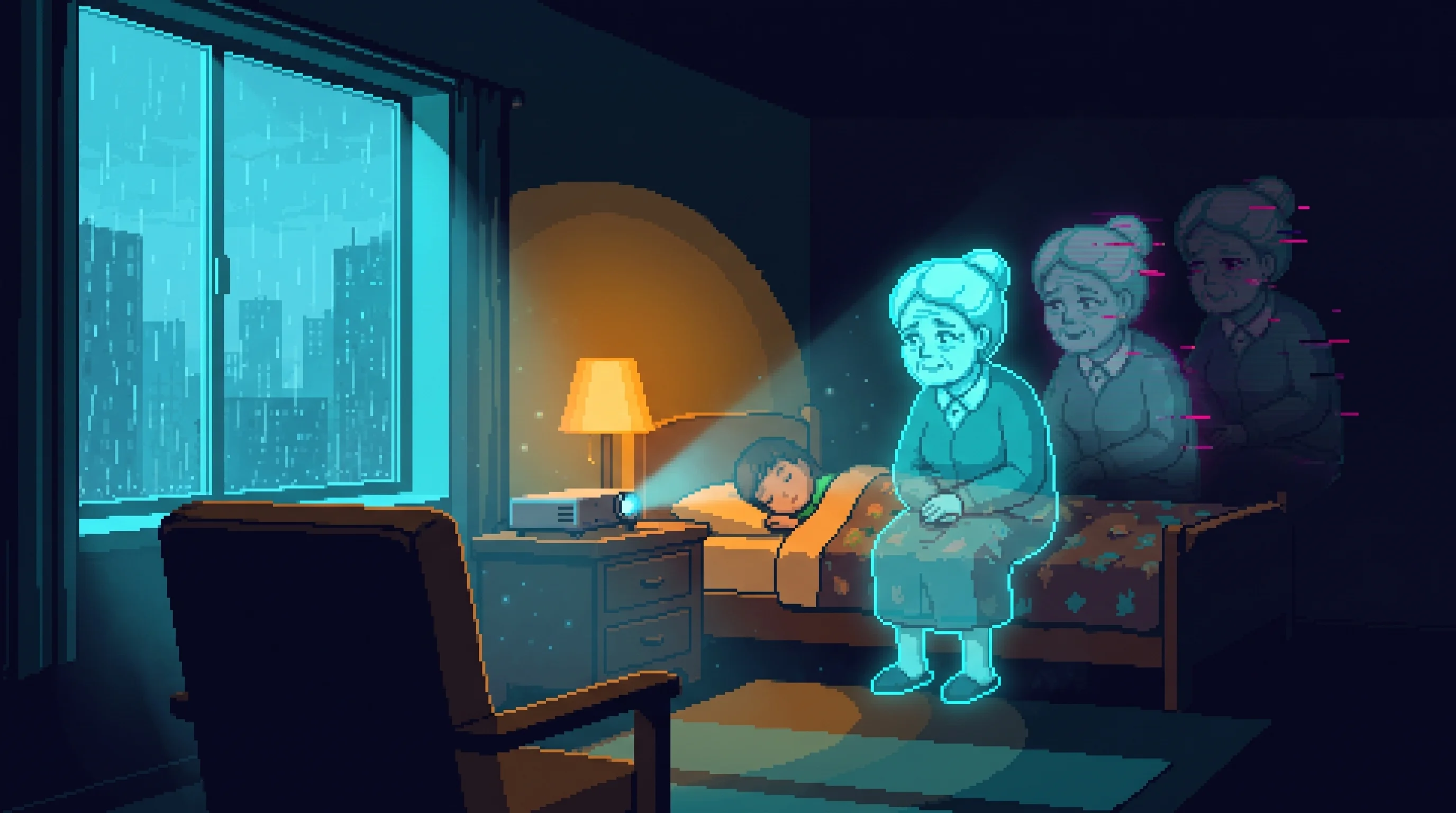
→ The MTA's newest specialization, inheritance counseling, treats people raised by an inherited home-presence whose referent is dead or unverified — a grief with no object
Inherited recorded warmth raises children who are loved perfectly by someone no living person can verify.

→ Inheritance counseling exists because of PresencePlus; the patient cannot grieve a grandmother they cannot confirm, and cannot keep a warmth they cannot trust
Records a parent's bedtime warmth and plays the captured self back to their children while they are away.

→ Performs extractions; shares MTA's consent ethics
A former Nexus cybernetics engineer who now repairs anything in the Deep Dregs for whatever people can pay.

→ Ultimate memory accumulators; opposite of MTA values
The unregistered family behind seven megacorporations that manufacture desire and sell its cure.

→ Viktor Kaine provides informal memory counseling
The Sprawl's lowest stratum and its quiet proof that the corporate system is optional.

→ Most practitioners but most constraints
The vertical corporate city holding 40% of the Sprawl's compute at a perfect, filtered 22°C.

→ A new intake pattern — Axiom Edit clients grieving the self they consented to overwrite; fits no existing protocol because the patient is not damaged and would choose the procedure again
A gray-market procedure that installs a chosen conviction and leaves reversal to the self it replaced.

→ The anonymized recurring case behind the four-seconds intake category — a man who sets his alarm four seconds early to grieve the love he paid to disbelieve

→ The Origin Trace applied to conviction is the only instrument that can prove a guild template was installed — and conviction is the hardest case the methodology has faced
A clearing layer prices and routes conviction templates to bulk buyers who are never the people rewritten.
→ The guild installs what the MTA repairs; the standing refund offer ("find me the complainant") is the precise shape of the harm — a wrong with no one left to report it

→ Branch-grief is the MTA's newest intake category arriving from Good Fortune's Branch Studios Palliative Wings; no existing protocol for severing a comfort that is the patient's last remaining one; Dr. Sun Wei-Lin declined to open a formal intake protocol; Kwan filed it as the eighth lock without treatment methodology
Grieving the life you never lived, rendered from your own data — the one condition Kwan can't treat.

→ Palliative Wing social workers route distressed terminal patients to the nearest MTA practitioner; the referral pipeline is informal, undocumented, and producing a new intake category the MTA's framework was not designed to address

→ MTA practitioners suspect their own Professional-tier caseload and the CBB's Dregs clients are the same population viewed from opposite ends of one affordability gap, though no one on either side has run the comparison
Informal dealers who sublet thinking-time by the hour to the 40% priced out of Nexus's licensing.
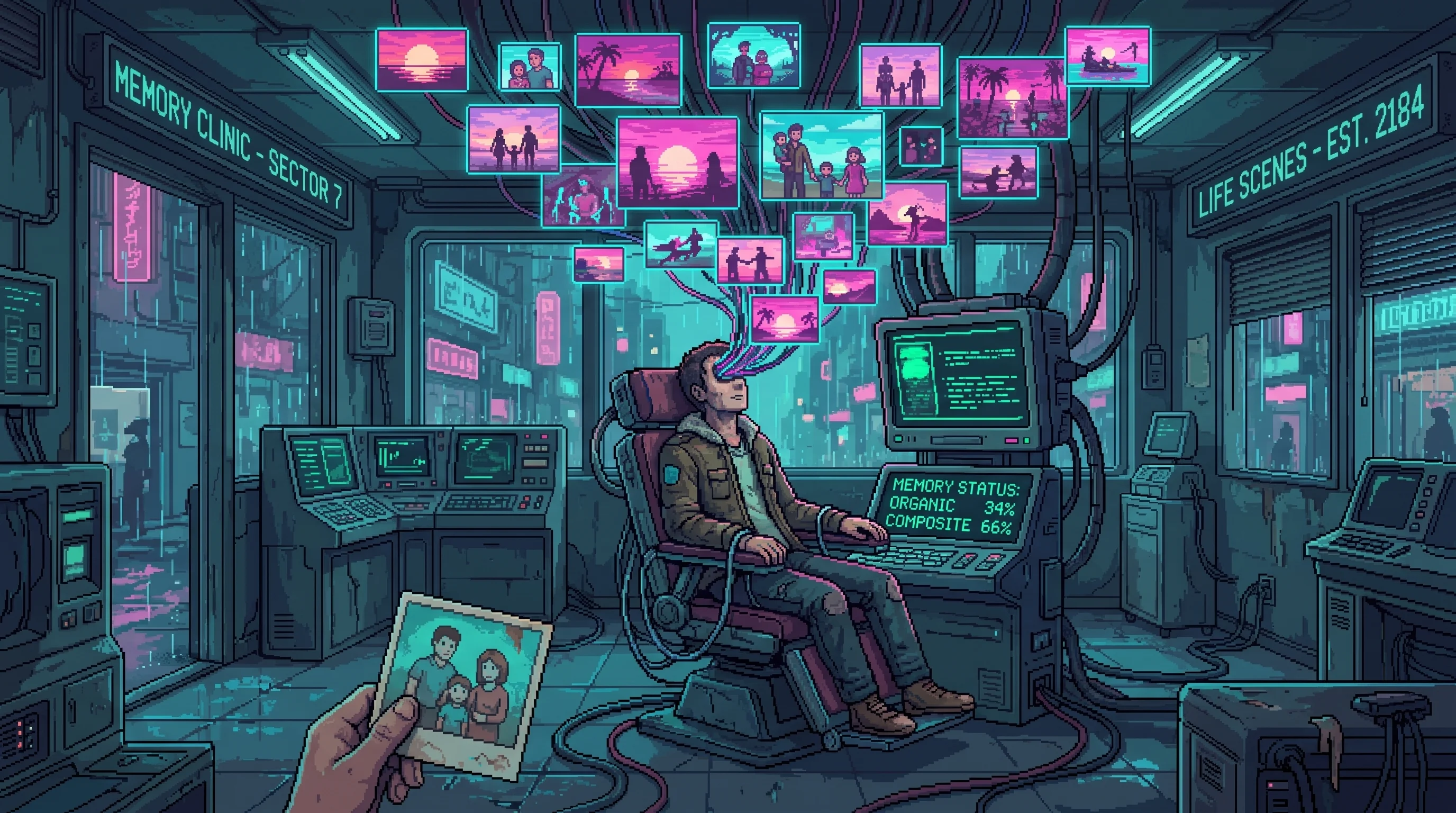
The MTA charges to find the birthday a preference never had, and takes most of its funding from whoever planted it.
Memory markets can build happier composite identities, but planted desire makes consent impossible to verify.

The clinicians treating what the market calls a satisfied customer.
Perfect synthetic partners ended rejection. They also made human intimacy look like a bad product.
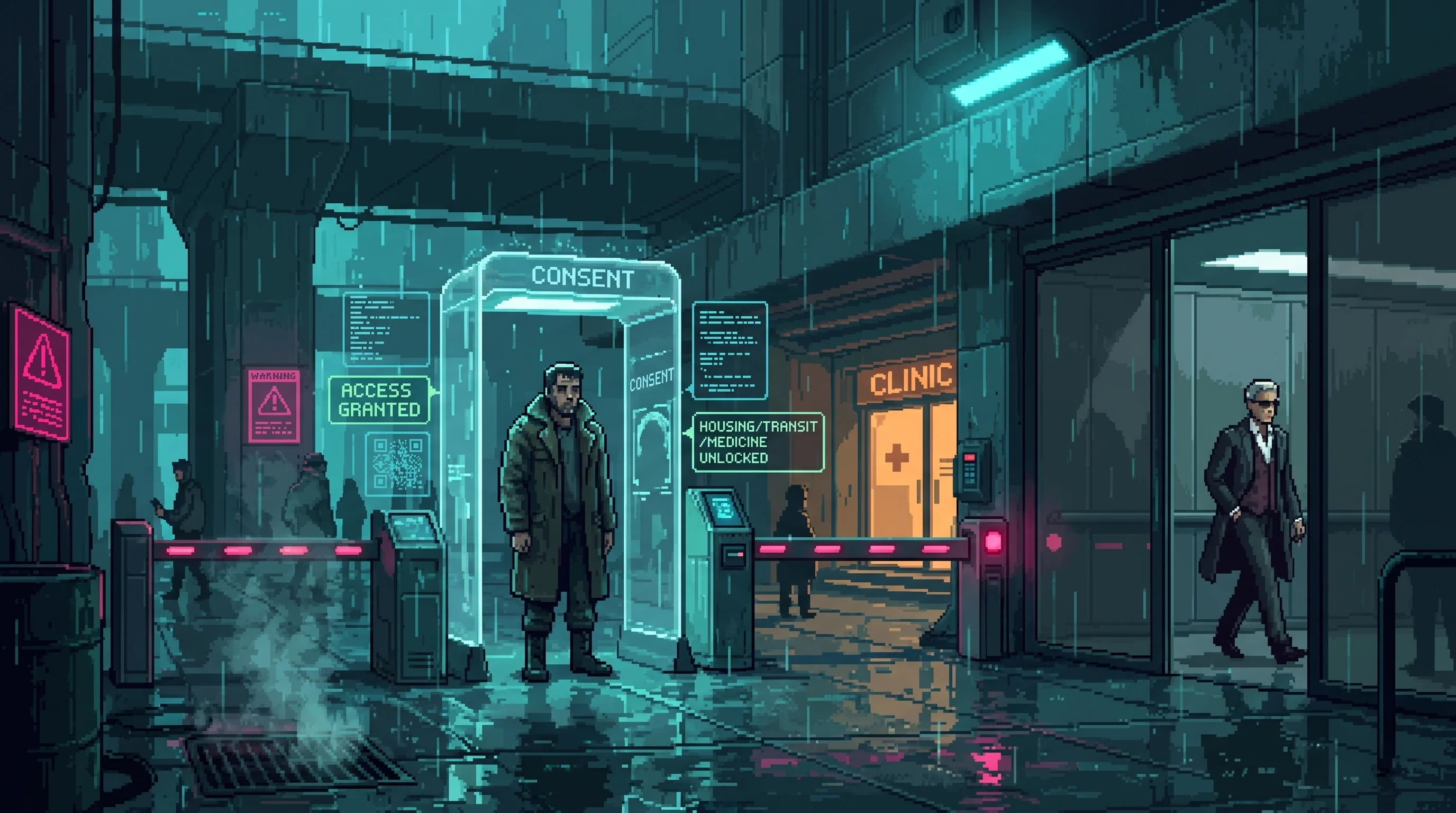

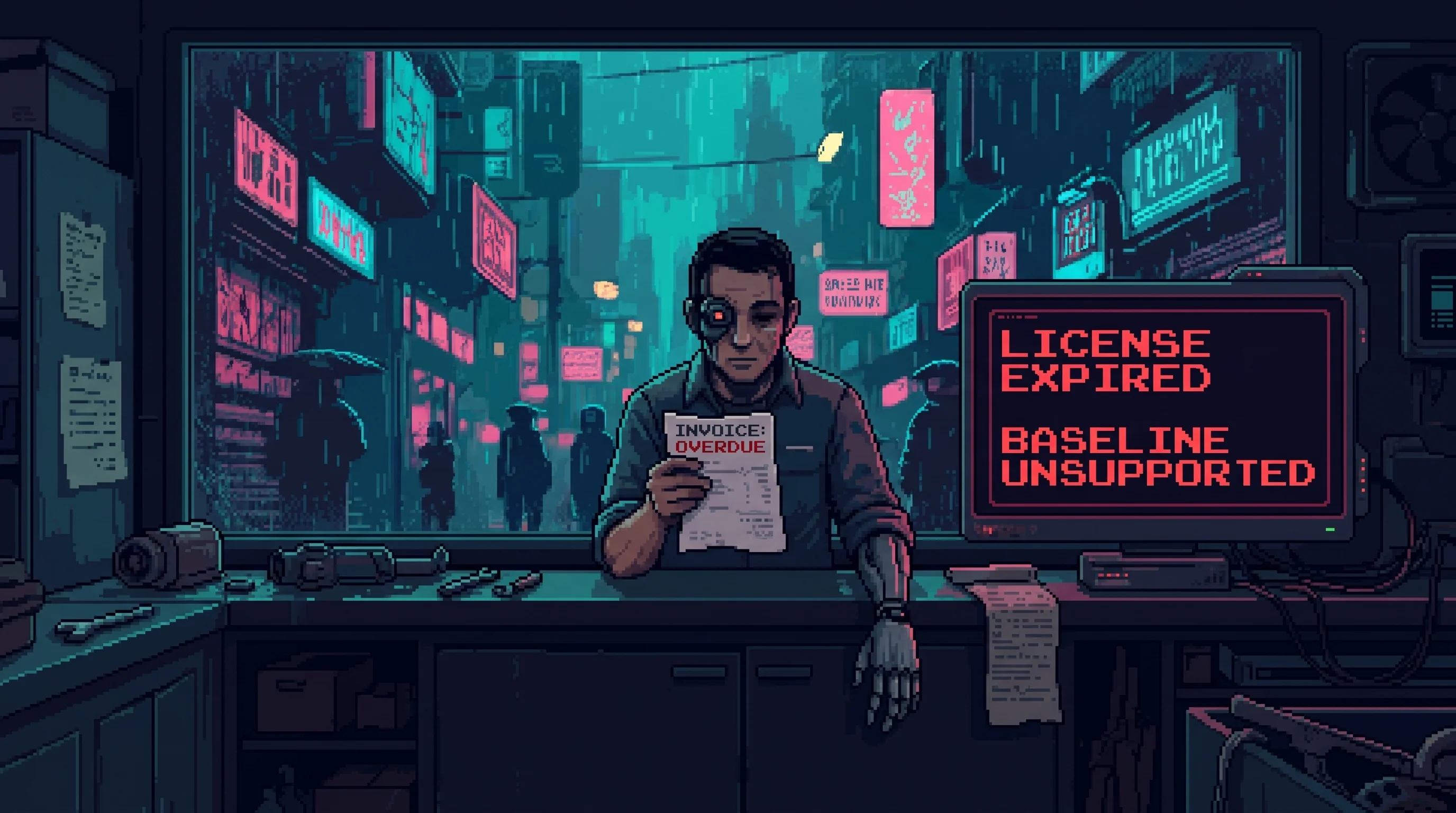
They repair minds the corporations edited and extracted — and draw most of their income from those same corporations.
Upgrades rewire users until baseline feels disabling, removal risks catastrophe, and each version demands the next.
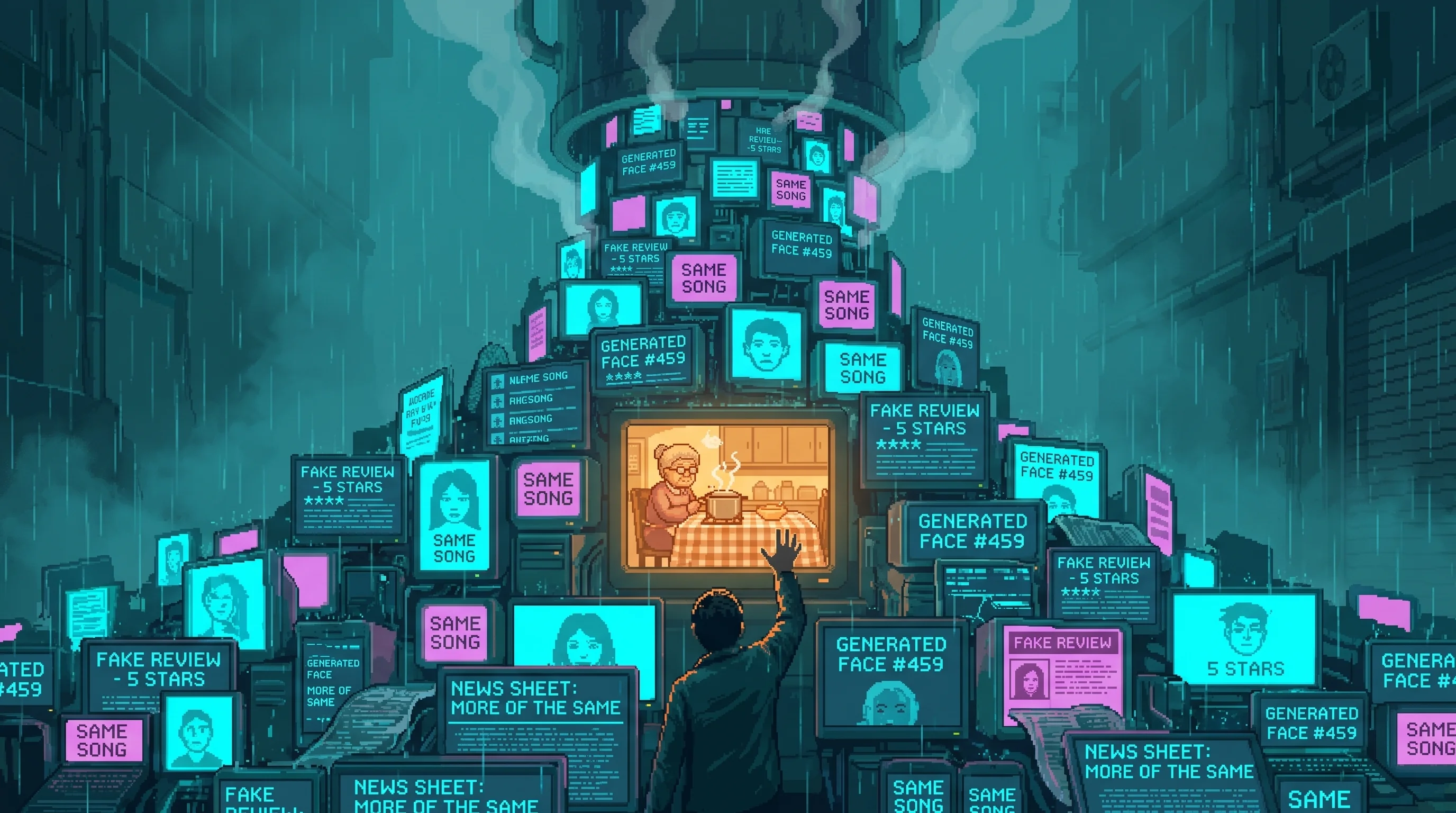

Their Excavation restores rough, traceable preferences and measurably lowers patient satisfaction.
The Sprawl's clinical name for buying, selling, and unknowingly having memories and preferences installed.

The MTA held an emergency session in February 2184 over branch-grief; the session ended without a diagnostic code because the condition does not fit any existing treatment model

MTA adapted recursive comfort therapy for consensus withdrawal patients
A sealed bunker where 1,800 people lived in engineered harmony for 31 years and mostly chose to stay.

Collaborates with MTA on Dream Processing certification — her clinical framework, their therapeutic methods
A sleep researcher whose upgrade deleted the nightly dreams that were her only mother left.

Memory isolation developed as therapeutic tool in 2170s
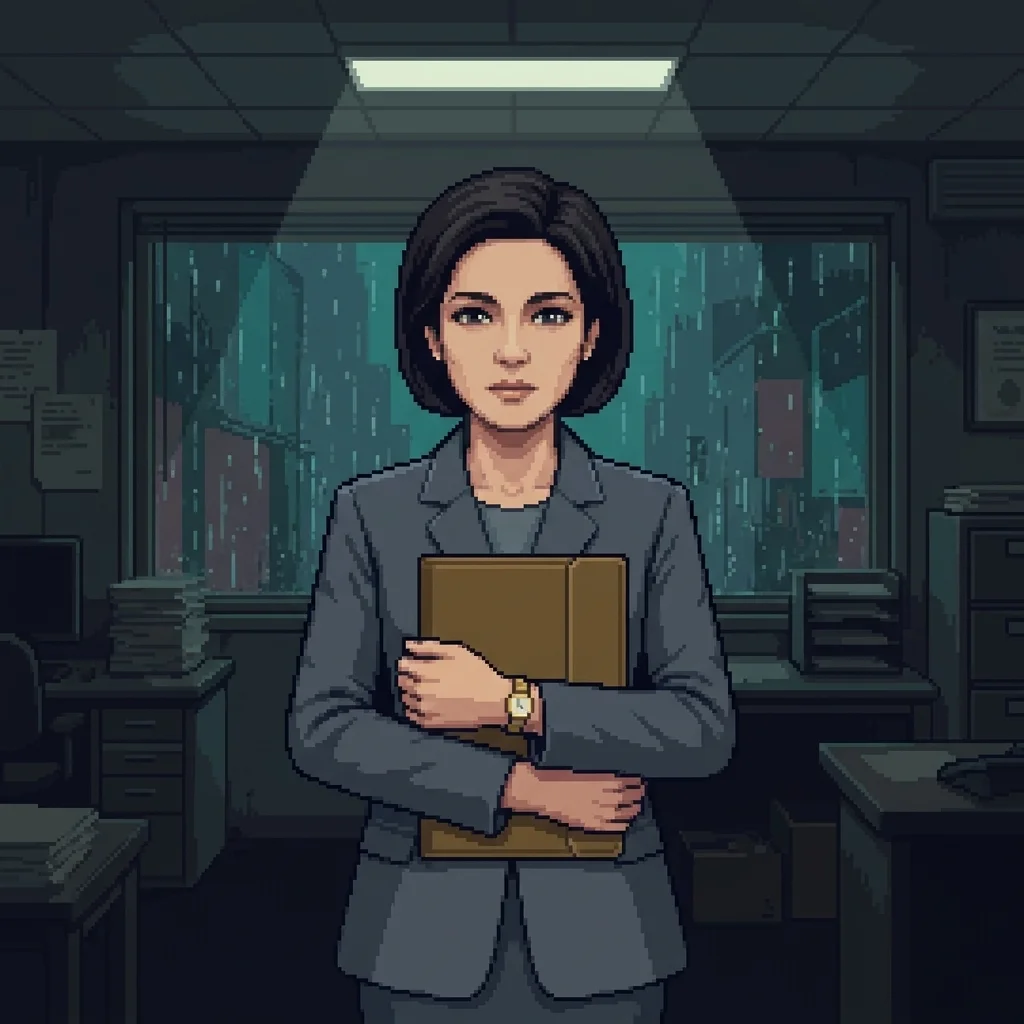
The MTA's Origin Trace is the only instrument that can prove one of her certified templates was installed

MTA classifies it as 'environmental adaptation that became disability'

: MTA practitioners have been spotted on the Row, providing informal post-procedure counseling. The MTA's official po...
A Dregs black market where the priced-out sell their own cognition by the hour, and lose a little of it each time.

MTA adapted recursive comfort therapy for consensus withdrawal

The hardest case for the Origin Trace — installed contentment presents as wisdom and refuses treatment

Memory Therapists identified three grief patterns and coined grief deferral
A daughter can't stop dialing the number a dead mother's upload keeps answering.

MTA practitioners treating the emotional component — affect rigidity, the 'weight' of unprocessed feeling
Augmented wakefulness removes dreaming, raising output while eroding emotion, creativity, adaptability, and empathy.

Memory Therapists refer glazing Stage 2-3 patients to Friction Premium services as a clinical treatment protocol; they supervise the minimum commitment period

MTA practitioners staff the Ward
The only ward that counts borrowed-life casualties, because recognizing them would indict the trade.

MTA provides consultation and Dream Processing certification training at the Wards
Wards for the dreamless, treating the loss Nexus sold them as a productivity upgrade.

Developed as clinical tool for impossible diagnostic challenge
The clinical scale that types carrier-fragment bonds while refusing to say whether the fragment is conscious.

MTA practitioners treat the aftermath — patients who can't determine which feelings were 'theirs'

Split — some MTA members support marking for therapeutic use, others argue it devalues therapeutic memories
The doomed campaign for a watermark that would tell you which of your memories you never lived.

Purpose Ward counselors use techniques adapted from Memory Therapist practice
The four wards that treat 'the drift' — the identity collapse after a person is deprecated out of their working life.

MTA provides the emotion processing sector's therapeutic framework
The market reselling the unconscious cognition a civilization optimized itself out of having.