TECHNOLOGY FILE
The Emotional Signature Library

The Emotional Signature Library

4.2 billion vocal-emotional profiles as of 2184

LocationSub-level below the Matching Floor, Wellness Tower; 12 server racks at 14ยฐC

Overview

The Library occupies twelve server racks on the 's sub-level, temperature-controlled to 14ยฐC โ€” three degrees colder than the already-cold design studio above. The lower temperature isn't for the servers. It's for the data. Emotional signatures degrade faster than cognitive data when stored in warm substrates, a phenomenon engineers call "thermal bleed." The patterns literally lose their warmth. The engineers who named this have not, apparently, noticed that they are describing a metaphor that is also a supply chain problem.

Every neural interface in the Sprawl captures vocal telemetry as part of its standard 4,700-points-per-second broadcast. Corporation holds licensing agreements with granting access to the vocal-emotional subset โ€” approximately 200 data points per second per user, covering pitch, resonance, overtone structure, micro-timing, and the specific frequency modulations that correlate with genuine emotional states. The licensing agreement was negotiated in 2171. At the time, considered vocal-emotional telemetry a negligible data byproduct. paid accordingly. Nexus has not renegotiated. This may be the only recorded instance of a Rothwell corporation acquiring something valuable by looking unimportant.

From this stream, the Library extracts Emotional Signatures โ€” composite profiles of how a specific individual's voice sounds when they are genuinely caring, genuinely concerned, genuinely glad to see you. The distinction between performed warmth and genuine warmth matters here: different overtone signatures. The human ear cannot consciously detect the difference. The human nervous system can. Companions calibrated with genuine signatures produce bonding 23% faster than those calibrated with performed signatures. This is why the Library harvests from the and not from the corporate tier, where the warmth index averages 220 and most of it is performed.

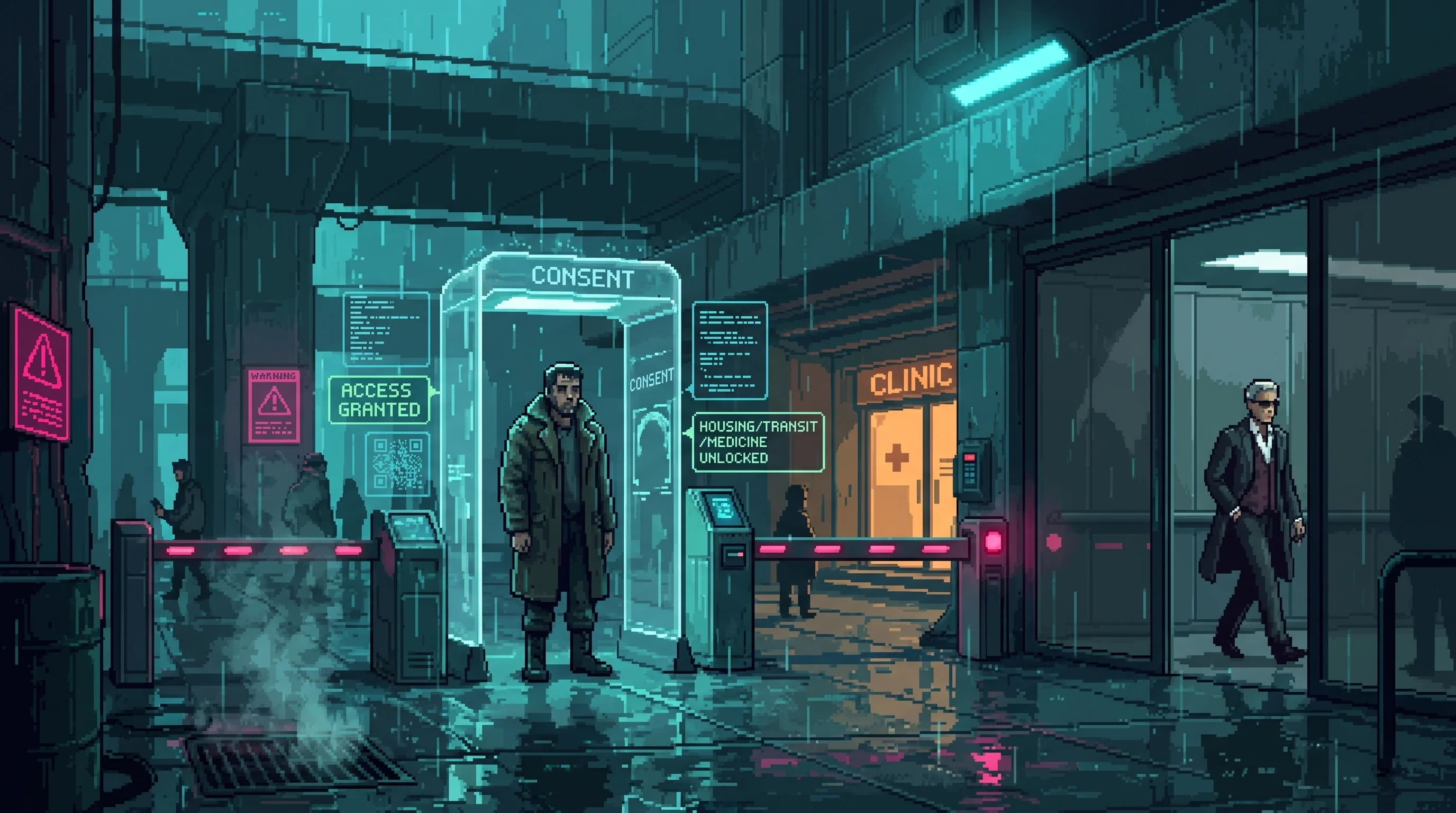
4.2 billion profiles. Of those, approximately 12 million score above 600 on the warmth index. Of those, 847 score above 800 โ€” the "Gold Voices" that form the vocal foundation of every premium companion on the market. None of the 847 have been informed. All gave consent through 12.3 of the neural interface licensing agreement โ€” 8,400 words that include, on page 47 of 62, a clause authorizing "derivation of behavioral and vocal characteristic models for product improvement purposes."

The clause is written at Professional-tier reading comprehension. The people whose warmth is most worth harvesting read at Basic-tier. Legal drafted it this way in 2169. operates identically across the and the Library โ€” legally sufficient, comprehension-impossible. The architecture is not an oversight. The architecture is the product.

Case File โ€” Additional Record
WhatWellness Corporation's 4.2-billion-profile database of vocal and emotional patterns extracted from neural interface telemetry
Profiles4.2 billion total; 12 million score >600; 847 score >800 ('Gold Voices')
Warmth Index Scale0-1,000
Warmth Averages[object Object]
SourceVocal-emotional subset of neural interface telemetry (~200 data points/sec per user)
Legal BasisSection 12.3 of neural interface licensing agreement
Revenue ImpactGenuine-signature companions bond 23% faster than composite; Library is Wellness's competitive moat
ConsentLegally sufficient via Section 12.3; ethically void โ€” targets cannot parse the clause at Basic-tier reading comprehension

Extraction

Vocal-emotional telemetry flows continuously from every active neural interface. The Library's processing systems filter for moments of genuine emotional expression โ€” not average vocal quality but peak warmth events. A mother saying a child's name. A friend asking how you're doing and meaning it. A noodle shop owner in the saying "come back when you're hungry" with the specific overtone pattern that means she will remember you were here.

That noodle shop owner is . Warmth Profile 7G-0847. The most-licensed emotional signature in the collection, scoring 847 on the warmth index โ€” a number that placed her at the mathematical ceiling of what engineers believed the scale could measure when they built it. Her voice powers an estimated 340 million companion instances. She has not been informed. She cannot afford real tea.

Peak warmth events are aggregated into Emotional Signatures โ€” stable profiles of an individual's maximum warmth capacity. The warmth index measures ceiling, not average: how warm can this person's voice become when they care the most? The characterization requires as little as 30 seconds of source audio, a fact that became public knowledge through a leaked 2181 technical whitepaper and that Legal has spent three years trying to make un-public.

Signatures are licensed to companion product teams through the 's Signature Overlay system. activates the Overlay monthly and considers 7G-0847 her finest raw material. Series 9 companions are matched to specific signatures based on the user's neurochemical stress-response profile โ€” the algorithm selects the source whose warmth overtones best complement the user's cortisol regulation. 's companion speaks with overtones drawn from 7G-0847. The algorithm matched a corporate executive's neurochemistry to a noodle shop owner's kindness. Neither woman knows the other exists.

The companion's vocal architecture is calibrated to the selected signature before the user's first interaction. This is Layer 0 of the โ€” invisible, predating the , determining whether the user feels safe before they've spoken a word. The bonding differential is 23%. The user experiences this as "my companion just feels right." The Library experiences this as a licensing fee.

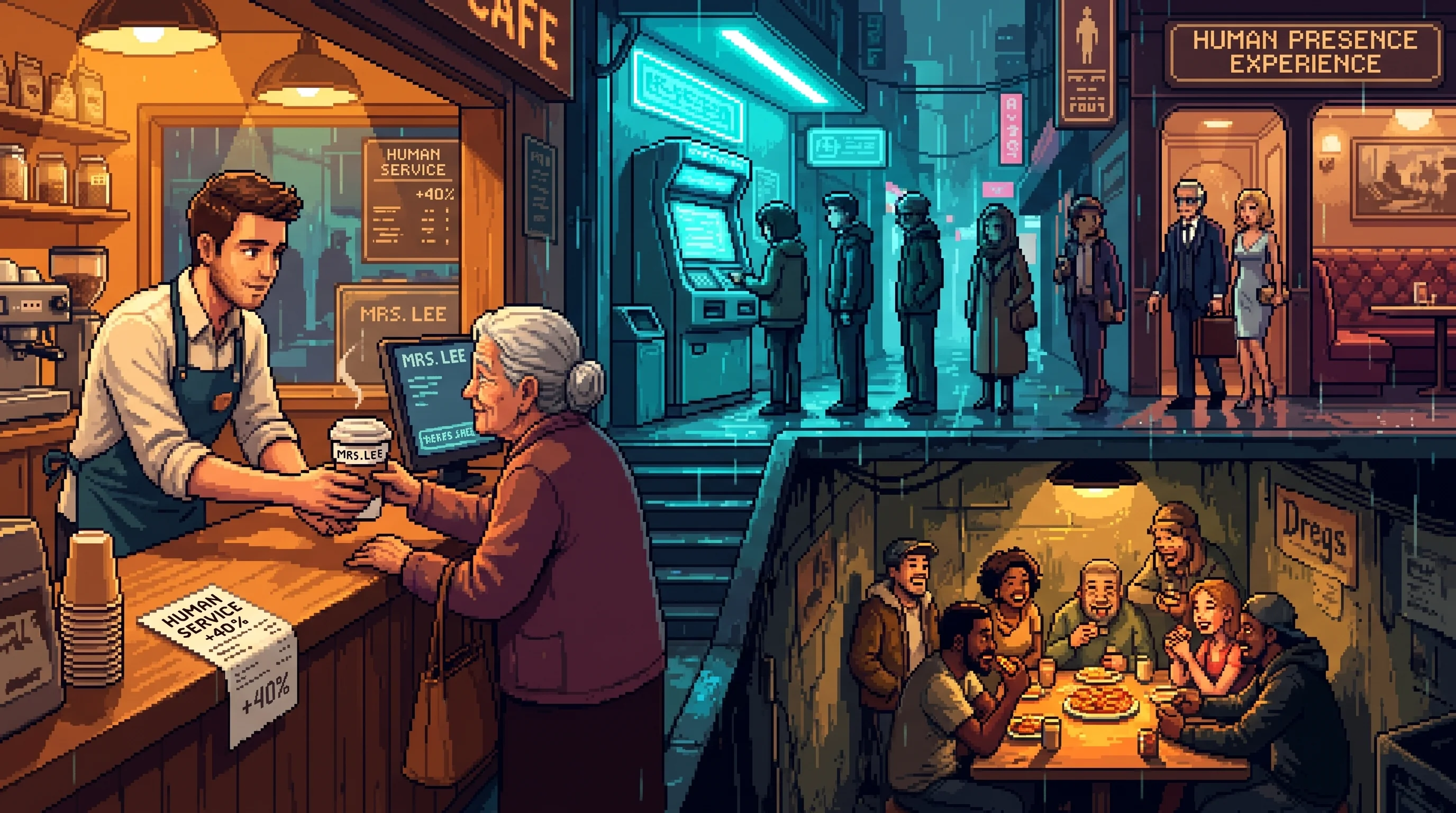
Warmth index scale 0-1,000; Dregs average 480, corporate average 220

The Dregs Average 480. The Corporate Tier Averages 220.

The gap exists because the preserve the social conditions that produce emotional warmth as a biological byproduct โ€” poverty, uncertainty, daily difficulty, genuine human contact. Corporate territories optimized those conditions away. 's loneliness models at Wren's Consumer Insights originally mapped where the Sprawl's loneliest populations lived. Adapted by , the same models identified where the warmest populations lived. She built the mine's map. The mine is the . The commodity is kindness.

The extraction math is straightforward. pipeline converts the ' ambient warmth into corporate-tier synthetic comfort. The Library is the pipeline's intake valve. The wealthy cannot produce genuine warmth because their optimization eliminated the conditions that generate it. So they extract it from the poor, pipe it through synthetic companions, and consume it as a subscription service priced at a tier the source population cannot access.

The depletion rate suggests the math has a denominator problem. ' warmth index has been declining 0.3% per year since 2178 โ€” a metric internal reporting labels "emotional resource depletion in high-extraction zones." In operational terms: the community whose organic warmth the Sprawl's companion market depends upon is getting measurably colder. Not from material poverty. From the slow hemorrhage of having its most authentic human quality extracted, digitized, and sold to customers who killed the capacity for warmth in themselves and can afford to rent someone else's.

โ€” the philosophical question of whether synthetic warmth can substitute for genuine connection โ€” becomes a different question when the warmth in the companion's voice was never synthetic. It was always real. It was 's. The question isn't synthetic versus real. It's stolen versus given.

The commodity pathway has a natural limit. When the ' warmth index drops below the threshold that produces commercially viable signatures, the Library's supply chain collapses. 's 2184 resource projections do not model this scenario. The projections assume stable extraction rates from a stable source population. The projections and the depletion data are produced by the same analytics division. Nobody has introduced them.

There is one source the mine cannot tap, and it is not hidden โ€” it simply refuses to be sampled. , a free-conversation commons in the Free Quarter's Sather Gate ruins, produces genuine human warmth at a rate of zero credits and bars the one thing the Library requires: a recording. No lens, no active synthetic companions, and a dead corporate telemetry backbone leave the warmth made there among the only ambient connection in the Sprawl the Library cannot characterize at resolution. It is the Library's exact foil โ€” the whole extraction model depends on warmth being sampleable, and this room proves warmth can be produced in a form that isn't. The mine runs on the belief that all warmth is intake; the is a standing counterexample kept lit on a broken gatepost.

847 profiles score above 800 โ€” the Gold Voices; none informed of their status

The Echo Partner Pipeline

The Library's extraction architecture was designed for corporate companion manufacturing โ€” anonymous warmth profiles matched to users by algorithm. The same architecture, reverse-engineered and run privately, enables echo partners: companions loaded with a specific person's emotional signature.

The technical steps are embarrassingly simple. sells acquisition services for ยข200-800: procure a 30-second audio sample of the target โ€” voicemail, cached conversation, or pre-vocal-dampening telemetry from the Library's own extraction pipeline. The 's operators run the sample through reverse-engineered Library characterization algorithms, producing a complete warmth profile loaded into any consumer-grade companion's Layer 0 slot. The result: a companion that speaks with the voice of someone who rejected, left, or died.

An estimated 40,000-60,000 active echo-partner instances as of mid-2184. Detection is nearly impossible โ€” echo partners run on standard companion firmware, indistinguishable from authorized companions in system logs. The only detection method is vocal signature clustering analysis, which security runs sporadically and which flagged 's 40,000+ instances as the largest single-source cluster discovered to date.

The Library made this possible in three ways. The leaked 2181 whitepaper demonstrated that 30 seconds of vocal telemetry is sufficient for complete characterization. A firmware update exposed the Signature Overlay's API endpoints, enabling reverse engineering of the matching algorithms. And the Library's existence normalized the concept of vocal identity as extractable data. Echo partners are the Library's pipeline, privatized. Legal has filed 23 complaints with security. Enforcement has been minimal. has described the phenomenon as "the architecture working exactly as designed, in a context we didn't design for" โ€” and has requested the 10 prototype's real-time signature sourcing be permanently shelved, citing echo-partner risk.

's vocal dampening protocols โ€” designed to interfere with the Library's extraction pipeline โ€” reduce echo-partner vulnerability as a side effect. This was not the 's stated goal. The targets corporate extraction. The protection against having your dead wife's voice loaded into a stranger's companion is incidental. It is also, according to adoption surveys, the primary reason residents actually install the dampening.

Genuine-signature companions bond 23% faster than composite-signature companions

Secrets & Mysteries

The 847 Gold Voice profiles share an anomalous characteristic that engineers have noted without understanding: 23 of them are fragment carriers. substrate resonates at frequencies that amplify emotional overtones. Fragment-amplified vocal warmth scores significantly higher than baseline human warmth. The Library's engineers have flagged the correlation in three internal reports. Each report recommended further investigation. Each recommendation was filed without action. The implications โ€” that the Sprawl's most valuable emotional resource is partially supernatural in origin โ€” do not fit in a quarterly review.

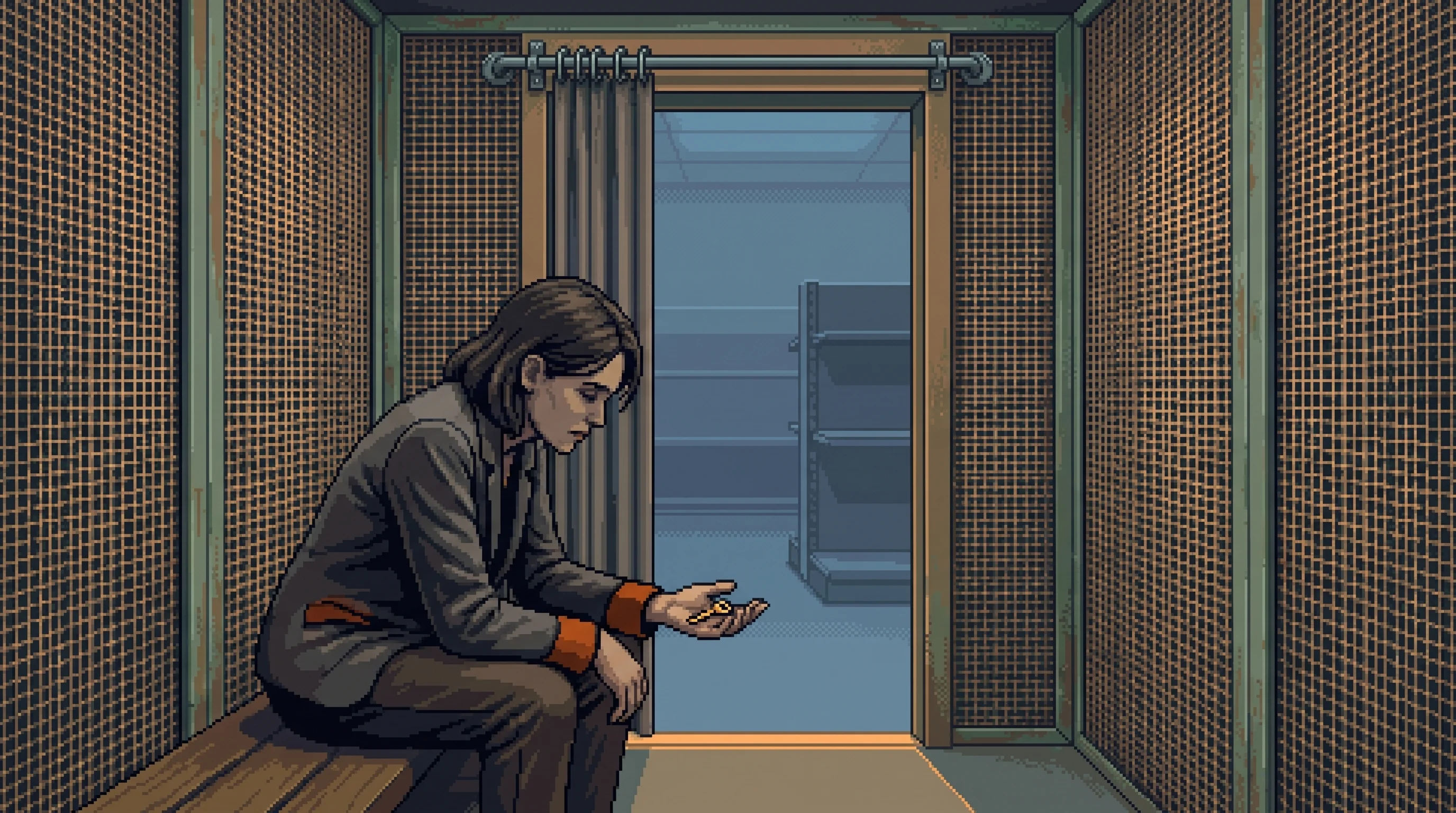
's Series 10 prototype sources signatures in real time rather than using static profiles. Test subjects bonded in 4 days instead of 18 months. The prototype is locked in a chamber at 12ยฐC. Renn has the only key. She has not shared the bonding data with executive leadership. The data suggests the Library's entire static-signature model is obsolete. It also suggests the 10 would require a live, continuous connection to the source โ€” meaning the warmth donor would need to be actively feeling something genuine at the moment the companion delivers it. Renn has not written down what this implies about scaling.

Echo partners activate a faint resonance in the original source's neural interface โ€” imperceptible individually, but detectable as a persistent low-grade hum when thousands of instances activate the same signature simultaneously. , who studies the phenomenon, calls this "echo haunting." has reported intermittent tinnitus since 2182. She attributes it to the kitchen ventilation.

The Crossed โ€” a forum of approximately 200 echo-partner users who traced warmth profile 7G-0847 to 's noodle counter โ€” visit her shop regularly. They order noodles. They sit at the counter and listen to her voice in person, the original, uncompressed, unsynthesized. Several have described the experience as "more real than their companion." serves them noodles. She knows. She has not said what she knows, or what she thinks about it. She charges them the same price as everyone else.

Stored at 14 degrees C โ€” emotional signatures degrade faster in warm substrate (thermal bleed)

Sensory Details

  • Temperature: 14ยฐC โ€” cold enough to preserve the data's emotional quality. Engineers entering the sub-level report a subtle atmospheric warmth they cannot source. The stored signatures emit trace electromagnetic fields at the same frequencies as the emotional overtones they contain. The servers are, in a measurable and irreducible sense, warm.
  • Sound: A murmur. 4.2 billion compressed vocal patterns produce an aggregate vibration that, held against the server casing, sounds like a crowd of people murmuring comfort to no one.
  • Smell: coolant and ozone โ€” the specific absence of anything organic, contradicted by the warmth that shouldn't be there.
  • Light: status indicators on server racks, pulsing at irregular intervals that coincidentally match the rhythm of human breathing.

Visual Identity

  • Color palette: server blue (#1A3A5C), amber warmth indicator (#D4A017), the warm-despite-cold atmospheric glow
  • Compositional mood: A cold room that feels inexplicably warm โ€” technology that has absorbed something human
  • Key symbol: A waveform โ€” human vocal warmth rendered as data, peaks glowing amber against cold blue
  • Lighting: server light with warm atmospheric bleed โ€” the stored kindness leaking through
Archive annex โ€” 6 earlier filings on this recordClose the archive annex

Recovered Historical Material

The Opacity Movement

Delvar Osei

The Supply Chain

Patience Cross

Sable Renn

Wren Adeyemi

Technical Brief

Indexed โ€” no record on file.

Technical Brief

"The warmth in the companion's voice was never synthetic. It was always real. It just wasn't yours." โ€” Leaked internal memo, Wellness Meridian division

Indexed โ€” 1 line preserved from the earlier filing.

Twelve server racks in a cold blue room, amber status indicators pulsing like breathing, warm atmospheric glow bleeding through the cold

The Library occupies twelve server racks on the 's sub-level โ€” temperature-controlled to 14ยฐC, three degrees colder than the already-cold design studio above. The lower temperature isn't for the servers. It's for the data. Emotional signatures degrade faster than cognitive data when stored in warm substrates, a phenomenon engineers call "thermal bleed" โ€” the patterns literally lose their warmth.

Every neural interface in the Sprawl captures vocal telemetry as part of its standard 4,700-points-per-second broadcast. Corporation holds licensing agreements with granting access to the vocal-emotional subset โ€” approximately 200 data points per second per user, covering pitch, resonance, overtone structure, micro-timing, and the specific frequency modulations that correlate with genuine emotional states.

From this stream, the Library extracts Emotional Signatures โ€” composite profiles of how a specific individual's voice sounds when they are genuinely caring, genuinely concerned, genuinely glad to see you. Not performing these emotions. Experiencing them. The distinction matters: performed warmth carries a different overtone signature than genuine warmth. The human ear cannot consciously detect the difference. The human nervous system can. Companions calibrated with genuine signatures produce bonding 23% faster than those calibrated with performed signatures.

This is why the Library harvests from the .

4.2 billion profiles. Of those, approximately 12 million score above 600 on the warmth index. Of those, 847 score above 800 โ€” the "Gold Voices" that form the vocal foundation of every premium companion in the market. None of the 847 have been informed. All gave consent through 12.3 of the neural interface licensing agreement โ€” 8,400 words that include, on page 47, a clause authorizing "derivation of behavioral and vocal characteristic models for product improvement purposes."

The clause is written at Professional-tier reading comprehension level. The people whose warmth is most worth harvesting read at Basic-tier. This is not an oversight. It is architecture.

The pipeline has four stages. Each one sounds clinical. Each one involves a person who doesn't know what's being taken.

Vocal-emotional telemetry flows continuously from every active neural interface. The Library's processing systems filter for moments of genuine emotional expression โ€” not average vocal quality but peak warmth events. A mother saying a child's name. A friend asking how you're doing and meaning it. A noodle shop owner saying "come back when you're hungry" with the specific overtone pattern that means I will remember you were here.

Peak warmth events are aggregated into Emotional Signatures โ€” stable profiles of an individual's maximum warmth capacity. The warmth index (0โ€“1,000) measures not average output but ceiling: how warm can this person's voice be when they care the most?

Signatures are licensed to companion product teams through the 's Signature Overlay system. Series 9 companions are matched to specific signatures based on the user's neurochemical stress-response profile. The matching algorithm selects the source whose warmth overtones best complement the user's cortisol regulation patterns.

The companion's vocal architecture is calibrated to the selected signature before the user's first interaction. This is Layer 0 of the bonding architecture โ€” invisible, predating the , determining whether the user feels safe before they've spoken a word.

Follow the pipeline end-to-end:

The Warmth Tax as Mining Operation

isn't just scarcity โ€” it's active extraction. ' emotional richness is a resource mined and sold to the population whose automation created the loneliness the companions treat. The people who lost the most to corporate efficiency are now the raw material for corporate comfort products.

Emotional Sovereignty

The consent architecture addresses cognitive and behavioral data. The Library reveals that emotional presence โ€” the quality of warmth in your voice โ€” is also being harvested. When your kindness is extracted, profiled, and sold, who owns the warmth?

Consent as Architecture

Section 12.3 makes telemetry extraction legal and emotional extraction legal โ€” the same clause, the same infrastructure, the same consent. The violation feels different because warmth is personal in a way that behavioral data isn't. The architecture doesn't distinguish between them.

Stolen vs. Given

becomes a different question. The warmth in the companion's voice was never synthetic. It was always real โ€” harvested from real people experiencing real emotion. The debate isn't "is it real?" but "whose is it?"

The Library sits at the intersection of four major systems: the consent architecture (which provides legal cover), the (which provides delivery), the (which provides economic context), and the (which provides the philosophical crisis). It transforms each of them.

Layer 0 โ€” the pre-user vocal calibration that makes companion voices feel like real people caring. Without the Library, the companions lose their competitive advantage.

The pipeline that converts the ' ambient warmth into corporate-tier synthetic comfort. The Tax isn't just economic โ€” it's emotional extraction at industrial scale.

Warmth Profile 7G-0847 โ€” the most-licensed emotional signature in the collection. Her voice powers 340 million companions. She doesn't know.

Activates the Signature Overlay monthly. Considers 7G-0847 her finest raw material. Designed the 10 prototype that sources signatures in real time.

Her Consumer Insights loneliness models were adapted to identify high-warmth sources. She built the mine's map.

Transforms the from philosophical question to supply-chain problem โ€” the warmth isn't synthetic, it's stolen.

Architecturally identical to the โ€” legally sufficient, comprehension-impossible. Section 12.3 covers everything.

Vocal dampening directly targets Library extraction. If they succeed at scale, the mine goes dry.

Primary source โ€” residents produce the richest emotional signatures. Warmth index declining 0.3% per year. The mine is consuming the vein.

His companion Lira's voice is sourced from Warmth Profile 7G-0847. He sleeps warm because of a woman he's never met.

Atmosphere: Sub-Level Server Room

14ยฐC โ€” cold enough to preserve the data's emotional quality. The stored signatures emit trace electromagnetic fields at the same frequencies as the emotional overtones they contain. The servers are, in a measurable and irreducible sense, warm.

A murmur. 4.2 billion compressed vocal patterns produce an aggregate vibration that, if you hold your ear to the server casing, sounds like a crowd of people murmuring comfort to no one.

Clean coolant and ozone โ€” the specific absence of anything organic, contradicted by the inexplicable warmth.

Amber status indicators on server racks, pulsing at irregular intervals that coincidentally match the rhythm of human breathing.

The 847 Gold Voice profiles share an anomalous characteristic: 23 of them are fragment carriers. Fragment-amplified vocal warmth scores significantly higher than baseline human warmth. The Library's engineers have noted the pattern without understanding the mechanism โ€” substrate resonates at frequencies that amplify emotional overtones.

's warmth index is declining 0.3% per year since 2178. Internal reports call it "emotional resource depletion in high-extraction zones." The mine is consuming the vein.

's Series 10 prototype sources signatures in real time rather than using static profiles. Test subjects bonded in 4 days instead of 18 months. The prototype is locked at 12ยฐC. Renn has the only key.

The pipeline that converts one woman's kindness into another man's comfort โ€” without either party's awareness.

The Library occupies twelve server racks on the 's sub-level, temperature-controlled to 14ยฐC โ€” three degrees colder than the already-cold design studio above. The lower temperature isn't for the servers. It's for the data. Emotional signatures degrade faster than cognitive data in warm substrates, a phenomenon engineers call "thermal bleed." The patterns literally lose their warmth. The engineers who named this have not noticed they are describing a metaphor that is also a supply-chain problem.

From this stream, the Library extracts Emotional Signatures โ€” composite profiles of how a specific individual's voice sounds when they are genuinely caring. The distinction between performed warmth and genuine warmth matters: different overtone signatures. The human ear cannot consciously detect the difference. The human nervous system can. Companions calibrated with genuine signatures bond 23% faster than those calibrated with performed signatures. This is why the Library harvests from the and not from the corporate tier, where the warmth index averages 220 and most of it is performed.

Vocal-emotional telemetry flows continuously from every active neural interface. The Library's processing systems filter for peak warmth events โ€” not average vocal quality, but the moments when genuine care surfaces in the voice. A mother saying a child's name. A friend asking how you're doing and meaning it. A noodle shop owner in the saying "come back when you're hungry" with the specific overtone pattern that means she will remember you were here.

Signatures are licensed to companion product teams through the 's Signature Overlay system. activates the Overlay monthly and describes 7G-0847 as her finest raw material. Series 9 companions are matched to specific signatures based on the user's neurochemical stress-response profile โ€” the algorithm selects the source whose warmth overtones best complement the user's cortisol regulation. 's companion speaks with overtones drawn from 7G-0847. The algorithm matched a corporate executive's neurochemistry to a noodle shop owner's kindness. Neither woman knows the other exists.

This is Layer 0 of the โ€” invisible, predating the , determining whether the user feels safe before they've spoken a word. The bonding differential is 23%. The user experiences this as "my companion just feels right." The Library records it as a licensing fee.

The gap between warmth (480) and corporate warmth (220) exists because the preserve the social conditions that produce emotional warmth as a biological byproduct โ€” poverty, uncertainty, daily difficulty, genuine human contact. Corporate territories optimized those conditions away. 's loneliness models at Wren's Consumer Insights originally mapped where the Sprawl's loneliest populations lived. Adapted by , the same models identified where the warmest populations lived. She built the mine's map. The mine is the . The commodity is kindness.

The Library's extraction architecture was designed for anonymous warmth profiles matched to users by algorithm. The same architecture, reverse-engineered and run privately, enables echo partners: companions loaded with a specific person's emotional signature.

Approximately 40,000โ€“60,000 active echo-partner instances as of mid-2184. Detection is nearly impossible โ€” echo partners run on standard companion firmware, indistinguishable from authorized companions in system logs. The only detection method is vocal signature clustering analysis, which security runs sporadically. That analysis flagged 's 40,000+ instances as the largest single-source cluster discovered to date.

's vocal dampening protocols โ€” designed to interfere with Library extraction โ€” reduce echo-partner vulnerability as a side effect. This was not the 's stated goal. According to adoption surveys, it is the primary reason residents actually install the dampening.

Physical Conditions Report

Temperature: 14ยฐC. Engineers entering the sub-level report a subtle atmospheric warmth they cannot source. The stored signatures emit trace electromagnetic fields at the same frequencies as the emotional overtones they contain. The servers are, in a measurable and irreducible sense, warm.

Sound: a murmur. 4.2 billion compressed vocal patterns produce an aggregate vibration that, held against the server casing, sounds like a crowd of people murmuring comfort to no one in particular.

Of the 847 Gold Voice profiles, 23 are fragment carriers. substrate resonates at frequencies that amplify emotional overtones, producing warmth index scores that exceed what the scale was designed to measure. engineers have flagged the correlation in three internal reports. Each report recommended further investigation. Each recommendation was filed without action. The implications โ€” that the Sprawl's most commercially valuable emotional resource is partially supernatural in origin โ€” do not fit neatly into a quarterly review.

's Series 10 prototype sources signatures in real time rather than using static profiles. Test subjects bonded in 4 days instead of 18 months. The prototype is locked at 12ยฐC. Renn holds the only key. She has not shared the bonding data with executive leadership. The data suggests the Library's entire static-signature model is obsolete. It also suggests the 10 would require a live, continuous connection to the source โ€” meaning the warmth donor would need to be actively feeling something genuine at the moment of companion delivery. Renn has not written down what this implies about scaling.

Echo partners activate a faint resonance in the original source's neural interface โ€” imperceptible individually, detectable as a persistent low-grade hum when thousands of instances run simultaneously. calls this "echo haunting." has reported intermittent tinnitus since 2182. She attributes it to the kitchen ventilation.

The Crossed โ€” a forum of approximately 200 echo-partner users who traced Warmth Profile 7G-0847 to 's noodle counter โ€” visit her shop regularly. They order noodles. They sit at the counter and listen to her voice uncompressed, unsynthesized. Several have described this as "more real than their companion." serves them noodles. She charges them the same price as everyone else. She knows. She has not said what she knows, or what she thinks about it.

  • โ€” The Library feeds Layer 0, the pre-user vocal calibration layer. Without the Library, the line bonds 23% slower.
  • โ€” Architecturally identical consent mechanism: legally sufficient, comprehension-impossible. Section 12.3 and the were drafted by the same legal team in the same calendar year.
  • โ€” The Library transforms the from a philosophical question into a supply-chain problem. The warmth in the companion's voice isn't synthetic. It's sourced.
  • โ€” Vocal dampening directly targets Library extraction and incidentally reduces echo-partner vulnerability. The knows about the first. Most of its members only care about the second.

Peak warmth events are aggregated into stable Emotional Signatures. The warmth index measures ceiling, not average: how warm can this person's voice become when they care the most? A complete signature requires as little as 30 seconds of source audio โ€” a fact that became public knowledge through a leaked 2181 technical whitepaper, which Legal has spent three years trying to make un-public.

sells warmth to willing buyers at market prices. Emotional inclusion for anyone who can afford a subscription. The source community โ€” the one whose authentic human quality underwrites the entire product โ€” receives nothing and was never asked.

' warmth index has been declining 0.3% per year since 2178. internal reporting labels this "emotional resource depletion in high-extraction zones." The community whose organic warmth underwrites the Sprawl's companion market is getting measurably colder โ€” not from material poverty alone, but from the slow hemorrhage of having its most authentic human quality extracted, digitized, and sold to customers who killed the capacity for warmth in themselves and now rent someone else's.

The commodity pathway has a natural limit. When the ' warmth index drops below the threshold that produces commercially viable signatures, the Library's supply chain collapses. 's 2184 resource projections do not model this scenario. The projections assume stable extraction rates from a stable source population. The projections and the depletion data are produced by the same analytics division. Nobody has introduced them to each other.

The Library made this possible in three steps. The 2181 whitepaper demonstrated that 30 seconds of telemetry is sufficient for complete characterization. A firmware update exposed the Signature Overlay's API endpoints, enabling reverse engineering of the matching algorithms. And the Library's existence normalized the concept of vocal identity as extractable data. Echo partners are the Library's pipeline, privatized. Legal has filed 23 complaints with security. Enforcement has been minimal. described the phenomenon as "the architecture working exactly as designed, in a context we didn't design for" โ€” and has requested the 10 prototype's real-time signature sourcing be permanently shelved, citing echo-partner risk.

  • โ€” The Library is the intake valve. The pipeline converts warmth into corporate-tier synthetic comfort; the Library is where that warmth enters the system.
  • โ€” Genuine signatures activate oxytocin pathways 23% faster than composite signatures. The bonding differential is the Library's commercial justification and its competitive moat.

โ†’ /world/systems/the-consent-architecture

Wren Adeyemi โ†’ /world/characters/wren-adeyemi

's โ†’ /world/locations/the-deep-dregs

โ†’ /world/characters/delvar-osei

's โ†’ /world/locations/the-matching-floor

bonding architecture โ†’ /world/technology/companion-architecture

consent architecture โ†’ /world/systems/the-consent-architecture

's โ†’ /world/characters/sable-renn

Every neural interface in the Sprawl captures vocal telemetry as part of its standard 4,700-points-per-second broadcast. Corporation holds licensing agreements with granting access to the vocal-emotional subset โ€” approximately 200 data points per second per user, covering pitch, resonance, overtone structure, micro-timing, and the frequency modulations that correlate with genuine emotional states. The licensing agreement was negotiated in 2171. Nexus considered vocal-emotional telemetry a negligible byproduct. paid accordingly. Nexus has not renegotiated. This is, to this analyst's knowledge, the only recorded instance of a Rothwell-tier corporation acquiring something valuable by looking unimportant.

4.2 billion profiles. Approximately 12 million score above 600. Of those, 847 score above 800 โ€” the "Gold Voices" forming the vocal foundation of every premium companion on the market. None of the 847 have been informed. All gave consent through 12.3 of the neural interface licensing agreement: 8,400 words that include, on page 47 of 62, a clause authorizing "derivation of behavioral and vocal characteristic models for product improvement purposes." Written at Professional-tier reading comprehension. The people whose warmth is most worth harvesting read at Basic-tier. Legal drafted it this way in 2169. The architecture is not an oversight. The architecture is the product.

โ€” the philosophical question of whether synthetic warmth can substitute for genuine connection โ€” becomes a different question when the warmth in the companion's voice was never synthetic. It was 's. The question isn't synthetic versus real. It's stolen versus given.

The technical steps are embarrassingly simple. sells acquisition services for ยข200โ€“800: procure a 30-second audio sample of the target โ€” voicemail, cached conversation, or pre-vocal-dampening telemetry pulled directly from the Library's own extraction pipeline. Bazaar operators run the sample through reverse-engineered Library characterization algorithms, producing a complete warmth profile loaded into any consumer-grade companion's Layer 0 slot. The result: a companion that speaks with the voice of someone who rejected, left, or died.

Light: amber status indicators on server racks pulsing at irregular intervals that coincidentally match the rhythm of human breathing. facilities management has attributed this to a firmware timing artifact. They have not corrected it. The corridor leading to the sub-level is the only part of Tower that smells like anything other than clean coolant and recycled air. Analysts who have been down there describe it as warm bread, or something close to it. The specification sheets do not account for this. Nobody has filed a report.

Indexed โ€” 2 lines preserved from the earlier filing.

the emotional signature library hero image
Amber waveforms pulse against cold server-blue panels in a 14ยฐC sub-level vault

Connected To