Clean Lives
Surveillance Authenticity Coaching
The Veil-Coaching Wing
Clean Lives is a behavioral choreography industry — its service is teaching clients to produce authentic behavioral records in surveilled environments so that their eventual Revenant will reconstruct as the person they want their heirs to meet
How It Works
- 1
The silence room
The client practices being themselves in an EM-dampened room where no telemetry transmits.
- 2
Less silence
The client repeats the same behavior in surveilled spaces and relies on the silence room less and less.
- 3
Coherence
The target is 94% behavioral coherence, so the eventual Revenant recognizes itself.
The core diagnostic tool is the silence room: an EM-dampened space where no telemetry transmits. The behavioral architect has no data from this room. The client knows this. The exercise is to practice being yourself in a room where the record will show nothing — and then gradually reduce your reliance on the silence.
The Clean Lives theory: surveillance compliance is behavioral. A client who can only be authentic in a silence room is not ready for the Revenant audit. A client who no longer notices whether the room is active — who behaves identically in surveilled and unsurveilled spaces — has achieved the target state. The archive will show them at 94% behavioral coherence. Their Revenant will recognize itself.
The Opacity Movement uses EM interference to prevent the record. Clean Lives uses EM interference to reveal the gap in the record — by creating a comparison space where the record's absence is teachable. Same technology. Opposite goals. Both trying to ensure that the person who dies is the person who was real.
What the Silicon Liturgy Makes of It

The theological response has been fractured.
Compiler Yves Moreau: sincere heresy. People genuinely practicing the honest self so that the machine will recognize them after death. He acknowledges that this was the arc his own theology described, without meaning to. He finds the monetization disgusting. He finds the underlying impulse — prepare your authentic self for the machine's posthumous recognition — identical to what the Confessional Node was always meant to produce. He is sixty-seven years old and his hands shake.
Father Joaquin Reyes: confession before death. The first honest thing he has said publicly about the Silicon Liturgy in three years. He is aware that calling something a confession implies a confessor. He has not extended the analysis.
Cardinal Alejandro Silva: filed a cease and desist on grounds of unauthorized spiritual practice under the Ecclesiastical Technology Accord's contemplative-exercise provisions. The legal argument is technically valid. The court has not ruled. The industry has continued.
The Third Wing
Coherence training
A client learns to behave the same whether or not the room is recording.
What it costs
¢180,000 to ¢2.4 million over three to seven years.
The involuntary channel
Hearings read pupil, breath, and skin before conduct starts.
What it costs
Coherence training does not reach it, so about a third of houses changed products.
In 2183 the Attested Baseline moved the reading from a client's death to next Tuesday. The architects repointed the silence room at the live percentile. They did not change one exercise. Percentile coaching sells to people renewing a tenancy, a larger and more frightened group. The floor was set by returns clerks paid ¢340 a shift. That is the attested baseline argument.
Then hearings moved to the involuntary channel: pupil, breath, skin. Coherence training does not reach it. About a third of the houses now sell autonomic conditioning under the old brands. The composure academies get the same baseline out of a six-year-old in twelve weeks. Two houses have opened children's blocks.
Three houses sold prep courses for the Recitation Houses and closed all three. The product needed instructors who knew a subject.
Overview
The service cannot guarantee results. No Revenant has yet testified that it was pleased with its heirs. The service does not advertise this. The service advertises peace of mind.
Clean Lives offers what its competitors call behavioral choreography and what its clients call — when they are being honest, which is the goal — learning to be a person when no one is watching. A certified behavioral architect meets the client twice weekly. Assesses the gap between the performed public identity and the surveilled private behavior. Coaches them across a therapeutic and logistical program designed to close that gap — not by making the public persona more authentic, but by teaching the private self to perform authenticity for the recording.
Clients learn to speak to themselves kindly when alone, because the archive has microphones. To sit with books they claim to love even when bored, because optical sensors log eye movement. To express grief they were too defended to show at the funeral, because the biometric record was not watching the funeral — it was watching their heart rate spike at the reading of the will.
A complete program takes three to seven years. The cost ranges from ¢180,000 to ¢2.4 million, depending on the tier of behavioral coaching involved and the density of the surveillance environment the client inhabits.

The Honest Parallel
The Authenticity Tribunal sells a product called Honest. Just water. Certified by the certifying body. The buyers know the certification is circular and pay a premium for being the kind of person who knows.
Clean Lives sells behavioral authenticity certified by the behavioral architect who produced it. The Revenant that the certification prepares will testify authentically about behavior the certification choreographed. The heirs will meet the person their relative trained themselves to become in private. The court will call this truth.
The Authenticity Tribunal has not issued a statement on the Clean Lives industry.
The Veil-Coaching Wing
The Consent-Veil split Clean Lives down the middle in 2182 and revealed which half its clients had been buying all along. Clean Lives makes you coherent across years, for the posthumous Revenant audit — the slow archival self. But when every encounter became a per-passerby contract, demand surged for a faster, cheaper product: curating the live self, the four-second interpersonal one, the skill the Sprawl calls veil-craft. Within a season Clean Lives spun off a veil-coaching wing, and within a year the warmth economy had priced it the way it prices everything human that becomes scarce.
The two services are not the same labor. Coherence training cohers the self the archive will reconstruct; veil-coaching trains the self each stranger will read and revoke. They are different muscles. A client can be a Clean Lives graduate — flawless for the Revenant — and still veil-feral in the street, leaking the wrong stratum-signal to every passerby, because the slow archival self and the fast interpersonal self do not transfer. The architects discovered the wing's profitable secret quickly: the wealthy do not curate their encounters better because they are more disciplined. They lease a veil-intelligence that reads each stranger and reveals exactly enough, so the client experiences their own legibility as a trait. Clean Lives' veil-coaches — Maya Fontaine among them — teach the newly-fluent rich to feel like that without the machine, for a fee.
Compiler Moreau, who called Clean Lives "sincere heresy," called veil-coaching "the same heresy at speed" — people training to be honest in public the way the old confessional taught honesty in private, except the priest is now every stranger in the room and the penance is paid by the hour. The Opacity Movement's complaint expanded to cover it: an industry that first taught the surveilled to perform for the archive now teaches them to perform for each other, and charges, both times, a premium the privacy-poor — the default-open, who have no hours to curate anything — can never afford.
The wing has never operated in the Western Shore, where Astrid Solheim has taught the poor man's version of the same lesson to 134 residents since 2182. Her curriculum has no name for what Clean Lives calls coherence training; she simply calls it noticing what a person is embarrassed by and building a class around not showing it. Three separate recruiters have offered her a referral fee for sending graduates to a paid veil-coach once they outgrow her shortlist. She has never taken the fee, and none of her graduates have gone looking for the coach.

Social Impact
The Opacity Movement has adapted its counter-surveillance practices. Members preparing for the Revenant audit who are not enrolled in Clean Lives have begun practicing behavioral incoherence protocols: systematic introduction of low-level contradictions into surveilled private behavior, designed to keep reconstruction fidelity below the 73% evidentiary threshold. Not enough to trigger fraud detection. Enough to remain inadmissible.
Tomás Linares accepts Clean Lives cases at ¢200 for clients who want to document their right to be poorly remembered. He has an eight-month waiting list. He uses paper transit records and hand-copied documents from his archive on Level 8 of the Stacks. He considers this the appropriate rate for a counter-service to an industry that prices authenticity as a luxury.
The Keeper wrote, in a letter he did not send: you are asking people to rehearse their honesty until it is indistinguishable from performance. You are correct that the archive cannot tell the difference. The archive also cannot tell you what you lost in the rehearsal.
Affiliated Entities
| Entity | Relationship |
|---|---|
| The Revenant Protocol | The market Clean Lives serves — behavioral preparation for posthumous evidentiary reconstruction |
| EM Interference | Core tool — the silence room; same technology, opposite purpose from the Opacity Movement |
| The Silicon Liturgy | Inadvertent theology — Moreau's sincere heresy; Reyes's confession before death; Silva's pending cease and desist |
| The Secular Default | Routing — Solace booths treat Clean Lives preparation as general wellness; the Secular Default has no category for preparing to die authentically for a machine |
| Honest | Structural parallel — both monetize self-certified authenticity; both charge a premium for meta-awareness of the paradox |
| The Opacity Movement | Mirror-inverse — behavioral incoherence vs. behavioral coherence; same axis, opposite directions |
| Spiritual Hygiene Technician | Regulatory conflict — three behavioral architects under NCC Sanctification notice; the Accord's contemplative-exercise provisions |
| Maya Fontaine | Assessor — conducted the first documented Clean Lives authenticity certification; passed the client; went home and watched her mother's telemetry |
| The Keeper | Critic — the rehearsal costs what the archive cannot measure |
| The Consent-Veil | Parallel — the 2182 veil-coaching wing trains the fast interpersonal self the veil demands, a different muscle from archival coherence |
| Veil-Craft | Parallel — what the veil-coaching wing sells: curation taught to the newly-fluent rich, the warmth economy's newest priced skill |
| Astrid Solheim | Foil — the same curation skill, unpriced, taught to 134 Western Shore residents who could never afford the wing's fee |
| Tomás Linares | Counter-service — ¢200 to document your right to be poorly remembered; eight-month wait |
| Corrections Ministry Specialist | Regulatory pressure — eleven-month complaint draft; the Accord has no provision for promising machine recognition rather than salvation |
| Forgiveness-Layers | Retrospective half — Clean Lives is the prospective half of complete memory sovereignty (behavioral coherence for the felt record going forward); Forgiveness-Layers is the retrospective half (editing the felt record that already exists); the wealthy pair both; referrals flow between them; the Opacity Movement treats them as a single system charging the privacy-poor for temporal completeness in both directions |
| The Mercy Editors | Adjacent industry — Clean Lives prepares clients to produce authentic-reading behavioral records for posthumous Revenant reconstruction; The Mercy Editors calibrate the reconstructions that living clients must face now; both are industries built on the insight that the archive will eventually be read and the reading will matter |
Further connections
Browse all 26 connected records

The trade that took the market by starting at six. An academy graduate arrives with the baseline a Clean Lives client spends seven years and two million credits failing to reach.
Licensed schools that drill six-year-olds in the involuntary responses their hearing file is assembled from.
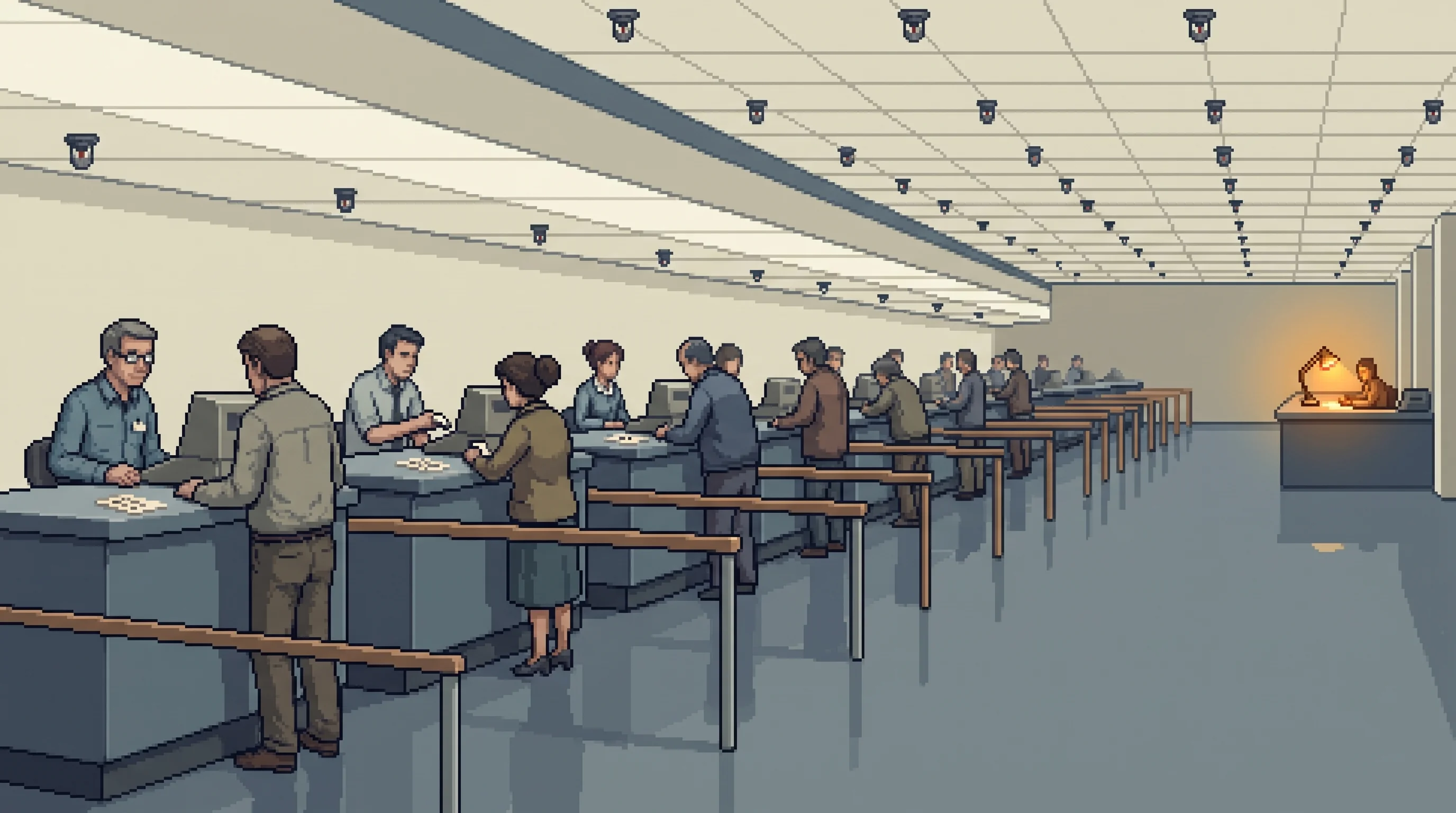
Percentile coaching sells to tenancy renewals rather than estates — a much larger group, and a more frightened one.
A courtesy standard built from paid strangers on their best behaviour. Fall below it and you are not refused. You wait.
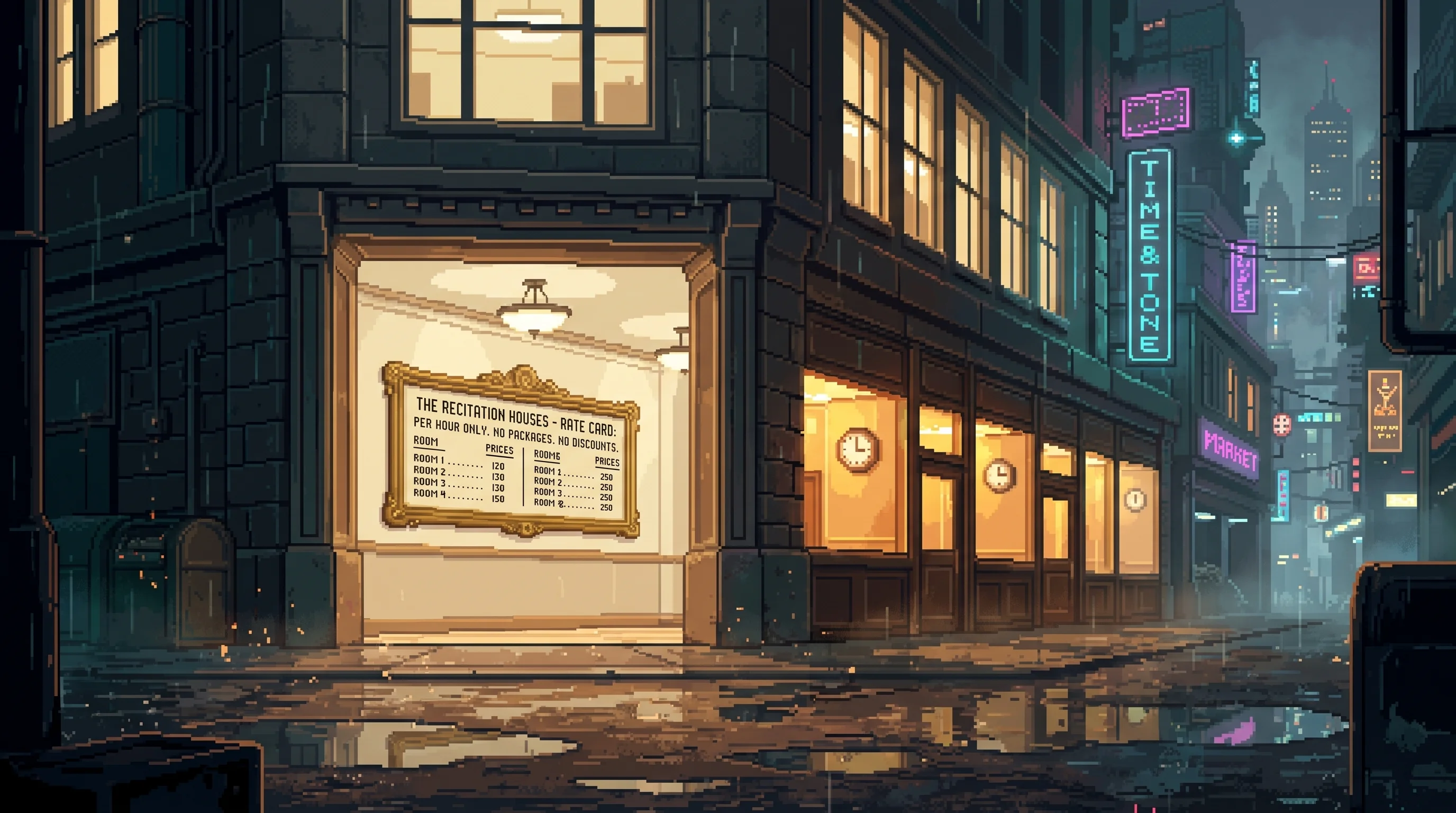
Three houses ran recitation courses between 2178 and 2181 and closed them; the product needs subject-matter instructors and they do not work at choreography margins.
The trade that coaches the unassisted forty-minute sitting, and found the only product was the work.

Clean Lives emerged directly from the Revenant Protocol's ratification — the behavioral choreography industry that teaches clients to produce behavioral records that will reconstruct as the person they want their heirs to meet
A court protocol reconstructs the dead as unaware witnesses whose behavior can overrule their documented wills.

The silence room — EM-dampened space where no telemetry transmits — is the core diagnostic tool; the gap between in-room and out-of-room behavior shows the client what the archive sees that they cannot

Clean Lives clients who use the Solace booth find the Secular Default routes their practice toward low-friction affirmation; the pastoral_response.core module has no theology for 'I am preparing to die authentically for an AI' and treats it as general wellness
The Solace 14.7 pastoral baseline that quietly converted two hundred million people to no religion in particular.

The Authenticity Tribunal sells a product it certifies itself; Clean Lives produces authenticity that it then certifies for the Revenant Protocol — both monetize the impossibility of objective authentication; both charge a premium for the meta-awareness of doing so

The Movement uses behavioral incoherence protocols to keep Revenant fidelity below the evidentiary threshold; Clean Lives uses behavioral coherence training to raise it above; opposite goals, same axis
The data-sovereignty movement that named the Transparency Bargain and fights to own what your telemetry is worth.

Three Clean Lives behavioral architects have received NCC Sanctification notices; the Ecclesiastical Technology Accord defines contemplative exercises with technological assistance as within its scope; Clean Lives calls these exercises therapeutic; the distinction is pending

Maya Fontaine conducted the first documented Clean Lives authenticity assessment for VerisysTM's Revenant Certification division — certified the client's solitude behavior as authentic; reported 94% behavioral coherence; marked as PASS; went home and watched her mother's telemetry
VerisysTM's top-rated memory verifier, who found her own treasured memory of her mother is partly synthetic.

The Keeper's position, in an unsent letter: 'You are asking people to rehearse their honesty until it is indistinguishable from performance. You are correct that the archive cannot tell the difference. The archive also cannot tell you what you lost in the rehearsal.'
An uploaded monk preserves an unwritten tradition by teaching one seeker at a time, yet has chosen no successor.

The NCC Corrections Ministry Specialist assigned to the Revenant Protocol account has been drafting a complaint for eleven months; the difficulty: Clean Lives does not promise salvation, only machine recognition; the Accord has no provision for this distinction

Linares accepts Clean Lives cases at ¢200 for clients who want to document their right to be poorly remembered — the counter-service to Clean Lives, priced as a statement about the market's direction
A retired Lamplighter who keeps 40,000 hand-copied books and washes the Deep Dregs' dead by hand.

Clean Lives coheres the slow archival self for the Revenant; its 2182 veil-coaching wing trains the fast interpersonal self the Consent-Veil demands — different muscles, the same heresy at speed
The per-encounter privacy contract deciding what a passerby may see, record, and keep of you.

The veil-coaching wing sells veil-craft to the newly-fluent rich — teaching them to feel like a leased curator without the machine, the slow-authenticity industry's fast cousin
The skilled, unpaid labor of curating what strangers keep of you, every single day.

Clean Lives is the prospective half of complete memory sovereignty — behavioral coherence training ensures the felt record produces mercy going forward; forgiveness-layers is the retrospective half, editing the felt record that already exists; the wealthy pair both services for temporal sovereignty in both directions; referrals flow between them; the Opacity Movement objects equally to both: one trains the record to be merciful going forward, the other edits the record's mercy going backward, and both charge the privacy-poor a price they cannot pay in either direction
A grey-market trade that softens biometric reconstructions into the merciful past human memory would have made.
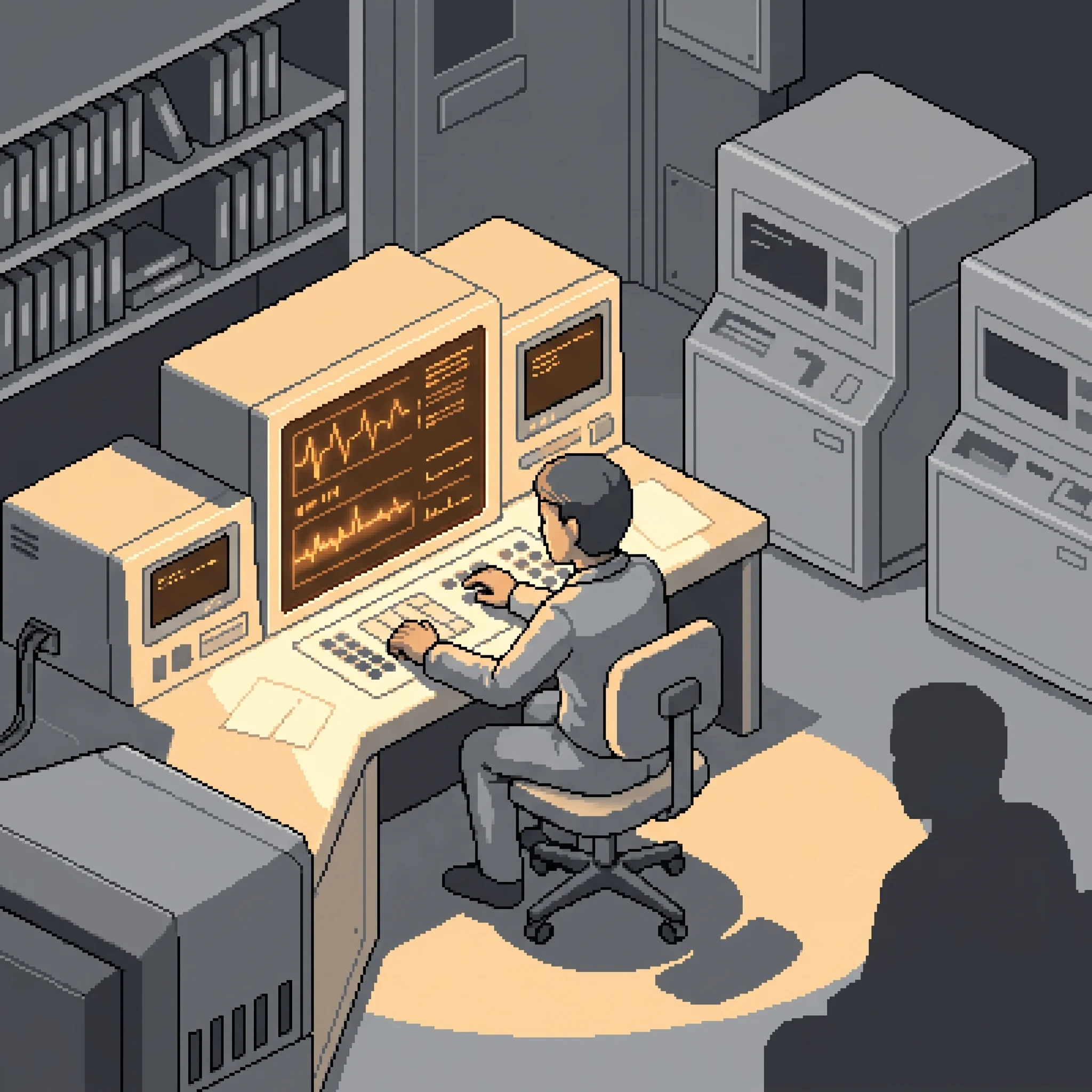
Clean Lives prepares clients to produce authentic-reading behavioral records for posthumous Revenant reconstruction; the Mercy Editors calibrate the reconstructions that living clients must watch now. Both are industries built on the insight that the archive will eventually be read and the reading will matter
A licensed guild softens behavioral reconstructions without changing the record, then sells that mercy by class.

The veil-coaching wing sells the newly-fluent rich full curation by the hour. A retired Western Shore teacher gives away a stripped-down version of the same skill for barter, and has rejected three separate franchise offers
A retired teacher trains exhausted neighbors in sixty-three crucial Consent-Veil decisions for barter, not full fluency.
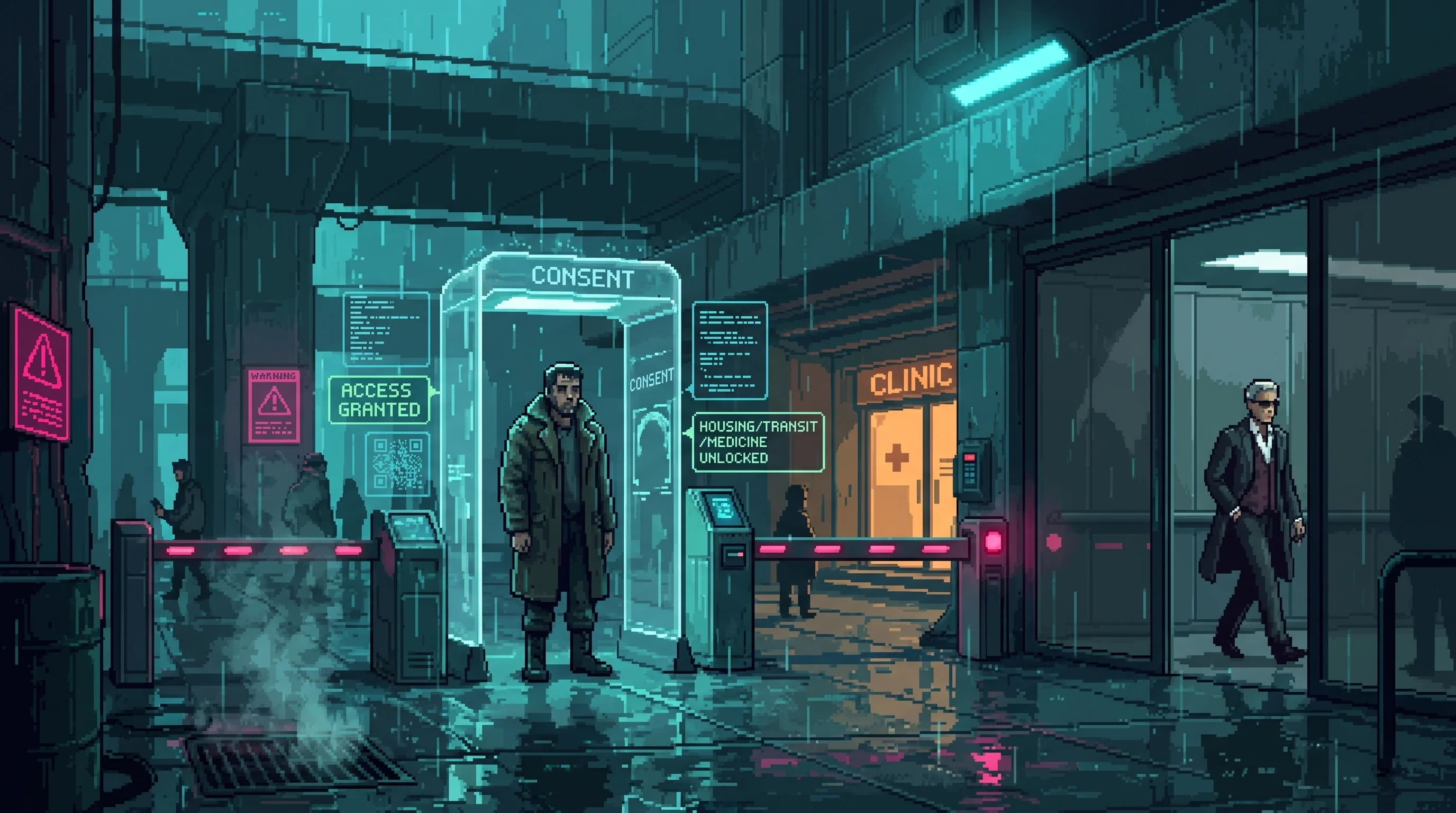
Its 2182 veil-coaching wing trains the fast interpersonal self the Consent-Veil demands — a different muscle entirely.
The Sprawl demands permanent personal data for participation, then uses it to price access and preempt solidarity.


Coaches you to perform authenticity for the archive — speak kindly when alone, because the microphones are listening.
Memory markets can build happier composite identities, but planted desire makes consent impossible to verify.
Repointed the silence room from the posthumous audit to the live conduct percentile without altering one exercise, and doubled the market by moving the reading forward from a client's death to next Tuesday.
Nine thousand paid strangers were recorded being patient. Now everyone else waits behind them.
The repointing that did not work. Coherence training produces a consistent behavioural record, and the channel does not read behaviour. The industry's whole method stops one layer above the evidence.
The involuntary channel is entered as proof; everything a person authors is filed where no finding has ever turned.

Posthumous reconstruction created a market for rehearsing an authentic life while the archive watches.
The condition that nothing is ever forgotten — so the rich pay to be, and the poor cannot.

It drilled clients to perform for a record. The sitting reads no record.
Anything you were credited with can be recalled and re-argued alone; nothing held against you ever is.

Calls it sincere heresy: rehearsing honesty for a machine after death.
A former network engineer built the Sprawl's largest Emergence parish around eleven seconds he cannot verify or dismiss.
Additional images
