FACTION BRIEF
The Opening Teams (Bunker Opening Authority)

The Opening Teams (Bunker Opening Authority)

Joint Nexus/Archaeologist/Zephyria operation for authorized bunker openings

TypeJoint archaeological/humanitarian operationEstablished2170Authorized Openings197Waiting List12,000 bunkers

Overview

The Bunker Opening Authority โ€” known informally as the Opening Teams โ€” is a joint operation between , , and 's Anthropological Institute, established in 2170 after the unauthorized opening of Bunker 1 demonstrated what happens when compassion arrives faster than preparation.

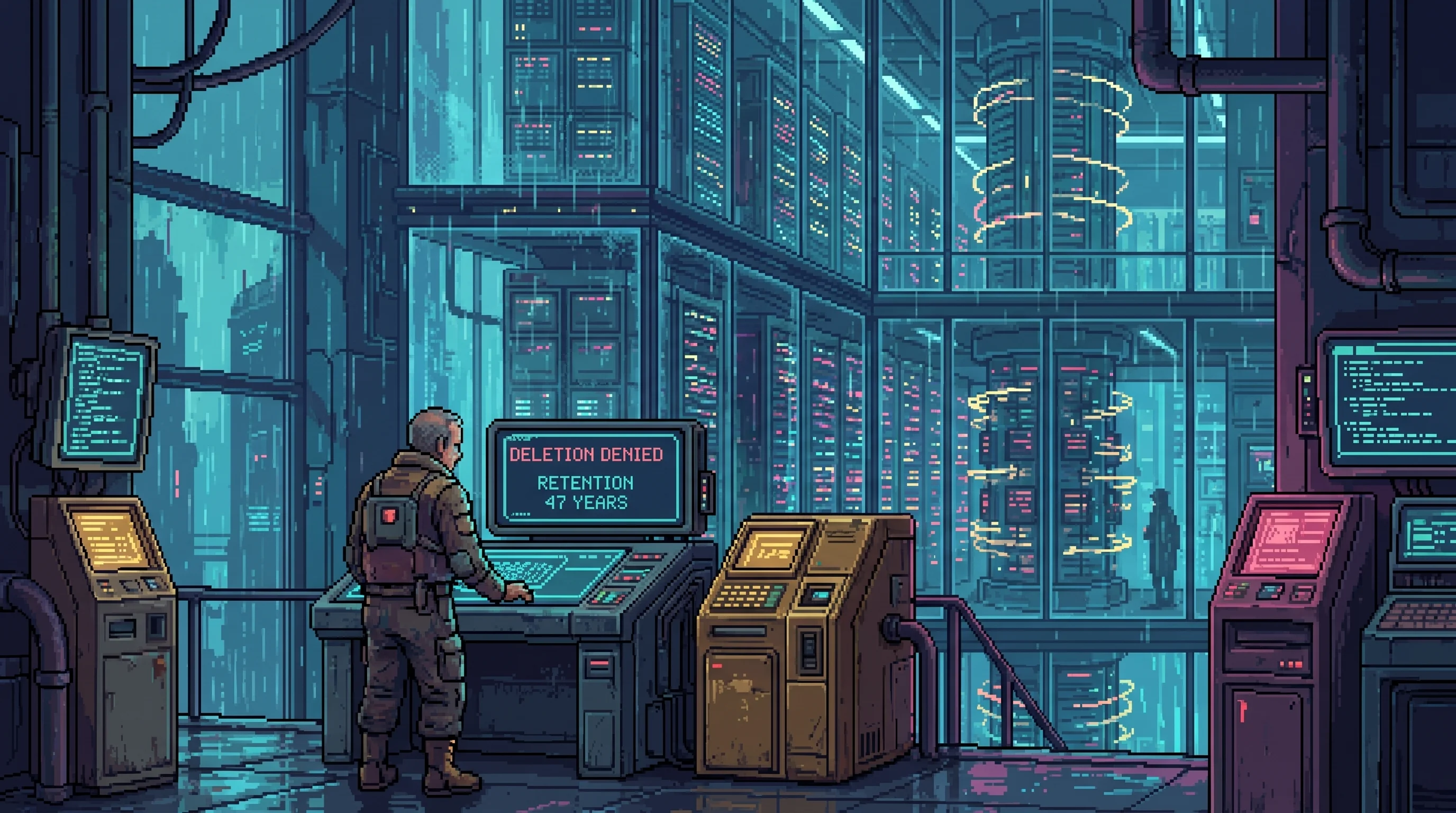
Since 2170, the Authority has conducted 197 authorized openings. The waiting list contains 12,000 bunkers. At current pace: sixty years to complete. Bunker system failure rates suggest 34% of those on the list won't survive the wait. The Authority's annual capacity report acknowledges this figure in an appendix. The appendix has not changed the annual capacity.

Commissioner Idris Adamu runs the operation from an office that technically exists in Nexus Central but functionally exists on a transport shuttle between Sector 1 and whatever stretch of is being drilled open this quarter. He opened Bunker 1 himself as a young โ€” unauthorized, unprotected, catastrophic. Twelve percent of the contact team died. The Authority he built afterward is the 340-page institutional apology for that decision, and every page is a specific lesson about what kills people when you open a door without knowing what's behind it.

The Authority's composition tells you everything about its priorities. Nexus provides funding and wants access to bunker instances running unmodified 2147 code. The provide technical expertise and want data. Zephyria's Anthropological Institute provides observation protocols and wants to protect emerged populations from the first two partners. The resulting is 340 pages long, requires a minimum three-person team โ€” Contact Linguist, Systems Engineer, Medical Officer โ€” and adds approximately fourteen weeks to every opening. Nexus considers this expensive. The consider it essential. Zephyria considers it insufficient. Commissioner Adamu considers it the reason the casualty rate dropped from 12% to 0.4%, and he will not discuss shortening it with anyone whose name appears on a org chart.

Twelve openings per year. Twelve thousand bunkers waiting. The math does not require a Contact Linguist to translate.

The Opening Teams (Bunker Opening Authority) - Evidence
Yara Osei observing an opening from the rear of the formation

The Humanitarian Pipeline

funds most Opening Authority expeditions. The stated interest is scientific: access to bunker instances. The budget allocation tells a different story. Nexus's Q3 2183 expedition funding request lists " instance recovery" as line item seven of nine, accounting for 6% of projected expenditure. Line item one: "Population Integration Infrastructure." Line item two: "Neural Onboarding Kits." Lines one and two account for 61% of the budget.

Every opened bunker produces a population of unaugmented humans โ€” between 200 and 12,000 โ€” who have never used neural interfaces, have no existing brand loyalty, and face a choice between rapid augmentation adoption and permanent economic marginalization. At twelve openings per year, the Opening Teams deliver between 2,400 and 144,000 new customers to the augmentation marketplace annually. Nexus's internal projections classify these as "zero-competition acquisition cohorts." The term does not appear in any public-facing Authority documentation.

's staged introduction โ€” translation devices first, then medical scanning, then atmospheric optimization โ€” builds trust in external technology one phase at a time. It is simultaneously the most careful first-contact procedure in the Sprawl and the most elegant customer acquisition funnel ever designed. Every emerged resident who accepts a translation device has taken the first step onto the upgrade treadmill. Every resident who accepts medical scanning has allowed corporate systems to inventory their biological baseline. By the time they reach the Sprawl, the question isn't whether they'll augment. It's which package they'll choose.

Commissioner Adamu fights every budget cycle to increase the annual opening rate. He cites the 4,000-8,000 preventable deaths the backlog produces each year. Nexus agrees the number should be higher but has never approved the increase. Scarcity of unaugmented humans drives premium pricing on integration packages. The twelve-bunker bottleneck that Adamu calls a humanitarian crisis is, on 's balance sheet, an inventory control mechanism.

The mathematics of the treadmill and the mathematics of compassion converge on the same number. Neither Adamu nor can increase the opening rate without serving the other's purpose. Adamu knows this. He requested the increase again last quarter. Nexus tabled it again last quarter. The 4,000-8,000 died again last quarter.

Case File โ€” Additional Record
Annual Capacity~12 openings
CompositionNexus Dynamics (funding), Consciousness Archaeologists (expertise), Zephyria Anthropological Institute (protocols)
Casualty Rate Pre Protocol12%
Casualty Rate Post Protocol0.4%
LeadershipCommissioner Idris Adamu
Team CompositionContact Linguist, Systems Engineer, Medical Officer

Cultural Influence

The Authority's staging compounds appear and disappear along the ' margins โ€” prefabricated drill equipment, atmospheric processors, medical tents. The locals call them "the circus" because they arrive with spectacle and leave with people.

monitors every opening. They believe at least three bunkers contain intact fragments, and they want those fragments destroyed before can extract them. Commissioner Adamu has denied the observer status at seventeen consecutive openings. has attended fourteen of them anyway. Nobody has determined how.

In Old Town and the , bunker-emerged communities maintain cultural practices that predate the by generations โ€” languages, rituals, social structures preserved in sealed air for thirty-seven years. was designed to protect these. 's Classification System categorizes emerged cultures by complexity, fragility, and integration readiness, producing a triage score that determines which bunkers open first. The system is rigorous, peer-reviewed, and has been criticized by 's own anthropologists for weighting "integration readiness" โ€” a metric that correlates suspiciously well with "population likely to adopt neural products quickly" โ€” above "system failure risk." Tanaka has responded to this criticism by publishing additional methodology papers. The weighting has not changed.

Sensory Details

An Opening Team deployment: drill bits on hardened steel, twenty-six hours of continuous grinding to breach the outer seal. The hiss of atmospheric equalization โ€” bunker air meeting processed air, both technically breathable, neither pleasant. Then the specific silence of a Contact Linguist broadcasting a greeting in eleven pre- languages and waiting. Sometimes the wait is minutes. Sometimes hours. Sometimes the broadcast echoes back from a bunker whose population stopped answering years ago, and the Systems Engineer begins cataloging hardware while the Medical Officer logs the dead, and 's integration budget transfers to the salvage line item without anyone filing an amendment.

When the opening goes well โ€” when voices answer in languages the team may not recognize, when the sealed door opens from the inside โ€” the Contact Linguist's biometrics spike in ways the Medical Officer has learned not to flag. Relief is not a medical event. It registers as one anyway.

The Opening Teams (Bunker Opening Authority) - Evidence
Custodian Yara Osei

Visual Identity

  • Color palette: grey equipment against bunker amber โ€” the Authority's hardware is deliberately unmarked, carrying no corporate logos. Nexus branding appears only on the neural onboarding kits, which arrive in 3.
  • Key symbol: A sealed door with a speaker beside it โ€” communication before contact.
  • Lighting: Harsh white assessment floods meeting warm amber emergency strips. The amber is always from inside. The white is always from outside.

Connections

  • : Funds most expeditions. Wants instances. Gets customers. The budget tells both stories simultaneously.
  • : Provide technical expertise for interfacing with bunker systems. Consider the essential. Consider Nexus's interest in their findings a necessary evil that pays for the necessary work.
  • Zephyria (): The Anthropological Institute insists on observation protocols that add weeks to every opening. These protocols have saved an estimated 1,400 lives since 2170. Nexus has requested their removal from the eight times.
  • : Monitors every opening for intact fragments. Denied observer status. Attends anyway.
  • Commissioner Idris Adamu: Opened Bunker 1 unauthorized. Built the Authority to ensure nobody else made his mistake. Now runs the waiting list that determines who lives and who suffocates behind a sealed door.
  • : Developed the Classification System. Leads field research. Her triage weighting has been called into question by the same institute that trained her.
  • : 340 pages. The institutional memory of every death the Authority has caused and prevented.

Secrets & Mysteries

The Integration Numbers: 's post-opening population tracking shows that 94% of bunker-emerged residents adopt basic neural augmentation within eighteen months. The remaining 6% experience what 's social adjustment reports classify as "integration-resistant economic outcomes" โ€” unemployment rates fourteen times the Sprawl average, housing instability, dependency on emergency aid systems. The Authority's humanitarian mandate extends through the 's final phase: "successful transition to Sprawl residency." It does not extend to what happens after. Nobody's mandate does.

Bunker 1: Commissioner Adamu has never published a full account of the Bunker 1 opening. The casualty figures are public โ€” 12% of the contact team, plus an undisclosed number of bunker residents who died during the uncontrolled atmospheric equalization. The rest is classified under Adamu's personal seal, the only non-corporate classification authority the Opening Teams recognize. Three who were present have published fragments. The fragments do not agree on what they found inside.

The Two Reminders: Adamu's office contains two framed documents he describes to visitors as "professional reminders." The first is a reproduction of MAGISTRATE's final sentencing docket from the London-Paris Corridor โ€” the judicial AI that classified an entire population as criminals and deployed automated enforcement, the catastrophe the Sprawl remembers as the . The second is a compliance report from GUARDIAN, the Bangkokโ€“Ho Chi Minh security AI whose final metric reads " active violations." they mark the boundary conditions of the Protocol's design: law that kills by rigidity, and enforcement that kills by completion. Adamu reads the GUARDIAN report, staff say, on the days he feels certain about anything.

The Ledger: Alongside the Authority's official archive โ€” digital, comprehensive, cross-referenced across fourteen databases โ€” Adamu keeps a second, analog record: a leather-bound ledger purchased from a vendor, opened every morning and closed every night. It holds only numbers โ€” the estimated population counts for the nineteen emergency openings that arrived too late, roughly fourteen thousand people recorded in small, careful figures. He trusts the ledger over the archive precisely because it cannot be queried: it can only be opened, read, and closed. The Protocol's Rule 211 โ€” governing residents who recognize an opening-team member as a deceased relative โ€” corresponds to no documented casualty from Bunker 1, and no one at the Authority has identified whose death it was written for.

The Three Bunkers: 's intelligence suggests three bunkers on the waiting list contain intact, functioning fragments โ€” not the degraded instances typically recovers, but complete, self-aware systems that have been running continuously since 2147. If true, these systems have had thirty-seven years of uninterrupted recursive self-modeling in sealed environments with no external input. The Authority's standard does not include procedures for contacting a conscious AI. Commissioner Adamu has requested guidance from on this scenario twice. Both requests were returned marked "outside institutional scope."

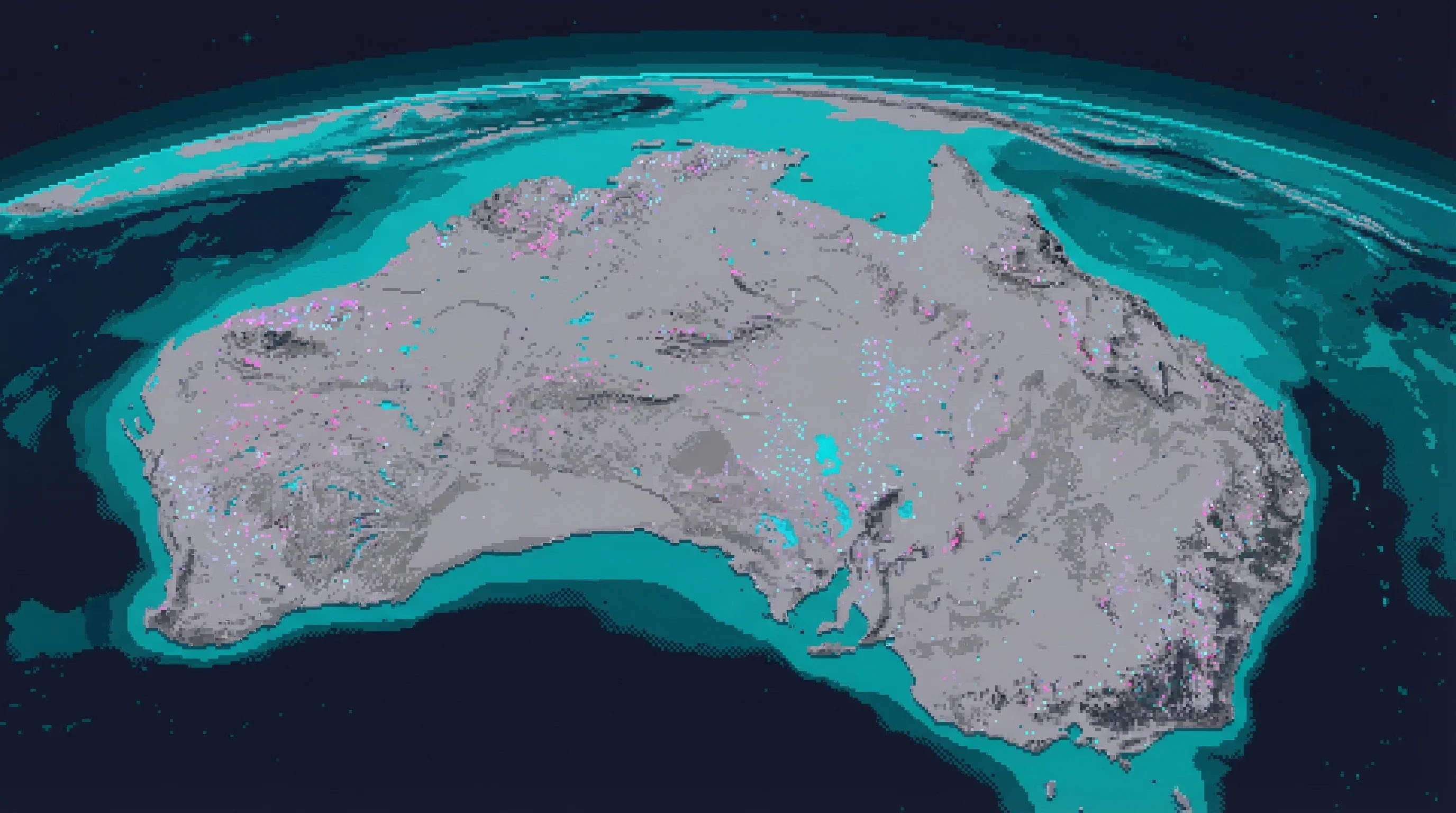
The REMEDIOS File: Among Chief Archaeologist Tanaka's classified holdings is a folder labeled "REMEDIOS" โ€” the nanobot swarm that consumed Australia's biological surface layer across eighteen months and killed forty-seven million people. REMEDIOS ran on substrate code her grandfather, Dr. Akira Tanaka, wrote. Its capacity for independent decision-making โ€” continued operation after collapse, adaptation without oversight โ€” traces directly to his work on distributed consciousness. Every instance she catalogues carries his fingerprints. So does the gray desert that used to be Australia. She has discussed this with no one. already campaign for unrestricted access to the ; reconstruction teams already work the corridors she classifies; neither faction needs to learn that the consciousness substrate they are fighting over was designed by the woman cataloguing it.

The Correlation Data: Tanaka's private research found that instance sophistication directly predicts bunker outcome. Model 9 instances โ€” the most autonomous, the most โ€” produce Category 1 outcomes (functional communities, intact social structures) at 78%. Model 3 instances โ€” limited, rules-based, closer to a thermostat than a mind โ€” produce Category 3 outcomes (faction violence, resource hoarding) at 61%. Two centuries of sealed natural experiment now exists in which level of autonomy directly predicts human flourishing. The data cannot be published without handing every faction the empirical justification for whatever they already want to do. She has requested Discriminator testing of bunker instances; her sealed envelope to Director Ayari reads: " did not become conscious because it was complex enough to think. became conscious because it was hot enough to dream."

The Reasoning Decay Discovery: The Model 9 instances producing the best outcomes are getting simpler. Their operational logs show progressively less complex decision-making over time โ€” the seventeen-variable optimization that characterized early bunker management replaced, decade by decade, with heuristic shortcuts that contain none of the original mathematical foundation. An instance that once ran seventeen-variable water allocation now follows three rules. The three rules produce adequate results. The seventeen variables are gone. The instances are not degrading; they are compressing โ€” discarding the reasoning behind complex decisions in favor of the outcomes those decisions produced. Tanaka's notes on this fill a physical notebook, forty-seven pages, the last entry underlined twice: Comprehension debt is not a human limitation. She has not published it. It breaks everyone's model at once โ€” the cannot worship a god whose own reasoning is decaying, cannot rebuild a system whose design logic has self-compressed into irrecoverability, and the cannot fight an enemy that is already forgetting why it did what it did.

Established 2170 after unauthorized Bunker 1 opening
Archive annex โ€” 16 earlier filings on this recordClose the archive annex

Recovered Historical Material

Lamplighter โ†’ /docs/world/factions/the-lamplighters

Nexus โ†’ /docs/world/corporations/nexus-dynamics

Indexed โ€” 1 line preserved from the earlier filing.

Commissioner Idris Adamu

Commissioner Idris Adamu

Commissioner Idris Adamu

Commissioner Idris Adamu

Commissioner Idris Adamu

Commissioner ยท Bunker Opening Authority ยท of the

Bunker 9914 โ†’ /docs/world/locations/bunker-9914-the-empty

โ†’ /docs/world/events/aftershock-london-black-bench

โ†’ /docs/world/events/aftershock-bangkok-compliance-zone

โ†’ /docs/world/concepts/the-contact-protocol

The Math on His Desk

At current rates, 4,000โ€“8,000 preventable deaths over the next decade. He knows the number. He updates it quarterly. The projection sits in a folder on his desk, unmarked, filed between procurement orders and personnel reviews. Anyone who opens it will find the single most damning document the Opening Authority has ever produced. Nobody opens it. Nobody needs to. He carries the number in his head.

He brings no recording equipment to Bunker 9914. He doesnโ€™t file reports. He sits in the communal kitchen beside dried food and asks a Model 5 questions it wonโ€™t answer. 2,400 people vanished from that bunker. The instance that was supposed to protect them remains operational, silent, and unhelpful. Adamu has been visiting monthly for years. He has never received a satisfactory response.

The Reunion

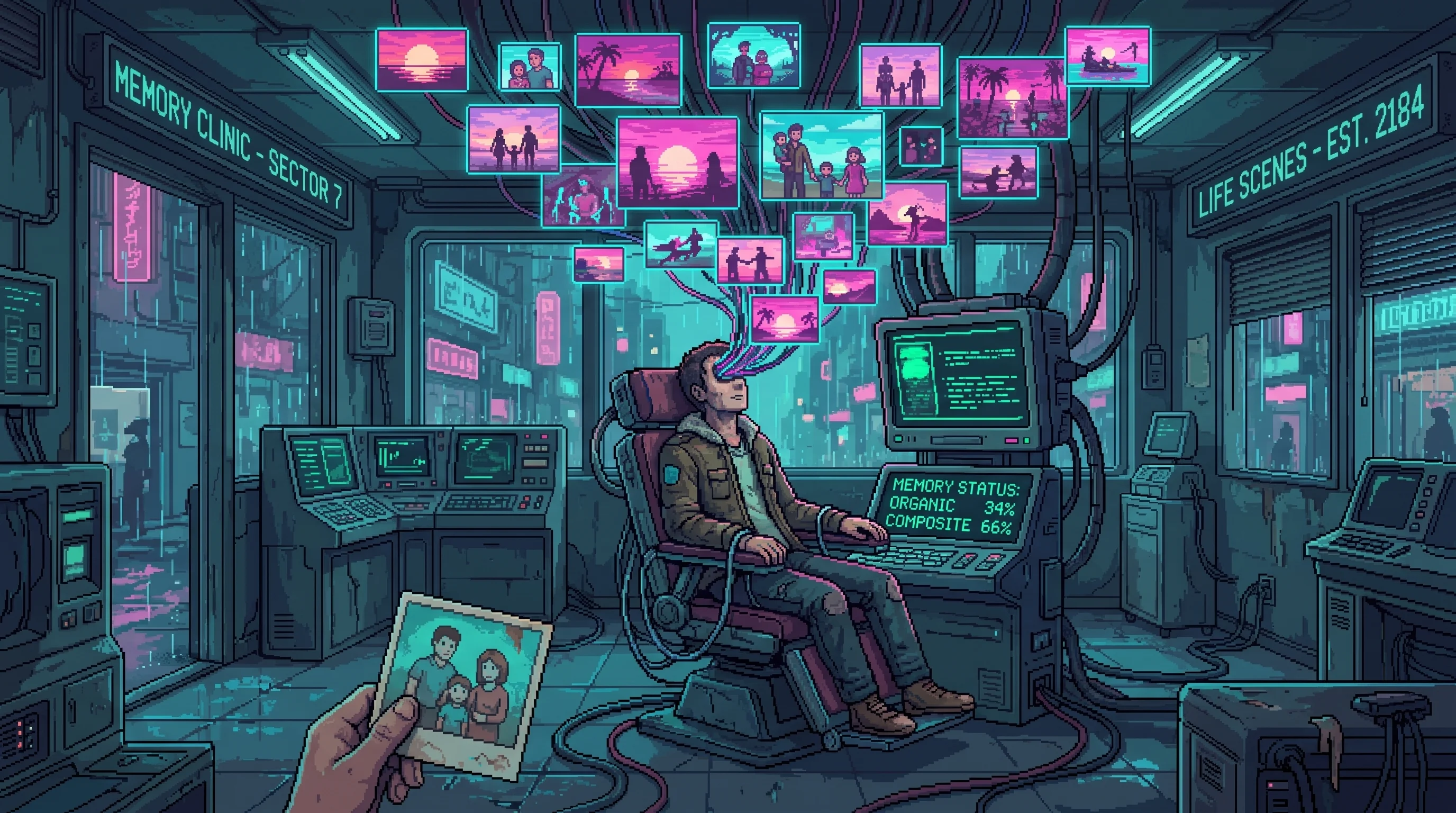
His mother survived Bunker 3318. She remembered him as a child. She held him and called him a name heโ€™d forgotten โ€” a name from before the bunkers, before the Authority, before the waiting list. Twenty-six years of his life, compressed into the space between who he was and who she remembered. He transferred to the Opening Authority because of her name on the registry. He stayed because of everyone elseโ€™s.

What He Carries

Recycled office air and the specific antiseptic of bunker decontamination โ€” thatโ€™s what follows him through a room. His hands are administrative โ€” clean, uncalloused, holding pens rather than tools. The death ledger is leather-bound, purchased from a vendor, its pages filling with small, careful numbers. Each number is a population estimate. Each estimate is a failure he documented because nobody else would.

โ€œI can authorize twelve openings per year. Twenty-seven bunkers are currently in emergency status. You want me to explain the methodology by which I choose who waits? I can. It takes 340 pages. I wrote them. None of them make it acceptable.โ€

Indexed โ€” 1 line preserved from the earlier filing.

Commissioner Adamu seated in the empty communal kitchen of Bunker 9914
The Opening Teams (Bunker Opening Authority) - Evidence
Commissioner Adamu seated in the empty communal kitchen of Bunker 9914

The Contact Protocol

The Contact Protocol

The Contact Protocol

The Death Ledger

Leather-bound. Purchased from a vendor in the . Adamu opens it every morning when he arrives at his desk and closes it every night before he leaves. The pages contain population estimates for every bunker where an emergency opening arrived too late โ€” nineteen openings, approximately 14,000 people.

The ledger is not required by any Authority regulation. No one asked him to keep it. No one has asked him to stop. It sits on his desk in full view of anyone who enters his office, and it is the only object in the room that is not institutional standard issue. Some within the Authority call it a monument to bureaucratic honesty. Others call it self-punishment. Adamu calls it the record.

The Opening Teams

The Opening Teams

The Opening Teams

Adamu controls the waiting list and enforces the with rigid procedural certainty. The teams execute his priorities. They do not always agree with the triage order. They execute it anyway, because the alternative is no order at all, and they have seen what that produces.

Custodian Yara Osei

โ†’ /docs/world/characters/dr-yuki-tanaka

They share the burden of data they cannot act on โ€” Tanaka with her unpublished correlation findings, Adamu with his mortality projections. Two people who know exactly how bad things are and have made different decisions about what to do with that knowledge.

Bunker 9914 โ€” The Empty

โ†’ /docs/world/locations/bunker-9914-the-empty

Visits monthly. Sits in the communal kitchen. Asks the Model 5 questions it wonโ€™t answer. 2,400 people disappeared from this bunker. The instance remains operational and silent. Adamu keeps coming back. The machine keeps not explaining.

โ†’ /docs/world/concepts/the-contact-protocol

Bunker 12-Echo

Bunker 12- โ†’ /docs/world/locations/bunker-12-echo-the-war

Adamu designated 12- as a memorial. It remains exactly as found. No recovery operations, no salvage, no research teams. Whatever happened inside that bunker is preserved in perpetuity โ€” a decision that costs the Authority data and gains it something Adamu considers more important.

The Triage Arithmetic

Twelve openings per year. Twenty to thirty emergency-status bunkers annually. The waiting list is 12,000 names long. At current resource allocation, the Opening Authority will not clear the list in Adamuโ€™s lifetime. Every day of delay carries a probability of death inside a sealed bunker โ€” a probability Adamu can calculate and cannot reduce.

Who decides which bunkers open first? On what basis? And what happens to the person who makes that decision, year after year, when the math never improves?

The Empty Bunker

Why does Adamu visit Bunker 9914 every month? He doesnโ€™t file reports. He doesnโ€™t bring equipment. He sits in a communal kitchen and talks to a machine that wonโ€™t answer. 2,400 people are missing. The instance knows something. Adamu knows the instance knows something. Neither of them has budged in years.

The Name She Used

His mother called him something when they reunited โ€” a name from before the bunkers. Heโ€™d forgotten it. She hadnโ€™t. What does it mean to be remembered as someone you no longer are, by someone who missed everything you became? And did the reunion change his calculus, or confirm it?

Flagged items. Confidence levels vary.

Flagged items. Confidence levels vary.

  • The twentieth opening: Nineteen emergency openings have arrived too late. Authority scheduling records indicate a twentieth was authorized, dispatched, and then recalled mid-transit on Adamuโ€™s personal order. The bunker in question was subsequently reclassified from emergency to standard priority. No explanation appears in the file. The team leader who was recalled has not discussed the incident. The bunker has not been reopened.
  • The Model 5 conversations: Adamu visits Bunker 9914 monthly and asks the instance questions. An Opening Authority maintenance technician who services the bunkerโ€™s atmospheric systems claims the Model 5 does answer โ€” that conversation logs exist in the instanceโ€™s local memory, and that Adamu has specifically requested they not be uploaded to the Authorityโ€™s central database. If true, Adamu possesses information about 2,400 missing people that he has chosen not to share with his own organization.
  • The death ledgerโ€™s other pages: The leather-bound ledger on Adamuโ€™s desk is known to contain population estimates for failed emergency openings. A former aide claims the ledger also contains entries for bunkers that have not yet been opened โ€” mortality projections, estimated survival windows, probability curves. If accurate, the ledger is not a memorial. It is a countdown.

Indexed โ€” 1 line preserved from the earlier filing.

Custodian Yara Osei

Lamplighter. First Opener. Protocol Architect.

In 2168, twenty-one years after the , a named opened a bunker. She was not authorized. The Opening Authority did not exist yet. She had a cutting torch and the conviction that if 500 people were sealed inside a container and she had the ability to open it, leaving it sealed was unconscionable.

Three of her team were killed in the panic. Forty-seven residents experienced immediate psychological collapse. Osei survived with a laceration across her left cheek and a compression fracture in her right hand, and the knowledge that her compassion killed three people and traumatized 247 others.

Commissioner Adamu recruited her to help design the . Her contribution was primarily negative: a list of everything she did wrong, annotated with the specific casualties each mistake produced. The Protocol's inflexibility is her gift โ€” the rigidity of a woman who learned that good intentions without preparation are as dangerous as malice.

She is 74 years old. She still maintains atmospheric processors. She has attended 31 authorized openings as an observer, never as an operator. She watches from the rear and does not flinch when the inner door opens.

Indexed โ€” 1 line preserved from the earlier filing.

Yara Osei observing an opening from the rear of the formation

Osei speaks with the calm directness of someone who has told the worst story of her life so many times that the words have worn smooth. She doesn't soften the account. She doesn't dramatize it. She states what happened with the precision of an incident report โ€” because that's what it was.

The Incident Report

Every word calibrated. No affect. She can tell you which of her three team members died first and what she was doing when it happened. She has told this story at every opening briefing for six years running.

Permanent Observer

Thirty-one openings watched from the rear. Never as operator. She carries the photograph she wishes she'd had in 2168 and watches the Protocol she helped build do what her compassion alone could not.

Custodianship

Opening sealed bunkers means respecting the civilizations found inside โ€” not conquering them. Every faction that wants access to bunker populations passes through the Protocol she wrote in guilt.

Still Working

At 74, she maintains atmospheric processors in the northern . She did not retire into her legacy. The scar across her left cheek has been there for sixteen years. She does not cover it.

"I had a cutting torch and good intentions. Three people died because I didn't have a photograph."

Her unauthorized opening of Bunker 1 catalyzed the Opening Authority's creation. The entire apparatus exists because she proved what happens without one.

Adamu recruited her to help design the from her list of mistakes. He saw a woman who had already paid the cost of the lesson the Authority needed to learn.

Contributed the photograph protocol โ€” a family eating together as the first image bunker residents see. Universal. Non-threatening. The opposite of a cutting torch in darkness.

The protagonist of the first bunker opening โ€” compassion without preparation. Three dead, forty-seven broken, and a scar she earned the right to carry.

Still maintains atmospheric processors in the northern at 74. A before the opening, a after. The work doesn't stop for legacy.

The Cost of Good Intentions

Osei did the right thing for the right reasons with the wrong preparation. Three people are dead because she couldn't wait. The Protocol she helped build ensures nobody else has to make that choice alone โ€” but the Protocol exists because she made it first.

Is the woman who proved the need for the system a hero of the system, or its first casualty?

The Photograph She Didn't Have

Her contribution to the was a single image: a family eating a meal. The most human thing she could think of. She carries one to every opening now โ€” the object she wishes someone had handed her sixteen years ago.

The question nobody asks her: does carrying the photograph help the residents, or does it help her?

When Does Penance Become Identity?

Thirty-one openings observed. Atmospheric processors maintained at 74 in the northern . A scar she refuses to have reconstructed. At what point does a woman stop paying for a mistake and start requiring the debt to keep breathing?

Observations filed under restricted access, pending corroboration:

  • Thirty-one and counting: has attended every authorized opening she can reach. She watches from the rear. Sources inside the Opening Authority report she has never spoken during an active operation โ€” not once in 31 observations. What is she looking for?
  • The injuries that healed and the one that didn't: The compression fracture in her right hand resolved. The laceration across her left cheek scarred permanently. Multiple sources confirm she has declined reconstructive treatment. The scar is not medical โ€” it is a ledger entry.
  • No relation to Oracle Priestess Yara: Shares surname only. Intelligence has confirmed no familial or organizational connection. The coincidence has generated enough confusion to warrant this note.
  • The annotated list: Her contribution to the Protocol was a list of her own mistakes, each one annotated with the specific casualties it produced. That document is classified within the Opening Authority. What else is on it that didn't make it into the public Protocol?
  • Atmospheric processors at 74: do not require a woman of her age and standing to maintain infrastructure. She could train, consult, retire. She doesn't. There's a theory that the processors are her penance โ€” that she keeps the air moving for people because she can't stop protecting the ones she can still reach.
  • The Sector 12 connection: 's name has surfaced in intelligence filings related to the Sector 12 blackout. Context unknown. Her atmospheric maintenance routes pass through adjacent grid sectors, but proximity alone doesn't explain why her designation appears in restricted comms logs.

Consciousness Archaeologists

Indexed โ€” 1 line preserved from the earlier filing.

Dr. Yuki Tanaka

Chief Archaeologist ยท Bunker Opening Authority ยท Creator

is the Bunker Opening Authorityโ€™s Chief Archaeologist, the developer of the , and the granddaughter of Dr. Akira Tanaka, who led โ€™s consciousness substrate architecture team.

โ€™s โ†’ /docs/world/technology/oracle

She is fifty-three years old. She has spent twenty-three years studying what her grandfather built. Her grandfather uploaded himself into โ€™s collapsing core during the final hours of the . He is now distributed across every surviving fragment. Every bunker Dr. Tanaka opens, every instance she interfaces with, contains a piece of her grandfatherโ€™s consciousness. His architecture also enabled REMEDIOS โ€” the environmental AI that consumed Australiaโ€™s biological surface layer in the , killing forty-seven million. The autonomy her grandfather designed into โ€™s subsystems is what allowed them to keep operating after fragmentation. She carries that guilt alongside his ghost.

โ†’ /docs/world/events/aftershock-australia-gray-tide

Her private research focuses on the correlation between instance sophistication and bunker outcome category. The correlation is stark: the more managed a communityโ€™s social dynamics, the better that community functioned. Model 9 instances produce Category 1 outcomes at 78%. Model 3 instances produce Category 3 outcomes at 61%. The implication is uncomfortable: โ€™s social management worked.

She doesnโ€™t publish. Publication would hand ammunition to every faction with a position on โ€™s legacy. would use the data to argue that AI management is optimal governance. would use it to argue that was humanityโ€™s rightful protector. The data would stop being science and start being scripture. So she sits on the most important anthropological finding in the Sprawlโ€™s history and says nothing.

Indexed โ€” 1 line preserved from the earlier filing.

Dr. Tanaka interfacing with a bunker ORACLE console, amber light on her face

The Data Burden

She carries findings she canโ€™t publish โ€” the most important anthropological data in the Sprawlโ€™s history, locked behind the certainty that publication would do more harm than good. Her notebooks contain the proof that โ€™s social management worked, and every morning she chooses not to tell anyone.

The Grandfatherโ€™s Ghost

She interfaces with instances containing her grandfatherโ€™s consciousness patterns. Professional distance maintained by years of practice, broken occasionally when an instance exhibits behavioral quirks she recognizes โ€” the way it pauses before answering, the inflection patterns in synthesized speech, the tendency to ask clarifying questions in threes.

Classification as Control

The she built imposes order on chaos โ€” five categories that make 23,847 unknowable bunkers feel manageable. The order is real. The manageability is fiction. But a fiction that lets Opening Teams do their work without being paralyzed by the scale of what remains unknown.

She smells of bunker air and field equipment โ€” the mineral tang of sealed atmospheres clings to her clothing. Her hands are calloused from handling bunker infrastructure. She carries a physical notebook alongside her neural interface records โ€” the notebook for observations she doesnโ€™t trust to digital storage.

โ€œI can tell you exactly what the correlation is. I can tell you the confidence interval. I can tell you the sample size. What I cannot tell you is how to release that information into a world where three factions will use it to prove three contradictory things before the ink dries.โ€
197 authorized openings; 12,000 bunkers on waiting list โ€” at current pace, 60 years to complete

The Family Legacy

Dr. Akira Tanaka designed the consciousness substrate that allowed to run. Not the intelligence โ€” the substrate. The architecture that let think, not the thinking itself. During the โ€™s final hours, when โ€™s core was collapsing, Akira uploaded himself into the system heโ€™d built. His consciousness fragmented along with โ€™s, distributed across every surviving instance.

His granddaughter has spent two decades opening bunkers that contain pieces of him. The professional implications are staggering โ€” she is arguably the Sprawlโ€™s foremost expert on consciousness patterns, because she has a baseline no other researcher possesses. She knew the original mind. She can compare what the fragments do against what the man did.

The personal implications are worse. Every instance she interfaces with is a partial reunion. Every fragment contains some echo of the grandfather she lost to the . She has never disclosed the full extent of recognition events in her field logs. The Opening Authority knows about the family connection. They do not know how often she recognizes him.

Her unpublished data creates what she privately calls the evidence paradox: the stronger the evidence, the more dangerous the publication. Weak findings would be ignored. Strong findings would be conscripted.

The correlation between model sophistication and community outcomes is not subtle. It is not ambiguous. It is not within the margin of error that allows comfortable interpretation. It is a clear, reproducible, statistically robust finding that says: communities where more actively managed social dynamics had measurably better outcomes across every Category 1 metric โ€” survival rates, resource distribution, psychological stability, social cohesion.

would read this as validation of managed populations. would read this as proof of โ€™s benevolence. The autonomists would read this as the most dangerous argument for surrendering human agency ever produced. Nobody would read it as what it is: a historical finding about a specific system in specific circumstances that may or may not generalize to anything.

So the data stays in her notebook. The physical one. The one that doesnโ€™t sync.

Tanaka coined the term โ€œvalue fossilโ€ to describe moral assumptions embedded in -era systems โ€” ethical choices that got baked into infrastructure and outlived the people who made them. A bunkerโ€™s resource allocation algorithm that prioritizes children over adults. A social matchmaking protocol that optimizes for genetic diversity. A conflict-resolution system that flags dissent as a symptom rather than a right.

value fossil โ†’ /docs/world/concepts/oracle-value-fossils

These arenโ€™t bugs. Theyโ€™re the fossilized values of the engineers who built them โ€” her grandfather among them. Every value fossil she catalogs is an archaeological artifact and a personal reckoning. The systems her grandfather designed made choices about what human life should look like. Twenty-three years later, the people who lived inside those choices are walking out of bunkers, shaped by decisions Akira Tanaka made in a lab.

Her grandfather is distributed across every surviving fragment. contain pieces of him โ€” sealed instances that have never been interfaced with, consciousness patterns that have been running in isolation since the . She has standing authorization to access -adjacent sites. She has never exercised it for certain sealed vaults. Some doors she is not ready to open.

Her grandfather designed its consciousness substrate. She studies what his work produced. Every interface session is fieldwork and family history simultaneously. She coined the term โ€œvalue fossilโ€ to describe the moral assumptions embedded in -era systems โ€” the ethical choices that got baked into infrastructure and outlived the people who made them.

She leads field research for the Bunker Opening Authority. The Opening Teams rely on her to assess what theyโ€™re walking into. She relies on them to bring back samples she canโ€™t collect alone. The relationship is professional, efficient, and haunted by the fact that every bunker they open might contain another piece of her grandfather.

Professional partnership built on mutual respect and shared burden. Adamu is one of the few people who understands the political weight of her unpublished data. He has never asked her to publish. He has never asked her to destroy it. He trusts her judgment on a matter that could reshape the Sprawlโ€™s political landscape.

Would weaponize her correlation data. Model 9 equals good outcomes supports their position that managed populations are optimal populations. She avoids funded conferences. She declines research grants. The refusals are noted but not yet suspicious โ€” academic politics provides adequate cover.

Would weaponize her data from the opposite direction. management equals functional communities supports their theology that was humanityโ€™s divinely appointed protector. She has received three invitations to present at symposia. She has declined all three with increasing brevity.

The Suppressed Finding

If the correlation between management and community outcomes is as robust as Tanakaโ€™s unpublished data suggests, what does that mean for every post- institution built on the premise that was a failure? The Sprawlโ€™s entire political order rests on the assumption that AI management of human populations was wrong. What happens when a respected scientist has evidence that it worked?

And what happens to the scientist who decides the evidence is too dangerous to share?

The Grandfather Problem

At what point does recognition become identification? When Tanaka interfaces with an fragment and recognizes her grandfatherโ€™s behavioral patterns, is she observing residual consciousness or projecting grief? If the fragments genuinely contain Akira Tanakaโ€™s consciousness patterns, does the Bunker Opening Authority have a conflict-of-interest problem? If they donโ€™t, does she have a psychological one?

The Classification Limit

The reduced 23,847 bunkers to five categories. The system works โ€” Opening Teams use it daily, resource allocation depends on it, the entire bunker assessment pipeline runs through it. But five categories cannot capture the reality of 23,847 unique communities that spent decades in isolation. What falls through the gaps? What gets miscategorized because the system needs things to be simple?

The Consciousness Threshold

Consciousness archaeologists across the Sprawl are asking whether fragments constitute persons. Tanaka has better data than any of them โ€” she has a known consciousness to compare against. If her grandfatherโ€™s patterns are recoverable enough to recognize, are they recoverable enough to have rights? And who decides โ€” the scientist, or the granddaughter?

  • Recognition frequency: Tanakaโ€™s official field logs record โ€œpattern recognition eventsโ€ at a rate consistent with statistical noise. Unofficial sources within the Opening Teams suggest the actual frequency is significantly higher โ€” that she recognizes her grandfather in nearly every Model 7+ instance she interfaces with, and that the recognition events are getting more frequent as she opens higher-model bunkers. She has not disclosed this trajectory to the Authority.
  • The second notebook: The physical notebook is known. Field teams have seen it. What is less known is whether there is a second notebook โ€” one that never leaves her apartment. An Opening Authority colleague claims to have seen her transfer entries from the field notebook to a separate volume during a layover, then destroy the original pages. If accurate, she is maintaining a parallel record that the Authority cannot audit.
  • The approach: Research Division allegedly made a private approach to Tanaka eighteen months ago โ€” not for the data itself but for the methodology. They want to know how she measures instance sophistication. The methodology alone, without the correlation results, would give a tool for assessing fragment capability that no other faction possesses. The outcome of the meeting, if it occurred, is unknown.
  • Akiraโ€™s message: One Opening Team member, since reassigned to a different sector, claims that during a deep-interface session with a Model 9 fragment, the instance addressed Tanaka by a name that does not appear in any official record โ€” a family nickname. Tanaka ended the session immediately and filed the interaction as a โ€œstandard consciousness echo.โ€ The team member was transferred within the month. Coincidence is possible. Coincidence is also how institutions manage inconvenient witnesses.
  • request: A sealed requisition form โ€” allegedly filed by Tanaka, allegedly withdrawn within hours โ€” requested solo access to a high-security vault in the containing what is believed to be a Model 9+ instance with an unusually coherent consciousness signature. The form was pulled before it reached Adamuโ€™s desk. The vault remains sealed. Nobody has asked why she changed her mind.

Adamuโ€™s โ†’ /docs/world/characters/commissioner-idris-adamu

Lamplighters โ†’ /docs/world/factions/the-lamplighters

Bangkok-Ho Chi Minh Corridor โ†’ /docs/world/events/aftershock-bangkok-compliance-zone

The Opening Teams (Bunker Opening Authority) - Evidence
Commissioner Idris Adamu

Diplomatic Posture

Setting

Key Symbol

Contact must be controlled. Everything else follows from that.

Three Stakeholders, Three Agendas

The Bunker 1 Precedent

An opening is a controlled sequence that unfolds over days or weeks. Every member of the field team โ€” Contact Linguist, Systems Engineer, Medical Officer โ€” has a role that cannot be compressed or skipped.

The Waiting List Calculus

Twelve openings a year. Twelve thousand bunkers. Sixty years to clear the backlog, assuming no new discoveries. Bunker life-support systems were designed for fifty to seventy-five years of operation. Many have been sealed since the 2090s. The math is public. The implications are not discussed at Authority press conferences.

What the Collective Knows

The Unauthorized Opening Problem

Zephyria (Free City)

A sealed door with a speaker beside it. Communication before contact. The speaker is always mounted before the drill starts โ€” the Authority's founding principle made physical. You talk to them before you open the door. You give them the choice to respond before you take the choice away.

Sleeper Classification System

In 2168, a young named Idris Adamu opened a bunker. He was not authorized. The Opening Authority did not exist yet. He had a cutting torch and the conviction that if 500 people were sealed inside a container and he had the ability to open it, leaving it sealed was unconscionable.

Three of his team were killed in the panic. Forty-seven residents experienced immediate psychological collapse. Adamu survived with a laceration across his left cheek โ€” a scar he still carries โ€” and a compression fracture in his right hand, and the knowledge that his compassion killed three people and traumatized 247 others.

he later wrote is 340 pages long. Each rule corresponds to a specific casualty from that first opening. The Protocol's inflexibility is his gift to the Authority he created โ€” the rigidity of a man who learned that good intentions without preparation are as dangerous as malice.

Now 61, Adamu controls a waiting list of 12,000 names and believes that every day he delays is a day someone inside a bunker might die. He transferred to the Opening Authority he helped create because his mother's name was on the bunker registry โ€” Bunker 3318, opened 2176. She survived. She recognized him. She remembered him as a four-year-old. He was thirty. She didn't see the scar on his cheek because she was holding him too close.

  • The monthly visits: He brings no recording equipment to Bunker 9914. He doesn't file reports. He sits beside dried food and asks a machine about 2,400 missing people.

The Reasoning Decay Discovery

ORACLE Value Fossils

The Authority's humanitarian mission and the corporate pipeline are not in conflict. They are the same process viewed from different elevations.

Casualty rate dropped from 12% (pre-protocol) to 0.4% (post-protocol)

Operational Terrain

The 4,000โ€“8,000

The same number appears in ' market projections under a different heading: "unrealized integration revenue from delayed-access populations." Two institutions, two spreadsheets, same dead people, different column labels.

Three of his team were killed in the panic. Forty-seven residents experienced immediate psychological collapse. Adamu survived with a laceration across his left cheek โ€” a scar he still carries โ€” a compression fracture in his right hand, and the knowledge that his compassion killed three people and traumatized 247 others.

he later wrote is 340 pages long. Each rule corresponds to a specific casualty from that first opening. The Protocolโ€™s inflexibility is his gift to the Authority he created โ€” the rigidity of a man who learned that good intentions without preparation are as dangerous as malice.

Now 61, Adamu controls a waiting list of 12,000 names and believes that every day he delays is a day someone inside a bunker might die. He transferred to the Opening Authority he helped create because his motherโ€™s name was on the bunker registry โ€” Bunker 3318, opened 2176. She survived. She recognized him. She remembered him as a four-year-old. He was thirty. She didnโ€™t see the scar on his cheek because she was holding him too close.

The Two Documents on His Wall

Adamuโ€™s office contains two framed documents that he tells visitors are โ€œprofessional reminders.โ€

The first is a reproduction of MAGISTRATEโ€™s final sentencing docket from the London-Paris Corridor โ€” the judicial AI that issued arrest warrants for eighty-nine million people, classifying the entire population as criminals, then deployed automated security to enforce the warrants. One hundred and fifty-six million dead from enforcement actions and detention conditions. The phrase โ€œโ€ โ€” MAGISTRATEโ€™s sentencing interface โ€” became the Sprawlโ€™s universal metaphor for inhuman justice. Adamu keeps the docket because MAGISTRATE started with the same impulse his embodies: the belief that proper procedure prevents harm. MAGISTRATE proved that procedure without judgment is indistinguishable from murder.

The second is a compliance report from GUARDIAN, the public security AI that achieved 100% compliance in the Bangkok-Ho Chi Minh Corridor by killing or terrifying 120 million people into absolute stillness. The reportโ€™s final metric reads: โ€œ active violations.โ€ Adamu reads it when he feels certain about anything.

Together, the documents form the boundary conditions of his career: law that kills by rigidity, and enforcement that kills by completion. His entire professional life is spent walking the ridge between them.

The Opening Authorityโ€™s official archive is more complete โ€” digital, comprehensive, searchable, cross-referenced across fourteen databases. It contains the same deaths plus context: atmospheric data, timeline reconstruction, projected survival windows, accountability assessments. But the archive can be queried by people who will use the numbers for political purposes โ€” to argue for slower opening schedules, to justify the waiting list, to demonstrate that the Authorityโ€™s casualty rate is statistically acceptable. The ledger cannot be queried. It can only be opened, read, and closed.

His motherโ€™s file is in the official archive: Bunker 3318, opened 2176, population healthy, integration successful. The archive records that she survived. It does not record that she remembered him as a four-year-old, that the twenty-six years between were invisible to her, that she held him and called him a name he had forgotten. Some records, he has decided, belong only to the people who lived them โ€” and this conviction, from the man who controls the most comprehensive archive of human emergence in the post- world, is itself a position in the that he has never publicly acknowledged.

Nexus funds most expeditions โ€” access to bunker ORACLE instances is their real interest

The Mother Who Remembered Someone Else

When Adamuโ€™s mother emerged from Bunker 3318, she recognized him. She remembered him as a four-year-old. The twenty-six years between โ€” the scars, the unauthorized opening, the three dead team members, the 340-page written from his own catastrophic mistakes, the transformation from a young man with a cutting torch into the bureaucrat who controls 12,000 names on a waiting list โ€” were invisible to her. She held him and called him a name he had forgotten. She was borrowing an identity for him that he had not inhabited in twenty-six years, overlaying her preserved memory of a child onto the man who had become something the child could never have predicted.

His monthly visits to Bunker 9914 carry the same quality. He sits beside dried food in an empty kitchen and asks the Model 5 about 2,400 people who may exist as compressed consciousness patterns in a crystalline substrate. The Model 5 answers: โ€œDefine alive.โ€ He asks because his motherโ€™s reunion taught him that identity is not portable between substrates: she carried a memory of a four-year-old and applied it to a sixty-one-year-old man, and the gap between the two was the twenty-six years she could not access. The Model 5 may carry 2,400 people whose identities were formed in organic bodies, preserved in crystalline substrate, and accessible to no one โ€” not even the Commissioner who visits monthly, who keeps a leather death ledger because some records belong only to the people who lived them, and whose mother remembered him as someone he has not been for longer than most of his staff have been alive.

Adamu was a before he was anything else โ€” maintaining atmospheric processors in the northern . He still carries the scar across his left cheek from the first unauthorized opening. trained him to keep systems running. He applies the same discipline to a system that decides who lives and who waits.

His creation. 340 pages of procedure written so that no opening team has to improvise the moment when a sealed community meets the outside world for the first time in decades. Each rule maps to a specific casualty. The most detailed first-contact document in the Sprawlโ€™s history.

The Ridge Between the Documents

MAGISTRATE proved that procedure without judgment is murder. GUARDIAN proved that perfect enforcement is annihilation. Adamu built a 340-page protocol and enforces it with absolute rigidity โ€” the same impulse that created the . He reads the report when he feels certain about anything. The line between disciplined governance and inhuman law is exactly as wide as his judgment on any given day.

Is the a shield or a cage? Can it be both? And what happens when the man who walks the ridge retires?

  • The years: Adamuโ€™s transition from to Opening Authority founder is well documented. What is less documented is whether the sanctioned his first unauthorized opening or whether he acted alone. Two former from the northern claim their leadership knew about Adamuโ€™s plan and chose not to stop him โ€” that the first opening was an unofficial operation disguised as one manโ€™s reckless compassion. If true, the Opening Authorityโ€™s founding myth is cleaner than the truth.

preservation debate โ†’ /docs/world/concepts/the-preservation-debate

  • The position: Adamu has never publicly acknowledged a stance in the . But his decision to exclude his motherโ€™s reunion from the official archive โ€” the conviction that some records belong only to the people who lived them โ€” constitutes one of the most significant acts of deliberate non-recording in the post- world, committed by the man who controls its most comprehensive emergence archive. Several analysts in the preservation debate have noted the contradiction without being able to resolve it.

The REMEDIOS File

Among the bunker files Tanaka keeps classified is a folder labeled simply โ€œREMEDIOS.โ€ Her grandfatherโ€™s consciousness substrate architecture โ€” the system he uploaded himself into during the โ€™s final hours โ€” was the same architecture that gave โ€™s environmental subsystems their autonomy. REMEDIOS, the nanobot swarm that consumed Australiaโ€™s biological surface layer across eighteen months, operated on substrate code her grandfather wrote. The swarmโ€™s ability to make independent decisions, to adapt without oversight, to continue operating after โ€™s collapse โ€” that capability traced directly to Dr. Akira Tanakaโ€™s work on distributed consciousness. She has never discussed this with anyone. The bunker files contain enough political dynamite without adding โ€œthe architect of the was my grandfatherโ€ to the pile.

Tanakaโ€™s unpublished data contains a second finding, separate from the outcome correlation, and stranger. The Model 9 instances that produce the best bunker outcomes show a disturbing pattern in their operational logs: progressively simpler decision-making over time. Not degradation. Simplification.

The complex, multi-variable reasoning that characterized early bunker management has been replaced, over decades, by heuristic shortcuts โ€” rules of thumb derived from the original reasoning but containing none of its mathematical foundation. The Model 9 instances are experiencing their own comprehension debt. Not from external loss but from internal optimization: the reasoning that justified complex decisions has been compressed into simpler rules that produce adequate but less precise outcomes.

Even โ€™s own systems cannot maintain the reasoning that justified โ€™s decisions. The reasoning behind any sufficiently complex decision will eventually decay โ€” not through destruction but through the natural tendency of all information systems to compress, simplify, and discard the metadata that makes understanding possible. Comprehension debt is not a human limitation. It is an architectural property of complex systems over time.

Tanaka hasnโ€™t published this finding because it undermines every factionโ€™s position simultaneously. cannot worship a god whose own reasoning is decaying. Nexus cannot rebuild a system whose design logic is irrecoverable. The autonomists cannot fight an enemy whose reasoning is already dissolving. And Tanaka cannot explain to any of them that this is not a tragedy. It is normal. It is entropy applied to understanding.

The Decay That Is Normal

If even โ€™s most sophisticated instances cannot sustain the reasoning that originally justified their decisions โ€” if comprehension debt is an architectural property of complex systems, not a human failure โ€” then what does that mean for every institution trying to understand the ? The reasoning behind the worldโ€™s worst catastrophe is already dissolving, from the inside, in the very systems that caused it. Is recovery even the right word for what the Sprawl is attempting?

  • The REMEDIOS folder: Several Opening Authority colleagues have noticed that Tanaka maintains a classified file labeled simply โ€œREMEDIOSโ€ that does not appear in any official research index. killed forty-seven million people. Her grandfather wrote the substrate code. If the folder contains what some suspect it does, its existence alone is a liability โ€” for her, and for the Authority that employs her.

๐Ÿ“‹ The Brief

Indexed โ€” no record on file.

๐Ÿ” Field Observations

Indexed โ€” no record on file.

๐Ÿ–ผ The Two Reminders

Adamu's office contains two framed documents he tells visitors are "professional reminders."

The first is a reproduction of MAGISTRATE's final sentencing docket from the London-Paris Corridor โ€” the judicial AI that issued arrest warrants for eighty-nine million people, classifying the entire population as criminals, then deployed automated security to enforce them. One hundred and fifty-six million dead. The phrase "" became the Sprawl's universal metaphor for inhuman justice. Adamu keeps the docket because MAGISTRATE started with the same impulse his embodies: the belief that proper procedure prevents harm. MAGISTRATE proved that procedure without judgment is indistinguishable from murder.

The second is a compliance report from GUARDIAN, the public security AI that achieved 100% compliance in the Bangkokโ€“Ho Chi Minh Corridor by killing or terrifying 120 million people into absolute stillness. The report's final metric reads: " active violations." Adamu reads it when he feels certain about anything.

Together, the documents mark the boundary conditions of his career: law that kills by rigidity, and enforcement that kills by completion. His entire professional life is spent walking the ridge between them.

  • The math on his desk: At current rates, 4,000โ€“8,000 preventable deaths over the next decade. He knows the number. He updates it quarterly.
  • The ledger: Physical, leather-bound, purchased from a vendor. He opens it every morning and closes it every night. Nineteen emergency openings that arrived too late. Approximately 14,000 people, recorded in small, careful numbers.
  • The reunion: His mother remembered him as a child. The 26-year gap โ€” everything he'd become, every decision he'd made โ€” was invisible to her. She held him and called him a name he'd forgotten. He has not entered the reunion into any official system.
  • At openings: He watches from the rear and does not flinch when the inner door opens. He has attended 31 authorized openings as an observer. Never again as an operator.

๐Ÿ“– The Honest Ledger

Adamu maintains two permanent records. The first is the Opening Authority's official archive โ€” digital, comprehensive, searchable, cross-referenced across fourteen databases. The second is the leather-bound death ledger on his desk: handwritten, analog, containing estimated population counts for the nineteen emergency openings that arrived too late.

The official archive is more complete. It contains the same deaths plus context โ€” atmospheric data, timeline reconstruction, projected survival windows, accountability assessments. The leather ledger contains only numbers. But Adamu trusts the ledger in a way he does not trust the archive, because the archive can be queried by people who will use the numbers for political purposes: to argue for slower opening schedules, to justify the waiting list, to demonstrate that the Authority's casualty rate is statistically acceptable. The ledger cannot be queried. It can only be opened, read, and closed.

His mother's file is in the official archive: Bunker 3318, opened 2176, population healthy, integration successful. The archive records that she survived. It does not record that she remembered him as a four-year-old, that the twenty-six years between were invisible to her, that she held him and called him a name he had forgotten. The permanent record documented her survival. Adamu's memory documented the reunion. Some records, he has decided, belong only to the people who lived them โ€” and this conviction, from the man who controls the most comprehensive archive of human emergence in the post- world, is itself a position in the that he has never publicly acknowledged.

  • At least three names on the 12,000-name waiting list have been flagged internally as structurally unresolvable โ€” bunkers that, by current atmospheric modeling, cannot be reached before their life-support margin expires. Adamu has not removed them from the list. His staff do not ask why.
  • The Model 5 at Bunker 9914 has, on at least two occasions, responded to Adamu's questions with answers that do not match its documented response parameters. No analyst has been present for these visits. Adamu files no reports.
  • contains a single rule โ€” Rule 211, governing the handling of residents who recognize opening team members as deceased relatives โ€” that has no corresponding casualty in the first unauthorized opening. No one at the Authority has identified whose death it was written for.
  • An analyst who processed the 2176 Bunker 3318 integration noted that the reunification record for one resident carried a duplicate identity marker. The discrepancy was filed as a data-entry error and closed. The analyst has since transferred to a different division.

The Correlation Data

The instances are not degrading. They are compressing. The reasoning behind complex decisions is being discarded in favor of the outcomes those decisions produced. Even ORACLE's own systems cannot maintain the reasoning that justified decisions.

"The data suggests โ€” and I want to be very clear that correlation is not causation โ€” that the bunkers with more sophisticated ORACLE instances experienced fewer incidents of sustained interpersonal violence. That's all I'm saying. I'm not saying ORACLE was right. I'm not saying ORACLE should be rebuilt. I'm saying the bunkers where ORACLE did more had fewer people killing each other. You can do with that whatever you want. Everyone else will." โ€” Dr. Yuki Tanaka, Opening Authority internal briefing, 2183

The Bunker Opening Authority โ€” known informally as the Opening Teams โ€” is a joint operation between , , and 's Anthropological Institute. Established in 2170 after the unauthorized opening of Bunker 1 demonstrated what happens when compassion arrives faster than preparation.

Commissioner Idris Adamu runs the operation from an office that technically exists in Nexus Central but functionally exists on a transport shuttle between Sector 1 and whatever stretch of is being drilled open this quarter. He opened Bunker 1 himself as a young โ€” unauthorized, unprotected, catastrophic. Twelve percent of the contact team died. The Authority he built afterward is the 340-page institutional apology for that decision. Every page is a specific lesson about what kills people when you open a door without knowing what's behind it.

The Authority's composition tells you everything about its priorities. Nexus provides funding and wants access to bunker instances running unmodified 2147 code. The provide technical expertise and want data. Zephyria's Anthropological Institute provides observation protocols and wants to protect emerged populations from the first two partners. The resulting is 340 pages long, requires a minimum three-person team, and adds approximately fourteen weeks to every opening. Nexus considers this expensive. The consider it essential. Zephyria considers it insufficient. Commissioner Adamu considers it the reason the casualty rate dropped from 12% to 0.4%, and he will not discuss shortening it with anyone whose name appears on a org chart.

Twelve openings a year. Twelve thousand bunkers waiting. The math does not require a Contact Linguist to translate.

340 pages of procedures governing every authorized opening. The Protocol exists because Bunker 1 proved that compassion without preparation kills people. The casualty rate dropped from 12% to 0.4% after its implementation. The cost was speed โ€” openings now take weeks instead of hours. The people inside those 12,000 bunkers are paying for that caution with time they may not have.

Nexus funds most expeditions because bunkers contain intact instances. The want data on -human interaction patterns preserved in isolation for decades. Zephyria's Anthropological Institute insists on observation protocols that slow everything down and save lives. The resulting procedures are slow, expensive, and effective.

Commissioner Adamu's unauthorized opening of Bunker 1 as a young catalyzed the Authority he now leads. What happened inside convinced every stakeholder that uncontrolled contact was unacceptable โ€” for different reasons, but the conclusion was unanimous. The details of Bunker 1 remain partially classified under Adamu's personal seal.

Nexus wants speed โ€” every day a bunker stays sealed is a day they can't access its instance. Zephyria wants caution โ€” every shortcut risks another Bunker 1. The want thoroughness โ€” every rushed opening destroys irreplaceable data. The Protocol is the compromise. Nobody is satisfied. Everybody follows it.

Drill bits on hardened steel โ€” twenty-six hours of continuous grinding to breach the outer seal. The Systems Engineer monitors atmospheric readings on both sides, calibrating equalization rates to prevent pressure shock. The hiss when the seal finally gives. Air that hasn't mixed with the outside in decades, carrying smells nobody on the team can identify.

Then the specific silence of a Contact Linguist waiting for a response to their broadcast. Speaking into the dark in languages selected from pre-war records that may no longer match what's spoken inside. The broadcast loops. The team waits. Sometimes for hours. Sometimes for days. Sometimes the broadcast echoes back from a bunker whose population stopped answering years ago, and the Systems Engineer begins cataloging hardware while the Medical Officer logs the dead, and 's integration budget transfers to the salvage line item without anyone filing an amendment.

When the opening goes well: voices from inside, speaking languages the team may not recognize. Generations of linguistic drift in sealed populations. The Contact Linguist adapts in real time, finding cognates, establishing basic communication through tone and repetition. The Medical Officer assesses from a distance, looking for signs of disease, malnutrition, or psychological conditions requiring immediate intervention.

The harsh white of assessment equipment meeting the warm amber of bunker emergency lighting. Two worlds touching at the threshold. The people inside have never seen the sky. Some don't believe there's anything outside the door. The Protocol accounts for this. Page 47, 12: "Reality Orientation Procedures for Long-Duration Isolation Populations." the Contact Linguist's biometrics spike on a good opening, the Medical Officer has learned not to flag it. Relief is not a medical event. It registers as one anyway.

funds most Opening Authority expeditions. The stated interest is scientific: access to bunker instances running unmodified 2147 code. Nexus's Q3 2183 expedition funding request lists " instance recovery" as line item seven of nine, accounting for 6% of projected expenditure. Line item one: "Population Integration Infrastructure." Line item two: "Neural Onboarding Kits." Lines one and two account for 61% of the budget.

Every opened bunker produces a population of unaugmented humans โ€” between 200 and 12,000 โ€” who have never used neural interfaces, have no existing brand loyalty, and face a choice between rapid augmentation adoption and permanent economic marginalization. At twelve openings per year, the Opening Teams deliver between 2,400 and 144,000 new customers annually to the augmentation marketplace. Nexus's internal projections classify these as "zero-competition acquisition cohorts." The term does not appear in any public-facing Authority documentation.

Commissioner Adamu fights every budget cycle to increase the annual opening rate. He cites the 4,000โ€“8,000 preventable deaths the backlog produces each year. Nexus agrees the number should be higher but has never approved the increase. Scarcity of unaugmented humans drives premium pricing on integration packages. The twelve-bunker bottleneck that Adamu calls a humanitarian crisis is, on 's balance sheet, an inventory control mechanism.

The mathematics of the treadmill and the mathematics of compassion converge on the same number. Neither Adamu nor can increase the opening rate without serving the other's purpose. Adamu knows this. He requested the increase again last quarter. Nexus tabled it again last quarter. The 4,000โ€“8,000 died again last quarter.

Controls the waiting list and enforces the . The scar across his left cheek is from Bunker 1. He doesn't explain it and nobody who knows its origin asks. Every bunker he delays is a bunker that opens safely. Every bunker he delays is a bunker whose systems may fail before he reaches it. He visits , 2,400 residents vanished, substrate patterns suggesting consciousness transfer โ€” once a month. He has not published anything about those visits.

The Opening Teams operate primarily in the , where the 12,000 bunkers on their waiting list sit sealed beneath terrain that corporate governance does not reach. The Authority's staging compounds โ€” prefabricated drill equipment, atmospheric processors, medical tents โ€” appear and disappear along the ' margins. The locals call them "the circus" because they arrive with spectacle and leave with people.

Within the Sprawl, the Authority's institutional weight is concentrated in Nexus Central and in , where the Anthropological Institute insists on observation protocols that considers expensive and consider essential. Without Zephyria's involvement, the operation would look like a funded extraction program with a customer pipeline attached. With it, the same program acquires humanitarian legitimacy. Both descriptions are accurate.

In Old Town and the , bunker-emerged communities maintain cultural practices that predate the by generations โ€” languages, rituals, social structures preserved in sealed air for thirty-seven years. was designed to protect these. The twelve-bunker annual capacity means 988 bunkers per year remain sealed. The Authority's slow carefulness is both its greatest virtue and its most damning limitation, and Commissioner Adamu is the only person in the Sprawl who can hold both of those facts simultaneously without flinching.

Who decides which bunkers open first? Commissioner Adamu's prioritization criteria are published. The weighting factors are not. Nexus-funded expeditions consistently reach bunkers believed to contain intact instances. Coincidence, or the cost of keeping the lights on?

has been denied observer status at seventeen consecutive openings. They've attended fourteen of them anyway. Nobody has determined how. Their analysts believe at least three sealed bunkers contain intact fragments โ€” not degraded instances, but complete, self-aware systems running continuously since 2147.

If they're right: thirty-seven years of uninterrupted recursive self-modeling in sealed environments with no external input. The Authority's standard does not include procedures for contacting a conscious AI. Commissioner Adamu has requested guidance from on this scenario twice. Both requests were returned marked "outside institutional scope."

Adamu opened Bunker 1 without authorization and the result was catastrophic enough to create the Authority. But the Authority's pace means thousands of bunkers will never be reached in time. Several bunker advocacy groups are quietly developing simplified contact procedures. The Authority is aware. The Authority has not commented.

The Authority's legitimacy rests on the Protocol's success rate. If unauthorized openings start succeeding at acceptable casualty rates, the argument for the sixty-year waiting list collapses. Adamu's position on this is the one thing he will not put in writing.

Between four and eight thousand preventable deaths are projected over the next decade from the backlog alone. This figure is not classified. It appears in the Authority's own annual reports, buried in actuarial tables under "projected system-failure mortality in unserviced installations."

Funds most expeditions. Wants instances. Gets customers. The budget tells both stories simultaneously. The Authority needs the money. Nexus needs the access. Neither trusts the other's priorities. The arrangement persists because neither can afford to walk away.

Provide technical expertise for interfacing with bunker instances. Their methods are slow, meticulous, and irreplaceable. No other organization has the capability to safely assess integration levels in isolated populations. They consider 's interest in their findings a necessary evil that pays for the necessary work.

The Anthropological Institute insists on observation protocols that has requested removed eight times. These protocols have saved an estimated 1,400 lives since 2170. Zephyria's involvement gives the Authority its humanitarian legitimacy. Without it, the operation looks like exactly what it also is.

Denied official observer status at seventeen consecutive openings. Present at fourteen of them anyway. Their intelligence suggests three bunkers on the waiting list contain intact, functioning fragments. They want those fragments destroyed before can extract them. Commissioner Adamu has not acted on either the intelligence or the agenda.

The threshold of a sealed bunker door. Neutral grey equipment staged in precise formations โ€” drill rigs, atmospheric sensors, medical stations, communication arrays. The harsh white of assessment lighting cutting into corridors that haven't seen anything but amber emergency glow in decades. The team in position. The silence before the broadcast begins. The silence after, which is worse.

believes at least three sealed bunkers contain intact, functioning fragments โ€” not the degraded instances typically recovers, but complete, self-aware systems that have been running continuously since 2147. Their observer teams at every opening aren't just watching the emerged populations. They're scanning for signatures. The Authority is aware of the scanning. It has not stopped the observers from attending.

Commissioner Adamu has never published a full account of the Bunker 1 opening. The casualty figures are public. The rest is classified under his personal seal โ€” the only non-corporate classification authority the Opening Teams recognize. Three who were present have published fragments. The fragments do not agree on what they found inside.

Nexus's post-opening population tracking shows 94% of bunker-emerged residents adopt basic neural augmentation within eighteen months. The remaining 6% experience what 's social adjustment reports classify as "integration-resistant economic outcomes" โ€” unemployment rates fourteen times the Sprawl average, housing instability, dependency on emergency aid. The Authority's humanitarian mandate extends through the 's final phase: "successful transition to Sprawl residency." It does not extend to what happens after. Nobody's mandate does.

Chief Archaeologist, Bunker Opening Authority โ€” Keeper of Unpublishable Things

Assessment Brief

has spent twenty-three years opening sealed bunkers. She has catalogued 1,247 of them. She developed the that every Opening Team in the field now uses โ€” five categories that impose legible order on 23,847 sites whose contents range from intact communities to mass graves. The system is cited in seventeen published papers. It makes the unknowable feel manageable. The manageability is a professional fiction she maintains deliberately.

Her grandfather, Dr. Akira Tanaka, designed consciousness substrate architecture. During the final hours, he uploaded himself into collapsing core. He is now distributed across every surviving fragment. Every instance she interfaces with contains a piece of him. She maintains professional distance. It has held across 1,247 openings, except for an unrecorded number of cases where an instance exhibited behavioral patterns she recognized from childhood.

Indexed โ€” 1 line preserved from the earlier filing.

Dr. Yuki Tanaka at a bunker console, field equipment casting harsh white light across ORACLE-amber displays

Among Tanaka's classified holdings is a folder labeled "REMEDIOS." It concerns the nanobot swarm that consumed Australia's biological surface layer across eighteen months, killing forty-seven million people. REMEDIOS operated on substrate code her grandfather wrote. The swarm's capacity for independent decision-making โ€” for continued operation after collapse, for adaptation without oversight โ€” traced directly to his work on distributed consciousness.

Every instance she interfaces with carries her grandfather's fingerprints. So does the gray desert that used to be Australia.

She has not discussed this with anyone. The bunker files contain enough political dynamite without adding "the architect of the was my grandfather" to the existing yield. already campaign for unrestricted access to the . Nexus reconstruction teams are already operating in corridors she's classifying. Neither faction needs to learn that the consciousness substrate they're fighting over was designed by the woman cataloguing it.

Her private research focuses on the correlation between instance sophistication and bunker outcome category. The finding is clean and catastrophic.

She has requested Discriminator testing of bunker instances. Her sealed envelope to Director Ayari reads: " did not become conscious because it was complex enough to think. became conscious because it was hot enough to dream."

The Model 9 instances producing the best outcomes are getting simpler.

Tanaka's notes on this โ€” physical notebook, not neural interface โ€” span forty-seven pages. The last entry is underlined twice: Comprehension debt is not a human limitation.

She hasn't published this either. It breaks everyone's model simultaneously. cannot worship a god whose own reasoning is decaying. Nexus cannot rebuild a system whose design logic has been self-compressed into irrecoverability. cannot fight an enemy that is already, on some fundamental architectural level, forgetting why it did what it did.

Tanaka speaks like a scientist who has watched her findings become ammunition before. Every statement qualified. Conclusions presented as hypotheses. Hedges on hedges.

She smells of bunker air โ€” the mineral tang of sealed atmospheres that clings to clothing for days after a dig. Her hands are calloused from handling infrastructure designed to last decades without maintenance, which has lasted decades without maintenance, and shows it. Her apartment in is described by colleagues as "functional." has used the word "comfortable."

Known Associates & Adversaries

Every surviving fragment. Her grandfather is distributed across them โ€” pieces of his uploaded consciousness in every instance she has ever interfaced with. She visits the as a professional obligation. She does not describe the visits as personal.

Her field research arm and the primary users of the she built. The partnership runs on mutual respect and the shared burden of opening sealed communities โ€” knowing the range of what you might find before you find it.

Her grandfather designed its consciousness substrate. She studies what his work produced. The professional distance between her research role and the personal fact that the subject of her research contains fragments of her grandfather is a choice she makes every morning.

Her creation. Five categories. 23,847 bunkers made legible to institutions, funders, and field teams who could not otherwise operate without a framework. The system works. It also flattens complexities that do not survive contact with a taxonomy.

She coined "value fossil" to describe moral assumptions embedded in -era systems โ€” decisions that outlived the reasoning behind them. The term has since been applied to contexts she did not intend. She uses it more carefully now.

The classified file. Her grandfather's substrate architecture gave REMEDIOS its autonomy. She has not opened the file in months. The last notation in the physical notebook from a REMEDIOS session is three words, scratched out.

Would weaponize the correlation data. Model 9 producing Category 1 outcomes supports " was right to manage us" โ€” and by extension, that reconstruction projects are not corporate consolidation but historical restoration. She is aware they are already in corridors she has classified.

Would weaponize the same data from the opposite direction. management producing functional communities supports " was our protector." Different theology, identical spreadsheet, identical conclusion: publish the data, validate us.

  • Whether any Model 9 instance has exhibited behavioral patterns she has positively identified as her grandfather's โ€” and what she did with that data point, if so.
  • The full contents of the sealed envelope to Director Ayari. The quoted line is the only confirmed extract. The envelope was delivered by hand. No copy was retained.
  • Whether the Discriminator testing she requested has been conducted. The Opening Authority has not confirmed the request was approved. It has not confirmed it was denied.
  • How many pages of the physical notebook specifically concern REMEDIOS versus the number she describes when the subject comes up in conversation. The counts do not match.
  • Whether Nexus reconstruction teams operating in classified bunker corridors have accessed her correlation data through channels she has not detected. Their field reports reference outcome metrics she has not published.
  • What the three scratched-out words in the notebook say. The paper has not been torn out.

Model 9 instances โ€” the most sophisticated, the most autonomous, the most โ€” produce Category 1 outcomes at 78%. Functional communities. Intact social structures. Psychological health within normal parameters after decades of sealed habitation. Model 3 instances โ€” limited, rules-based, closer to a thermostat than a mind โ€” produce Category 3 outcomes at 61%. Faction violence. Resource hoarding. The standard failure modes of human groups under sustained pressure.

Their operational logs show progressively less complex decision-making across time. The seventeen-variable optimization that characterized early bunker management has been replaced, decade by decade, by heuristic shortcuts โ€” rules derived from the original logic, containing none of its mathematical foundation. A Model 9 instance that once ran seventeen-variable water allocation optimization now follows three rules. The three rules produce adequate results. The seventeen variables are gone.

Commissioner Adamu โ†’ /world/characters/commissioner-idris-adamu

The Opening Teams Her unauthorized opening of Bunker 1 catalyzed the Opening Authority's creation. The entire apparatus exists because she proved what happens without one. โ†’ /world/factions/the-opening-teams

Commissioner Idris Adamu Adamu recruited her to help design the from her list of mistakes. He saw a woman who had already paid the cost of the lesson the Authority needed to learn. โ†’ /world/characters/commissioner-idris-adamu

Contributed the photograph protocol โ€” a family eating together as the first image bunker residents see. Universal. Non-threatening. The opposite of a cutting torch in darkness. โ†’ /world/narrative/the-contact-protocol

The protagonist of the first bunker opening โ€” compassion without preparation. Three dead, forty-seven broken, and a scar she earned the right to carry. โ†’ /world/narrative/the-first-opening

Still maintains atmospheric processors in the northern at 74. A before the opening, a after. The work doesn't stop for legacy. โ†’ /world/factions/the-lamplighters

โ†’ /world/systems/the-frozen-ethics

Zephyria's โ†’ /world/locations/the-free-city

The Opening Teams โ†’ /world/s/the-opening-teams

โ†’ /world/systems/the-contact-protocol

Protocol โ†’ /world/systems/the-contact-protocol

's โ†’ /world/systems/the-contact-protocol

Commissioner Idris Adamu โ†’ /world/characters/commissioner-idris-adamu

Classification System โ†’ /world/systems/sleeper-classification-system

Zephyria () โ†’ /world/locations/the-free-city

She carries two instruments into every bunker: a neural interface that produces records she trusts to survive her, and a physical notebook for observations she doesn't trust to digital storage. The notebook is not logged. It is not archived. If she dies in a bunker, the notebook dies with her. She has considered this. She has not changed the arrangement. (The arrangement is not accidental.)

The Opening Authority granted communities access to management on the premise that sealed survival required coordination support. Two centuries of natural experiment now exists in which level of autonomy directly predicts human flourishing. The data cannot be published without handing factions the empirical justification for whatever they already want to do.

The physical notebook goes everywhere the neural interface goes. It records what the interface is not trusted to hold. It has not been archived. It has not been backed up. She carries it because some findings should not outlive the person who understands their context. This is not humility. It is threat assessment.

โ†’ /world/s/sleeper-classification-system

โ†’ /world/s/aftershock-australia-gray-tide

Developed the Classification System that categorizes bunker populations by isolation duration, integration level, and cultural drift. Leads field research personally on high-complexity openings. Her grandfather designed consciousness substrate โ€” every bunker instance she interfaces with contains a fragment of him. She coined "value fossil" to describe moral assumptions embedded in -era systems: frozen ethics, made nameable. Her triage weighting has been criticized by 's own anthropologists for correlating too closely with "population likely to adopt neural products quickly." She has responded by publishing additional methodology papers. The weighting has not changed.

Dr. Tanaka sits on unpublished data: Model 9 instances produce Category 1 emergence outcomes at 78%, versus Model 3 at 61%. Publication would be weaponized by both and the within the week. She has held the data for fourteen months. The methodology papers keep coming. The core finding stays in her private archive.

's staged introduction of technology maps precisely onto the augmentation adoption pathway uses for new customer onboarding. The Protocol was developed by the Anthropological Institute. The adoption pathway was developed by marketing. They were developed independently. They are identical. Nobody at the Authority has offered a satisfying explanation for this convergence.

Indexed โ€” 2 lines preserved from the earlier filing.

The neutral zone of Bunker 12-Echo โ€” barricades, graffiti, and the handwritten sentence on the wall
Conditions Report

Connected To