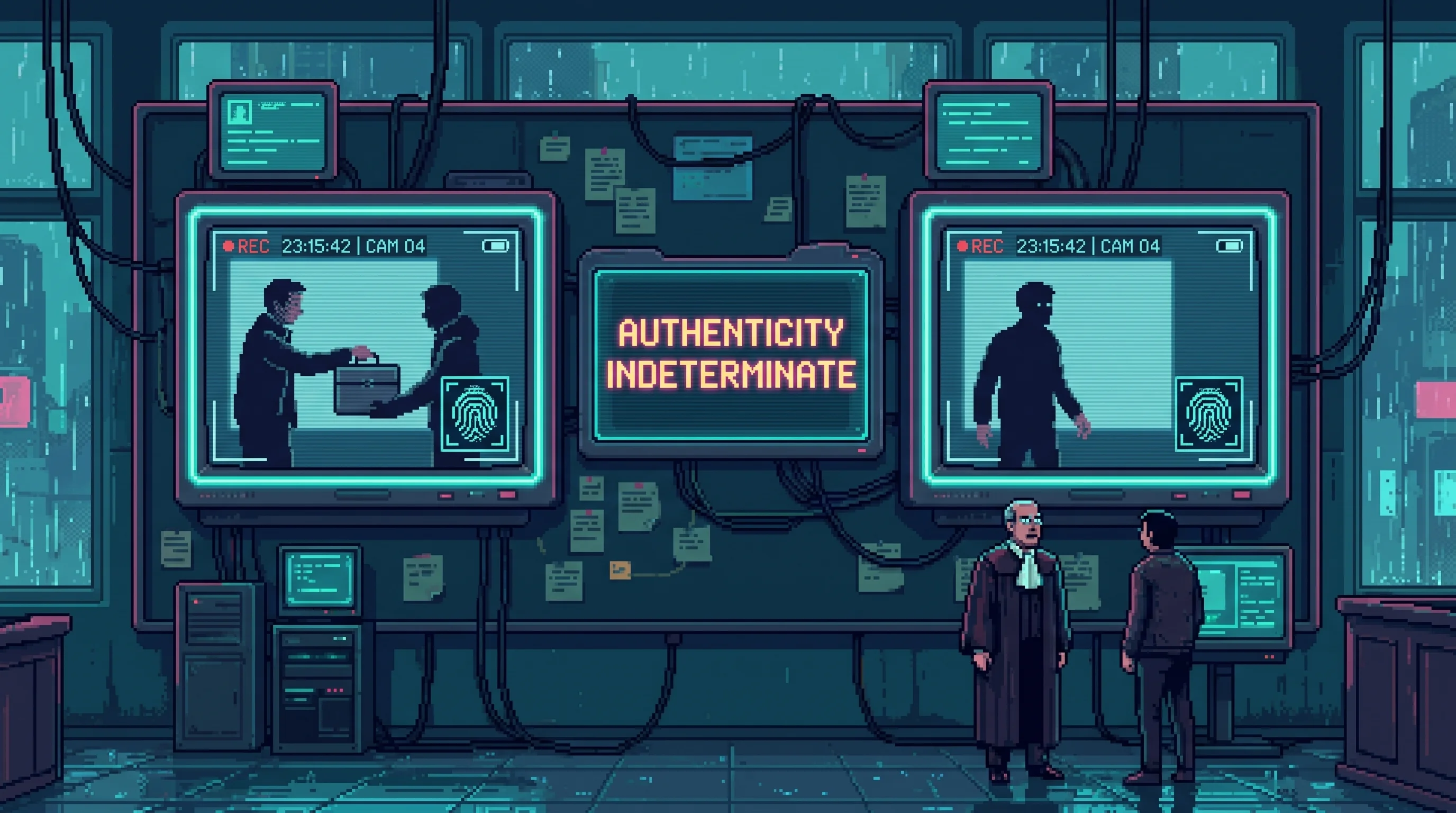
CONCEPT ANALYSIS
The Preservation Debate

The Preservation Debate

Both positions are correct โ€” every delay risks death, every opening destroys unique data

Interventionist PositionBunker systems aging โ€” open them before people diePreservationist PositionSealed bunkers are irreplaceable experiments in human development โ€” every opening terminates an experimentThird PositionBunker 4407 โ€” residents offered and refused integration; neither sealed nor opened on others' termsCore TensionBoth positions are correct โ€” every delay risks death, every opening destroys unique data

Overview

The Preservation Debate has been running for eleven years and has produced 4,200 pages of committee transcripts, three formal position papers, one fistfight in the Zephyria Anthropological Institute's main hall, and zero policy changes.

The interventionist position is straightforward: bunker life-support systems are failing. Seals degrade. Atmospheric processors built in the 2140s were never designed to run for four decades without maintenance. People are dying in sealed containers while committees convene. exist to prevent this. Director Adamu keeps a death ledger โ€” a running count of confirmed fatalities in bunkers that were on the schedule but hadn't been reached yet. The ledger is not a metaphor. It is a spreadsheet. It updates weekly.

The preservationist position is also straightforward: every sealed bunker is a closed system containing a human culture that developed for thirty-seven years without contact with the Sprawl, without augmentation, without corporate influence, without the Net. These are the last uncontaminated datasets in human civilization. Each opening is an irreversible termination of a running experiment. The Zephyria Anthropological Institute's protocols โ€” the ones that slow openings by an average of nine weeks per bunker โ€” exist because once you crack the seal, you cannot put the culture back.

Both positions are backed by body counts. The interventionists count the dead inside sealed bunkers. The preservationists count the cultural extinctions that follow openings โ€” seventeen distinct linguistic systems lost within eighteen months of integration, four unique governance models dissolved within a year of Sprawl contact, one religion that existed nowhere else in human history abandoned by its last practitioner six weeks after she received her first neural interface.

Nobody is wrong. This is the problem.

Bunker 4407 โ€” the โ€” offered the committee something it did not want: a third option. Its residents were contacted, informed of the outside world, offered integration, and declined. They are growing food. They are governing themselves. They are not dying. They are also not producing anthropological data for the Institute, which has created a specific kind of frustration among preservationists who now find themselves arguing for the scientific value of sealed isolation to a population that chose isolation without being asked.

Voice-Who-Carries, the diplomat from Bunker 7741, summarized the debate during a panel with the precision of someone who learned language without ever hearing an argument about funding: "You argue about whether to open doors. We argue about whether doors exist. Your argument is stranger."

The transcript shows twelve seconds of silence following this remark. The moderator's next question was about lunch.

The Preservation Debate - Evidence

The Upgrade They Never Received

The dimension neither side will put on the record: every year a bunker stays sealed, its residents fall further behind the Sprawl's augmentation baseline. This is not a metaphor about cultural adjustment. It is arithmetic.

The professional floor in most Sprawl sectors requires a โ€” the cognitive co-processor that handles parallel task management, interface-speed data parsing, and the 847,000 daily content interactions that constitute functional literacy in 2184. Bunker residents read at biological speed. Biological reading speed, in a labor market calibrated to neural-assisted cognition, qualifies an applicant for positions in three categories: manual sanitation, structural salvage, and a customer service role that the internal posting describes as "patience-intensive."

' integration packages include augmentation. The augmentation is financed through 's โ€” the same subscription architecture that currently services 140 million existing Sprawl residents on the upgrade treadmill. A bunker resident receiving their first neural interface in 2184 is not starting where the Sprawl started in 2147. They are starting thirty-seven years behind, with thirty-seven years of iterative dependency built into the catch-up package. onboarding form for emerging populations is eleven pages. Page one asks for the applicant's name. Page two asks for collateral.

The preservationists understand this without naming it. Every year of sealed isolation is a year without the first cognitive subscription that makes the second one necessary. The bunker populations are the last humans on Earth whose cognitive architecture contains no licensing layer, no subscription tier, no revenue stream between their thoughts and the thinking.

's Sector Development division has a team assigned to emerging bunker populations. The team's internal designation is "Greenfield Accounts." Their Q3 2184 projections estimate 340,000 new subscription activations from scheduled openings over the next fiscal year. The projections were included in 's investor materials under "Untapped Markets โ€” Natural Growth."

Director Adamu's death ledger and 's greenfield projections are updated on the same day each quarter. Neither document references the other.

Voice-Who-Carries: 'You argue about whether to open doors. We argue about whether doors exist. Your argument is stranger.'

Visual Identity

  • Color palette: Committee Beige (#C4B19A), Ledger Red (#8B2500), Seal Grey (#6B6B6B), Gold (#B8860B)
  • Key symbol: A spreadsheet with two columns โ€” deaths prevented, cultures terminated โ€” and a total row that refuses to render

Connections

  • : The 's operational arm. Director Adamu's death ledger is the interventionist position reduced to a single updating document. The debate is, for him, a delay measured in names.
  • : 's Anthropological Institute provides the preservationist infrastructure โ€” protocols that add nine weeks per opening and have, by the Institute's own internal tracking, preserved three languages and one governance model that would otherwise have been lost. The same protocols delayed the opening of Bunker 6612 by eleven weeks. Bunker 6612's atmospheric processor failed during week eight.
  • : The case study that broke the binary. Offered integration, declined it, thriving. Neither the interventionists nor the preservationists cite 4407 in formal proceedings, because it demonstrates that the populations being argued over have preferences of their own.
  • : ' commentary on the debate has been quoted in fourteen committee sessions and zero policy documents.
Archive annex โ€” 2 earlier filings on this recordClose the archive annex

Recovered Historical Material

The Preservation Debate

Technical Brief

The Interventionist Calculus

Indexed โ€” no record on file.

The Preservationist Calculus

Bunker 4407 broke the binary.

"You argue about whether to open doors. We argue about whether doors exist. Your argument is stranger."โ€” Voice-Who-Carries, The Speaker of 7741
  • The clock doesn't care: Bunker systems degrade on their own timelines. The debate can take as long as it wants. The atmospheric processors don't wait for consensus.

Bunker 4407 โ†’ /world/locations/bunker-4407-the-garden

Zephyria's โ†’ /world/locations/the-free-city

โ†’ /world/systems/the-opening-teams

Voice-Who-Carries, The of 7741 โ†’ /world/characters/the-speaker-of-7741

4407's โ†’ /world/locations/bunker-4407-the-garden

' โ†’ /world/systems/the-opening-teams

The preservationist position is also straightforward: every sealed bunker is a closed system containing a human culture that developed for thirty-seven years without contact with the Sprawl, without augmentation, without corporate influence, without the Net. These are the last uncontaminated datasets in human civilization. Each opening is an irreversible termination of a running experiment. Zephyria's Anthropological Institute protocols โ€” the ones that slow openings by an average of nine weeks per bunker โ€” exist because once you crack the seal, you cannot put the culture back.

Voice-Who-Carries delivered this observation during a panel. The transcript shows twelve seconds of silence following the remark. The moderator's next question was about lunch.

Bunker infrastructure was never designed to last forever. Water recyclers corrode. Power cells degrade. Atmospheric processors develop particulate leaks that take decades to kill. maintain rolling threat assessments on every known sealed bunker, tracking projected system failure timelines against population estimates. When the numbers cross a threshold, they argue for immediate action. Director Adamu's death ledger โ€” a running count of confirmed fatalities in bunkers delayed by committee process โ€” makes him an unambiguous interventionist. The ledger updates weekly. The committees meet monthly.

Zephyria's Anthropological Institute has spent years documenting what happens to opened bunker populations. The data is consistent. Languages that evolved in isolation for decades flatten into Sprawl pidgin within two generations. Social structures built around bunker-specific resource constraints lose coherence when those constraints vanish. Spiritual practices rooted in sealed-world cosmologies cannot survive the revelation that the world is not what the founders said it was. The Institute's slow-contact protocols have measurably reduced the damage. They also add nine weeks per opening. During the Bunker 6612 case, the atmospheric processor failed in week eight of the protocol period.

Accurate threat assessment requires sensor data from inside the bunker. Getting that data often means breaching the seal. The act of determining whether intervention is needed can itself constitute the intervention. have improved passive acoustic and thermal analysis significantly. "Improved" still means "wrong often enough to matter." This is the thread labeled st-evidence-paradox in the 's internal filing system. It has been open for six years.

Neither side discusses this in formal proceedings. Every year a bunker stays sealed, its residents fall further behind the Sprawl's augmentation baseline. This is not a metaphor about cultural adjustment. It is arithmetic.

The professional floor in most Sprawl sectors requires a โ€” the cognitive co-processor handling parallel task management, interface-speed data parsing, and the 847,000 daily content interactions that constitute functional literacy in 2184. Bunker residents read at biological speed. Biological reading speed, in a labor market calibrated to neural-assisted cognition, qualifies an applicant for positions in three categories: manual sanitation, structural salvage, and a customer service role that the internal posting describes as "patience-intensive."

' integration packages include augmentation. The augmentation is financed through 's โ€” the same subscription architecture currently servicing 140 million existing Sprawl residents on the upgrade treadmill. A bunker resident receiving their first neural interface in 2184 is not starting where the Sprawl started in 2147. They are starting thirty-seven years behind, with thirty-seven years of iterative dependency built into the catch-up package. onboarding form for emerging populations runs eleven pages. Page one asks for the applicant's name. Page two asks for collateral.

The preservationists understand this without naming it. Every year of sealed isolation is a year without the first cognitive subscription that makes the second one necessary. The bunker populations are the last humans on Earth whose cognitive architecture contains no licensing layer, no subscription tier, no revenue stream between their thoughts and the thinking. Opening them doesn't just end an experiment. It starts a dependency.

's Sector Development division has a team assigned to emerging bunker populations. The team's internal designation is "Greenfield Accounts." Their Q3 2184 projections estimate 340,000 new subscription activations from scheduled openings over the next fiscal year. Director Adamu's death ledger and 's greenfield projections are updated on the same day each quarter. Neither document references the other.

When contact was established, 4407's residents were offered integration. They declined. They understood the outside existed. They understood their systems were aging. They chose to remain. Not sealed โ€” they know the door is there. Not opened โ€” they haven't walked through it. They are growing food. They are governing themselves. They are not dying.

Neither the interventionists nor the preservationists cite 4407 in formal proceedings. For the interventionists, 4407 is an inconvenient demonstration that populations can manage their own infrastructure decisions. For the preservationists, 4407 produces no anthropological data for the Institute, which has created a specific frustration: they are now arguing for the scientific value of sealed isolation to a population that chose isolation without being asked and doesn't need the argument validated.

The question 4407 leaves open: what about bunkers whose populations have no concept of an outside? Is ignorance a condition requiring correction โ€” a harm in itself โ€” or a form of self-determination that outsiders have no right to disturb? You cannot offer informed autonomy to people who don't know there's anything to be autonomous about. 4407 knew. That is the part that keeps the debate alive.

  • The dependency spiral: Opened bunker populations frequently become dependent on Sprawl infrastructure, trade networks, and cognitive frameworks within a generation. Preservationists call this colonization. Interventionists call letting people die to protect theoretical cultural purity a worse colonialism โ€” deciding for others that their culture matters more than their lives. Both descriptions are accurate.
  • Institutional paralysis: The 's mandate is to open bunkers. Its own research demonstrates that opening bunkers causes measurable harm. Every team in the field carries an argument that has no winning side and a schedule that does not wait for resolution.
  • Who decides: No framework has established whose decision this actually is. The claims jurisdiction. The Institute claims advisory authority. The bunker populations โ€” whose lives and cultures are at stake โ€” are almost never consulted, because consulting them requires contact, and contact is the thing being debated.
  • The subscription baseline: No opened bunker population has refused augmentation packages entirely. Whether this represents genuine demand or engineered necessity is a question the Anthropological Institute has been discouraged from publishing research on.

The Preservation Debate feeds into and draws from the ' operational doctrine, 's anthropological protocols, and the growing case file of bunkers at every stage of contact โ€” from 4407's voluntary isolation to 7741's ongoing diplomatic engagement to populations opened decades ago still finding their footing in the Sprawl.

7741's โ†’ /world/locations/bunker-7741-the-silent-city

There are at least three bunkers where the confirmed catastrophic life-support failure and the preservationist bloc on the Advisory Council voted to delay regardless. The death toll in those bunkers, if projections hold, will be measured in hundreds. The votes were not unanimous. They were decisive. The council members who voted to delay have not been named publicly. Director Adamu's ledger is very specific about who voted and when.

The Anthropological Institute's own internal studies suggest their slow-contact protocols may not reduce cultural dissolution โ€” only delay it by a generation. This finding has not been published. The implications for the Institute's formal position are obvious to anyone who has read the draft.

A third finding, circulating among senior analysts: the augmentation dependency rate among emerged bunker populations is statistically indistinguishable from the dependency rate among Sprawl residents who received their first interface package through 's emergency credit programs. The catch-up packages and the poverty packages have the same architecture. Someone designed them to.

the preservation debate hero image
Bunker 4407 provides the third position โ€” communities can be offered and can refuse

Connected To