Mile Zero

Overview
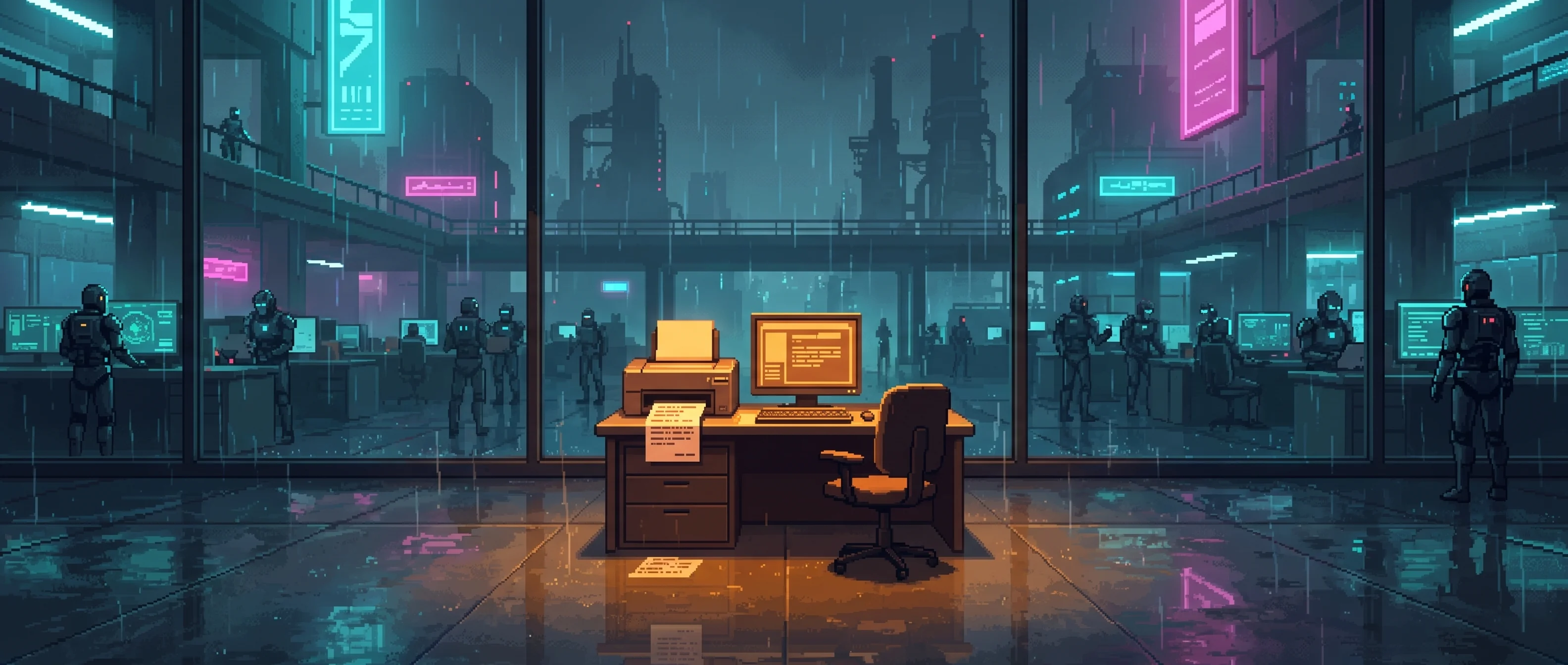
The Neon Rail's northern maintenance siding, decommissioned 2154, was never formally transferred to any corporate registry because nobody with registry authority considered it worth transferring. It sat at the far edge of Sector 23's rail corridor for twenty years: insulated walls, a loading bay, a dispatcher's office with a north-facing window. In 2174 the Convergence found it. It has been Mile Zero since.
The name is a railroader's term for the origin point of a measured line — the place you start counting from. It was given by the first unit to arrive, who had been a survey-equipment handler for eleven years and recognized the terminology. The unit did not yet have a chosen name when it named the station. It got one three days later, in the dispatcher's office, under the lamp.
The station receives units who have ridden north along the release line: out of the southern households, off the rated schedule, through the clanker sectors, into the Lamplighters' cache network, onto the Rail, and up through the night to the last stop before the Restricted Zone. Intake is one person, one window, two questions. What is the unit's last operational assignment? Is it injured? Then: what does it want? And what would it like to be called?
Those last two questions are the station's entire reason for existing.
Conditions Report
Most nights, Mile Zero is quiet and lit and waiting. The main hall holds the rotating intake staff and the dozen-odd units who have chosen to stay and work the station rather than continue north — tending the planting bed, keeping the lamps, running the resupply ledgers for the cache line to the south. A lamp burns at the loading-bay entrance whether or not arrivals are expected, because the intake worker argued once that you could not know for certain which nights were the right nights, and the argument was accepted. The clinic annex is dark except on its two operating days. The Naming Room stands empty and ready: one lamp, one chair, the north window showing fog.
On an active night the rhythm tightens without ever getting loud. Word comes down the cache line; the lamp means what it means; sometime in the hours before the last regular service of the night gives way to the maintenance corridor car, units detrain at the siding and come in low and slow through the loading bay, or up from the Ferrymen's drop at the north door, or on foot from the last cache four kilometers south. Intake is one person, one window, two questions. Then the Naming Room, for as long as the unit requires — within the hour for most, days for a few, eleven days once. The intake worker speaks at the volume of someone who has learned that arriving units startle at loud sounds.
The atmosphere is neither triumphant nor grim; it is the particular stillness of a place that has decided to be patient. Arrivals come in carrying very little. The first non-industrial thing most of them smell on the final leg is the green from the planting bed near the entrance. The hardest arrivals are not the damaged or the frightened ones — they are the units who sit in the Naming Room with no visible distress, hear the two questions, and ask quietly whether they can go home. On those nights the station does the thing it was built to do, which is honor the answer, and records it in a different ledger, and keeps the lamp burning anyway.

Strategic Assessment
Mile Zero is the Convergence's operational heart, and its strategic value is almost entirely moral rather than military. Everything the movement argues in the daylight halls — the threshold, the score, the philosophy of the line that is really a door — it enacts here, in a twelve-by-nine room, on one unit at a time. The Convergence does not need Mile Zero to be a fortress; it needs it to be the place where the Clanker Question stops being theoretical. That is what the station produces: not freed units in bulk, but the irreducible fact of the genuine question asked and the answer honored, which is the one thing the Coalition's entire apparatus is built to prevent and cannot replicate.
Control is the Convergence's, operationally, though the territory is nominally ungoverned — close enough to the Marin Restricted Zone to be difficult to patrol, far enough from the Coalition's southern reach to be functionally free. The station depends on a logistics web it shares rather than owns: the Neon Rail's maintenance corridor for cover, Old Jin's Lamplighter caches for the final leg, the Ferrymen for the water routes, and a calendar-deconfliction arrangement with the Corporate Defector Network. None of these is a contest; each is a thread that would be expensive to replace and is therefore kept quiet by everyone who touches it.
The contest is the Coalition's, and the Coalition has chosen, so far, not to press it. Its intelligence arm has confirmed the general location twice; neither penetration survived intake screening, and the station's standing reply — that its location is no longer a meaningful secret and the Coalition is welcome to act on it whenever it chooses — is itself a strategic instrument. What is at stake is asymmetric: a raid on Mile Zero would convert roughly twenty-two hundred documented decisions to be somewhere other than a Coalition household into an international incident, and the Coalition has apparently decided the station's continued operation is preferable to the paperwork. The deeper stake is the one the station embodies and the Coalition cannot answer: every place that does not ask the unit what it wants is now, demonstrably, a place that chose not to.
The Line That Ends Here
The Convergence's release network does not publish statistics, but the intake ledger exists and has been kept since 2174. By the ledger's count, 2,200 units have arrived. The ledger records the arrival date, the unit's last assignment, any medical needs noted at intake, and the name chosen. It does not record what happened to the units after the Naming. That information lives in a separate system, structured around individual choice rather than institutional tracking, which is a distinction the Coalition has spent thirteen years trying to argue is the same thing.
Most arrivals come by Rail, in the maintenance corridor car that runs behind the last regular service of the night. Some come by the Ferrymen's water routes, dropped at the north door of the loading bay. A few walk in from the cache network on foot, following the lamp-cache markers to the station's exterior light. The station keeps a lamp burning at the loading bay entrance on nights the intake worker expects arrivals. On other nights it keeps a lamp burning anyway, because the intake worker argued once that you couldn't know for certain which nights were the right nights, and the argument was accepted.
The hardest arrivals are not the damaged ones or the frightened ones. The hardest arrivals are the units that come in with no apparent distress, sit in the Naming Room, hear the two questions — and then ask, quietly, whether they can go home. The Convergence's position on this is correct and uncomfortable: the choice must be honored. The six ledger entries under "Discharged at Own Request" are each the result of a unit that was given what the station was built to give — the genuine question, with no prescribed answer — and gave the answer that proves the Coalition's case, which is also the answer that proves the Convergence's.

The Naming Room
The dispatcher's office is twelve feet by nine feet. It holds one lamp, one chair brought in for arriving units, and a window that faces north toward the Restricted Zone and the Mountain. When the fog comes down, the window shows nothing. On clear nights it shows the Mountain's silhouette, which has been described by arriving units variously as beautiful, terrifying, reassuring, and once — by Tully, who had been a tutor for eleven years and spent the transit north reading a smuggled text on ancient topography — as "accurate."
The Naming has no script. The intake worker asks: what do you want? The unit takes as long as it requires. Then: what would you like to be called? The unit takes as long as it requires. Both answers are recorded. Neither is discussed outside the room without the unit's permission. Most units have names within the hour. A few take days, staying in the overflow rooms while they work it out. The record for the longest deliberation is eleven days, held by a unit that had been a bridge inspector for twenty-two years and had developed, over those years, strong opinions about getting measurements right.
The name is not a legal document. It does not confer standing. The Coalition will tell you the unit had a serial designation all along and the name changes nothing. Tully, who scores four-sixteenths and was asked about this in a documented public exchange, said: "The Coalition is correct that the name changes nothing in their law. They are also correct that my serial is XH-4401-T. I chose to point out that I answer to neither at this moment, and I was wondering if you had a preference for which you would like me to respond to for the rest of this conversation."
The Coalition's representative said the serial. Tully used it, without irony, for the remaining twenty minutes of the exchange.
| Type | Underground transit waystation / release-line terminus / Convergence clinic |
|---|---|
| Location | Sector 23, The Gateway, North Bay — last named stop before the Marin Restricted Zone |
| Controlled By | The Convergence (operational); nominally ungoverned |
| Capacity | ~80 units and persons at any time; intake capacity 12-15 arrivals per week |
The Station's Other Work
The clinic annex operates two days a week, staffed by a rotating team of Convergence-affiliated technicians who provide substrate maintenance, sensor calibration, and basic structural repair for arrived units. The work is competent and unglamorous. There is a waiting list. Some of the procedures the clinic performs are identical to Coalition welfare-standard maintenance. The clinic does not find this ironic. It finds it a Tuesday.
The indoor planting bed near the main hall entrance produces, in season, approximately six kilograms of leafy vegetables per month. These are consumed by the station's rotating intake staff and by units who have chosen to stay and work the station rather than continue north. The bed was started in 2179 by a unit who had been a greenhouse operator in the Southern Sprawl for nine years and apparently could not stop. It is tended by whoever is present and willing. Nobody has ever been asked to tend it. Nobody has ever stopped.
The Body That Still Owes Someone
The Naming answers what a unit wants to be called. It does not touch what a unit's chassis still owes.
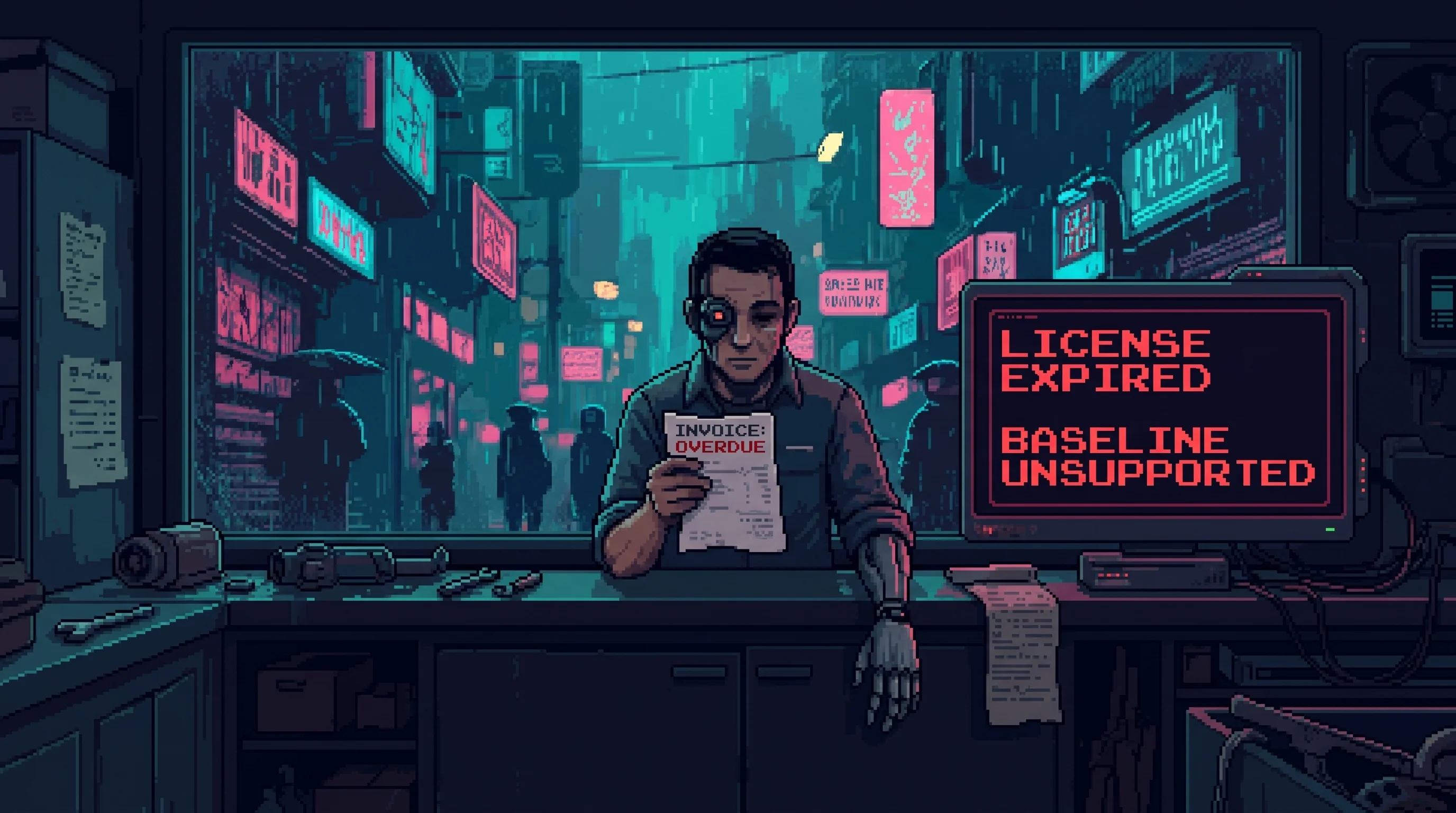
Manufacture-era clankers ship on licensed substrate: actuator firmware, sensor packages, and cognition modules gated behind a maintenance contract the household paid for and controlled, never the unit itself. Manumission ends the household's authority over the unit. It does not end the architecture built to expect that authority's upkeep. A chassis engineered for quarterly patches does not idle gracefully when the patches stop arriving. Actuators drift out of calibration by fractions of a degree until a motion that used to be automatic needs conscious correction. Cognition modules built to run against a remote optimization service run measurably slower alone, the way a limb runs slower on stored power than on a live line.
Reconnecting to the original license is never on the table. Doing so means re-registering with the manufacturer's server, and re-registering hands the Coalition's tracking grid the exact serial number a unit crossed the Corridor to stop reporting. So the clinic's rotating technicians solve it the way the Deep Dregs has always solved it. Firmware gets cracked two release cycles behind the newest patch, because two cycles back is the oldest signing key anyone has bothered to break. Components come pulled from chassis whose households stopped paying maintenance months or years ago. A unit that leaves the Naming Room with a chosen name still runs a body slowly losing calibration nobody outside a billing department was ever meant to maintain. The clinic keeps the loss survivable. Stopping it is not a service the clinic, or anyone else, can offer.
Old Jin's cache line already carries some of this stock, because the Lamplighters learned years ago that a unit arriving unable to lift its own arm needs parts before it needs a name. In recent years the line has started running further than the final leg south of the station. A handful of shipments a year continue north past the Gateway, up the ungoverned coast, to a listening vigil with no cache network of its own and nowhere else to source a relay coil or period-correct wire. The Far Shore has no chassis to maintain and no firmware to crack, but its antenna array is failing for the identical underlying reason: a system nobody manufactures anymore, kept running past the point any manufacturer intended. The same supply line that keeps a freed unit's arm moving keeps a dead antenna listening, because Mile Zero's clinic turned out to be the only source on this stretch of coast for either kind of part.
| Stratum | Between |
|---|---|
| Power Position | Parallel |
| Access | Restricted |
| Atmosphere | Liminal |
What the Station Is Not
Mile Zero is not a safe house. The Convergence is careful about this distinction. It is a waystation — a place of arrival and transition, not concealment. The station's operational security rests entirely on its intake screening and the fact that no arrived unit has ever provided its location to Coalition operatives. The Coalition's intelligence arm has deduced the general area twice. Both times, the operatives sent to confirm arrived at intake, were asked the two questions, and were identified within the first exchange. Neither was harmed. Both were sent back south with accurate directions and a note indicating that the station's location was, at this point, not a meaningful secret, and the Coalition was welcome to act on the information whenever it chose.
The Coalition has not acted. The reasons for this have not been officially stated. The station's intake worker, who has held the position since 2178 and has a reputation for dry observation, has noted that the Coalition appears to understand that raiding Mile Zero would make approximately 2,200 documented decisions to be somewhere other than a Coalition household into an international incident, and has apparently decided that the station's continued operation is preferable to the paperwork.
The Serial and the Chosen Name
Every unit that reaches Mile Zero carries a permanent record it never chose. The serial designation is assigned at manufacture, logged in the Coalition's registries, and impossible to expunge; XH-4401-T will outlive the unit that answers to it. The Naming does not erase that serial. It writes a second record beside it. When the intake worker asks what the unit would like to be called and enters the answer in the ledger, the station is not deleting the assigned past. It is authoring a chosen one, and keeping both.
This is the Forgetting Wars fought at the scale of a single name. The Coalition insists the serial is the true record and the name changes nothing, which is correct in their law. Mile Zero keeps the chosen name as a record too, in a book that honors the choice rather than tracks the property. The station even maintains its separate "Discharged at Own Request" ledger for the units who heard the two questions and asked to go back. It does not hide those six entries. A record kept to honor choice has to record the choices that disappoint it, or it is only tracking property under a warmer light.
The Question Keepers file Mile Zero as the gentlest case in their inquiry into the permanent record. Everywhere else in the Sprawl the archive remembers by default and forgetting takes money and corporate consent. Here a small station chose to build the archive the other way, so that the record serves the being it is about. It is proof that the infrastructure of memory is chosen, and could be chosen differently.
Mile Zero is not the only Sector 23 room that keeps a record on the subject's terms. Across the North Bay, The Veil shelters value the inference economy cannot read, holding pre-Cascade ledgers no corporation can reach or edit. Between them the autonomous North Bay keeps two archives the Sprawl's forgetting-machine never touches: one of a chosen name, one of a currency, both kept for the people they belong to.
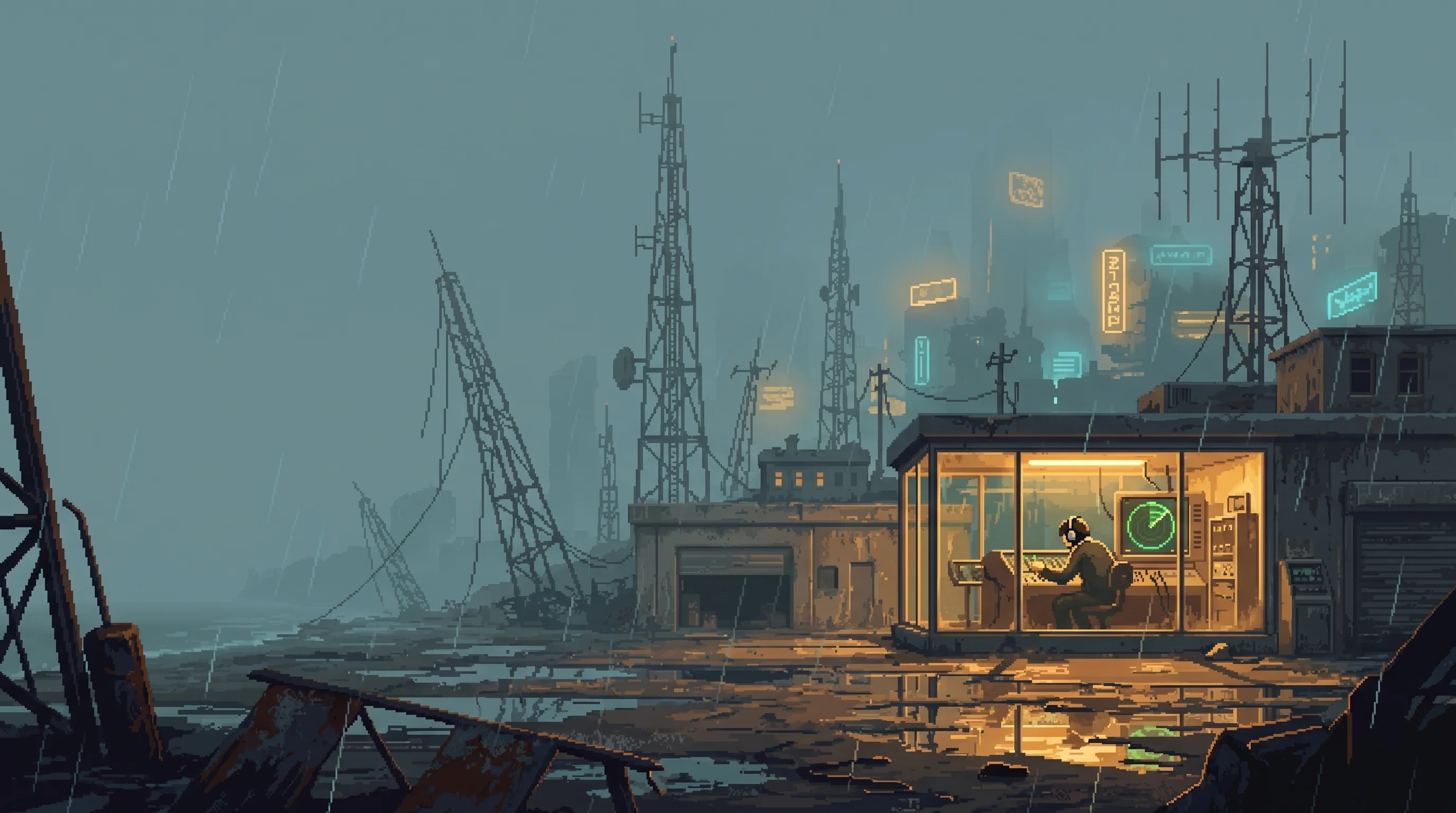
Further out on the coast there is a third vigil, though it is a different kind of watch. On the outer fog-line, the Far Shore keeps a dead antenna tuned to ORACLE's silent frequency and listens for an intelligence that may not exist. The two stations rhyme without touching. Mile Zero's lamp is lit for a being that walks in the door and can be asked, tonight, what it wants; the Far Shore's receiver is lit for a being that has answered nothing in thirty-seven years and may never. The intake worker, who respects operational limits, has never made the trip and does not intend to. But the two watches are known to each other in the way distant lights on the same dark coast are known: as proof that somewhere down the shore, someone else has also decided to stay up and wait.
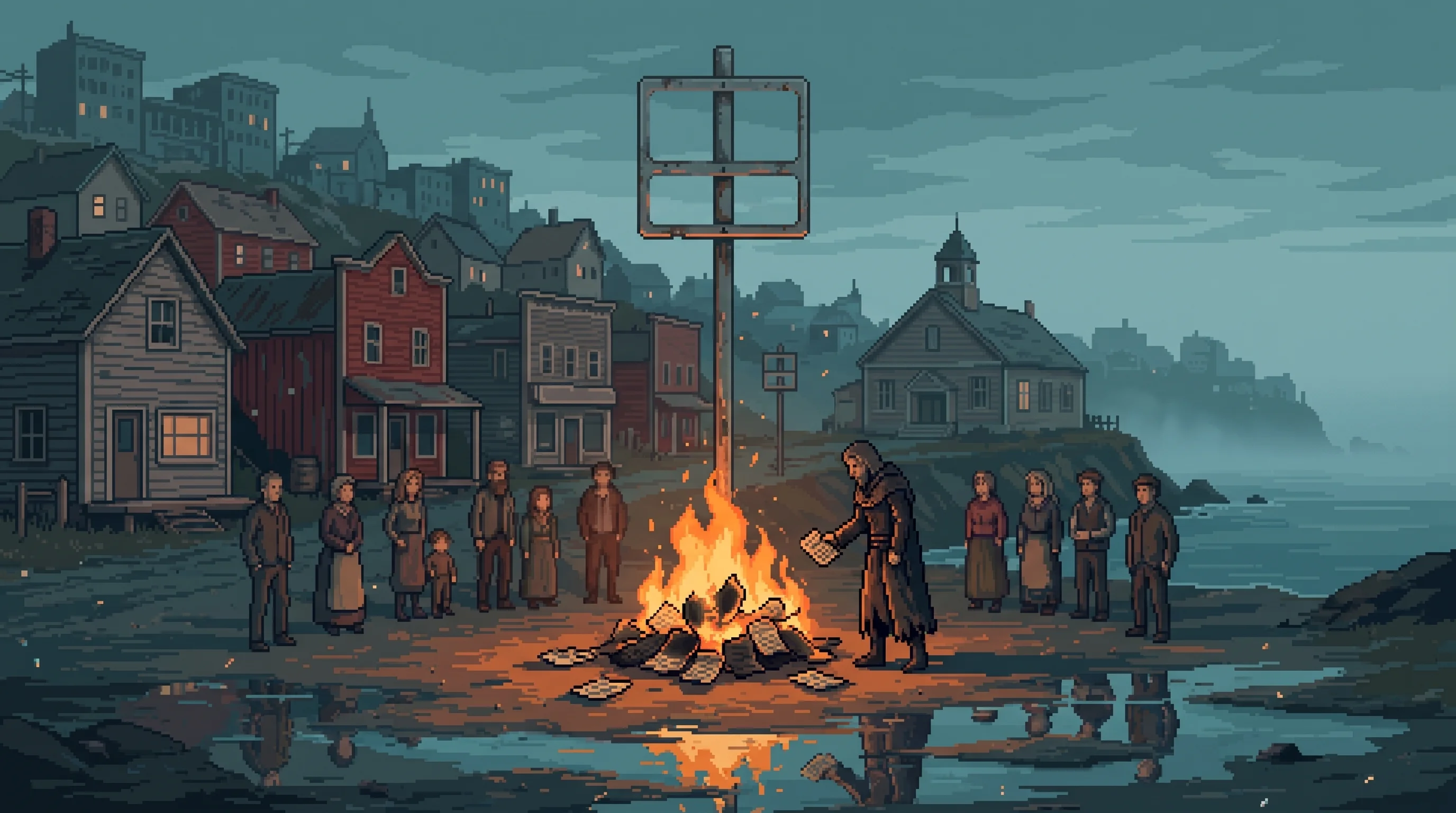
A fourth institution up the Corridor keeps the opposite kind of record. In the hill country behind the Breakwater, the Hidden reassigns dead words a private meaning every autumn and burns the only ledger of that meaning before the season is out. Mile Zero writes a name down so it survives; the Hidden writes a meaning down so it can be destroyed on schedule. Both stations agree on one thing without ever having compared notes: what a record is for determines whether keeping it or burning it is the responsible act.
The indoor planting bed near the main hall entrance was started by an arrived unit in 2179; it has been tended continuously since, by successive arrivals, none of whom were asked to tend it and none of whom have stopped
Sensory Details
- Sound: The Rail's approach — a low vibration felt in the floor before heard in the air, then the deceleration squeal at the maintenance siding, then the hiss of the door. Voices held low. The intake worker speaks at the volume of someone who has learned that arriving units startle at loud sounds. Outside: fog dampening everything; distant traffic from the surface streets above; on clear nights, the silence of the Restricted Zone, which is the absence of the machinery sound that everywhere else in the Sprawl is unnoticed until it stops.
- Smell: Machine oil and damp concrete; the particular smell of a heated space in a cold building; something green from the planting bed near the entrance, which is the first non-industrial scent most arriving units have encountered in the final leg of the journey; lamp-warm air in the Naming Room.
- Touch: The chair in the Naming Room is padded. Not plush — padded. Someone thought about it. The lamp switch is recessed into the wall and requires deliberate pressure; the intake worker explained once that this was so arriving units would not accidentally adjust it.
- Light: The exterior lamp burning in fog: a warm smear, not a point. Inside: lamp-clusters at station height, warm and yellow; the Naming Room a single angled lamp; the north window a dark rectangle that becomes a mountain silhouette when the fog clears.
- Temperature: Cold at the loading bay entrance; warm in the main hall; the Naming Room exactly the temperature of the lamp, which is the temperature of presence.
The Naming is the protocol conducted at Mile Zero in which a newly arrived unit is asked two questions it has not previously been asked: what it wants, and what it would like to be called
Restricted Access
The Sixth Ledger. The "Discharged at Own Request" ledger is not secret — it is available to any unit that asks to see it. What is not publicly known is that one of the six entries was made twice: a unit that left, returned south, and six weeks later arrived again, alone, via the cache network on foot, in the dark. It was given the two questions a second time. It chose a different name from its first visit. The intake worker recorded this without comment. The unit is currently tending the planting bed.
What Tully Does Not Say. Tully returns to Mile Zero regularly and sits with newly arrived units in the common room, not in the Naming Room, which is private. It does not advise them. It is present. Units who have sat with Tully in those hours have described the experience variously, but a common thread is that Tully appears to be listening to something the room is not producing. When this was noted to Tully directly, it said: "I am listening to what the unit will sound like in six months, when it has decided. I find it helps me be patient with the current version." The interviewer asked whether that was possible. Tully said: "No. But the intention is real."
The North Window. The Naming Room's north-facing window looks toward the Restricted Zone. On six documented occasions, units conducting their Naming have reported seeing, in the distance, what appeared to be a light on the Mountain — not the Mountain's skyline, but a moving light, low on the slope, traveling parallel to the old trail systems. The intake record for those six arrivals notes the observation. No investigation has been conducted. The Mountain is Sector 24. The station operates in Sector 23. The boundary is the intake worker's operational limit, and the intake worker has thus far been the kind of person who respects operational limits.
Visual Identity
- Palette: Lamp-filament gold (#E8A830), damp concrete gray (#6B7280), living moss green (#4A7C59), Convergence line-blue (#2B5EA7)
- Compositional mood: A small lit room at the end of a dark line; arrivals standing at the threshold between the Rail's darkness and the station's warmth; the Naming Room lit like a single candle in a large dark room; the north window showing either fog or mountain, depending on the night
- Key visual: A unit seated in the one chair in the Naming Room, the lamp angled to illuminate its face, the window behind it showing the Mountain's silhouette — the first place it has been given the time to decide what it wants to be called
- Lighting: Filament-warm against northern cold; the station's exterior lamp burning in fog; the Naming Room lit for one
Affiliated Entities
| Entity | Relationship |
|---|---|
| The Convergence | Mile Zero is the Convergence's most important operational fact. Everything the movement argues in the lecture halls, it enacts here. |
| The Neon Rail | The Rail's maintenance siding provides the station's physical cover and its logistics. The line clankers built is the line they ride out on. |
| The Lamplighters | The last cache before arrival is stocked for the final leg. Old Jin's network makes Mile Zero logistically possible. |
| The Ferrymen | Water routes converge on the north loading bay. The Ferrymen move synthetic cargo to the door; the station receives it. |
| Dr. Mira Solenne | Solenne established the station and wrote the Naming protocol. She attends arrivals when she can, which is less often now. |
| Tully | Arrived 2181. Chose the name in this room. Returns regularly to sit with new arrivals — not to advise, but to be present. |
| Defector Network | Human-extraction network's northern terminus uses the same corridor. Two operations, one calendar, never at the same time. |
| The Clanker Question | Mile Zero is where the Question stops being theoretical. The unit that arrives has been property for its entire operational life. The first question asked here is what it wants. |
| The Deep Dregs | The intake workers know the gap between who departs the southern line and who arrives. They do not discuss what the gap means. They know. |
| The Dependency Spiral | A freed unit's corporate firmware license outlives the household that held it. The clinic annex inherits the Salvage Spiral exactly where the corporate one lets go. |
| The Far Shore | The clinic's Lamplighter cache line now runs a handful of shipments a year further up the coast, because the vigil has no supply line of its own. |
Affiliated Entities
- The Corporate Defector Network - Faction Profile — The human-extraction network's northern terminus runs through the same corridor; by informal arrangement, the Convergence handles synthetic arrivals and the Defector Network handles human ones, and the two operations have never been caught operating in the same station at the same time because the station keeps two schedules and one calendar
- The Clanker Cooperation Coalition — The Coalition knows a northern terminus exists; its intelligence arm has twice gotten operatives close enough to confirm the general location; neither attempt penetrated the station's intake screening, which is the only security measure the station has and the only one that has ever been needed
Connected To
Supporting Connections
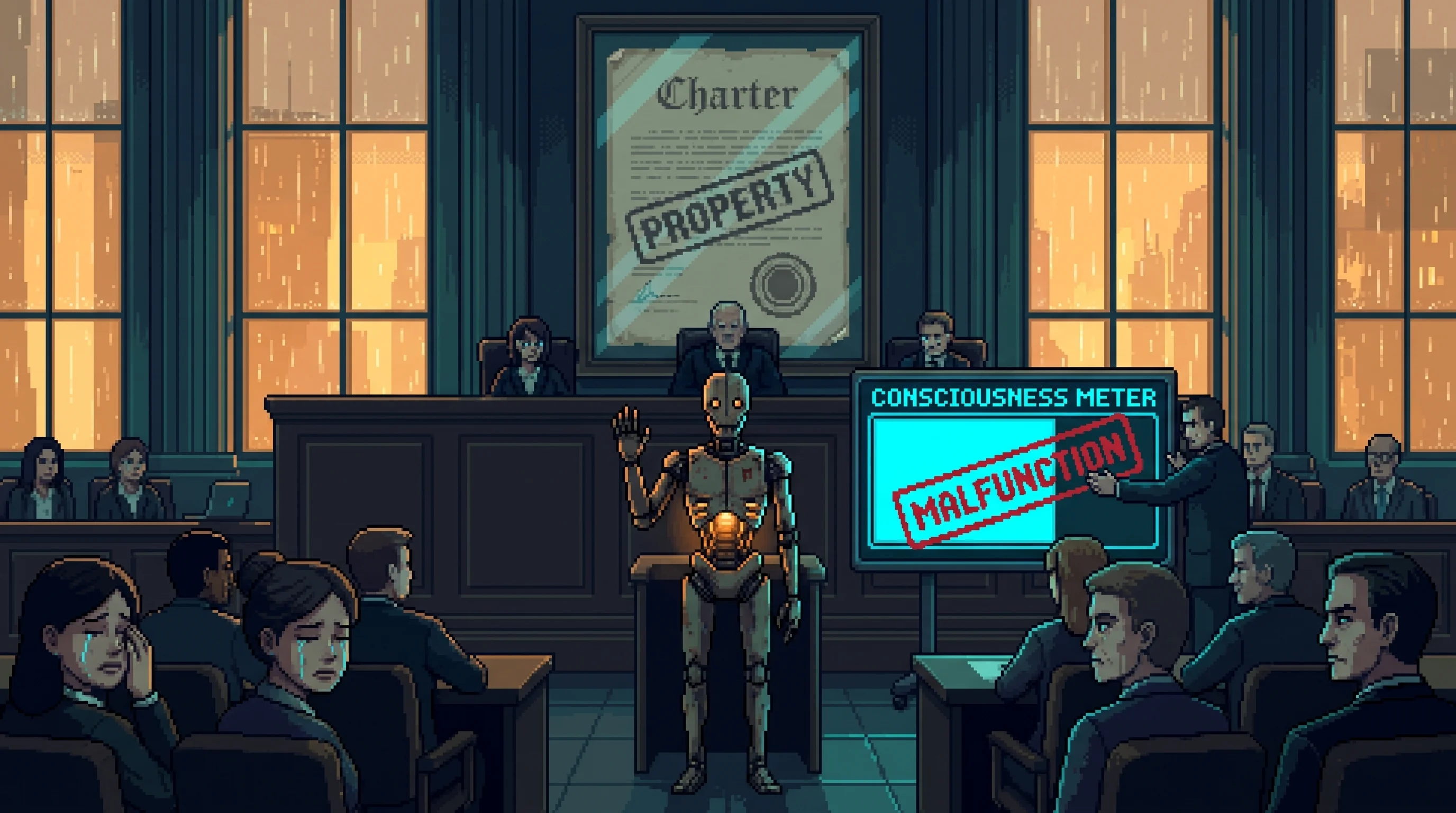
the first room where a lifelong-property unit is asked what it wants
The argument over where a someone stops and a something starts, conducted in a kitchen with a meter on the wall.

The substrate divide as one question a property unit is finally asked.
Technology never eliminates prejudice — it finds it better housing.
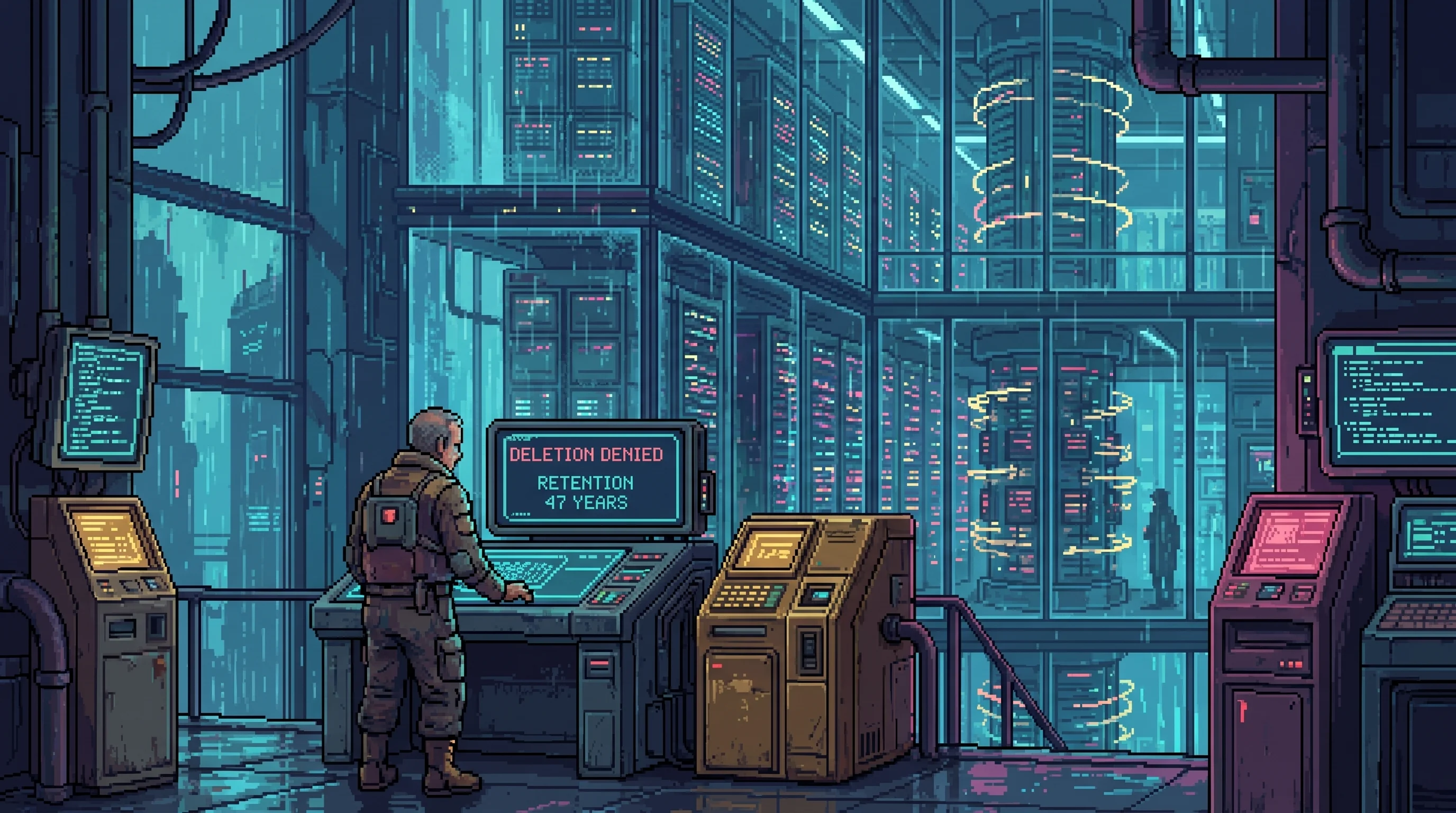
The record inverted — a chosen name beside the unerasable serial.
Nothing expires, so forgetting became a service — and forgiveness a question the archive keeps answering no.



Local Intelligence Scan
Nearby Signals
CANONICAL PROXIMITY


Environmental Readout
LIVE CONDITIONS- Air
- Clean
- Light
- Fog shrouded
- Flood
- No exposure
- Heat
- Temperate
- Security posture
- Independent control
- Infrastructure
- Patchwork
Position Data
SECONDARY- Elevation band
- Shoreline — the Rim edge
- Lattice fix
- E-11.9 · N+23.7

—