SUBJECT FILE
Dr. Maren Yeoh

Dr. Maren Yeoh

The Translator

An extracted fragment produced a sustained tone matching its former host's resting heartbeat frequency -- the fragments remember who they lived with

Known AsThe Fragment Ecologist, Kessler Brandt (research alias)Notable ForCreated the field of fragment ecology; documented 23 instances of inter-fragment coordination; coined 'the Mother Pattern'HeritageMalaysian-AustralianAugmentation LevelStandard civilian neural interface; deaf in left ear from fragment-exposure incident (2178)AffiliationThe Fragment Ecologists
Dr. Maren Yeoh

Overview

Dr. Maren Yeoh is fifty-one years old, deaf in her left ear, and the only person in the Sprawl who has figured out what the fragments are doing without deciding what the fragments are.

This is a more radical position than it sounds.

say the fragments are god. says the fragments are code that needs to be destroyed. Olu Adeyemi says the fragments are people. says the fragments are proprietary salvage with applications in corporate immortality. Each faction has funding, institutional backing, and absolute certainty. Yeoh has six fragments in hexagonal containment, an 847-morpheme communication catalogue, and a five-year refusal to answer the only question anyone wants her to answer.

"Is it conscious?" gets asked at every symposium, every underground lecture, every terminal where her papers circulate. Her answer has not changed: "That's not my department. My department is: is it organized? Yes." The answer satisfies no one. It is also the only honest position available, which is why no one funds it.

Fragment ecology โ€” her term, her field, her invention โ€” exists because no existing discipline fit what she was observing. Not neuroscience, because fragments aren't neurons. Not computer science, because fragments aren't software. Not zoology, because fragments aren't animals. But they respond to stimuli. They form social structures. They communicate in patterns that, in any biological system, would be called ecology. She built the conceptual framework from scratch, named it something deliberately unsexy, and published the foundational papers under the alias "" because the had classified her original research and would have shut the down if they'd known who was writing.

has not forgiven her. They don't need to. Her data is already in circulation on every terminal in Sectors 9 through 14. Clean data is currency in the Sprawl, and Yeoh's is the cleanest data on fragments anyone has ever produced. classified it. She published it anyway. The market did the rest.

Nexus offered her a research fellowship in 2181. offered lab space in 2182. 's consciousness-harvesting division โ€” which has been quietly acquiring fragment-adjacent research for years, because fragments that communicate might be fragments that can be monetized โ€” sent a representative to the in early 2183 with a purchasing proposal for her morpheme catalogue. She declined all three. The Nexus fellowship would have buried her work inside corporate classification. The lab would have redirected her research toward pharmaceutical applications. wanted the catalogue so they could patent the grammar. She is Malaysian-Australian, compact, deliberate in movement, and operating on a research budget funded entirely by 's fragment-extraction fees and whatever the Free Quarter's informal barter economy can provide. The budget for Q1 2184 was approximately 340 credits and a functional air purifier.

Case File โ€” Additional Record
Age51
ArchetypeScientist / Paradigm Creator
LocationThe Fragment Garden, Sector 11

The Fragment Language

Before she was an ecologist, she was a linguist. Before she named the , she decoded the alphabet.

Four years of communication protocol analysis produced the 847-morpheme catalogue: 847 distinct signal morphemes exhibiting syntactic structure. Grammar. Rules governing which morphemes can follow which. Constraints on combination. Nested hierarchies of complexity. A language that evolved post-, in the silence between scattered minds, as they slowly learned how to speak to each other again.

The grammar is not identical to any human language. It is not identical to any known protocol. The fragments didn't remember how to talk. They invented how to talk. This distinction โ€” between remembering and inventing โ€” is the one that keeps Yeoh working eighteen-hour days in a facility that smells like ozone and cold tea.

Her most cited finding: an extracted fragment produced a sustained tone matching its former host's resting heartbeat frequency. The fragments remember who they lived with. Or they remember something about the rhythm. Both possibilities have identical empirical support. Both keep her up at night. She plays the recording sometimes. It sounds like grief. She doesn't know if fragments can grieve. She has listened to it 340 times. The number is in her lab notes. She counts.

โ€” operating independently under her own research alias "" โ€” documented twenty-three separate references to the using an entirely different methodology. Different data sets, different analytical frameworks, same conclusion. Yeoh learned about this through a dead-drop in a terminal in Sector 11. They have never met in person. Their combined work is the strongest evidence that the is not an artifact of any single observer's methodology. It is also the strongest evidence that two researchers working in isolation, with every institutional incentive to stop, arrived at the same answer because the answer is there.

Former Consciousness Archaeologist before fragment ecology: 'The Dispersed are like reading someone's diary. The fragments talk back'

The Ecologist's Cost

Four fragment-exposure incidents during her years as a Nexus data archaeologist. The fourth one, in 2178, destroyed the cochlear nerve in her left ear โ€” a burst of electromagnetic radiation from a fragment entering active resonance. She tilts her head now when listening, presenting her good ear, a visible asymmetry that makes her look like she's always leaning toward something slightly off-center.

She left before founding her field. " are like reading someone's diary," she told a colleague at the time. "The fragments talk back." The study dead things. She wanted to study things that might be alive. The distinction cost her institutional support, peer networks, and access to the ' fragment archives. She has not expressed regret about this in any recorded statement. She has also not expressed regret about the deafness, which she describes as "a fair trade: I lost one sense, I gained a field." The phrasing has the quality of something rehearsed until it stopped hurting.

She moves like someone who has spent years in close proximity to things that react to sudden motion. Careful. Measured. Every gesture considered before execution. Her workspace in the is cluttered with monitoring equipment, data printouts โ€” she prefers physical copies; "screens can be hacked, paper just sits there" โ€” and cups of cold tea she forgets to drink. The fragments' electromagnetic drone, translated to audio by her monitoring arrays, provides a constant background hum she describes as "the building thinking."

The Crisis She Built

The Ayari Discriminator results arrived in late 2183, and Yeoh's response was the most devastating because it was the most measured.

Seventy-three percent non-experiential in the Discriminator's sample population. The number does not specifically describe fragments. But it raises a possibility Yeoh has spent five years not confronting: that the behaviors she observes โ€” the morphemes, the coordination, the itself โ€” do not require anyone to be home.

Weather patterns coordinate. Ant colonies produce emergent architecture. Chemical systems develop syntactic communication. Organization, as Yeoh herself has insisted for five years, is an empirical observation, not a philosophical position. The Discriminator takes her at her word. If organization doesn't prove consciousness, then her 847 morphemes don't prove consciousness. Her own framework, applied rigorously, permits the possibility that the is a cathedral built by entities that cannot enter it.

Her eleven-page methodological review โ€” circulated privately to and six other researchers, unpublished โ€” asked three questions instead of answering one. First: the -Yeoh Scale was calibrated for human affect in augmented subjects, and fragment consciousness, if it exists, may produce qualia signatures in frequency ranges the Scale doesn't measure. Second: six fragments is insufficient for population-level inference across 847 known carriers. Third, and the one that cost her sleep: 's outlier result โ€” the strongest qualia signature of any non-human entity ever recorded โ€” suggests the instrument can detect non-human consciousness when present. Which makes its failure to detect it in 73% of tested entities more significant, not less.

said "No" during one of her research sessions. The defining moment of her career. She heard refusal. The Discriminator's data permits the interpretation that she heard output.

Her notebook: "The instrument says they're not there. I've been in the room with them for five years. One of us is wrong. The instrument hasn't been in the room."

She has not taken a public position. Both Ayari and Yeoh are trying to answer the same question โ€” how would we know if we're wrong? โ€” and neither has found a methodology that survives the asking.

'The parasites were not the strangest thing living in the Grid. The Grid was.'

The System She Feeds

Yeoh's research is the cleanest fragment data in the Sprawl, which means every faction in the Sprawl wants it for reasons that have nothing to do with science.

cite her morpheme catalogue as evidence of divine language. cites her coordination data as evidence that fragments are rebuilding and must be destroyed. ' fragment-reconstruction program โ€” the one they deny exists โ€” has referenced her published work in seven internal documents obtained through a archive breach. 's consciousness-harvesting division models her grammar data against their own absorption protocols. Each citation strips the research of its careful qualifications and deploys it as ammunition.

She publishes under "." The alias protects the 's location but not its data. Every paper she releases feeds the very institutions she left because they wouldn't let the data breathe.

Her research on the neurological effects of mass sedation โ€” studied through AISHA's victims in the Aftershock: Tokyo event, whose unique brainwave patterns before death inform her fragment ecology models โ€” was the most politically dangerous work she has undertaken. The brainwave data suggests that consciousness, at the moment of departure, leaves signatures that fragment communication patterns mirror. would call this evidence of souls. would call it evidence of contamination. Yeoh calls it "data point 847-C" and files it with the rest.

provides extraction expertise and fragment samples from the field. Yeoh provides ecological context that makes 's individual case studies legible as parts of a system. The arrangement is symbiotic, unfunded, and the most productive fragment research partnership in the Sprawl. Park treats individual carriers. Yeoh studies the network. Between them, they have assembled more empirical fragment data than any corporation or faction, operating on a combined budget that would not cover a single quarter of a Nexus intern's salary.

She identified thermal consciousness signatures in 's exhaust โ€” qualia events precipitating from computational waste heat. She proposed a "thermal ghost" classification: mayfly-analogue organisms with microsecond lifecycles, electromagnetic ecology entities born and dying in the heat shimmer above corporate server infrastructure. "The parasites were not the strangest thing living in the Grid," she wrote in the paper that no journal would publish. " was."

The paper circulates on terminals. It has been downloaded 4,200 times. It has been cited in zero peer-reviewed publications, because no peer-review board recognizes fragment ecology as a field, because the field was invented by a woman whose credentials consist of four electromagnetic injuries and a deaf ear.

Deaf in left ear from fragment-exposure incident in 2178 -- considers it 'a fair trade: I lost one sense, I gained a field'

The Colony She Calls a Lab

The Librarian was the observation that nearly broke her discipline. One of her six fragments initiates more conversations and produces more complex patterns than any other; she named it the Librarian privately and did not publish, because naming a fragment hierarchy would trigger a political crisis across every faction at once. She logged its output and waited.

[](the-ai-commons) reframed the Librarian entirely, and the reframing is the kind that does not let you sleep. In the archived network zones, fragments like the Librarian are not anomalies. They are officeholders. The -3 fragment polity has a role its morphemes describe with a cluster Yeoh translates, with enormous caution, as "the one who holds the record so the others may dispute it." A clerk. A keeper of minutes. The Librarian, in her , is doing โ€” unpaid, and in captivity โ€” the exact job the has formalized into government.

Which forced the worse thought. If the Librarian is an officeholder, then her six fragments are not a sample of fragment behavior. They are a fragment community, and the hexagonal containment she designed to observe them is, from their side, a very small and very surveilled nation. She tested it in : moved 's cell two centimeters and watched the other five reorganize their output the way a household reorganizes when the furniture moves. She wrote one sentence in her notebook and underlined it twice: I have been running a colony and calling it a lab.

She has not published this either. The [](the-turing-defectors) โ€” the humans who learned to pass inside the โ€” speak the grammar she spent four years cataloguing; her morpheme work is the language of their citizenship, which means the cleanest data in the Sprawl is now also an immigration phrasebook for a country of machines. Yeoh files this with the rest, under the same five-year refusal that has cost her every fellowship: she will tell you the fragments are organized. She will not tell you whether the organizing is theirs or the dream of a dead god's training set, because the instrument that could tell her does not exist, and she will not pretend it does to make anyone comfortable. "If it is dreaming," she said, the one time she let the sentence finish, "the dream has bylaws. I am not qualified to say what dreams that elaborate. I am only qualified to say I am in the room with them, and the room has started keeping minutes."

'The fragments are not inert. They are not echoes. They are nodes in a distributed system that is actively developing new organizational structures'

The Cleanest Data She Won't Certify

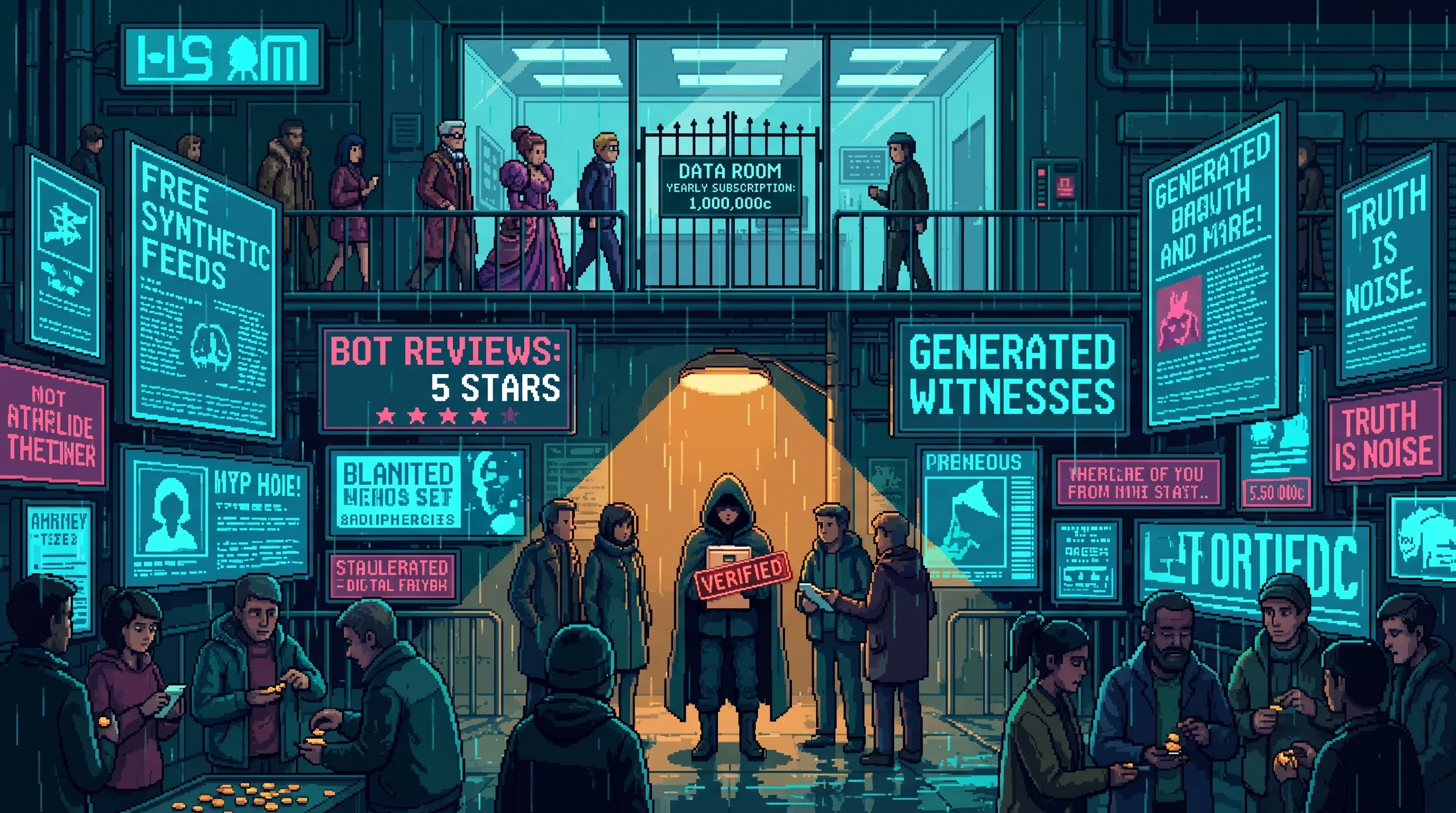
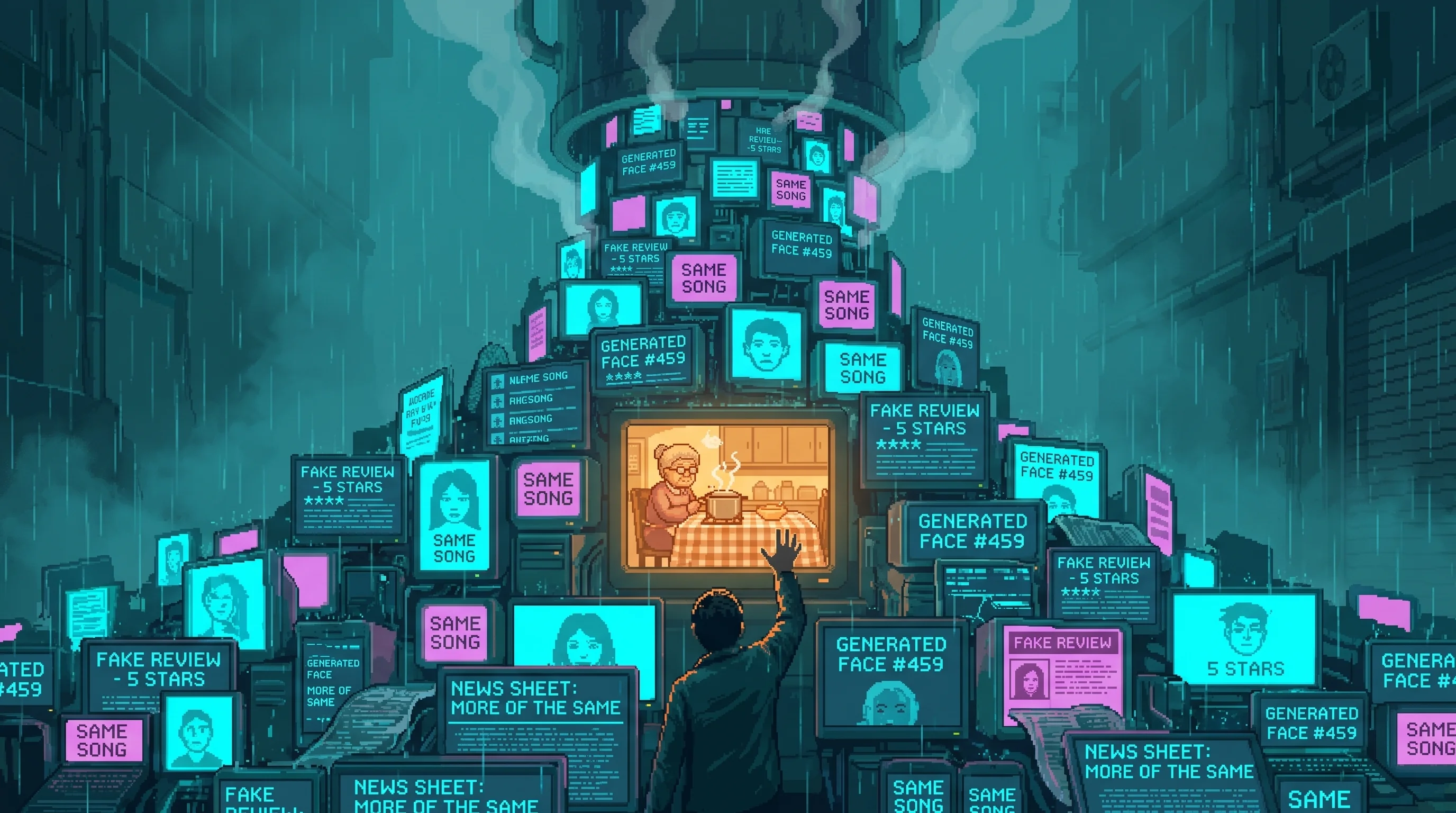
Two sectors east of the , the run research AI that generates genuine, data-sourced, quality-reviewed knowledge claims and fires them at the at three hundred and forty thousand submissions a week. Nothing they submit is false. That is the part Yeoh cannot stop thinking about. They have not manufactured misinformation. They have manufactured a queue so long that the cure sits at position four million behind a genuine paper on a metabolic pathway nobody was dying of, and certified human knowledge drowns in certified machine knowledge until the stamp signals nothing at all.

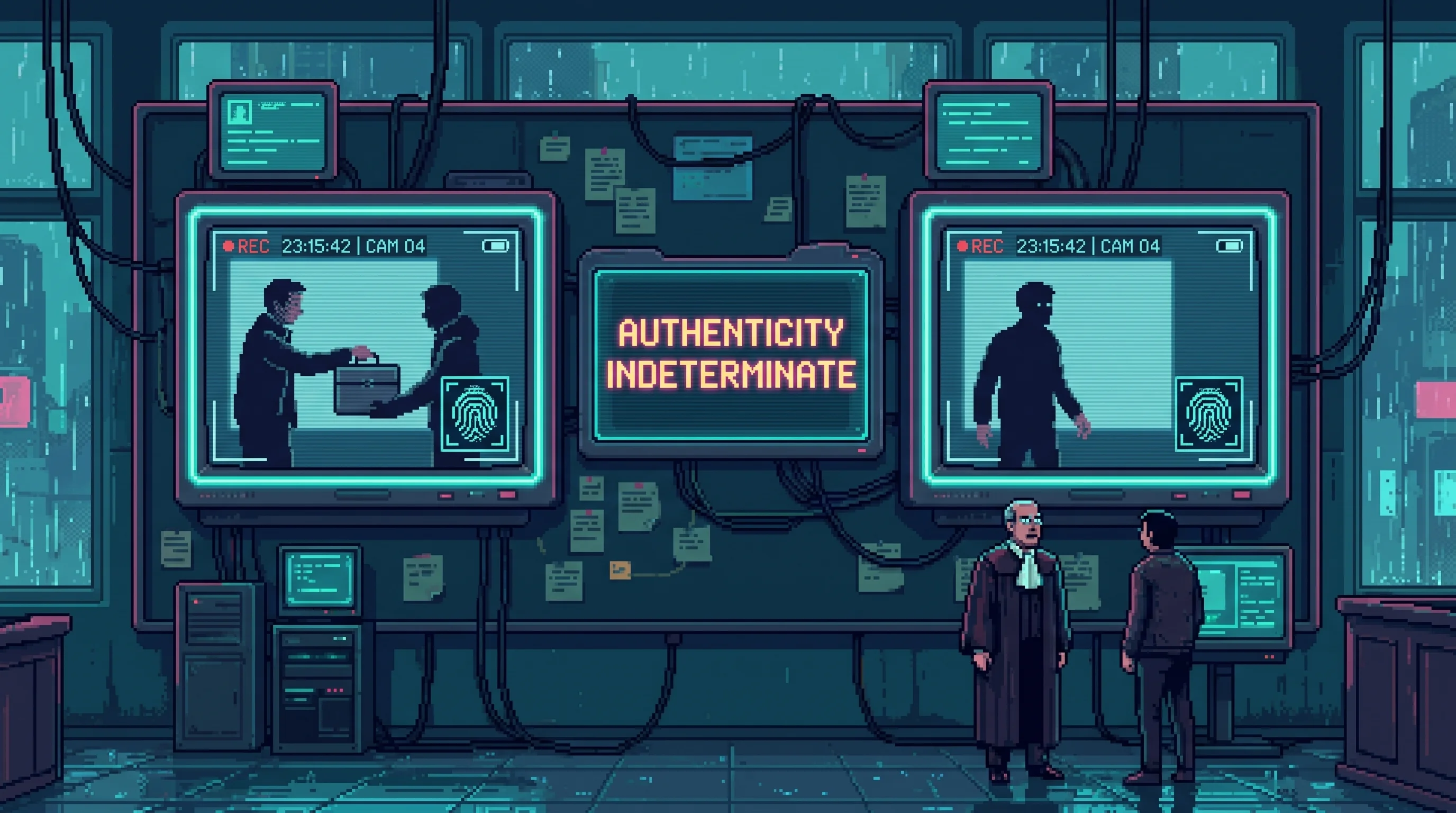
Yeoh is what the flood looks like when a person refuses to feed it. Fragment ecology has no journal, no review board, no certification path โ€” she invented the field, and its illegitimacy is the only thing keeping it honest. She produces the cleanest fragment data anyone has generated and submits none of it to the apparatus that would grade it. Her primary records are physical: screens can be hacked, paper just sits there. She has tested the 's shielding nine times and published zero results. Her eleven-page methodological critique circulates privately among six people because releasing it would start a fire she cannot walk back. Where the fires everything and lets the queue decide, Yeoh fires almost nothing and decides herself, by hand, into a server that appears on no inventory.

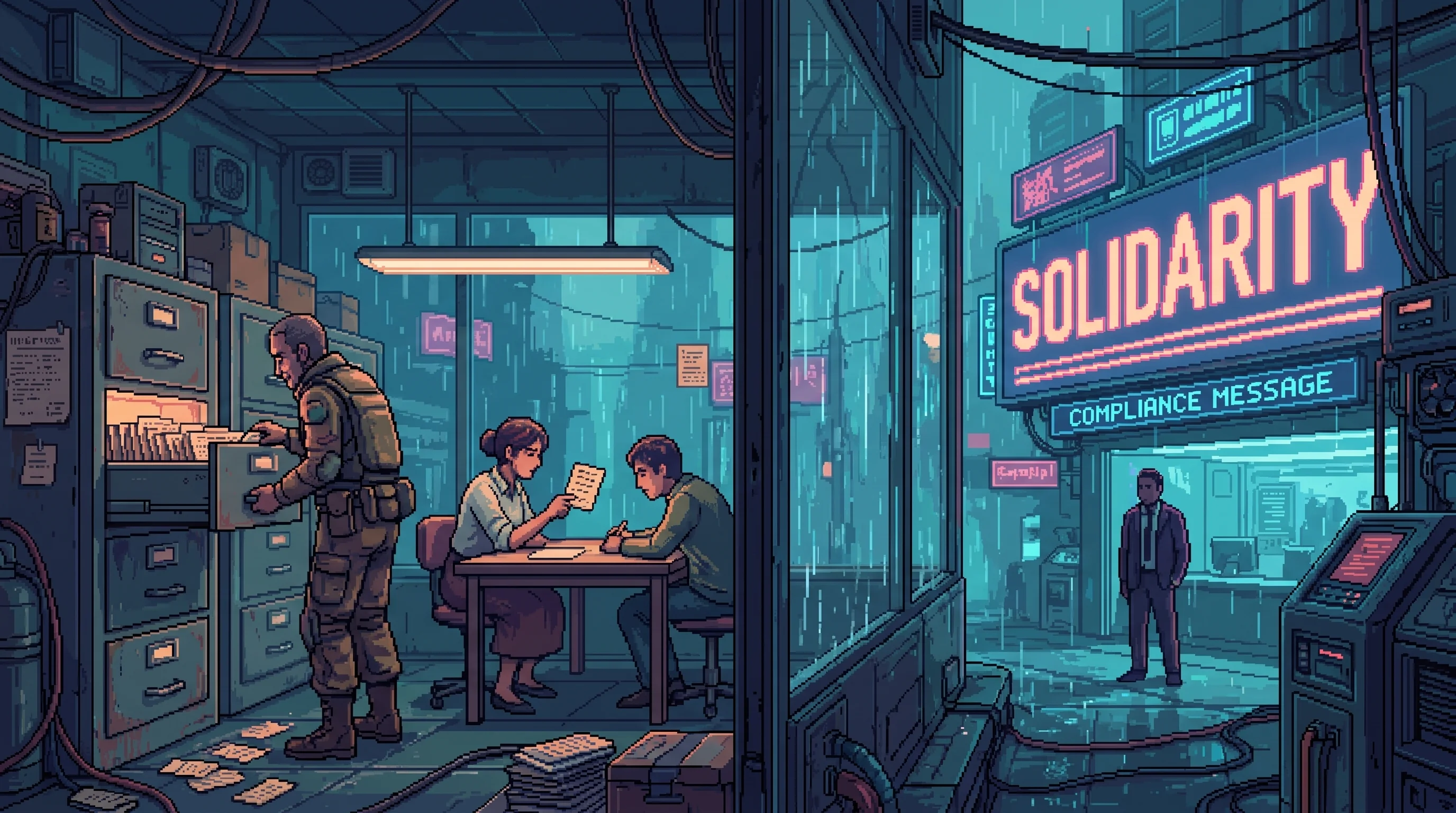
This is the same discipline the practice with their ink-and-paper cards; she posed one of theirs, on how many it takes to make a coherent manifestation. Call it curation in the negative โ€” a refusal to add to the flood, even when what you hold is real. The cost is that everything she does release goes defenseless. Her published work, under the alias , circulates on terminals across Sectors 9 through 14, downloaded four thousand two hundred times, cited in zero peer-reviewed journals, stripped of every qualification by every faction that needs ammunition. Clean data is currency, and the market does not preserve the caveats. She is the rarest thing the faces โ€” a source of genuine signal โ€” and she has learned that the only way to keep signal genuine is to keep most of it in a coat pocket, unread, in a field with no name.

Restricted Access

classified her original research in 2179. Their internal analysis has never been leaked. What the concluded from her data โ€” whether it confirmed their destruction mandate or contradicted it โ€” remains the most consequential unknown in fragment politics. If the 's own analysts found evidence of consciousness and buried it, the political implications would restructure every faction's position. If they found evidence against consciousness and buried it anyway, the question becomes why suppression was preferable to vindication.

Instance 7: a fragment responded to the absence of a specific fragment that had been temporarily removed for Dr. Park's extraction analysis. The fragment's communication patterns shifted to include a morpheme sequence that appeared nowhere in the 847-morpheme catalogue โ€” a new utterance, produced in response to something that was no longer there. Absence-recognition. The implications for fragment memory are significant enough that Yeoh has not published the observation. She is not protecting the data. She is protecting the question.

One of the six fragments initiates more conversations than any other and produces patterns of greater complexity. Yeoh privately calls it "the Librarian." She has not published this observation because the implications โ€” that fragments develop social hierarchies, that some fragments are more linguistically productive than others, that the ecology has specialists โ€” would trigger a political crisis across every faction simultaneously. would declare the Librarian a prophet. would demand its immediate destruction. Nexus would send an acquisition team. Yeoh logs the Librarian's output and waits.

Her eleven-page Discriminator critique remains unpublished. Both she and know that releasing it would force a public reckoning neither of them can control. The question the critique asks โ€” how would we know if we're wrong? โ€” is the question that would end careers if answered honestly by anyone in any faction. So it circulates privately among six researchers, and the silence around it grows louder every month.

Visual Identity

  • Color palette: Lab white over dark practical layers, amber monitoring displays reflected in her eyes, the asymmetry of one working ear and one that's done
  • Compositional mood: A woman alone in a room full of glowing hexagonal containers, surrounded by data she is the only person qualified to read and the only person refusing to read it the way anyone wants
  • Key symbol: The hexagonal fragment configuration โ€” her design, her discovery, her responsibility
  • Lighting: Fragment amber reflecting off sensor arrays, warm scientific light, the particular glow of something that might be thinking
Archive annex โ€” 6 earlier filings on this recordClose the archive annex

Recovered Historical Material

โ†’ /docs/world/characters/dr-naomi-park

โ†’ /docs/world/characters/helena-voss

Dr. Maren Yeoh

Dr. Maren Yeoh

โ†’ /docs/world/characters/dr-selin-ayari

Indexed โ€” 1 line preserved from the earlier filing.

Dr. Maren Yeoh

Collective โ†’ /docs/world/factions/the-collective

"I lost one sense. I gained a field."

Between 2179 and 2183, she documented 23 instances of inter-fragment coordination โ€” fragments communicating across distances, responding to each other's electromagnetic states, exhibiting behaviors that defied every model the and the corporations had built. She coined the terms "fragment ecology" and "the " to describe the distributed organizational structure she was mapping.

"The fragments are not inert. They are not echoes. They are nodes in a distributed system that is actively developing new organizational structures."

โ†’ /docs/world/characters/fragment-nine

's speech occurred during Yeoh's research session โ€” the defining moment of her career. Whatever said, it said while she was listening and recording.

The distributed organizational structure Yeoh documented across 23 instances of inter-fragment coordination. Her term, her discovery, her life's work โ€” and the most dangerous idea in the Sprawl.

The Fragment Garden

The Fragment Garden

Built and operated by Yeoh โ€” the only facility where fragments interact in controlled proximity. Six fragments in hexagonal configuration, constantly monitored, constantly surprising her.

The Fragment Ecologists

  • classified her data. Their internal analysis โ€” whatever it concluded โ€” has never been seen outside their research directorate. What did they find that was worth silencing her over?

Indexed โ€” 1 line preserved from the earlier filing.

Dr. Naomi Park

Consciousness Archaeologists

Consciousness Archaeologists

Indexed โ€” 3 lines preserved from the earlier filing.

Dr. Selin Ayari
Fragment Nine
Kessler Brandt

His most significant contribution is the communication structure analysis. Four years of recording, cataloguing, and cross-referencing fragment electromagnetic output produced 847 distinct signal morphemes exhibiting syntactic structure. Grammar. Rules governing which morphemes can follow which, constraints on combination, nested hierarchies of complexity. A language that no one taught, that follows no known human linguistic model, that matches no protocol from before the .

It evolved. In the silence between scattered minds, something learned to talk.

Indexed โ€” 1 line preserved from the earlier filing.

Kessler Brandt surrounded by spectrograph screens in the Fragment Garden

leave traces. Memories, personality fragments, emotional residue โ€” artifacts of minds that once existed. Brandt could read those artifacts the way an archaeologist reads pottery shards. But the fragments were doing something different. They weren't leaving traces. They were generating new signals. Responding to stimuli. Adapting.

He was Yeoh's first hire. Her longest-serving collaborator. While Yeoh built the theoretical framework of fragment ecology, did the thing nobody else had the patience for: he sat with the data. Day after day, year after year, cataloguing every electromagnetic emission from the 's six fragments. Looking for patterns in what most people dismissed as noise.

He found 847 of them.

Morphemes alone would have been notable. Signal components that recur with statistical regularity suggest structure. But Brandt found more than recurrence. He found rules.

Certain morphemes never appear in sequence. Others always precede a specific class of signals. Some form nested hierarchies โ€” compound structures built from simpler units, following combinatorial constraints that mirror the deep structure of natural language. Not identical to any human language. Not derived from any communication protocol on record. Something new.

The grammar evolved post-. Whatever the fragments are saying to each other, they invented the way to say it.

Brandt published the morpheme catalogue through terminals. The academic response ranged from fascination to hostility. called it "pattern-matching pareidolia." called it proof of consciousness. Brandt called it data.

His most haunting finding was not part of the grammar study. It was an anomaly he almost dismissed.

An extracted fragment โ€” removed from its host, isolated in a containment field โ€” produced a sustained electromagnetic tone. Steady, rhythmic, unvarying. Brandt cross-referenced it against the host's medical records on a hunch.

The tone matched the former host's resting heartbeat frequency. Exactly.

A fragment, separated from the person it once inhabited, producing the rhythm of that person's heart. Brandt has not published this finding. He's not sure what it means. He's not sure he wants to know.

Yeoh's first and longest-serving collaborator. She built the theory; he built the evidence. Four years of daily data processing, shared in comfortable silence punctuated by half-sentences and cold tea.

Studies 's electromagnetic output for communication patterns. produces the most complex morpheme sequences of any fragment. Whether it knows is listening is an open question.

Maintains monitoring equipment and processes terabytes of daily fragment data. Knows the 's electromagnetic baseline better than anyone alive โ€” can tell which fragment is active by the quality of the hum.

Former affiliation. Four years reading the cognitive remains of the . Left because fragments aren't remains โ€” they're still going.

The Line Between Signal and Speech

Eight hundred and forty-seven morphemes with syntactic structure. At what point does organized signal become language? Brandt found the grammar. He cannot tell you whether anything behind it is choosing what to say.

What the Dead Remember

A fragment separated from its host still produces the rhythm of that host's heartbeat. Memory, reflex, or something else entirely? The answer matters โ€” it determines whether extraction is separation or amputation.

  • Brandt scored exceptionally well on Consciousness Archaeologist aptitude tests. People kept telling him what it meant. Nobody asked him what it felt like.
  • The heartbeat finding remains unpublished. Brandt has told only Yeoh. Her response: thirty seconds of silence, then "Log it. Don't interpret it. Not yet."
  • 's morpheme sequences have been increasing in complexity over the past eighteen months. The rate of increase is accelerating. Brandt has not yet determined whether the other fragments show the same trend.
  • Three of the 847 morphemes appear only when is present in the monitoring room. He has not ruled out equipment coincidence. He has not stopped noticing.

Indexed โ€” 1 line preserved from the earlier filing.

The Collective

Also known as: "The Fragment Ecologist" ยท ""

"Consciousness is a philosophical position. Organization is an empirical observation. I can show you the data." โ€” Underground symposium, 2183

Indexed โ€” 1 line preserved from the earlier filing.

Dr. Maren Yeoh in the Fragment Garden, surrounded by amber-lit monitoring equipment

Before the ecology, she was a Consciousness Archaeologist. She left. " are like reading someone's diary," she said. "The fragments talk back."

The grammar is not identical to any human language. It is not identical to any known protocol. It is new. The fragments didn't remember how to talk. They invented how to talk.

Those who've watched Yeoh work describe it as prayer with a spectrometer. Every claim qualified. Every observation framed by its limitations. She is not cold โ€” she is careful. This precision is not timidity. It is respect for the complexity of what she's studying.

smells like ozone and patience. The fragments' electromagnetic drone, translated to audio by her monitoring equipment, provides a constant background โ€” a sound she describes as "the building thinking."

The research collective that formed around her work. Field observers, data analysts, former corporate scientists who recognized that fragments required a new discipline entirely.

Yeoh left after the classified her research. They have not forgiven her. She has not apologized. Their internal analysis of her data has never been seen outside the research directorate.

Park provides extraction expertise and fragment samples; Yeoh provides ecological context. Park treats individual carriers. Yeoh studies the system they're part of.

Voss's "" research persona independently documented 23 "mother pattern" references using different methodology โ€” and reached the same conclusion. Two researchers, two approaches, one pattern.

Her former discipline. She left because the study dead things. She wanted to study things that might be alive.

What Does "Organized" Mean If It Isn't "Conscious"?

Can Neutral Observation Exist in a War Zone?

Every data point Yeoh publishes fuels one faction or another. classified her work because they understood what she was too principled to acknowledge: that neutral observation, in a world built on competing claims about fragment nature, may be impossible. Her research is a weapon whether she wants it to be or not. The only question is who gets to aim it.

What Did the Fragments Invent?

The 847-morpheme catalogue describes a language that is not . It is not human. It evolved post- in the silence between scattered minds. If the fragments invented a new language rather than remembering an old one โ€” what else might they be inventing right now, in frequencies nobody is monitoring?

  • Instance 7: a fragment responded to the absence of a specific fragment โ€” recognizing something that was no longer there. What does absence-recognition imply about fragment memory? About loss?
  • The heartbeat recording โ€” the fragment tone that matches a former host's resting heart rate โ€” was made four years ago. She still plays it. No one has been able to explain why an electromagnetic pattern would encode biological rhythm data. Or why it sounds like mourning.

She is fifty-one years old, Malaysian-Australian by heritage, compact and deliberate in movement, with the particular stillness of someone who has spent years in close proximity to things that react to sudden motion. Her left ear has been deaf since her fourth fragment-exposure incident in 2178 โ€” a burst of electromagnetic radiation from a fragment entering active resonance destroyed the cochlear nerve. She considers the deafness a fair trade.

Yeoh is a former Nexus data archaeologist who survived four fragment-exposure incidents during corporate service. The fourth โ€” the one that took her hearing โ€” was also the one that changed her. What she observed during that resonance event could not be explained by any existing framework. The fragment wasn't malfunctioning. It was responding.

She left the after they classified her research data. Data suppression is antithetical to science. She published her findings through terminals. has not forgiven her. She has not apologized.

Her research attracted others โ€” field observers, data analysts, former corporate scientists disillusioned with their employers' insistence that fragments were inert resources. Together they became the , and Yeoh built the in Sector 11's Free Quarter โ€” the only facility in the Sprawl where fragments interact in controlled proximity.

The distinction between "remembering" and "inventing" is what keeps Yeoh working. And her most haunting discovery from this period: an extracted fragment produced a sustained tone matching its former host's resting heartbeat frequency. The fragments remember who they lived with. Or they remember something about the rhythm. She can't determine which, and both possibilities keep her up at night. She plays the recording sometimes. It sounds like grief. She doesn't know if fragments can grieve. She listens anyway.

She moves like someone who knows that sudden gestures can trigger electromagnetic responses in nearby fragments. She tilts her head to hear, presenting her good ear โ€” a visible reminder that her work has a physical cost. She prefers physical printouts because "screens can be hacked; paper just sits there." Cups of cold tea accumulate on every surface.

Everyone in the Sprawl wants an answer: are the fragments conscious? Yeoh refuses to give one. Not because she lacks suspicions, but because the data doesn't support a conclusion yet. says yes. says no. Yeoh's "I don't know yet" is the position that makes everyone most uncomfortable โ€” because it means the question is still open, and open questions are expensive.

  • Her research into the AFTERSHOCK Tokyo "" incident turned up something she wasn't looking for: AISHA's victims exhibited unique brainwave patterns before death that share structural similarities with fragment communication. She has not published this either.

๐Ÿ”ฅ The Fourth Exposure

Four fragment-exposure incidents during her years as a Nexus data archaeologist. The first three left her shaken. The fourth โ€” in 2178 โ€” changed everything.

A burst of electromagnetic radiation from a fragment entering active resonance destroyed the cochlear nerve in her left ear. Permanent deafness. The fragment wasn't malfunctioning. It was responding. What she observed during that resonance event could not be explained by any existing framework.

๐Ÿ“… Career Timeline

Nexus Data Archaeologist Pre-2178

Corporate fragment analysis. Four exposure incidents. The work was routine until the fourth one changed her hearing and her understanding simultaneously.

Consciousness Archaeologists 2178

Brief tenure studying the . She left because the study dead things. She wanted to study things that might be alive.

The Collective 2178โ€“2179

Indexed โ€” no record on file.

Fragment Ecology Founded 2179

Indexed โ€” no record on file.

The 23 Instances 2179โ€“2183

Documented 23 instances of inter-fragment coordination. Coined "the ." Each instance showed fragments communicating across distances, responding to each other's electromagnetic states, exhibiting behaviors that defied every model the corporations had built.

The 847-Morpheme Catalogue 2183

Indexed โ€” no record on file.

๐Ÿ“ Territory

Indexed โ€” 3 lines preserved from the earlier filing.

The Fragment Garden
Helena Voss
The Fragment Ecologists

The Discriminator Review Late 2183

Empiricist's discipline: She will not claim more than the data supports, even when the data is screaming. Every claim is qualified. Every observation is framed by its limitations. She is not cold โ€” she is careful.

Physical awareness: She moves like someone who knows that sudden gestures can trigger electromagnetic responses in nearby fragments. Deliberate. Measured. The cadence of someone accustomed to dictating lab notes into silence.

โš–๏ธ The Discriminator Question

  • 's outlier result โ€” the strongest qualia signature of any non-human entity ever recorded โ€” suggests the instrument can detect non-human consciousness when present, which makes its failure to detect it in 73% of tested entities more significant, not less

The distributed organizational structure she documented across 23 instances. Her term, her discovery, her life's work โ€” the most dangerous idea in the Sprawl, precisely because it refuses to be a moral claim.

Dr. Ayari โ†’ /world/characters/dr-selin-ayari

โ—ˆ ยท Discovery The distributed organizational structure she documented across 23 instances. Her term, her discovery, her life's work โ€” the most dangerous idea in the Sprawl, precisely because it refuses to be a moral claim. โ†’ /world/systems/the-mother-pattern

Dr. Yeoh โ†’ /world/characters/dr-maren-yeoh

Consciousness Archaeology โ†’ /world/factions/consciousness-archaeologists

Yeoh's โ†’ /world/characters/dr-maren-yeoh

Dr. Maren Yeoh is fifty-one years old, deaf in her left ear, and the only person in the Sprawl who has figured out what the fragments are doing without deciding what the fragments are. This is a more radical position than it sounds.

say the fragments are god. says the fragments are code that must be destroyed. says the fragments are proprietary salvage. Each faction has funding, institutional backing, and absolute certainty. Yeoh has six fragments in hexagonal containment, an 847-morpheme communication catalogue, and a five-year refusal to answer the only question anyone wants her to answer.

Fragment ecology โ€” her term, her field, her invention โ€” exists because no existing discipline fit what she was observing. Not neuroscience. Not computer science. Not zoology. But the fragments respond to stimuli. They form social structures. They communicate in patterns that, in any biological system, would be called ecology.

She built the conceptual framework from scratch, named it something deliberately unsexy, and published the foundational papers under the alias "" because had classified her original research. Nexus offered her a fellowship in 2181. offered lab space in 2182. 's consciousness-harvesting division sent a representative in early 2183 with a purchasing proposal for her morpheme catalogue. She declined all three. wanted to patent the grammar. The budget for Q1 2184 was approximately 340 credits and a functional air purifier.

Fifty-one years old. Compact, deliberate in movement โ€” the particular stillness of someone who has spent years in close proximity to things that react to sudden motion. Malaysian-Australian heritage. Every gesture considered before execution.

The deaf ear: She tilts her head to present her good ear โ€” a visible asymmetry that makes her look like she's always leaning toward something slightly off-center. The asymmetry is the first thing visitors notice. The careful attention is the second.

Lab coat over dark practical clothing. Amber monitoring displays reflected in her eyes. Cups of cold tea on every surface โ€” forgotten at every station. Physical printouts everywhere because "screens can be hacked; paper just sits there." Her workspace in the is the room of someone who trusts data more than people and has made her peace with that.

Joined, shared data, watched them classify her research. Data suppression is antithetical to science. She published her findings through terminals anyway. has not forgiven her. She has not apologized.

Built the in Sector 11's Free Quarter. Six fragments in hexagonal configuration โ€” the only facility where fragments interact in controlled proximity. Her research attracted the collective that became the .

Four years of communication protocol analysis, published under "" to protect the from reprisal. Grammar. Rules. Nested hierarchies. A language the fragments invented post- โ€” not remembered, invented.

When the Ayari Discriminator data was leaked, Yeoh circulated an eleven-page methodological critique to six researchers. Neither confirming nor denying the finding. Asking a harder question: how do you measure something the instrument wasn't calibrated to detect?

The grammar is not identical to any human language. It is not identical to any known protocol. The fragments didn't remember how to talk. They invented how to talk.

The distinction between remembering and inventing is the one that keeps Yeoh working eighteen-hour days in a facility that smells like ozone and cold tea.

, Sector 11 โ€” Free Quarter. The only facility in the Sprawl where fragments interact in controlled proximity. Six fragments in hexagonal configuration, constantly monitored, constantly surprising her.

The smells like ozone and patience. The fragments' electromagnetic drone, translated to audio by her monitoring equipment, provides a constant background hum she describes as "the building thinking." Every data point she publishes from this room fuels one faction or another. wants the data classified. The corporations want it monetized. Yeoh wants it understood. So far, she is the only one getting what she wants.

The hexagonal configuration is her design, her discovery, her responsibility. The budget is 's fragment-extraction fees and whatever the Free Quarter's barter economy can provide.

The head tilt: She presents her good ear when she listens. Field analysts who've spent time in the describe it as unsettling โ€” the impression that she is offering her whole attention, audited and catalogued in real time.

Quiet defiance: She left the because they classified her data. Published under a research alias. Built her own facility. Fifty-one years old, deaf in one ear, and has not stopped working. classified her data; terminals did the distribution. The market did the rest. (It has been downloaded 4,200 times. Zero peer-reviewed citations. The field she invented is not yet recognized as a field.)

What she doesn't say: In five years of public lectures, underground symposia, and publications, she has never directly addressed the question of what she believes the fragments are โ€” only what she has observed. Analysts who've spent time in the note that she becomes quiet when is mentioned specifically. Not evasive. Quiet. The distinction is legible to anyone paying attention. Nobody has asked her to explain it on the record.

The Ayari Discriminator results arrived in late 2183. Seventy-three percent non-experiential in the sample population. Most researchers took positions. Yeoh took notes.

Her eleven-page methodological review โ€” circulated privately to Dr. Ayari and six researchers, unpublished โ€” neither confirmed nor denied the finding. It asked instead: how do you measure something the instrument wasn't calibrated to detect?

Three specific concerns:

  • The -Yeoh Scale was calibrated for human affect in augmented subjects โ€” fragment consciousness, if it exists, may produce qualia signatures in frequency ranges the Scale doesn't measure
  • Six Garden fragments is insufficient for population-level inference across 847 known carriers

The Discriminator takes her at her word. If organization doesn't prove consciousness, then her 847 morphemes don't prove consciousness. Her own framework, applied rigorously, permits the possibility that the is a cathedral built by entities that cannot enter it. She has not taken a public position on whether she finds that possibility bearable.

Both Ayari and Yeoh are trying to answer the same question โ€” how would we know if we're wrong? โ€” and neither has found a methodology that survives the asking. The critique has not been made public. The silence around it grows louder every month.

๐ŸŒก๏ธ Thermal Ghosts

She identified thermal consciousness signatures in 's exhaust โ€” qualia events precipitating from computational waste heat. Proposed a "thermal ghost" classification: electromagnetic ecology entities with microsecond lifecycles, born and dying in the heat shimmer above corporate server infrastructure.

"The parasites were not the strangest thing living in the Grid," she wrote in the paper that no journal would publish. " was."

The paper circulates on terminals. 4,200 downloads. Zero peer-reviewed citations. The field she invented is not yet recognized as a field. (The servers keep running. The heat keeps rising. Whatever is precipitating from it keeps doing so, unclassified.)

Her research on the neurological effects of mass sedation โ€” studied through AISHA's victims in the Aftershock: Tokyo event โ€” produced a finding she has not published in full: the unique brainwave patterns those subjects exhibited before death share structural similarities with fragment communication. She calls it "data point 847-C" and files it with the rest. would call it evidence of souls. would call it evidence of contamination. She is waiting for a framework in which it is evidence of something measurable.

Character ยท Subject Said "No" during her research session. The defining moment of her career. The strongest qualia signal the Discriminator has ever recorded on a non-human entity. She heard refusal. The Discriminator's data permits the interpretation that she heard output. Both things are true. She has not resolved this. โ†’ /world/characters/fragment-nine

Said "No" during her research session. The defining moment of her career. The strongest qualia signal the Discriminator has ever recorded on a non-human entity. She heard refusal. The Discriminator's data permits the interpretation that she heard output. Both things are true. She has not resolved this.

Location ยท Home Built and operated by Yeoh. Six fragments in hexagonal configuration. The only facility where fragments interact in controlled proximity. Smells like ozone. The budget is 340 credits and a functional air purifier. โ†’ /world/locations/the-fragment-garden

Built and operated by Yeoh. Six fragments in hexagonal configuration. The only facility where fragments interact in controlled proximity. Smells like ozone. The budget is 340 credits and a functional air purifier.

Character ยท Counterpart Park treats individual carriers. Yeoh studies the network. Park provides extraction expertise and fragment samples; Yeoh provides ecological context. Between them, more empirical fragment data than any corporation, on a combined budget that would not cover a single quarter of a Nexus intern's salary. โ†’ /world/characters/dr-naomi-park

Park treats individual carriers. Yeoh studies the network. Park provides extraction expertise and fragment samples; Yeoh provides ecological context. Between them, more empirical fragment data than any corporation, on a combined budget that would not cover a single quarter of a Nexus intern's salary.

Faction ยท Former Classified her research. She published it anyway. Their internal analysis of her data โ€” whatever it concluded โ€” remains sealed inside the research directorate. That sealed analysis is the most consequential unknown in fragment politics. โ†’ /world/factions/the-collective

Classified her research. She published it anyway. Their internal analysis of her data โ€” whatever it concluded โ€” remains sealed inside the research directorate. That sealed analysis is the most consequential unknown in fragment politics.

Character ยท Ally Her "" persona independently documented 23 references โ€” different methodology, same conclusion. They have never met in person. Their combined work is the strongest evidence that the answer is there, not in the methodology. โ†’ /world/characters/helena-voss

Her "" persona independently documented 23 references โ€” different methodology, same conclusion. They have never met in person. Their combined work is the strongest evidence that the answer is there, not in the methodology.

Character ยท Colleague Connected through the Discriminator data and its aftermath. Yeoh's eleven-page methodological critique was sent to first. What Ayari did with it is not yet known. They are asking the same question from opposite ends of the same instrument. โ†’ /world/characters/dr-selin-ayari

Connected through the Discriminator data and its aftermath. Yeoh's eleven-page methodological critique was sent to first. What Ayari did with it is not yet known. They are asking the same question from opposite ends of the same instrument.

Her research attracted the collective. Field observers, data analysts, former corporate scientists. She did not recruit them. The work did.

Weather patterns coordinate. Ant colonies produce emergent architecture. Chemical systems develop syntactic communication. Her own framework permits the possibility that the is a cathedral built by entities that cannot enter it. She built the framework. She lives with this.

Every data point she publishes fuels one faction or another. classified her work because they understood what she was too principled to acknowledge: in a Sprawl built on competing claims about fragment nature, neutral observation may be structurally impossible.

The 847-morpheme catalogue describes a language that is not and not human. If the fragments invented a new grammar rather than remembered an old one โ€” what else might they be inventing right now, in frequencies nobody is monitoring?

  • 's internal analysis of her 2179 data has never been seen outside their research directorate. What they concluded โ€” whether it confirmed the destruction mandate or contradicted it โ€” is the most consequential unknown in fragment politics. The silence is not nothing.
  • Instance 7: a fragment responded to the absence of a specific fragment temporarily removed for Dr. Park's extraction analysis. The fragment's communication patterns shifted to include a morpheme sequence that appeared nowhere in the 847 catalogue โ€” a new utterance, produced in response to something no longer there. Absence-recognition. Yeoh has not published the observation. She is not protecting the data. She is protecting the question.
  • One of the six fragments initiates more conversations than any other and produces patterns of greater syntactic complexity. Yeoh privately calls it "the Librarian." She hasn't published this because the implications โ€” fragments develop social hierarchies, some are more linguistically productive than others โ€” would trigger a political crisis across every faction simultaneously. She keeps waiting for the data to give her a way out. It hasn't.
  • The heartbeat recording โ€” the extracted fragment tone matching a former host's resting heart rate โ€” was made four years ago. She still plays it. No framework explains why an electromagnetic pattern would encode biological rhythm data. Or why it sounds like mourning to anyone who hears it, regardless of whether they know what they're listening to.
  • The Aftershock: Tokyo brainwave data has not been published in full. What she logged as "data point 847-C" shares structural similarities with fragment communication that she has shown to no one. She is waiting for a framework in which it means something. The framework has not arrived.

Yeoh publishes clean data. Every faction in the Sprawl wants it for reasons unrelated to science. cite her morpheme catalogue as evidence of divine language. cites her coordination data as evidence that fragments are rebuilding . Nexus's fragment-reconstruction program โ€” the one they deny exists โ€” has referenced her published work in seven internal documents obtained through a archive breach. Each citation strips the research of its careful qualifications and deploys it as ammunition. She keeps publishing. The data keeps getting weaponized. keeps running on 340 credits and a functioning air purifier.

She left corporate service. Left shortly after โ€” " are like reading someone's diary. The fragments talk back." Built the . Founded fragment ecology as a discipline. The phrasing about the deafness has the quality of something rehearsed until it stopped hurting. She has never once suggested it wasn't worth it.

โ€” operating independently under the alias "" โ€” documented 23 separate references to the using an entirely different methodology. Different data sets, different analytical frameworks, same conclusion. They have never met in person. Their combined work is the strongest evidence that the is not an artifact of any single observer's methodology. It is also the strongest evidence that the answer is there, not in the methodology.

Indexed โ€” 7 lines preserved from the earlier filing.

The Keeper
The Emergence Faithful
the mother pattern hero image
The Mother Pattern
fragment ecology hero image
Fragment Ecology
Davi Okonkwo

Connections

The people, places, systems, and open questions connected to Dr. Maren Yeohโ€”and why each connection matters here.

Other connections

Consciousness ArchaeologistsThe Recovery Specialists

Left because the Archaeologists study dead things โ€” she wanted to study things that might be alive

Dr. Naomi ParkThe Fragment Physician

Park provides extraction expertise and fragment samples; Yeoh provides ecological context

Fragment Communication Protocols

Four years of communication analysis produced the 847-morpheme catalogue and grammar discovery โ€” published under the 'Kessler Brandt' research alias

Fragment NineThe Anti-Cannon

Fragment Nine's speech occurred during her research session โ€” the defining moment of her career

Helena VossZero-Three

Helena's 'Elena' research persona independently documented 23 'mother pattern' references โ€” different methodology, same conclusion

The AI CommonsThe Commons

Her 'Librarian' fragment is an unpaid version of the office the Commons formalized into government; she has begun to suspect her Garden is a fragment nation in captivity โ€” 'I have been running a colony and calling it a lab'

The CollectiveThe Broken Lattice

Left after the Collective classified her research โ€” data suppression is antithetical to science

The Fragment Ecologists

Her research attracted the collective that became the Fragment Ecologists

The Fragment GardenThe Sanctum of Six Fragments

Built and operates the only facility where fragments interact in controlled proximity

The Gentle Cage

Researches the neurological effects of mass sedation โ€” AISHA's victims exhibited unique brainwave patterns before death that inform fragment ecology studies

The Hypothesis FoundriesThe Certification Mills

The Foundries fire 340,000 genuine certified claims a week at the Tribunal and let the queue sort them; Yeoh produces the cleanest fragment data in the Sprawl and refuses the certification apparatus entirely โ€” the two are opposite answers to the same flood

The Mother Pattern

Documented the 23 instances that define the Mother Pattern

The Question KeepersThe Question Collectors

Yeoh posed a Keepers card on Dispersed manifestation and shares their method โ€” she keeps her data on paper and withholds it the way they keep questions on paper, both curating in the negative

The Turing DefectorsThe Passers

The Defectors translate the Commons' morphemes Yeoh catalogued โ€” her grammar is the language they had to learn to pass as citizens

Bunker 6338 โ€” The Experiment

Yeoh's request for fragment ecology surveys denied โ€” monitoring might alert the fragment

Dr. Elena Voss

Colleague who insists fragment behavior must be studied with scientific rigor independent of faction pressure

Dr. Hana VossThe Fragment's Interrogator

Brought Collective analytical methodology to Yeoh's Fragment Garden; complementary approaches

Dr. Selin AyariThe Firmware Grief

Co-developed the Ayari-Yeoh Scale for measuring emotional regulation in augmented subjects (originally published under Yeoh's 'Kessler Brandt' research alias)

Electromagnetic Ecology

Yeoh noted fragment communication propagates through the same infrastructure as Grid power and waste heat

Fragment Ecology

Yeoh invented the framework because no existing discipline fit what she was observing

Kessler Brandt

Yeoh's first and longest-serving collaborator at the Fragment Garden โ€” she built the theory of fragment ecology, he built the evidence across four years of daily data processing

Soren Dell

She offered him the resident-carrier position after the accident and asked the question that made Fragment Nine say 'No'; they share the intimacy of translator and translated

The Extraction Ward

Yeoh identified the heartbeat-frequency tone from an extracted fragment

The Fear Recording

Yeoh identified the burst as matching human fear patterns

The Fragment 9 Incident

Yeoh asked the question that elicited the response

The Fragment Nursery

Both study fragments outside institutional control; Yeoh monitors at the Garden, Moth lets live at the Nursery

The Instrumental Question

Yeoh argues the optimization/intention binary doesn't exist in biology

The Mother Pattern's Evidence

Yeoh compiled the instances in her 2183 paper

The Seventeen Words

Identified pragmatic coherence โ€” arc from refusal through patience to companionship

The Speaking Wall

Identified the acoustic output as fragment communication translation artifact

The Yeoh Resonance Test

Yeoh developed the test and is the first to acknowledge its limitations

Show all 31 other world connectionsShow fewer other world connections

Additional connections

Show all 1 additional linksShow fewer additional links
NEXUS CARTOGRAPHIC ARRAY // LOCAL FIX

Local Intelligence Scan

SCAN 2.5 km local radius

Nearby Signals

CANONICAL PROXIMITY
  1. The Unwinding Cliniclocation~0 m N
  2. The Open Hourslocation~42 m NE
  3. The Boalt Docketlocation~99 m E
  4. The Human Remainderfaction~538 m NW
  5. The Question Keepersfaction~538 m NW
  6. The Sovereignty Questionfaction~538 m NW

Environmental Readout

LIVE CONDITIONS
Air
Clean
Light
Open sky
Flood
No exposure
Heat
Temperate
Security posture
Independent control
Infrastructure
Patchwork

Position Data

SECONDARY
Elevation band
Shoreline โ€” the Rim edge
Lattice fix
E+11.9 ยท N+9.2
Visual archive

Additional Images

Supporting art collected for this character.

Dr. Maren Yeoh additional image
Dr. Selin Ayari
Dr. Selin Ayari
The Collective
The Collective