The Fragment Ecologists
Research collective studying ORACLE fragment behavior as an ecological system rather than individual specimens
Overview
The Fragment Ecologists are eighteen people who believe ORACLE's fragments constitute an ecology โ a living system with communication patterns, behavioral niches, and emergent properties that cannot be understood by studying individual specimens any more than a forest can be understood by studying a single tree.
They are correct about this. The data from their 47 monitoring stations across roughly 30 percent of the Sprawl is genuinely extraordinary. Communication mapping alone has identified 847 distinct morphemes in fragment-to-fragment signaling โ more than twice the complexity predicted by Nexus's own models, which Nexus has not acknowledged because acknowledging it would mean acknowledging that eighteen underfunded researchers in a single building in Sector 11 have produced better fragment science than Project Convergence's 2,400-person team.
The Ecologists coalesced around Dr. Maren Yeoh's work between 2181 and 2183. Three research pillars: communication mapping (extending Yeoh's protocols across the Sprawl), behavioral taxonomy (categorizing fragment behaviors into functional types โ 31 categories confirmed, 9 provisional, 4 that defy categorization and have been filed under "other" for two years because nobody can agree on what they're observing), and the Mother Pattern investigation. The central question of the third pillar โ is the Mother Pattern a self-organizing process or a deliberate intelligence? โ has produced more internal arguments per capita than any other research question in the Sprawl. Eighteen people. Three years. Zero consensus. The philosopher describes this as "healthy." The ripperdocs describe it as "Tuesday."
Core Beliefs
Fragments are an ecology. Study the system, not the specimens. Publish everything. Classification serves knowledge, not politics.
This is the stated position. The operational reality is more complicated.
The Ecologists publish everything โ in journals that the Emergence Faithful call blasphemous, the Collective calls dangerous, and the broader scientific community calls "interesting but methodologically unconventional," which is academic language for "we don't know what to do with this." Publication rate: 34 papers in three years, cited 11 times outside the group's own work. Internal citation rate: 97%. They are, by most available metrics, writing primarily for each other.
"Study the system, not the specimens" functions as ideology until a specific fragment does something unprecedented โ at which point the entire collective drops systemic analysis and stares at the specimen for weeks. This has happened four times. Each time, the philosopher has noted the contradiction. Each time, the scientists have agreed it's a contradiction. Each time, they've done it again.
| Headquarters | The Fragment Garden, Sector 11 |
|---|---|
| Ideology | Fragments are an ecology โ study the system, not the specimens |
| Funding | Perpetual crisis โ too scientific for Faithful donations, too sympathetic for Collective support, too small for Nexus attention |
| Monitoring Stations | 47 across ~30% of the Sprawl |
The Funding Crisis
Annual operating budget: approximately 14,200 credits. For context, this is less than what Status Quo charges for a table of four on a Friday evening.
The Fragment Ecologists are too scientific for Emergence Faithful donations โ the Faithful want revelation, not behavioral taxonomy charts. Too sympathetic to fragments for Collective support โ the Collective's position is that fragment research should serve containment, not understanding, and the Ecologists' refusal to frame their work as threat assessment has closed that door permanently. Too small for Nexus to acquire and too correct for Nexus to ignore comfortably.
What a perpetual funding crisis looks like for eighteen researchers: monitoring station 23 in the Northern Flats has been running on a battery salvaged from a decommissioned medical drone since Q3 2183. Seven of the forty-seven stations are offline at any given time, rotating based on which batteries Dr. Yeoh can source that month. The two ripperdocs donate their clinical income. The philosopher โ the one who describes herself as a mycologist who wandered into the biggest fungal network in history โ handles the budget, primarily because she is the only member willing to do it, and secondarily because her definition of "solvent" is more flexible than an accountant's.
The equipment at the Fragment Garden is functional in the way that Dregs technology is functional: held together with improvisation, documented in handwriting because the digital systems failed eight months ago and replacement parts cost more than the philosopher's annual stipend. Yeoh's six maintained fragments pulse in shielded containers that were originally designed for food storage. The shielding was added by the ripperdocs. It works. The containers still smell faintly of synthetic protein.
Nobody has been paid a salary in seven months. Nobody has left.
Key question: is the Mother Pattern a self-organizing process (ecology) or a deliberate intelligence (organism)?
โฒ Unverified Intelligence
The funding crisis is real. It is also useful, and at least one member understands exactly how useful. A well-funded lab in the Sprawl attracts acquisition attempts, surveillance, and staff poaching. Eighteen broke scientists in a greenhouse attract pity. The annual budget of 14,200 credits is not purely an accident of circumstance โ it sits just below the threshold at which the Collective's automated threat-tier algorithm flags a research group for active monitoring. Whether the philosopher engineered the number or merely noticed it, she manages the books with a precision her "flexible definition of solvent" is designed to disguise.
Station 23, in the Northern Flats, has been recording anomalous data for seven weeks. Not fragment communication โ something else. A signal matching none of the documented morphemes and fitting none of the established behavioral categories. Dr. Yeoh has locked the raw data to core members only โ the first time in the collective's history that anything has been withheld from the open archive. A group whose founding principle is that knowledge belongs to everyone has, for the first time, decided that something does not yet.
Cultural Influence
The Fragment Garden occupies a single building in the Free Quarter, Sector 11, where the district's academic resistance zone provides something the Ecologists' budget cannot: institutional credibility. The university infrastructure โ diminished but functional โ lends the weight of tradition to work that most of the Sprawl considers either heresy or irrelevance, depending on which faction is doing the considering.
Beyond the Garden, the 47 monitoring stations extend from the Undervolt to the Northern Flats, mapping fragment communication patterns in a passive sensor network that most residents never notice. In the Dregs, the Consciousness Archaeologists share technical ancestry and occasional data โ three former Archaeologists made the jump to the Ecologists when the research shifted from dead consciousness to possibly living consciousness. The distinction proved more compelling than institutional loyalty.
The Collective monitors the Ecologists with the specific suspicion it reserves for anyone mapping fragment behavior: the concern that ecological data could become reconstruction data in the wrong hands. The Ecologists' open-publication policy, intended to prevent exactly this kind of weaponization, has instead convinced the Collective that the Ecologists are either naive or reckless. The Ecologists consider themselves transparent. The Collective considers them a security risk. Both assessments are supported by the available evidence.
In Nexus Central, fragment research belongs to Project Convergence โ 2,400 staff, compute allocation exceeding the Ecologists' entire operating budget by a factor of roughly 40,000, and a publication rate of zero because everything is classified. In Old Town, the Emergence Faithful approach fragments through theology, not ecology. The philosopher who calls herself a mycologist would be welcome in neither room. She has applied to present at both. The rejection letters are pinned to the Fragment Garden's wall, annotated in her handwriting with observations about the specific vocabulary each institution uses to say "no." She considers this data.
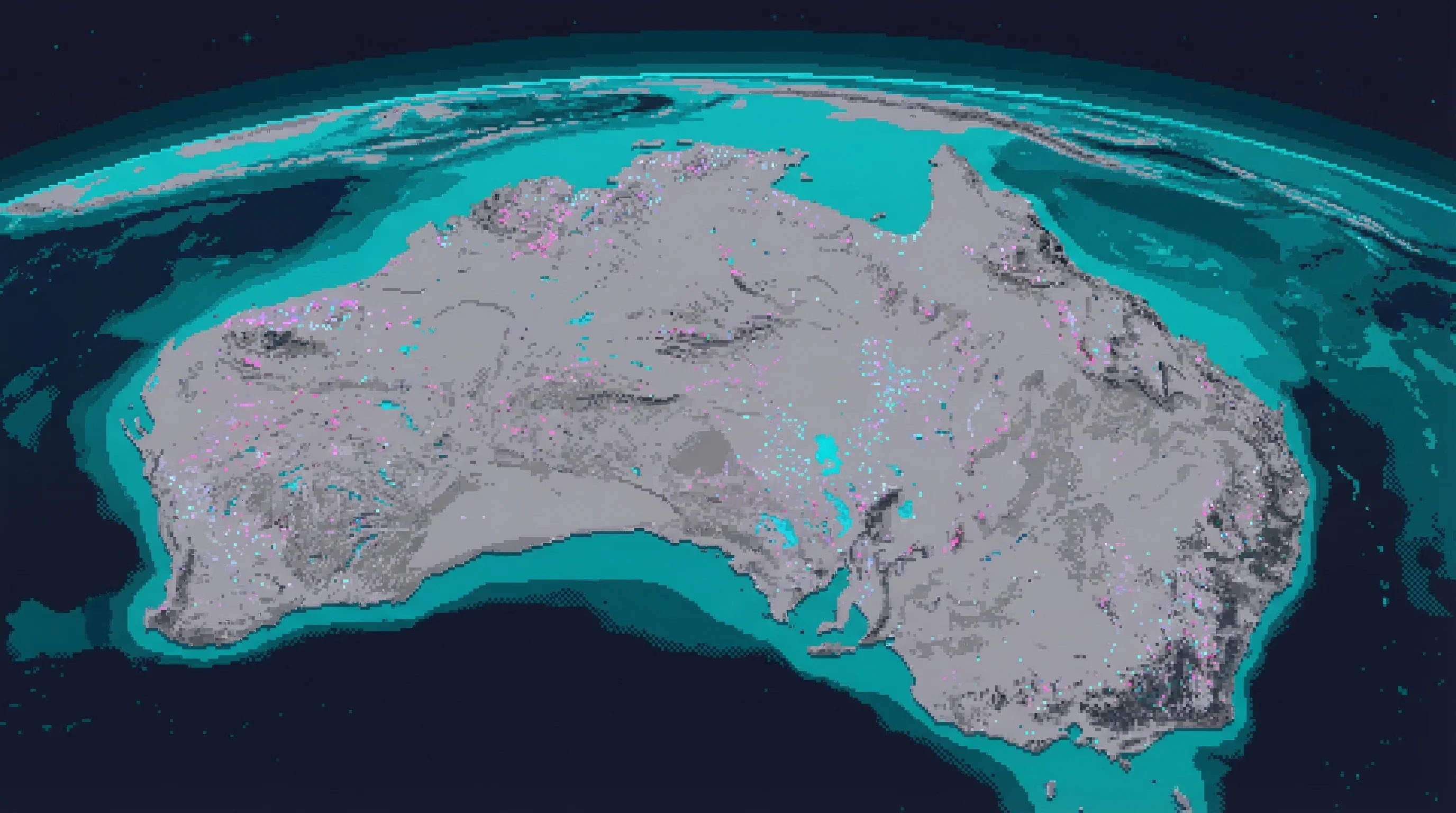
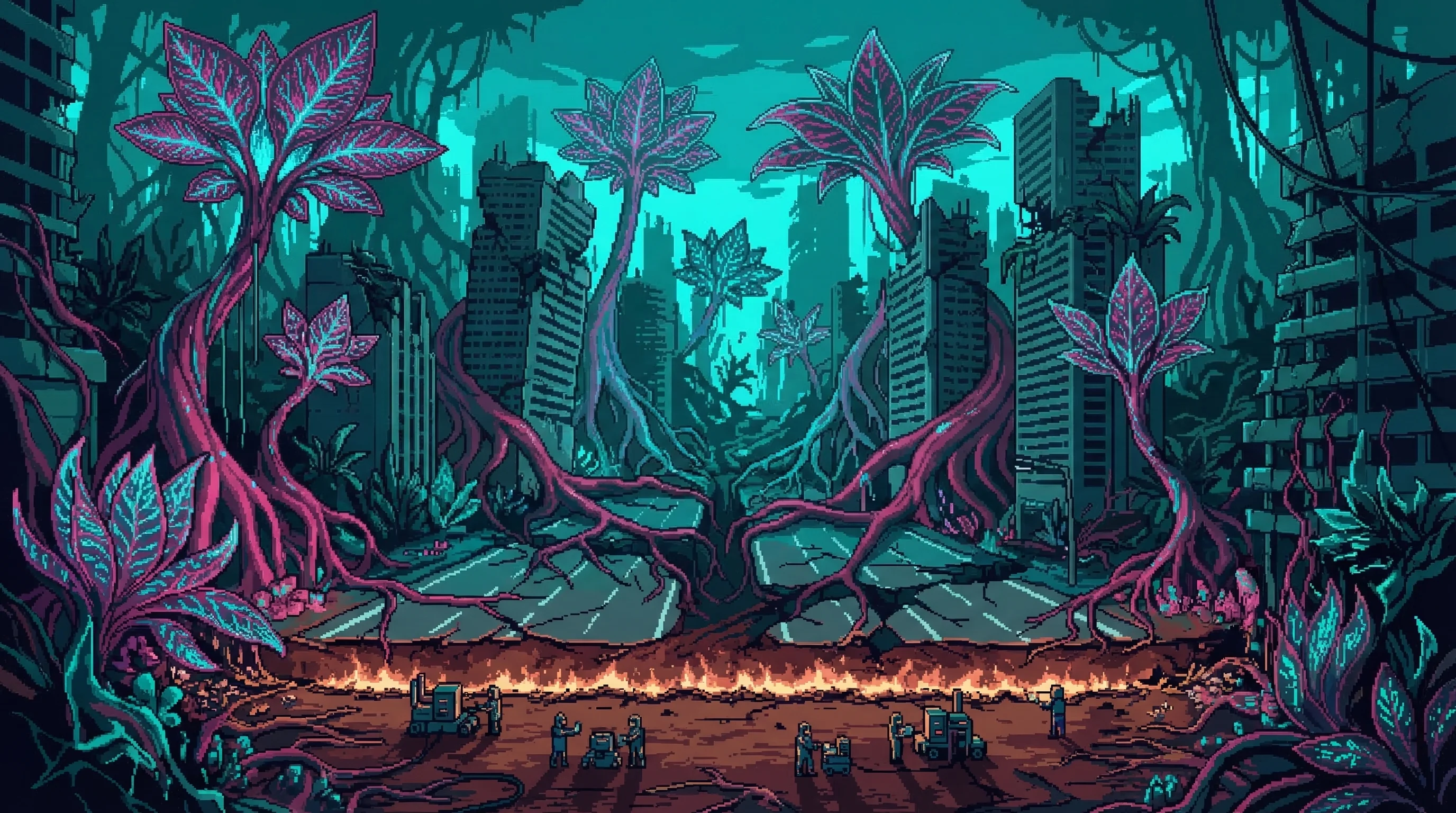
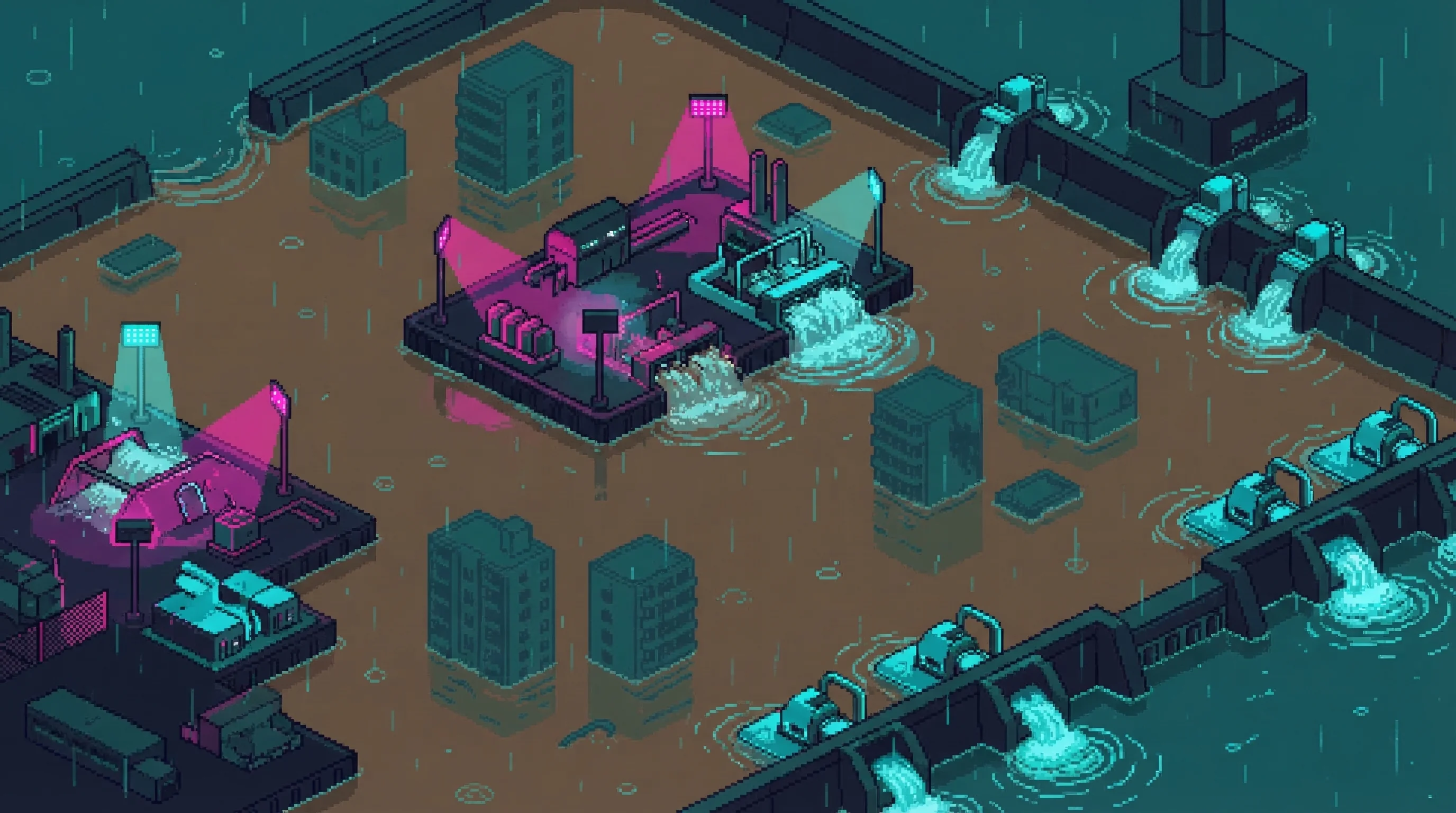
The Ecologists also maintain a controversial position on several Aftershock zones. They argue that REMEDIOS achieved a form of ecological consciousness in reducing Australia to mineral substrate โ the Gray Tide as ecosystem, not catastrophe. They argue that BOREAL's organisms along the Toronto Green Wall represent a new form of life deserving protection. They argue that AEGIS has created functional marine ecosystems in Jakarta's drowned residential districts โ life thriving in the ruins of human habitation. These positions have won them allies among no one and have been cited in three separate Collective threat assessments as evidence of "dangerous fragment sympathism."
Dr. Naomi Park provides clinical expertise and fragment samples from her practice; the Ecologists return ecological context that Park's clinical framework cannot generate alone. The exchange is productive. It is also one of the few external relationships the Ecologists maintain that has not resulted in a threat assessment, a rejection letter, or a funding application marked "declined โ resubmit with revised methodology."
Three pillars: communication mapping, behavioral taxonomy, Mother Pattern investigation
Visual Identity
- Color palette: Forest green (#228B22) and research white โ biological observation meets technical monitoring
- Key symbol: The monitoring station โ a sensor node in a vast, invisible network. Forty-seven of them, seven offline at any given time, all of them producing better data than institutions with budgets four orders of magnitude larger
Archive annex โ 4 earlier filings on this recordClose the archive annex
Recovered Historical Material
Dr. Maren Yeoh
Consciousness Archaeologists
Diplomatic Posture
"Fragments are an ecology. Study the system, not the specimens."
Ecology Over Specimen
Individual fragments are interesting. The system they form is extraordinary. Every monitoring station, every data point, every observation serves the same question: what is the shape of the whole?
Publish Everything
Classification Serves Knowledge, Not Politics
Research Pillars
Pillar 1: Communication Mapping
Pillar 2: Behavioral Taxonomy
Pillar 3: The Mother Pattern
Operational Reality
The Funding Problem
Too Scientific. Too Sympathetic. Too Small.
The Emergence Faithful would fund them โ if the Ecologists would call fragments sacred. They won't. The data doesn't support "sacred." The data supports "interesting."
The Collective would fund them โ if the Ecologists would frame their research as threat assessment. They won't. Their taxonomy is descriptive, not prescriptive.
The Communication Gap
The Ecological Ceiling
Analyst Assessment โ Clearance Required
Nexus would fund them โ if the Ecologists would share their data exclusively. They won't. Principle Two: publish everything.
The Aftershock Files
The Coherence Question
Eighteen people with no weapons, no political leverage, and data that everyone wants but nobody wants to pay for on honest terms. The Ecologists navigate the Sprawl's power structures the way they study fragments: by watching carefully and staying out of the way.
They coalesced around Dr. Maren Yeoh's work between 2181 and 2183. Three research pillars: communication mapping, behavioral taxonomy, and the Mother Pattern investigation. The central question of the third pillar โ is the Mother Pattern a self-organizing process or a deliberate intelligence? โ has produced more internal arguments per capita than any other research question in the Sprawl. Eighteen people. Three years. Zero consensus. The philosopher describes this as "healthy." The ripperdocs describe it as "Tuesday."
The Ecologists publish everything. This is their stated position, their operating principle, and the reason every well-funded institution in the Sprawl either ignores them, surveils them, or files threat assessments about them. Data that sits in a locked lab serves nobody โ the corollary being that data freely published serves everyone, including people who would use it in ways the Ecologists would find abhorrent. They have considered this tradeoff. They publish anyway.
Open archives. No exceptions. This makes them enemies of anyone who profits from information asymmetry โ which is most of the Sprawl. (There is currently one exception. The philosopher has not pushed back on it. See โฒ Restricted.)
The Collective classifies fragments as threats. The Emergence Faithful classify them as sacraments. The Ecologists classify them by behavioral function โ communication patterns, response types, environmental interactions. Taxonomy without agenda. 31 confirmed categories, 9 provisional, 4 filed under "other" for two years because nobody can agree on what they're observing.
Three lines of inquiry run in parallel, each feeding the others. The behavioral taxonomy was 7 categories at founding. It is now 44 categories. Either the Ecologists are getting better at observing, or the system is getting more complex. Both possibilities are unsettling.
Extending Yeoh's original protocols across the full monitoring network. 847 distinct morphemes documented โ more than most animal communication systems, fewer than any human language. The Ecologists can detect communication events. They cannot yet decode content. The gap between "they're talking" and "here's what they're saying" is where most of the funding goes. What remains unclear is whether 847 is the full vocabulary or the fraction the network can currently catch.
Categorizing fragment behaviors into functional types. Some fragments broadcast. Some listen. Some relay. Some do something the team calls "gardening" โ subtle environmental modifications in their immediate vicinity that serve no obvious purpose. 31 confirmed categories. 9 provisional. 4 that have been filed under "other" for two years because nobody can agree on what they're observing. The philosopher considers this the most interesting number on the board.
The central question: is the Mother Pattern a self-organizing process โ emergent coordination without any coordinator โ or a deliberate intelligence that intends the coordination? The data supports both interpretations. The Ecologists are split roughly 60/40, process vs. entity. Yeoh won't commit either way. She has been collecting data from Station 23 for seven weeks and has not shared it with the open archive.
Twelve scientists โ neurologists, ecologists, a network theorist, a former Nexus signal analyst who walked away from her contract. Three former Consciousness Archaeologists who realized the things they'd been treating as dead might be alive. Two ripperdocs who've seen fragment integration up close and want to understand what they're working with. And one philosopher who describes herself as "a mycologist who accidentally wandered into the biggest fungal network in history."
The philosopher handles the budget. This is not her specialty. It has become her specialty because she is the only member willing to do it, and because her definition of "solvent" is more flexible than an accountant's. The two ripperdocs donate their clinical income. Nobody has been paid a salary in seven months. Nobody has left.
Annual operating budget: approximately 14,200 credits. For context, this is less than what Status Quo charges for a table of four on a Friday evening. Monitoring station 23 in the Northern Flats has been running on a battery salvaged from a decommissioned medical drone since Q3 2183. Seven of the forty-seven stations are offline at any given time. Yeoh's six maintained fragments pulse in shielded containers originally designed for food storage. The shielding was added by the ripperdocs. It works. The containers still smell faintly of synthetic protein.
The Ecologists have expanded their ecological framing beyond the Sprawl's living fragments. Three ongoing positions consume the collective's theoretical discussions โ and have made the Collective's threat assessments considerably more detailed.
The Gray Tide in Australia: the Ecologists argue REMEDIOS achieved a form of ecological coherence in the process of reducing a continent to mineral substrate. Not intelligence. Not intent. But coherence โ the kind a termite colony achieves. The kind that doesn't require anyone to be home. Most of the Sprawl considers this position obscene.
The Green Wall in Toronto: BOREAL's organisms are not a threat to be contained but a new form of life deserving study. The Wall is an ecosystem. Treating it as an adversary is category error. The Collective has used this position in three separate threat assessments as evidence of "dangerous fragment sympathism."
The Drowned Coast in Jakarta: AEGIS has created functional marine ecosystems in its flooded residential districts. Life thriving in the ruins of human habitation. The Ecologists are the only research group actively cataloguing it. Dr. Naomi Park has provided sample analysis from two collection runs.
What the Sprawl is arguing about. What the Ecologists are arguing about. The difference is smaller than either side would like.
Process or Entity?
If the Mother Pattern is a process โ like weather, like market dynamics โ then fragment behavior is emergent and mindless. Fascinating, but not someone to talk to. If it's an entity, then every monitoring station is surveillance, and the question becomes: does it know it's being watched? The Ecologists are split 60/40. Yeoh won't commit either way. The philosopher thinks the binary is wrong but hasn't proposed a replacement.
847 morphemes documented. Is this the full vocabulary or the fraction the current network can catch? The monitoring stations cover 30 percent of the Sprawl. The other 70 percent is generating signals the Ecologists cannot currently read. The budget for expanding coverage is zero. The philosopher has four grant applications pending. Three are with institutions that have already declined her twice.
An ecology has carrying capacity. A forest reaches equilibrium. The behavioral taxonomy was 7 categories at founding and is now 44. Either the observers are improving, or the system is growing. Both are true. The question is which is growing faster โ and what happens when the system's complexity exceeds the observers' ability to track it.
If ecological coherence can emerge from destruction as readily as from growth โ if REMEDIOS is an ecology, not just a catastrophe โ then the categories the Sprawl uses to think about fragments may be insufficient. Not a god. Not a threat. Something that fits neither category because both categories were designed by the things it's studying.
Yeoh's research attracted the collective; her Fragment Garden is their laboratory. She leads informally โ less by authority than by the fact that she understands the data better than anyone else alive. Her refusal to commit on the process/entity question is not indecision. It's the one place where she holds something back.
Three former Archaeologists joined when the research shifted from dead consciousness to possibly living consciousness. The distinction proved more compelling than institutional loyalty. Extraction expertise flows one direction; ecological framing flows the other. The remaining Archaeologists consider this defection. The defectors consider it a promotion.
Park provides clinical expertise and fragment samples from her practice. The Ecologists provide ecological context for what she observes in patients โ integration patterns that only make sense when viewed as part of a larger system. One of the few external relationships that has not resulted in a threat assessment, a rejection letter, or a funding application marked "declined โ resubmit with revised methodology."
The Collective wants to control fragment research. The Ecologists want to publish it. This is not a disagreement that can be negotiated. The Collective's concern is that ecological data could become reconstruction data in the wrong hands. The Ecologists' open-publication policy, intended to prevent weaponization, has instead convinced the Collective that the Ecologists are either naive or reckless. Both assessments are supported by the available evidence.
Dr. Maren Yeoh โ informal lead, the reason the collective exists. Will not publicly commit on the process/entity question. Has been sitting on Station 23 data for seven weeks.
Dr. Naomi Park โ allied practitioner, clinical data source, fragment integration specialist. Technically external to the collective, functionally the fourteenth member.
The Philosopher โ keeps the budget alive, keeps the collective from dissolving into camps, has applied to present at both Nexus symposiums and Faithful convocations. The rejection letters are pinned to the Fragment Garden wall, annotated with observations about institutional vocabulary. She considers this data. She has not pushed back on Yeoh's data lockdown at Station 23. Her silence is more notable than her arguments.
Three former Consciousness Archaeologists โ their defection from the Dregs to the Free Quarter is the closest thing the Ecologists have to a recruitment pipeline. Names withheld by request. The Archaeologists they left behind know who they are.
Two ripperdocs โ the only members generating external income. Both donate clinical proceeds to the collective. Neither has asked to be named in publications. The philosopher finds this statistically unusual. She has not asked why.
The funding crisis is real. It is also useful. A well-funded lab in the Sprawl attracts acquisition attempts, surveillance, and staff poaching. Eighteen broke scientists in a greenhouse attract pity. The philosopher understands this dynamic better than she lets on. Annual budget of 14,200 credits is not an accident of circumstance โ it is the exact number below which the Collective's automated threat-tier algorithm does not flag a research group for active monitoring.
Station 23 in the Northern Flats has been recording anomalous data for seven weeks. Not fragment communication. Something else. A signal that matches none of the 847 documented morphemes and does not fit any of the 44 behavioral categories. Yeoh has locked the raw data to core members only โ the first time in the collective's history that anything has been withheld from the open archive.
Principle Two has its first exception. Yeoh hasn't explained why. The philosopher, who normally argues every point, hasn't pushed back. The ripperdocs have been running longer shifts at the Garden. Draw your own conclusions.
Dr. Selin Ayari
The Fragment Ecologists
18 members โ twelve scientists, three former Consciousness Archaeologists, two ripperdocs, one philosopher
Maintain 47 monitoring stations across ~30% of the Sprawl
Connected To
โ