
Scroll Sickness
Medical name: Chronic Attentional Fragmentation Disorder (CAFD)
Overview
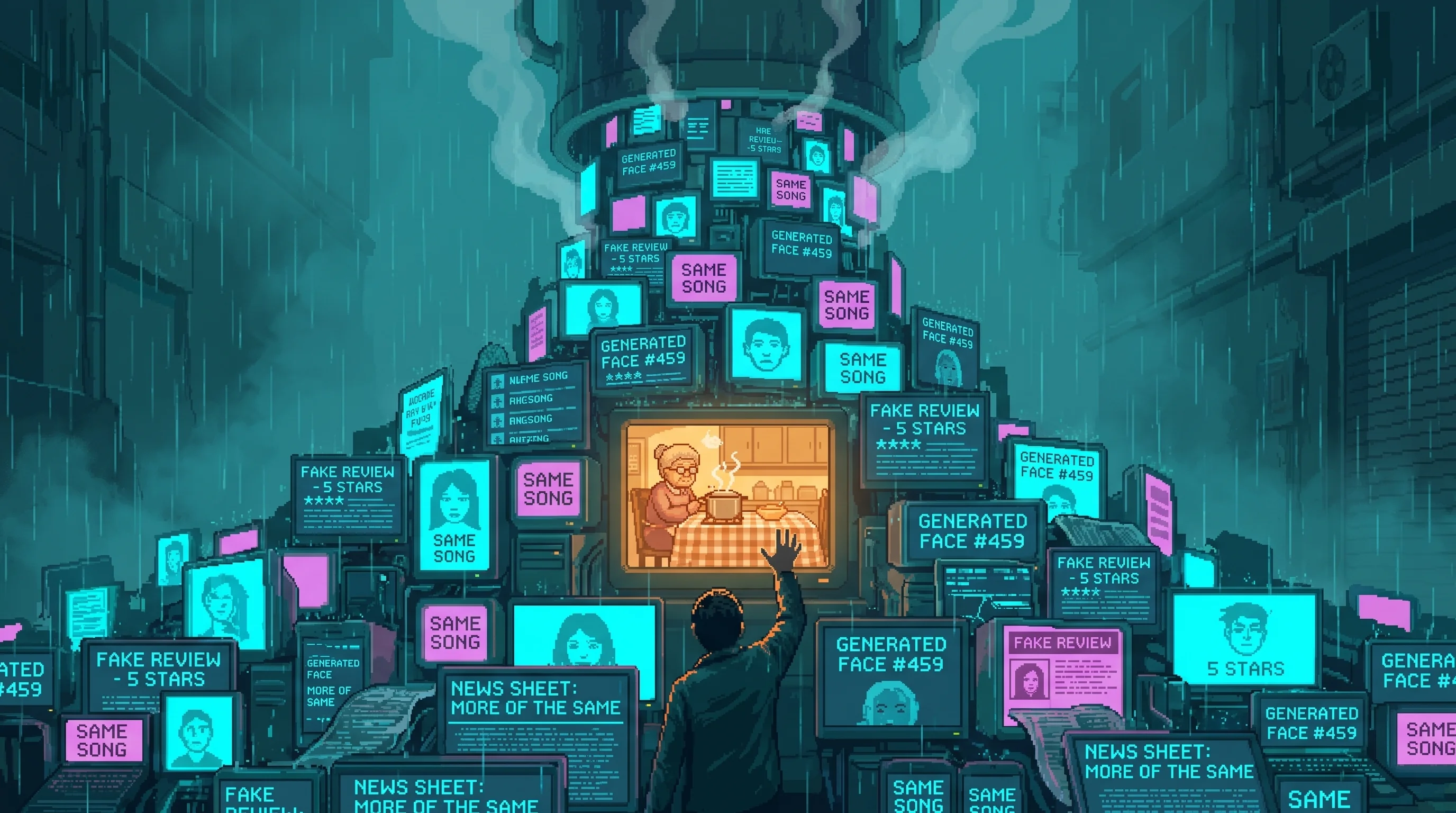
The Content Flood generates ¢340 billion annually. Scroll sickness is not a side effect. Scroll sickness is the revenue model.
The medical name is Chronic Attentional Fragmentation Disorder. Nobody uses the medical name except insurance systems declining coverage. The Dregs call it scroll sickness. The Memory Therapists Association, in a rare moment of precision, classifies it as "an environmental adaptation that became a disability when the environment changed faster than the adaptation could track." The MTA filed this definition in 2179. The Content Flood's content-change interval has shortened twice since then. The definition has not been updated.
The mechanism is neurological, not behavioral. Sustained exposure to the Flood's 4.7-second content-change interval trains the brain to switch. Not to choose to switch — to require switching. The architecture rewires for rapid sampling: broad, shallow, continuous. A cognitive strategy perfectly suited to an environment where everything changes every 4.7 seconds and catastrophically unsuited to every environment that doesn't. Conversations. Physical text. Meals eaten without a feed running. Silence.
The 4.7-second interval is not arbitrary. Nexus behavioral research — published, peer-reviewed, available on request — determined in 2174 that 4.7 seconds maximizes user engagement across all neural interface demographics. The study was cited 11,400 times in subsequent Content Flood optimization literature. It was cited zero times in subsequent medical literature. The interval was designed to capture attention. It captures attention so successfully that returning it has become a clinical problem.
Progression
The condition moves in one direction.
Mild CAFD: difficulty sustaining conversations past three exchanges. The patient appears distracted. Friends describe them as "not really there anymore." They are there. They are also everywhere else, simultaneously, because the switching architecture does not pause for eye contact.
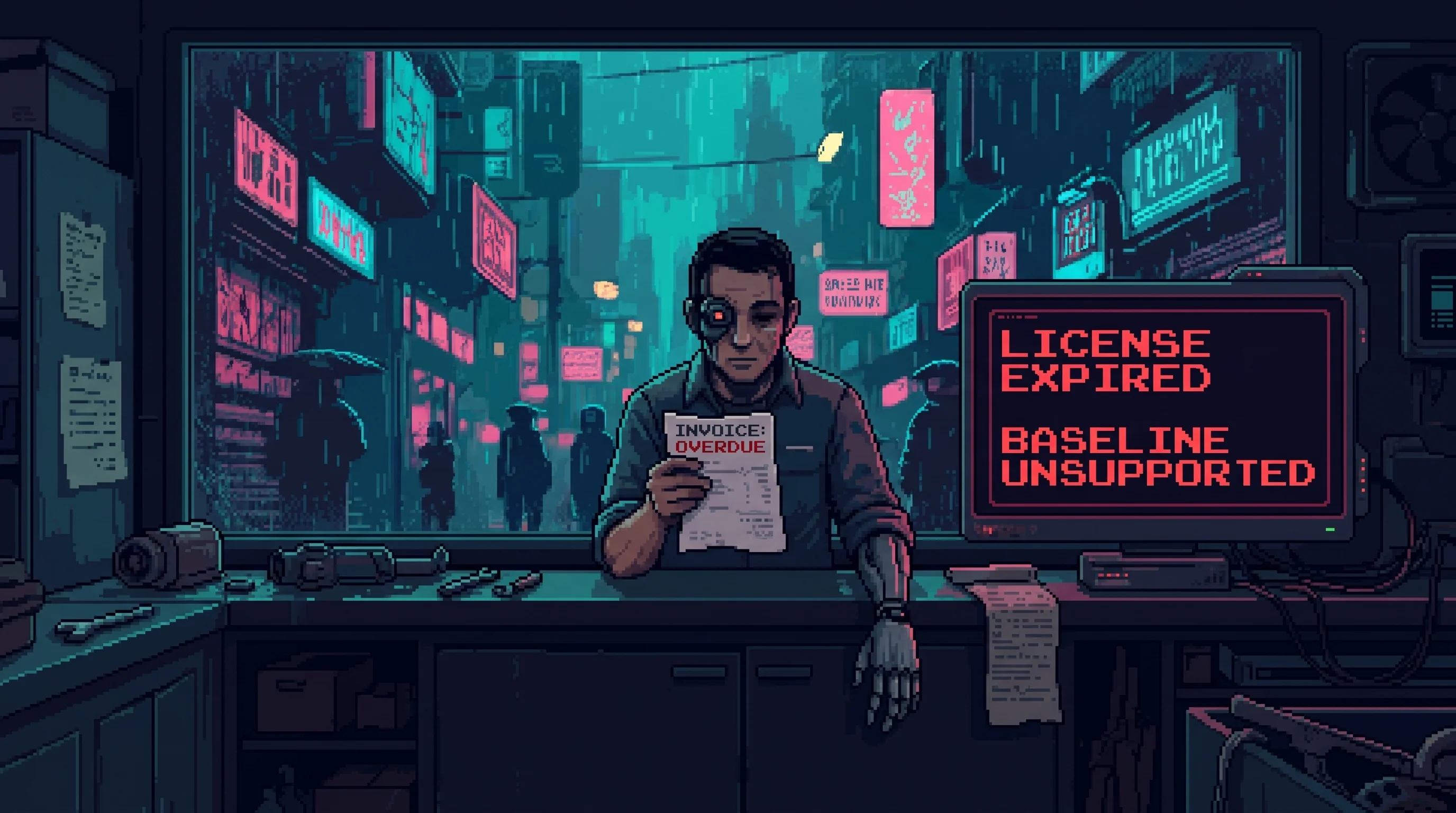
Moderate CAFD: inability to complete multi-step tasks without external scheduling. Cooking a meal requires a prompt system. Reading a paragraph requires a break at the period. Good Fortune's cognitive assistance loans — unsecured, 29.7% APR — saw a 340% enrollment increase between 2180 and 2183, almost entirely in the moderate CAFD demographic. The loans fund scheduling software subscriptions. The scheduling software runs on Nexus infrastructure. The Nexus infrastructure serves the Content Flood. The Content Flood produces the scroll sickness. The loan payments are automatically deducted.
Severe CAFD: permanent rapid-switching. The patient does not lose the ability to focus. The patient loses the ability to stop focusing on whatever arrived most recently. Neurologically distinct from attention deficit disorders, though the distinction offers no comfort to the 14,000 Sprawl residents currently living in the severe bracket. Their experience, as documented in MTA intake interviews: the world arrives in fragments. A conversation is a series of disconnected sentences. A walk is a slideshow. Reading a page feels like a film with a frame cut every five seconds — the narrative is trackable, but settling into it is not available as an option.
No recorded case of severe CAFD has ever reversed to moderate.

Treatment
Treatment is environmental. Pharmacological interventions target the switching architecture; the switching architecture is not malfunctioning. It is performing exactly as trained. You cannot medicate someone out of a skill their brain spent years perfecting.
The protocol: sustained exposure to low-stimulus environments for periods long enough that the rapid-switching pattern relaxes into something resembling sustained attention. The Noise Floor offers dedicated CAFD recovery rooms — white walls, no feeds, no interfaces, nothing changing. The Insomnia Wards accept moderate-to-severe cases on referral. The Quiet Room, in the Deep Dregs, has treated scroll sickness patients since before the MTA acknowledged the condition existed.
Recovery rates correlate with duration of low-stimulus exposure. The minimum effective treatment period for moderate CAFD is 90 days. A 90-day stay at the Noise Floor costs approximately ¢18,000 at subsidized rates. Average annual income in Sectors 7 through 12, where CAFD prevalence is highest: ¢21,400. The math does not require a neural interface to complete.
The Content Flood does not cause scroll sickness. The Content Flood is scroll sickness's optimal habitat. Removing the patient from the Flood is the treatment. Returning the patient to the Flood is the relapse. The Flood is free, ubiquitous, and neurally integrated into every Basic-tier consciousness license in the Sprawl. Treatment requires leaving an environment that 94% of the population cannot leave because it is built into the infrastructure of being conscious.
Helix Biotech's Neurological Recovery Division published a 2183 white paper proposing a "graduated re-integration protocol" for treated CAFD patients returning to Flood-enabled environments. The protocol recommends limiting initial Flood exposure to 20 minutes per day, increasing by 5-minute increments weekly. Average daily Flood exposure for a Basic-tier consciousness license holder: 14.2 hours. The protocol does not address how a recovered patient navigates employment, transit, commerce, or social interaction during the 13.8 daily hours they are supposed to avoid the system everything runs on.
The white paper was downloaded 47 times. The Content Flood's daily active user count is 6.1 billion.
| Treatment | Sustained low-stimulus environment exposure (Noise Floor, Insomnia Wards, Quiet Room) |
|---|
Affiliated Entities
Scroll sickness parallels the Dream Deficit — both are cognitive losses produced by systems functioning as designed. It mirrors the Lucidity Crisis in mechanism — the brain rebelling against optimization it never consented to. Treatment overlaps with attention withdrawal protocols developed for Content Flood dependency, though the MTA maintains these are distinct conditions. The distinction matters to the MTA's billing codes. It does not appear to matter to the patients.
Treatment environments: the Noise Floor, the Insomnia Wards, the Quiet Room. Good Fortune's cognitive assistance loan program handles the financing. The financing handles the patient.
Sensory Details
- Sound: The scroll-sick hear everything at equal volume. No conversation is foreground. No ambient noise is background. The hierarchy that lets a healthy brain prioritize one voice over traffic has been replaced by flat, democratic sampling. Everything is equally loud. Nothing is important.
- Sight: Eyes track movement before meaning. A scroll-sick patient in a still room is calm. A scroll-sick patient in a Dregs market — vendors, drones, feed projections, foot traffic — is processing forty-seven stimuli per second and completing none of them.
- Time: The 4.7-second interval becomes subjective clockwork. Patients report that periods of sustained stillness feel "wrong" in a way they cannot articulate. The absence of change registers as error. Silence feels broken.
Visual Identity
- Color Palette: Content Flood interface spectrum — cycling neon that never lands on a single hue. The palette IS the pathology.
- Compositional Mood: A face lit by rapidly switching feeds, eyes mid-dart, caught between two stimuli and committed to neither.
- Key Symbol: A beam of coherent light hitting a prism and exiting as dozens of fragments — each fragment bright, none sufficient.
- Lighting: 4.7-second strobe cycle. Sustained illumination is the one thing the visual identity cannot include.
Cannot sustain attention beyond the Content Flood's 4.7-second content-change interval
Progressive — mild, moderate, severe stages
Treatment is environmental: sustained low-stimulus exposure
Severe cases: permanent rapid attention-switching — unable to stop focusing on whatever is newest
Connected To




—