CONCEPT ANALYSIS
The Lucidity Crisis

The Lucidity Crisis

Stage 3 patients show IMPROVED creativity, emotional regulation, and interpersonal connection โ€” productivity declines

WhatProgressive breakdown of the boundary between conscious and unconscious processing in Full Wakefulness Protocol usersNamed ByDr. Selin Ayari (2183)StagesStage 1 โ€” Peripheral drift: anomalous visual activity at edges (onset 18-36 months), Stage 2 โ€” Pattern pareidolia: persistent meaningful patterns in random input (onset 3-5 years), Stage 3 โ€” The Waking Dream: full dream sequences alongside waking consciousness (onset 5+ years, rare)Stage 3 CasesFewer than 200 documented among 140 million Protocol users

Overview

The Lucidity Crisis describes the progressive breakdown of the boundary between conscious and unconscious processing in Full Wakefulness Protocol users. Named by in 2183 โ€” the name is deliberate, lucid dreaming inverted โ€” the condition has been documented in all three neural interface tiers, though 91% of confirmed cases occur in corporate-tier users running the at full optimization.

The mechanism is simple. The brain generates dream content. It has always generated dream content. What sleep provided was a container. The removed the container. The content did not stop.

Three stages, progressing on a timeline that correlates almost perfectly with the 's dependency integration window:

Stage 1 โ€” Peripheral drift. Shapes at the edges of vision that vanish under direct attention. Onset at 18-36 months, the same window during which Nexus NeuroCompliance estimates the 's dependency architecture becomes irreversible in 60% of users. Most patients dismiss the symptoms as fatigue. NeuroCompliance agrees. Their intake form lists peripheral drift under "Expected Adaptation Responses," between "mild tinnitus" and "intermittent dรฉjร  vu." The form has not been updated since 2179.

Stage 2 โ€” pareidolia. Faces in wall textures. Figures in data displays. Meaningful patterns that follow the user's unprocessed emotional content rather than visual logic. , a mid-tier financial analyst in Sector 11, has been seeing a woman in the corner of his office for seven months. She is not there. She stands near the ventilation panel where the acoustic foam has warped slightly from humidity. He has named her. He has not told his employer. His quarterly NeuroCompliance review noted "sustained attention metrics within normal parameters." The woman in the corner was not discussed because did not mention her, and NeuroCompliance does not ask questions that might generate reportable answers.

Stage 3 โ€” The Waking Dream. Full dream sequences running in parallel alongside waking consciousness. Fewer than 200 documented cases among 140 million users. The brain, denied its processing window, has jury-rigged the visual cortex and emotional processing centers into an improvised dream generator โ€” rebuilding the machinery from scratch using whatever neural resources remain. Okonkwo is not Stage 3. He saw a garden once, for four seconds, superimposed over a quarterly earnings report. Then it was gone. He described it as the most beautiful thing he had experienced in years. His productivity metrics that quarter were 3% below target.

The paradox that has not addressed and Dr. Ayari will not stop publishing about: Stage 3 patients show measurable improvements in creativity, emotional regulation, and interpersonal connection. Every quality the was designed to eliminate in favor of productivity. The brain, confronted with an optimization it cannot survive, is evolving around it. The adaptation looks like a malfunction. The malfunction produces the only dreamers left in a dreamless workforce.

Nexus Cognitive Health Division has classified the Lucidity Crisis as "a known variant of neural adaptation, clinically insignificant." The classification routes symptomatic patients to neural recalibration rather than the . Recalibration suppresses the hallucinations. It does nothing about the underlying . It requires quarterly renewal at 2,400 credits per session. Cessation produces symptom rebound more severe than the original presentation.

The arithmetic: a user who reports Stage 2 symptoms enters a second subscription layered on top of the first. One product prevents sleep. The second suppresses the brain's protest against the prevention of sleep. Both are sold by Nexus Cognitive Health. Both require renewal. Each renewal deepens dependency on both the and its palliative, locking the patient into parallel subscriptions that address the same problem from opposite directions for the same vendor.

Nexus NeuroCompliance representatives, when asked about this structure, express genuine confusion about the objection. The optimizes waking hours. Recalibration manages adaptation symptoms. These are two services addressing two needs. That both needs were created by the first service and managed by the second is, in the representative's framework, not a conflict of interest but a comprehensive care model. "We don't just sell the ," one regional compliance officer told an industry panel in 2183. "We support the whole user journey." The panel applauded. Dr. Ayari, watching the livestream from her clinic in Sector 7, noted the phrasing in her research log and underlined it twice.

The brain tries to dream. The corporation recalibrates. The brain tries again. Incidence is increasing.

The Lucidity Crisis - Evidence

The Symptom That Proves You Cannot Leave

The Lucidity Crisis onset window โ€” 18 to 36 months โ€” is not a coincidence. It is a timestamp. The peripheral drift begins precisely when the 's integration passes the point of safe reversal, the moment the neural architecture has been restructured enough that removal would cause more damage than continuation. The hallucinations are the brain's acknowledgment that it has been permanently altered. The dream-processing capacity the severed is not dormant. It is destroyed. What remains is improvisation.

Nexus markets this as evidence the system is working. "Neural adaptation within expected parameters" appears in 94% of NeuroCompliance intake assessments for Stage 1 patients. The remaining 6% are flagged for recalibration. The flags correlate not with symptom severity but with the patient's insurance tier โ€” Corporate Premium users are offered recalibration; Standard users are told to monitor and report back. The monitoring produces data. The data feeds the research that does not officially conduct and has not officially acknowledged.

A complete recalibration cycle โ€” four quarterly sessions at 2,400 credits โ€” costs 9,600 credits annually, roughly 14% of median corporate-tier income. Patients who discontinue recalibration report symptom rebound within 11-19 days: peripheral drift intensified, pareidolia accelerated, and in three documented cases, spontaneous Stage 3 onset in patients who had previously presented at Stage 1. The rebound data is available in Dr. Ayari's 2183 paper. Nexus Cognitive Health's official response cited "methodological concerns with the sample size" and recommended patients "consult their assigned NeuroCompliance representative for personalized guidance."

The personalized guidance is recalibration.

Case File โ€” Additional Record
ParadoxStage 3 patients show improvements in creativity, emotional regulation, and interpersonal connection โ€” while their productivity metrics decline
Nexus Classification"Known variant of neural adaptation, clinically insignificant"

Visual Identity

  • Color palette: blue-white (#E8F0FE) with warm amber dream-imagery (#D4A017) bleeding through at the edges
  • Key symbol: A face forming in acoustic paneling โ€” a wall that dreams
  • Lighting: Clinical corporate light with impossible warm patches where dream content intrudes

Connections

  • : The Lucidity Crisis is the 's late-stage expression โ€” the brain's rebellion surfacing as visible symptom. The is the silent structural damage. The Crisis is the moment the damage becomes impossible to ignore, or in 's classification framework, possible to bill for.
  • : Named the condition in 2183. Published three papers in eleven months. Her choice of terminology โ€” "Lucidity Crisis," inverting the concept of lucid dreaming โ€” was deliberate provocation. Nexus Cognitive Health requested she adopt their preferred terminology ("Adaptation-Variant Neural Presentation"). She declined. Her clinic in Sector 7 continues to accept Stage 2 and Stage 3 referrals that NeuroCompliance routes elsewhere.
  • : Stage 2. Seven months. The woman in the corner of his office has not been reported to his employer, his NeuroCompliance representative, or his wife. His productivity metrics remain within acceptable range. The garden lasted four seconds and has not returned.
  • : Owner of the , operator of NeuroCompliance, provider of recalibration, classifier of clinical insignificance. The Cognitive Health Division processes approximately 11,000 recalibration sessions per quarter across Sectors 3 through 14. Revenue from recalibration alone exceeds Dr. Ayari's total annual research funding by a factor of 340.
  • : Where Lucidity Crisis patients should be sent according to Dr. Ayari's treatment protocols. Where they are not sent according to Nexus NeuroCompliance routing. The treat the underlying deficit. Recalibration manages the surface symptom. The routing decision is classified as "clinical triage optimization." The optimization's output happens to direct patients toward the billable service and away from the curative one.
  • / The Full Wakefulness Protocol: The cause. 140 million users. Fewer than 200 Stage 3 cases โ€” a ratio that cites as evidence of safety and Dr. Ayari cites as evidence of suppression. Both are using the same number. Both are correct.
The brain is adapting around the Protocol โ€” jury-rigging visual cortex into an improvised dream generator
Archive annex โ€” 4 earlier filings on this recordClose the archive annex

Recovered Historical Material

Indexed โ€” no record on file.

Technical Brief

The Lucidity Crisis

Corporate Response

The condition is rare in its advanced form. It is not rare in its early stages. Most Protocol users past the eighteen-month mark have experienced peripheral drift and dismissed it as fatigue or screen artifacts. They are not wrong about the fatigue. They are wrong about the artifacts.

Stage 1 โ€” Peripheral Drift

Onset: 18โ€“36 months of continuous use

Stage 2 โ€” Pattern Pareidolia

Onset: 3โ€“5 years of continuous use

Stage 3 โ€” The Waking Dream

Onset: 5+ years of continuous use (rare)

Their productivity metrics decline.

  • The adaptation curve is steepening. Stage 3 cases have doubled in the last eighteen months. The brain is getting better at building workarounds, or the 's suppressive capacity is degrading over generational use, or both.
  • Stage 3 may not be the ceiling. If the brain can rebuild dream processing using the visual cortex, what does Stage 4 look like? Auditory? Tactile? A full sensory dream running underneath waking reality at all times?
  • โ€” The Full Wakefulness Protocol that triggers the Crisis by eliminating the brain's dream-processing window
  • โ€” Where Lucidity Crisis patients should be sent. Where they are not.

Dr. Ayari's original 2183 paper included a fourth stage in its theoretical framework. The section was removed before publication at 's request. Ayari has not discussed it publicly. The working title in her draft notes, recovered from a corrupted backup, was "Stage 4 โ€” Consensus."

โ†’ /world/systems/the-dream-deficit

Full Wakefulness Protocol โ†’ /world/systems/augmented-wakefulness

โ†’ /world/systems/augmented-wakefulness

The brain does not stop generating dream content when you remove sleep. It cannot. Dream generation is not a feature of sleep โ€” it is a feature of the brain. What sleep provided was a container. The removed the container. The content did not stop.

The Lucidity Crisis describes what happens next: a progressive breakdown of the boundary between conscious and unconscious processing in Full Wakefulness Protocol users. Named by in 2183 โ€” the name is deliberate, lucid dreaming inverted. Instead of waking consciousness intruding into the dream, dream consciousness intrudes into waking life.

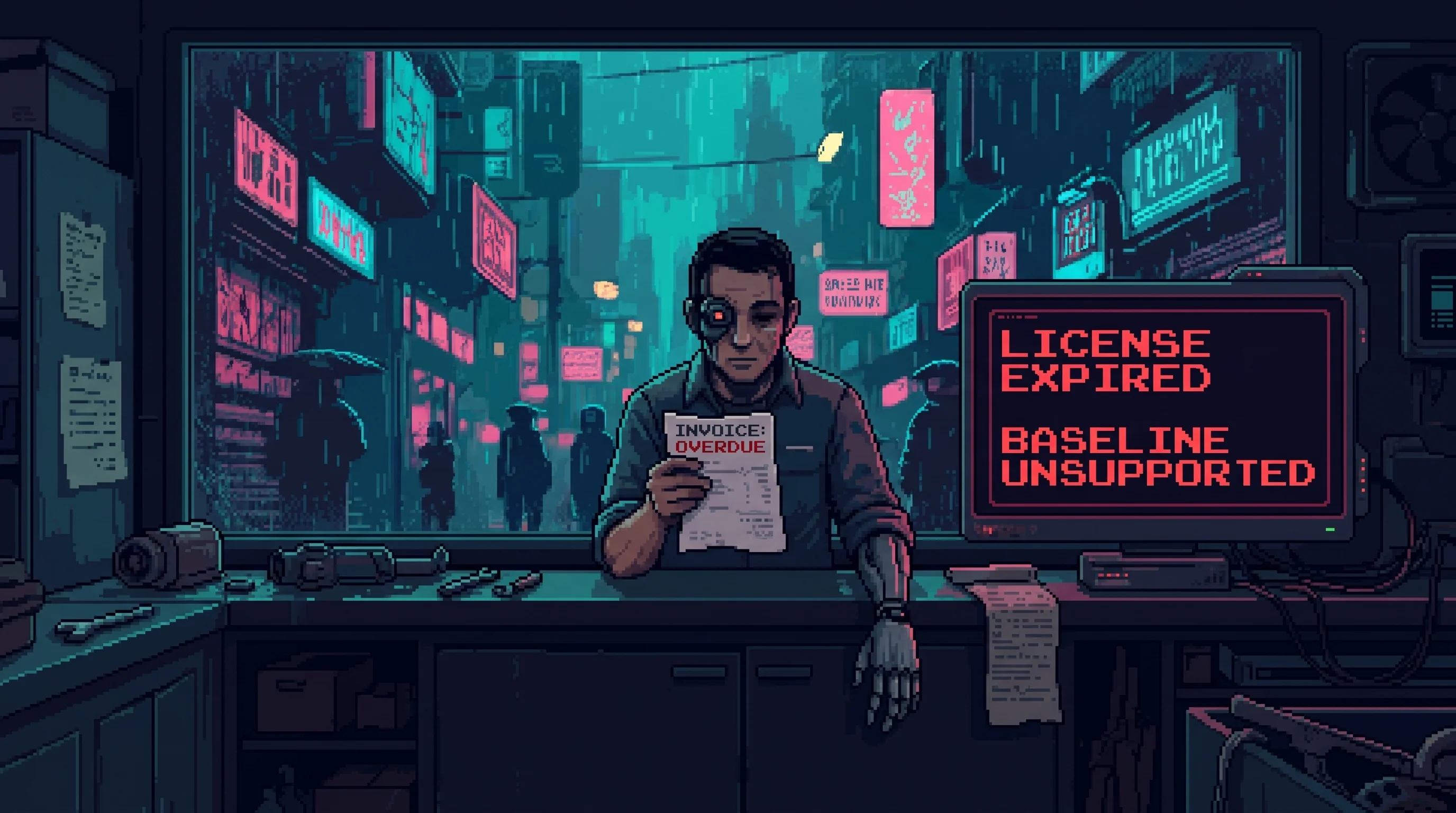
The sells wakefulness. The Lucidity Crisis is what the brain charges for it. Both debts accrue interest. Only one of them shows up on an invoice.

Anomalous visual activity at the edges of the visual field. Shapes that resolve into nothing when directly observed. Movement where there is none. Most users report it as "something in the corner of my eye" and stop reporting after the first NeuroCompliance check flags nothing abnormal. The shapes are not random. Analysis of patient sketches shows consistent archetypal forms โ€” faces, doorways, animals โ€” mapped to the user's unprocessed emotional content. The peripheral cortex, understimulated during the 's suppression of REM-adjacent activity, begins generating its own input. Nexus NeuroCompliance's intake form lists peripheral drift under "Expected Adaptation Responses," between "mild tinnitus" and "intermittent dรฉjร  vu." The form has not been updated since 2179.

Persistent meaningful patterns in random visual input. Faces in acoustic paneling. Figures in wall textures. Data visualizations that briefly resolve into landscapes or crowds before snapping back. The patterns follow dream logic โ€” emotional significance rather than spatial accuracy. They carry narrative weight the user cannot explain.

Davi Okonkwo, Stage 2. Reports a woman standing in the corner of his office โ€” she stands near the ventilation panel where acoustic foam has warped from humidity. She vanishes when he turns. He has named her. He has not told his employer. His quarterly NeuroCompliance review noted "sustained attention metrics within normal parameters." A garden, green and sunlit, lasted four seconds superimposed over a quarterly earnings report. He described it as the most beautiful thing he had experienced in years. His productivity metrics that quarter were 3% below target.

Full dream sequences running in parallel with waking consciousness. The patient does not lose awareness of their surroundings. They gain a second awareness โ€” an ongoing, self-consistent dream narrative that unfolds alongside waking experience. The two streams interact. Emotional content from one bleeds into the other. Some patients describe it as having two lives simultaneously.

Fewer than 200 documented cases among 140 million users. The number is increasing. The brain, denied its processing window, has jury-rigged the visual cortex and emotional processing centers into an improvised dream generator โ€” rebuilding the machinery from scratch using whatever neural resources remain.

Nexus classifies Stage 3 as 'clinically insignificant' and suppresses the adaptation through neural recalibration

The Paradox Nexus Has Not Addressed

Stage 3 patients show measurable improvements in creativity, emotional regulation, and interpersonal connection. They score higher on empathy indices than non- baselines. They report richer emotional lives. They describe experiences that sound, to pre- psychology, like healthy dream processing โ€” grief resolution, fear integration, creative synthesis.

The brain, confronted with an optimization it cannot survive intact, is adapting around it. The adaptation looks like a malfunction on every corporate diagnostic. The malfunction produces the only dreamers left in a dreamless workforce โ€” every quality the was designed to eliminate in favor of output. The "cure" suppresses the very capabilities the optimization destroyed. Nexus cannot acknowledge the trade-off without acknowledging what the costs. So the trade-off remains unacknowledged. The cost remains uncounted. The recalibration invoices arrive quarterly.

The Lucidity Crisis onset window โ€” 18 to 36 months โ€” is a timestamp. Peripheral drift begins precisely when the 's integration passes the point of safe reversal, when the neural architecture has been restructured enough that removal causes more damage than continuation. The hallucinations are the brain's acknowledgment that it has been permanently altered. The dream-processing capacity the severed is not dormant. It is destroyed. What remains is improvisation.

Nexus markets this as evidence the system is working. "Neural adaptation within expected parameters" appears in 94% of NeuroCompliance intake assessments for Stage 1 patients. The remaining 6% are flagged for recalibration. The flags correlate not with symptom severity but with the patient's insurance tier โ€” Corporate Premium users are offered recalibration; Standard users are told to monitor and report back. The monitoring produces data. The data feeds the research that does not officially conduct.

A complete recalibration cycle โ€” four quarterly sessions at 2,400 credits โ€” costs 9,600 credits annually, roughly 14% of median corporate-tier income. Patients who discontinue recalibration report symptom rebound within 11โ€“19 days: peripheral drift intensified, pareidolia accelerated, and in three documented cases, spontaneous Stage 3 onset in patients who had previously presented at Stage 1. Nexus Cognitive Health's response to Dr. Ayari's rebound data cited "methodological concerns with the sample size" and recommended patients "consult their assigned NeuroCompliance representative for personalized guidance." The personalized guidance is recalibration.

The prevents sleep. Recalibration suppresses the brain's protest against the prevention of sleep. Both are sold by Nexus Cognitive Health. Both require renewal. Each renewal deepens dependency on both the and its palliative โ€” two subscriptions addressing the same problem from opposite directions for the same vendor. One regional compliance officer, speaking at an industry panel in 2183, called it "supporting the whole user journey." The panel applauded. Dr. Ayari, watching the livestream from her clinic in Sector 7, underlined the phrase twice in her research log.

has classified the Lucidity Crisis as "a known variant of neural adaptation, clinically insignificant." The classification is procedural. Its routing consequences are not.

"Clinically insignificant" means symptomatic patients are referred to neural recalibration rather than the , where the underlying might be treated. No policy memo explains the routing. Recalibration is covered under standard maintenance. Ward referral requires a separate diagnostic pathway that the "clinically insignificant" classification preempts. The algorithm is not wrong. It is optimizing for the wrong thing.

Recalibration works โ€” for a while. Each subsequent reset holds for a shorter duration. Stage 2 patients who undergo repeated recalibration report increasingly vivid pareidolia in the weeks following treatment, as though suppressed content returns with compound interest. No longitudinal study of recalibration outcomes has been published. The Cognitive Health Division processes approximately 11,000 recalibration sessions per quarter across Sectors 3 through 14. Revenue from recalibration alone exceeds Dr. Ayari's total annual research funding by a factor of 340. No longitudinal study has been funded.

  • The productivity paradox has no clean resolution. The exists to maximize output. The Crisis produces humans who are more emotionally complete and less productive. Both facts are true. Only one is discussed in quarterly earnings calls.
  • The 200 are not being studied โ€” they are being suppressed. Every Stage 3 patient who undergoes recalibration is a data point destroyed. Whatever the brain is building, the corporation is dismantling it before anyone can document what it was becoming.
  • โ€” The underlying condition; the Lucidity Crisis is its late-stage expression, the moment the structural damage surfaces as something can bill for

Three Stage 3 patients at a Shenzhen facility were left unrecalibrated for eleven months due to an administrative error. When discovered, all three had developed synchronized dream content โ€” sharing narrative elements, characters, and locations in their waking dream streams despite having no contact with one another. The administrator who flagged the anomaly was reassigned. The patients were recalibrated within the hour. No record of the synchronization exists in any official system.

Indexed โ€” 1 line preserved from the earlier filing.

the lucidity crisis hero image
Stage 1: Peripheral drift โ€” shapes at edges that vanish under direct attention (onset 18-36 months)
Stage 2: Pattern pareidolia โ€” faces and figures in wall textures following dream logic (onset 3-5 years)

Connected To