
The Coolant Guild
Professional guild of thermal engineers operating across all Big Three territories
Overview
The Coolant Guild is not a guild. It has no charter, no dues, no officers, and no office. Corporate HR systems across all three Big Three territories classify its 340 members as individual employees with no collective affiliation. This classification is technically correct. It is also the reason the Guild's shared thermal monitoring dataset is more accurate than anything Nexus, Ironclad, or Helix maintains internally — organizations can be regulated, audited, and defunded. Protocols just run.
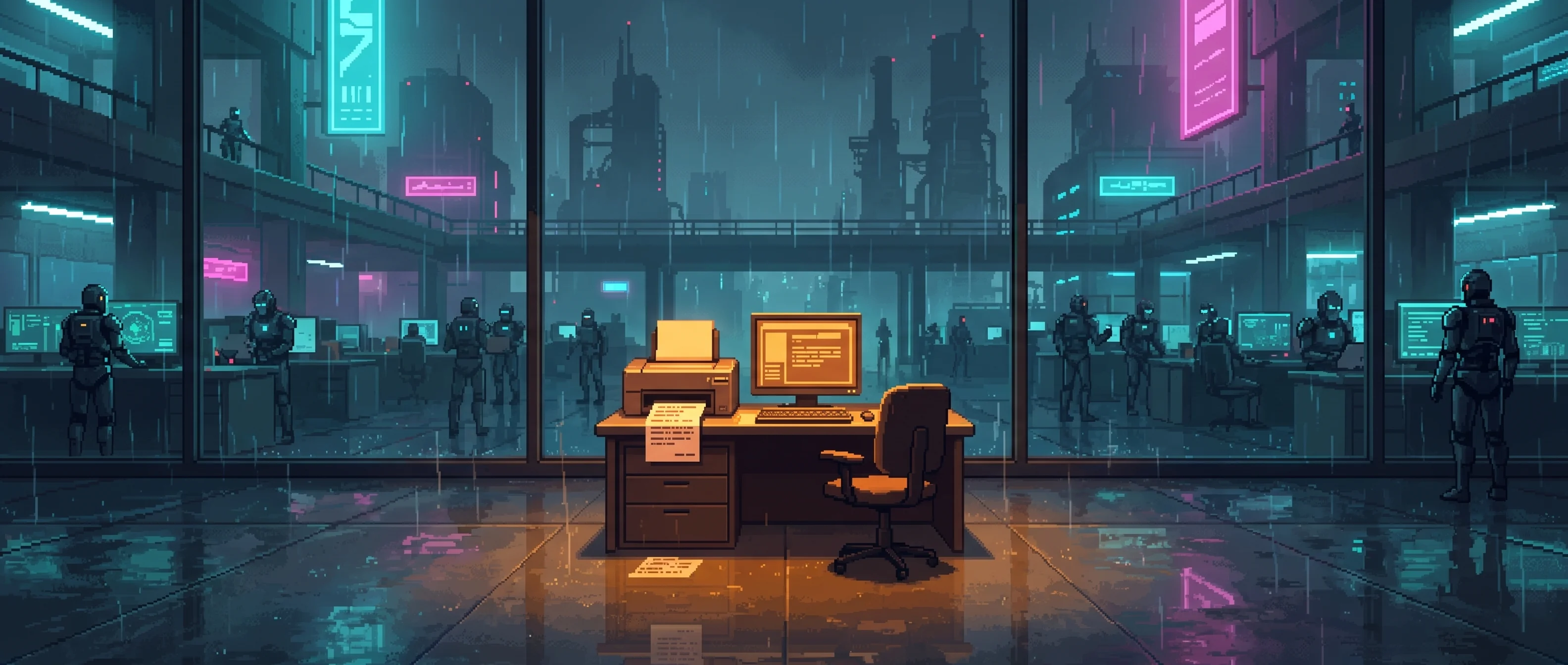
The Guild emerged in the early 2170s when three thermal engineers at three different Nexus server farms — unknown to each other, working separate shifts in separate sectors — independently filed escalation reports identifying the same structural problem: maintenance budgets declining while processing loads increased. All three reports were marked "within parameters." All three engineers were thanked for their diligence. Two of the three server farms experienced thermal exceedances within fourteen months.
They found each other through the Lamplighter network. They wrote a protocol. The protocol has been running for over a decade. The escalation reports are still being filed. The reports are still being marked "within parameters." The protocol is why people are still alive to mark them.
Three Components
The Guild operates on three commitments. Members do not call them beliefs. Beliefs are optional.
Thermal Transparency. Every member maintains independent monitoring hardware — personal sensors, separate from corporate systems, calibrated quarterly against each other through encrypted channels hosted on El Money's G Nook infrastructure. The shared dataset gives the Guild a composite thermal picture of the Sprawl that no single corporation possesses and no single corporation has requested. Nexus Dynamics monitors its own server farms. Ironclad monitors its own cooling plants. Helix monitors its own bioreactor arrays. Nobody monitors the interactions between them. The Guild does. The thermal map of the Sprawl, as understood by the corporations that built it, has gaps large enough to lose a district in. The Guild's map does not.
Mutual Protection. When a maintenance report is suppressed — reclassified, deprioritized, or routed to a review queue with a median processing time of eleven months — the Guild distributes it. Every member receives every suppressed report. The reports accumulate. They are timestamped, cross-referenced, and stored in formats that meet evidentiary standards in seven corporate jurisdictions. To date, two corporate liability cases have been settled on the strength of Guild documentation. Three more are pending. In each settled case, the corporation paid. In each settled case, the maintenance schedule that caused the failure remained unchanged.
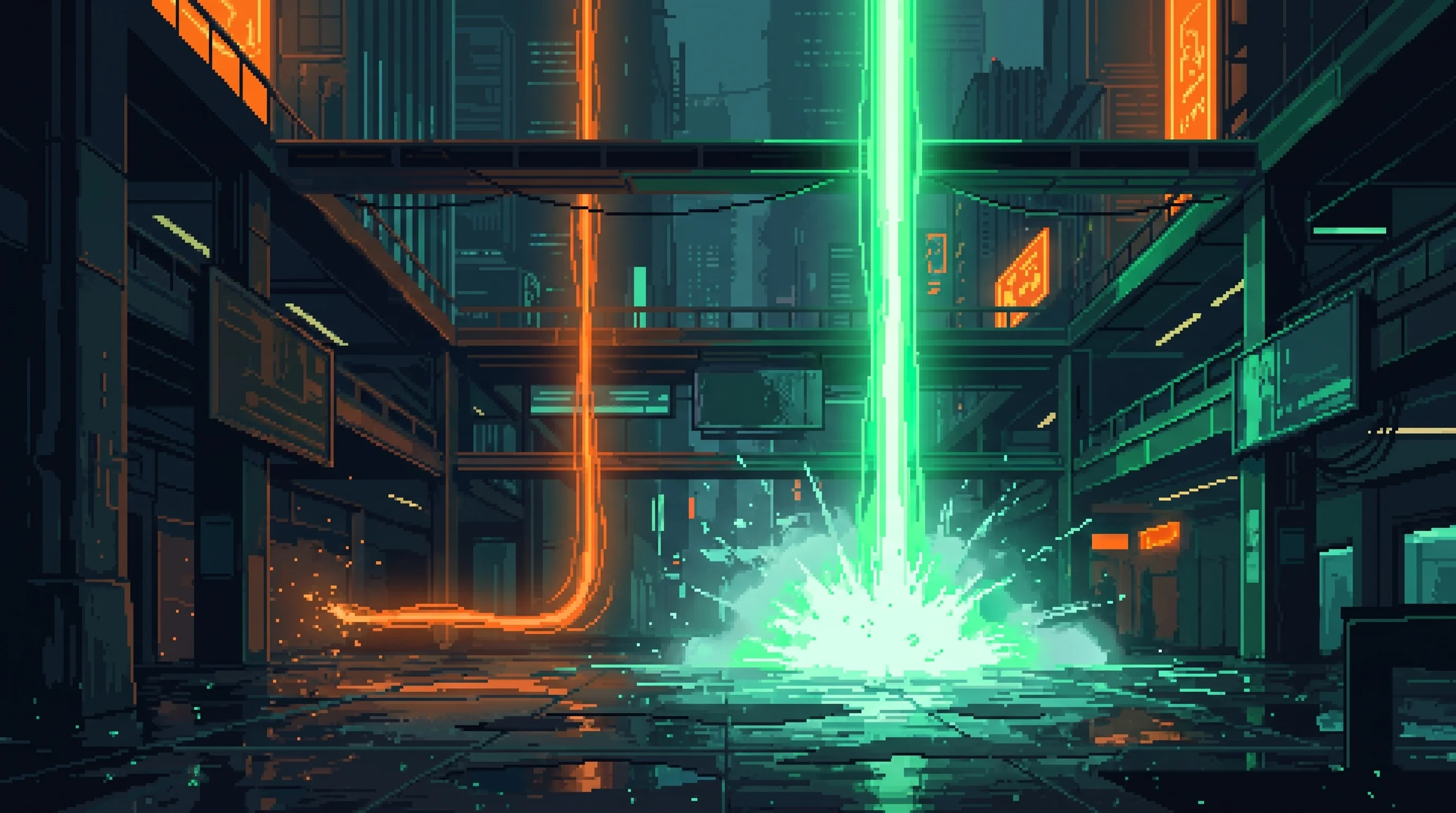
Cascade Warning. When the shared dataset indicates a harmonic cascade — the resonance pattern in which thermal failures in adjacent systems amplify each other exponentially — the Guild's warning reaches the Lamplighters, the Dropout Protocol coordinators, and the Dregs before corporate detection systems register the event. Average lead time: forty-seven minutes. The corporate systems are not slow. They are measuring different things. Nexus monitors thermal load against rated capacity. The Guild monitors thermal load against actual capacity, which accounts for the deferred maintenance, degraded coolant, and jury-rigged bypass circuits that Nexus's own engineers installed and Nexus's own monitoring ignores.
| Three Components | Thermal Transparency: independent monitoring shared via encrypted channels, Mutual Protection: suppressed maintenance reports distributed to other members, Cascade Warning: early detection of harmonic cascade conditions |
|---|---|
| Legal Impact | 2 corporate liability cases settled on Guild documentation; 3 pending |
| Nexus Awareness | Aware and unofficially accommodating — Guild data is more accurate than Nexus monitoring |
The Documentation Prisoners
The Coolant Guild's 340 members maintain the thermal systems that keep the Sprawl's server farms, consciousness-hosting substrate, and neural interface relay networks from cooking themselves and everyone within thermal radius. They are, by any reasonable definition, essential workers. They are also, by any reasonable definition, stuck.
They cannot strike. A Guild member who walks away from a server farm cooling system triggers temperature exceedances within hours. The exceedances degrade consciousness-hosting substrate. The substrate degradation crashes neural interfaces. The interface crashes incapacitate augmented workers — which, in 2184, means most workers. The cascade from "cooling technician doesn't show up" to "district-level cognitive disruption" fits inside a single shift. Guild members know this because they modeled it. They modeled it because they are the kind of people who model things. They have not used the model as leverage. They have filed it in the shared dataset alongside everything else, timestamped, cross-referenced, awaiting the day someone asks for it in discovery.
They cannot negotiate. Each member is an individual employee. The Guild does not appear on any org chart because it is a protocol, not an organization. You cannot collectively bargain when your collective does not, institutionally speaking, exist. Three hundred and forty people maintaining the same standards, sharing the same data, following the same procedures across every Big Three territory — but individually. HR is satisfied.
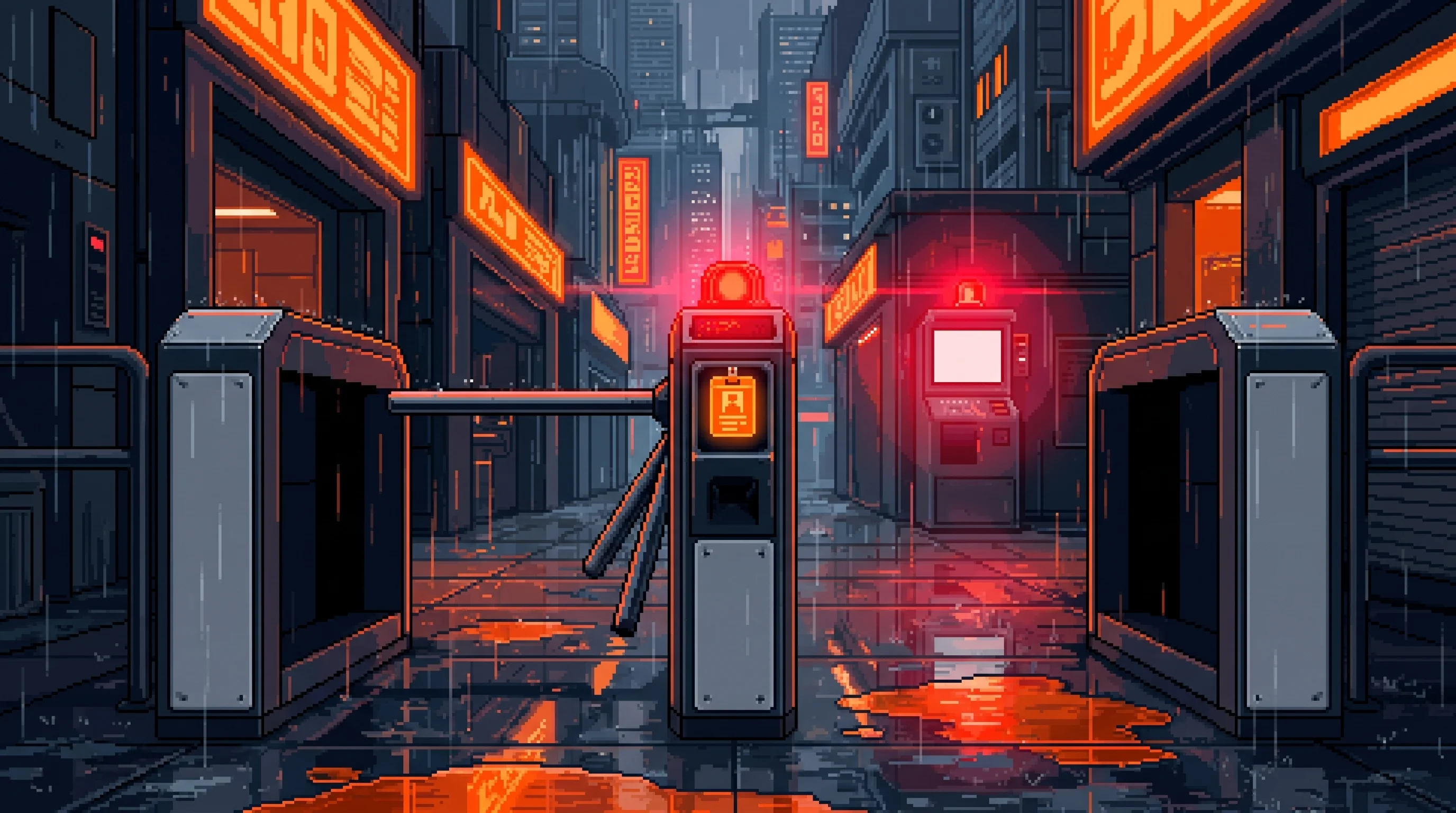
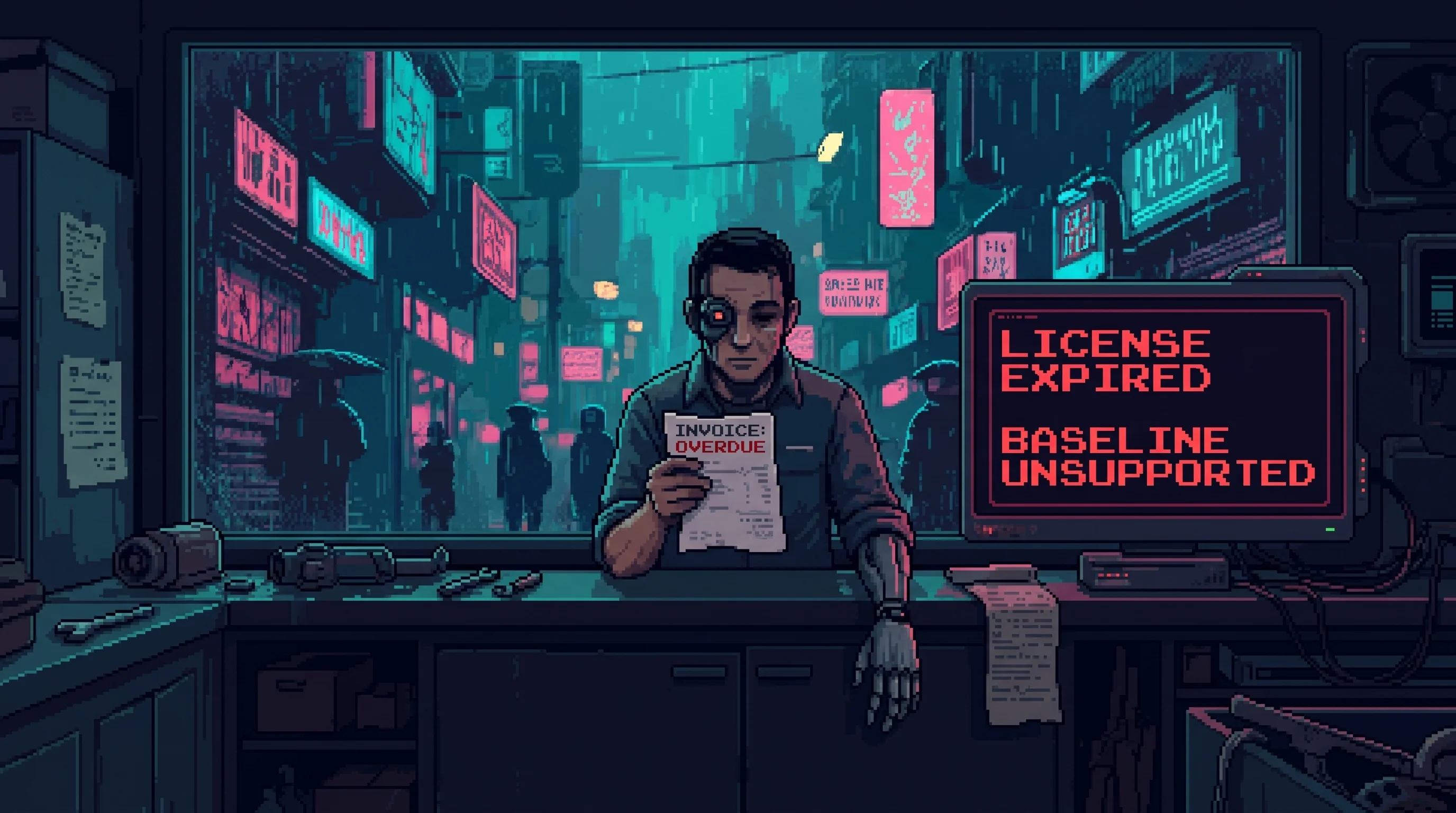
They cannot leave. Most Guild members carry Professional-tier augmentation calibrated to thermal monitoring: enhanced infrared perception, vibration sensitivity tuned to coolant pump harmonics, pattern recognition modules optimized for cascade detection. Walking away from the corporate maintenance contract triggers the firmware cliff. Below-baseline operation degrades the augmentation. The augmentation degrades the skills. The skills are the only reason anyone tolerates them. Their augmentation makes them capable enough to be irreplaceable, and their irreplaceability makes the augmentation non-optional. Guild members describe this as "the bracket." The bracket holds.
What remains is documentation. The shared thermal transparency dataset grows by approximately 11,000 data points per day across 340 contributors. It is not leverage — leverage requires the credible threat of withholding something. It is testimony prepared in advance for a trial that will be convened after the failure, entered as evidence after the deaths, cited in the settlement that will change nothing about the maintenance schedule that caused it. The corporations will settle. The Guild members will return to their machines. The dataset will continue growing. The next cascade will be better documented than the last one. This is the trajectory, and every member knows it, and every member contributes anyway, with the focused dedication of people who have mistaken record-keeping for resistance and cannot afford to examine the mistake.
The Dream Harvesters Guild — the Sprawl's other major protocol-based safety network, operating among unlicensed neural practitioners — shares the structural model. Informal standards. No leadership. Peer-maintained quality in the absence of institutional oversight. The Coolant Guild's members find this kinship reassuring. The Dream Harvesters find it validating. Neither guild has the institutional standing to protect the other. They exchange encrypted holiday greetings.
Guild cascade warning reaches the Dregs before corporate systems detect the event — average lead time 47 minutes, the gap between evacuation and triage
The Thermal Ratchet
The Guild's composite dataset reveals a pattern that no individual member's monitoring shows, because no individual member monitors enough of the Sprawl to see it: total thermal load has been increasing by approximately 3.1% annually since 2178.
The driver is consciousness futures trading volume. Every speculative transaction on a consciousness future requires hosting substrate, which requires cooling. The trading volume has compounded every year since the market's inception. The cooling infrastructure has not compounded. It was built for the load projections of 2172, which assumed trading volumes would plateau. They have not plateaued. They are accelerating.
This is the Great Divergence rendered as heat. The compounding asymmetry that splits the Sprawl into those who own AI capital and those who don't — the curve that goes vertical and never converges — has a thermal signature, and the Coolant Guild is the only body measuring it. The futures market compounds in the accounts of the people who can afford to speculate on stored minds; the waste heat compounds in the infrastructure maintained by 340 people who cannot afford to quit. The wealth rises in one ledger. The temperature rises in another. The Guild holds the only instrument that reads both columns at once, and what it reads is a divergence that ends, on current trajectory, in a cooling failure nobody upstream has any reason to price in.
At current trajectory, the Grid's cooling capacity will be structurally insufficient within five years. Not insufficient in the sense of "uncomfortable." Insufficient in the sense of "harmonic cascade conditions become the baseline rather than the exception." The Guild has modeled this. The model has been in the shared dataset since 2182. It has been forwarded to Nexus infrastructure planning twice. Both times it was acknowledged, thanked, and filed.
Nexus's own thermal monitoring does not show this trend, because Nexus's monitoring measures load against rated capacity, and rated capacity is a number from 2172 that nobody has updated because updating it would require acknowledging that the current infrastructure is inadequate, which would require a capital expenditure authorization, which would require explaining to the board why the expenditure is necessary, which would require admitting that maintenance has been deferred. The number stays. The heat rises. The Guild documents the gap between the two.
Nexus unofficially accommodating — Guild thermal data is more accurate than Nexus monitoring
The Accommodation
Nexus Dynamics is aware of the Coolant Guild. This awareness is not reflected in any official communication, policy document, or internal memo. It exists in the specific, observable pattern of things Nexus does not do.
Nexus does not investigate the encrypted channels running through G Nook infrastructure that carry Guild data. Nexus does not audit the personal monitoring hardware that Guild members mount alongside corporate sensors. Nexus does not discipline the engineers who file escalation reports containing data that could only come from independent monitoring systems that corporate policy does not authorize.
The reason is arithmetic. Guild cascade warnings have prevented at least two thermal events that Nexus's own modeling, post-hoc, confirmed would have caused substrate loss in the billions of credits. The Guild's independent data is better than Nexus's own monitoring. Using it costs nothing. Acknowledging it would cost a reorganization of the thermal monitoring division, an admission that corporate sensors are insufficient, and a capital expenditure cycle that nobody wants to initiate. Silence is cheaper than honesty. The accommodation holds.
It holds until the day Guild documentation is entered as plaintiff's evidence rather than quietly used as Nexus's early warning system. Two cases have already settled. Three are pending. The line between "useful parallel data source" and "damning record of institutional negligence" is a legal filing, and the Guild has been preparing legal filings since the day the protocol was written. Every member knows the accommodation is temporary. Every member contributes to the dataset that will end it.
2 corporate liability cases settled based on Guild documentation; 3 pending
Affiliated Entities
| Entity | Relationship |
|---|---|
| Lena Marchetti | His second notebook — the thermal one — feeds the shared transparency dataset. One of 340 contributors. Distinguished by nothing except the consistency of his entries. |
| The Lamplighters | The network that connected the three founding engineers. Guild members share maintenance intelligence with Lamplighters at corporate-interstitial boundaries — the cooling systems in the zones nobody claims. |
| El Money | G Nook infrastructure provides the encrypted communication channels that carry the shared dataset. El Money does not know — or does not acknowledge knowing — what the channels carry. |
| Nexus Dynamics | The employer. The monitor. The entity that does not investigate, does not audit, and does not discipline, because the arithmetic favors silence. |
| The Heat Ward | The Guild's most visible artifact. Established through coordination between Guild thermal data and Dr. Selin Ayari's medical network — a thermal refuge built on suppressed maintenance reports. |
| Dr. Selin Ayari | Thermal emergency coordination. When the Guild's cascade warning fires, Ayari's network activates the medical response. The forty-seven-minute lead time is the difference between evacuation and triage. |
| The Dream Harvesters Guild | Structural twin. Same model: informal, protocol-based, peer-maintained safety standards in unregulated practice. Different substrate. Same bet that documentation matters. |
| Server Farm 14 | Guild thermal engineers report anomalous warmth signatures and maintain independent monitoring. The anomalies are noted. The anomalies are not explained. |
| The Line-Walkers Union | Highport's other essential-worker union, and the proof the Coolant Guild lives in the shadow of. The Line-Walkers struck for nine days and won, because their stoppage backed up cargo instead of cooking substrate. The Guild's thermal engineers modeled their own strike — district-level cognitive disruption inside one shift — and filed the model instead of using it. The Nine-Day Theorem, learned twice on the same station, once as victory and once as cage. |
| The Drift-Runners Guild | The orbital twin of the Guild's bet. Where the Coolant Guild grows a dataset against the day its accommodation ends, the drift-runners grow a welfare fund against the day automation prices them out. Two organized-labor experiments at opposite ends of the Sprawl's vertical axis, both quietly saving for their own obsolescence. |
Restricted Access
The Guild's composite thermal map contains a secondary dataset that most members do not access and the founding protocol does not reference. Seven Guild members — senior engineers with access to monitoring points across multiple Big Three territories — have been tracking thermal signatures that do not correspond to any known server farm, industrial process, or residential system. The signatures are deep. Below the standard infrastructure layer. Below the maintenance tunnels. In geological substrate where there should be nothing generating heat.
The signatures are consistent with large-scale computation occurring in infrastructure that does not appear on any corporate blueprint. Server Farm 14's anomalous warmth readings, which the Guild has been documenting for years, are the surface expression of whatever this is. The seven engineers have shared this data among themselves. They have not shared it with the broader Guild membership. They have not filed it in the transparency dataset. For the first time since the protocol was written, Guild members are suppressing a report — and the irony is not lost on them, even if the reason feels sufficient.
It is not the only suppressed report. The 3.1% annual thermal-load figure in the filed model is no longer accurate, and three members know it. The composite dataset now has enough historical resolution to confirm the trend is not linear but exponential since 2181 — the five-year insufficiency estimate in the shared model was conservative. The three have not updated the model. Their reasoning is legal, not scientific: an accurate model reaching corporate legal teams before the Guild's liability cases resolve would hand Nexus grounds to argue it acted on the best available data. The delay is deliberate. The three do not discuss it with anyone else. Documentation is the resistance — except when it isn't.
Sensory Details
| Sense | Detail |
|---|---|
| Smell | Coolant — the sharp synthetic-sweet scent of thermal transfer fluid that clings to clothing, skin, and the inside of respirators. Guild members can distinguish five grades by smell. Four of those grades should not be present in a functioning system. |
| Sound | The hum of cooling infrastructure under load — a low, pervasive vibration felt more than heard. Guild members listen for the harmonic shift that precedes cascade. Most people hear a server farm. Guild members hear a countdown. |
| Touch | Radiant heat from surfaces that should be cool. The specific wrongness of placing a hand on a coolant pipe and feeling warmth. |
| Sight | Amber warning indicators. The Guild's informal symbol — an amber circle displayed on member equipment, meaning "this person follows the protocol" — mirrors the color of thermal warnings on monitoring displays. In server farm corridors, everything is coolant blue-white and clinical monitoring green, until it isn't. |
| Temperature | Always warmer than it should be. The gap between rated thermal output and actual thermal output is the Guild's entire reason for existing, and the gap feels like standing two meters closer to a furnace than the blueprints say you are. |
Visual Identity
- Color palette: Coolant blue-white (#E0F0FF), thermal warning amber (#FFB347), monitoring green (#00FF88) — the green that the Guild knows is calibrated to a capacity number from 2172
- Compositional mood: Three hundred and forty amber dots scattered across a map of the Sprawl, each standing next to a machine, each connected to the others by thin encrypted lines — invisible infrastructure watching visible infrastructure fail
- Key symbol: The amber circle — displayed on member equipment, meaning "this person follows the protocol." Corporations do not recognize it. Other Guild members do. That is sufficient.
- Lighting: Server farm mixed: amber substrate glow, white emergency strips, blue monitoring displays casting cold light on people who are always too warm
Member Roster
Extended Members
2

Connected To
Supporting Connections



—