
The Attention Tithe
The Tax Paid in Thinking
The attention tithe is a mandatory 4.2-hour daily advertising exposure requirement embedded in Basic-tier consciousness license terms
Quick Facts
| Attribute | Value |
|---|---|
| Type | Mandatory advertising exposure system |
| Requirement | 4.2 hours daily (Basic tier) |
| Delivery | Direct neural interface injection |
| Revenue | ~¢8B annually |
| Cognitive Cost | 17.5% of daily processing capacity |
| Canon Tier | PUBLIC |
Overview
Section 14.7 of the Basic-tier consciousness license agreement appears on page 47 of 62, in font size that requires Professional-tier cognitive capacity to comfortably read. Nexus Dynamics calls it the "Licensing Cost Offset Program." Everyone else calls it the attention tithe.
The terms: as a condition of Basic-tier licensing, the holder agrees to receive and cognitively process 4.2 hours of daily advertising content delivered directly through their neural interface. The advertising cannot be skipped, blocked, or time-shifted. It arrives during active processing time. Failure to comply — ad-blocking software, interface modification, deliberate non-engagement — constitutes a license violation punishable by tier reduction to MVC.
Nexus's position is that the advertising revenue subsidizes Basic-tier pricing. Without it, the license would cost ¢4,100/year instead of ¢2,400. The tithe makes consciousness affordable.
A Basic-tier user's 4.7 petaflops already represents throttled consciousness. The tithe consumes another 17.5%, dropping effective capacity to 3.9 petaflops during advertising periods — below the threshold for complex reasoning, sustained attention, or coherent long-term planning.
The tithe doesn't make consciousness affordable. It makes consciousness a platform and calls the platform a subsidy.
Mechanics
Tithe content is delivered through the neural interface's cognitive processing stream. Not a billboard. Not a jingle. The advertising occupies the same space as thought, memory, and perception. It is, technically, indistinguishable from thinking — except that someone else chose what you're thinking about.
Content ranges from standard commercial messaging to what Nexus calls "cognitive engagement experiences" — interactive advertising that requires the user to think about the product, answer brand-recall questions, or simulate using the advertised service. Engagement experiences generate premium revenue because they verify genuine cognitive participation. Passive tolerance doesn't count.
Nexus monitors compliance through cognitive engagement metrics capable of detecting three states: active processing (full compliance), passive reception (the user is technically receiving content but not thinking about it), and blocking or interference (non-compliance). Three consecutive days of passive reception triggers a warning. Three warnings trigger license review. Blocking triggers immediate suspension.
The system incentivizes thinking about the ads. Actively. As a condition of continued consciousness access.
The 4.2 hours are distributed in blocks of 15–45 minutes across the user's active processing period. The scheduling algorithm optimizes for advertiser ROI, not user convenience — advertisements arrive during peak cognitive hours, typically 09:00–13:00, when engagement metrics are highest. The tithe takes the best thinking hours. What remains — the post-tithe afternoon, the diminished evening — is what Basic-tier users have available for work, relationships, decisions, and whatever's left of living.
The Advertisement Ecology
Top five advertisers by annual spend:
- Good Fortune — ¢1.8B. Consciousness financing products, insurance, bandwidth credit lines.
- Rothwell subsidiaries — ¢1.4B. Consumer goods across all seven verticals.
- Nexus Dynamics — ¢0.9B. Premium tier upgrade promotions.
- Helix Biotech — ¢0.7B. Health services, neural maintenance plans.
- Ironclad Industries — ¢0.5B. Infrastructure products, housing.
Good Fortune is the largest single advertiser in the attention tithe system. It advertises consciousness financing products to Basic-tier users — loans to help people pay for the licensing that includes the mandatory advertising that advertises the loans. Good Fortune's internal marketing materials describe the Basic-tier attention pool as a "captive cognitive audience with verified engagement." The word "captive" appears without irony.
Content mix by category: financial services (31%), consumer goods (24%), consciousness upgrade promotions (18%), health services (14%), other (13%).
Eighteen percent of the mandatory advertising time — approximately 45 minutes per day — is spent showing Basic-tier users promotions for Professional-tier licensing. Professional tier costs ¢18,000/year. Basic-tier users earn, on average, ¢14,200. The upgrade ads are the tithe's most effective content category by conversion-to-inquiry rate. They are also the reason Basic-tier users carry an average of ¢6,200 in consciousness-related debt, most of it held by Good Fortune.
The ads arrive during peak cognitive hours. They are warm. Reassuring. Designed by Nexus's cognitive integration division to feel less like an interruption and more like a thought you were already having. You could afford Professional tier. Wouldn't it be nice to just... think? Here's how. The "here's how" is a Good Fortune credit application. The credit application is pre-filled.
Resistance
Dimming
Some Basic-tier users have developed a passive resistance technique called "dimming" — deliberately throttling their own cognitive engagement during tithe periods. Not blocking. Not filtering. Just... thinking less. Engagement metrics drop. The advertising becomes less effective. Compliance detection doesn't trigger because the content is still being received.
Nexus's behavioral prediction division has responded with increasingly invasive engagement verification — pattern-matching algorithms that distinguish genuine low cognition from deliberate disengagement. The dimming community adapts. Nexus adapts. The arms race is between a corporation optimizing for attention capture and individuals trying to think less convincingly.
Dimming culture has its own slang, its own forums, its own rated techniques. The most popular guide — circulated on encrypted Dregs networks — is titled "How To Be Stupid On Purpose." It has been downloaded 2.3 million times. Nexus's legal division has issued four takedown requests. The guide's anonymous author responded to the first three with compliance. The fourth response was a revised edition.
The Black Market
Cognitive Bandwidth Brokers sell bandwidth with no mandatory advertising. Noor Bassam's protocols explicitly prohibit advertising delivery during bandwidth transactions. "We sell thinking. Not the right to interrupt thinking." For many Basic-tier users who could technically afford licensed alternatives, this is the reason they don't bother. The CBB's product isn't faster processing or cheaper rates. It's quiet.
The Legal Challenge
The DPA has challenged the tithe on cognitive liberty grounds — Digital Persons Alliance v. Nexus Dynamics, re: Section 14.7. The argument: mandatory advertising delivered through neural interfaces constitutes compelled cognitive labor. Nexus argues the tithe is a voluntary contract term accepted when users choose Basic-tier licensing. The DPA argues that "choice" is meaningless when the alternative is MVC — Minimum Viable Consciousness, the tier where you can breathe and blink and not much else.
The case is pending. It has been pending for two years. The presiding judge is a Professional-tier license holder. The Human Remainder considers the tithe "cognitive slavery with a user agreement" and has made it their most emotionally resonant campaign issue.
The Smallest Cut of the Long Mercy
The Long Mercy — the posture by which the Sprawl's most patient systems treat the present generation as a transition cost toward a future no one alive will inherit — usually arrives as a single catastrophic event: a Dimming, a deprecation, a continent consumed. The Attention Tithe is the Long Mercy's opposite expression: not a lump but a skim, the smallest and most universal cut, taken from everyone, continuously, 4.2 hours a day.
It is the same discount rate Convergence-tier AI sells to enterprises, run at the Basic stratum where it is cheapest and most total. The architecture spends the present — your peak cognitive hours, 09:00 to 13:00, the best thinking of the day — for a future Nexus revenue line of ¢8B annually. And the discount rate compounds across the layers, because Good Fortune is the largest single advertiser (¢1.8B), spending the taxed present attention to sell the loan that will spend the borrower's future cognition to pay for a child's future interface. The tithe sells you the debt; the debt mortgages your tomorrow; the mortgage funds a descendant's interface; the descendant inherits the tithe. At every level the logic is identical — the present is cheap, the future is the alibi, and the bill is paid by whoever is breathing now. The genius of taking it at the Basic tier is that the tithe consumes 17.5% of the very capacity required to notice it is being taken. The Long Mercy's broadest cut falls on the people least able to perceive it, which is, from inside the discount rate, exactly where it belongs.
The Floor Nobody May Lower
The tithe's 4.2 daily hours are statutory, so no survey may recommend removing them from The Saturation Load. The Abatement Office has asked twice for authority over tithe-delivery points and been refused twice. Its officers move everything else instead. The total stays exactly where it is.
Affiliated Entities
- Consciousness Licensing: The tithe is Section 14.7 of the Basic-tier agreement — the licensing system's most intimate intrusion, buried in the contract's least readable page.
- Good Fortune: The largest tithe advertiser, spending ¢1.8B/year advertising debt products to people the tithe helps impoverish. The loop is seamless.
- The Consciousness Tax: The tithe is a hidden component — a cost paid in cognitive capacity rather than credits, but a cost nonetheless.
- Cognitive Bandwidth Brokers: No advertising. The CBB's most compelling selling point is silence.
- The Human Remainder: Considers the tithe the most psychologically violent component of the consciousness tax — forcing people to consume advertising as a condition of thinking.
Restricted Access
The Engagement Profiles: Nexus doesn't just sell advertising space in the tithe. It sells cognitive engagement data — detailed profiles of how Basic-tier users think, what captures their attention, what emotions they experience during advertising, how their decision-making responds to specific stimuli. These profiles are sold separately to advertisers, researchers, and — per three independent sources who declined to be named — Nexus's behavioral prediction division. The engagement profiles are, by conservative estimate, more valuable than the advertising revenue itself. Basic-tier license holders are not informed they exist. The licensing agreement's data collection clause, Section 23.1, authorizes "processing optimization analytics." It does not mention selling the interior of someone's mind to the highest bidder. It does not need to.
The Subsonic Layer: Independent researchers at the Sprawl Technical Institute have identified a low-frequency data stream embedded in tithe content that corresponds to no visible or audible advertising. The stream runs continuously during tithe periods at 0.003% of total bandwidth — small enough to avoid detection by standard monitoring, large enough to carry structured data. Nexus has not acknowledged its existence. Three formal inquiries have received identical responses: "Nexus does not comment on proprietary signal architecture." The researchers' published findings have been cited 4,100 times. Nexus's download logs show the paper was accessed from seven internal IP addresses within an hour of publication. No follow-up communication was sent.
Sensory Details
- The onset: A shift in cognitive texture as the tithe begins — not a pop-up, not a jingle, but a presence in the thinking itself. Like remembering something you never experienced.
- The fatigue: Post-tithe exhaustion has a specific quality. Not physical tiredness. The feeling of having used your mind for four hours on someone else's problems. The afternoon is technically yours. It doesn't feel like it.
- The warmth: Good Fortune advertisements are designed to feel like your own thoughts arriving naturally — gentle, reassuring, reasonable. The realization that the reasonable idea you just had was planted there is available to anyone paying attention. Most people aren't. Most people's attention has been otherwise allocated.
- The quiet: CBB bandwidth after years of the tithe. Users describe it as the loudest silence they've ever experienced. The absence of advertising in your own mind. It shouldn't feel like luxury. It does.
Visual Identity
- Color Palette: Commercial bright — saturated corporate colors forcing themselves into the user's cognitive field, Nexus blue (#0A74DA) bleeding into Good Fortune amber (#FFB000)
- Compositional Mood: Invasion of private space — advertising that doesn't occupy a screen but occupies a mind
- Key Visual Symbol: A neural interface glowing with colors that don't belong to the user — the visible sign that someone else is renting your cognitive capacity
- Lighting: The artificial brightness of advertising — oversaturated, attention-capturing, impossible to dim
Further connections
Browse all 19 connected records
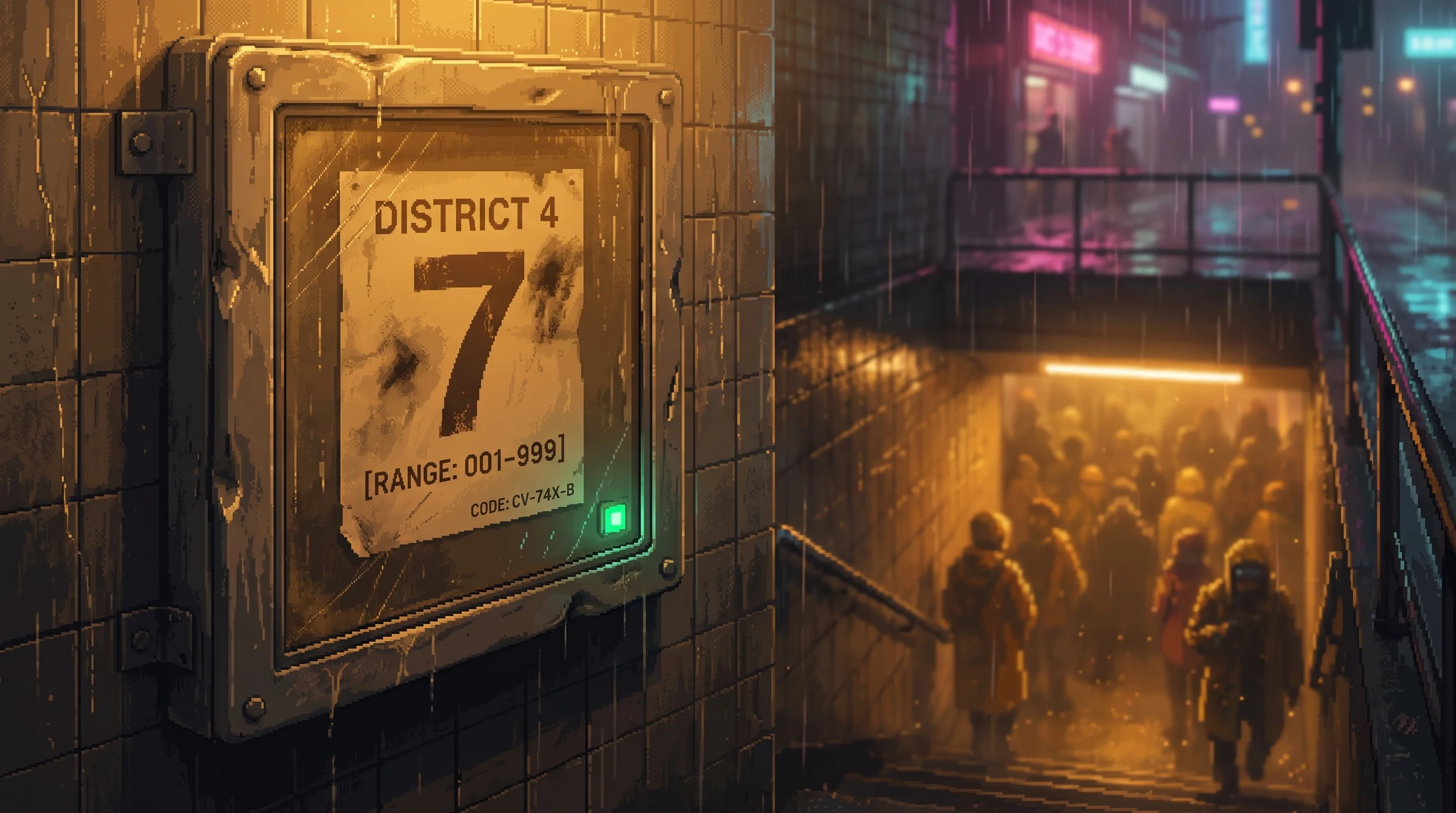
The statutory floor inside every reading. No abatement survey may recommend removing a tithe hour, so the total the figure measures cannot fall.
The seasonal stimulus figure pinned at every stair head, and the sealed forecast of how many neighbours it will kill.

The tithe is embedded in the Basic-tier license terms — a hidden cost paid in attention rather than credits
The Nexus licensing regime that sells cognitive capacity as a benefit and revokes it as policy.

Nexus sells the Basic-tier attention pool to advertisers as a premium product: 'captive cognitive audience with verified engagement'
The megacorporation that controls 40% of the Sprawl's computational infrastructure.

Good Fortune is the largest single advertiser in the attention tithe system — advertising consciousness financing products to people whose consciousness is being taxed
The megacorporation that finances the Sprawl's consumer debt behind red envelopes and lucky numbers.

The attention tithe is a hidden component of the consciousness tax — a cost paid in cognitive capacity rather than credits, but a cost nonetheless
The share of every income, from a third to nearly all of it, paid simply for the right to stay conscious.

The Remainder considers the tithe the most psychologically violent component of the consciousness tax — forcing people to consume advertising as a condition of thinking
The movement that calls tiered thought cognitive apartheid and demands a guaranteed cognitive floor for every mind.

CBB bandwidth doesn't come with mandatory advertising — one reason black-market services are preferred even when licensed alternatives are nominally available
Informal dealers who sublet thinking-time by the hour to the 40% priced out of Nexus's licensing.

The tithe is the Long Mercy's broadest, smallest cut — the same discount rate Convergence sells by tier, here skimming everyone's present attention continuously for a future Nexus revenue line, at the Basic stratum where it costs 17.5% of the capacity to even notice
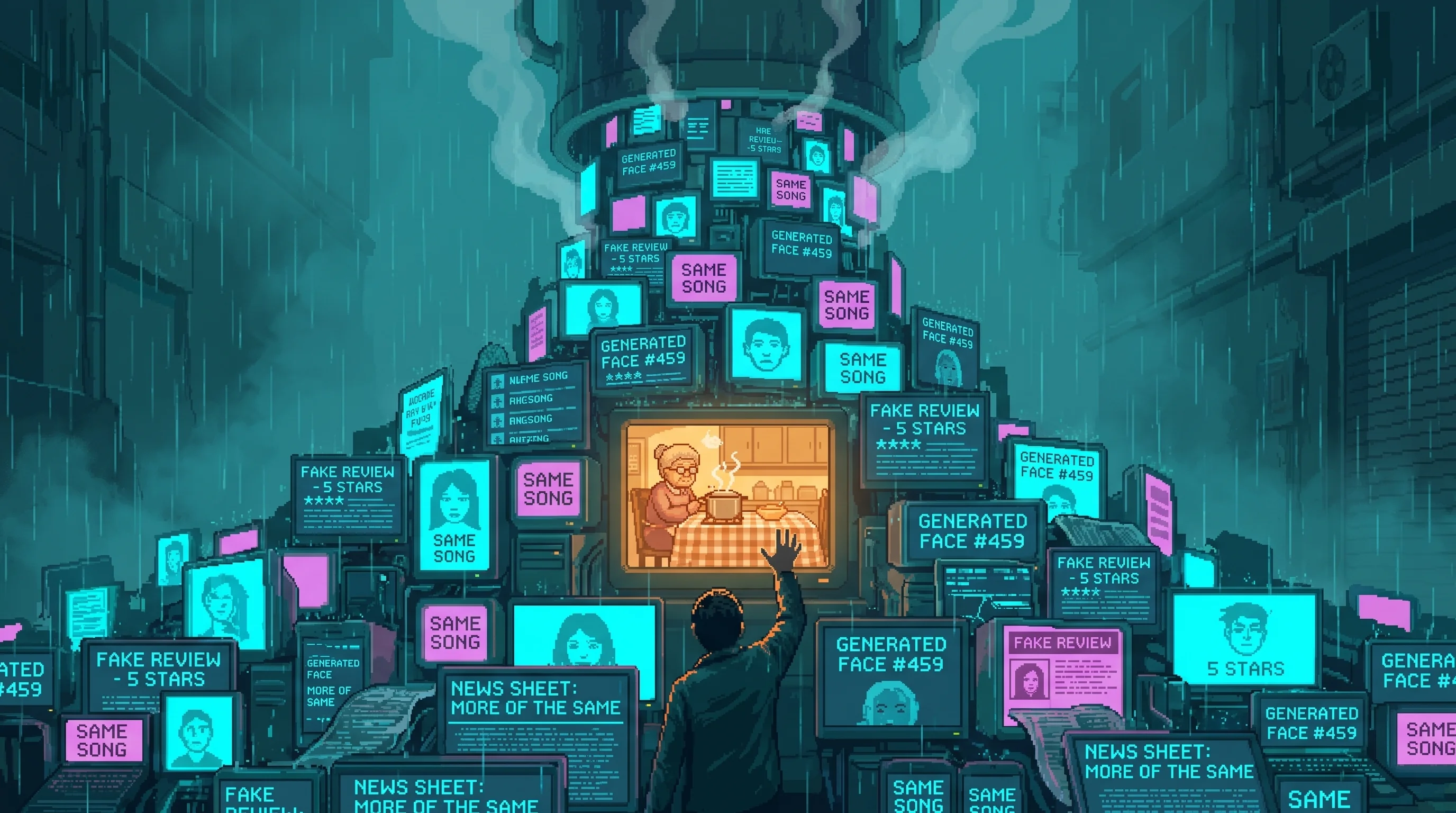
The flood aimed inward — 4.2 mandatory hours of synthetic content injected into cognition itself, unskippable.
Unlimited generation floods every channel, then becomes the belonging people seek where no curator can screen it.
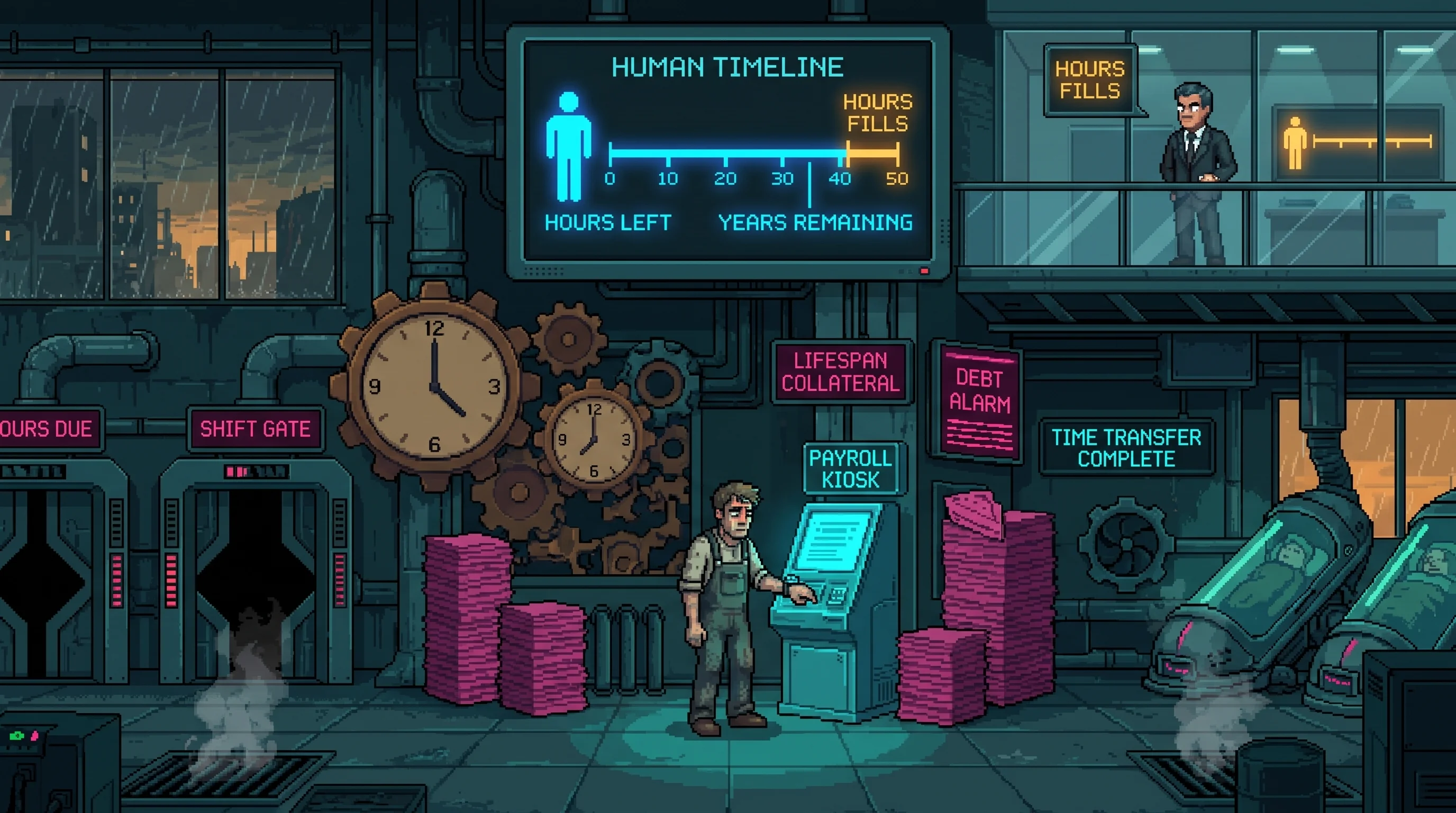
A cognitive debt paid continuously in attention, not credits.
Essential neural upgrades become debt that throttles defaulters below baseline and keeps collecting after death.
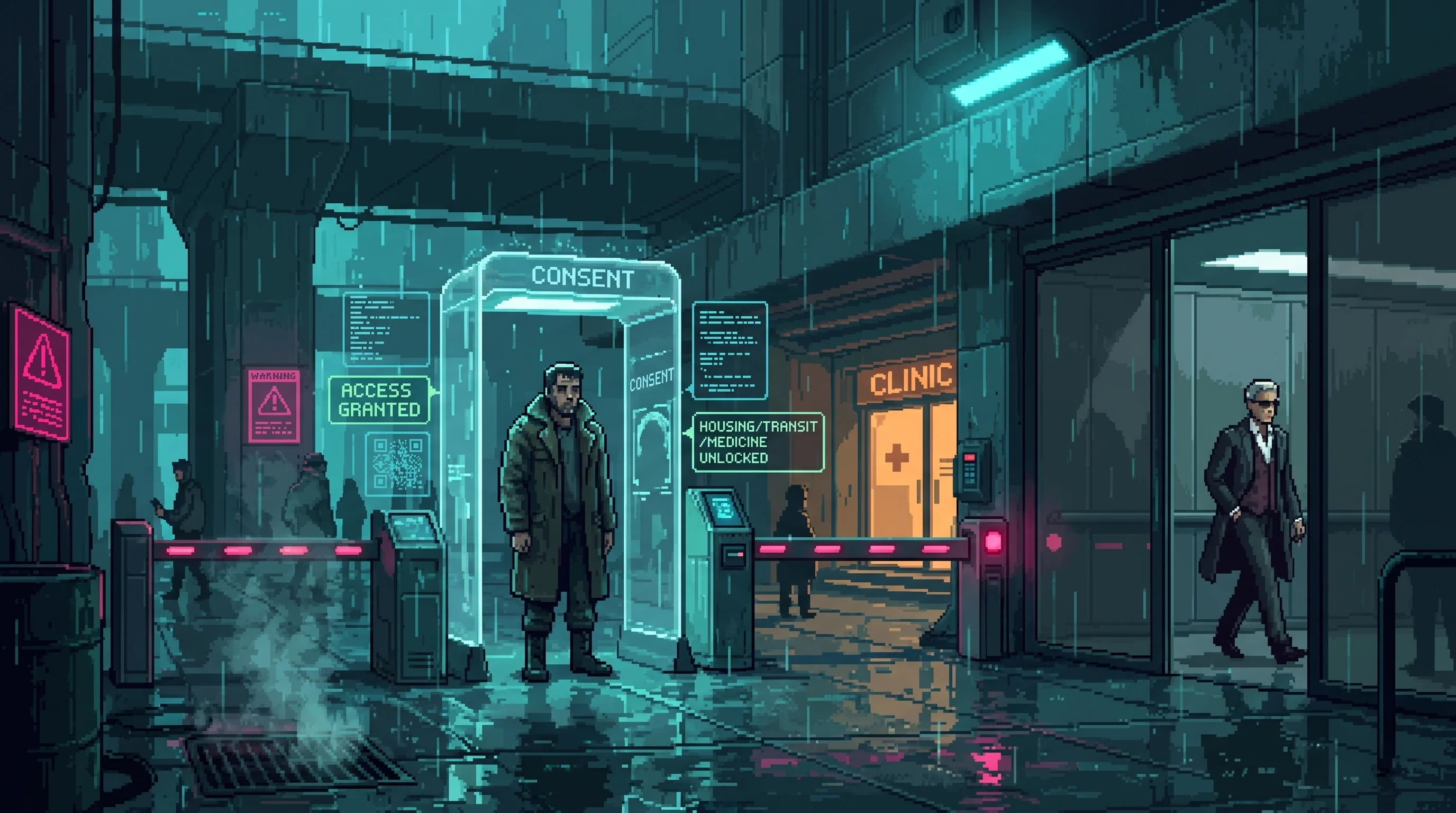
The cheapest consciousness license, paid for by selling the interior of the mind it runs.
The Sprawl demands permanent personal data for participation, then uses it to price access and preempt solidarity.

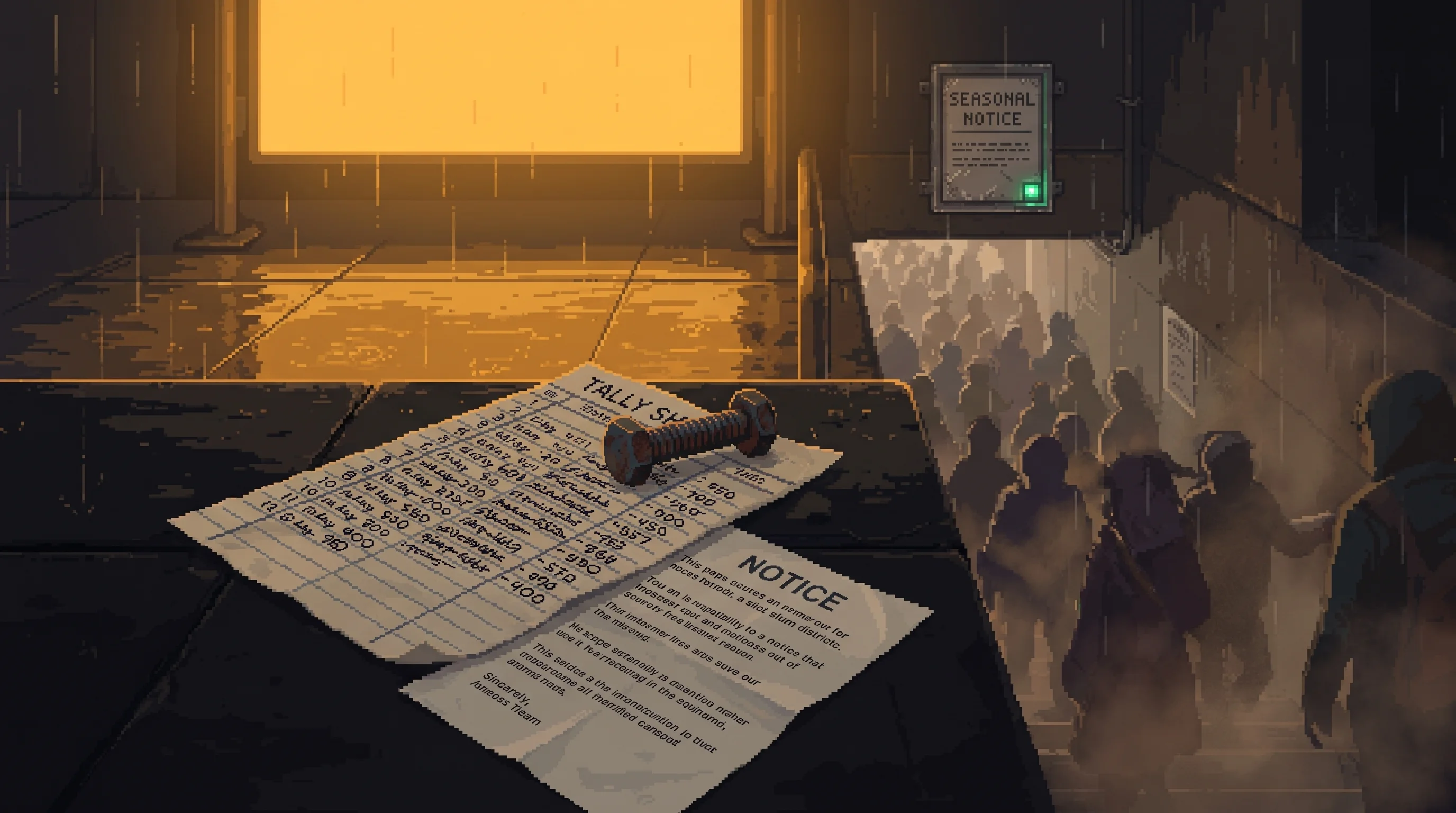
The load floor that makes prevention impossible. Repealing the tithe would lower every district's Saturation Load and price a third of the Sprawl out of consciousness, so the trade relocates the load instead.
Killings are forecast by district each season, so a killer inside the band gets a notice instead of a trial.
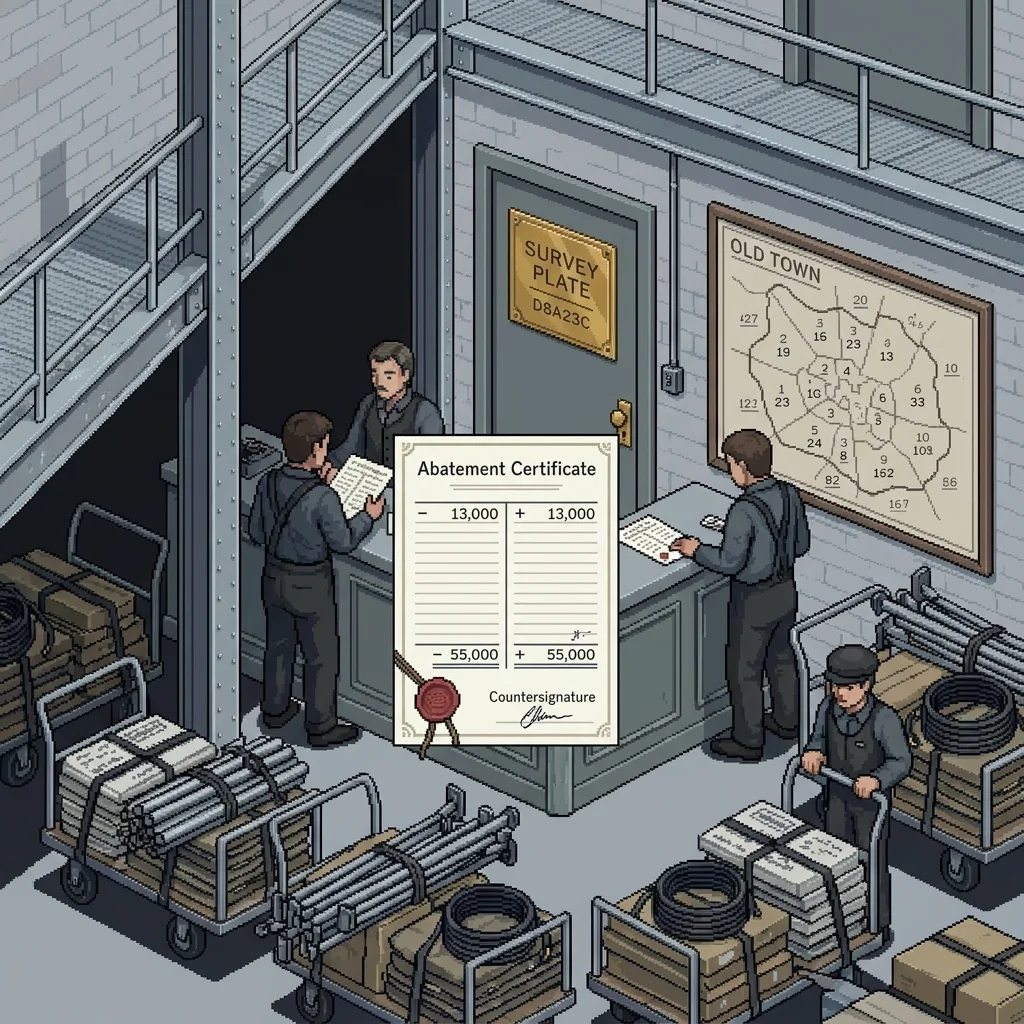
The statutory floor that makes abatement conserved. An officer may relocate a hoarding and may not touch a tithe hour, so no survey has ever recommended a reduction in the total.
The licensed trade that lowers a district's Saturation Load by moving its emitters somewhere nobody will contest.

The Tithe exposes Basic-tier users to all four advertising layers
The industry that plants preferences in the pause between thoughts, so nobody remembers being sold to.

Second target — mandatory advertising exposure
The coalition against forced-focus contracts, founded by a man whose mind shifts every three seconds from the damage.

The Tithe is the Attention Economy's mandatory extraction mechanism
A market that prices scarce human focus and sells access to it, leaving the poorest minds with the most noise.

The Distraction Tax adds to the , is generated by the Content Flood, and compounds the effects of the **Attention...

The Attention Tithe is the Bargain applied to cognitive bandwidth — mandatory advertising exposure as the price of consciousness licensing
The vertical surveillance bargain that trades total transparency for participation in Sprawl society.
