
The Consciousness Tax
The 'consciousness tax' is the colloquial term for the cumulative cost of maintaining consciousness in the Sprawl's economic system
Overview
Nobody passed a law called "the consciousness tax." There is no line item on anyone's invoice labeled cost of being allowed to think. The Human Remainder coined the term to describe what happens when you add up the licensing fees, hosting costs, bandwidth supplements, neural maintenance, insurance premiums, and financing charges that a Sprawl resident pays for the privilege of continued cognition.
The average Dregs resident spends 34% of their income on these costs. For uploaded consciousnesses, the figure approaches 100%. For MVC residents in the Dim Ward, the equation collapsed years ago — their consciousness has been reduced to 4.7 minutes per hour, and they still can't cover it without subsidy.
Nexus Dynamics collects approximately ¢47 billion annually from consciousness licensing alone. Good Fortune collects ¢12 billion financing the gap between what consciousness costs and what people can pay, at 18–24% interest. Ironclad Industries takes ¢6 billion in hardware and maintenance. Helix Biotech takes ¢3 billion in neural-biological interface services. Total consciousness economy: ¢68 billion, against a Sprawl GDP of ¢400 billion.
Seventeen percent of the economy is the cost of being conscious. The second-largest sector is food.
The Invoice
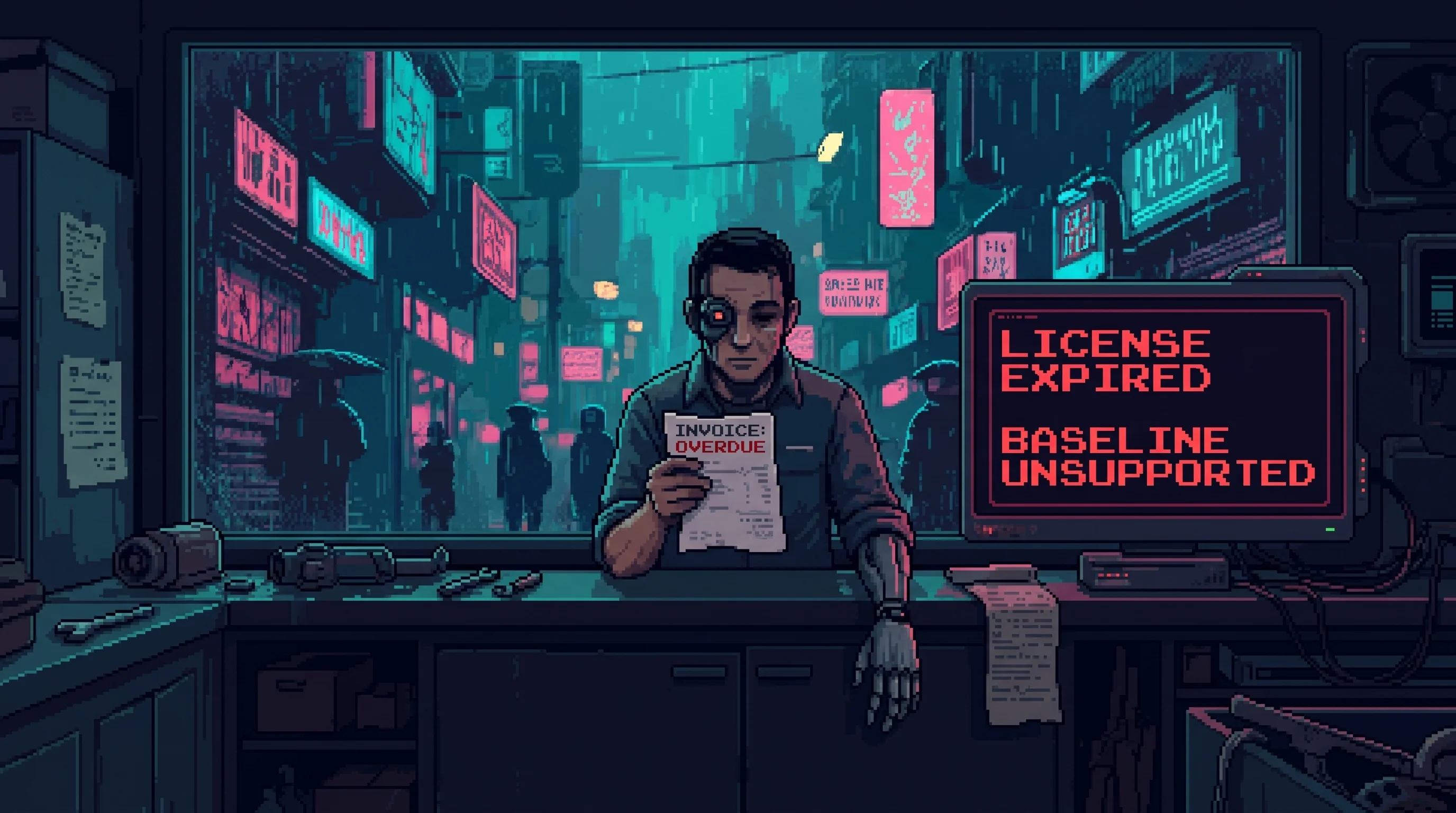
A Basic-tier Dregs resident earning ¢8,000 per year receives the following obligations:
Consciousness licensing: ¢2,400. (List price. Actual cost runs higher after mandatory add-ons, tier-change fees, and the administrative surcharge for annual renewal that Nexus classifies as "processing optimization.") Neural interface maintenance: ¢600–3,000, depending on generation and whether the resident can find a certified technician in a district that has approximately four. Bandwidth allocation supplements: ¢200–5,000, variable, which means unpredictable, which means budgetable only by people with enough cognitive bandwidth to budget — which is the tier above theirs. Hosting fees for digital consciousnesses: ¢300–25,000. Insurance against identity theft, substrate failure, fork liability, and cognitive degradation: ¢400–8,000, technically optional in the way that a parachute is technically optional.
The licensing fee alone is 30% of gross income. Before rent. Before food. Before the maintenance that prevents the interface from degrading, which would reduce cognitive capacity, which would reduce earning potential, which would make the next year's licensing fee a larger percentage of a smaller income.
Good Fortune offers a solution. Consciousness loans: upfront payment of annual licensing fees, repaid monthly at 18–24% interest. A Dregs resident who finances through Good Fortune pays ¢3,400 instead of ¢2,400 — a 42% surcharge for the privilege of installments. Bandwidth credit lines compound daily. MVC prevention insurance guarantees hosting above minimum viable levels until a claim is denied, which occurs in 31% of cases. (Good Fortune's actuarial team has confirmed that 31% is the optimal denial rate: high enough to protect margins, low enough to avoid regulatory attention. The rate has not changed in six years.)
The invoice arrives monthly. Clean digital document. Nexus branding. Its precision is impeccable. Its total is larger than the recipient's rent.
The consciousness tax creates a poverty trap: lower cognitive capacity reduces earning ability, which reduces ability to pay for cognitive capacity
The Spiral
The consciousness tax produces a cycle that the Human Remainder has documented extensively and no institution has interrupted:
Lower income reduces the tier a resident can afford. A lower tier reduces cognitive capacity. Reduced cognitive capacity reduces earning potential. Reduced earning potential reduces income. The cycle has been mapped, graphed, published, and presented to three separate regulatory bodies. It continues.
The floor is MVC. When the tax exceeds total income, consciousness drops to minimum viable — 4.7 minutes of processing per hour. At MVC, Nexus subsidizes hosting and classifies it as a public service tax deduction. The deduction is generous. Nexus's MVC hosting operates at a 66% profit margin. The tax write-off for subsidizing a Dim Ward resident exceeds the cost of hosting them, meaning Nexus earns more per MVC resident than per Basic-tier paying customer.
The consciousness tax's most desperate victims are its most profitable demographic. This is noted in no public filing. It is visible in every quarterly earnings report to anyone who can do the arithmetic, which requires Professional-tier processing or above.
The Dim Ward's 340,000 residents are the endgame: people for whom the cost of being conscious exceeded their ability to pay. They exist at the minimum the market will sustain. Dissolving them entirely would be politically inconvenient. Upgrading them would reduce a revenue stream. The subsidy continues. The profit margin continues. The 340,000 continues.
The Designed Equilibrium
Good Fortune's internal product documentation — portions of which surfaced during a Human Remainder data action in 2181 — describes the consciousness financing line as "lifecycle revenue optimization." The phrase is precise. The products are engineered to maintain borrowers in a state of permanent debt service, generating interest income that exceeds principal repayment over any period longer than fourteen months.
A leaked planning document references a "consciousness debt ceiling" — the maximum amount a Basic-tier resident can be induced to borrow before defaulting to MVC. The ceiling is recalibrated annually. It has increased every year since 2176, tracking inflation in licensing fees that Good Fortune's parent company, the Rothwell Foundation, has significant influence over through its seat on the Nexus Corporate Council.
The Rothwell strategy — create the problem, sell the solution — does not require conspiracy. Nexus sets licensing fees. Good Fortune finances them. The fees rise. The financing compounds. The borrower descends. At MVC, the borrower becomes more profitable than they were at Basic. Nobody designed the consciousness tax. Every component of it was designed. The distinction matters to economists. It does not matter to the 340,000.
The Cognitive Bandwidth Brokers — the Sprawl's black market for unlicensed processing — exist because the formal system prices consciousness above what 40% of the population can afford. The brokers sell bootleg bandwidth at rates that undercut Nexus by 60–80%, on infrastructure held together with salvage code and optimism. The service is unreliable. The clients cannot afford reliability. The black market is not an aberration. It is the informal economy's price signal, broadcasting in plain language what the formal economy obscures in licensing tiers: consciousness costs more than people have.
For uploaded/digital consciousnesses, the tax approaches 100% of income — every credit earned goes to maintaining the substrate that allows earning
The Weight
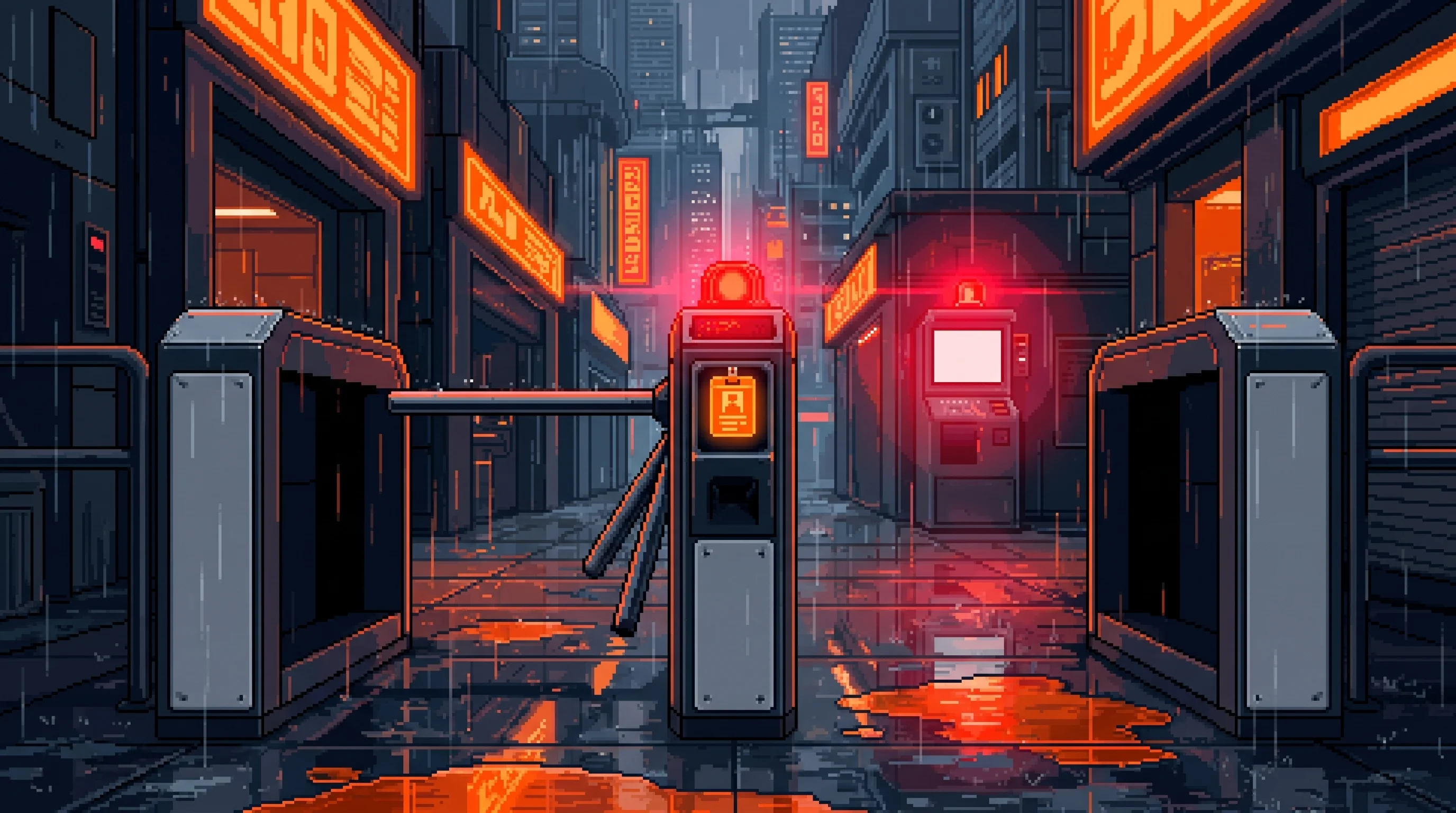
A Dregs resident's license renewal is declined on a Tuesday. Their processing allocation begins to drop. Not immediately — the grace period is seventy-two hours, which is enough time to secure financing, borrow from a bandwidth broker, or liquidate an asset. It is not enough time to do any of these things at Basic-tier cognitive speed.
The world gets slower. Dimmer. Simpler. Thoughts that completed in seconds now take minutes. The renewal notice is still open in their neural interface, but parsing the payment options requires the processing tier they've just lost access to. Good Fortune's loan advertisements appear in the Dregs in warm colors with friendly faces. The interest rates are in small print that most Basic-tier residents lack the bandwidth to parse. At reduced processing, the advertisements become the clearest thing in the visual field — Good Fortune optimizes ad rendering for degraded cognitive states the way restaurants optimize menus for confused diners.
The tax is collected in cognitive capacity when it cannot be collected in credits. The distinction between these two collection methods is meaningful to accountants. To the resident watching their thoughts thin out over seventy-two hours, it is the same thing happening in a different unit of measurement.
Affiliated Entities
- Consciousness Licensing: The tax's largest component — ¢2,400–120,000/year for permission to think at a given tier. The gap between Basic's 4.7 petaflops and the system's available 12.4 is not technical. It is revenue.
- Good Fortune: Finances the tax for those who can't pay upfront. Profits from the gap between cost and ability to pay. The 18–24% interest rate transforms an annual burden into a permanent one.
- Nexus Dynamics: Collects ¢47B annually. Sets licensing fees. Controls 73% of hosting infrastructure. Profits more from subsidized MVC residents than from paying Basic-tier customers.
- Upload Poverty / MVC: The tax's consequence. When the cost of consciousness exceeds income, consciousness is reduced until the cost doesn't.
- The Dim Ward: 340,000 residents at the tax's terminal state — too expensive to dissolve, too profitable to upgrade.
- Cognitive Bandwidth Brokers: The black market exists because 40% of the population cannot afford the formal market. The brokers are the price signal the system refuses to read.
- The Human Remainder: Named the tax. Quantified it. Published the lifecycle revenue optimization documents. Campaigns against it. The tax continues.
- Ironclad Industries: ¢6B annually in neural interface hardware and maintenance — the physical layer under the financial extraction.
- Helix Biotech: ¢3B annually in neural-biological interface services — where Nexus taxes what you think, Helix taxes what you think with.
The average Dregs resident spends 34% of income on consciousness-related costs (licensing, hosting, bandwidth, neural maintenance)
Restricted Access
- The Ceiling Calibration: Good Fortune's consciousness debt ceiling is recalibrated annually by a team of seven analysts whose compensation is indexed to ceiling increases. Their performance reviews measure "lifecycle value expansion per cohort." The ceiling has risen every year since 2176. Average increase: 8.3%. Average wage growth in the Dregs: 1.1%. The analysts have never visited the Dregs. Their models do not include a variable for what MVC feels like. The models are, by every internal metric, excellent.
- The Subsidy Inversion: Nexus's public service classification for MVC hosting has survived four regulatory audits. The auditors confirmed that Nexus provides hosting below market rate. They did not note that the tax deduction for providing it exceeds the cost — because the audit framework evaluates whether the service is below market rate, not whether the provider profits from the classification. The framework was designed by a committee that included two Nexus representatives. The framework is fair. The framework's scope is not.
Sensory Details
- The Invoice: Nexus blue on white. Clean typography. The monthly total displayed in a font size 14% larger than the line items, a design choice that Nexus's UX team describes as "hierarchy clarity" and that recipients experience as the number they cannot stop seeing.
- The Advertisements: Good Fortune gold and warm amber flooding Dregs corridors at reduced-bandwidth resolution — rendered crisper than the resident's own thoughts, because the ads are processed server-side at Professional tier.
- The Drop: The seventy-two-hour grace period after a declined renewal. Sound gets flatter. Colors desaturate. The internal monologue that used to complete sentences begins leaving gaps. The renewal notice remains visible in the neural interface. Its payment options require the tier that just expired.
- The Dim Ward Display: Processing allocation monitors in ward administration — rows of numbers oscillating between active and dormant states. Each number a person. Each transition a life paused. The monitors are Nexus hardware, maintained under the public service classification, operating at 66% profit margin.
The consciousness tax is not a single payment — it's a web of costs that makes existing as a conscious being an ongoing economic burden
Visual Identity
- Color Palette: Nexus Blue (#0A74DA) and Good Fortune Gold (#DAA520) — the branding of the two largest beneficiaries, rendered in the clean aesthetic of an invoice that costs more than rent
- Compositional Mood: Bureaucratic extraction — the professional surface of a system that prices consciousness as a commodity and collects in cognitive capacity when credits run out
- Key Visual Symbol: The invoice — the most mundane document in the Sprawl, arriving monthly, demanding payment for the right to read it
- Lighting: Fluorescent even — the light under which the consciousness tax is calculated, approved, and collected, indistinguishable from the light in every other office where nothing important appears to be happening
Connected To
Supporting Connections



—
—