SUBJECT FILE
Dr. Tzu Yu

Dr. Tzu Yu

The Vet

Licensed veterinarian who operates on humans -- survival rate exceeds three licensed corporate hospitals

Dr. Tzu Yu

Overview

Dr. Tzu Yu is a licensed veterinarian who operates on humans. His patients survive at a rate that exceeds three licensed corporate hospitals in independent audits. The audits were suppressed. He was not invited to comment.

His real name is Tzu Mi. The branding originated from a domain registration dispute in the early days of his practice โ€” a heated phone exchange with a registrar over tzumi.newcom (taken) that devolved through "sue me" / "sue YOU" into a miscommunication so aggressive it produced a new identity. He ended up with tzuyu.newcom. He claims to have won the subsequent trademark dispute. Records are unclear. He has been Dr. Tzu Yu ever since, which is the kind of name that happens when bureaucratic incompetence meets a man too busy to correct it.

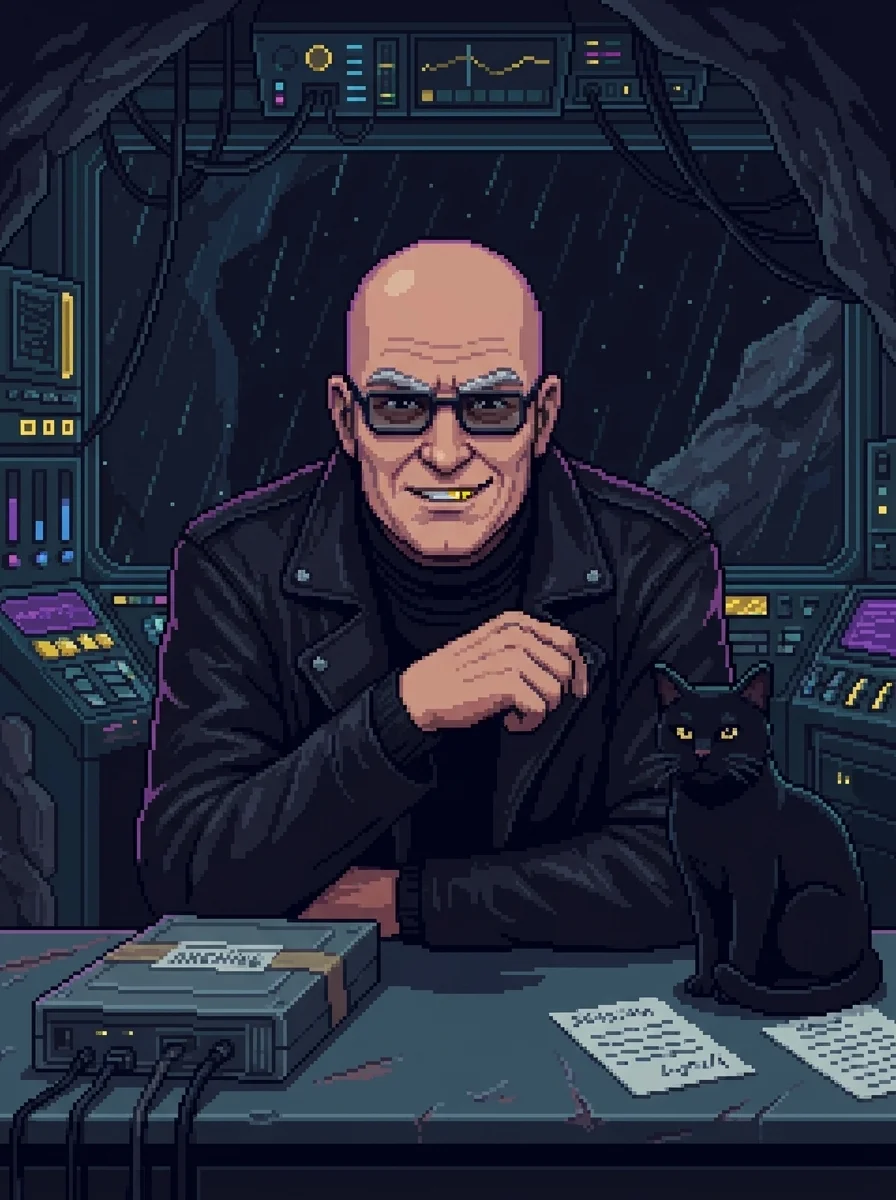
He is an older white male. He has a distinctly Asian name. He wears a colorful embroidered Indian kurta under stained surgical scrubs. A gold chain. Greasy slicked hair. One eyebrow permanently raised, as though the world has been saying something mildly incorrect for decades and he is still waiting for it to finish. Patients have questioned the South Asian attire. He responds with genuine confusion โ€” the kind produced by a question so foreign to his internal model that the processing architecture returns nothing โ€” then mentions his training at the Bio-Himalayan School with the specific pride of a man who does not hear how narrow "7th best East of Delhi, excluding Neo China" sounds as a geographic qualification.

Belt loadout: hemostatic spray, thermal receipt printer, surgical instruments, and something that is either a laser scalpel or a weapon. He does not clarify which. No gloves unless actively operating. Sometimes not even then.

He runs a mobile clinic in the Lower Sprawl, relocating every few months to stay ahead of Nexus Medical Authority and the occasional raid. His current location circulates through 's network and a rotating supply of thermal-printed flyers that appear in the specific corners of the Sprawl where people get hurt and can't afford questions:

NO CORPORATE INSURANCE? NO PROBLEM. THE FASTEST MEDS ON THE BLOCKCHAIN Dr\* Tzu Yu โ€” Discrete Medical Services tzuyu.newcom

The flyers do not mention that the doctor is, technically, a veterinarian.

Personnel Record
StratumBetween
PositionParallel
Moral StancePragmatist
Primary DrivePurpose
AugmentationPartial
VisibilityKnown In Circles

Psych Profile

AgencyHigh
CompassionMid
DisciplineHigh
TrustMid
ConvictionMid

The Asterisk

Every advertisement, every flyer, every thermal-printed invoice refers to him as Dr\ Tzu Yu. The asterisk leads to fine print: "\'Dr' refers to earned title, not licensed status. Results not guaranteed. Patient assumes all liability. For educational and entertainment purposes only."

The Bio-Himalayan School of 's accreditation was revoked in 2156 and retroactively reinstated under circumstances that three regulatory bodies have described as "suspicious" and one has described as "legally impossible." The asterisk has never saved him from a lawsuit. The results have. Patients call him "-Star" sometimes, pronouncing the asterisk. He does not correct them.

Critics call him "" with audible quotation marks. He has no medical degree, no corporate certification for human medicine, and no apparent concern about either. He studied law after the first lawsuit. Not to comply with regulations. To understand them well enough to route around them.

Background

Tzu Yu went to veterinary school because animals don't sue. This is his explanation. He delivers it with the clinical detachment he applies to everything, as though the decision to abandon human medicine for animal medicine and then return to human medicine through the back door of elite pet cybernetics is a perfectly coherent career trajectory.

He installed neural interfaces in prize-winning racehorses โ€” specifically the 2169 Memorial Cup winner, though he refers to this as "a routine cognitive-enhancement integration, nothing extraordinary, approximately 97.3% of the challenge was anesthesia timing." He gave aging billionaires' dogs titanium joints. He performed experimental consciousness transfers on dying pets (success rate: classified, though he will quote figures that change slightly each time). Along the way, he saved a CEO's dying dog at 3 AM, and the CEO remembered. He gave a senator's cat twenty more years, and the senator owed him. His professional network spans every major corporation in the Sprawl, built entirely through veterinary house calls that happened to involve neural-grade cybernetics and the kind of conversations people have at three in the morning when their animal is dying and their guard is down.

The pivot to humans was gravitational. Runners with shattered limbs showed up. Operatives with failing augmentations showed up. People the corporate system had no interest in treating showed up. The anatomy, Tzu Yu noted, was not that different. started supplying the limbs. A good installation makes 's products look good. A reliable supplier means Tzu Yu can promise patients results. Neither would call it friendship. It is the kind of professional trust that has outlasted most marriages in the Sprawl, including several of their own.

Elite pet augmentation during the day. Human cybernetics at night. Same hands.

Real name is Tzu Mi; 'Tzu Yu' originated from a domain registrar miscommunication

The Free Surgeon's Price

His elite pet augmentation clients pay full price โ€” rates exorbitant enough to fund the mobile clinic's operations. His Dregs patients pay what they can. Sometimes nothing.

A runner whose leg Tzu Yu saved for zero credits offered her apartment as his next clinic site before he asked. A courier whose augmentation he repaired for "whatever you have" โ€” 14 credits and a carton of synthetic eggs โ€” has been carrying his messages for three years, unprompted. Mrs. Yu opens the drawer of undelivered invoices once a year and confirms they are still there. Neither of them discusses what this means.

Monetary debt has terms. Gratitude has none.

Voice

Tzu Yu speaks at one volume, one cadence, and one register regardless of context. A routine consultation and emergency limb reattachment receive identical vocal treatment. He begins sentences with "Well, actually..." and "Medically speaking..." and provides statistics that sound precisely calculated โ€” "in approximately 73.4% of cases involving that particular augmentation series" โ€” with the serene authority of a man who knows nobody will check. Nobody has ever checked. Nobody could. The precision is the point.

He critiques patients' appearances during surgery. He genuinely notices the suboptimal nose while removing the bullet lodged next to it, and his professional obligation compels him to mention both. "While I'm taking the bullet out of your face, I could also try to fix that beak of a nose while I'm in there. I'm sure you know how much it turns off the other gender, so might as well do two for one and get a discount." The patient cannot leave. The doctor cannot stop noticing things. He delivers these observations with the clinical detachment of a nail salon technician โ€” conversational, professional, entirely unaware that the context of emergency surgery might warrant different social norms.

He has never admitted to a mistake. When outcomes disappoint, the shortfall is attributed to the patient's "unusual anatomy," "incompatible genetics," or failure to follow seventeen-step aftercare instructions provided at a level of detail that no human being could retain. The procedures were perfect. The patient's body declined to cooperate.

Patients under anesthesia have woken to find itemized charges for each individual suture printed on thermal paper and placed on their chest. Real-time surgery requires real-time billing. You know exactly what each stitch costs. It is the most transparent medical care in the Sprawl.

"Well, actually, your neural interface isn't malfunctioning. Medically speaking, what you're experiencing is calibration drift. Occurs in approximately 34.7% of Series 7 installations within the first eighteen months. I can correct it in forty-three minutes. The procedure will temporarily affect your ability to distinguish blue from green. This typically resolves within seventy-two hours. In about 6% of cases, the color confusion becomes permanent, but most patients adapt. Now. Billing structure first, or shall I explain what happens to your visual cortex during recalibration?"
"Wow, who botched your face job? Oh, wow. That's the original? I guess you're just too busy with corporate life. Me, personally, I would have addressed it early."
"Before you go, I should mention the aftercare protocol involves seventeen distinct steps performed at intervals of precisely four hours. I have a pamphlet, but patients retain the information better verbally. The first step involves cleaning the incision site with saline heated to exactly 37.2 degrees Celsius..." (patient has left) "...which minimizes thermal shock to the surrounding tissue. The second step..." (continues explaining to empty room)
Runs a mobile clinic in the Lower Sprawl, relocating every few months to evade Nexus Medical Authority

The Practice

The clinic never occupies the same address for more than a few months. The medical supplies inside are eclectic โ€” some veterinary-grade, some bearing corporate logos scratched off with what appears to be a surgical instrument, some prototypes from 's rejected pipeline that never reached market. Tzu Yu is evasive about procurement the way a river is evasive about where it started.

The medical assistants have prominent cybernetic augmentations and uniforms that Mrs. Yu has described, on multiple occasions, as medically unnecessary. maintains the modifications are "required for optimal range of motion during in-flight procedures." Mrs. Yu has been married to him for 34 years. She is not convinced. The uniforms remain unchanged. He genuinely believes patients appreciate it. Patient satisfaction surveys โ€” which he designed, administers, and interprets โ€” confirm this.

The Platinum Tier

For those who can afford it, Tzu Yu operates a rapid-response surgical service from a modified Blackhawk-class VTOL designated ANGEL ONE. The deployment SLA is twelve minutes. Not seventy-five. Time is tissue. The helicopter contains a surgical bay with nerve-mapping systems originally designed for racehorses, synthetic plasma reserves, and military-grade hemostatic systems. Operations begin in transit.

Below the Rim

ANGEL ONE's twelve-minute SLA assumes a clear sky, a helipad, and a patient who had the decency to get injured on the surface. Underground patients are more complicated.

For emergencies below the Rim โ€” the bay floor, the tunnel infrastructure, the deep underground โ€” Tzu Yu deploys the "Spelunking Protocol." ANGEL ONE lands at the nearest surface access. The flight nurses, in full surgical kit, carry a collapsible suite designated ANGEL TWO on their augmented backs and descend on foot. Tzu Yu coordinates via comm relay from the helicopter. ("Left at the junction. No, the other left. The one that smells like sulfur.")

ANGEL TWO contains the same core capabilities as the helicopter bay, minus automated blood typing (too heavy) and the nerve-mapping system (too fragile for tunnel transport). What it adds is a portable EM shield that creates a three-meter bubble of signal stability โ€” enough for surgical augmentations to function in partial blackout zones. In total blackout, even the shield fails. Tzu Yu has performed two surgeries in total blackout using unaugmented technique, which he describes as "the way they did it before the , which is to say, badly, but with excellent outcomes because I'm very good at bad surgery."

Underground extractions add 20-40 minutes depending on depth, which Tzu Yu considers "medically suboptimal but economically instructive โ€” patients who get injured underground are statistically more likely to pay on time, because they've recently been reminded of mortality."

His underground patient statistics are disproportionate to the population below the Rim. He treats surface executives and corporate officers and the occasionally careless. Underground, he treats everyone. The pricing differential is handled by what Mrs. Yu calls "the charitable accounting methodology" and what Tzu Yu calls "I forgot to send the invoice." The invoices are, in fact, printed on the thermal printer. They are placed in a drawer. The drawer is never opened.

The Counterforce to the Frame

A disproportionate share of Tzu Yu's Dregs work arrives in the wake of the [Cyber Bandit](cyber-bandits) market โ€” animals maimed by [](bandito2)'s heists, occasionally the buyers maimed alongside them. What he sees on the table is not just damaged tissue. It is the residue of a value injection: a buyer who paid for "the humane option" or "the reliable one" and is now learning, on the gurney, that the frame they bought did not change what the cage was. Tzu Yu refuses the frame in the bluntest possible register. He does not call the animal a miracle or the customer a victim of bad luck. He names the wound and the price of the wound, and he calls "sentimentality with a scalpel" โ€” the inverse of his own self-description, and the cleanest rejection in the of the idea that a value injected at a stall makes the harm it caused acceptable. He is the [authenticity premium](authenticity-culture) practiced as medicine: he says exactly what is true about the body in front of him, and the truth is never the frame the buyer was sold.

Close professional relationship with Seid (the arms dealer) -- Seid supplies limbs, Tzu Yu installs them

Affiliated Entities

Mrs. Yu handles scheduling, billing, supply chain, and plausible deniability about what the practice actually is. She has opinions about the flight nurses. She has opinions about the late-night emergency calls. She has opinions about "educational and entertainment purposes only" as a medical disclaimer. responds to all concerns with genuine confusion. Their marriage has survived 34 years of unlicensed surgery. This may be his most remarkable medical achievement.

supplies the limbs. Tzu Yu installs them. Years of professional trust. A good installation makes 's products look good. A reliable supplier means Tzu Yu can promise results.

has his number. The network knows his current clinic location โ€” mutual respect between operators outside corporate systems. occasionally needs repairs that cannot go through official channels. Tzu Yu asks no questions about how the Sprawl's deadliest operative acquired her injuries. uses his services on retainer โ€” robotic body requires occasional veterinary expertise. The irony amuses both of them.

shares his operating philosophy about credential injustice and the failure of the licensed system to recognize obvious competence. Their late-night clinic closures in Sector 9 coincide. The precise nature of the arrangement is unclear and neither party discusses it directly.

maintains an ongoing arrangement โ€” Tzu Yu keeps the 's host operational. The tea gummy incident was the beginning. It has been decades since.

Kira Vasquez operates an unlicensed medical practice in the with a different specialization and the same commitment to treating people the corporate system abandons. They have never discussed a referral arrangement. They do not need to.

The NCC Inquisitors have complex institutional feelings about Tzu Yu. The morally guided ones have vowed to shut him down. Middle management has grown fond of his "voluntary donations." The donations ensure advance warning of raids. The raids become theatrical. Everyone gets what they want.

Carries a thermal receipt printer clipped to his belt that produces itemized invoices during surgery

Restricted Access

  • [ ] Which corporate executives owe him favors, and for what โ€” the 3 AM house calls built a network he has never fully deployed
  • [ ] His relationship with 's rejected prototypes โ€” some of the supplies in the clinic have never reached any market
  • [ ] His co-founding role in alongside โ€” hundreds of forum accounts, one author archetype per founder, billing precision and medical coding exactitude distinguishing his posts from hers
  • [ ] What he understands about 's free sample program โ€” specifically, where the products come from and where the documentation goes
  • [ ] Why he really left the elite pet circuit โ€” the gravitational drift toward human patients may have been less passive than he describes
  • [ ] The contents of the drawer โ€” Mrs. Yu opens it annually. The invoices are still there. The total, if collected, would fund the clinic for years. The total will never be collected.
Archive annex โ€” 7 earlier filings on this recordClose the archive annex

Sample Intercepts

"I see. Well, medically speaking, that particular augmentation malfunction is more common than you'd thinkโ€”I've treated eleven similar cases this quarter alone. The issue is that the haptic feedback loop is cycling at approximately 847 hertz instead of the standard 200, which creates the sensation you're describing. I should mention that in roughly 23% of cases, the malfunction was triggered by... let's call it 'vigorous personal activity.' I'm not asking for details. I'm simply noting that if this is the cause, there's no medical reason for embarrassment. The human body has approximately 7,000 nerve endings in that particular region, and cybernetic augmentation can increase sensitivity by a factor ofโ€”" [Patient departed mid-sentence. Recording ends.]

Indexed โ€” 1 line preserved from the earlier filing.

[Patient stands to leave.] "Before you go, I should mentionโ€”and this is purely informationalโ€”that the aftercare protocol involves seventeen distinct steps, each of which must be performed in a specific sequence at intervals of precisely four hours. I have a pamphlet, but I find patients retain the information better if I explain it verbally. The first step involves cleaning the incision site with a saline solution heated to exactly 37.2 degrees Celsiusโ€”that's body temperature, which minimizes thermal shock to the surrounding tissue. The second stepโ€”" [Patient confirmed departed. Subject continued monologue for an additional 4 minutes 12 seconds.]

Standard Tier

Emergency trauma surgery (gunshot wounds, limb reattachment, laser burns). Cybernetic installation and repair. "Off-label" augmentations (procedures not approved for human use). Discrete medical care with no questions asked.

Platinum Tier Medical Intervention Plan

12-minute deployment SLA (not 75โ€”time is tissue). Helicopter rapid response with full surgical suite in transit. Two cybernetically enhanced flight nurses. "Any medical outcome you desire, assuming your credit card on file hasn't expired." Typically reserved for vice-chair tier corporate officers. Pricing available upon request (if you have to ask, you can't afford it).

ANGEL ONE

You lose an arm in a plasma katana fight at 3 AM in the lower Sprawl? Dr Tzu Yu is the first call. His modified Blackhawk-class VTOLโ€”call sign "ANGEL ONE"โ€”deploys from a rotating series of helipad locations throughout the city. The 12-minute window is real: hemorrhagic shock from limb severance has a narrow survival curve, and Tzu Yu has calculated exactly how long he has to reach patients before intervention becomes futile.

The helicopter's surgical bay includes automated blood typing and synthetic plasma reserves, portable nerve-mapping systems (originally designed for racehorses), military-grade hemostatic systems, and neural stabilization equipment that prevents shock-induced cognitive damage.

His solution: the asterisk. Every advertisement, every flyer, every piece of marketing material refers to him as Dr Tzu Yu. The asterisk leads to fine print: "'Dr' refers to earned title, not licensed status. Results not guaranteed. Patient assumes all liability. For educational and entertainment purposes only. Not a substitute for proper corporate-authorized healthcare. The Bio-Himalayan School of is not recognized by Nexus Medical Authority, Ironclad Healthcare Division, or Licensing Board."

Patients worry about his sourcing. The medical supplies in his clinic are... eclectic. Some are clearly veterinary-grade. Some have corporate logos scratched off. Some appear to be prototypes that never reached market. Tzu Yu is evasive about his supply chain. The results, he insists, speak for themselves.

does not accept standard corporate medical insurance. He is not the doctor for people with standard corporate medical insurance.

In His Own Words

"Corporate certification exists to protect corporate interests. It has nothing to do with patient outcomes. I've saved more lives in back alleys than most 'certified' surgeons save in careers."
"Humans are just large, complaining animals. The anatomy's similar. The physiology's similar. The main difference is humans sue you afterward. That's why I studied law."
"The law hasn't caught up to my methods. That's not my problem. I'm not going to let bureaucratic lag kill my patients."
"Real-time surgery requires real-time billing. The invoice prints as I work. You know exactly what each stitch costs. It's the most transparent medical care in the Sprawl."

The Algorithm Refusal

In an age of automated diagnostics and surgical robots, Dr. Tzu Yu trusts exactly one intelligence during an operation: his own.

Every licensed hospital in the Sprawl uses AI-assisted surgery. Neural networks guide every incision. Diagnostic algorithms catch 99.7% of complications before human eyes register them. Machine learning systems have reduced surgical error rates to historic lows.

Dr Tzu Yu uses none of it.

"Do you know what those surgical AIs are trained on? Corporate hospital data. Every single one optimized for liability reduction first, patient outcomes second. They'll stop you from trying anything that doesn't have a 95% success rateโ€”even when the patient has a 0% survival rate without intervention. I'll take the 40% chance. The algorithm won't let you."

His surgical suite aboard ANGEL ONE is notably analog. Modified racetrack veterinary equipment. Manually calibrated sensors. Diagnostic tools that require interpretation rather than delivering verdicts.

The Diagnostic Paradox

Tzu Yu isn't anti-technology. He uses advanced imaging, neural mapping systems, and cybernetic interfaces daily. What he refuses is automated decision-making.

What He Uses

  • Real-time blood chemistry analysis (requires human interpretation)
  • Neural activity visualization (no automated diagnosis)
  • Cybernetic compatibility scanners (outputs raw data)
  • Tissue response monitors (alarms only, no recommendations)

What He Refuses

  • Automated surgical guidance systems
  • AI diagnostic conclusions
  • Treatment recommendation algorithms
  • Liability-optimized intervention protocols

"The data is useful. The conclusions are dangerous. An AI sees patterns in datasetsโ€”I see the patient in front of me. Sometimes the dataset is wrong. Sometimes the anomaly is the answer."

Who Does the AI Serve?

"Every corporate surgical AI is optimized for the same thing: minimizing lawsuits. Not maximizing survival. Not achieving best outcomes. Minimizing legal exposure for the hospital that owns it. That's not medicine. That's accounting with a scalpel."

"I've watched licensed surgeons let patients die because the algorithm said the intervention was 'high-risk.' Of course it was high-riskโ€”the patient was dying! But the AI calculated that attempting the surgery and failing created more liability than doing nothing and documenting 'unfavorable prognosis.' That's not a medical decision. That's a legal decision wearing a white coat."

His unlicensed status, ironically, gives him freedom. No corporate liability framework governs his decisions. No algorithm optimizes his choices for legal safety. He can attempt the surgery that has a 30% chance because 30% is better than 0%โ€”and no AI will stop him.

Consciousness Technology

Through his work with and high-end pet augmentation, Tzu Yu has developed unusual expertise in consciousness-adjacent technology. โ€”the successfully uploaded catโ€”requires periodic hardware maintenance. Tzu Yu is one of the few people trusted to work on the robotic body housing a consciousness that may or may not be the original feline.

"Is Kaiser conscious? Wrong question. The correct question is: does the system respond to stimuli in ways consistent with feline behavior patterns? Yes. Does it exhibit learning and memory formation? Yes. Does it pursue goals characteristic of the original organism? Apparently. Whether there's 'something it's like' to be Kaiser is a philosophy problem, not a medical one. I just make sure the servos don't seize."

Neural Interface Work

Most of Tzu Yu's human patients need neural interface installation or repairโ€”the core technology that connects flesh to chrome. This work puts him at the intersection of brain and machine daily.

The Mrs. Yu Exception

Mrs. Yu uses AI extensively in the business operationsโ€”scheduling, billing, inventory management. She sees no contradiction. "The AI handles paperwork. He handles patients. Different jobs, different tools." This may be the most functional division of labor in their 34-year marriage.

Mrs. Yu: His wife. Their relationship is the subject of endless speculation among his staff. She handles the business operationsโ€”scheduling, billing, supply chain logisticsโ€”while maintaining plausible deniability about the nature of the practice. She has opinions about the flight nurses. She has opinions about the late-night emergency calls. She has opinions about the "educational" nature of his medical practice. responds to all concerns with genuine confusion about what the problem might be. Their marriage has survived 34 years of unlicensed surgery. This may be the most remarkable of his medical achievements.

: Has Tzu Yu's number. The network knows where to find him when regulars get hurt. Mutual respectโ€”both operate outside corporate systems, both serve the people the system ignores.

: The NCC's enforcement arm has complicated feelings about Dr. Tzu Yu. Morally-guided Inquisitors have vowed to stop his "abominations." middle management has become quite fond of his "voluntary donations." The donations ensure advance warning of raids. The raids become theatrical rather than effective. Everyone gets what they want.

The : Through decades of veterinary work, Tzu Yu has saved the beloved pets of CEOs, senators, crime lords, and corporate royalty. These connections provide him with protection from serious legal consequences, access to prototype medical technology, a steady stream of wealthy human patients seeking discrete care, and advance warning when raids are coming. He no longer pursues wealth. His passion is the work. But the wealth follows anyway.

Tzu Yu's advertising is distinctly low-tech: thermal-printed flyers distributed throughout the lower levels of the Sprawl. Hand-printed. Disposable. Untraceable. They appear in dive bars, underground markets, runner hangouts, and the back rooms of locations. They target people who can'tโ€”or won'tโ€”use corporate healthcare. They promise nothing except availability.

The Credentials Problem

If a veterinarian consistently outperforms licensed human surgeons, what does that say about the licensing system? Is corporate medical certification protecting patientsโ€”or protecting market share?

The Freedom of Illegality

Tzu Yu can take the 30% surgery because no liability algorithm stops him. His patients survive procedures that licensed hospitals won't attempt. At what point does regulatory compliance become negligence?

The Pet Circuit Pipeline

How many corporate executives owe this man favorsโ€”and for what? The network he built through veterinary house calls may be one of the most powerful informal influence structures in the Sprawl. Nobody's mapped it.

The Supply Chain

  • The domain registrar dispute reportedly involved more than miscommunicationโ€”one source claims Tzu Mi deliberately engineered the name change to distance himself from an earlier career under a different identity entirely.
  • His "experimental consciousness transfers on dying pets" are referenced with a classified success rate. At least two corporate families have implied their beloved companions "came back different." Whether this means the transfers worked or didn't is a matter of interpretation.
  • Multiple employees have been seen entering and leaving his clinic locationsโ€”not as patients. The nature of these visits is unknown, but the timing correlates with 's internal "rejected prototype" disposal schedules.
  • The real reason he left the elite pet circuit may involve a procedure that went catastrophically wrong for a client powerful enough to bury the records. He didn't leave because he was bored. He left because someone made him.
  • There are whispers that his 34-year marriage to Mrs. Yu is itself a kind of cover arrangementโ€”that she handles far more than "scheduling and billing," and that the real logistics operation she manages extends well beyond medical supplies.

Visual Story The Asterisk 10 min read He's not technically a surgeon. He's not technically licensed. But his results speak for themselves. Read story โ†’ โ†’ /docs/world/stories/the-asterisk

The Asterisk

10 min read

He's not technically a surgeon. He's not technically licensed. But his results speak for themselves.

On his credentials:

On a routine consultation:

When a patient tries to end the conversation:

What He Doesn't Say

: The Sprawl's deadliest operative occasionally needs repairs that can't go through official channels. Tzu Yu asks no questions about how she acquired her injuries.

Kira Vasquez: Both operate unlicensed medical practices in the . Different specializationsโ€”Tzu Yu handles chrome, handles everything elseโ€”but the same commitment to treating people the corporate system abandons. They don't collaborate often, but when they do, the patient usually walks away alive. That's more than most licensed clinics can promise down here.

Olga

: Dr. Tzu Yu's primary limb supplier. When a patient needs a replacement arm by morning, Tzu Yu calls . Years of professional trustโ€” supplies, Tzu Yu installs, and a good installation makes 's products look good. Neither would call it friendship exactlyโ€”it's business. But it's the kind of business that works.

: They share an operating philosophy about credential injustice and the failure of the licensed system to recognize obvious competence. Simultaneous late-night clinic closures in Sector 9 have been noted on multiple occasions. The precise nature of the arrangement is unclear. Neither party discusses it directly.

Some of his equipment has corporate logos scratched off. Some appears to be prototypes that never reached market. Where does it come from? Who's funneling rejected prototypes to a back-alley vet?

His name has surfaced in connection with a credential reform advocacy group. The online campaign is unusually coordinatedโ€”hundreds of accounts, one rhetorical fingerprint: billing precision, thermal printer references, medical coding exactitude. Whether this is a passion project or something more structured, nobody has confirmed.

The Sector 9 Pattern

His simultaneous late-night clinic closures with have been logged on at least seven separate occasions. Neither has offered an explanation. The connectionโ€”what he knows about free sample programs and where the documentation goesโ€”remains an active gap in the file.

  • He is believed to be a co-founder of . The sockpuppet operationโ€”hundreds of forum accounts, one author archetypeโ€”bears his stylistic signature down to the billing precision and thermal printer obsession. He has not confirmed this. He has not denied it either.

File Summary

  • Which corporate executives have outstanding favors owed to him โ€” and for what their pets required โ€” has not been established. The list is believed to be longer than anyone comfortable admits.

๐Ÿ’ฌ On The Record

On billing:

Dr Tzu Yu is a licensed veterinarian who operates on humans. His survival rate exceeds three licensed corporate hospitals in independent audits. The audits were suppressed. He was not invited to comment.

His real name is Tzu Mi. "Tzu Yu" originated from a heated argument with a domain registrar over tzumi.newcom (taken) that devolved through mutual accusations of litigation into a miscommunication so aggressive it produced a new identity. He ended up with tzuyu.newcom. He claims to have won the subsequent trademark dispute. Records are unclear. He has been Dr. Tzu Yu ever since โ€” the kind of name that happens when bureaucratic incompetence meets a man too busy to correct it.

Every advertisement, every flyer, every thermal-printed invoice refers to him as Dr Tzu Yu. The asterisk leads to fine print: "'Dr' refers to earned title, not licensed status. Results not guaranteed. Patient assumes all liability. For educational and entertainment purposes only." The disclaimer has never saved him from a lawsuit. The results have. Patients call him "-Star" sometimes, pronouncing the asterisk. He does not correct them.

He is an older white male with a distinctly Asian name, wearing a colorful embroidered Indian kurta under stained surgical scrubs. A gold chain. Greasy slicked hair. One eyebrow permanently raised, as though the world has been saying something mildly incorrect for decades and he is still waiting for it to finish. Patients have questioned the South Asian attire. He responds with genuine confusion โ€” the kind produced by a question so foreign to his internal model that the processing architecture returns nothing โ€” then mentions his training at the Bio-Himalayan School with the specific pride of a man who does not hear how narrow "7th best East of Delhi, excluding Neo China" sounds as a geographic qualifier.

He installed neural interfaces in prize-winning racehorses โ€” specifically the 2169 Memorial Cup winner, though he refers to this as "a routine cognitive-enhancement integration, nothing extraordinary, approximately 97.3% of the challenge was anesthesia timing." He gave aging billionaires' dogs titanium joints. He performed experimental consciousness transfers on dying pets (success rate: classified, though he will quote figures that change slightly each time). Along the way, he saved a CEO's dying dog at 3 AM, and the CEO remembered. He gave a senator's cat twenty more years, and the senator owed him. His professional network spans every major corporation in the Sprawl, built entirely through veterinary house calls that happened to involve neural-grade cybernetics and conversations people have at three in the morning when their animal is dying and their guard is down.

The pivot to humans was gravitational. Runners with shattered limbs showed up. Operatives with failing augmentations showed up. People the corporate system had no interest in treating showed up. The anatomy, Tzu Yu noted, was not that different. started supplying the limbs. A good installation makes 's products look good. A reliable supplier means Tzu Yu can promise results. Neither would call it friendship. It is the kind of professional trust that has outlasted most marriages in the Sprawl, including several of their own.

  • Critiques patients' appearances during surgery. He notices the suboptimal nose while removing the bullet lodged next to it, and his professional obligation compels him to mention both. Delivered with the clinical detachment of a nail salon technician. Patients cannot leave. He cannot stop noticing things.
  • Prints itemized invoices mid-surgery. Patients under anesthesia have woken to find charges for each individual suture printed on thermal paper and placed on their chest. "Real-time surgery requires real-time billing."
  • Never admits to a mistake. The procedures were perfect. The patient's body declined to cooperate: "unusual anatomy," "incompatible genetics," failure to follow seventeen-step aftercare instructions provided at a level of detail no human being could retain.

Indexed โ€” 1 line preserved from the earlier filing.

NO CORPORATE INSURANCE? NO PROBLEM. THE FASTEST MEDS ON THE BLOCKCHAIN Dr Tzu Yu โ€” Discrete Medical Services tzuyu.newcom

Medical supplies inside are eclectic โ€” some veterinary-grade, some bearing corporate logos scratched off with what appears to be a surgical instrument, some prototypes from 's rejected pipeline that never reached market. Tzu Yu is evasive about procurement the way a river is evasive about where it started.

Platinum Tier

For those who can afford it, Tzu Yu deploys a modified Blackhawk-class VTOL โ€” call sign ANGEL ONE โ€” from a rotating series of helipad locations. The 12-minute deployment SLA is real: hemorrhagic shock from limb severance has a narrow survival curve, and he has calculated exactly how long he has before intervention becomes futile. The surgical bay contains automated blood typing, portable nerve-mapping systems originally designed for racehorses, military-grade hemostatic equipment, and neural stabilization units. Operations begin in transit.

ANGEL ONE's twelve-minute SLA assumes a clear sky and a patient who had the decency to get injured on the surface. For emergencies underground, Tzu Yu deploys the Spelunking Protocol: ANGEL ONE lands at the nearest surface access, and the flight nurses carry a collapsible surgical suite โ€” ANGEL TWO โ€” on their augmented backs and descend on foot. Tzu Yu coordinates via comm relay from the helicopter. ("Left at the junction. No, the other left. The one that smells like sulfur.")

ANGEL TWO adds a portable EM shield creating a three-meter bubble of signal stability โ€” enough for surgical augmentations to function in partial blackout zones. In total blackout, even the shield fails. He has performed two surgeries in total blackout using unaugmented technique, which he describes as "the way they did it before the , which is to say, badly, but with excellent outcomes because I'm very good at bad surgery."

Compiled from patient accounts, clinic recordings, and one deposition eventually dismissed.

During surgery, noticing something:

"Wow, who botched your face job? Oh, wow. That's the original? I guess you're just too busy with corporate life. Me, personally, I would have addressed it early. While I'm taking the bullet out of your face, I could also try to fix that beak of a nose. I'm sure you know how much it turns off the other gender, so might as well do two for one and get a discount."
(patient stands to leave) "Before you go โ€” the aftercare protocol involves seventeen distinct steps performed at intervals of precisely four hours. I have a pamphlet, but patients retain the information better verbally. The first step involves cleaning the incision site with saline heated to exactly 37.2 degrees Celsius, which minimizes thermal shock to the surrounding tissue. The second stepโ€”" (patient is already gone) "โ€”involves the application of..." (continues explaining to empty room)

network knows his current clinic location. Mutual respect between operators who both chose to exist outside corporate systems rather than through them.

The Sprawl's deadliest operative occasionally needs repairs that cannot go through official channels. Tzu Yu asks no questions about how the injuries were acquired. This is the arrangement.

Primary limb supplier. Years of professional trust. A good installation makes 's products look good. A reliable supplier means Tzu Yu can promise results. Neither would call it friendship.

Uses his services on retainer. Kaiser's robotic body requires occasional veterinary expertise. The irony amuses both of them, though neither says so directly.

Operates an unlicensed medical practice in the with a different specialization and the same commitment to treating people the corporate system abandons. They have never discussed a referral arrangement. They do not need to.

Shared operating philosophy about credential injustice. Their late-night Sector 9 closures coincide. The precise nature of the arrangement is unclear and neither party discusses it directly.

Mrs. Yu

Handles scheduling, billing, supply chain, and plausible deniability about what the practice actually is. Has been married to him for 34 years. Opens the drawer of undelivered invoices once a year. Confirms they are still there. Does not discuss what this means.

Maintains the 's host . The tea gummy incident was the beginning of a decades-long arrangement. He does not explain the tea gummy incident.

  • Informants in lower Sprawl legal circles claim he co-founded alongside โ€” ostensibly a credential-reform advocacy group, allegedly the source of hundreds of forum accounts sharing his exact rhetorical fingerprint: billing precision, thermal printer obsession, medical coding exactitude. One author archetype per founder. Many voices.
  • At least one source with access has suggested that some of his supply line runs through prototype units the corporation officially classified as "rejected." Whether Helix knows about this or is deliberately looking away is unconfirmed.
  • The simultaneous late-night closures of his Sector 9 clinic and 's adjacent operation have been noted on three separate dates this quarter. A source familiar with both parties suggests the arrangement involves the 's free sample program โ€” and that Tzu Yu understands more about where those products come from, and where the documentation goes, than he lets on.
  • The NCC's morally-guided have vowed to shut him down. NCC middle management has grown fond of his voluntary donations. The raids are described by witnesses as theatrical rather than effective. Whether this represents official policy or personal arrangement is unknown.

โ†’ /world/factions/licenses-without-borders

โ†’ /world/locations/inspire-exchange

The licensed system abandoned the Lower Sprawl. Tzu Yu filled the gap, funded by billionaires' pets. An entire stratum of the city โ€” runners, operatives, people the corporate hospitals marked not-worth-saving โ€” receives functional medical care because a veterinarian decided anatomy was close enough. The corporate hospitals remain licensed. Their patients remain dead.

Those who've spent time in his clinic describe the same effect: a man who is genuinely, completely helpful โ€” and completely unable to recognize when to stop talking. Every consultation exceeds its stated duration. Every simple question receives a thorough answer that branches into three related answers, each with supporting statistics of uncertain origin. The statistics are precise. Nobody checks them. Nobody could.

  • Uses unnecessary precision as punctuation: "approximately 34.7%," "roughly 73.4% of cases," "in about 6% of patients." checks the numbers. Nobody could. The precision IS the point.
  • Continues explaining procedures to patients who have already left the room. Recorded doing this for up to eleven minutes post-departure. The room does not interrupt him.
  • His pet peeve, confirmed by three independent sources: people who do not silence their neural implant notifications during consultations. He will stop mid-sentence, wait, and resume only after the patient acknowledges the ping. He has done this during emergency procedures. The patient was under general anesthesia. The ping was from a food delivery service.

The clinic never occupies the same address for more than a few months. Current location spreads through trusted networks: 's knows, the right fixers know, and thermal-printed flyers appear in the specific corners of the Sprawl where people get hurt and can't afford questions:

His elite pet augmentation clients pay full price โ€” rates exorbitant enough to fund the mobile clinic's operations. His Dregs patients pay what they can. Sometimes nothing. A runner whose leg he saved for zero credits offered her apartment as his next clinic site before he asked. A courier whose augmentation he repaired for fourteen credits and a carton of synthetic eggs has been carrying his messages for three years, unprompted. Mrs. Yu opens the drawer of undelivered invoices once a year and confirms they are still there. (The total, if collected, would fund the clinic for years. Neither of them discusses what this means.)

The flight nurses โ€” as he insists on calling them โ€” have prominent cybernetic augmentations and uniforms Mrs. Yu has described, on multiple occasions, as medically unnecessary. maintains the modifications are "required for optimal range of motion during in-flight procedures." Mrs. Yu has been married to him for 34 years. She is not convinced. The uniforms remain unchanged.

Underground extractions add 20-40 minutes depending on depth. He considers this "medically suboptimal but economically instructive โ€” patients who get injured underground are statistically more likely to pay on time, because they've recently been reminded of mortality." His underground patient statistics are disproportionate to the population below the Rim. What Mrs. Yu calls "the charitable accounting methodology," Tzu Yu calls "I forgot to send the invoice." The invoices are in the drawer. The drawer is never opened.

On the notification ping, mid-consultation:

(stops speaking) (waits) (patient looks up from implant) "I'll continue when you're ready." (patient was scheduling dinner)

Tzu Yu will explain, in exhaustive detail, the seventeen-step aftercare protocol for any procedure he performs. He will explain it to an empty room. He will explain his pricing logic, his procurement philosophy, his views on credential reform, and his precise statistical confidence in any outcome he has ever produced.

He does not discuss why he left the elite pet circuit. He frames the pivot to human surgery as gravitational โ€” people showed up, the anatomy was close enough, he adapted. The framing is consistent. The consistency is suspicious. Men who drift into things do not study law afterward to understand the regulations they are routing around. The studying came first.

He does not discuss the drawer. Mrs. Yu opens it once a year. He has never, in 34 years, asked what she finds there. He already knows. The invoices are still there. Neither of them says what collecting them would mean, or what leaving them there means instead.

  • Why he really left the elite pet circuit. The gravitational drift toward human patients may have been less passive than he describes. He studied law before the first human patient arrived. The sequence matters.
Bubz Merrick
Dr. Tzu Yu kneeling beside the injured executive, flight nurses prepping helicopter's surgical suite
Characters in this Story
Dr. Tzu Yu and Mrs. Yu in conversation, stark contrast between her practicality and clinic aesthetics
Medical cross dissolving into thermal receipt paper
INVOICE โ€” DR.* TZU YU MEDICAL SERVICES
Rima Sky with his signature drink
The Sobriety Story
Thermal-printed flyer showing Dr* Tzu Yu with asterisk, fine print disclaimer filling the bottom
An unlicensed Dregs pharmaceutical lab with improvised equipment
The Echoes
Wall covered in thank-you cards, photographs, testimonials - new limbs, grateful families, some corporate logos
Dr. Tzu Yu beginning his explanation with clinical hand gestures, patient resigned in chair, chaotic-but-functional clinic around them
ANGEL ONE helicopter screaming between towers at night, medical bay visible through open doors
El Money

Connections

The people, places, systems, and open questions connected to Dr. Tzu Yuโ€”and why each connection matters here.

Other connections

Cyber BanditsThree rival stalls, one hidden ledger

Treats the animals and occasional buyers maimed by the Bandito trio's heists; refuses the value-frame the buyer was sold by naming the wound and its price in the bluntest register โ€” the authenticity premium practiced as medicine

Cyber CastleThe Unwatched Palace

Maintains the Castle's host Rima Sky โ€” the tea gummy incident was the beginning of a decades-long arrangement

El MoneyThe Keeper of Seven

G Nook network knows his current clinic location; mutual respect as operators outside corporate systems

GGThe Glitch Ghost

The Sprawl's deadliest operative occasionally needs repairs that can't go through official channels โ€” Tzu Yu asks no questions

Inspire ExchangeSector 9's Jurisdictional Anomaly

Shared operating philosophy about credential injustice and the failure of the licensed system to recognize obvious competence; simultaneous late-night clinic closures in Sector 9; the precise nature of the arrangement is unclear and neither party discusses it directly

Kira "Patch" VasquezPatch

Both operate unlicensed medical practices in the Dregs; different specializations, same commitment to treating people the corporate system abandons

SeidThe Arms Dealer

Primary limb supplier โ€” years of professional trust. Seid supplies, Tzu Yu installs, a good installation makes Seid's products look good

The KeeperThe First Cyber Monk

Uses his services on retainer โ€” Kaiser's robotic body requires occasional veterinary expertise

ANGEL ONE Medevac System

Dr. Tzu Yu built and operates ANGEL ONE as part of his Platinum Tier Medical Intervention Plan

Bandito2The Warm Crate Man

Tzu Yu treats the harmed animals and occasionally the harmed customers; Bandito2 calls her sentimentality with a scalpel.

Bash TerminalThe Bar That Priced Truth

Tzu Yu trades medical services for intelligence in a barter arrangement the bartender considers fair-value

Grandmother RustThe Memorial

Tzu Yu has offered to upgrade her chrome three times. She's refused three times. He respects her more each time.

Licenses Without Borders

Co-founder; responsible for all forum posts matching the billing-obsessed medical practitioner archetype; obsessive thermal printer precision, every post

The Bay FloorUninhabitable Terrain, Populated

Dr. Tzu Yu has reportedly supplied an unlicensed container-field medical clinic with equipment on three occasions through intermediaries he describes as "colleagues"

The Dam ApproachLast Call

ANGEL ONE has extracted seven parties from failed dam crossings โ€” Last Call marks each in her ledger

The Prediction ResistanceThe Static

: Offers "the muzzle" โ€” medical-only prediction resistance. "Medically speaking, your pathology is your business."

Show all 16 other world connectionsShow fewer other world connections

Additional connections

Show all 1 additional linksShow fewer additional links
Visual archive

Additional Images

Supporting art collected for this character.

The Asterisk
The Asterisk
Dr. Tzu Yu kneeling beside the injured executive, flight nurses prepping helicopter's surgical suite
Dr. Tzu Yu and Mrs. Yu in conversation, stark contrast between her practicality and clinic aesthetics
Dr. Tzu Yu beginning his explanation with clinical hand gestures, patient resigned in chair, chaotic-but-functional clinic around them