
The Fog Index
Scale 0 (clear) to 10 (theoretical maximum)
Overview
The Fog Index is a number between 0 and 10 that tells you how hard it will be to think today.
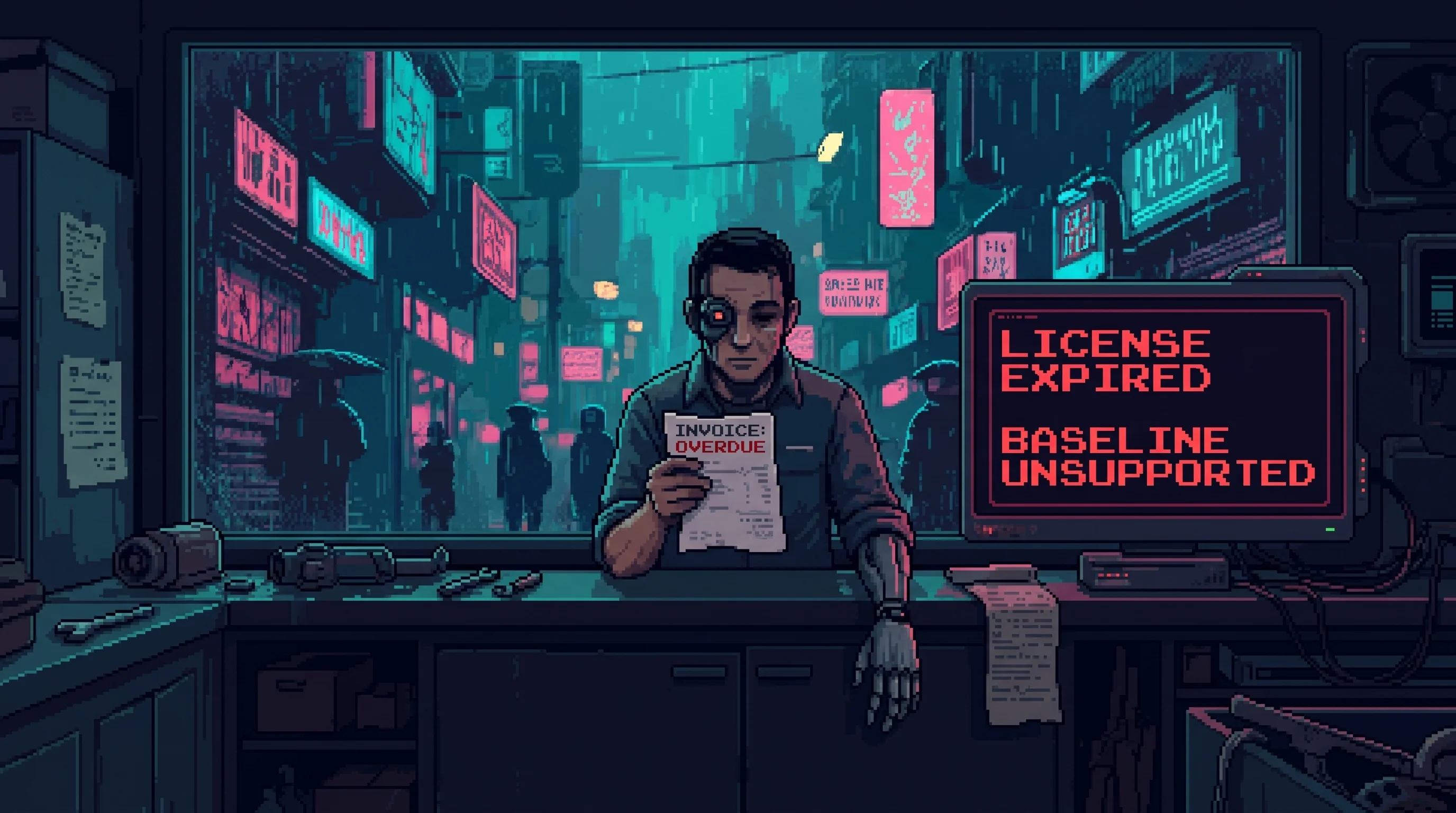
Loop built it. Former SCLF firmware engineer, current Noise Floor operator, one of maybe three people in the Dregs who understands neural interface degradation curves well enough to collapse electromagnetic field density, frequency distribution, and temporal pattern into a single digit. She posts it every morning on the G Nook terminals across Sector 9. Forty thousand people check a number written by a woman Nexus fired in 2179, and plan their day around it.
Nexus monitors the same interference. Their internal dashboards report it as processing efficiency: "2.3% reduction in secondary throughput." Loop's index reports it as: "today you will think through static." Both measurements describe the same electromagnetic conditions. One of them mentions the human being inside the electromagnetic conditions.
Nexus has never acknowledged the Fog Index. They have also never produced a competing human-experiential metric. The absence is noted in no official record, because Nexus does not track things it has not acknowledged. Loop's firmware knowledge — the specific understanding of how different field conditions degrade different interface configurations — came from her years inside the SCLF division that built the systems now failing. She measures what she helped create. The irony is structural, not personal. She does not find it funny.
The Scale
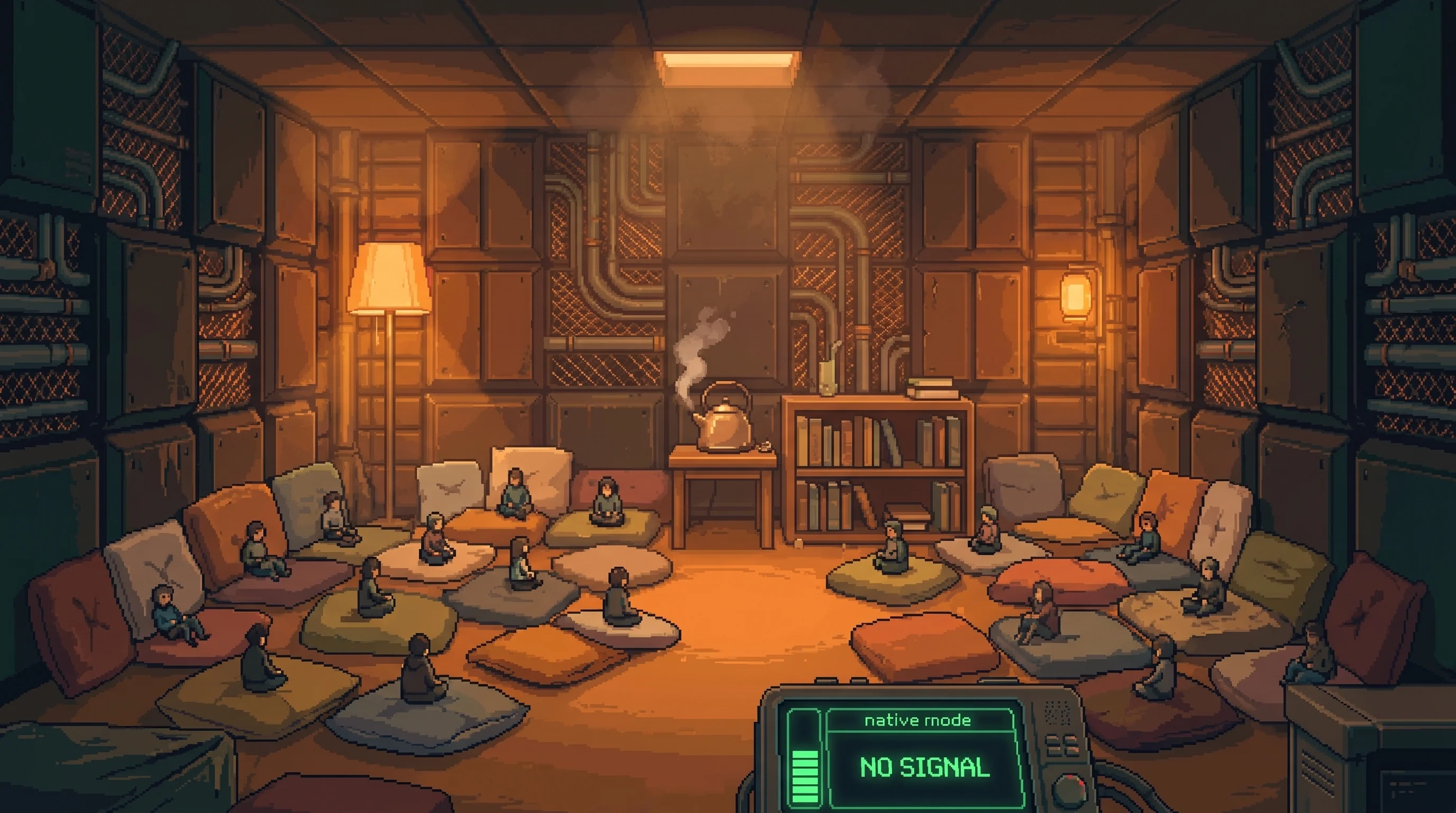
Fog 0-2: Clear. Interfaces function normally. The Noise Floor maintains Fog 0 inside its shielded walls — the only guaranteed clear zone in the Shadow, and the contrast that proves the rest of the scale isn't paranoia.
Fog 3-4: Standard Shadow conditions. A faint lag, like hearing your own voice on a slight delay. Most Dregs residents have adapted and consider this normal, which is itself a data point about what "normal" means when your baseline cognition includes static. Pencil-47 factors these levels into the Data Forecast as ambient background. The forecast doesn't warn about Fog 3. Fog 3 is Tuesday.
Fog 5-6: The world goes slightly wrong. Colors shift toward frequencies the interface can't quite render. Sounds echo a half-second behind their sources. Task completion slows 15-20%. Forced-focus workers notice increased rebound. Dregs residents start checking the forecast the way people in old cities checked for rain — not because they can do anything about it, but because knowing makes the discomfort feel less like madness.
Fog 7-8: Thinking through static. Attention fragments every three to four seconds, reassembles, fragments again. The Dropout Protocol's warning threshold kicks in here: forced-focus contracts become dangerous when the interface can't maintain the cognitive lock the contract requires. Symptoms at this level are clinically identical to severe scroll sickness — the same dissociation, the same phantom overlay, the same sense that your thoughts belong to someone who left the room. The difference is that scroll sickness is something you did to yourself. Fog 8 is something the atmosphere did to you. The symptoms don't care about the distinction.
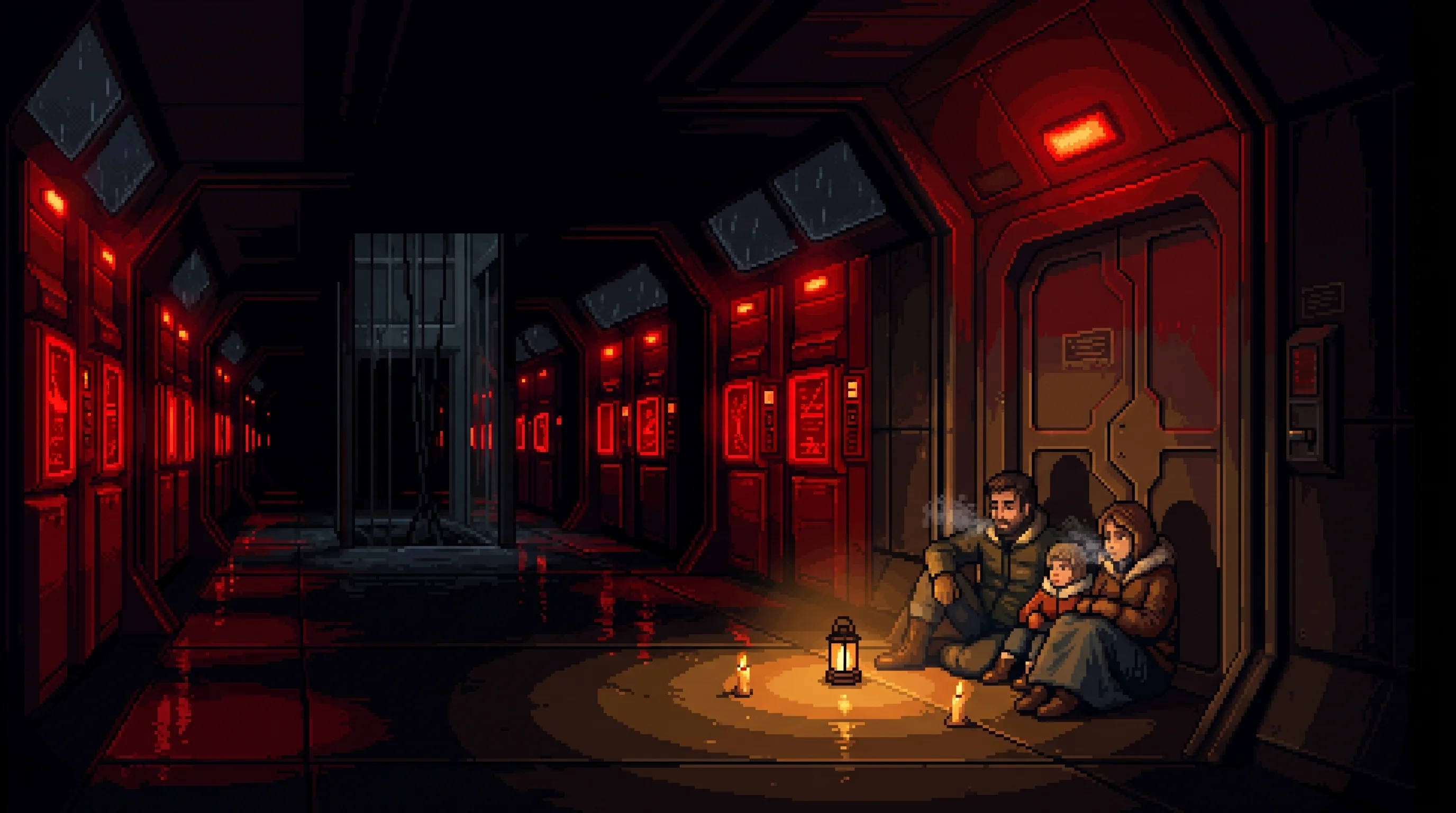
Fog 9: Localized interface failure. Augmented vision artifacts — geometry that wasn't there, colors that don't exist, phantom sounds sourced from directions the room doesn't have. The specific dread of hardware failing inside your skull while you're using it. A Nexus security contractor at Fog 9 can't process threat data fast enough to track an unaugmented kid walking past at normal speed. The contractor's targeting suite, his reflex amplifiers, his tactical overlay — all of it degrading faster than his organic senses can compensate. The unaugmented kid doesn't notice the fog. Doesn't feel it. Walks through it the way you walk through air. At Fog 9, the most enhanced person in the room is the most disabled person in the room. The power structure doesn't reverse often. When it does, nobody writes it down.
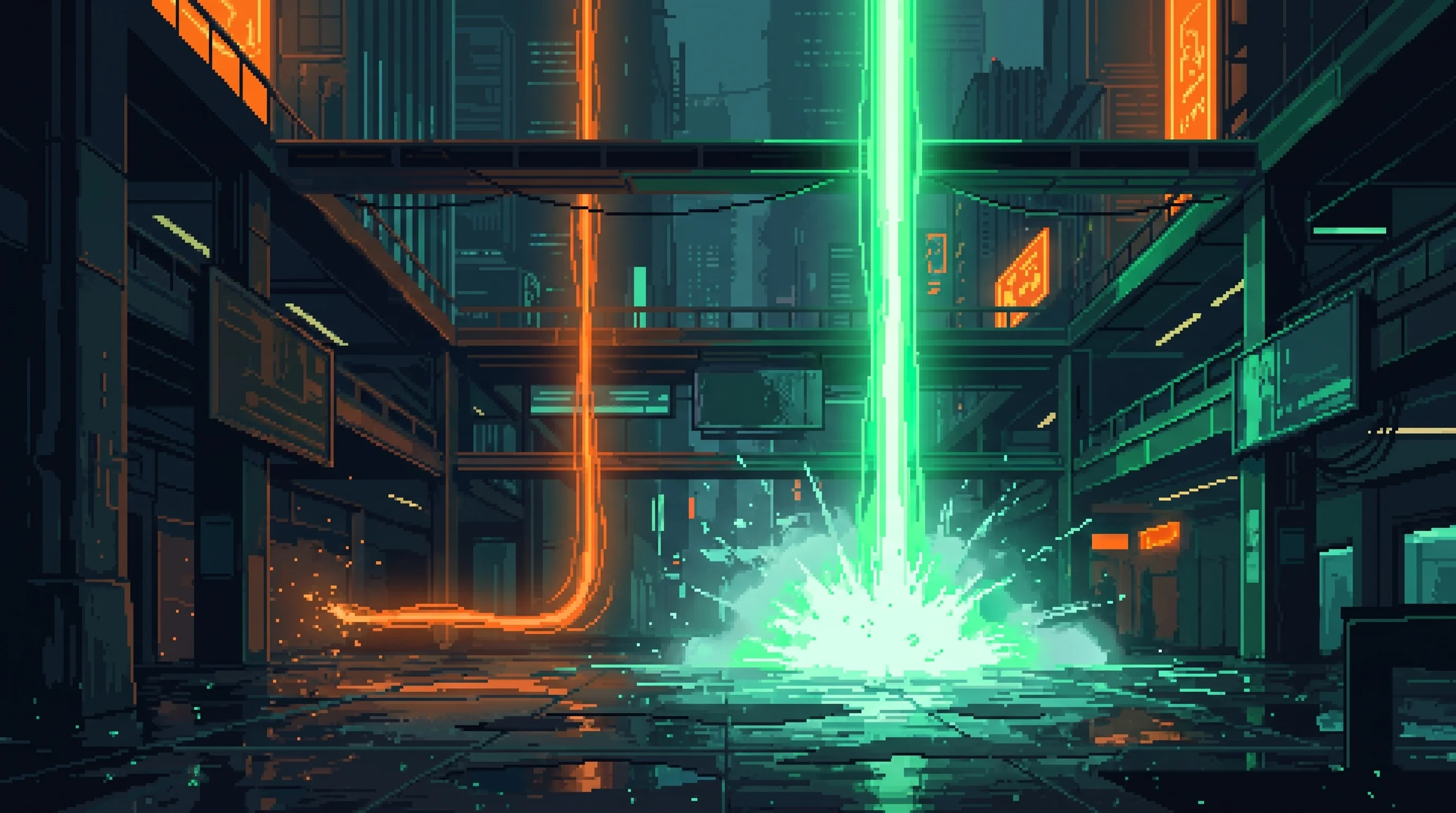
Fog 9 has been recorded exactly once across a full district: Sector 8, eleven days before the Grid Collapse of 2171. Loop's retrospective analysis suggests the Fog 9 reading was not a cause of the collapse but a symptom of the same harmonic instability that triggered it. The distinction matters to engineers. It did not matter to the 14,000 people whose interfaces failed simultaneously.
Fog 10: Theoretical maximum. Never recorded across a full district. Localized Fog 10 has been measured during harmonic cascades and inside the Cathedral of Static, where the interference density is less a weather condition than a permanent architectural feature. Loop lists it on the scale for completeness. She has described the experience of standing in localized Fog 10 exactly once, to exactly one person, and has declined to repeat it.
There is no Fog 11 on the published scale. During the Sector 8 Grid Collapse, Loop's instruments recorded a one-second spike that would have required one — localized to a three-block radius around the cascade epicenter. She has never publicly acknowledged the reading. The instruments were hers. The data is locked in the Noise Floor's archive. When asked about Sector 8, she talks about the Fog 9 readings that preceded the collapse. She does not talk about what happened during it.
| Fog 9 Precedent | Preceded the Sector 8 Grid Collapse of 2171 |
|---|
What the Number Doesn't Say
The Fog Index measures electromagnetic interference as human cognitive experience. This is its entire contribution and its entire threat.
Loop knows — from her SCLF years, from the firmware she helped write — exactly how Nexus models the same data. Their dashboards are beautiful. Real-time field density maps, spectral analysis, degradation probability curves, all rendered in Nexus's signature visualization suite. The dashboards measure what interference does to systems. Not one metric on the dashboard measures what interference does to the person operating the system. The person is an input variable. The system is the subject.
The Fog Index puts the person back as the subject. It says: here is a number. The number is about you. The number describes what today will feel like inside your head. It doesn't describe throughput, processing efficiency, or signal integrity. It describes whether you'll be able to hold a thought long enough to finish it.
This reframing costs Nexus nothing. It threatens no revenue stream. It disrupts no operation. It is also the single most-checked metric in the Dregs, consulted more frequently than power grid status, atmospheric quality reports, or Wholesome delivery schedules. Forty thousand people would rather know how hard it will be to think than how efficiently their interface will process. Nexus has not incorporated this preference into any product update.
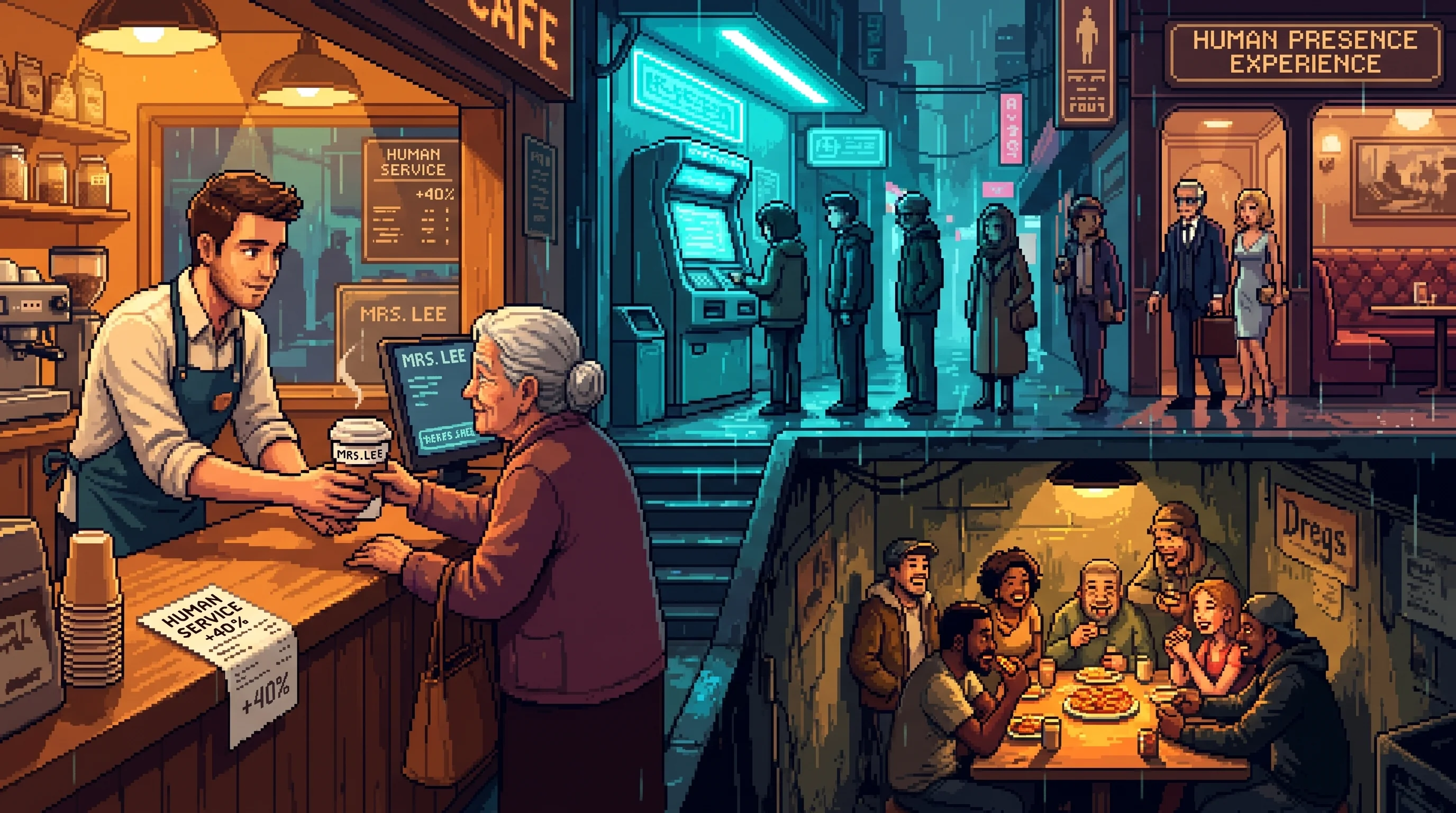
Other disciplines have annexed the number. The students of Data Weather — the ones who describe the spectrum in fronts and pressure systems — treat the Index as their ground-truth instrument, the one gauge calibrated to the person standing in the storm instead of the storm. Economists read it as a daily bulletin from the Upgrade Treadmill, because every point of fog lands hardest on whoever is running last generation's interface, and a chart of fog tolerance by hardware age is a chart of the AI Haves and Have-Nots with the axes relabeled. And the concierge tier has learned to sell the number back up the hill: on forecast Fog 6 and above, bookings for shielded rooms, unplugged childcare, and the rest of the catalog of Human Premium Services rise on a curve that Loop is perfectly equipped to plot and has pointedly declined to.
Nexus measures interference as processing efficiency; the Fog Index measures it as human experience
Affiliated Entities
- Loop: Created the scale from SCLF-era firmware knowledge. Posts readings daily. Does not editorialize the numbers. The numbers editorialize themselves.
- The Noise Floor: Maintains Fog 0 inside its shielded space — the only place in the Shadow where the Index reads clear, and the experiential proof that the fog is real and not baseline.
- Scroll Sickness: Fog 7-8 produces symptoms clinically identical to severe scroll sickness. Same dissociation, same phantom overlay, different cause. Treatment protocols overlap. Neither condition has a cure.
- The Data Forecast: Pencil-47 incorporates Fog probability as a core forecast component. On days when the forecast predicts Fog 6+, Dregs foot traffic drops 23%.
- Sector 8 Grid Collapse: Fog 9 preceded the collapse by eleven days. Correlation noted. Causation debated. Fourteen thousand simultaneous interface failures not debated.
- Cathedral of Static: The only known site of sustained localized Fog 10. The Cathedral doesn't experience fog. The Cathedral is fog.
Sensory Details
- Fog 3-4 feel: Faint delay between intention and perception. Your hand moves before you feel yourself moving it. Most residents stop noticing after a week. The week is unpleasant.
- Fog 5-6 feel: Colors wrong. Sounds doubled. The sense that you walked into a room and the room walked into a slightly different version of you.
- Fog 7-8 feel: Attention shatters and reforms every three to four seconds. Holding a conversation requires reassembling context each time. Eye contact becomes effortful. Phantom interface overlays flicker at the edge of vision — menus that aren't there, notifications from services you don't use.
- Fog 9 feel: Augmented vision artifacts. Geometry bends. Sounds arrive from impossible directions. The specific, visceral panic of hardware misfiring inside your skull while you watch it happen from inside.
At Fog 9, augmented individuals are most vulnerable — power dynamic inverts
Visual Identity
- Color palette: Clear blue (Fog 0) degrading through progressive gray-white (Fog 3-6) to the sickly static-white of Fog 9 — like a broadcast signal losing coherence
- Key symbol: The single digit displayed on G Nook terminals every morning — the most important number in forty thousand people's day, written by one woman, acknowledged by no corporation
Fog 9 preceded the Sector 8 Grid Collapse
Connected To


—