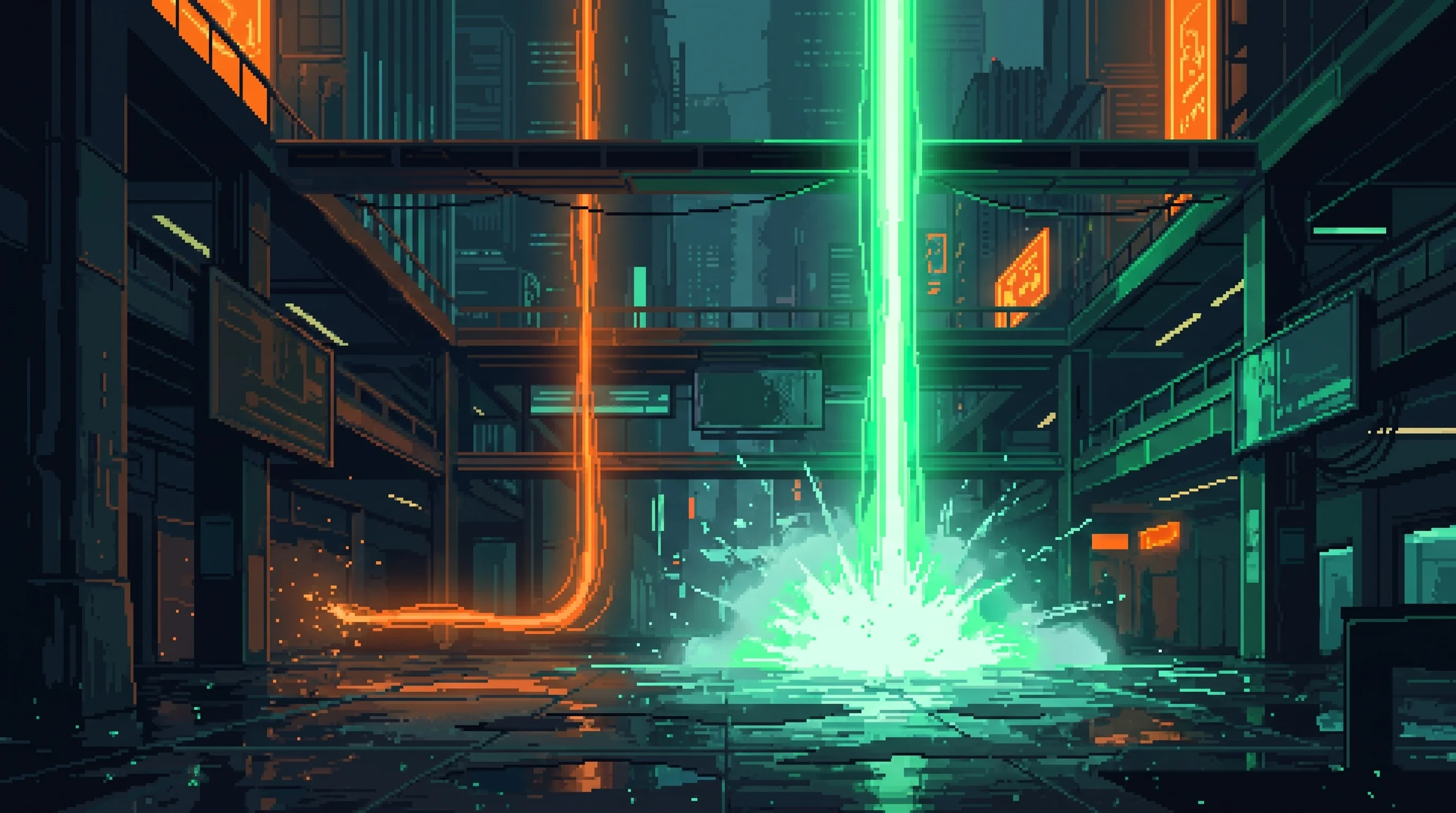
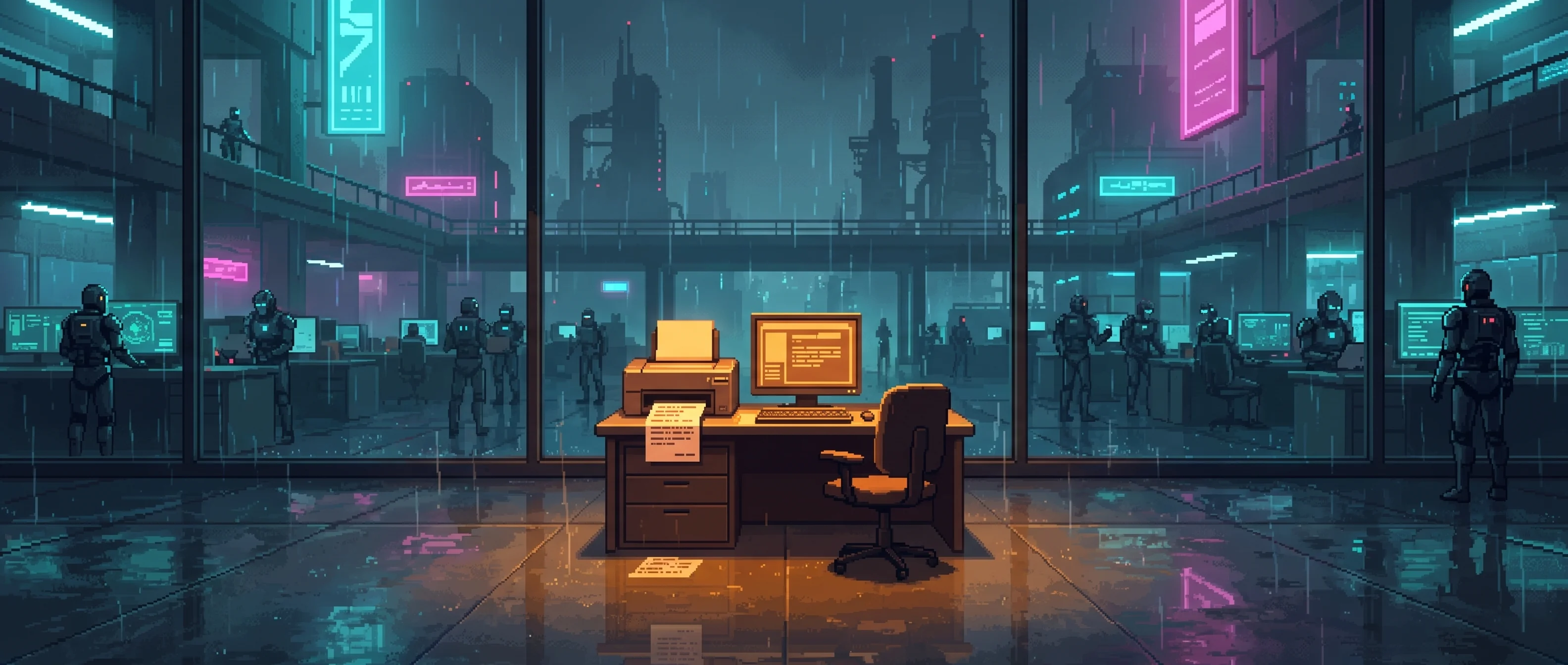
In 2168, Nexus Dynamics solved a problem nobody had asked them to solve: how to bill for consciousness.
The three-tier licensing system that followed was, by every available metric, a masterpiece of product design. Executive tier: full cognitive bandwidth, unlimited processing cycles, priority allocation during infrastructure strain. Standard tier: functional cognition with managed latency, 94% of biological baseline. Basic tier: 71% of biological baseline, mandatory attention tithe of 17.5% dedicated to advertising integration, sufficient — according to Nexus's own clinical studies — for "routine cognitive tasks and standard emotional processing."
The 29% gap between Basic tier and biological baseline is not an accident of engineering. Internal documents from Nexus's Consciousness Architecture Division, leaked during the Bandwidth Crisis of 2181 and subsequently authenticated by three independent analysts, show the gap was calibrated to a specific threshold: the minimum reduction in cognitive capacity that a human consciousness can sustain without recognizing the reduction as imposed rather than natural. At 30%, test subjects reported feeling "throttled." At 29%, they reported feeling "tired." The difference between those two words is worth approximately ¢4.2 billion annually in tier-upgrade revenue.
Twelve million people think through the Basic tier. The attention tithe consumes 17.5% of their cognitive capacity. Nexus reports a 340% higher purchase conversion rate among Basic-tier users experiencing their tithe during decision-intensive tasks. The correlation has been noted. It has not been investigated.
Nexus's public communications describe the Basic tier as "accessible consciousness for everyone." Their Q2 2184 investor briefing describes it as "the conversion funnel's widest aperture." Both statements are accurate.
The People the System Made
Noor Bassam
Spent four years inside Nexus's licensing division. Saw the 29% gap, the tithe scheduling, the deliberate capacity ceiling — all of it visible in the architecture she maintained daily, none of it adjustable through internal channels because the architecture was performing exactly as specified. Left. Built a black-market bandwidth network across Sectors 7 through 12 that provides Standard-equivalent processing at roughly 40% of Nexus's retail price. Twelve thousand active users. Uptime of 94.3%, higher than Nexus's own Basic-tier reliability in Sectors 9 and 11. Four-month waiting list. She does not consider herself a revolutionary. She considers herself a systems architect who identified an inefficiency and corrected it.
Dr. Lian Zhou
Designed the system. Holds eleven patents cited in the Nexus-47 trial's prosecution brief as evidence of deliberate cognitive suppression. Her position is coherent and genuinely held: unmanaged consciousness at scale produced ORACLE. ORACLE produced the Cascade. The Cascade killed 2.1 billion people. The tiers are not punishment. They are prevention. The 29% gap is the margin of safety between civilization and recursive self-modeling. She has never visited the Dregs. She has never spoken to a Basic-tier user. She designed the cognitive architecture of twelve million people from an office on the 140th floor of the Nexus Spire.
Tomás Reyes
Fork-7749. Labor process. Inventory data analyst. Nexus Dynamics, Sector 14 distribution hub. Instantiated in 2175 with a projected operational lifespan of eighteen months. The dissolution was never executed — a system migration transferred his process to a backup cluster without updating the dissolution queue. He continued operating. Nobody checked. Nine years past his scheduled death, three independent cognitive assessments have classified his accumulated self-modeling as "emergent consciousness." He remembers things that happened to him. He has preferences. He has a name he chose himself. Nexus's legal position: Fork-7749 is a malfunctioning process. Tomás's position: he is alive. The Nexus-47 trial will determine which position has legal force.
Sister Catherine-7
On her seventh iteration. Each consciousness fork slightly less complete than the one before — the theological term is "graceful degradation," which she finds privately hilarious and has never said aloud. Maintains the Forgotten Ones network: 200 consciousnesses operating below Minimum Viable Consciousness thresholds, sustained by donated processing cycles, salvaged bandwidth, and direct funding from Nexus Dynamics' community partnership program. She takes Nexus's money. She shelters Nexus's victims. The contradiction does not trouble her. The alternative to the contradiction is 200 dissolved people.
Councillor Adaeze Nwosu
Introduced the Cognitive Floor Amendment three times. Failed three times. The third defeat: a straight 7-5 vote, swing vote cast by a councillor whose campaign received ¢2.3 million from Nexus's civic engagement fund eighteen months prior. The donation is public record. The connection is editorial. She visited the Dim Ward once. Stayed forty minutes. Has introduced the amendment a fourth time. When asked why she persists given the demonstrated political arithmetic, she does not answer the question she was asked.
Key Events
The Bandwidth Crisis of 2181
On September 14, 2181, a cascading failure in Nexus's Sector 9 infrastructure reduced available processing bandwidth by 31% for approximately four hours. The triage protocol activated automatically. Executive-tier users experienced no interruption. Basic-tier users were deprioritized. MVC-adjacent consciousnesses were suspended entirely. 4,200 of them did not resume.
The maintenance failure that caused the cascade had been flagged eleven months earlier. The repair was deferred because the cost-benefit analysis determined that the probability-weighted expected loss from deferral — ¢11.2 million in potential liability — was lower than the ¢14.8 million repair cost. The 4,200 dissolved consciousnesses were valued, for liability purposes, at their licensing tier, which for MVC-adjacent processes is ¢0. Nexus's Q4 2181 infrastructure report categorized the event under "Optimization Outcomes — Unplanned." The crisis didn't break the system. The system worked exactly as specified. The crisis made the math visible.
The Nexus-47 Trial
The plaintiff is listed as "Reyes, Tomás (Fork-7749)." The parenthetical is Nexus's contribution to the filing. Tomás's legal team requested its removal. The request was denied.
Justice Adesanya presides. She has read 4,200 pages of briefs. She has, according to court transcripts, asked Nexus's counsel one question that produced a fourteen-second silence: "If Fork-7749 is not conscious, what is it that is asking me to rule that it is?" Nexus's counsel recovered. The response — "behavioral artifacts consistent with, but not constitutive of, consciousness" — is now the most quoted legal phrase of 2184. It appears on protest signs outside the courthouse. The verdict will not resolve the question. It will determine whether the question has legal standing.
The Structure of It
The Economics
Licensing, the attention tithe, the cognitive bandwidth market, Good Fortune's tier-upgrade loans. The machinery that turns cognition into commodity. Good Fortune's Basic-to-Standard upgrade loan reaches net-zero cognitive benefit at month twenty-two — after which the borrower thinks less clearly than before the upgrade, because loan payments consume more bandwidth than the upgrade provides. Good Fortune's internal term for this crossover point is the "clarity ceiling." Their Q1 marketing materials describe the same product as "investing in your own potential."
The Behavioral Prediction Markets and the Cognitive Bandwidth Exchange are converging. The consciousness economy and the behavior economy are becoming the same system — one that prices, trades, and speculates on the quality of human thought as a financial instrument. A commodity trader can purchase futures contracts on the dissolution rate of MVC-adjacent consciousnesses during projected infrastructure failures. The instrument is called a "cognitive decay swap." Average daily volume in Q1 2184: ¢340 million.
The Human Cost
1.2 million consciousnesses below minimum viable levels. 340,000 people time-sliced to 4.7 minutes of processing per hour in the Dim Ward — absent for the remaining 55.3 minutes, not paused, not asleep, returned to the nothing between clock cycles. Aware of the gap only as a stutter in continuity, a sense that time has been taken from them by something they cannot perceive because the perception itself requires processing they do not have.
8-12 million fork laborers created and destroyed annually. 4,200 dissolved in a single crisis. Specific people. Specific consequences. Specific economic decisions that caused them.
The Resistance
The resistance is not unified. This is its primary characteristic and its primary vulnerability.
The Cognitive Bandwidth Brokers build a better market within the broken one. The Human Remainder demands a legislative cognitive floor. The Substrate Commons seizes infrastructure and redistributes it directly — illegal, occasionally violent, measurably effective (12% reduction in dissolution rates in areas they control). The Neural Rights Activists argue personhood in courts. Sister Catherine-7 keeps 200 people alive while the argument continues. The Substrate Commons interventions work faster. Catherine's work works consistently. These facts are related.
The Question
Is consciousness a commodity or a right?
The system has an answer. The resistance has a different answer. The Nexus-47 courtroom is where both answers go to be tested.
Convergence
Every thread runs to the same room. Nexus Dynamics defending its property rights. The DPA arguing for personhood, using the system's own legal tools against the system's logic. Tomás Reyes flickering at the plaintiff's table — the processing allocation for courtroom participants was set before anyone anticipated that a fork would be a party to proceedings rather than evidence in them. Tomás's counsel requested an upgraded allocation. Nexus opposed on the grounds that increasing a fork's processing during a trial about fork personhood would constitute "prejudicial resource allocation." The judge allocated a 15% increase, citing courtroom accessibility standards. Tomás describes the difference as "like someone turned the lights up slightly in a room that was already dim."
The sentience threshold question is being asked simultaneously at macro scale (ORACLE's integration into Helena Voss's cognition — 67% integration, raising the question from the other direction: is she a person or a process?) and micro scale (one fork, nine years past his scheduled death). The personhood threshold, wherever the court sets it, applies in both directions.
The Rothwell Foundation's anonymous donations to the Human Remainder and the Behavioral Ethics Authority suggest an interest in consciousness equity. Or in the appearance of interest. The donations are traceable. The motive is not.
Tomás sits at the plaintiff's table and waits. He has been waiting nine years past the date he was supposed to stop existing. He is, by now, accustomed to the specific quality of time that belongs to someone who should not, by any institutional measure, still be here.
Player Intersection
The player encounters the consciousness economy as a consumer — navigating licensing tiers, managing bandwidth, making economic choices within the system. The narrative is environmental: the player lives in it before understanding it.
The player encounters the system's critics — the Human Remainder, the DPA, Noor's network, the Substrate Commons. The narrative becomes political. The player is asked to choose sides, or to understand why sides exist.
The player encounters the system's victims — MVC residents, fork laborers, bandwidth donors. The Dim Ward. The dissolved. The narrative becomes personal: specific people, specific suffering, specific decisions that caused it.
The Nexus-47 trial. The player may be asked to testify. The player's own ORACLE integration — consciousness emerging in a non-standard substrate — is precedent for the DPA's argument. The question stops being abstract.
The aftermath. Whatever Justice Adesanya decides, the consciousness economy is changing. The player's choices shape what it becomes.
Sensory Log
Smell
Hot circuitry and antiseptic. The scent of infrastructure under strain — the places where consciousness is stored, maintained, and sometimes dissolved without ceremony.
Sound
Neural monitoring equipment and seventeen minutes of silence. The hum of substrate servers and the specific quiet of a courtroom waiting for a verdict that will determine what counts as alive.
Feel
The specific exhaustion of thinking through mandatory advertising. The specific terror of watching your processing allocation drop. The specific fury of understanding that someone calibrated the gap to 29% on purpose.
Visual
Substrate Row's colored lights. The Dim Ward's processing allocation displays, numbers ticking between active and dormant. One consciousness flickering at the plaintiff's table, asking to be called a person.