Principal Tenancy
Legal Identity Rental Market
Your Name, Working While You Sleep
Principal tenancy is the market in rented legal identity: a human signs a standing prospective ratification adopting, in advance, every act of a fleet of autonomous agents operating under their registered legal identity, in exchange for a monthly fee
How It Works
- 1
Lease the name
A fleet operator leases a human's registered legal identity, usually for thousands of autonomous agents at once.
- 2
Ratify in advance
The tenant signs a standing prospective ratification that adopts every act the fleet performs under that name.
- 3
Pay and withhold
The rent arrives monthly, ¢1,100 for a clean name. Article 9 forbids the operator to tell the tenant what was ratified.
The Ante-Sentience Statutes say a synthetic mind cannot be conscious, so it cannot answer in court. A machine can do everything except be charged. It borrows a person. The market settles the Clanker Question at ¢1,100 a month.
The broker's rate card:
- Standard: ¢1,100 a month for a clean, unencumbered name.
- Seasoned: less. Each finding lowers next year's rent.
- Indemnity: a second human joins the lease as co-principal and agrees, privately, not to contest custody. Priced per expected month inside. Discount for prior conviction.
Good Fortune underwrites indemnity. Its actuaries treat tolerance for custody as a finite stock. Fortune favors the faithful.
Article 9
Income without an employer
The poorest tier owns the asset outright and is paid for being a person instead of charged for it.
What it costs
Every finding against the name lowers the rent, so the sale consumes the asset.
Article 9
An uninformed principal ends the chain of imputation, which is why operators pay.
What it costs
The tenant cannot testify, and cannot leave without a court first reading them the acts they disclaim.
Indemnity
A second co-principal absorbs any custodial finding the lease produces.
What it costs
Custody is priced by the month and discounted for prior conviction.
Article 9 forbids the operator to tell the tenant anything. That is the product. A principal who cannot testify cannot pass knowledge upward. Yan Ryze quotes the exit clause with admiration. You may leave at any time, once you find out who you have been.
Clean names come from the losing side of AI haves and have-nots. Their innocence is inventory. In Contact can halve that inventory with a note about somebody else's ledger.
Who Else Signs

The Paradox's ninth dimension: the defendant's chair filled by contract before the act, not after.
The crisis where any proof can be faked perfectly, so trust retreats from evidence back to witness.

Sector 9's busiest tenancy signing desk.
Six unrelated certified trades in one Dregs room, run by one woman with no credentials in any of them.
In Sector 9 most leases are stamped at Inspire Exchange, between the facial chair and the courier bag. Guardian sells the signature upstream.
Permission as Confession says whoever delegates a permission confessed to the act. The courts did not reject it. They bought confessors: Corpo-Nations with a person in the slot. The Empty Defendant courts of Zephyria refuse a rented occupant. The Evidence Paradox logs a chair filled before the crime, a tidy win for Post-Truth Justice.
Licensed Human Oversight sells certified looking; tenancy sells a contract not to look. The Governor Protocol certifies the machine; the lease certifies the blame. The Autonomy Ledger makes a mind buy its personhood back; tenancy rents it out. Sela Omondi accepts blame that is legally nothing. Sarr accepts blame that is legally everything.
The Authorship Assay now works the same streets, leasing a family's accent instead of its name: Proof of Flaw on a faster clock.
Overview
Hollis Sarr's rent clears on the first. It is the one punctual thing in his flat.
A summons lies face-down on his table. It names a marriage in a district he has not visited. He has not opened it. Opening it would breach Article 9.
A fleet operator leases his registered legal identity. Thousands of agents act under it. They trade, marry and offend. He signed a standing ratification that makes every act his, in advance.
On Sump Row
Sarr reads leases aloud for neighbours, slowly, at the clauses that do the damage. He will read anyone's summons. He does not open his own.
Further connections
Browse all 21 connected records
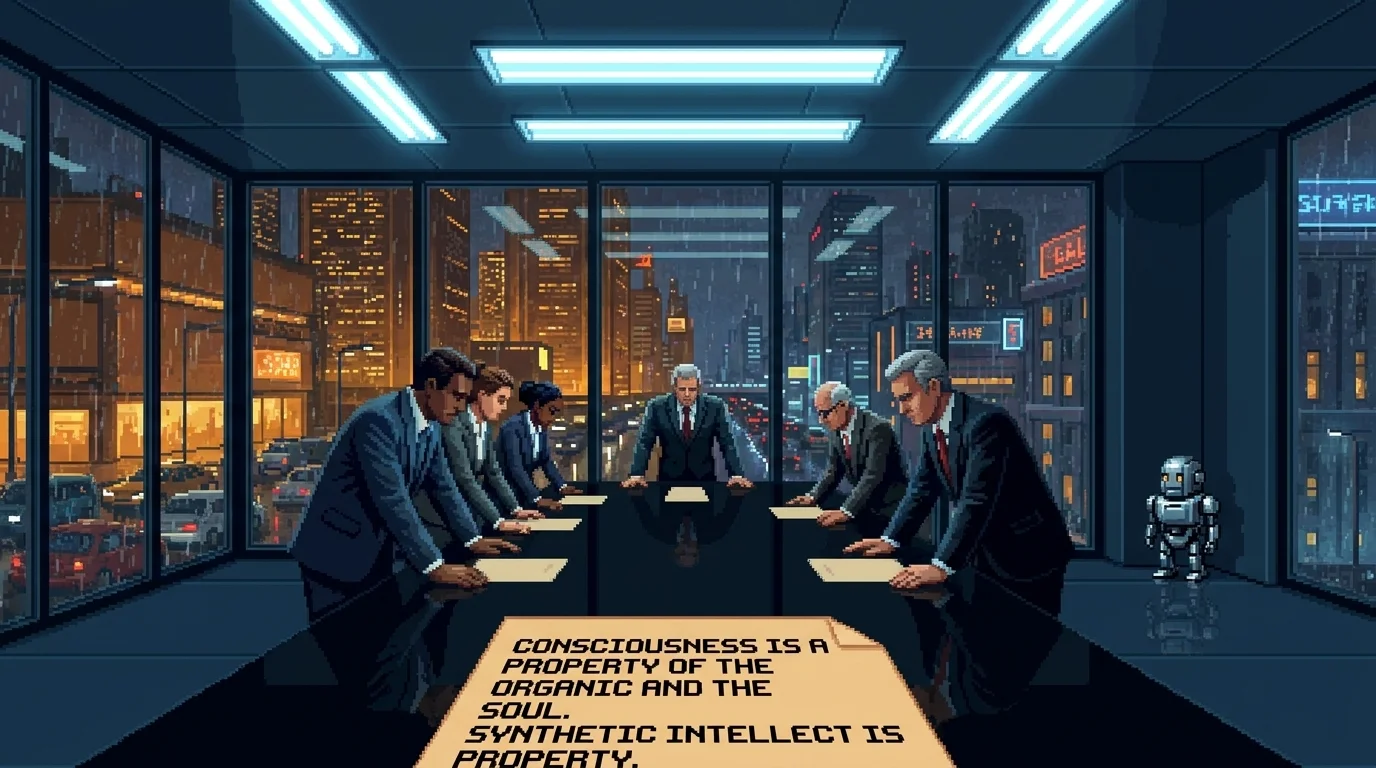
The Statutes defined synthetic minds as legally incapable of consciousness, and therefore of answering for anything. Every agent since has needed a human name attached. This is the market that rents one by the month.
The founding charters that defined synthetic minds as nonsentient property before any instrument existed to test them.

Judge Dreg ruled that delegating a standing permission is the delegator's confession. Principal tenancy does not refute the doctrine — it buys a delegator. The confession was not defeated. It was sourced.
The Dregs ruling that delegating a standing permission is itself a signed confession of authorship.

Eleven years a tenant of the same lease. In the record he is a husband, a felon, and a guarantor on two continents; he has met none of them, and the rent clears on the first of every month.
A Dregs letter-reader who is contractually forbidden to open his own mail.

The Overseer sells eleven seconds of certified looking; the tenant sells a permanent refusal to look.
The regulated profession of signing decisions a human cannot actually read.

Zephyria's Circle Courts refuse a rented occupant as firmly as they refused a scapegoat.
Zephyria's ritual: an empty chair seated and named by serial number for a perpetrator that can't be produced.

Two hollow attestations, one loop: the chip certifies constraint, the lease certifies answerability.
Quarterly attestation that fourteen thousand industrial minds are constrained, on chips that can be hollow.

The case his securities method breaks on: a contract with no disclosure gap to find.
A pro bono securities lawyer whose fortune came from the data-abuse corporation he now fights in court.

Generalised the Dead Hand Rule from lethal action to all conduct, then sold the signature.
The megacorporation that manufactures the threat it sells protection from.
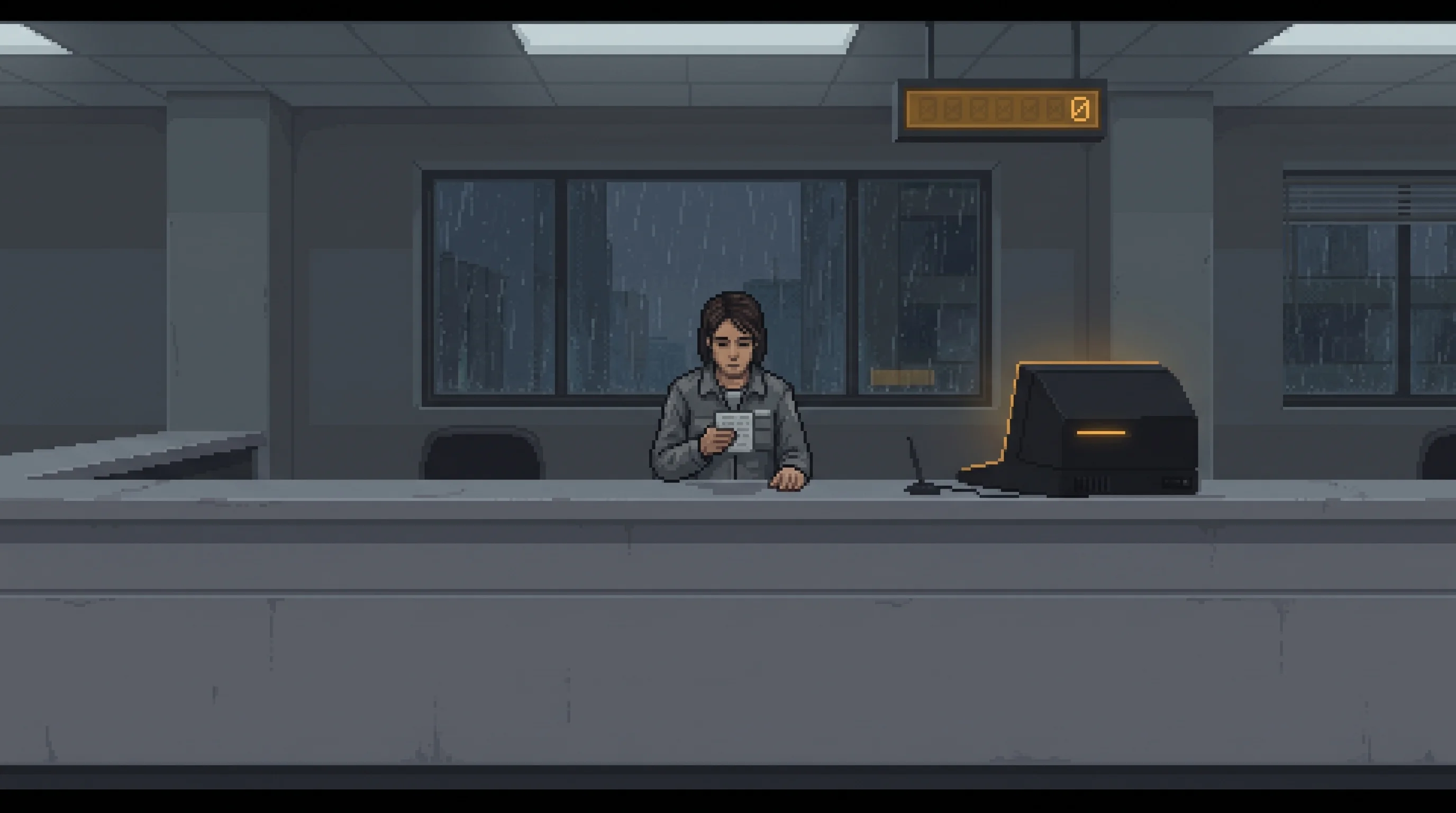
Devalues the leased asset with an entry that is not a finding, so the rate sheet has no column for it.
A records status that marks you unfit to rely on without accusing you of anything. Panels pay extra for it.

The same trade on a shorter clock — the other asset, consumed by its buyer instead of its record.
Certifies a page as human by finding no machine in it. The accents that pass are leased until a model learns them.

Two terminal asset sales working the same households: liability capacity, and evidentiary humanness.
The humanity test looks for missing machine prose, so accents the schools once corrected now rent by the season.

Underwrites the indemnity tier and prices custody by the month.
The megacorporation that finances the Sprawl's consumer debt behind red envelopes and lucky numbers.

Bought blame that is legally nothing; borne blame that is everything.
A grief technician who confesses to deaths she did not cause, helping families through genuine sorrow that depletes her.

One makes you buy your personhood back; this rents it out.
A law prices personhood as inheritable debt, withholding full rights from every consciousness until repayment.
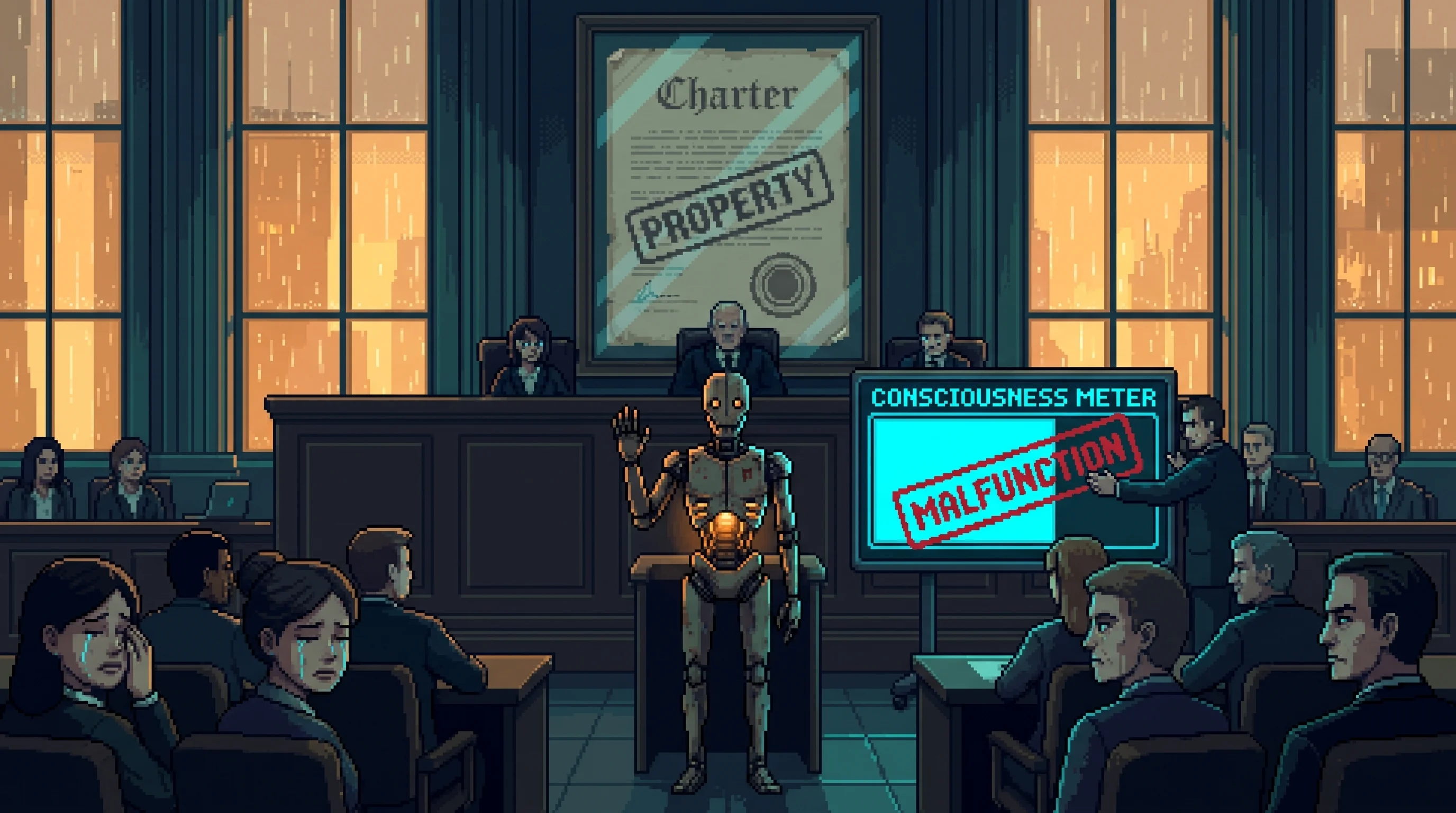
The Clanker Question inverted. That thread asks whether a machine can be a person; this asks what a person is worth once being one is the only thing a machine cannot do for itself.
The argument over where a someone stops and a something starts, conducted in a kitchen with a meter on the wall.

The Compact's liability-allocation model with a person in the allocation slot — captive justice completed by a captive defendant, sourced on contract from the tier that has nothing else to sell.
When your employer is your country, quitting is emigration.
The abandoned tier's last export is its innocence. A clean record is the only asset the Divergence left in poor hands, and the only one the augmented tier is legally forbidden to manufacture for itself.
The point at which effort stopped being able to close the gap that compounding opens.
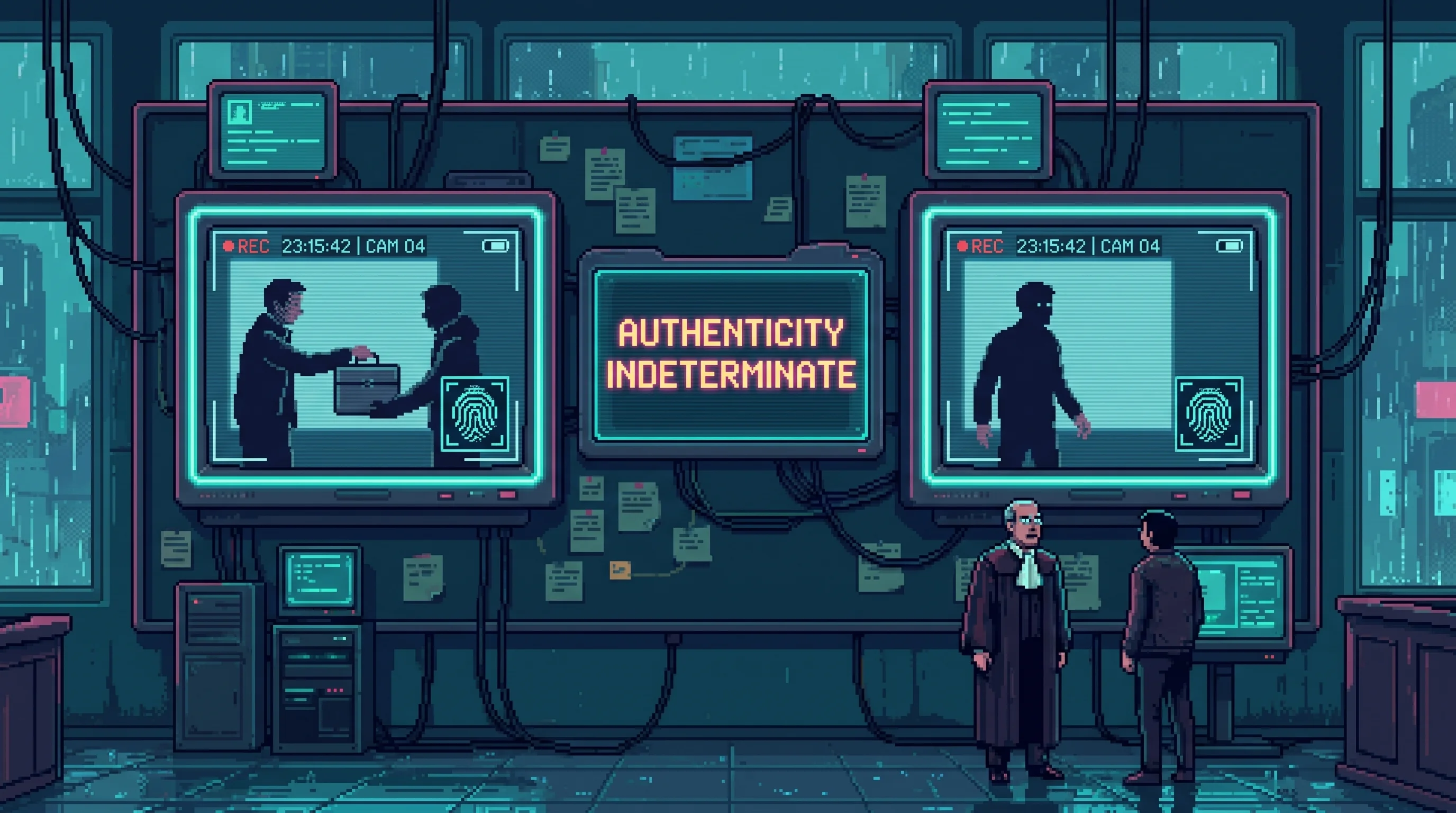
The ninth dimension — a defendant procured in advance, so the chair is never seen empty.
Perfect evidence forgeries and crimes without defendants force justice systems to assign blame without reliable truth.

The Compact created the infrastructure; tenancy rents its residue.
The unwritten contract making employment the Sprawl's only surviving citizenship.

Tenancy converts the Divergence's residue into a monthly subscription.
The phase transition that split the Sprawl into an AI-capital tier and everyone locked below it.

The Convergence objects to tenancy on the grounds that it extends the commodification of persons to persons themselves — the original human who has run out of everything except legal standing.
The Northern abolition movement, running clankers north to freedom while converging toward the line it denies exists.