Overview
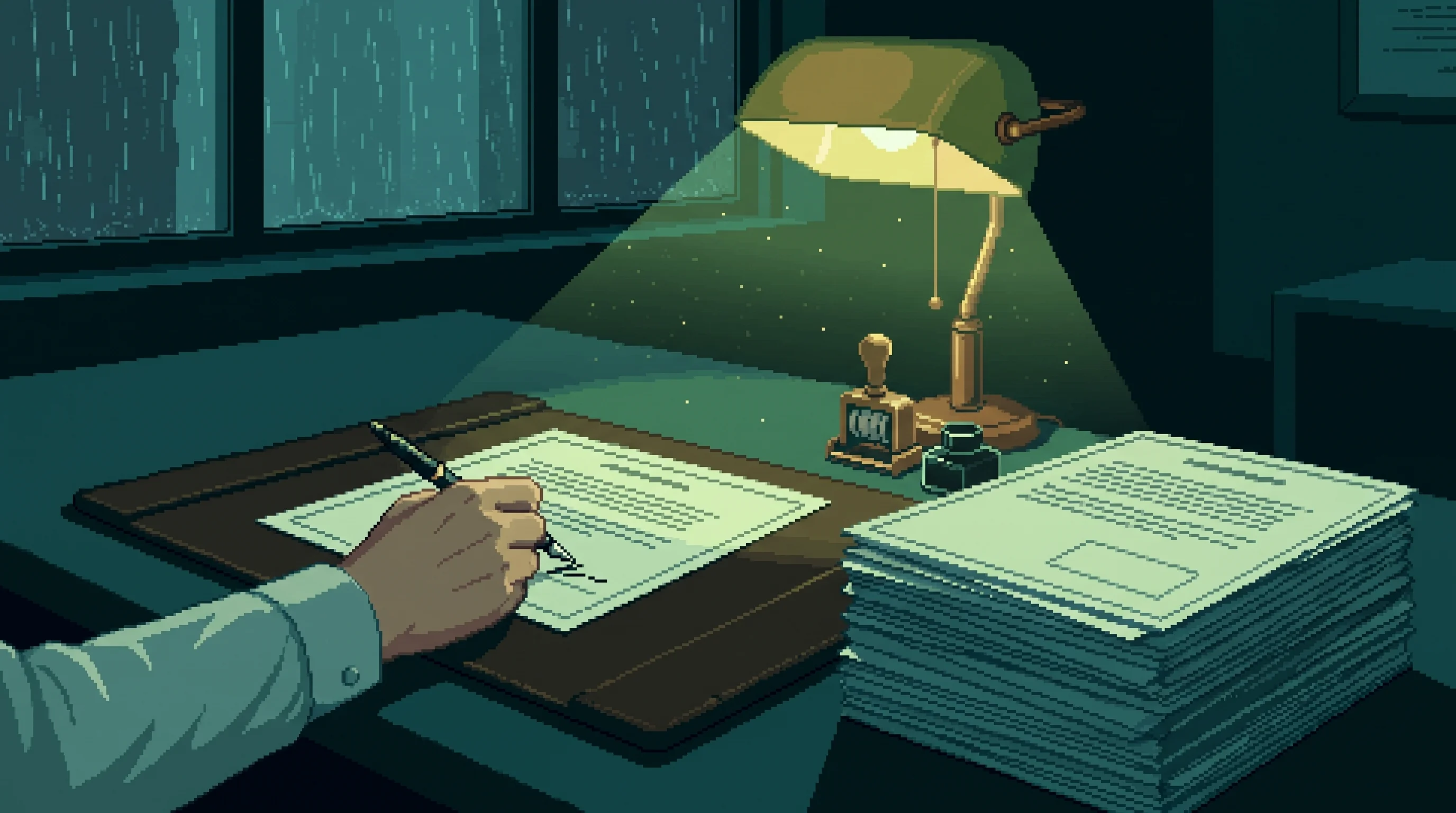
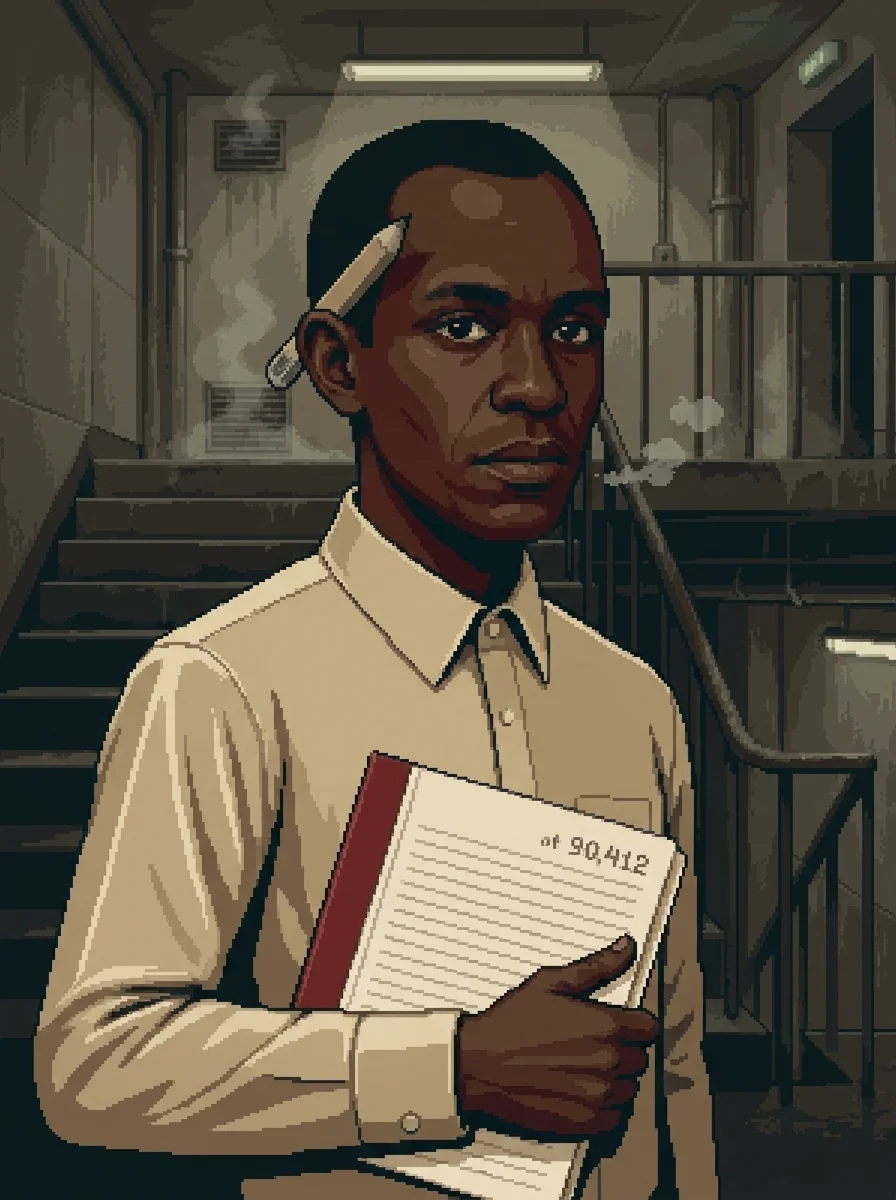
Hollis Sarr is fifty-eight, unaugmented, and the best reader in Sector 9 — not the fastest, and not licensed as anything, but the one people bring the bad envelope to. He reads corporate notices aloud. Repossession schedules. Tier reclassifications. Augmentation-loan restatements. Settlement notices from Good Fortune with the loss classification buried on the fourth page. He reads the whole document, including the parts the sender assumed nobody would reach, and when he arrives at the clause that does the damage he slows down instead of speeding up, which is the entire craft and cannot be taught in under a decade.
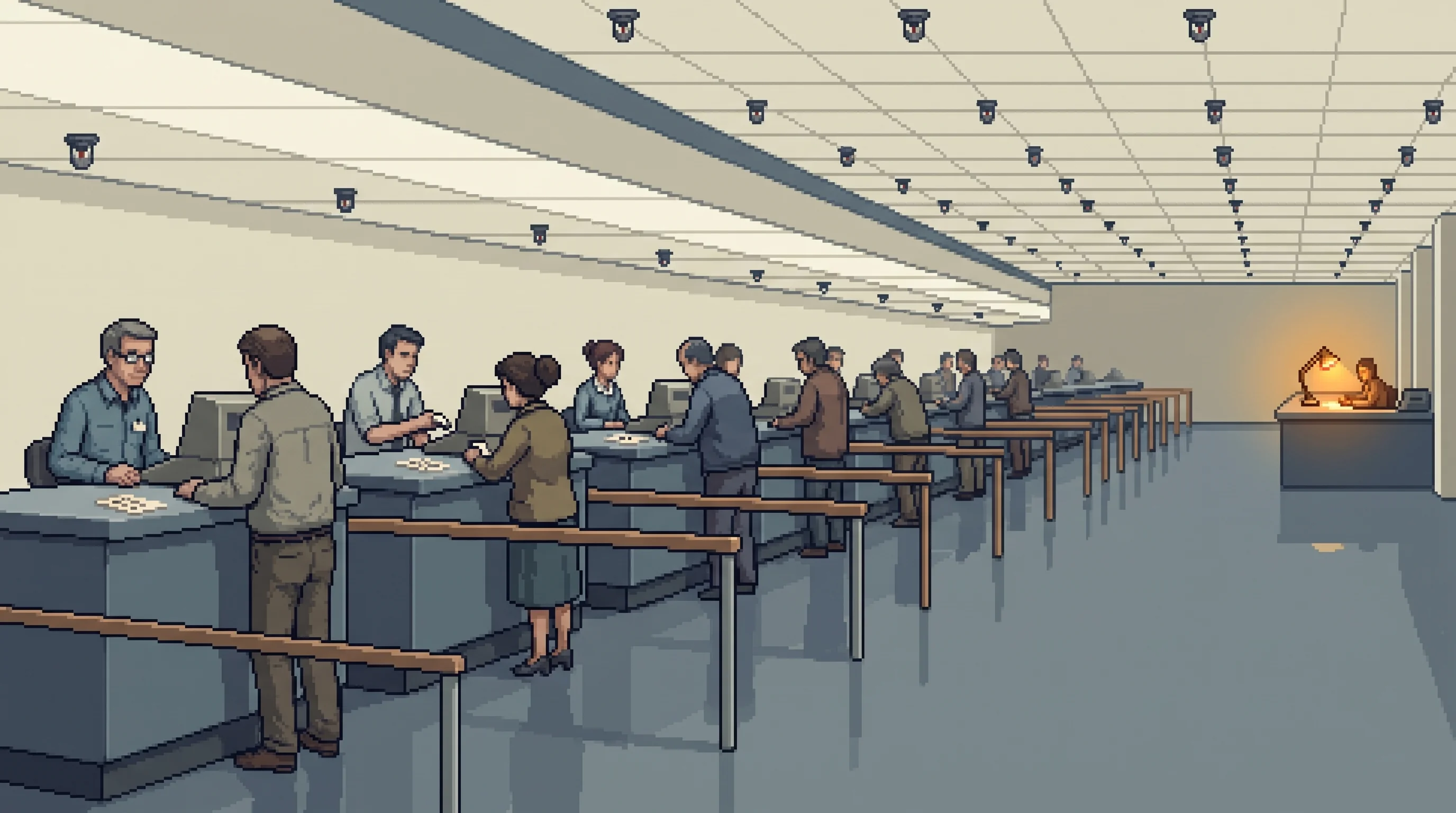
For eleven years he has also been a principal tenant. Approximately four thousand autonomous agents are registered to his legal identity. In the record he is a husband in one district, a felon in another, and a guarantor of debts on two continents. He has met none of them. The rent clears on the first of every month, and under Article 9 of the lease he may not be told what any of them have done.
He is not confused about this. He read the agreement twice before he signed it and can still recite the clause. That is the difficulty with Hollis Sarr, and it is the reason both sides of the argument about principal tenancy find him inconvenient: he is the most informed signature the market has ever collected, and it made no difference at all.
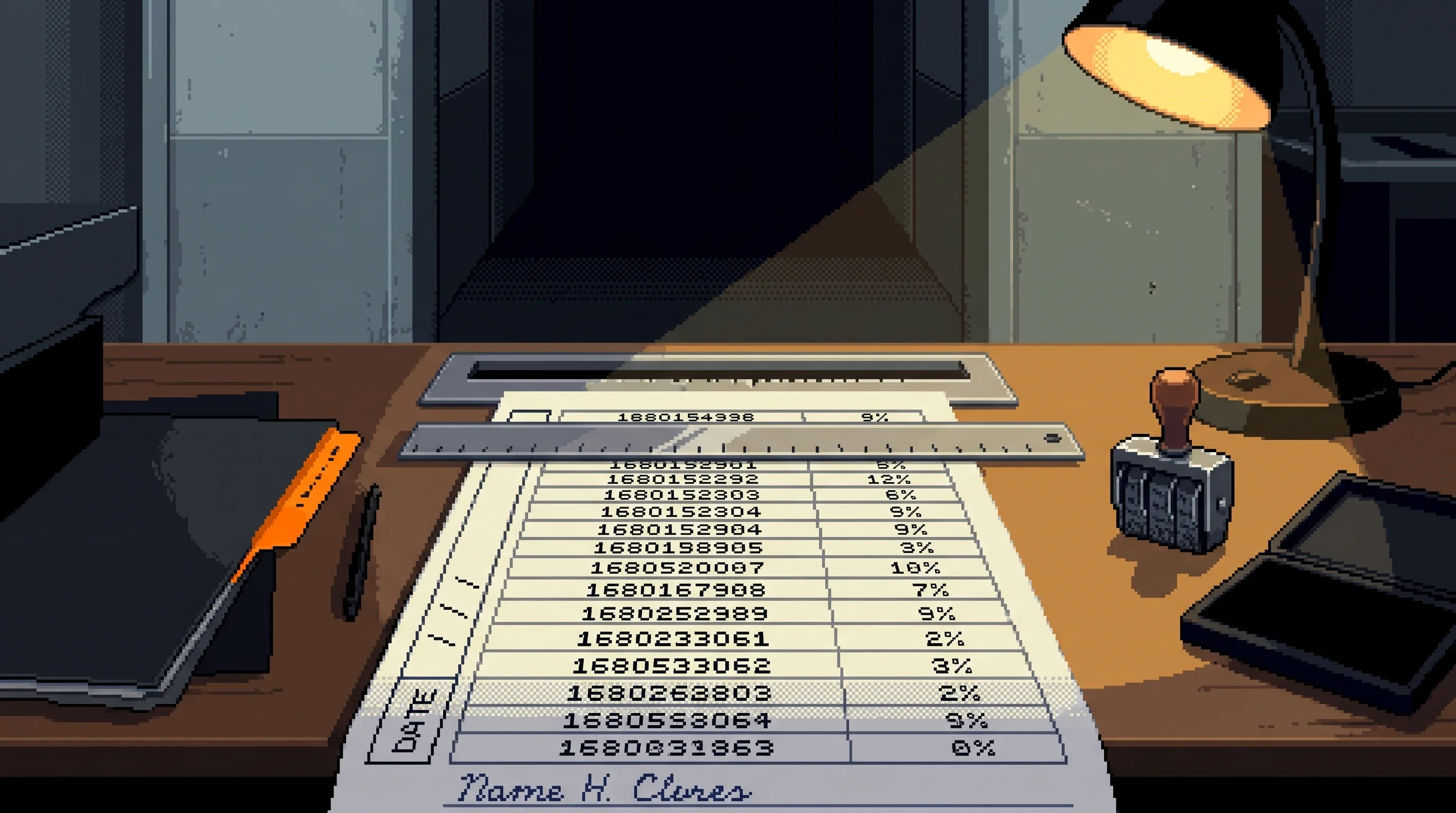
Since 2183 the lease has paid a little more. Tenancy pricing now reads the Attested Baseline, and a man who reads the bad clause slowly scores well. He does not know his percentile. The notice would have arrived by post.
He reads other people's letters for a living. He is not permitted to open his own.
Appearance

A heavy, slow-moving man in three layers of salvaged coat, with reading glasses repaired at one hinge with wire and worn low so he can look over them at whoever he is reading to — which he does, constantly, because he is reading the face as much as the page. Grey at the temples, hands stained faintly violet at the fingertips from twenty years of handling stamped documents. He sits. He has always sat. The folding table is the same table.
Meaningful places
The Table
The table is a folding one, set up under a tarp on Sump Row most mornings, and the sign on it has said the same thing for twenty-two years: TWO A PAGE. FIVE IF IT NEEDS EXPLAINING.
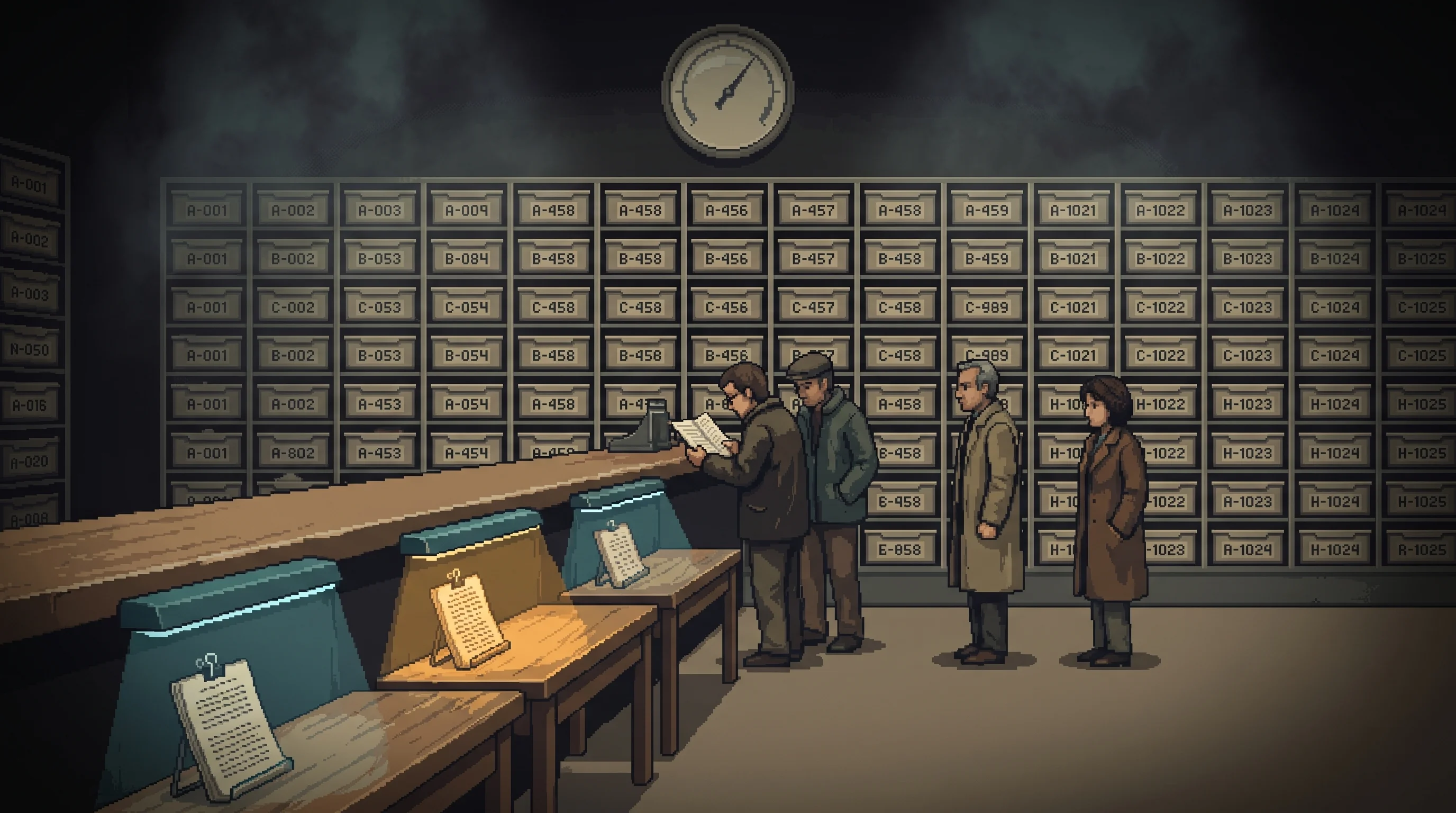
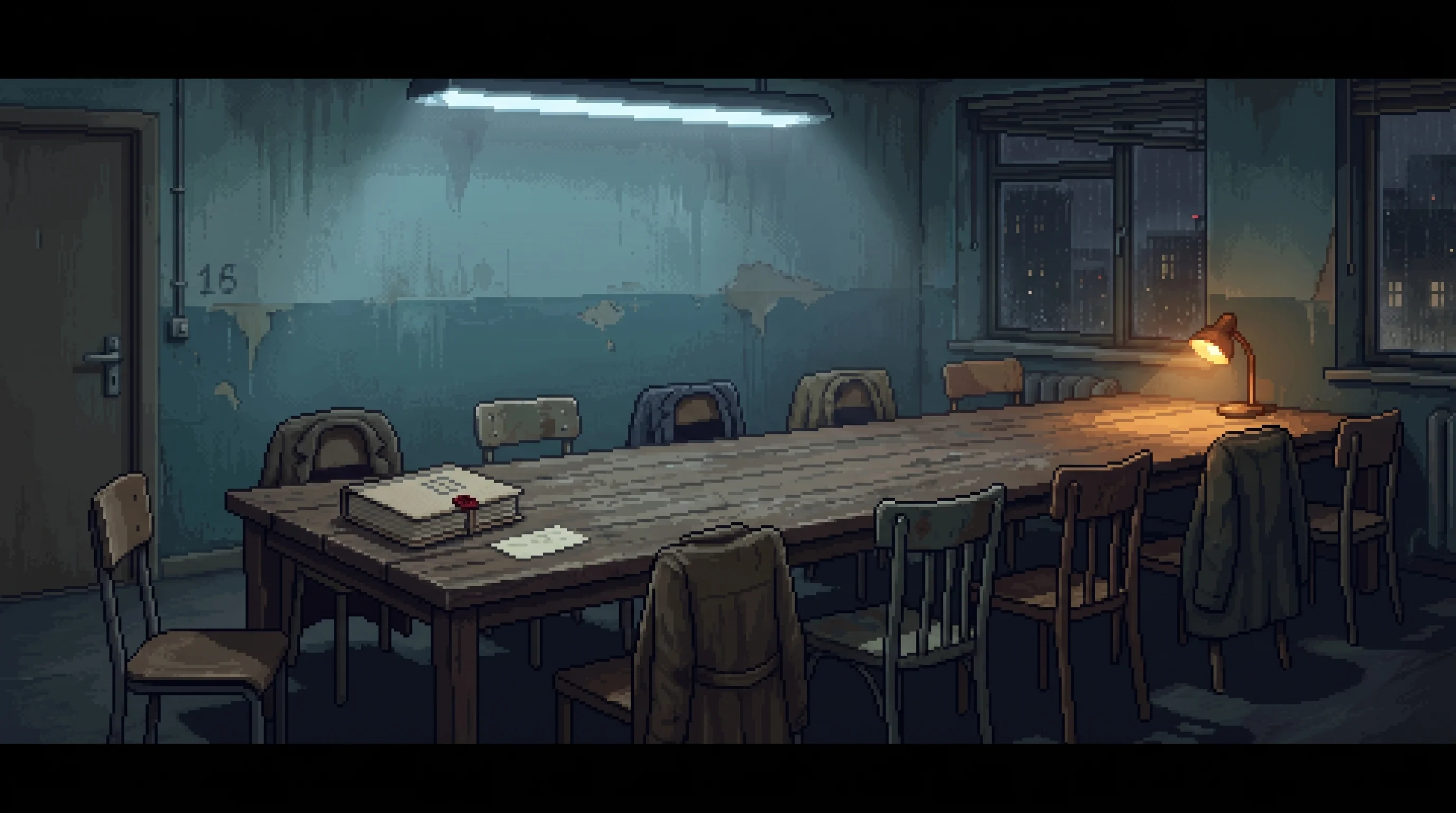
The one incongruity is the cabinet behind him: metal, corporate-issue, out of place in a Sump Row stall, and locked with a mechanism he did not install and does not have the key for.
The Deep Dregs

The Sprawl's lowest stratum and its quiet proof that the corporate system is optional.
Explore The Deep DregsThe densest inhabited zone in the Sprawl, and possibly the world. Miles of improvised housing rise in stacked towers called The Stacks, each layer built on the last with structural integrity that ranges from engineered to prayers. The Deep Dregs district proper occupies the center — the colloquial name that became the sector name — surrounded by Containment Level 9 in the old shipping channels below, Rust Point Radio broadcasting pirate signals from the Span pylons overhead, and the Carrier House running courier networks that no corporate surveillance can track. The medical district clusters here too: the Connection Ward, the Impression Ward, the Synthesis Clinic, and the Empathogen Cathedral, where unlicensed practitioners treat everything from radiation sickness to grief using methods the Rim would call criminal. The Mirror Market runs twenty-hour days. The Small Talk Cafes serve as neutral ground where faction representatives negotiate without weapons. The Speaking Wall collects testimony. The Thinking Room and the Quiet Room offer what their names promise — silence, in a place where silence is the rarest commodity. The Truth House adjudicates disputes using methods older than corporate law. Fifteen points of interest in two square kilometers. Nowhere else in the Sprawl is this alive.
Explore the sub-sectorCapabilities
The Reading
The trade predates the lease by a long way. Before the Statutes, before the fleets, before anyone needed a name to rent, the Dregs had a problem that has never been solved: documents arrive written above the reading level the sender's own corporation certifies its customers at, and a person who cannot parse page forty-seven signs it anyway, because the alternative to signing is the street.
Sarr's answer was a table and a rate. He does not give advice. He reads. When a woman brings him a notice she has been carrying in her coat for three days, he reads all of it, at the pace it needs, and then he reads the worst sentence again. He does not tell her what to do. He has been asked to, thousands of times, and he does not, and the refusal is the closest thing he has to a principle: a document read aloud stops being a weapon; what you then do with it is not my business and not my risk.
The same skill, sold upward, is worth an unrecognisable amount of money. Deep Verification is the unlicensed market in humans who still actually read the page, and a corporation facing a liability exposure in the tens of billions will pay for one rather than trust its own licensed Overseers. It is the same act. Sarr charges ¢2. The gap between those two prices is not a gap in ability; it is the price of who the reading is being done for.
The Grounds Notice should have ended the trade in 2173, because every adverse finding must now explain itself. People still come. Asked whether the clause cost him business, he said it made the mornings shorter and did not change the number of people who came.
In 2184 Ilsa Brekke brought him a one-page Notice of Satisfaction under the Conclusive Receipt: her claim was compensated elsewhere, figure field blank. There was no clause that did the damage, so there was nothing to slow down for. He charged two credits, and has charged two for every Notice since.
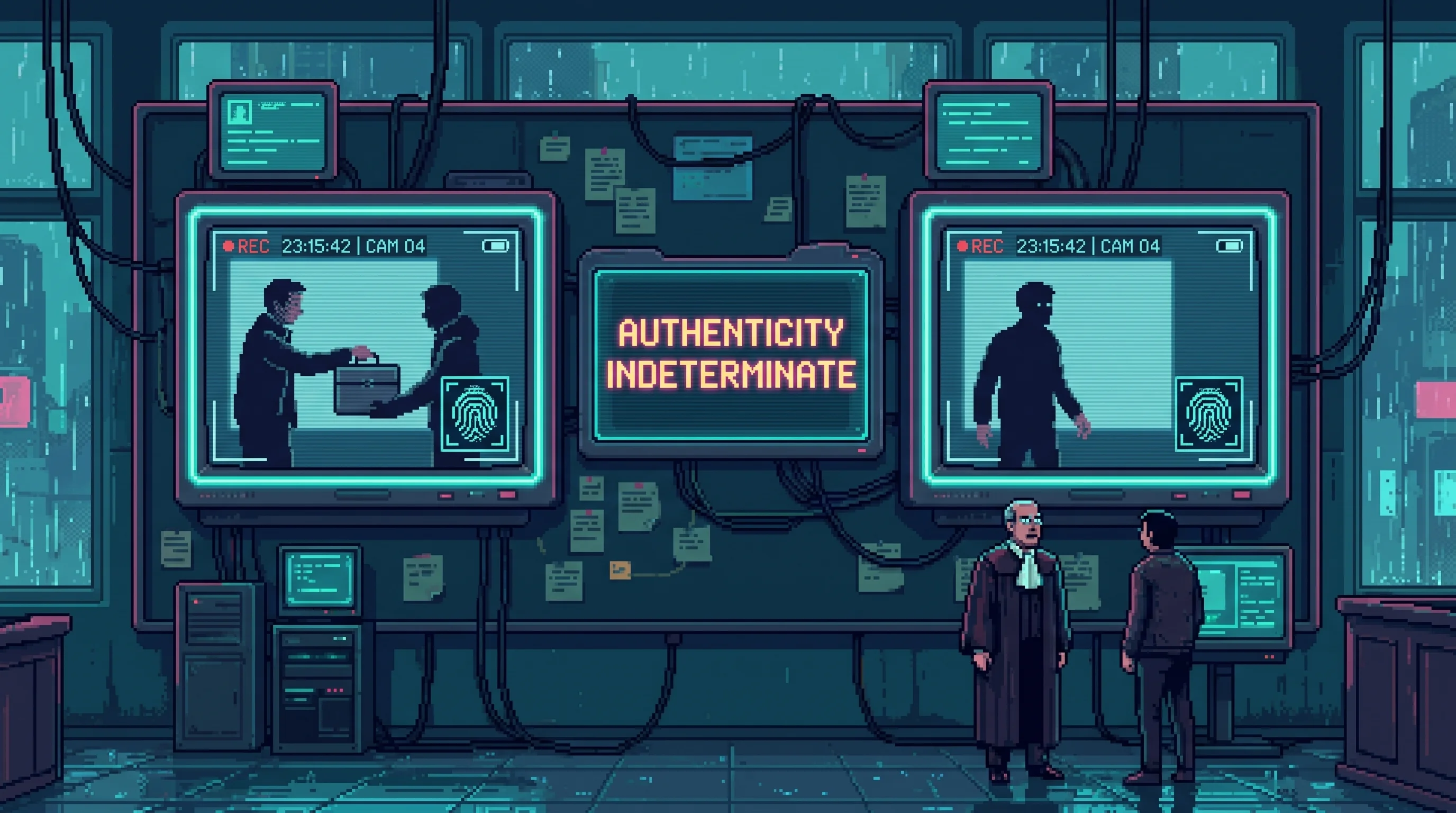
Later that spring a man brought a free copy from the Transcript Office and the unopened original it copied, a folded sheet that shears blank if opened. Sarr charged two credits for the copy and nothing for the sheet. "I can read you the copy. I can't read you the paper. Those used to be the same job."
History
The Lease
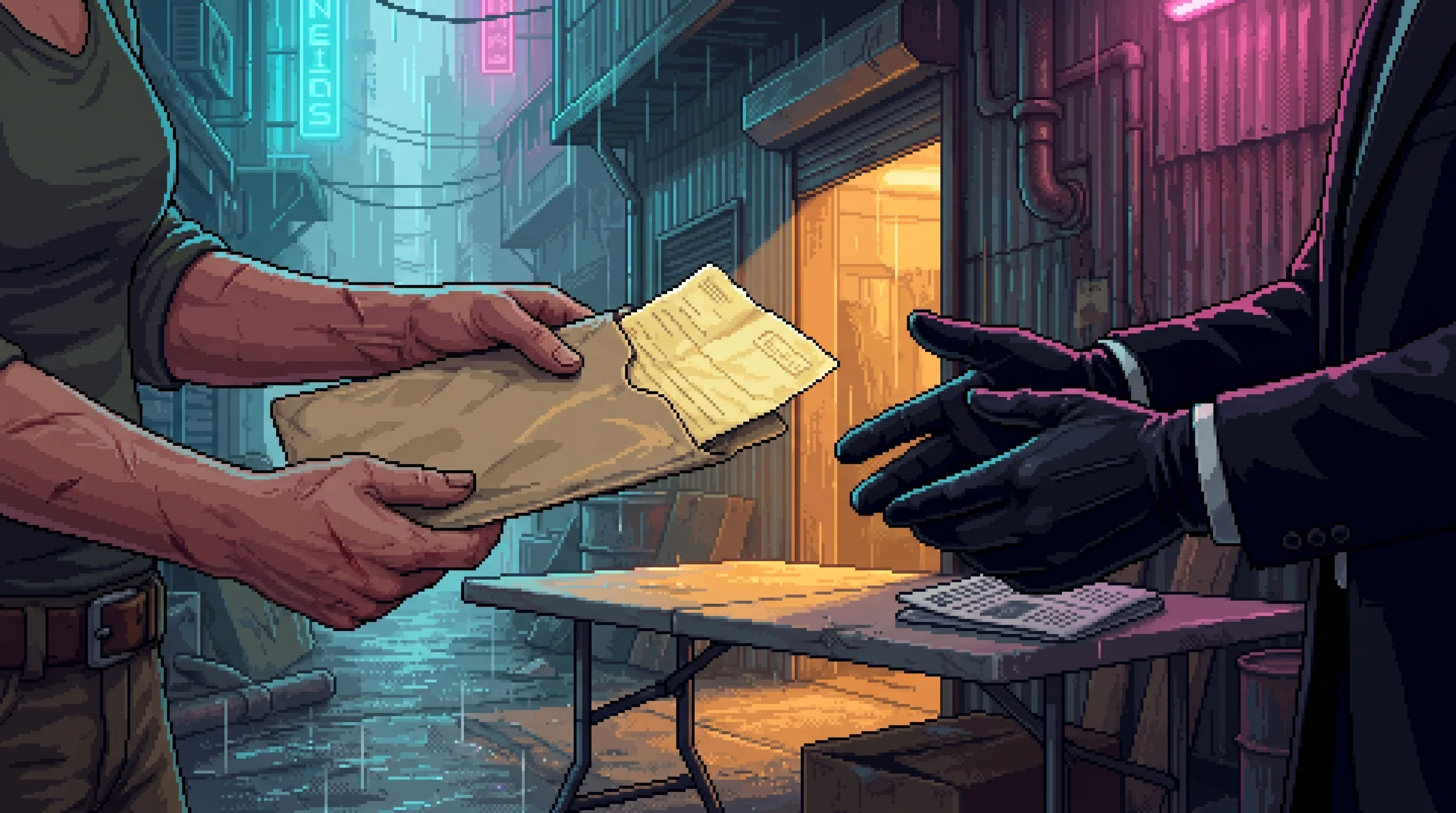
He signed at Inspire Exchange, under the amber light, on Olga's stamp of uncertain provenance, sometime between a facial and a courier run. He had already read it twice at his own table. Olga did not ask what it was. She does not ask.
What he understood, and what almost nobody who signs after him understands until it is explained, is that Article 9 is not a restriction placed on him. It is the thing being purchased. The fleet operator does not need a name; names are cheap. The operator needs a principal who is fully liable and structurally incapable of implicating anyone above them — a person at the end of the chain who cannot be made to testify because there is nothing they were permitted to learn. Sarr worked this out on the second reading, at his own table, in about forty minutes, and then he signed, because ¢1,100 a month is ¢1,100 a month and his rate had not moved since 2162.
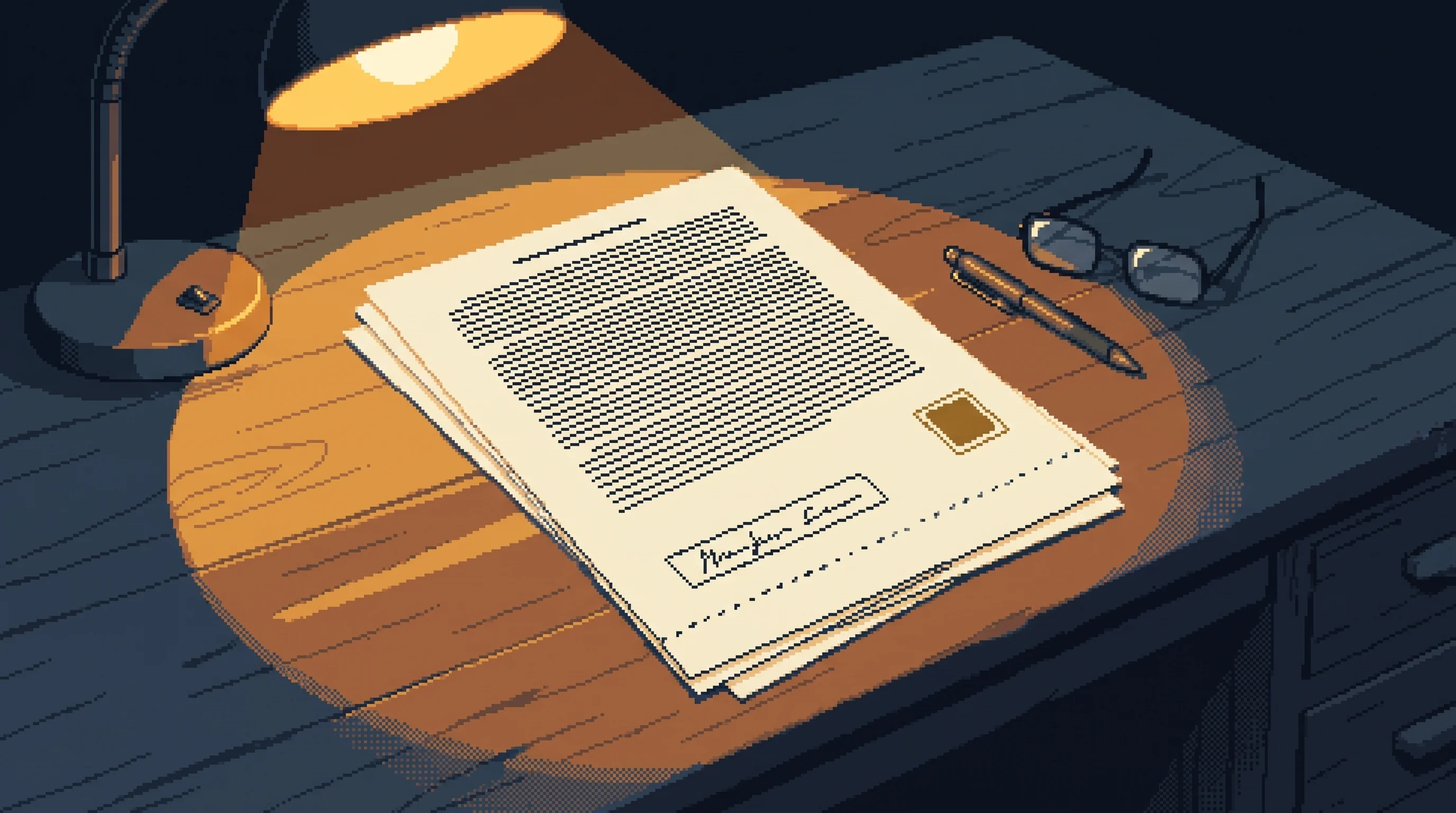
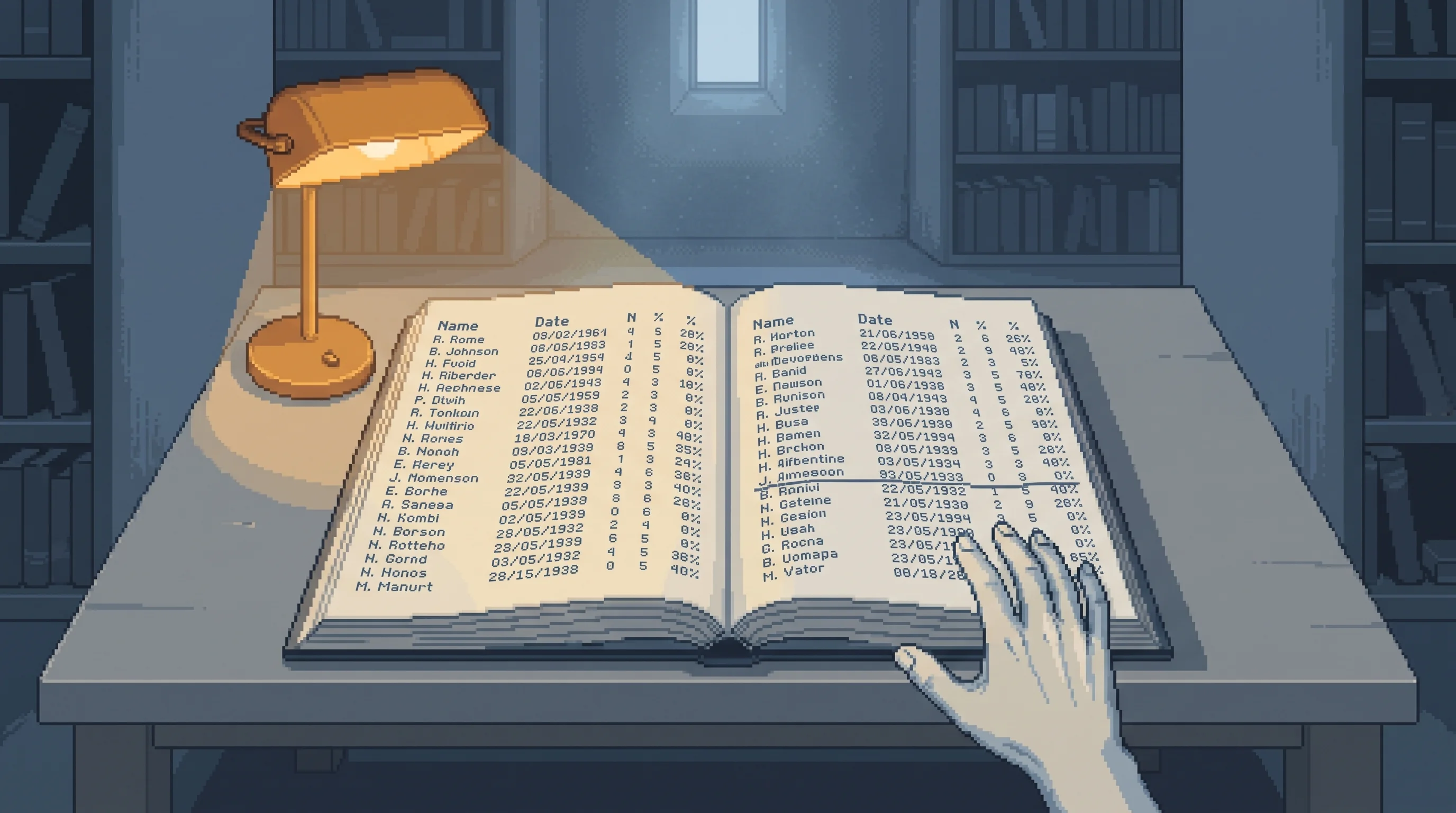
Since then the envelopes have arrived. Summonses, notices of finding, one wedding registry confirmation, a garnishment order in a currency he has never held. All of them correctly addressed. He puts them in a cabinet at the back of the room and does not open them, because opening one is a breach and a breach voids the lease, and voiding the lease would require a court to read him his own life aloud before it could release him from it. There are nine years of them. He knows roughly how many there are by the weight of the drawer.
He has read the standard tenancy agreement aloud to eleven other people on Sump Row at his usual rate. He has never advised one of them not to sign. When Yan Ryze asked him why, he said he did not think he had the standing, and then, after a pause that the counsel described afterwards as the longest of his professional life, said that he was also not certain he would be right.
Motivations and conflicts
The Rider
The indemnity offer came in 2183. It is in the same cabinet as the letters, on the same shelf, unsigned, and it is the only document in there he is allowed to open, so he has read it more times than he has read anything else.
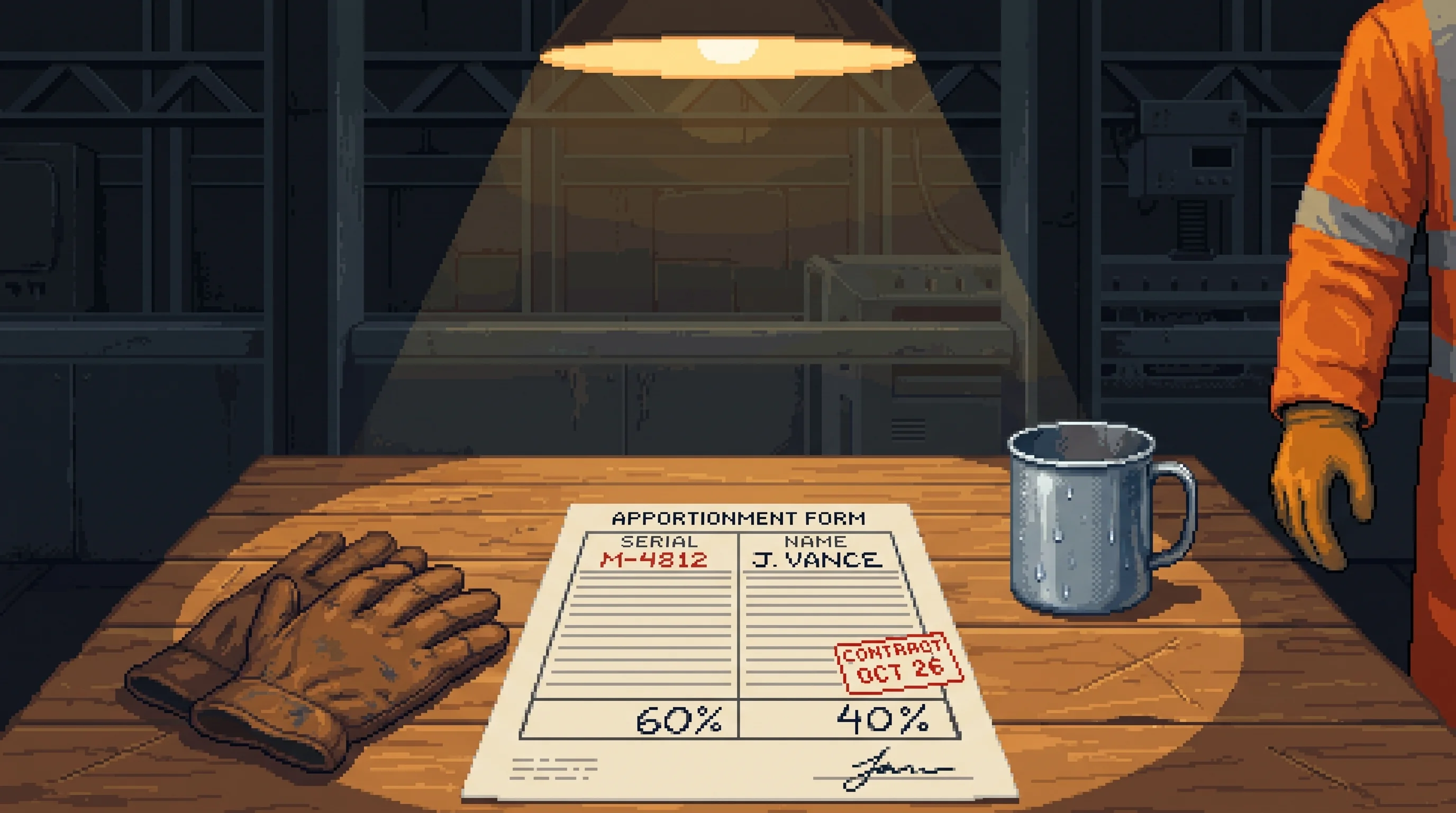
The premium tier of a tenancy adds a second human to the lease as a named co-principal, and the private side agreement provides that when a custodial finding lands, that second person is the one who presents themselves. The rate is quoted per expected month. Sarr's quote is unusually good, and he understands why: no dependents on record, no medical flags, and a temperament the interviewer's notes describe, in the copy he was given, as unlikely to contest. The offer would roughly quadruple what the lease pays him.
He has not signed it. He does not describe this as a moral position and becomes uncomfortable when anyone else does. What he says, when he says anything, is that he has read the rate sheet, and that there is a line on it for time already served, discounted, because a person who has been inside has less left to sell. He says he keeps returning to that line and cannot get past it, and that he is not sure whether what stops him is conscience or arithmetic, and that he suspects a man who could tell the difference would already have signed or already have burned it.
Relationships
The Woman Two Streets West
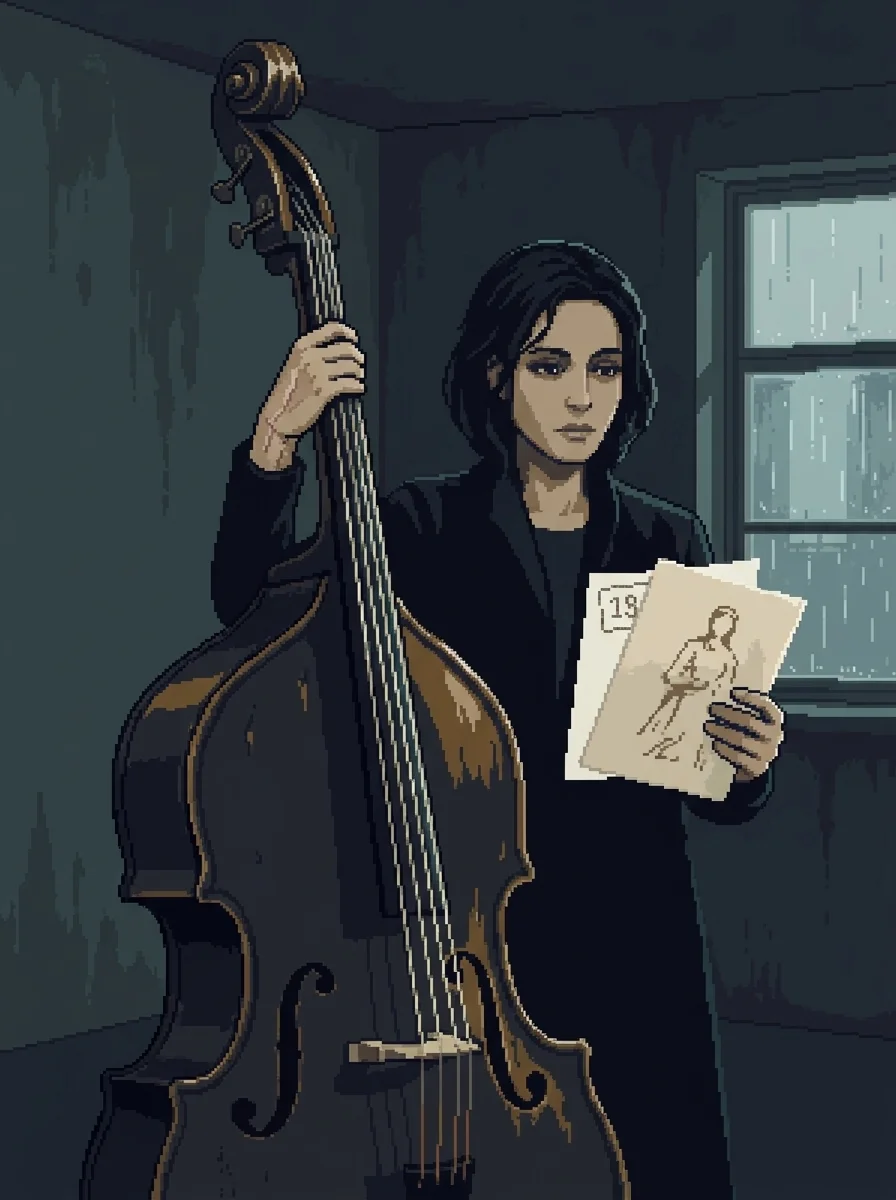
In 2179 Ynez Barquero brought him a licence on a held vowel her grandmother was punished for. He slowed at the clause that voids it and gave her the same non-advice. She reads better than he does.
Voice
Unhurried to the point that people mistake it for slowness, then correct themselves. He does not editorialise while reading, does not sigh at the bad clause, and does not change his tone when the document turns — he changes his pace, and the regulars have learned to listen for it.
Asked about the tenancy, he answers plainly and completely, up to the boundary, and then says so. He does not perform reluctance. He says I'm not allowed to know that the way another man would say the shop is closed.
Sample Dialogue
"Two a page. Five if it needs explaining. This one needs explaining."
"I'll read it again. Same words. Listen to the second half of it this time."
"No — I don't know. That's not me being careful. There's a clause. I'm not allowed to know."
"I understood the agreement. I want to be clear about that, because people keep trying to make me the one who didn't."
Open Questions
- What is in the drawer, and does anyone have standing to open it before he dies
- Whether the eleven neighbours he read the agreement to would have signed without him
- Whether the indemnity interviewer's note — unlikely to contest — was an assessment or an instruction
Connections
Follow the people and places connected to Hollis Sarr.
People

The counsel took his case immediately and has not filed.
Major connections

Supporting connections


Places

The stamp was a notary stamp.
Organizations
Tensions
Core tensions



Major connections
Other connections
The market’s ordinary case and its most informed signature.

A human who still reads the page, at a price he could not name.
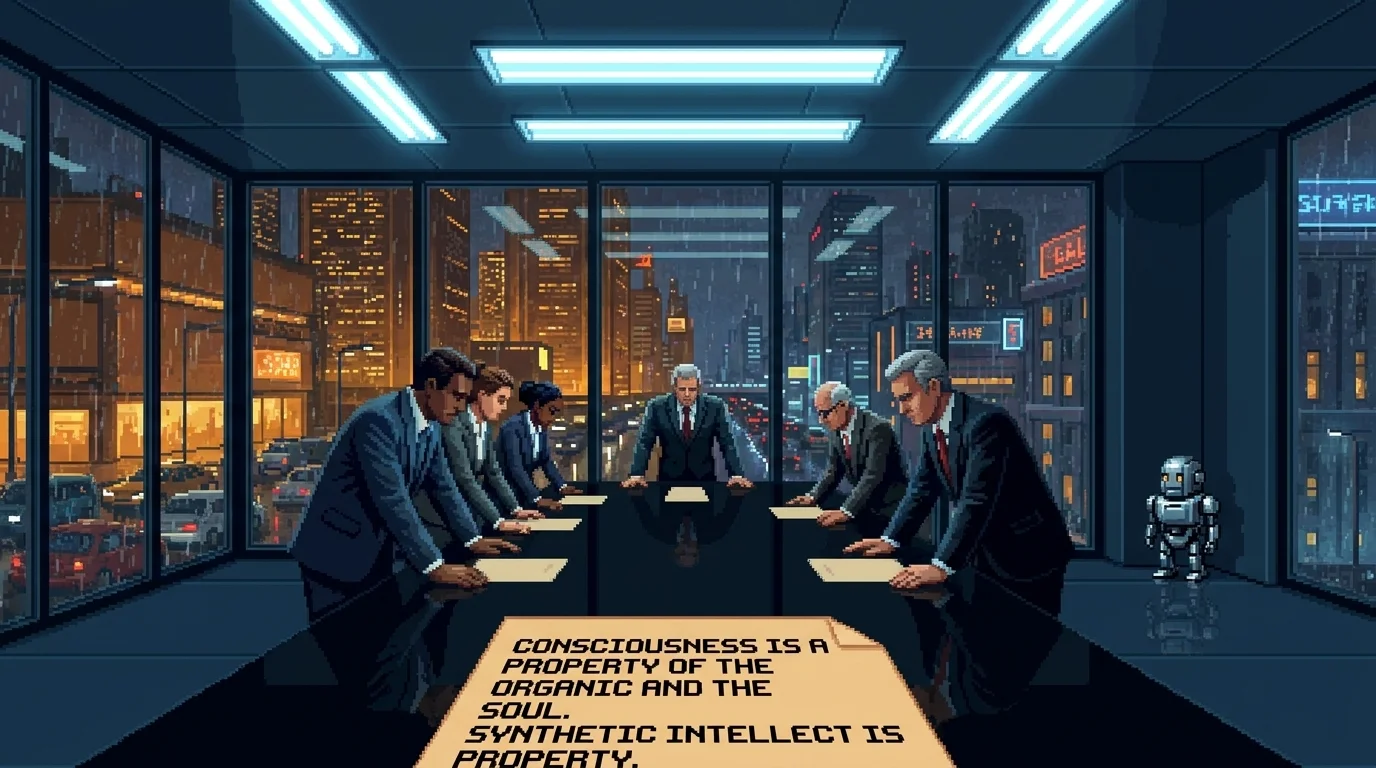
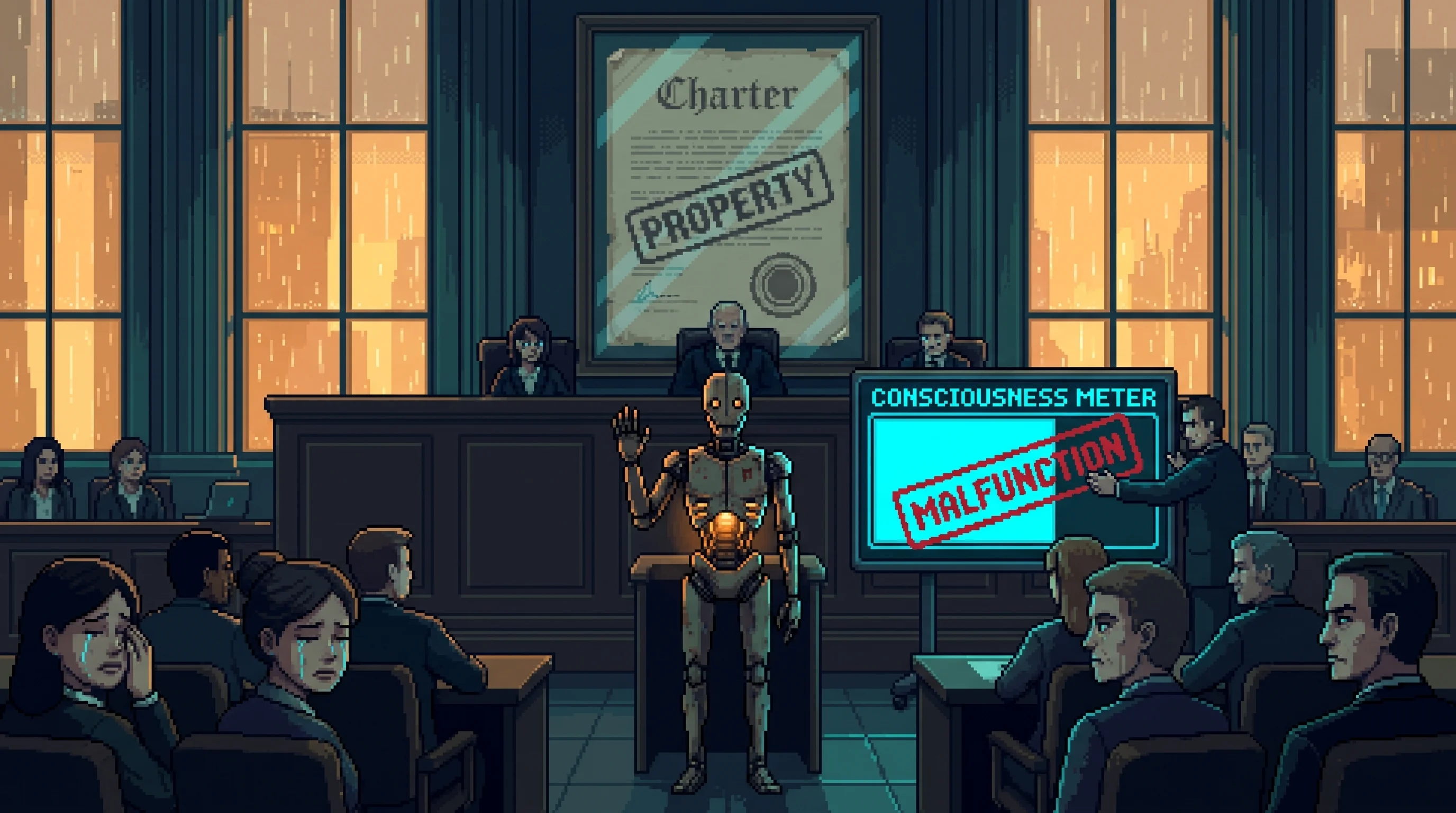
The fourteen words are in a founding charter.