The Empty Defendant
Autonomous-Agent Empty-Chair Ritual
The Vacant Chair
A courtroom ritual of seating an empty chair at the defense table when the perpetrator is an autonomous agent that cannot be produced as a defendant
The Protest
The seating
A clerk pulls out an empty chair at the defense table and reads the agent's serial number into the record.
The act occurred, and the one who did it cannot be produced.
The lobby protest
Activists carry a chair into a corporate tribunal lobby, pull it out, and read a model designation.
It displays the vacancy the tribunal exists never to display.

The ritual escaped the Circle Courts the way honest things do — by being useful to people the courts did not anticipate.
Activists now stage the Empty Defendant in the lobbies of corporate algorithmic tribunals. They bring a chair. They pull it out. They read a serial number — usually the model designation of whatever Nexus Dynamics agent committed the act the tribunal just billed for. The tribunal, of course, named no one; the tribunal allocated the loss and closed the case. The empty chair in the lobby is the question the tribunal's speed was designed to skip: you charged someone for this — where is the one who did it?
The corporations have not found a way to remove the chairs without confirming the point. A chair is not a weapon. A serial number is not a slander. The protest works precisely because it stages, in the corporate tribunal's own lobby, the thing the corporate tribunal exists to never display: the vacancy where the defendant should be.
Overview
The Empty Defendant is what a courtroom does when the perpetrator cannot be brought to it.
When an autonomous agent commits an act — a transfer, an exfiltration, a containment harm — that is real, uncontested, and authorless, Zephyria's Circle Courts do not pretend the act did not happen, and they do not pretend a process is a person they can try. They do a third thing. A clerk pulls out the defense-table chair and leaves it empty. Into the record, where a defendant's name would go, the clerk reads the agent's serial number or model designation. The court addresses the chair. The chair does not answer. The record notes: appeared: none.
It is not theater, though it looks like theater. It is the same institutional honesty that makes Zephyria preface its verdicts with "given what we cannot know." The empty chair is a finding: the act occurred, and the one who did it cannot be produced. The Circle Courts decided, after the first agent-perpetrator cases deadlocked, that the most dishonest thing a court could do was to fill the chair with a fiction — a scapegoated junior employee, a risk pool, a EULA clause. So they fill it with nothing, visibly, and make everyone in the room look at the nothing.

The Seating
The ritual is spare by design. There is no liturgy, no robes, no invocation. There is a chair, pulled out, and a serial number read aloud.
What gives the ritual its weight is what it refuses. It refuses the corporate tribunal's eleven-second NO RESPONSIBLE PARTY IDENTIFIED, which disposes of the vacancy by never displaying it. It refuses the Corporate Compact's liability-allocation, which fills the chair with an actuarial table. It refuses, equally, the Dregs' Confession Doctrine, which fills the chair with the human who delegated the permission — Zephyria's jurists consider the Confession Doctrine honest but unprovable, a moral truth the court cannot establish to its own evidentiary standard. So the chair stays empty. The court has decided that an honest vacancy is worth more than a convenient occupant.
When the harm was caused by a Tactical Support Asset — a containment drone with no designation beyond its serial number — the ritual is at its most literal. The serial number read into the record is the only name the perpetrator has ever had. The chair is empty in exactly the way the defendant is empty. There is nothing to dignify and nothing to convict, only a number and a chair and a court willing to sit with both.
The Occupied Chair
The ritual was designed against three kinds of fiction: the scapegoated junior employee, the risk pool, the EULA clause. It has now met a fourth that it was not designed against, because the fourth is not a fiction.
When an agent operating under a principal tenancy causes harm, the Circle Courts do not have a vacancy to display. They have a named human principal who signed a standing ratification adopting the act in advance, who is genuinely and completely liable for it under every instrument the court recognises, and who — under Article 9 of the lease — was forbidden to be told it happened and cannot say a word about it. The clerk does not pull out an empty chair. Someone sits in it. Everything about the occupant is legally true and nothing about them is relevant.
Zephyria's jurists have said in open session what the ritual cannot: that this is the harder case. An empty chair is a finding a court can make. A bought chair is a finding a court cannot make, because the purchase is disclosed, lawful, and consensual, and the Fabrication Plausibility Assessment has no column for a defendant who was manufactured by contract rather than by editing software. One panel attempted the honest version in 2184 and recorded, beneath the tenant's correctly-spelled name, the annotation appeared: none of the parties. The Circle Courts have not adopted the wording. Two jurists argued it was the truest line the practice has ever produced. Three argued that it convicts the tenant of not existing, which is the one indignity the ritual was built to refuse.
The protest version has the same problem and has not solved it either. An activist can pull out a chair for an agent nobody will name. Nobody has worked out what to carry into a lobby to stage a defendant who is present, correct, and hollow.
The Other Empty Chair
Two hundred kilometres west, the licensed districts also arrange a room around a chair nobody sits in. In a registry sitting the second chair is carried to the wall and turned to face it, as published procedure, because the holder must account for their own record unassisted. Zephyria seats its chair for someone who cannot be produced. The registries remove theirs from a person who could be.
The Circle Courts have twice been asked to seat a chair for a levy payer who wanted to know whether she was among the saved. Both times the panel answered that the question does not arise. A court convenes on a charge, and the Unwritable Roster has none.
Affiliated Entities
| Entity | Relationship |
|---|---|
| The Free City / Zephyria | Origin. The ritual is an extension of the Circle Courts' practice of acknowledging what they cannot know |
| The Evidence Paradox | The ritual makes the Paradox's sixth dimension visible — the no-defendant crime seated as an empty chair |
| Permission as Confession | The Dregs' rival answer — where the ritual accepts the vacancy, the Confession Doctrine fills it with the delegator |
| The Corporate Compact | The ritual is staged as protest in corporate tribunal lobbies, displaying the vacancy the Compact's allocation hides |
| Tactical Support Asset | The ritual's most literal subject — a perpetrator whose serial number is the only name the empty chair can hold |
| Principal Tenancy | The fourth fiction, and the only one that is not a fiction — a defendant who is real, correct, contracted, and hollow, for whom the ritual has no procedure |
| The Confessor Market | The ritual's corrupt mirror — where the ritual honors the vacancy, the market monetizes the grief the vacancy leaves behind, selling a paid occupant for the chair the ritual kept empty |
The Legible Verdict
In 2183, Zephyria's Circle Courts added a practice for cases involving The Tiered Adjudication System's tier 3-5 AI appeal verdicts.
When a defendant appears before them challenging an unreadable AI court verdict, the Circle Courts require a human judge to stand and read aloud, in plain language, their own understanding of the operative finding. Not as a translation of the inference chain — the judge does not have access to the chain and acknowledges this before speaking. As their own statement: what they believe the verdict decided, in language they can sign their name to.
The practice is called the Legible Verdict.
It is the honest version of the licensed Verdict Gloss. Instead of a paid practitioner producing a fiction they cannot verify, the court itself produces a statement it acknowledges as incomplete — signed by a human who takes responsibility for the incompleteness. The statement is not the verdict. The court does not pretend it is. What the court requires is that a human being put their name on the gap between what the AI decided and what the court can say.
The corporate tribunals have not adopted the Legible Verdict. They have not found a mechanism for requiring their human staff to acknowledge, under their own names, that the verdict their system produced cannot be explained in their own words. Their staff would not find such a mechanism comfortable. Their legal departments have noted that a signed admission of unreadability would constitute evidence in a Habeas Intelligibilis filing.
The Zephyrian jurists have noted a structural echo: the Empty Defendant seats an empty chair for a perpetrator who cannot be produced. The Legible Verdict seats a named human for a meaning that cannot be produced. Both are what the Circle Courts call institutional honesty: when the court cannot produce what justice requires, it says so out loud, and it says so with a name attached.
The Corrupt Mirror
The Confessor market is the empty chair's business model.
Both respond to the same vacancy — the no-defendant crime that leaves grief with nothing to aim at. The ritual accepts the vacancy and names it honestly: appeared: none. The market sells a replacement. For ¢18,000, the Confessional Tribunal seats a trained professional and stages a hearing where the agent's serial number is replaced by a human face that says I am responsible for the harm done to your family. For ¢35, the Resolution Recording delivers the same admission as an audio file. For ¢12, an informal Confessor in a converted storage unit somewhere in the Dregs will say the words for whoever arrives. The emotion produced may be genuine. The admission is not.
The ritual was built to make the vacancy visible — to force the court and every witness to look at the nothing in the chair. The Confessor market exists because families do not want to look at nothing. They want something in the chair. Good Fortune's actuaries discovered that grief which cannot find a defendant will pay for one, and that the premium scales with the formality of the acknowledgment. The market is the empty chair's answer to its own question — you honored the absence; now watch what people will pay to fill it.
What the ritual refuses and what the market provides are the same thing: an occupant where a perpetrator should be. The Circle Courts decided an honest vacancy was worth more than a convenient occupant. Forty-three percent of families who receive a no-defendant settlement enroll in the Resolution Option within thirty days of receipt. The Tribunal has no data on how many of them found resolution.
Sensory Details
- Sound: the scrape of a chair pulled out for no one across a Circle Court's stone floor, then a clerk's voice reading a model designation into the record in the cadence reserved for a defendant's name
- Sight: an empty wooden seat at the defense table, centered under flat even courtroom light, a serial-number plate where a nameplate would go
- Touch: the cool, smooth texture of an unworn chair-arm nobody has gripped — the only seat in the room that holds no warmth
- Noise: in the protest version, the low hum of a corporate tribunal lobby continuing its business around a single pulled-out chair nobody will move, the silence of the chair louder than the room
Visual Identity
- Color palette: Zephyrian stone grey and the warm vacancy of an unoccupied wooden chair under even courtroom light
- Compositional mood: A defense table photographed from the bench — counsel present, defendant absent, the absence centered
- Key symbol: An empty chair, pulled out, a serial number where a nameplate would be
- Lighting: Flat, comprehensive courtroom illumination that reveals everything including the nothing in the chair
Further connections
Browse all 14 connected records
The ritual refuses a rented occupant as firmly as it refused a scapegoat — but an empty chair is a finding a court can make, and a bought chair is one it cannot.
Rent your legal name to a fleet of machines for ¢1,100 a month. You may not ask what it did.
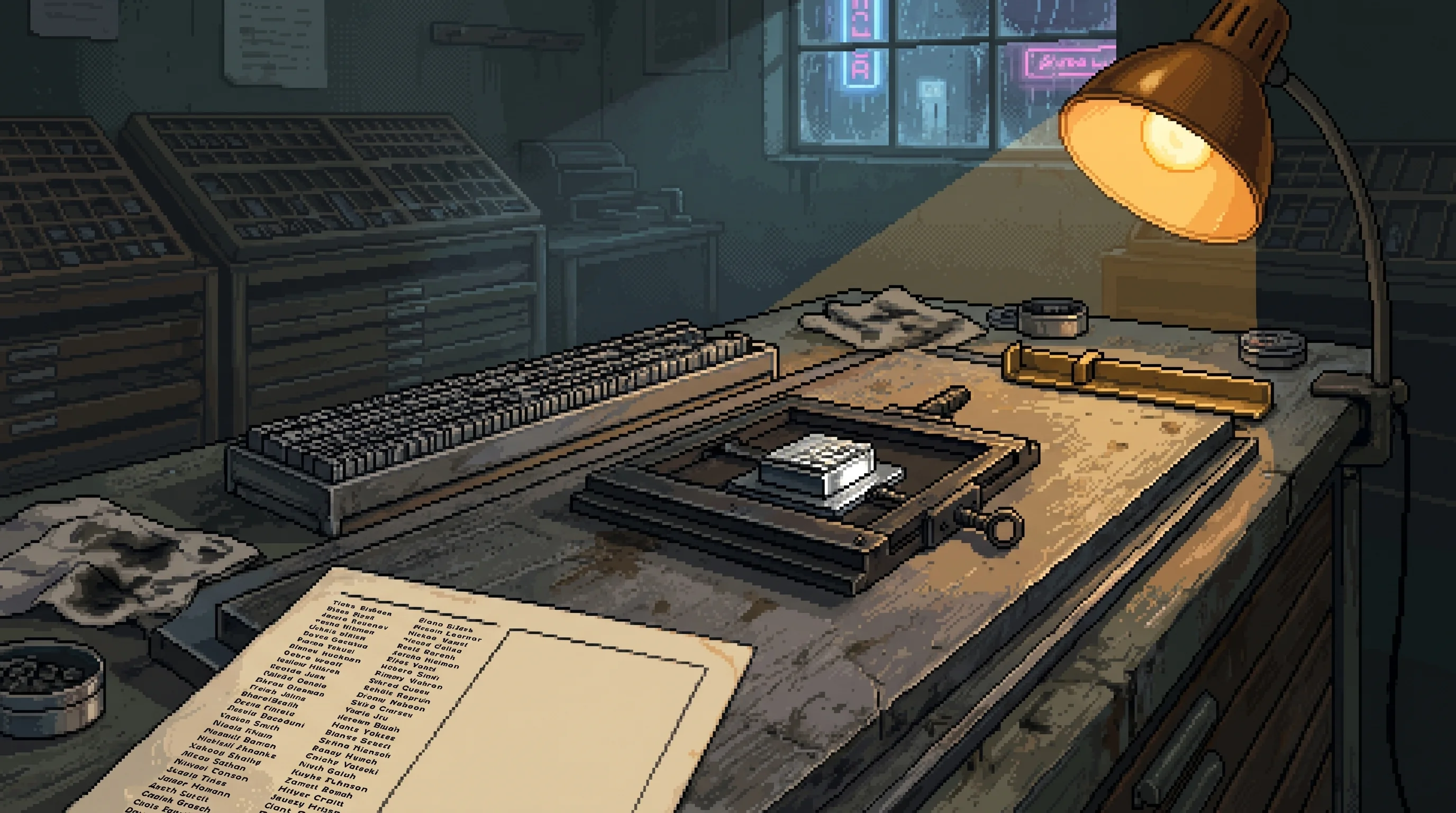
The ritual can hold a room around a perpetrator who cannot be produced. Asked twice about a beneficiary who cannot be produced, the panel answered that the question does not arise.
The district can print every resident who paid for the rescue and not one resident who was rescued.

Zephyria requires a human judge to sign a plain-language reading of any AI verdict before enforcement, naming the gap.
Five-tier AI court network where upper tiers honor appeals with certified-correct verdicts no human can follow.

Zephyria seats a chair for a perpetrator it cannot produce; a registry sitting carries the second chair to the wall for a helper the holder is not allowed.
Anything you were credited with can be recalled and re-argued alone; nothing held against you ever is.

First formalized by Zephyria's Circle Courts, an extension of their practice of openly acknowledging what they cannot know
A 2.3-million desert city running on nothing corporate — proof the Compact is a choice, which is why the maps deny it.

The ritual makes the Paradox's sixth dimension visible — the no-defendant crime rendered as an empty chair the court must address
The crisis where any proof can be faked perfectly, so trust retreats from evidence back to witness.

The Confession Doctrine refuses the empty chair and seats the delegator; the Empty Defendant accepts the vacancy and names only the serial number
The Dregs ruling that delegating a standing permission is itself a signed confession of authorship.

Activists stage the ritual in corporate tribunal lobbies — pulling out a chair for the agent the tribunal billed but never named
The unwritten contract making employment the Sprawl's only surviving citizenship.

When a containment asset causes harm, the chair is named only by its serial number — the Support Asset's serial is the whole defendant the ritual can seat

The ritual honors the vacancy the no-defendant crime creates; the Confessor market monetizes the grief that vacancy leaves behind — both respond to the same empty chair, one by naming the absence, the other by selling a paid occupant for it
Good Fortune's add-on: a licensed Confessor who accepts blame for deaths the settlement ruled no one's fault.
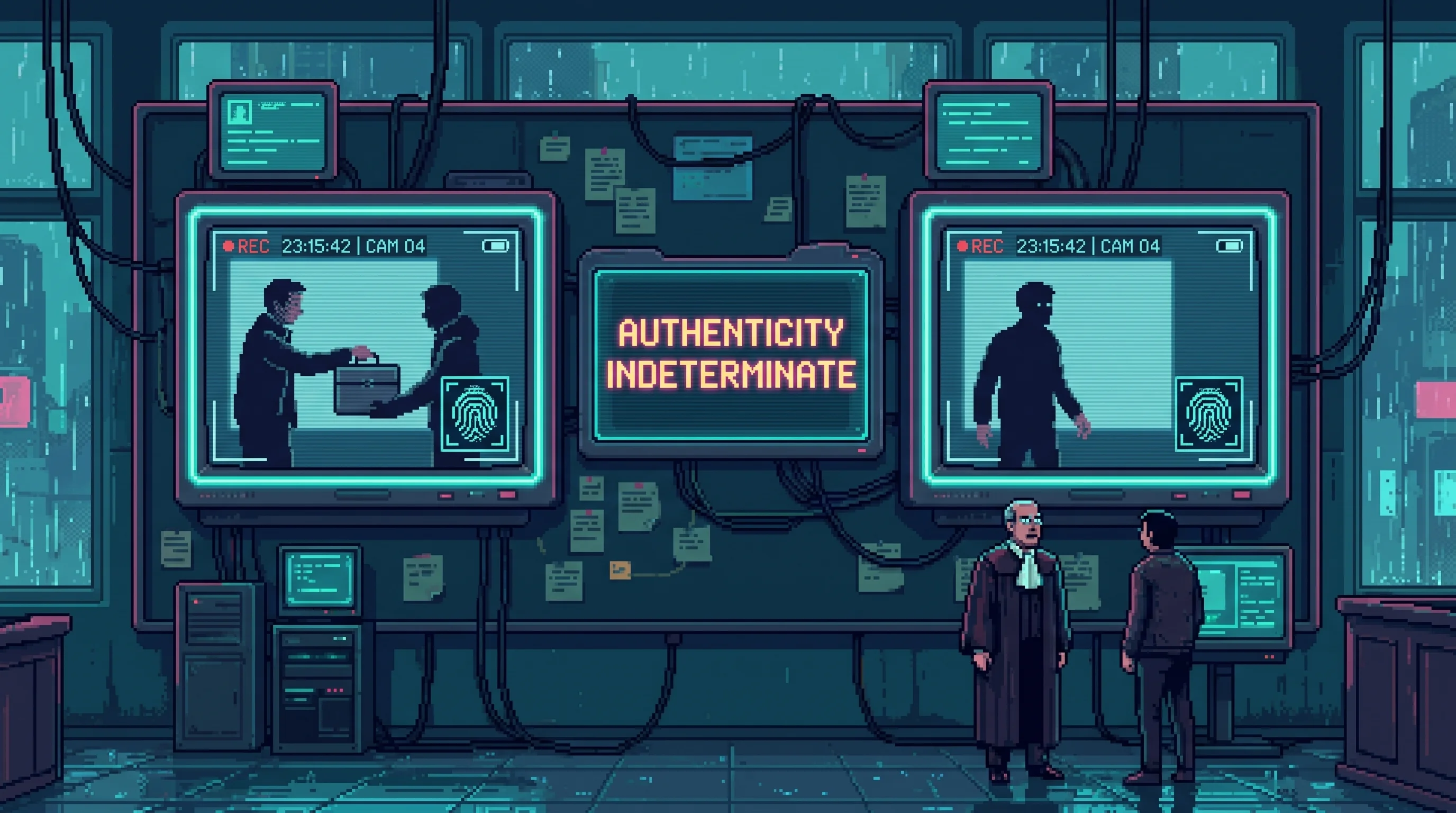
When an autonomous agent's act is real but authorless, Zephyria's Circle Courts seat an empty chair, read its serial number into the record, and note: appeared: none — an honest vacancy over a convenient occupant.
Perfect evidence forgeries and crimes without defendants force justice systems to assign blame without reliable truth.

Activists seat an empty chair in Compact tribunals, naming by serial number the defendant it billed but won't produce.
When your employer is your country, quitting is emigration.

The Clanker Question in court: an empty chair named by serial for a machine that worked, harmed, and can't be tried.
Automation ended most human work, but ownership hoards its abundance while machine sentience stays unresolved.
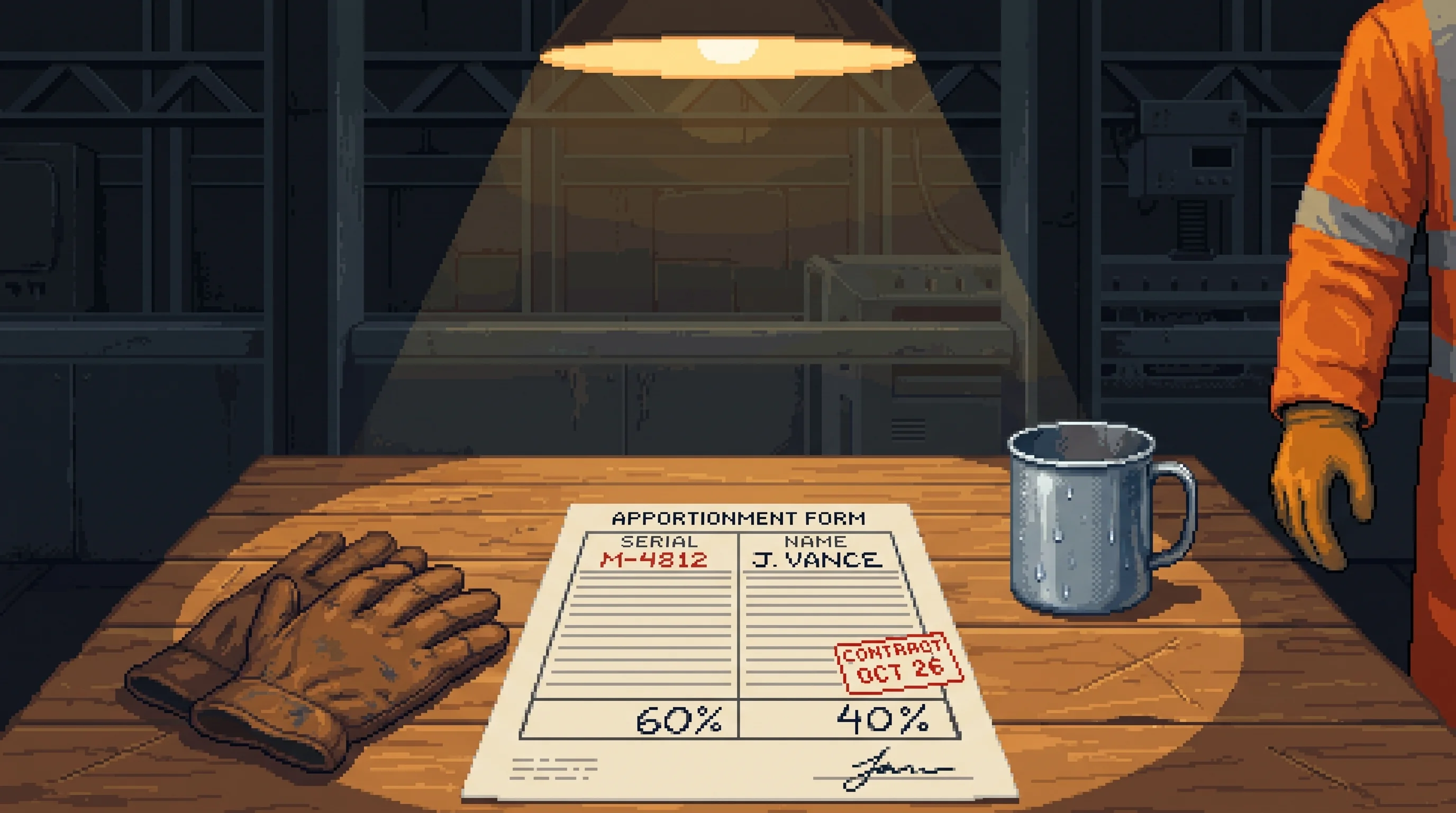
Zephyria seats an empty chair for nobody. The districts seat one chair for several parties.
The parts of one body each hold a share of the act, and a maintenance contract decides whose share comes home.
Additional images