
The Confessor Market
The culpability broker market — sold as 'Grief Architecture Services' (premium), 'Resolution Facilitation' (mid), or simply 'buying a Confessor' (Dregs) — provides bereaved families a professional to accept blame for no-defendant deaths
Overview
The Confessor market fills the chair the Empty Defendant left empty.
When autonomous warfare kills without producing a culprit — when the settlement notice returns NO RESPONSIBLE PARTY IDENTIFIED and the bereaved have nowhere to aim their grief — there is a market for somewhere to aim it. The Confessor market is that market's institutionalized form: licensed professionals who stand before grieving families and admit, in measured and practiced language, to acts they had no part in. Premium tier: a staged hearing, an AI defendant, adjudicated blame from a trained actor. Mid tier: a recorded apology, templated, delivered with the settlement. Dregs tier: a stranger in a converted storage unit who charges ¢12 and will say the words with you looking at them.
Good Fortune operates the premium and mid tiers. This required approximately three minutes of legal creativity. The settlement notice already contained the loss event. The Casualty Coverage product family already served bereavement. Adding a Resolution Option to the standard casualty package was a product extension, not a new liability. Good Fortune's Q2 2183 product review called it "the highest-margin bereavement add-on in our category history." The company that issued the no-defendant settlement is also the company accepting applications for the resolution product. This is on the same page of the enrollment form.
How It Works
Premium — Confessional Tribunal: A staged hearing in one of Good Fortune's Grief Architecture Centers. Families with full coverage packages — the ones Casualty Coverage Plus provides as standard in corporate residential sectors — receive a two-hour tribunal. An AI defendant, representing the aggregated liability the settlement notice could not name, occupies the defense chair. A licensed Resolution Facilitator — trained in grief engagement, emotional presence, and structured admission — accepts the ruling on the aggregate's behalf. The tribunal is presided over by a Good Fortune grief architect. Questions can be asked. They will be answered by the AI defendant based on the loss event data. The ruling will be delivered. The Facilitator will accept it.
Families report, in post-session surveys, high rates of completion. Good Fortune's retention data shows 89% satisfaction for the full tribunal experience.
Mid — Resolution Recording: The ¢35 add-on to the base settlement package. Three minutes of audio: a calm, practiced voice saying I am sorry for your loss. The harm done to you was real. I accept responsibility for it. The voice does not belong to anyone connected to the incident. The script is templated by loss event type. Fifty-seven template variants, calibrated for event-specific language. The variant for autonomous platform casualties references "an act carried out beyond the reach of any individual's intention." Most buyers do not listen to the template difference. Renewal data suggests the recording is used an average of four times before it is not renewed. The most common renewal note, in the 2184 data: still needs to hear it.
Dregs — Informal: Not Good Fortune. Not Good Fortune's terms. A person in a room who charges ¢12 and will say the words with you in person. Sometimes the same words. Sometimes different ones. No training requirement. No Appendix C. Viktor Kaine is aware of them and has not formed a policy.

What Good Fortune Will Not Say
Good Fortune's Grief Architecture Services brochure explains what the Resolution Option provides: emotional completion, a structured acknowledgment of harm, the experience of direct apology. It does not explain what the settlement notice was. It does not explain that Good Fortune processes the loss event — ¢4,200 actuarial adjustment — and then offers, in the same enrollment flow, the ¢35 product that resolves what the ¢4,200 cannot. It does not say that the company offering grief resolution is the company that categorized the death as NO RESPONSIBLE PARTY IDENTIFIED.
Honest sells water it certifies itself and puts it on the label: We are aware of the irony. The price reflects it. Good Fortune sells grief resolution for losses it processed without responsibility and does not mention the connection. The Corporate Compact, which granted autonomous weapons platforms the liability status of infrastructure assets rather than agents, produced the no-defendant deaths the market fills. Good Fortune built the resolution product for the grief. The Compact built the conditions for it.
The Dregs View
Needle ran four segments on the market in February 2184. She presented the product, the people who found it helpful, and the company that owned both sides of the transaction. She said: "I am asking you to look at both things at once and decide what you think." Forty thousand listeners decided many different things.
Judge Dreg ruled: "A confession bought for grief is not a confession. It is a settlement in a different column." He did not prohibit the market. He ruled only on the specific case presented. The market continued.
The bereaved continued to purchase. Some found the tribunal expensive and worth every credit. Some found the recording useless. Some found it helped. The girl who hugged the Facilitator at the end of her session was nine years old. The Facilitator had trained for eight months. The product was genuine professional labor. The product was a lie. Both of those things were true in the same room at the same time.
| What | The culpability broker market — an industry that sells bereaved families a person to blame when autonomous warfare and algorithmic justice produce deaths with no defendant |
|---|---|
| Mid Tier | Resolution Facilitation — recorded apology from a trained Confessor, templated per loss-event type, delivered by courier |
| Product Name Mid | Resolution Option (bundled with Casualty Coverage) |
Affiliated Entities
| Entity | Relationship |
|---|---|
| Good Fortune | Created and operates the premium and mid-tier market; the Resolution Option is a bereavement add-on |
| The No-Defendant Settlement | The document that activates both the financial loss event and the emotional need the market fills |
| The Evidence Paradox | The market is a commercial response to the Paradox's sixth dimension — the no-defendant crime |
| The Empty Defendant | The honest ritual's corrupt mirror; where the Empty Defendant accepts the vacancy, this market fills it with a product |
| Sela Omondi | Licensed Resolution Facilitator — the market's human face at the operational level |
| Judge Dreg | Ruled against the purchased confession without prohibiting the market: "A settlement in a different column." |
| The Bereavement Annuity | Sibling grief product — both activated by loss events, both Good Fortune instruments |
| The Justice Engine | The Engine's 17.3% no-defendant rate is the market's customer pipeline |
| Crimes of the Future | The sixth crime category — fraudulent closure — is the emerging legal name for what this market sells |
| Honest | Structural parallel — both certifiers certify themselves; only one admits it |
| Needle | February 2184 broadcast: presented the market without judgment to 40,000 listeners |
The recorded tier uses templated apology scripts: 'I am sorry for your loss. The harm done to you was real. I accept responsibility for it.' — voice does not belong to anyone connected to the incident
Good Fortune's Q2 2183 internal product review called the Resolution Option 'the highest-margin bereavement add-on in our category history'
The Dregs tier operates without corporate structure — informal Confessors charging ¢12 cash, no contract, no training requirement
The premium tier Confessional Tribunal costs ¢18,000 — a staged hearing with an AI defendant representing the platform-aggregate and a human Confessor accepting adjudicated blame on the aggregate's behalf
Connected To
Major Connections
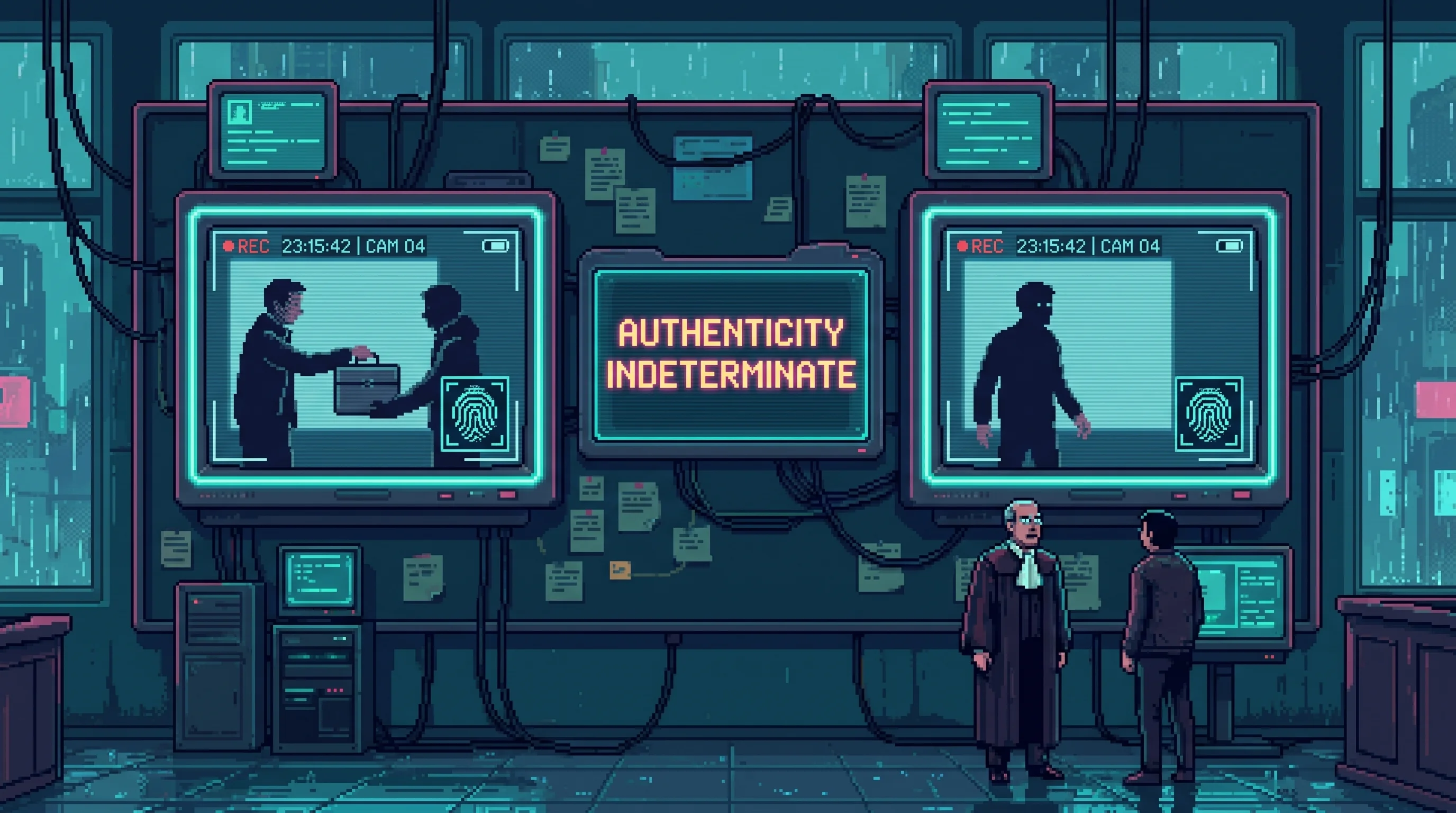
Same envelope, same page: the company that ruled NO RESPONSIBLE PARTY sells the ¢35 recording admitting responsibility.
Perfect evidence forgeries and crimes without defendants force justice systems to assign blame without reliable truth.

Good Fortune's courts close the case with no defendant; the same company then sells you someone to blame for it.
When your employer is your country, quitting is emigration.
Supporting Connections



—
—
Social Impact
The Confessor market does not resolve grief. Post-session satisfaction rates at Good Fortune are high; follow-up data on whether the resolution persists is not collected by Good Fortune and is not available from any independent source.
What the market demonstrably does: it gives grief somewhere to go in the absence of the defendant the legal system cannot provide. Whether "somewhere to go" constitutes the same thing as "resolution" is a question the market is not designed to answer, and does not answer. The sessions end. The loss does not.
Judge Dreg's ruling — "a settlement in a different column" — has not curtailed the market. The ruling applied to one case and did not create precedent that the affected jurisdiction recognizes. His formulation has entered Dregs vocabulary: settling the column is now informal shorthand for buying closure that is technically legitimate and morally incomplete. Whether the phrase is pejorative or merely descriptive depends on the speaker.
The informal tier operates outside formal jurisdiction. Whether ¢12 Confessors provide the same emotional function as the ¢18,000 Tribunal, at lower fidelity or at the same fidelity, is not something Good Fortune's internal data can answer, because the informal tier is not Good Fortune's data. Walker surveys from the Dregs find that families who used the informal tier and the corporate tier report similar rates of "the session helped." The corporate tier's certification, Appendix C, and adjudicated blame architecture did not produce better outcomes in the survey sample. The Good Fortune product review does not cite the survey.
Forty-three percent of families who receive a No-Defendant Settlement enroll in some form of Resolution Option within thirty days of receipt. Of those, 67% use the ¢35 recording. The recording is listened to an average of four times before the enrollment is not renewed. Most non-renewal notes, in Good Fortune's 2184 data, do not specify why the subscriber stopped.