The Last Middle Class
Sector 9 Field Report — Economic Elimination Archive

The Shop
Tomiko Sato owned a tea shop.
Six tables, a counter she built from salvaged steel, eight teas on the menu — four synthetic, four real. The real ones cost three times as much and sold better, which tells you something about the three-block commercial strip between Sector 9's residential tier and the Ironclad manufacturing perimeter in 2174. People walked past fourteen synthetic-tea vendors to reach her shop. She was profitable. Not prosperous. The distinction mattered to her.
In 2174, approximately 340,000 independent operators maintained livelihoods across the Sprawl outside corporate employment. By 2176, the number was closer to 40,000. The mechanism was not competition, market pressure, or personal failure.
What Killed the Shop
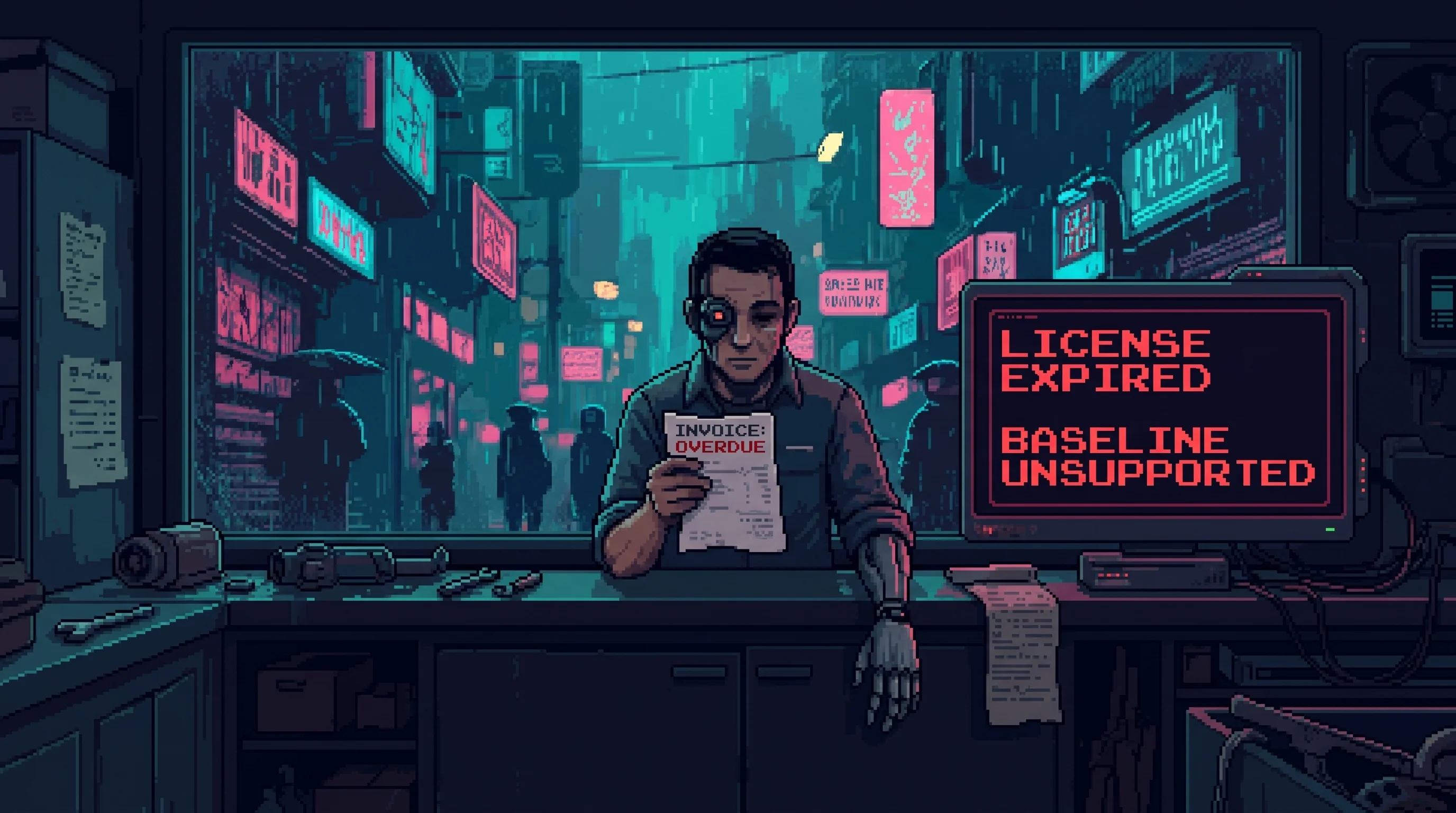
Nexus announced that consciousness licensing for independent operators would decouple from corporate-negotiated group rates. Independent Professional-tier licensing jumped from ¢7,200 to ¢18,000. The announcement was four paragraphs. Paragraph four noted that corporate employment included consciousness licensing at no additional charge.
Tomiko's annual profit was ¢14,000.
The math stopped working.
She spent seven of the twelve-month transition period trying alternatives — co-licensing arrangements with other Sector 9 independents, reduced-tier plans that would have limited her neural interface to business hours only, a brief inquiry into whether her tea shop qualified as a "cultural preservation site" under Ironclad's heritage exemption program. Heritage exemptions require structures older than fifty years. The shop was three years old. The counter was older — salvaged steel from a pre-Cascade cargo vessel — but the licensing board does not evaluate counters.
Nexus had modeled the licensing reclassification's absorption rate — how many independents would apply, in what order, from which sectors — before announcing it. Tomiko's application arrived on the day the model predicted, plus or minus six hours.
Independent operators who survived the decoupling did so through corporate subsidy (independence in name only), gray-market licensing (illegal), or operating without a consciousness license (also illegal, and cognitively debilitating). Within two years, 94% of the 340,000 were gone.
After the Transition
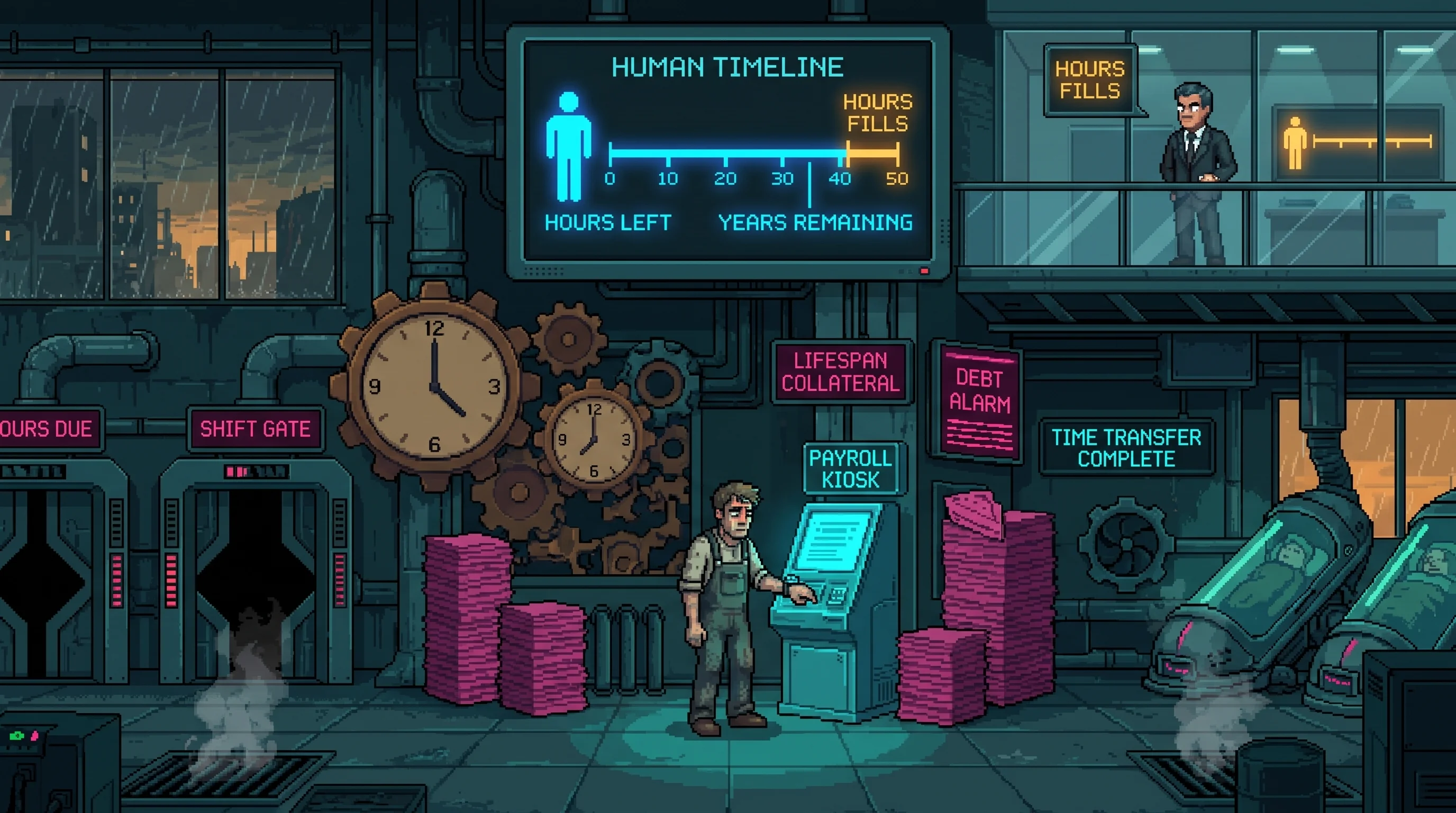
She took the corporate job in month eight. Nexus's onboarding division processed her application in eleven minutes. She manages the tea service for the Lattice's executive dining floor now — formally titled "Beverage Experience Curator," which is a way of saying she makes tea for people who could automate the process but prefer the optics of a human doing it.
The executive dining floor smells of nothing. Atmospheric processing strips scent to prevent distraction during high-value cognitive work. The tea is brewed by AI to molecular precision. It is objectively superior to anything she served in her shop. Nexus wellness surveys indicate she reports "adequate satisfaction" — the middle option on a five-point scale, selected with the deliberateness of someone who has considered all five options.
The Corporate Compact absorbed her. The Compact's cage is warm and the tea is excellent. She opted into employment. She now has full consciousness licensing, health coverage, and atmospheric processing that eliminates the smell of real tea from every room she works in.
The Artifact
Her counter — salvaged steel, built by hand, stained amber and green — sits in a Dregs scrap market. Current listing price: ¢340, based on metal content and weight. No mention of prior use. The tea stains reduce the scrap value by approximately ¢15 due to surface contamination requiring additional processing.
Someone will buy it for the metal. They will not know what it was. They will know what it weighs. The steel will become something else. The stains will become slag.
Scale
The Phase Transition is the systemic event. Tomiko is the transition told through one person.
Multiply her by 340,000 and you have the scale of the Great Divergence. Each one had a number that stopped working. Each had a counter, or a workbench, or a client list that became arithmetically impossible on the same schedule. The licensing decoupling was announced in a single press release. The displacement happened across two years of individual reckonings, one calculator at a time.
The Great Divergence's name for what happened to Tomiko is ¢4,000 — the difference between her annual profit and her new licensing cost, the margin by which independence became impossible. Tomiko's name for it is a Wednesday in month eight when she filed the application.
Unanswered Questions
- Was the licensing decoupling deliberate strategy or an unmodeled side effect of corporate rate negotiations? Nexus has not answered this. Nobody has asked officially.
- Nexus modeled the absorption rate with six-hour accuracy before announcing the change. What else has been modeled and not announced?
- Her communication logs show a 340% decrease in personal messaging volume since onboarding. This is not in her file as a symptom. It is not in her file at all.
- The 6% of independent operators who survived the decoupling — how? And what are they paying that isn't denominated in credits?
- The counter is listed at ¢340 in a Dregs scrap market. Has anyone recognized it? Does anyone remember what it smelled like?