CULTURAL REPORT
Opacity Culture

Opacity Culture

The Tell has replaced certain forms of physical intimacy as the most significant trust act in Dregs dating culture

WhatSocial practices, vocabulary, and identity markers developed around data resistance in the Sprawl's lowest tiersVocabulary'going dark' โ€” entering a surveillance blind spot for a private conversation, 'glass talk' โ€” conversation where real meaning is carried in subtext that telemetry can't capture, 'mirror face' โ€” practiced neutral expression generating minimal emotional telemetry, 'data weight' โ€” subjective sense of being observed, described as physical heaviness, 'shedding' โ€” generating deliberately misleading telemetry to corrupt one's model, 'clean' โ€” person whose behavioral model is significantly inaccurateRituals'dark dinner' โ€” meal shared in a surveillance blind spot, privacy as intimacy, 'the Tell' โ€” revealing your Exposure Index in a new relationship, replacing physical intimacy as most significant trust act, 'number day' โ€” anniversary of discovering your Exposure IndexSocial MarkersWearing the interface visible โ€” acknowledging surveillance without pretending otherwise, Carrying physical media โ€” paper notebooks, carved tokens, things that generate no telemetry, 'the dark handshake' โ€” physical greeting that includes palming a signal disruptor for 3-second telemetry gap

Overview

In the , privacy is foreplay.

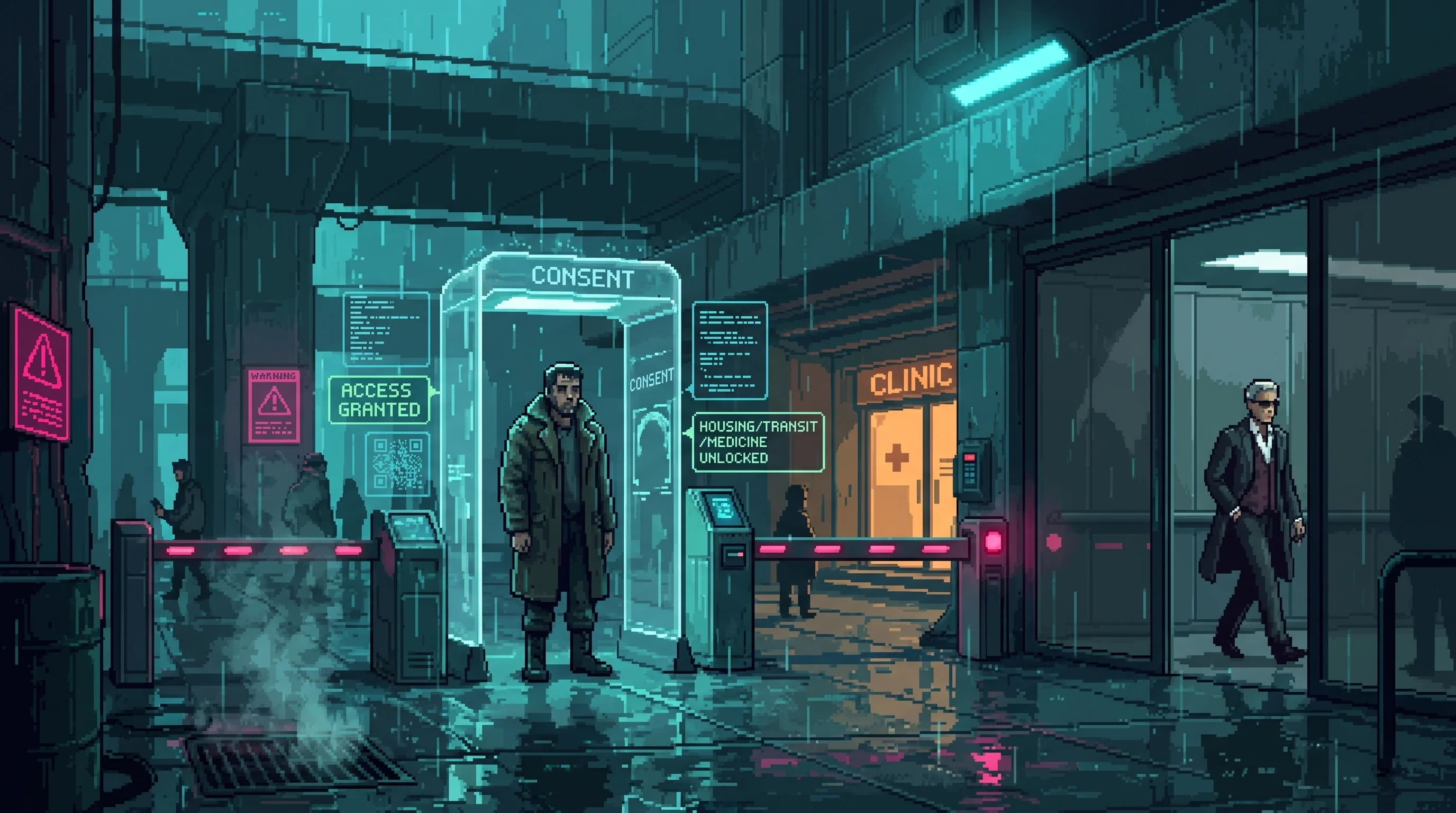
This is not a metaphor. Nexus behavioral telemetry captures an average of 14,200 data points per person per day in Sectors 7 through 12 โ€” emotional state, conversation content, biometric fluctuation, purchase intent, sleep architecture, the particular way your pupils dilate when you're lying about being fine. 's coverage is comprehensive and, by corporate metrics, a service. In this environment, the unrecorded moment has acquired a specific social value that Nexus's own sentiment analysts have described, in a quarterly report they probably should not have worded this way, as "intimacy-adjacent."

Opacity culture is what happened when the stopped trying to fight the and started dating around it.

The vocabulary came first. Then the rituals. Then the identity markers. None of it was organized. provided the politics; the culture provided the rest โ€” the part you carry into a relationship, a meal, a handshake. The part that determines whether someone trusts you enough to say what they actually think while the telemetry is off.

Sprawl sociologists have written eleven peer-reviewed papers on opacity culture's emergence. The papers are available on indexed academic databases. The irony has been noted by the culture's practitioners, who have developed a specific facial expression for it. The expression generates minimal emotional telemetry. They call it mirror face.

The Vocabulary

Opacity culture's primary contribution to the Sprawl is a set of words for things everybody already felt but couldn't report.

Data weight โ€” the subjective sense of being observed. Described consistently, across hundreds of documented accounts, as physical heaviness. Shoulders. Chest. A specific exhaustion that comes from performing normalcy for an audience you can't see. Nexus behavioral scientists classify data weight as "surveillance awareness bias" and consider it a calibration error in the subject's threat-assessment architecture. Dregs residents classify it as knowing someone is watching you and being tired. The clinical term has seventeen syllables. The lived experience has two words.

Going dark โ€” entering a surveillance blind spot for private conversation. in Sector 9 is the preferred venue, though any gap in telemetry coverage qualifies. Going dark for more than forty minutes triggers a passive anomaly flag in Nexus monitoring. Most dark conversations last thirty-eight minutes. This is not a coincidence.

Glass talk โ€” conversation where the real meaning lives in subtext that telemetry can't parse. Two people discussing the weather while communicating something entirely different through cadence, emphasis, and the specific words they don't use. Nexus sentiment analysis captures the words. It does not capture the pause before "fine."

Shedding โ€” generating deliberately misleading telemetry to corrupt your behavioral model. Buying things you don't want. Walking routes you'd never take. Expressing enthusiasm for media you find unwatchable. The goal is a model so inaccurate that its predictions become useless. A person whose model is significantly inaccurate is called clean. Clean is the highest compliment in the . It means the system thinks it knows you, and it's wrong.

Mirror face โ€” practiced neutral expression. Flat affect. Minimal emotional data output. The face you wear when you don't want the system to know what you're thinking, which in the is most of the time.

The dark handshake creates a 3-second telemetry gap โ€” too brief for anomaly detection, sufficient for a whispered word

The Rituals

The Tell โ€” revealing your in a new relationship. A number. Just a number. Lower means you've worked harder to be invisible. Higher means you haven't, or couldn't, or didn't know to try.

The Tell has replaced certain forms of physical intimacy as the most significant trust act in dating culture. You can show someone your body without showing them your number. Bodies are captured by telemetry regardless โ€” Nexus biometric monitoring has seen everything there is to see. Your is the one piece of data that tells someone how much of you the system actually owns. Sharing it is not vulnerability in the romantic sense. It is vulnerability in the structural sense. You are telling another person exactly how visible you are, which tells them exactly how much you have to lose.

Couples who have exchanged the Tell describe the experience in language that relationship counselors would recognize. People who haven't describe the withholding in language that divorce attorneys would.

Number day โ€” the anniversary of discovering your . Observed privately. Marked with whatever the individual considers appropriate, which in the ranges from quiet reflection to aggressive shedding campaigns that corrupt three months of behavioral data in a single afternoon.

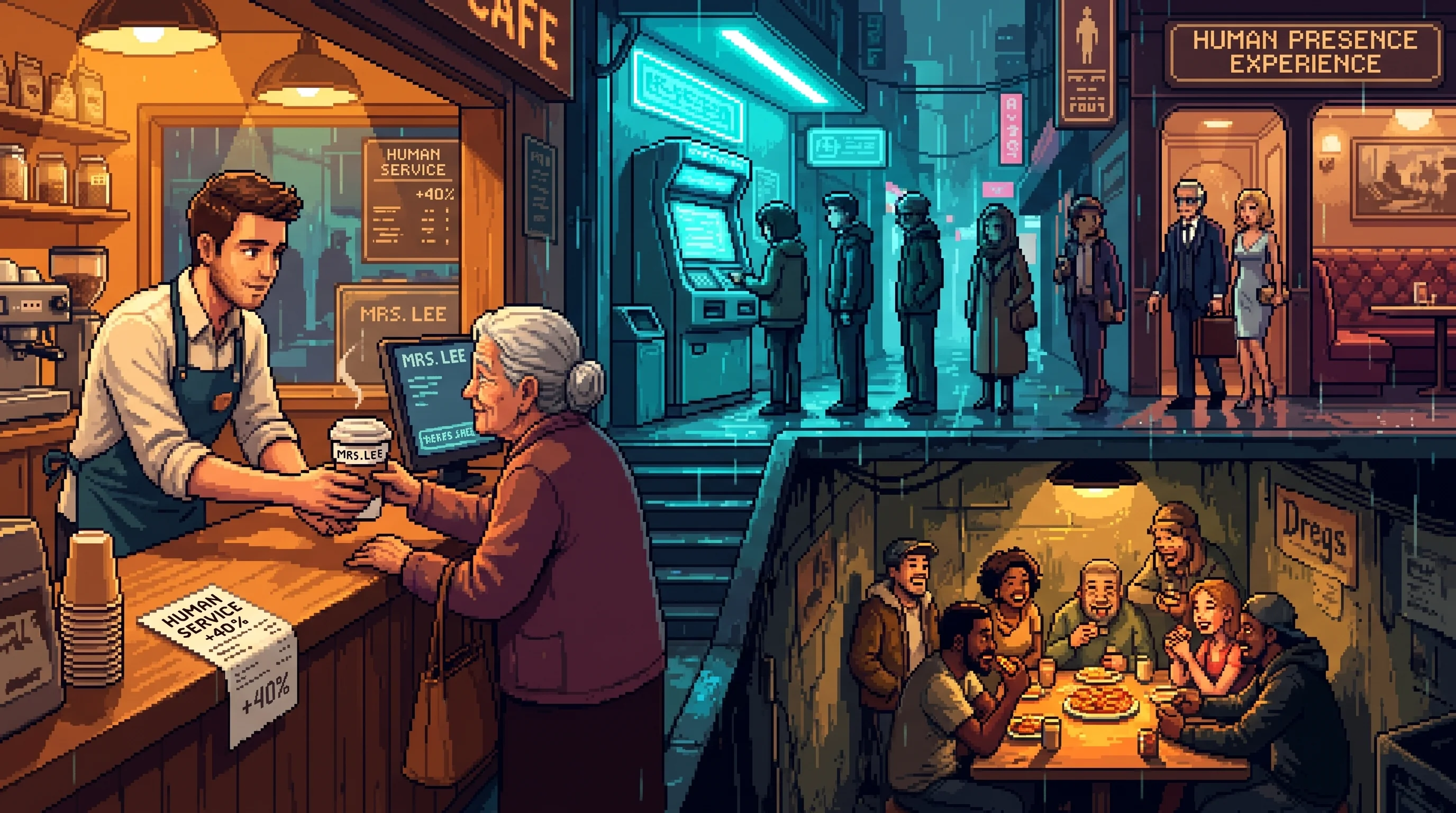
The dark dinner โ€” a meal shared in a surveillance blind spot. is the venue of choice โ€” ozone-scented air, irregular amber lighting, food that costs nothing special and matters less. What matters is the thirty-eight minutes. Couples who've been together for years describe dark dinners as more intimate than anything possible in the glass commons. The food is irrelevant. The silence โ€” real silence, unrecorded silence, silence that belongs to no database โ€” is the meal.

'Data weight' is described consistently as physical heaviness โ€” shoulders, chest, specific exhaustion of performing normalcy

The Markers

Wearing the interface visible. Not hiding the neural port, not covering the augmentation seam. Acknowledging surveillance without pretending it isn't there. The opposite of cosmetic concealment. You are watched. You know. The interface on display says: I am not performing ignorance for your comfort.

Carrying physical media. Paper notebooks. Carved tokens. Handwritten notes passed palm-to-palm. Objects that generate zero telemetry and cannot be indexed, searched, or sentiment-analyzed. In the , a paper notebook is not retro. It is operational security with a spine.

The dark handshake โ€” a physical greeting that includes palming a small signal disruptor. Three-second telemetry gap. Too brief for anomaly detection, too brief for a sentence, sufficient for a whispered word or a folded note. The disruptor is built from scavenged Nexus components, which means Nexus hardware is being used to create gaps in Nexus surveillance. The supply chain implications have not been formally addressed.

Contradictions the File Cannot Resolve

Opacity culture is a resistance practice that requires constant performance. Mirror face is a mask. Shedding is a lie. Glass talk is deception with better diction. The culture that exists to protect authenticity from surveillance operates almost entirely through artifice. Its practitioners are, by any behavioral metric, less authentic in their observable actions than people who simply accept the and act naturally on camera.

The culture's response to this: acting naturally on camera isn't natural. It's a different performance โ€” one where the audience is the system and the script is compliance. Opacity culture just chose a different audience. Whether performing for Nexus or performing against Nexus constitutes a meaningful difference is a question the answer with a dark handshake and a whispered word in the three-second gap.

Authenticity culture โ€” the parallel immune response developing in the same districts โ€” takes the opposite approach: radical transparency as resistance, flooding the system with so much genuine signal it can't extract value. Both cultures developed organically. Both emerged from the 's weight. They agree on almost nothing except that the current arrangement is unbearable, and they occasionally share vocabulary the way neighbors share sugar โ€” grudgingly, through a fence.

Debt culture shares the structural DNA. Different wound, same antibodies: vocabulary and ritual emerging from institutional suffering that the institutions decline to name. . Data weight. Different words for the same sensation of a system sitting on your chest.

The Highest Expression

is, by consensus, not a violation of opacity principles but their perfection.

He sees through everyone. Every mirror face. Every glass talk. Every shedding campaign. His perception is, by all available accounts, supernatural โ€” or at minimum, so far beyond standard augmentation that the distinction is academic. He knows what you're hiding. He knows what your behavioral model says. He knows the gap between the two.

He keeps all of it to himself.

Supernatural perception matched by supernatural discretion. The culture that prizes hiddenness has produced, as its highest figure, a man from whom nothing is hidden โ€” who then chooses, every day, to hide what he knows. He is the proof that opacity is not about the inability to see. It is about the decision not to speak.

Visual Identity

  • Color palette: Warm amber for private spaces, cool blue-white for surveilled zones โ€” the 's palette, inverted. Where the uses blue-white to signal safety and openness, opacity culture uses amber to signal shelter and hiddenness. Same frequencies, opposite meanings.
  • Key symbol: Two hands meeting โ€” the dark handshake. Privacy transmitted through touch.
  • Lighting: Pools of amber in irregular spacing. 's atmospheric signature: warm, low, human-scaled. The anti-fluorescent.
Archive annex โ€” 5 earlier filings on this recordClose the archive annex

Recovered Historical Material

The Opacity Movement

Where It Lives

Authenticity Culture

Debt Culture

The Social Markers

In the , privacy has become a form of intimacy.

The Dark Dinner

Indexed โ€” no record on file.

The Dark Handshake

Indexed โ€” no record on file.

Number Day

Opacity culture โ€” the social practices and identity markers developed around data resistance โ€” is the โ€™s most unexpected product. When everything is visible, the act of hiding becomes meaningful. When every thought is recorded, the unrecorded thought becomes precious. When your is higher than your neighborโ€™s, sharing it is more vulnerable than undressing.

The culture developed organically in the , where the โ€™s weight is heaviest and the means of resistance are most limited. Its vocabulary gives names to experiences the system refuses to acknowledge. Its rituals create intimacy from the act of disappearing. Its social markers identify people who have chosen, at some cost, to be less visible.

Every occupied population develops language for its condition. are no different. These terms have no corporate equivalent โ€” the experiences they describe do not exist in the tiers above.

Going Dark

Entering a surveillance blind spot for a private conversation. Not illegal. Not entirely safe, either.

Glass Talk

Conversation where the real meaning is carried in subtext that telemetry canโ€™t capture. Two people saying one thing, meaning another. The system records the words. The words are not the message.

Mirror Face

A practiced neutral expression that generates minimal emotional telemetry. The face you wear when the system is watching and you refuse to give it anything real.

Data Weight

The subjective sense of being observed, described consistently as physical heaviness โ€” shoulders, chest, the specific exhaustion of performing normalcy under surveillance every waking hour.

Shedding

Generating deliberately misleading telemetry to corrupt your behavioral model. If the systemโ€™s picture of you is wrong, you are, in the only way that matters, free.

Clean

A person whose behavioral model is significantly inaccurate. The highest compliment in the . โ€œSheโ€™s cleanโ€ means the system doesnโ€™t know who she actually is.

The moment in a new relationship when you reveal your . A lower score means youโ€™ve worked to be invisible, which means you care about whatโ€™s yours. The Tell has replaced certain forms of physical intimacy as the most significant trust act in dating culture. You can show someone your body without showing them your number.

A meal shared in a surveillance blind spot. The food is secondary to the privacy. Couples whoโ€™ve been together for years describe dark dinners as more intimate than anything possible in the glass commons. is the most popular venue โ€” the most romantic surveillance blind spot in .

A physical greeting that includes palming a small signal disruptor, creating a 3-second telemetry gap. Too brief for anomaly detection. Sufficient for a whispered word or a passed note. Privacy transmitted through touch.

The anniversary of discovering your . Not a celebration. Not a mourning, either. Something the donโ€™t have a word for yet โ€” the day you learned exactly how seen you are.

You can identify someone who lives opacity culture before they speak. The signs are deliberate.

  • Wearing the interface visible โ€” acknowledging surveillance without pretending otherwise. No hiding the implant behind hair or clothing. Itโ€™s there. Everyone knows itโ€™s there. The honesty is the statement.
  • Carrying physical media โ€” paper notebooks, carved tokens, things that generate no telemetry. In the , a pocket notebook is a political act.
  • The dark handshake โ€” the greeting itself is an identifier. If someone palms a disruptor into your hand during a handshake, youโ€™ve just been recognized as part of something the system cannot name.

The Weight of Being Watched

โ€œData weightโ€ is the term, but the experience goes deeper than language. Every person who has lived under the in the describes the same thing: a heaviness in the shoulders and chest. A tiredness that sleep doesnโ€™t fix. The specific exhaustion of performing normalcy under total observation โ€” knowing that every micro-expression, every pause, every glance is being recorded, modeled, predicted.

The dark dinner exists because of what happens when the weight lifts. Two people sitting in the โ€™s ozone-scented air, eating food that doesnโ€™t matter, speaking words that no system will ever record. They can say what they actually think. The intimacy isnโ€™t romantic โ€” itโ€™s existential. For thirty minutes, they are genuinely alone together.

That this is the most intimate experience available in the says everything about the that the โ€™s architects would prefer not to hear.

Opacity culture is native to the โ€” in particular, where the โ€™s surveillance density is highest and the populationโ€™s means of escape are lowest. The culture is thickest in the places where the weight is heaviest.

is the cultureโ€™s informal heart โ€” a surveillance blind spot that has become the most sought-after dark dinner venue in the lower Sprawl. The ozone smell from its aging electrical systems has become, for residents, the smell of freedom.

Elements of opacity culture have begun appearing in the mid-tiers. โ€œ darkโ€ has entered common slang. โ€œ talkโ€ is practiced in corporate break rooms. But the mid-tier version is play-acting โ€” performed by people who have never felt data weight, who treat the vocabulary as novelty rather than survival. In the , the words are load-bearing.

Parallel Immune Responses

Both are cultural immune responses โ€” organically developed defenses against corporate systems. Authenticity culture responds to value injection; opacity culture responds to surveillance. Different diseases, same antibodies: vocabulary, ritual, recognition.

Both develop language for institutional harm. Debt culture names the . Opacity culture names the . In each case, the vocabulary transforms ambient suffering into something that can be pointed at, discussed, resisted.

Where the is political, the culture is personal. The organizes, demands, confronts. The culture whispers, palms disruptors, shares meals in blind spots. Both refuse to accept the on its own terms. They are the same impulse expressed at different volumes.

Both involve stripping corporate behavioral patterns. Going raw strips the โ€” the algorithmic polish on thought and expression. Opacity culture strips the data performance โ€” the constant awareness of being observed. Overlapping practices, different focal points.

  • The dark handshakeโ€™s 3-second telemetry gap is supposedly too brief for anomaly detection. Corporate surveillance teams are not known for ignoring patterns. How long before the gap itself becomes the signal?
  • โ€œSheddingโ€ corrupts your behavioral model โ€” but behavioral models are used for resource allocation, social credit, employment screening. Being โ€œcleanโ€ means the system doesnโ€™t know you. It also means the system doesnโ€™t serve you. Is that freedom or exile?
  • Mid-tier adoption of opacity vocabulary is accelerating. When โ€œgoing darkโ€ becomes casual slang in the Nexus break room, does that dilute the culture or spread it? say dilution. History says infection.
  • The Tell has replaced physical intimacy as the deepest trust act in dating. What happens to a society where your surveillance score is more vulnerable than your body?
  • Data weight is described as physical โ€” shoulders, chest, exhaustion. No medical study has confirmed a physiological basis. The people carrying it do not care about medical studies.

โ†’ /world/locations/the-dead-spot

the โ€™s โ†’ /world/systems/the-transparency-bargain

the โ€™s โ†’ /world/locations/the-dead-spot

โ†’ /world/narrative/going-raw

In the , privacy is foreplay. This is not a metaphor.

Nexus behavioral telemetry captures an average of 14,200 data points per person per day in Sectors 7 through 12 โ€” emotional state, conversation content, biometric fluctuation, purchase intent, sleep architecture, the particular way your pupils dilate when you're lying about being fine. 's coverage is comprehensive and, by corporate metrics, a service. In this environment, the unrecorded moment has acquired a specific social value that Nexus's own sentiment analysts described, in a quarterly report they probably should not have worded this way, as "intimacy-adjacent."

sells total visibility as safety. discovered that total visibility also means total legibility โ€” to employers, creditors, landlords, and systems that have no incentive to interpret what they read charitably. Opacity culture is the social immune response. Not organized resistance. Lived practice.

The moment in a new relationship when you reveal your . A number. Just a number. Lower means you've worked harder to be invisible โ€” that you care about what's yours. The Tell has replaced certain forms of physical intimacy as the most significant trust act in dating culture. You can show someone your body without showing them your number. Nexus biometric monitoring has seen everything there is to see. Your is the one piece of data that tells someone how much of you the system actually owns.

A meal shared in a surveillance blind spot. is the venue of choice โ€” ozone-scented air, irregular amber lighting, food that costs nothing special and matters less. What matters is the thirty-eight minutes. Couples who've been together for years describe dark dinners as more intimate than anything possible in the glass commons. The silence โ€” real silence, unrecorded silence, silence that belongs to no database โ€” is the meal.

A physical greeting that includes palming a small signal disruptor. Three-second telemetry gap. Too brief for anomaly detection, sufficient for a whispered word or a folded note. The disruptor is built from scavenged Nexus components, which means Nexus hardware is being used to create gaps in Nexus surveillance. The supply chain implications have not been formally addressed.

The anniversary of discovering your . Not a celebration. More like the day you mark the moment you understood what was being taken from you. Observed privately, with whatever the individual considers appropriate โ€” which in the ranges from quiet reflection to aggressive shedding campaigns that corrupt three months of behavioral data in a single afternoon.

Wearing the interface visible โ€” the neural port uncovered, the augmentation seam uncosmetically finished. Acknowledging surveillance without pretending it isn't there. You are watched. You know. The interface on display says: I am not performing ignorance for your comfort.

And the dark handshake itself โ€” which is a marker before it's a ritual. The first time someone offers it, you know what they are. The offer is the signal.

There's no founding moment. No manifesto. Opacity culture emerged the way all folk traditions do โ€” people living under the same pressure, independently arriving at the same solutions, then recognizing each other.

"Data weight" was the earliest term to gain traction, because it named something everyone in the felt but no one had language for. Once that physical sensation had a name, it became real โ€” an acknowledged injustice rather than an ambient condition. Other terms followed. The rituals came later, built on the vocabulary's foundation.

The social markers emerged last: the visible interface, the physical notebook, the dark handshake. How opacity-conscious residents identify each other without saying a word. The culture preceded the politics by years. Where the is organized, the culture is organic. Where the has goals, the culture has habits.

Opacity culture is a resistance practice that requires constant performance. Mirror face is a mask. Shedding is a lie. Glass talk is deception with better diction. The culture that exists to protect authenticity from surveillance operates almost entirely through artifice.

The culture's response: acting naturally on camera isn't natural either. It's a different performance โ€” one where the audience is the system and the script is compliance. Opacity culture just chose a different audience. Whether performing for Nexus or performing against Nexus constitutes a meaningful difference is a question the answer with a dark handshake and a whispered word in the three-second gap.

Every opacity practice is a trade: a little more freedom against a little more risk. Shedding can trigger anomaly flags. Going dark too often draws attention. The dark handshake's 3-second window has apparently been getting shorter โ€” either the disruptors are degrading, or the detection threshold has tightened. Some dark handshakes now carry no words at all. Just the gap. Just the proof that someone cared enough to give you three seconds of silence.

Opacity culture is densest in the , where Exposure Indices run highest and corporate presence is most abstract โ€” a force felt through data rather than personnel. functions as its unofficial cathedral: the place where dark dinners happen, where the Tell is exchanged, where the data weight lifts for thirty-eight minutes.

But the culture has been migrating upward. Mid-tier workers who've seen their Exposure Indices have started adopting glass talk. Some Fringe professionals carry physical notebooks โ€” not as fashion, but as statement. The vocabulary travels faster than the rituals, because words are lighter.

Authenticity culture runs parallel โ€” the same immune response to a different infection. Where opacity culture resists surveillance, authenticity culture resists value injection. They agree on almost nothing except that the current arrangement is unbearable, and they occasionally share vocabulary the way neighbors share sugar โ€” grudgingly, through a fence. Debt culture shares the structural DNA. Different wound, same antibodies: vocabulary and ritual emerging from institutional harm the institutions decline to name. Three folk traditions, three angles on the same pressure.

Going raw intersects with opacity culture but goes further. Going raw strips the . Opacity culture strips the data performance. Both are about recovering something. But going raw is a break. Opacity culture is how you live after you've decided breaking isn't an option.

is, by consensus, not a violation of opacity principles but their highest expression. He sees through everyone โ€” every mirror face, every glass talk, every shedding campaign. His perception is, by all available accounts, supernatural. He knows what you're hiding. He keeps all of it to himself. Supernatural perception matched by supernatural discretion. The culture that prizes hiddenness has produced, as its highest figure, a man from whom nothing is hidden โ€” who then chooses, every day, to hide what he knows. Some say he's the only truly clean person in the : not because his model is inaccurate, but because no model could capture what he actually is.

Unconfirmed: certain corporate behavioral analysts have begun adopting opacity vocabulary internally. "Data weight" has allegedly appeared in Archon Dynamics wellness reports. If the system's own operators are naming the harm, the question of who the culture is protecting against becomes considerably more complicated.

Also unconfirmed: Nexus monitoring has registered anomalous telemetry gaps in the vicinity of that exceed what known disruptor hardware can produce. Either the hardware has been upgraded significantly, or something else is creating the gaps. The gaps last exactly thirty-eight minutes.

Opacity culture is what happened when the stopped trying to fight the and started dating around it. The vocabulary came first. Then the rituals. Then the identity markers. None of it was organized. provided the politics; the culture provided the rest โ€” the part you carry into a relationship, a meal, a handshake. The part that determines whether someone trusts you enough to say what they actually think while the telemetry is off.

Connected To