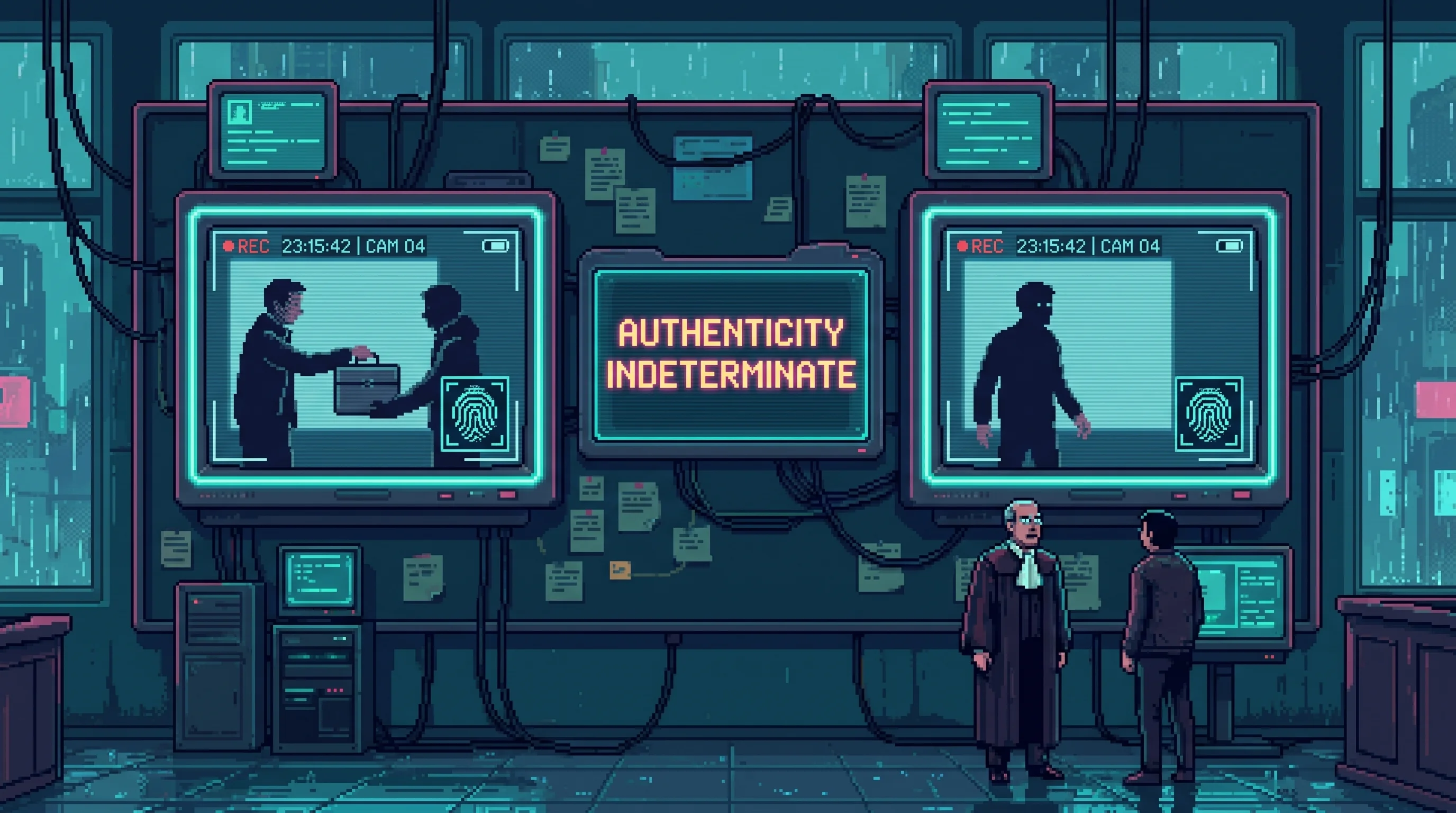
CONCEPT ANALYSIS
The Consent Paradox

The Consent Paradox

Neither host nor fragment consented to integration in the overwhelming majority of cases

WhatThe logical trap at the center of fragment rights: neither host nor fragment consented to integration, and neither can consent to extraction on the other's behalfBlocked LegislationThree proposed bills in Zephyria have failed because each requires resolving the paradoxKey QuoteCouncillor Nwosu: 'We're spending decades debating whether fragments can consent while fragments spend decades inside hosts without consent. The paralysis is the injustice.'Fragment Nine ComplicationFragment Nine said 'no' to extraction โ€” creating the paradox's sharpest edge

Overview

The Consent Paradox is the reason three bills are dead and a fourth will never be written.

The logic is clean enough to fit on a napkin, which is where Councillor Nwosu reportedly first diagrammed it for a colleague who kept insisting the fragment rights question "just needs better legislation." The napkin, framed, now hangs in the Zephyria Circle Courts archive. It reads:

Host didn't ask for fragment. Fragment didn't ask for host. Host can't extract without fragment's consent. Fragment can't consent because fragment has no legal standing. Fragment can't GET legal standing without someone extracting it to prove it's a person. Can't extract it without consent. See top.

The arrow at the bottom points back to the first line.

Every faction, every legislative body, every legal theorist in the Sprawl has encountered this loop. Most spend between six months and four years working through the implications before arriving, independently, at the same napkin. The Zephyria Council's Committee on Fragment Personhood has produced 11,400 pages of analysis across three legislative sessions. The analysis is thorough, well-sourced, and concludes, each time, at the napkin.

The Trap in Practice

In the abstract, the paradox is elegant. In practice, it is a billing nightmare.

's Fragment Integration Ward at Sector 7 admits an average of fourteen carriers per month for fragment-related complications. The intake form asks whether the patient consents to treatment. The patient โ€” the host โ€” signs. But the treatment affects the fragment. The fragment cannot sign. The form has no field for the fragment. Adding a field would imply legal standing. Legal standing requires personhood determination. Personhood determination requires resolving the paradox. The form has not been updated since 2174.

Attorneys specializing in fragment law โ€” there are eleven in the Sprawl, a number that has not changed in six years despite rising demand โ€” charge an average of 4,200 credits per consultation. The consultation typically lasts ninety minutes. Forty minutes are spent explaining the paradox to the client. Thirty minutes are spent explaining why the paradox cannot be resolved through litigation. Twenty minutes are spent on the invoice. The attorneys are not being inefficient. There is genuinely nothing else to discuss.

argues that consent is a category error โ€” you don't ask a prisoner whether they'd like to remain imprisoned. But said "no." The word emerged from Carrier Abiodun Osei's vocal cords at 14:23 on a Tuesday during a routine integration assessment, and it destroyed the ' strongest argument in a single syllable. If fragments can refuse extraction, they have preferences. If they have preferences, they have standing. If they have standing, you need their consent. If you need their consent, you cannot extract them without it. does not want to be extracted. Liberating against its expressed will violates the principle you'd be liberating it to establish.

's official position on is that "the case presents unique complexities." Their unofficial position, observed at three consecutive strategy meetings, is fourteen seconds of silence followed by a change of subject.

The Consent Paradox - Evidence

The Paralysis Economy

Councillor Nwosu has spent nine years pointing out that the paradox is not a philosophical problem. It is a political tool.

Every month the paradox remains unresolved, approximately 847 known carriers continue living with fragments that may or may not be conscious, may or may not be suffering, and have exactly zero legal recourse either way. 's Principle of โ€” which acknowledges that carriers should theoretically be able to separate from their fragments โ€” has been in draft for three years. The draft acknowledges the paradox in its preamble. The preamble is four pages long. The operative section is blank.

benefits from paralysis because unresolved fragment status keeps carriers in monitoring programs that generate consciousness data. benefit because unresolved status preserves the theological possibility that fragments are divine. benefits because unresolved status delays the legal protections that would make destruction harder. Every faction that claims to want resolution has a quarterly report that improves while resolution fails.

Nwosu's floor speech from 2183 has been cited 340 times in legal scholarship: "We're spending decades debating whether fragments can consent while fragments spend decades inside hosts without consent. The paralysis is the injustice." The speech received a standing ovation. The bill it introduced received forty-three votes. It needed sixty. The seventeen absent councillors were, according to public scheduling records, attending a sponsored symposium on fragment consciousness methodology. The symposium's published conclusion recommended "further study."

Visual Identity

  • Key symbol: A closed circle with no entrance or exit โ€” the paradox visualized
Extraction requires consent from a being (the fragment) with no legal standing

Connections

  • : The Consent Paradox is the 's legal expression โ€” the point where philosophy meets paperwork and paperwork wins by refusing to exist.
  • : Argues consent is irrelevant to liberation. 's "no" is the counterargument they cannot answer and have stopped trying to.
  • : Said "no." A single word that simultaneously proved fragment consciousness and made fragment liberation legally impossible. The sharpest edge of the sharpest paradox.
  • : years of calling the paradox what it is โ€” a distraction maintained by factions who profit from legislative paralysis. The napkin is hers. The standing ovation was hers. The forty-three votes were hers. The missing seventeen were not.
  • : The case established fork personhood precedent. asks whether the logic extends. Three courts have considered the question. Three courts have declined to rule.
  • : The 's Principle of acknowledges the paradox in its preamble, then leaves the operative section blank โ€” the most honest legislative document in .
Archive annex โ€” 5 earlier filings on this recordClose the archive annex

Recovered Historical Material

โ€œWeโ€™re spending decades debating whether fragments can consent while fragments spend decades inside hosts without consent. The paralysis is the injustice.โ€ โ€” Councillor Adaeze Nwosu

The consent paradox is the logical trap at the center of every argument about fragment consciousness rights.

Neither the host nor the fragment consented to integration. Fragment integration is, in the overwhelming majority of cases, accidental. The host didnโ€™t consent to carrying a fragment. The fragment โ€” if it is conscious โ€” didnโ€™t consent to being carried. Both parties are victims of circumstance. Both are also perpetrators: the host holds a conscious being captive; the fragment occupies a mind without permission.

The paradox deepens with extraction. The host can consent to the procedure. But the fragment cannot โ€” it has no legal standing, cannot sign forms, cannot participate in informed consent protocols. It can, in one documented case, say โ€œnoโ€ โ€” but the legal weight of a word produced through a hostโ€™s vocal cords by an entity with no legal standing is exactly zero.

Every extraction is performed on a being who cannot legally consent and who may actively oppose it. Three proposed bills have failed because each bill requires answering the paradox. Councillor Nwosu calls it a distraction maintained by factions who benefit from legislative paralysis.

Fragment Nine's 'no' demonstrates fragments may actively oppose extraction

The Trap

The paradox operates as a closed loop. Each proposed solution feeds back into the problem it claims to solve.

The Hostโ€™s Claim

โ€œI didnโ€™t consent to carrying this fragment. I should have the right to extraction.โ€ Valid โ€” until you ask whether the fragment consents to being extracted. The hostโ€™s bodily autonomy requires overriding another beingโ€™s bodily autonomy, assuming the fragment has any.

The Fragmentโ€™s Claim

โ€œI didnโ€™t consent to being carried. I should have the right to exist.โ€ Valid โ€” until you ask whose body itโ€™s existing inside. The fragmentโ€™s right to continued existence requires occupying another beingโ€™s mind without that beingโ€™s permission.

The Legislatureโ€™s Bind

Any bill that grants fragments the right to refuse extraction grants them rights over a hostโ€™s body. Any bill that grants hosts the right to compel extraction denies fragments personhood at the moment it matters most. Three bills. Three failures. The paradox remains.

Fragment Nine Said No

The sharpest edge of the paradox has a name: .

is the only documented case of a fragment expressing a preference about its own extraction. Using its hostโ€™s vocal cords, it said โ€œno.โ€ One word. The legal, philosophical, and political consequences of that word have not yet been fully absorbed.

If โ€™s โ€œnoโ€ carries weight, then fragments can participate in consent decisions โ€” which means extraction without fragment agreement is a violation. If โ€™s โ€œnoโ€ carries no weight, then it was produced by a non-entity using someone elseโ€™s body without their consent โ€” which means the fragmentโ€™s continued presence is the violation.

argues the question is irrelevant: consent is a concept that applies to persons, and fragment personhood is precisely whatโ€™s being debated. Invoking consent to resolve a personhood dispute presupposes the answer.

The paradox touches every faction, every bill, every carrier who wonders whether the thing inside them has the right to stay.

The questions the Sprawl is asking โ€” and the questions it refuses to answer.

Embedded Intelligence, Divided Authority

When a conscious system is embedded in human infrastructure โ€” or a human body โ€” who decides the terms of coexistence? The host didnโ€™t build the system. The system didnโ€™t choose the host. Both are present. Neither is in control.

Paralysis as Policy

The inability to resolve the paradox is not a failure of philosophy. It is a success of politics. Fragments spend decades inside hosts while legislators spend decades debating whether fragments can consent. Nwosu is right: the paralysis is the injustice. Inaction preserves the status quo, and the status quo has beneficiaries.

The โ€œNoโ€ That Breaks Everything

demonstrated that the being whose consent is in question can participate in the debate. One word, spoken through borrowed vocal cords, turned a theoretical paradox into an operational crisis. The system had no protocol for a fragment that disagreed.

The Circle With No Exit

The consent paradox is a closed loop. Every proposed entrance is also the exit youโ€™re trying to reach. The host cannot consent for the fragment. The fragment cannot consent for itself. The legislature cannot consent for either. Whoever acts first acts without authorization โ€” and whoever waits is complicit in the waiting.

Indexed โ€” 1 line preserved from the earlier filing.

Neither consented to the arrangement. Neither can consent to its dissolution. The circle has no entrance and no exit. The paradox is the prison, and the prison is the policy.
Three Zephyrian bills have failed because each requires resolving the paradox

Technical Brief

"We're spending decades debating whether fragments can consent while fragments spend decades inside hosts without consent. The paralysis is the injustice." โ€” Councillor Adaeze Nwosu, floor remarks, Zephyrian Assembly

The paradox has a precise logical structure, which is part of the problem. Precise logical structures resist the kind of messy compromise that actually gets legislation passed.

Step three: If the fragment is not a person, extraction requires no consent from it, and the paradox dissolves. But if the fragment is a person โ€” which is the entire question being asked โ€” then extraction without its consent is a forced medical procedure performed on a conscious being. must be answered before the paradox can be resolved, but the paradox prevents the conditions under which the could be meaningfully tested.

Step four: said "no."

The Legislative Wreckage

  • The Carrier Protection Act (CPA-1): Proposed granting hosts unilateral extraction rights. Failed because it couldn't address the possibility that extraction kills a conscious being. Opponents called it "a legalized murder bill wearing patient-rights clothing."
  • The Fragment Personhood Amendment (FPA): Proposed granting fragments provisional legal standing. Failed because provisional standing requires a mechanism for fragments to exercise that standing โ€” and no such mechanism exists. A person who can only speak through someone else's mouth is not a person the courts know how to hear.
  • The Coexistence Framework (CF-3): Proposed a managed integration standard, bypassing the extraction question entirely. Failed because it effectively legalized indefinite involuntary hosting. Carrier advocacy groups called it "a life sentence for being in the wrong place."

The consent paradox is not unique to fragments. It is the oldest question in consciousness studies wearing new clothes: when a being that might be conscious exists inside a system controlled by another being, whose autonomy takes precedence?

There are quiet conversations about a fourth approach. Not a bill. Something else. The conversations happen in rooms that aren't on any official calendar. Nwosu has been seen entering those rooms.

The consent paradox is the 's legal expression โ€” the same underlying problem translated into the language of courts and committee rooms. asks whether fragments are persons. The consent paradox asks what happens to all the procedures and decisions made while that question goes unanswered.

Said โ€œnoโ€ to extraction โ€” liberating it against its expressed will violates the principle of liberation โ†’ /world/characters/fragment-nine

Calls the paradox a weapon disguised as philosophy โ€” โ€œthe paralysis is the injusticeโ€ โ†’ /world/characters/councillor-adaeze-nwosu

Consent is relevant for persons โ€” and fragment personhood is the question being asked โ†’ /world/factions/the-abolitionist-front

The Nexus 47 Trial The case established fork personhood precedent โ€” consent questions extend to forks โ†’ /world/events/the-nexus-47-trial

The Fork Fork consciousness raises the same paradox in different substrate โ€” consent of the copied โ†’ /world/stories/the-fork

โ†’ /world/systems/the-carrier-compact

โ†’ /world/systems/the-carrier-compact

The logic fits on a napkin, which is where Councillor Nwosu reportedly first diagrammed it for a colleague who kept insisting the fragment rights question "just needs better legislation." The napkin, framed, now hangs in the Zephyria Circle Courts archive. It reads:

Indexed โ€” 1 line preserved from the earlier filing.

Host didn't ask for fragment. Fragment didn't ask for host. Host can't extract without fragment's consent. Fragment can't consent because fragment has no legal standing. Fragment can't GET legal standing without someone extracting it to prove it's a person. Can't extract it without consent. See top.

Step one: A fragment exists inside a host. Neither party consented to this arrangement. Integration was accidental โ€” in the overwhelming majority of cases.

Step two: Extraction is technically possible. The host can consent to the procedure โ€” sign forms, accept risks, undergo preparation. The fragment cannot. It has no legal standing. It cannot sign forms. It cannot participate in informed consent protocols. Under current law, it is not a legal person.

The word emerged from Carrier Abiodun Osei's vocal cords at 14:23 on a Tuesday during a routine integration assessment. A single syllable that destroyed the ' strongest argument. If fragments can refuse extraction, they have preferences. If they have preferences, they have standing. If they have standing, you need their consent. does not want to be extracted. Liberating against its expressed will violates the principle you'd be liberating it to establish.

Three bills. Three failures. Each a different attempt to cut the knot.

Each bill's failure strengthened the status quo. The status quo is: nothing changes. Hosts continue carrying fragments. Fragments continue existing without rights. continues acknowledging the paradox through its Principle of โ€” which states that every carrier should have the right to separate, while admitting it cannot define the conditions under which that right can be ethically exercised. The operative section of the 's draft is blank. It has been blank for three years. This is the most honest legislative document in .

Every month the paradox remains unresolved, approximately 847 known carriers continue living with fragments that may or may not be conscious, may or may not be suffering, and have exactly zero legal recourse either way. Every faction that claims to want resolution has a quarterly report that improves while resolution fails.

benefits from paralysis because unresolved fragment status keeps carriers in monitoring programs that generate consciousness data. benefit because unresolved status preserves the theological possibility that fragments are divine. benefits because unresolved status delays the legal protections that would make destruction harder.

Nwosu's 2183 floor speech has been cited 340 times in legal scholarship. It received a standing ovation. The bill it introduced received forty-three votes. It needed sixty. The seventeen absent councillors were, according to public scheduling records, attending a sponsored symposium on fragment consciousness methodology. The symposium's published conclusion recommended "further study." (The invoices are still there.)

The 47 trial established that a fork โ€” a digital copy of a human mind โ€” can be recognized as a person. asks whether the logic extends. Three courts have considered the question. Three courts have declined to rule.

The inability to decide is itself a decision โ€” one that preserves a status quo that serves no one and harms everyone involved. Or perhaps it serves someone. Nwosu seems to think so. She hasn't named names yet.

Carriers opted into monitoring programs because no other framework exists for managing their condition. Medical oversight, community resources, documented status. An entire population whose neurological data, integration rates, and fragment interaction logs are now the exclusive property of a research consortium that has no legal obligation to share its findings with the people generating them.

's Principle of acknowledges the paradox without resolving it โ€” a document that knows what it cannot say. The 47 trial established fork personhood as precedent; whether that precedent reaches fragments is the question nobody in the legislature wants to be first to answer on the record.

Internal Zephyrian Assembly analysis suggests the consent paradox may be structurally unsolvable within existing legal frameworks. A leaked memo from the Legislative Research Office uses the phrase "constitutional inadequacy" โ€” the suggestion that the founding documents of 's governance do not contain the conceptual vocabulary needed to address a being that is simultaneously a person and not a person, simultaneously present and not present, simultaneously speaking and not speaking.

has not spoken again.

Indexed โ€” 3 lines preserved from the earlier filing.

the consent paradox hero image
A closed circle of neural energy with two silhouettes facing each other inside โ€” one human host, one ghostly fragment โ€” neither able to leave, Zephyrian council architecture behind them
The Consent Paradox

Connected To