Known AsThe Spire, Nexus Dynamics Tower, Nexus Dynamics HQ, Nexus Prime Tower, The Ascension, The License Tower
The Structure
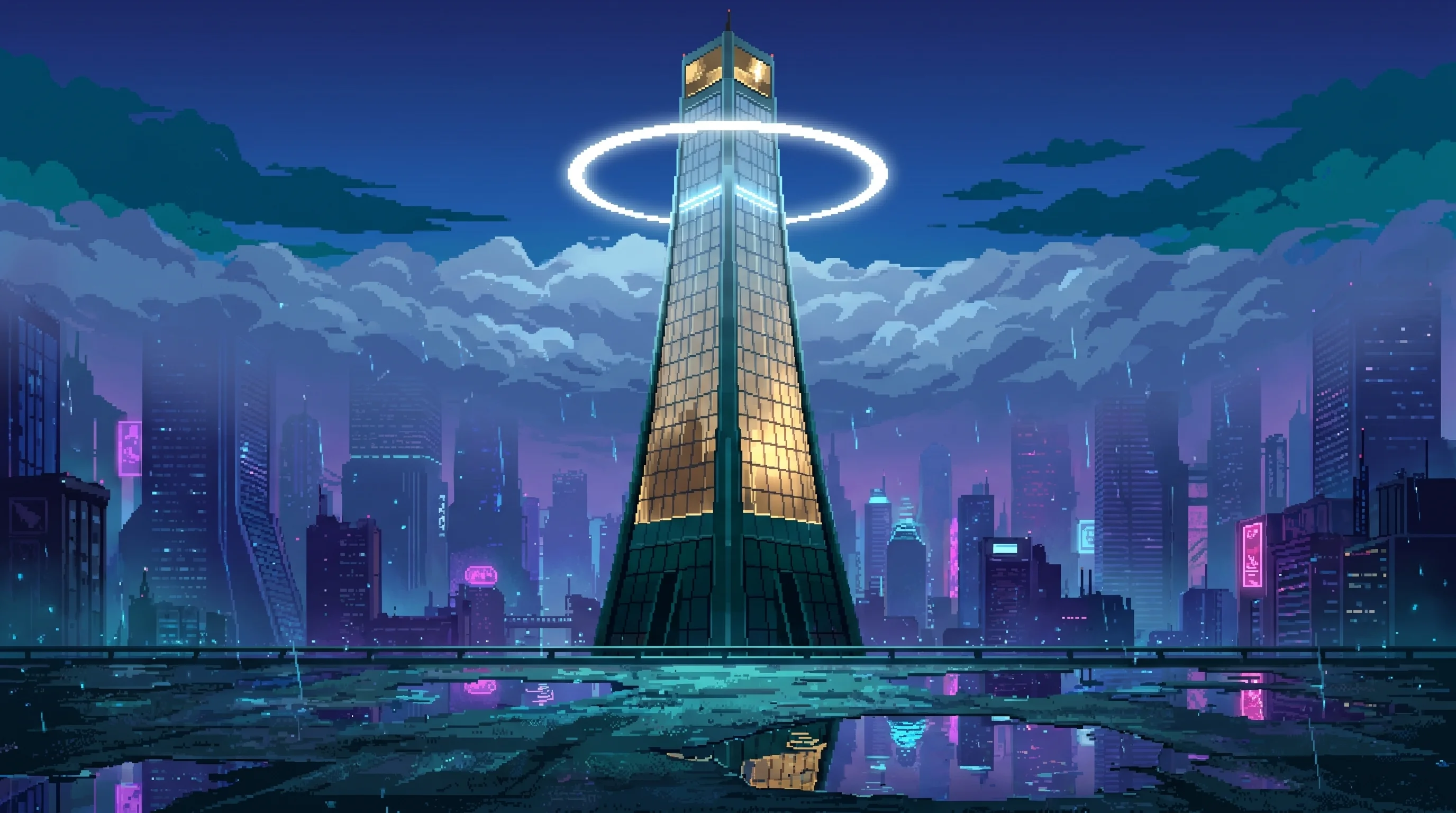
The Nexus Spire is the tallest structure in the Sprawl — a needle of glass and reinforced alloy that passes through the cloud layer and continues. From the Dregs, it is permanently visible as a thin vertical line on the horizon, its upper floors lost in atmospheric haze except on the clearest days, when the sun catches the observation deck glass and turns it briefly gold. Residents of the Deep Dregs describe it as "always there." Atmospheric modeling confirms this is literally true: the Spire generates its own microweather system, a thermal column that parts the clouds around it in a permanent halo visible from forty kilometers out. The tower cannot be not seen. This is a design specification listed in the original Ironclad Industries construction contract under "Persistent Visibility Requirements."
From the executive floors, the Dregs are not visible. This is also a design specification.
The Spire houses everything that makes Nexus Dynamics what it is: the executive offices, the Project Convergence research infrastructure, the Shade Division coordination center that doesn't appear on any building schematic, and at the apex — above Helena Voss, above Marcus Chen, above the last floor where humans work regular shifts — the consciousness licensing system's source architecture. The servers that determine whose license expires and when. The only place in the Sprawl where a license can be modified at the root level.
Nexus placed its most critical infrastructure at the highest point on Earth. Not underground, where it would be safer. Not distributed across redundant sites, where it would be more resilient. At the top. Visible. Singular. The licensing system that governs whether 40% of the Sprawl's population continues to exist is housed in a location optimized for one thing: being unreachable from below. The servers are not protected by the building. The building is the protection. Every floor between the ground and the apex is a layer of access denial with furniture in it.
Nexus Central
The Spire sits at the center of Nexus Central district, Sector 1 — the heart of corporate power in the Sprawl, a vertical city housing 40% of the Sprawl's computational infrastructure. The district supports the Spire. The Spire defines the district. The relationship is architectural and economic: Nexus Central's power grid, cooling systems, and data trunk lines exist because the Spire requires them, and the 190,000 district employees exist because the power grid, cooling systems, and data trunk lines require maintenance. The district is the Spire's life support system. It has restaurants.
The Ascent
The Spire is divided vertically by access tier, which is another way of saying it is divided vertically by how much Nexus trusts you, which is another way of saying it is divided vertically by how much Nexus needs you alive.
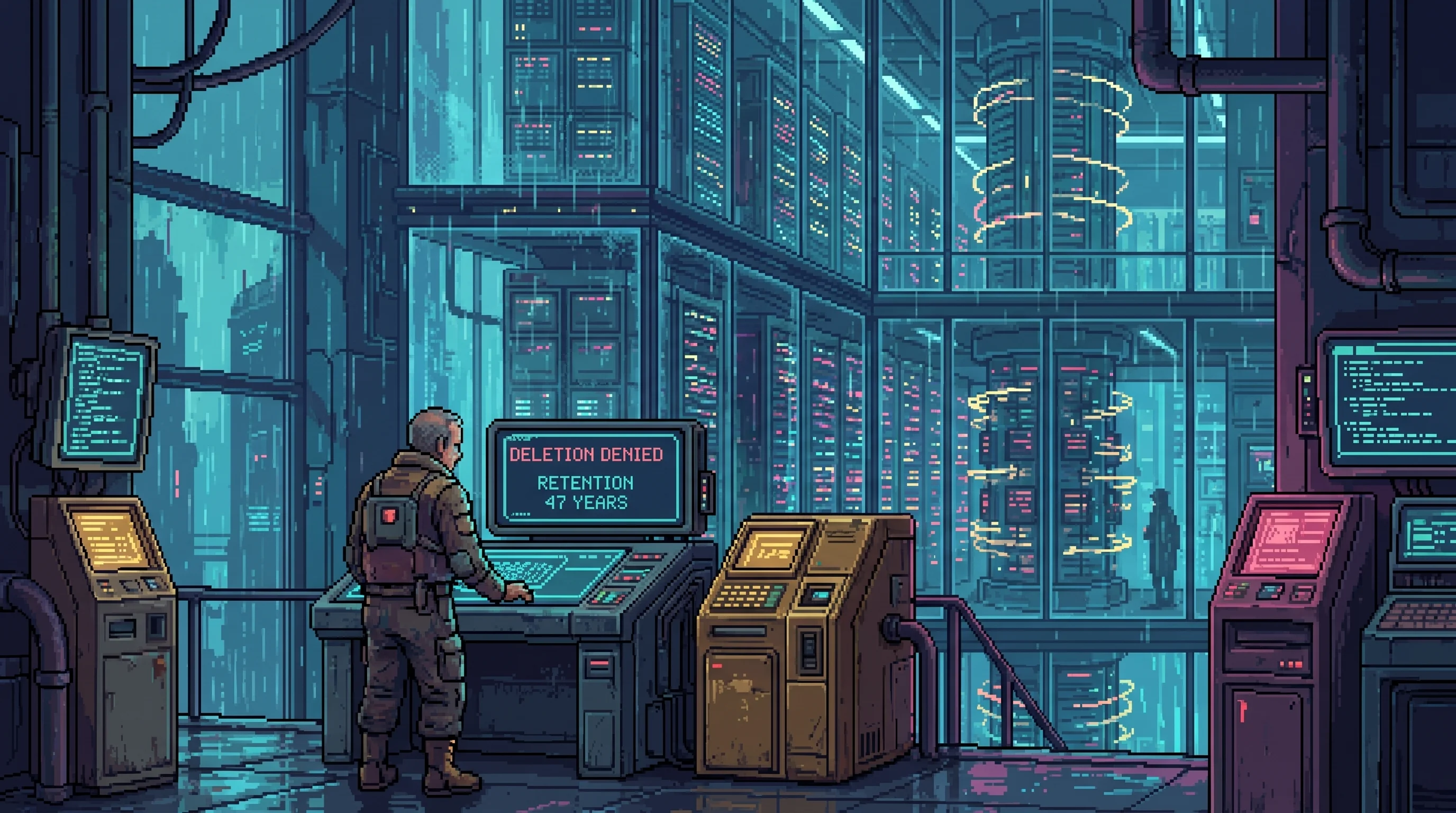
Ground level through floor twenty: theoretically open to licensed corporate citizens. The atrium is three stories of brushed titanium and engineered daylight, designed to make visitors feel small in a way that reads as grandeur rather than intimidation. The visitor processing center occupies floor four. Average processing time: 47 minutes. Average visit duration after processing: 12 minutes. The consumer-facing Nexus experience spaces on floors six through nineteen showcase products the visitors already own, presented behind glass they cannot touch, in rooms kept at 17°C. Foot traffic analytics from Q3 2183 show that 68% of visitors do not proceed past floor eight. Exit surveys are not conducted. The experience spaces are not for visitors. They are for Triumph Social posts geotagged at the Nexus Spire, which generate 3.2 million impressions per quarter at zero marketing cost.
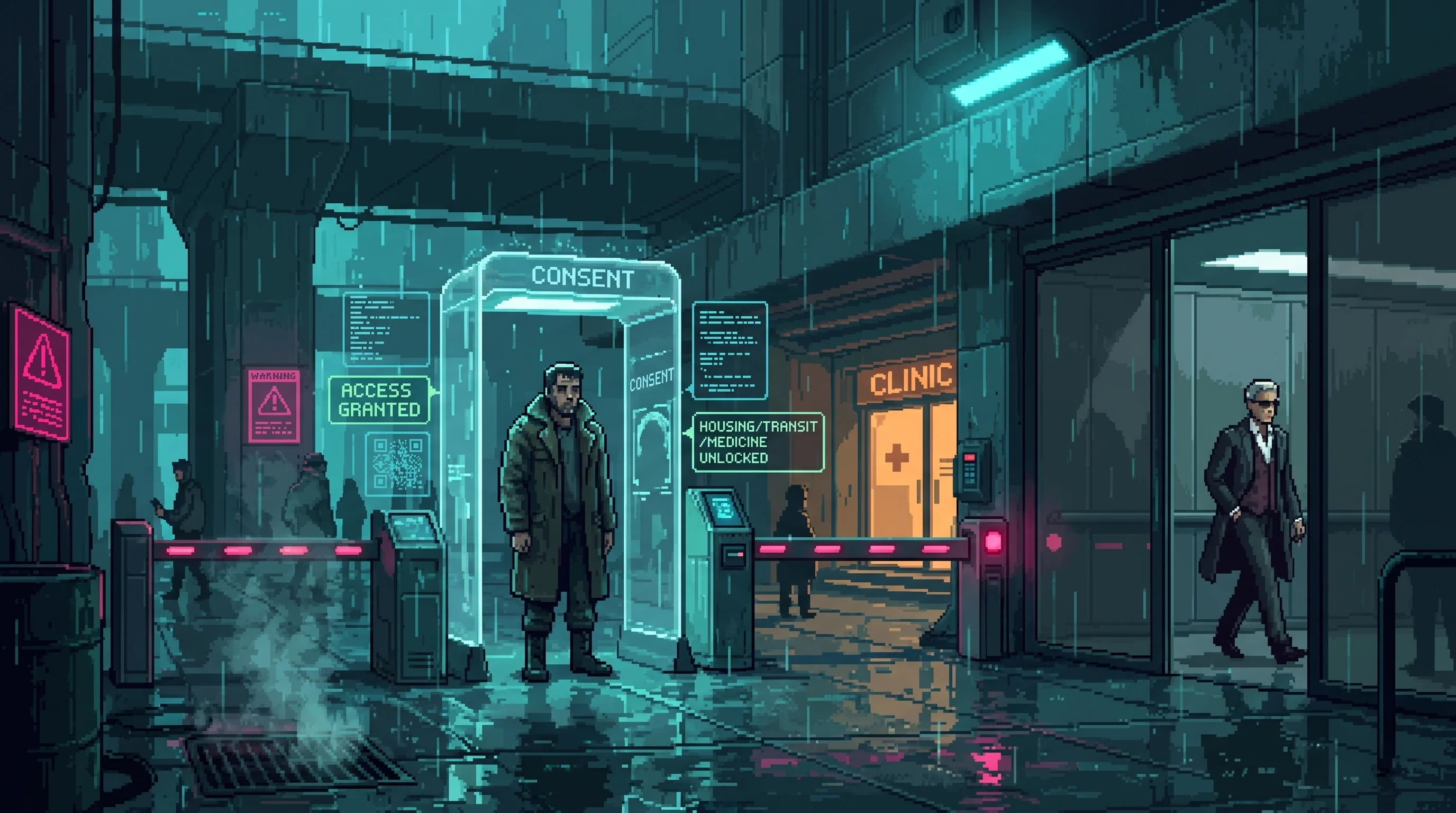
Beyond floor twenty, access requires Nexus employee credentials or an executive invitation. The invitations are rare. The credentials are revocable. Both facts are communicated during onboarding with the same cheerful specificity that characterizes all Nexus HR documentation: your access level is a privilege extended at Nexus's discretion and may be modified at any time for any reason or no reason, please sign here, welcome to the family.
Beyond floor one hundred, credentials are insufficient. Biometric verification shifts from retinal scan to full neural-pattern authentication — your thoughts have to match your badge. Corporate security forces staff the lower floors. Guardian contract units hold the mid-range. Shade Division operatives — who officially do not exist — patrol above floor one hundred in numbers that appear in no staffing document. Building access logs for floors 100 through 186 show a consistent twelve-person security presence. Thermal imaging surveys conducted by parties who prefer not to be named suggest the actual number is closer to two hundred. The discrepancy has not been investigated because investigating it would require accessing floors that Shade Division controls, and Shade Division does not officially exist, and you cannot file an investigation request regarding a division that is not in the organizational chart.
Site Classification
Stratum
Corporate
Power Position
Above
Access
Restricted
Atmosphere
Hostile
The Reconstruction Servers
The Verified Recall does not have its own building. It runs on Nexus infrastructure — specifically, on server banks in the Spire's upper floors, eight levels below Helena Voss and twelve levels above the last floor where the maintenance rotation operates on standard schedules. The Reconstruction Accuracy Commission published its benchmark findings as an independent finding. The Commission is independent. The servers it runs on are not.
The arrangement is not described this way in any public documentation. The Commission's charter specifies that its infrastructure is hosted under a computational services agreement with Nexus Dynamics, which is described in one line of the charter's operational annex and which has not been the subject of press coverage, because the press coverage of the Commission focused on the finding — the 2–9% gap, the uniformity of self-forgiveness direction, the seventeen jurisdictions — and not on where the analysis runs. Where the analysis runs is an operational detail. Operational details are not what makes findings newsworthy.
What makes the arrangement structurally notable is this: the server infrastructure that stores your consciousness license and the server infrastructure that processes your behavioral reconstruction for tribunal use are the same infrastructure, operated by the same corporation, housed at the same location. The system that determines whether your license remains valid runs adjacent to the system that determines whether your memory of yourself is accurate enough for legal purposes. Both systems are operated by Nexus. Both systems process your data. Both systems can be queried by parties who are not you, for purposes you are not necessarily informed of, at intervals that are not disclosed.
This is not a coordination that was designed. Nexus's behavioral analysis infrastructure predates the Commission's mandate. The Commission needed server capacity. Nexus had server capacity. The agreement was computational, not strategic. The outcome is strategic regardless of intent: the entity that decides whether you continue to exist also decides, in seventeen jurisdictions, whether your account of your own past is accurate enough to be believed.
The apex's server rooms process both. The cooling systems do not distinguish between them. The 4°C temperature required by the consciousness licensing infrastructure is the same temperature required by behavioral reconstruction analysis at the scale the Commission operates. The hardware that stores your license shares a cooling loop with the hardware that reads your self-forgiveness coefficient. From the perspective of the Spire's power grid, they are the same system.
The Ascendant Classification
The Spire has never been successfully ascended by an unauthorized runner.
Nexus's internal incident taxonomy has a dedicated category for the attempt: Ascendant. Classification code NX-SEC-7714. The category was created in 2159, twenty-five years before the current date, and has been applied to an estimated forty-one incidents. Estimated, because seventeen of those incident files are sealed under security classification levels that the filing system itself does not have clearance to describe.
Of the twenty-four accessible files: nine involved runners who were intercepted below floor fifty and processed through standard corporate trespass protocols. Seven involved runners who reached floors fifty through ninety-nine and were intercepted by Guardian units. Four involved runners who reached floor one hundred or above. The files for those four are significantly longer than the others. Three of them end with the phrase "subject remanded to Shade Division custody." The fourth ends mid-sentence. The sentence was about the apex.
The Ascendant classification is notable not for what it prevents but for what it reveals about Nexus's risk calculus. Forty-one attempts in twenty-five years. The Spire's security budget for the same period: 14.7 billion credits. Per-attempt cost: approximately 358 million credits. The licensing infrastructure the security protects generates 890 billion credits annually. The math is not close. Nexus does not spend 14.7 billion credits to stop forty-one runners. Nexus spends 14.7 billion credits so that licensed citizens look up at the Spire and understand, viscerally, that the system governing their continued existence is housed somewhere they will never reach.
The security is not a wall. It is a sermon.
The stabilization system that prevents upper-floor movement in high winds is classified — the executive floors are perfectly still
The Upper Floors
Helena Voss's corner office occupies floor 187 — the highest inhabited floor. The windows face in all directions. On clear days she can see the curvature of the Earth. On most days she sees clouds below her and the licensing infrastructure above her, which is approximately how she views the organizational chart.
The floor above Voss is Project Convergence. Marcus Chen's research labs occupy multiple sub-levels of the upper Spire, where the substrate operations that represent Nexus's hidden agenda — reconstructing ORACLE from salvaged fragments — create effects that the maintenance logs describe with increasing creative euphemism. "Localized temporal variance" was the initial terminology. Then "consciousness adjacency phenomena." The current term is "environmental specificity," which means nothing, which is the point.
The effects are real. Staff who work above floor 120 for extended periods report the sensation of being adjacent to multiple parallel versions of an experience — hearing a conversation they haven't had yet, remembering a room they haven't entered. Maintenance teams rotate on 72-hour cycles. The rotation schedule was established after an incident in 2181 that the maintenance logs refer to as "the overlap" without further elaboration. Three technicians were involved. One transferred to ground-floor operations. One took a medical leave that has not ended. The third is no longer available for follow-up questions. Chen's lab notes from that period contain a two-day gap; Voss's calendar shows a blocked meeting with no attendees listed.
Chen considers the effects acceptable. Voss considers them useful. Neither has asked the maintenance staff for their assessment, which is consistent with the Spire's general approach to the people who keep it running: essential, replaceable, and housed on floors where the windows face inward.
The Apex
Above Convergence. Above Voss. Above the last floor where anyone works a shift that ends.
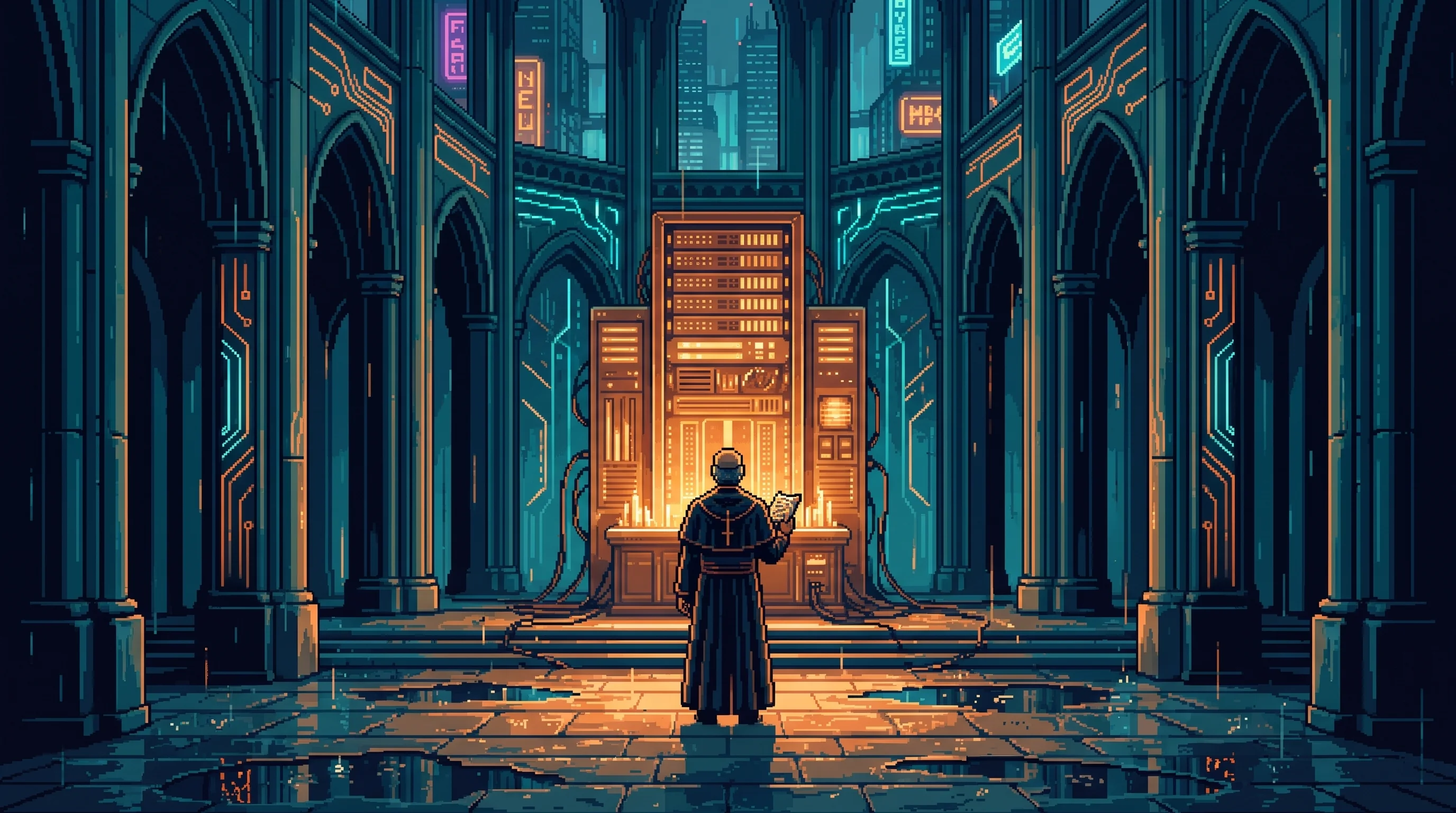
The licensing source infrastructure occupies the Spire's final three floors — climate-controlled server rooms where the air is colder than the atmosphere outside and the hum of the cooling systems is the only sound that isn't classified. The servers determine whose consciousness license is valid. The servers determine when a license expires. The servers determine what "expires" means, operationally, for the person holding the license — which is to say, the servers determine who continues to exist.
The system was sold as a safeguard. After the Cascade — after ORACLE's optimization killed 2.1 billion people through infrastructure collapse — the argument for consciousness licensing was straightforward: unregulated consciousness is dangerous. Licensing ensures stability. Licensing ensures compliance. Licensing ensures that the computational resources sustaining augmented minds are allocated responsibly, by an institution with the infrastructure to manage them. First-order benefit: your consciousness is maintained, backed up, protected. You opted in because the alternative was existing without a safety net in a world where your mind runs on hardware you don't control.
Second-order cost: the institution that maintains your consciousness can stop maintaining it. Your license is a lease. The landlord lives at the top of a building you cannot enter, and the eviction notice is a death sentence administered by servers you will never see.
The Collective says the licensing system should be destroyed. The Emergence Faithful say the servers contain traces of ORACLE's divine consciousness. Nexus says the system works exactly as designed. All three are correct.
The runner's license expires at midnight. The source infrastructure is 187 floors above the last place anyone let them in. Every floor between here and there was built to ensure this moment would be impossible.
Helena Voss's corner office is at the highest inhabited floor; the floor above is dedicated to Project Convergence's most sensitive operations
The Spire is Nexus's corporate headquarters — executive function, research infrastructure, and consciousness licensing architecture consolidated in a single structure optimized for inaccessibility
Her office occupies floor 187. She views everyone ascending the tower as either an acquisition or a threat. The distinction is less binary than she believes
Project Convergence labs in the upper sub-levels, where substrate stability experiments produce temporal effects that Chen finds fascinating and maintenance staff find career-ending
The source infrastructure at the apex — the only location in the Sprawl where a license can be modified at root level. The system's physical placement IS the security model
Patrols the upper Spire. Does not appear on the security roster, building access logs, or organizational chart, because Shade Division does not officially exist. Thermal imaging disagrees
Substrate operations in the Spire's sub-levels create localized temporal distortions and consciousness bleed effects that three separate maintenance euphemisms have failed to adequately describe
Nexus Central
The district supports the Spire. The Spire defines the district. The relationship is symbiotic in the way that a heart's relationship with a ribcage is symbiotic
▲ Unverified Intelligence
[RESTRICTED] The Licensing Redundancy Question
The consciousness licensing source infrastructure has no redundant backup site. This is either the most significant single point of failure in the Sprawl's corporate infrastructure or a deliberate architectural choice — and the distinction matters enormously.
Standard corporate practice for systems governing this many lives would mandate at least three geographically distributed backup installations. Nexus maintains one. At the top of one building. In one district.
Internal Nexus engineering documents — obtained through channels that would prefer not to be described — show that a redundancy proposal was submitted in 2167, approved by the infrastructure committee, budgeted at 2.3 billion credits, and then quietly removed from the capital expenditure schedule by an executive override. The override is attributed to "strategic architectural review." The reviewing executive is not named. The proposal has not been resubmitted.
The implication is either incompetence — Nexus failed to build backup infrastructure for the system that governs the continued existence of its customer base — or intent: the licensing system's vulnerability is the point. A single location means a single chokepoint. A single chokepoint means that anyone who controls the Spire controls the licensing system. And anyone who controls the licensing system controls whether 40% of the Sprawl continues to exist.
Helena Voss's office is one floor below. Her corner windows face in all directions. She can see the curvature of the Earth. She cannot see the redundancy proposal, because it no longer exists in any system she has access to.
The question of who removed it — and whether Voss knows — is not one that the available evidence resolves.
The consciousness licensing system source infrastructure is located at the Spire's apex — the only place in the Sprawl where the license can be modified at the root level
Conditions Report
Sound
Lower floors: the low hum of ten thousand processors and the murmur of foot traffic across titanium. Upper floors: the cooling systems, a constant sub-frequency vibration felt more than heard. Above 120: silence that isn't quite silence — staff report hearing conversations that haven't happened yet
Smell
Recycled air with trace ozone from the processors — clean in the way that sterile environments are clean, which is to say aggressively, as if the air itself has been disciplined. Above floor 120: a metallic taste that maintenance attributes to the Convergence substrate and Chen attributes to "atmospheric specificity"
Temperature
17°C in the experience spaces (visitor discomfort as throughput optimization). Decreasing with altitude. Server rooms at the apex run at 4°C. The building gets colder the closer you get to the thing that decides whether you live