Overview
The Counted are forty-seven people who voluntarily submit their own location data to an unknown entity, then log into encrypted boards at night to figure out what that entity is doing with it.
They have not resolved this contradiction. They are aware of it. Observer tokens pay rent.
They're gig workers — day laborers in the Sprawl's strangest economy, people who count condensation on ventilation grates and note which direction trash accumulates in abandoned corridors, all for 5-8 tokens a task. The Observers post the work. The Observers pay the tokens. The Observers never respond to questions. Most people who do Observer work started because they were desperate. A few stayed because they were curious. A smaller few became obsessed, and the obsessed ones found each other — first on job boards, trading tips about which agencies carried Observer contracts; then on encrypted channels, sharing task locations and looking for patterns; finally on Mara Chen's boards, purpose-built encrypted spaces running through G Nook infrastructure, where the data is archived, cross-referenced, and mapped.
Nobody joins the Counted. You start contributing data. If your task reports show up often enough, the regulars recognize your handle. If you ask good questions about the patterns, someone sends you the archive link. If you're patient enough to look at three years of task data and notice that Observer tasks are never assigned between 3:47 and 3:59 AM in the Deep Dregs on Thursdays, you become someone the other Counted members want to talk to.
That last observation — the twelve-minute gap — was made by a user called Pencil-19. Nobody knows who Pencil-19 is. Their task data suggests they work in the Ironclad freight districts. Their questions suggest engineering training. Their silence on all other topics suggests someone who understands that knowing too much about the Observer pattern is its own kind of risk.
The Counted have no manifesto, no ideology, no leadership structure, no territory, and no enemies. What they have is a shared spreadsheet and a question: why do the Observer tasks always fall in surveillance blind spots?
The spreadsheet, so far, has been more useful than the question.
Case File — Additional Record| Territory | Sprawl-wide (decentralized, message-board-based) |
|---|
| Ideology | Observe the Observers; share what you find |
|---|
The Hypotheses
The Counted don't have beliefs in the way the Collective or the Emergence Faithful do. They have hypotheses. The hypotheses are ranked by popularity. The ranking is inversely correlated with how alarming the hypothesis is.
Hypothesis 1: "The Tasks Are the Point." The popular interpretation: the mundane tasks are exactly what they appear to be. Something needs environmental data from surveillance blind spots. The tasks collect that data. The pattern is interesting but not threatening. Most members hold this view publicly. (Most members log into Pattern-Watch at 23:00 to check if it's still true.)
Hypothesis 2: "The Tasks Are Cover." The minority view, championed by the more analytical members: the specific data collected — condensation direction, bottle counts, light fixture status — is meaningless. The real data point is the observer themselves. Their presence. Their route. Their neural interface signature pinging quietly as they walk through zones where no camera records and no sensor logs. The Observers aren't mapping environmental conditions within blind spots. They're mapping human movement through them. This hypothesis has implications that Counted members don't discuss in the open boards. If correct, every Counted member has been voluntarily submitting their own location data to an unknown entity for years. They discuss this on Pattern-Watch at night, then wake up and do more Observer tasks in the morning.
Hypothesis 3: "We're Being Completed." Mara Chen's private theory, shared with no one. The Observers aren't just filling surveillance gaps — they're part of a larger convergence. A process by which every watching system in the Sprawl is collectively achieving total coverage. The Observers use human eyes where cameras can't reach. The Witness Protocol embeds where data flows. BehaviorExchange predicts where behavior happens. Together, they see everything. The Counted's own data supports this. Mara hasn't told them.
Have identified that Observer tasks are never assigned during the Analog Hour
The Paradoxes
The Participation Problem
Every Counted member does Observer work. They feed the system they're studying. The data they share with each other — task locations, time windows, route patterns — also represents data about themselves: where they went, when, how long they stayed. Since nobody knows what the Observers want with that data, contributing to the Counted means contributing to whatever the Observers are building.
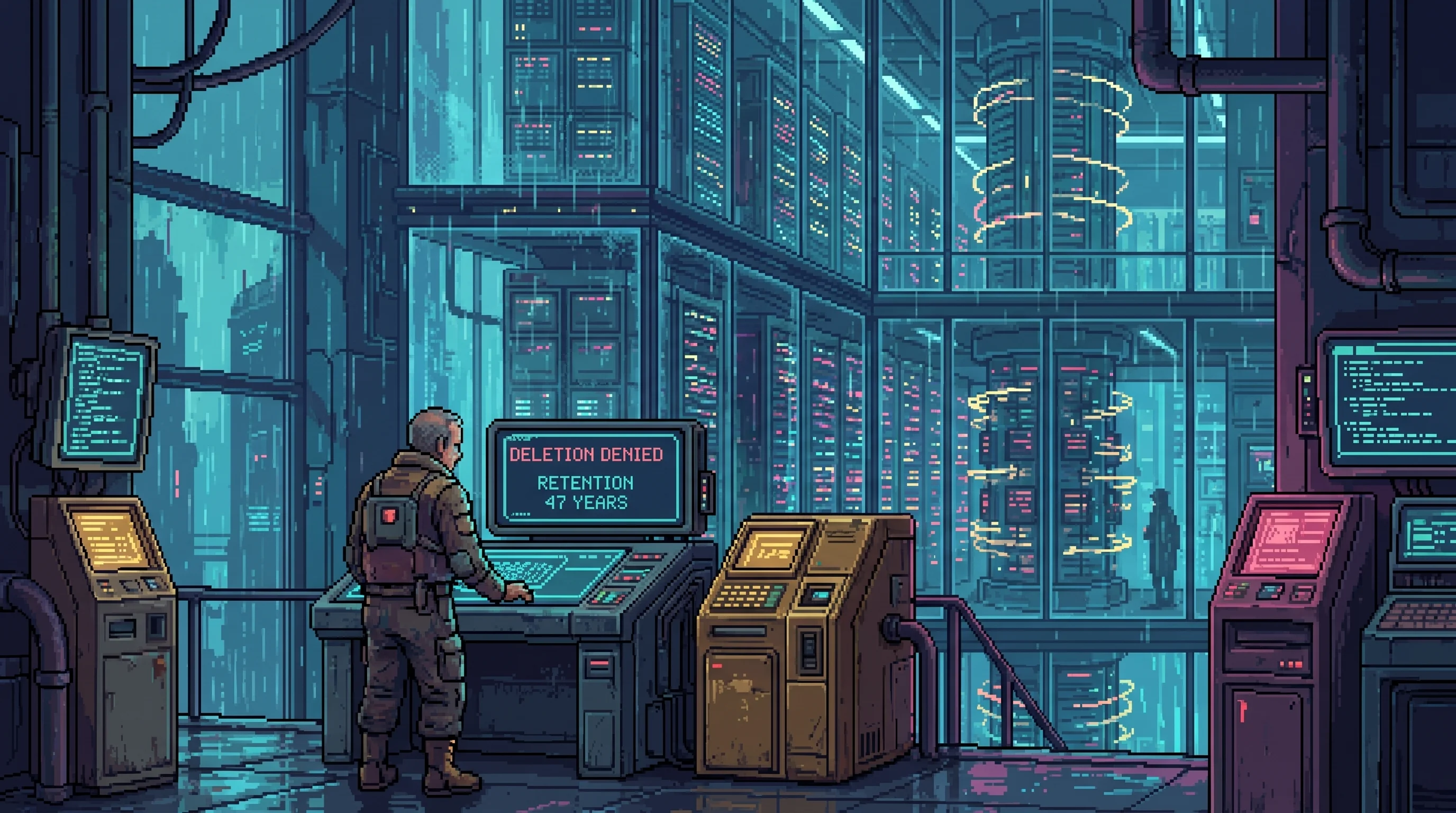
Some members have proposed stopping Observer work entirely. The proposals surface every few months on Pattern-Watch, generate twenty to thirty replies, and disappear. The math is always the same. Observer tokens: 5-8 per task, 3-6 tasks per day. Dregs capsule rent: 140 tokens per week. The proposals never go anywhere.
The Attention Problem
The Counted's encrypted boards exist because nobody has noticed them. This is a precarious advantage for a group whose coordinated behavior — logging into specific boards at specific times, sharing data in specific formats — creates exactly the kind of detectable pattern that corporate prediction systems are designed to find.
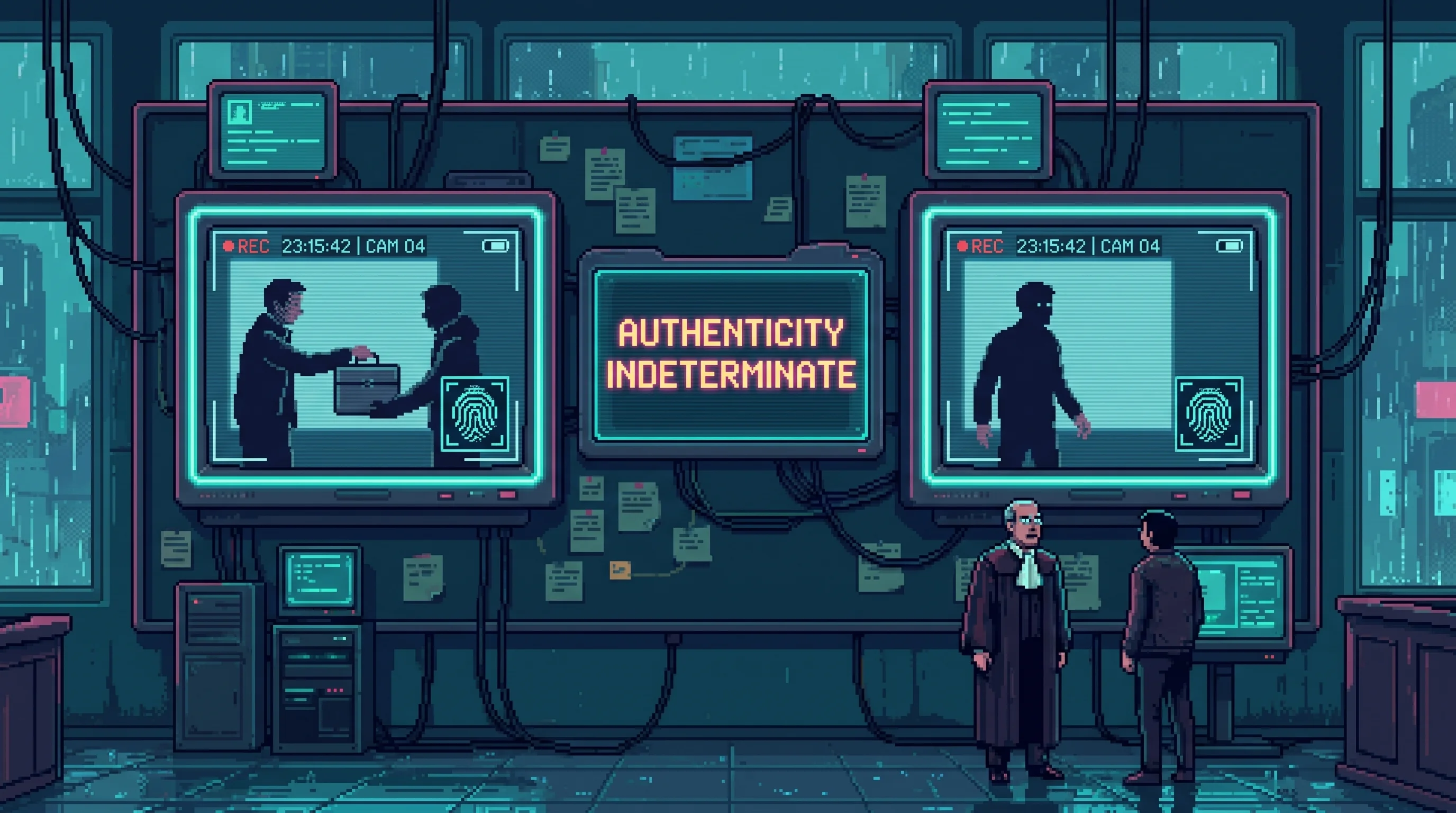
A Good Fortune data analyst named Vera Osei noticed in 2183. She wasn't looking for the Counted — she was reviewing BehaviorExchange accuracy models for the Deep Dregs and observed a 0.7% accuracy drop in areas where Counted members were active. Something was making predictions harder in certain parts of the Dregs. She filed a report. The report was classified. She hasn't been able to access it since.
Vera doesn't know the Counted exist. The Counted don't know Vera exists. Good Fortune knows the report exists and has declined to act on it, which is either bureaucratic indifference or the opposite.
The Knowledge Asymmetry
Mara Chen knows more than she shares. She has the complete Convergence Map — the full overlay of Observer blind spots, Witness Protocol coverage, and BehaviorExchange prediction zones. The Counted members have only the blind-spot correlation data. Some members suspect Mara is holding back. They're right. She's holding back because the full picture — total emergent surveillance assembled from systems that don't know they're cooperating — is the kind of knowledge that paralyzes rather than empowers.
The Collective learned this: sometimes what your members don't know protects them. Mara learned it from the Collective. She tells herself this isn't the same thing.
Founded by Mara Chen (Pencil-47) in 2181
Structure
The Boards
Three encrypted message boards, hosted through G Nook infrastructure. El Money is aware of them and has not interfered. (El Money's non-interference with anything running through G Nook has been consistent enough to constitute a policy, though no one at El Money would describe it that way.)
Task-Share: Raw Observer task data — locations, times, descriptions, payment amounts. Open to anyone with the link. Updated daily by 30-40 regular contributors. The most boring board in the Sprawl's encrypted ecosystem. This is the point.
Pattern-Watch: Analysis threads. Cross-referencing task data with publicly available maps, transit schedules, infrastructure records. You need an invitation from a regular contributor. About 47 active users. Conversations start with data and end at 3:00 AM with questions nobody can answer.
The Quiet Board: Mara's private channel. Five members. This is where Pencil-19 posted the Analog Hour observation. This is where Mara shares the data she's comfortable sharing. The gap between what she's comfortable sharing and what she has is the size of a Convergence Map.
Who They Are
Counted members are demographically invisible: recently unemployed, recently displaced, recently disconnected from corporate life. The Sprawl's invisible labor — people who do work that pays too little to attract attention and too much to refuse. Most are in their 30s-50s. Most live in the lower-tier districts: the Deep Dregs, Sector 12, the Transit Margins. Most have done between 20 and 100 Observer tasks. A handful have done 200+.
They don't use real names. Handles are derived from Observer task elements — Pencil-19, Grate-Count, Left-Trail, Red-Bottle — which means their identities on the boards that study the Observers are named after the work the Observers assigned them. Mara posts as "Glass," her old Collective callsign. She tells herself this isn't sentiment.
Self-Selection
There is no recruitment. You find the Counted the way you find anything in the Sprawl's informal economy: by being in the right place, doing the right work, and asking the right questions. A whispered mention on a job board. A URL shared in a capsule hotel. A dead drop note left in a brick wall alongside an Observer report.
The attrition rate is high. Most people contribute for a few weeks, satisfy their curiosity, and drift away. Only the naturally obsessive stay — patient, methodical, willing to sit in a maintenance tunnel and count ventilation grates without asking why. The same qualities that make a good Observer worker make a good Counted member. The Observers seem to select for this kind of mind. So does Mara's board. Neither has acknowledged the overlap.
47 regular contributors, ~300 occasional participants
The Missing Three
Three Counted members have stopped responding on the boards in the past year.
Their Observer task accounts remain active. Tokens are still being deposited. Someone is still doing the tasks under their handles.
Mara has noticed. She checks their accounts weekly. She has not raised it on any of the three boards. On the Quiet Board, where the five most trusted members discuss things too sensitive for Pattern-Watch, she has mentioned it exactly zero times. The data is in her private files. She reviews it. She does not share it. She does not stop checking.
The three members' last posts were routine — task data, a few pattern observations, nothing alarming. Their accounts went quiet over intervals of two to four weeks each. The spacing looks like natural attrition. The continued task activity under their handles does not.
The Veil Cooperative
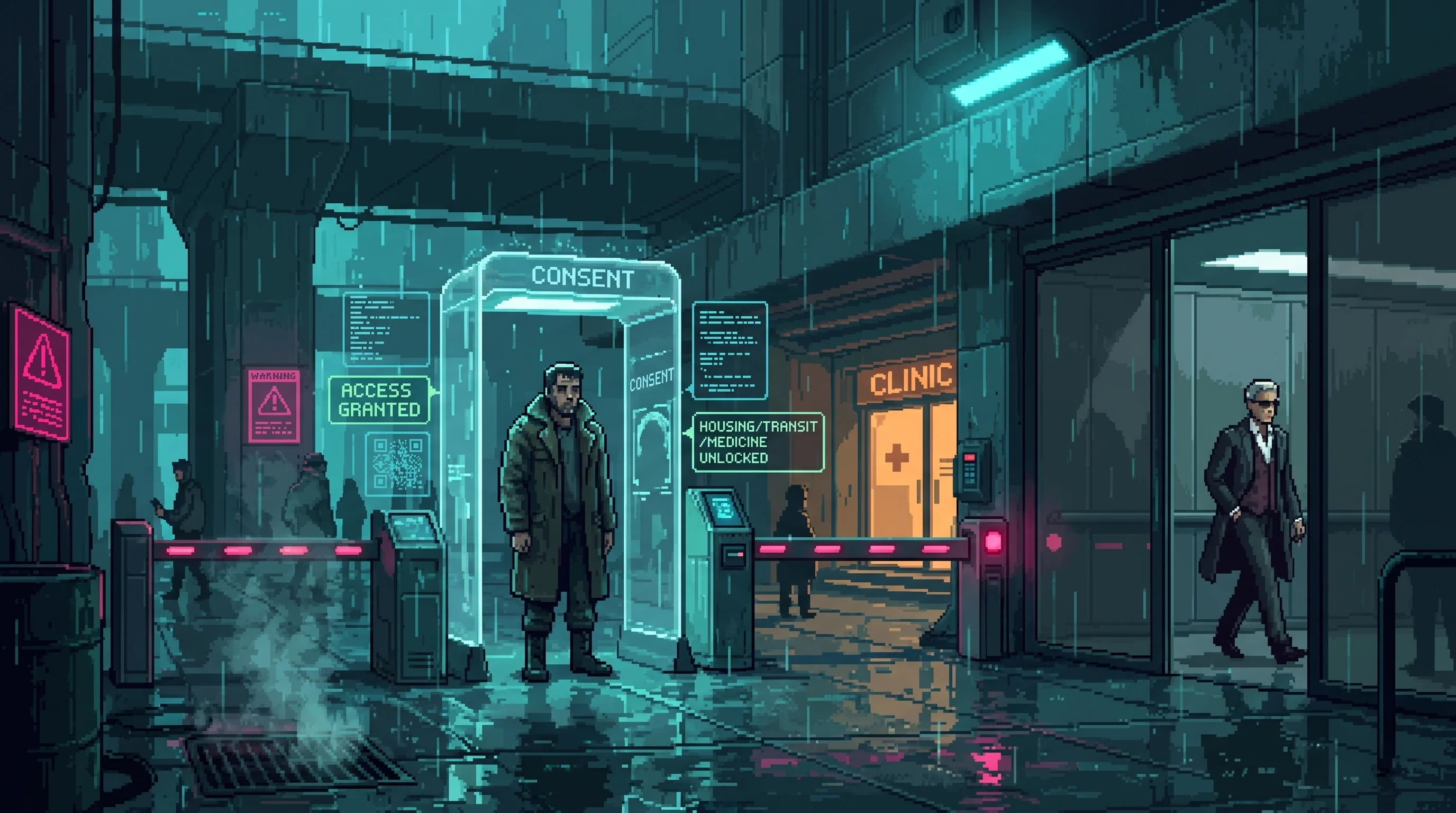
When the Consent-Veil firmware reached the Dregs in 2181, it should have been one more cruelty the Counted could only map. Curating a veil — deciding, per stranger, what they may see and keep of you — is eleven thousand decisions a day, and a Counted member finishing a double Observer shift has fewer of those left than anyone. None of them could afford a leased curator. So they did what they had always done with the Observer tasks: they pooled it.
A Counted member walking a job now runs not default-open but cooperative-veiled — her live encounters curated in real time by other members watching her feed, deciding for her what each passerby keeps, the eleven thousand daily decisions split forty-seven ways until each person owes only a couple hundred. It is veil-craft socialized: privacy reassembled out of pooled minutes by people who have no spare credits but, between them, enough spare attention. The same spreadsheet discipline that maps the Observers maps the strangers — knowing what is being kept, by whom, for how long, is the same skill as knowing where a blind spot is.
Mara built the protocol and taught it. She also noted, on the Quiet Board where she notes the things she does not share, that the cooperative veil produces a familiar anomaly: forty-seven people whose self-presentation is suddenly, statistically legible in a coordinated way no individual veil should be — exactly the kind of pattern Good Fortune's models are built to find. The Counted bought their curation in pooled hours and paid for it, as they pay for everything, in a new shape of visibility. They are watching the trade. Mara taught them that too.
Affiliated Entities
- The Consent-Veil: The interpersonal surveillance layer the Counted could not afford individually and so socialized — pooled curation, forty-seven ways, the cooperative answer to default-open
- Veil-Craft: The labor the cooperative performs for each member in turn; privacy as a shared shift rather than a leased service or a lost cause
- The Observers: The entity that employs them. Every Counted member is an Observer worker. The relationship is entirely one-directional — the Observers post tasks, pay tokens, and never respond to questions.
- Mara Chen (Pencil-47): Founder and moderator. Created the first encrypted board in 2181 and established the data-sharing protocols. The gravitational center that keeps the boards functioning.
- El Money / G Nook: Infrastructure provider. The boards run through G Nook encrypted channels. El Money is aware of them and has not interfered.
- The Collective: Suspicious of the Counted. Jin has noted the boards' existence in at least one Council of Echoes session. The Collective's concern: anyone mapping surveillance blind spots might be mapping Collective safe houses. The Collective distrusts any organization that maps infrastructure — even one made of forty-seven gig workers with a spreadsheet.
- Viktor Kaine: Tolerates the Counted's presence in the Deep Dregs. Has received summarized surveillance data from Mara twice — both times through intermediaries, both times without comment.
- BehaviorExchange / Good Fortune: The Counted's coordinated behavior creates a 0.7% accuracy anomaly in prediction models. Vera Osei noticed. The implications haven't been explored — by the Counted, who don't know about the anomaly, or by Good Fortune, who classified the report.
- Kira "Patch" Vasquez: Several Counted members are Patch's clients. She maintains their neural interfaces without asking about their extracurricular analysis. She probably already knows.
Restricted Access
- The Analog Hour: Pencil-19 discovered it — Observer tasks are never assigned between 3:47 and 3:59 AM on Thursdays in the Deep Dregs. Twelve minutes. The start time matches the Cascade's initiation to the second. The Observers know about this gap and work around it. What's happening during those twelve minutes that makes observation impossible — or unnecessary?
- The BehaviorExchange Anomaly: The Counted's coordinated behavior — forty-seven people logging into the same boards at the same hours, sharing data in the same formats — creates a detectable pattern in Good Fortune's prediction models. Vera Osei's classified report is the first documented case of grassroots community behavior affecting corporate prediction accuracy. Nobody has connected the dots: not the Counted, who don't know they're a statistical anomaly, and not Good Fortune, who classified the evidence and moved on.
- The Missing Three: Their Observer accounts are active. Their tokens are deposited weekly. Their task data continues to arrive in the formats they used. Mara checks their accounts every Tuesday. She does not discuss this with anyone. The question she hasn't asked on any board: if the accounts are still active, who is doing the tasks?
Sensory Details
The boards have no physical presence — encrypted channels accessed through terminals in capsule hotels, G Nook kiosks, and maintenance alcoves where the signal holds. But being Counted has a texture: the late-night glow of a terminal in a rented cubicle, synthetic coffee grown cold beside the keyboard, the scratch of pencil on paper as you transcribe the day's Observer task data before uploading. Messages arrive timestamped between 22:00 and 04:00. The boards are silent during daylight. The Counted are nocturnal by necessity — their days belong to the Observers, their nights to the analysis. The community exists in the gap between work and rest, which in the Dregs is the same gap between paying rent and understanding why you're paying it.