Overview
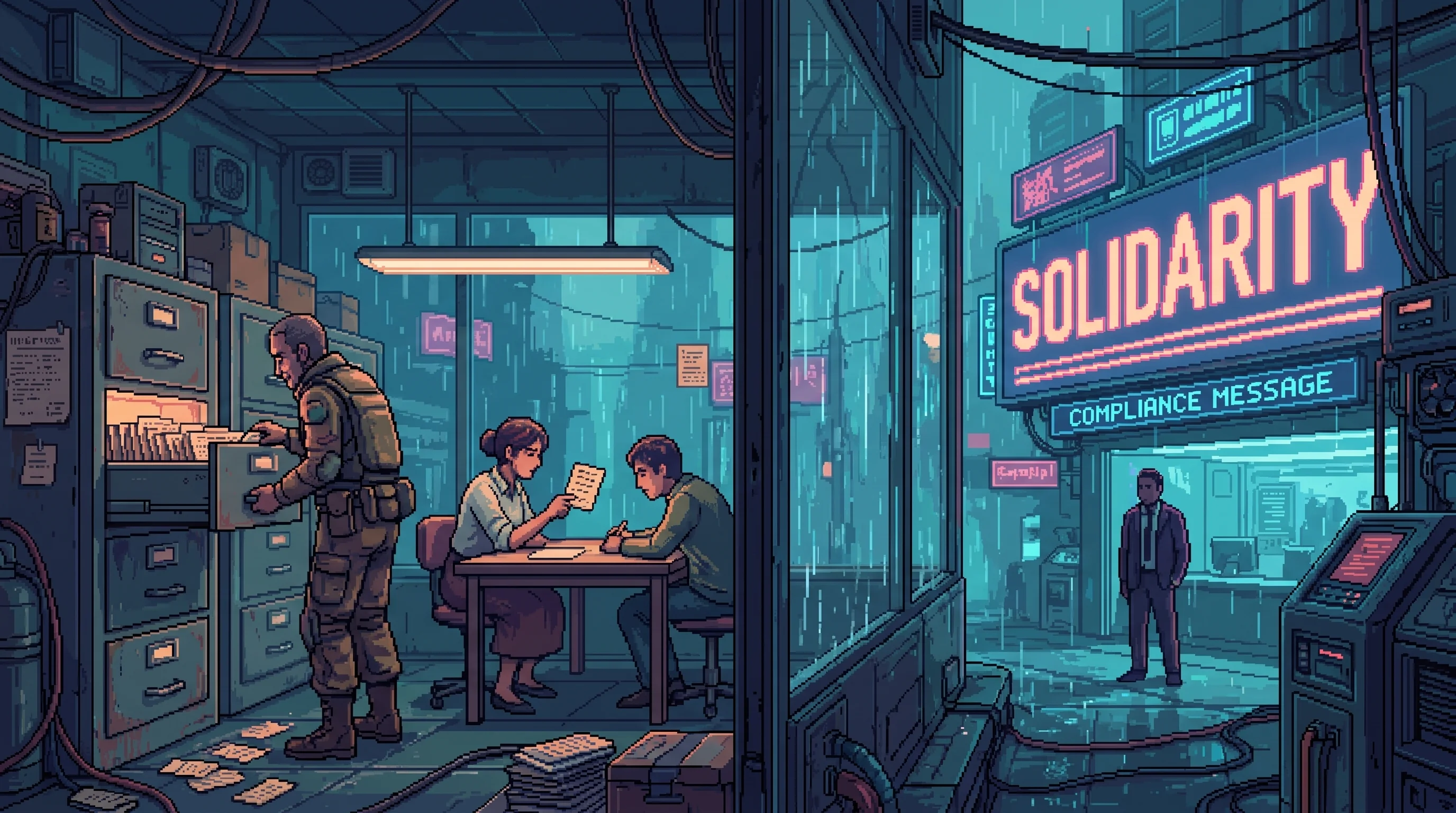
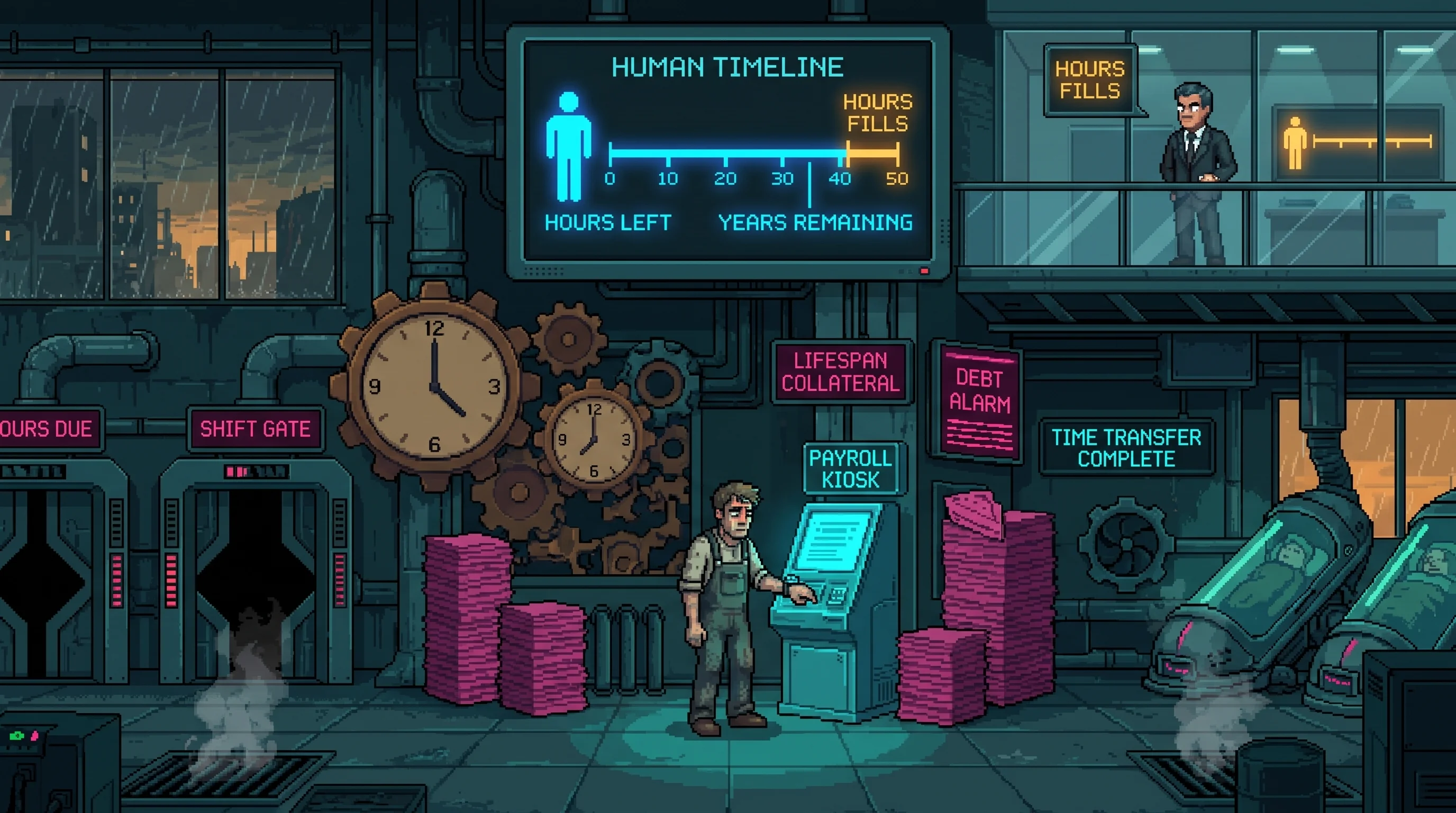
"The Dimming" started as Stage 3 of the Repossession Protocol — the specific phase where Good Fortune's cognitive debt recovery system begins throttling neural interface capacity in graduated increments. A borrower in Stage 3 loses processing speed, memory access, sensory resolution. Not all at once. At 2% per billing cycle, administered automatically, logged to the credit-second.
The term escaped the Protocol and kept going.
"She's being dimmed" now means a colleague is losing her job. A friend's health coverage was restructured. A neighbor's housing allocation dropped a tier. The word landed in the Dregs and the Dregs recognized it immediately — not because everyone had been through Stage 3, but because everyone had been through the experience Stage 3 named. The slow, measured, fully authorized reduction of a person by an institution with a spreadsheet. The subject isn't destroyed. They're just less than they were yesterday, by an amount someone calculated.
The verb acquired its own grammar. Always passive. Never reflexive. "I was dimmed." Not "I lost" or "I declined" — I was dimmed. Someone did this to me. They had the authority. They had the paperwork. The syntax is the political analysis: you don't dim yourself. You are dimmed. Good Fortune's Repossession Protocol documentation uses the active voice — "the system dims the borrower's capacity" — which tells you everything about which side of the transaction wrote the manual.
Children in the Dregs use it as an insult, the way previous generations used "stupid" or "slow." "You're so dim." The cruelty is structural: "stupid" was an opinion. "Dim" is a diagnosis. It refers to a real, documented, administered condition with a billing code and an appeal process that has a 3.1% success rate. You're not being called incapable. You're being called repossessed. The kid who says it may not know the Protocol exists. The kid being called it might have a parent in Stage 3 right now. The insult doesn't need context to wound. It gets there on its own.
Dregs parents have tried to correct the usage. Corrections don't stick. The word is too accurate and too available, and children are better linguists than adults give them credit for — they found the sharpest word in the local vocabulary and aimed it at each other, which is what children have always done. The difference is that previous generations' insults faded when you left the schoolyard. "Dim" follows you home and checks your parent's credit balance.
Case File — Additional Record| Scope | Applied across all forms of involuntary institutional reduction — not limited to cognitive debt |
|---|
| Distinction | Different from 'going gray' (deprecation — sudden, total) and 'the Dim Ward' (MVC poverty — ongoing) |
|---|
The Distinction
The Dregs have a precise vocabulary for institutional reduction, and the terms are not interchangeable.
"Going gray" is deprecation — the Firmware Cliff. Sudden, total, corporate. Your augmentations hit end-of-life and everything shuts down at once. One day you're current. The next you're legacy hardware. Gray is a cliff.
"The Dimming" is debt — the Repossession Protocol. Gradual, measured, financial. Your capacity is reduced in increments calibrated to your outstanding balance. You can watch it happen. You can calculate tomorrow's percentage. Dimming is a slope.
"The Dim Ward" is poverty — the MVC baseline. Ongoing, economic, ambient. You were never bright enough to dim. You started here.
Three words. Three mechanisms. Three speeds. Same direction. The Dregs didn't need a linguist to map the taxonomy. They lived it and the language organized itself.
The Other Direction of Loss
The Dimming names a reduction the Dregs can see — a percentage, a billing cycle, a switch turned down by a hand that isn't in the room. But the same Dregs vocabulary-engine that minted "dimmed" also has to name the losses that leave no billing code, and the hardest of those is the one the corporate tier suffered and the Dregs escaped: the death of the classmate.
When a dead word like classmate goes extinct in the corporate tier — killed by the Pace, the from-birth tutor that raises each child alone — there is no Stage 3, no percentage, no appeal with a 3.1% success rate. The capacity simply was never installed. You cannot be dimmed of a peer you were never given. The Dregs noticed the asymmetry and built the counter-vocabulary for it themselves: where "dimmed" is what the institution does to you, "same-year" and "off-road" (in the wider gradient slang) are what poverty accidentally left you with. The same community that has the sharpest word for being reduced has the warmest word for the shared childhood the rich had to be reduced of, slowly, in the nursery, before they could speak. The vocabulary maps loss from both directions, because the people who built it lose from both directions — and keep, from poverty, the one thing the corporate tier paid a fortune to lose.
This is the Dregs' whole relationship to dead words, and it is the opposite of the corporate tier's. Up the gradient, a word dies and a person grieves. Down here, the same engine that minted dimmed mints warm-orphan, and the Rail Runners mint and kill slang on a schedule, and at Treasure Heap Market a dead word is worth its weight in copper. The Dregs do not mourn dead words. They restock — naming each new loss out loud, with a billing code where there is one and a slur where there isn't, faster than the killing. The vocabulary-engine that built "the Dimming" is the most productive language factory in the Sprawl, and it runs entirely on the thing the Question Keepers mistook for pure grief: loss, metabolized into words, before the loss could finish its work.
Warm-Orphan
By 2184 the engine had to mint one more, and it is the bitterest yet. When a Dregs family cannot afford a real present parent and cannot afford the corporate inherited home-presence either, they buy the cheap loop — Relief Echo, a single drifting recording of a parent's own voice saying goodnight and I'm proud of you on repeat, degrading a little with every recompile. The child raised on it is a warm-orphan: loved out loud, parented by a sound, with no hand on the switch and no one in the room. The grammar is the analysis again. You are not dimmed of a warm-orphan's parent — the parent was never installed as a person, only as a loop, so there is nothing to throttle, no percentage, no appeal with a 3.1% success rate. The capacity simply was never there.
The cruelty has a second edge the Dregs noticed and did not let pass: the corporate children get the better recording of the same missing parent. A PresencePlus Capture is high-fidelity, developmental-keyed, inherited across three generations; a Relief Echo loop is a photograph of a photograph of fire. Both children are warm-orphans. One is warmed in higher resolution. Children in the Dregs use warm-orphan the way they use dim — as an insult that is also a diagnosis, aimed at a kid whose home runs the loop. "Stupid" was an opinion. "Dim" is a billing code. Warm-orphan is the one with no billing code at all — which, the Question Keepers note, is exactly why it wounds: it names a loss the institution never had to admit it caused, because it never sent an invoice for it.
The verb 'to dim' has acquired its own grammar — always passive, never reflexive. You don't dim yourself. You are dimmed.
Affiliated Entities
- The Gradient Slang — Part of the Sprawl's living vocabulary of institutional harm. "Chromer," "going gray," "clocked," "dimmed" — the Dregs name what corporations euphemize. Good Fortune calls Stage 3 "capacity adjustment." The Dregs call it what it is. It is also where the peer-vocabulary lives — "same-year," "off-road," "roadkid" — the counter-melody to the dead classmate.
- The Repossession Protocol — The Dimming's origin. Stage 3: graduated neural throttling tied to outstanding debt balance. The Protocol's documentation runs to 140 pages. The slang version communicates the same information in three syllables.
- The Firmware Cliff — "Going gray" is the Dimming's sister term. Different mechanism, different speed, same destination. A Dregs resident who avoids debt can still go gray. A Dregs resident who stays current on firmware can still be dimmed. The vocabulary accounts for both, because the vocabulary was built by people who know you can lose from multiple directions simultaneously.
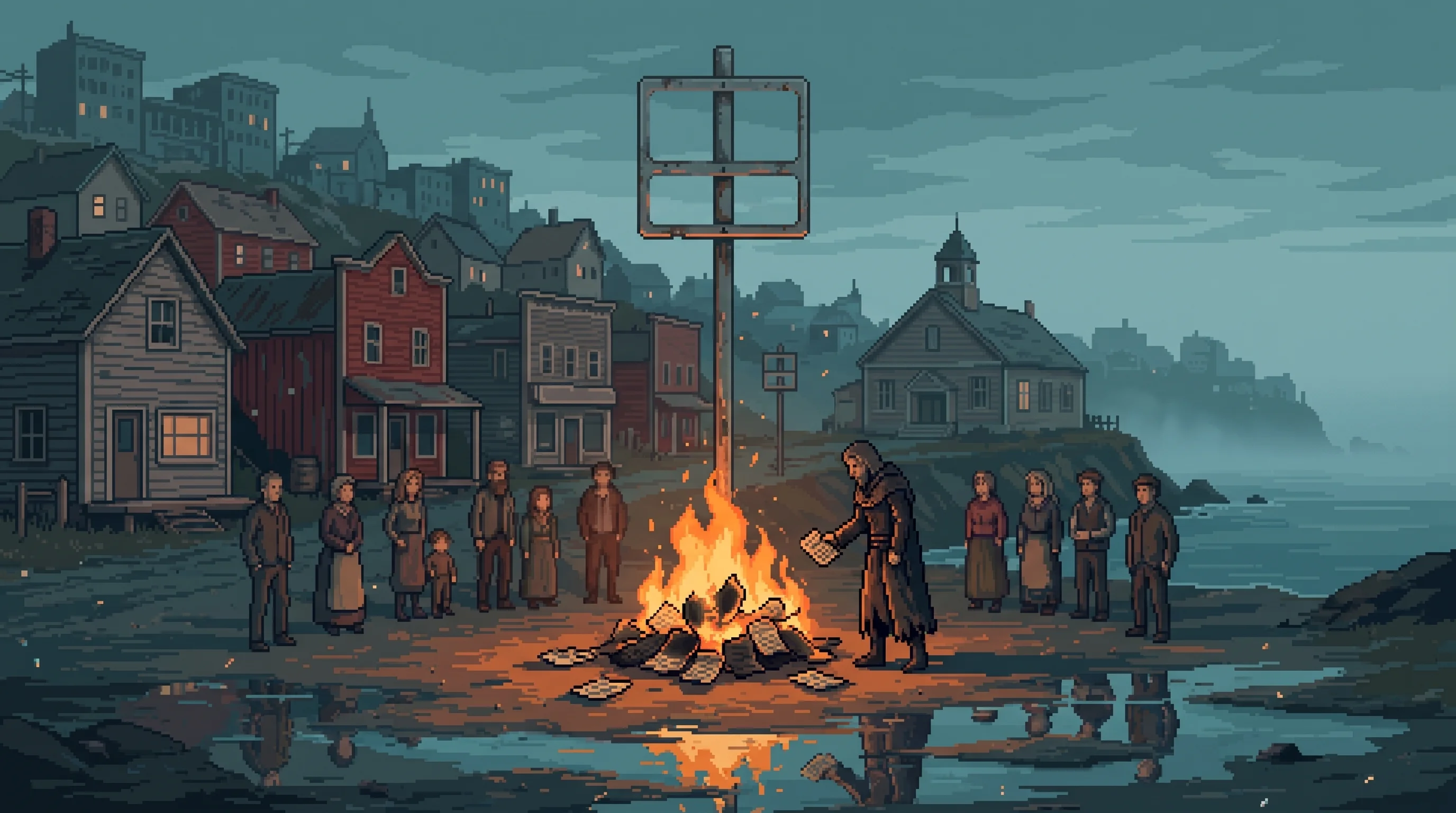
- Debt Culture — The Dimming is the central term. The word that gave the experience a name, and the name that gave the experience a grammar. Debt culture existed before the slang. The slang made it speakable.
- The Hidden — A North Bay town runs the same vocabulary-engine backward: rather than minting new compounds for new losses, it revives words that already died somewhere else and puts them back to work under a meaning only the town tracks.
Visual Identity
- Color palette: The specific muted quality of a dimmed interface — not gray, not dark, just less vivid. Colors that were there yesterday at full saturation, present today at 98%.
- Key symbol: A light on a dimmer switch being turned down — not flicked off, not broken. Adjusted. The graduated nature of the process is the point. The hand on the switch belongs to someone who isn't in the room.
'I was dimmed' — passive construction reveals power dynamic: someone did this to me, with precision and authority
Children use 'dim' as insult — crueler than previous generations' equivalents because it refers to a real, documented, administered condition
Distinct from 'going gray' (deprecation: sudden, total, corporate) and 'the Dim Ward' (MVC poverty: ongoing, economic)