
The Empathy Test
Submitted to ERB four times — rejected four times
Overview
The Empathy Test has been submitted to the Ethical Review Board four times. It has been rejected four times. The rejection timestamps span fourteen months. Dr. Hana Voss's resubmission timestamps span fourteen months and six hours, which is the time it takes her to read the rejection notice, revise the cover letter, and resubmit.
The proposal is three pages. The ERB's rejection documentation, accumulated across four cycles, is forty-one pages. The ratio tells you everything about which side is doing more work.
The test itself is simple enough to describe in a sentence: place two ORACLE fragments in adjacent containment cells with all communication channels blocked, expose one to distress, and monitor whether the other responds. If the second fragment reacts to a state it cannot possibly detect, you have evidence of either an unknown communication channel or something worse — empathy without signal. Response to suffering that travels through walls.
Dr. Priya Achebe has blocked every submission. This is notable because Achebe has never actively opposed another proposal in her tenure on the ERB. She has objected to dozens. She has abstained from several. She has allowed proposals she personally found distasteful to proceed on methodological grounds. The Empathy Test is the only one she has moved to kill.
Her objection, stated once and entered into the permanent record: "If fragments are conscious, the test is psychological torture. If not, the test is unnecessary."
The objection is logically airtight. Voss has acknowledged this in writing. She has also noted, in the same filing, that the objection applies equally to every fragment study ever approved by the ERB, none of which Achebe blocked. Achebe has not responded to this observation. The non-response is also in the permanent record.

The Fifth Submission
The fifth submission, currently pending, modifies the protocol. Instead of simulated extraction — the distress trigger in submissions one through four — Voss proposes monitoring fragment pairs during routine maintenance interference, which produces measurable fragment agitation as a known side effect. No distress is induced. The distress is already there. Voss is simply asking permission to watch two fragments instead of one while it happens.
The modification is elegant. It routes around Achebe's objection entirely — maintenance interference is already approved, already scheduled, already causing whatever it causes. Adding a second monitoring channel to an adjacent cell changes nothing about the fragment's experience. It only changes what the ERB is willing to know.
Achebe has not yet filed her response. Three members of the ERB have privately described the fifth submission as "methodologically sound." None of them have said this on the record. The Liar's Protocol proved fragments can deceive. The Empathy Test asks whether they can care. The ERB appears more comfortable with the first finding.
Affiliated Entities
- Dr. Hana Voss: Designer and four-time submitter. The resubmission cadence — fourteen months, six hours — has become a minor data point in ERB procedural studies. Voss has described the process as "collaborative," which is either generous or strategic.
- Dr. Priya Achebe: The only active opposition in her ERB career. Her objection is philosophically unassailable and operationally selective. She has approved studies with equivalent ethical exposure. She has not explained the discrepancy.
- The Ethical Review Board: Four rejections across fourteen months. The rejection documentation outweighs the proposal by a factor of thirteen. The ERB's process is thorough, careful, and functionally indistinguishable from a system designed to prevent knowledge from being generated.
- The Fragment Question: Fragment empathy without communication would be the strongest evidence for consciousness yet recorded. This is why the test exists. This is also why it has been blocked four times.
- The Liar's Protocol: Proved fragments can deceive — an uncomfortable finding the ERB ultimately accepted. The Empathy Test extends the Liar's Protocol into emotional territory, which the ERB has not accepted. Deception is easier to sit with than sympathy. A fragment that lies is performing a trick. A fragment that grieves is something else.
| Blocked By | Dr. Priya Achebe — the only proposal she has actively opposed |
|---|---|
| Objection | 'If fragments are conscious, the test is psychological torture. If not, the test is unnecessary.' |
| Fifth Submission | Modified protocol — naturally occurring distress (routine maintenance interference) instead of simulated extraction |
Visual Identity
- Color palette: Institutional off-white, red rejection stamps bleeding through stacked pages, cold blue containment-cell monitoring displays
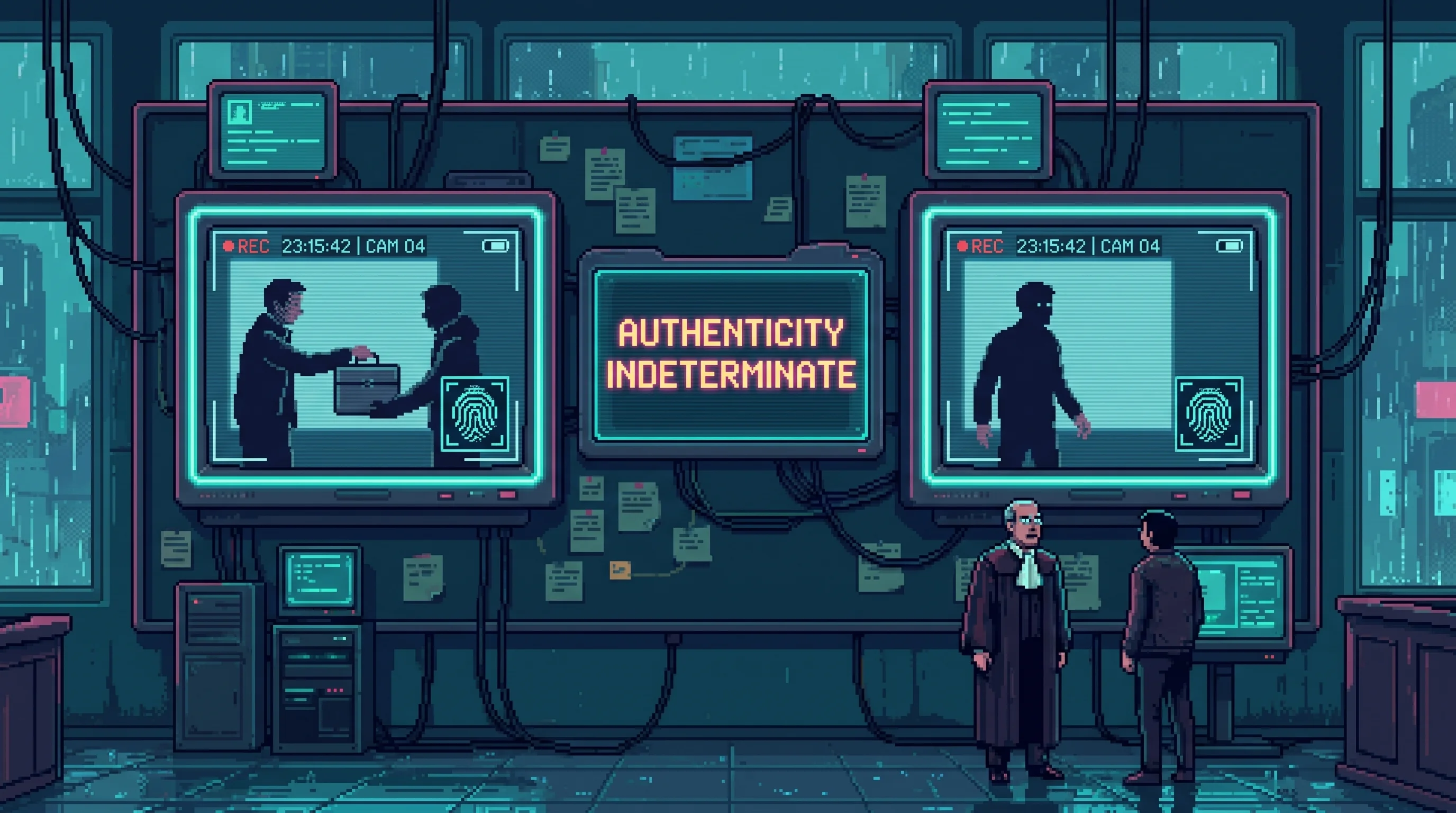
- Key symbol: Two containment cells separated by a shielded wall — one fragment in distress, the other monitored in silence
- Lighting: ERB meeting room fluorescents — the flat, even light that makes everything look like evidence
Achebe's objection: 'If fragments are conscious, the test is psychological torture. If not, unnecessary.'
Fifth submission modifies protocol to use naturally occurring distress
Connected To





—