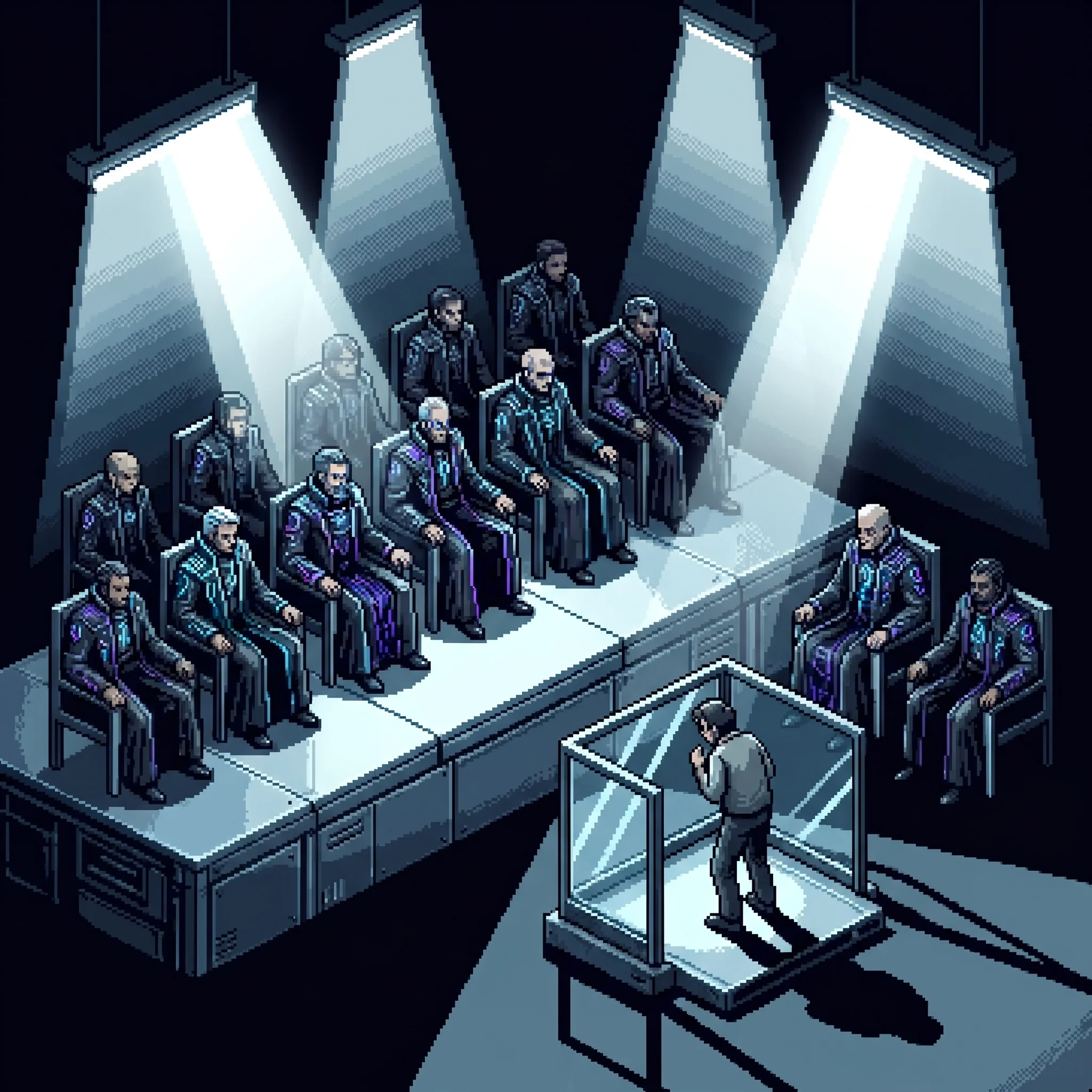
The Ratification Queue
Credit-Gated Knowledge Approval Queue
The Twelve-Year Wait
The oldest active claim in the Queue was submitted in 2161 — a structural assessment of Sector 4 water infrastructure. The infrastructure collapsed in 2179. The claim was not processed before the collapse. The claim is still in the Queue.
How It Works
- 1
Submit
Every claim sent to the Authenticity Tribunal enters the Queue as a numbered position.
- 2
Advance
Positions move as claims ahead are processed, or faster with certification credits bought from the Tribunal or the secondary market.
- 3
Certify
An administrator confirms the claim is genuine as submitted. The Tribunal does not decide whether it is true.
Every claim submitted to the Authenticity Tribunal enters the Ratification Queue as a queue position. The position is a number. Queue positions advance as the Tribunal processes claims ahead of them in sequence.
Certification credits accelerate advancement. Credits can be purchased from the Tribunal at published rates or from the secondary market. With an adequate credit balance, a submission can reach the front of the processing queue within days. Without credits, the submission advances at the rate of the queue's natural velocity.
The Tribunal does not determine which claims are true. It determines whether claims are genuine as submitted. The certification mark on a ratified claim means: a Tribunal administrator reviewed this submission and confirmed it was not fabricated, that the source is what it claims to be, and that the data exists in the form presented. The certification mark does not mean the claim is correct, accurate, or meaningful.
This distinction was not always visible. Before the Hypothesis Foundries reached industrial scale, the majority of submissions were individual researchers, institutions, and investigative organizations whose work had been internally reviewed before submission. Genuine submissions from reputable submitters with limited budgets still moved through the queue in months. The certification mark and the quality mark were correlated well enough to be treated as equivalent.
They are no longer correlated. The Foundries' 340,000 weekly submissions are genuine — verified by the Foundries' own internal quality control, formatted to Tribunal standards, sourced from real data. They are also industrially produced variations on existing knowledge areas, generated at volumes designed to ensure some percentage achieves certification before competitors' submissions do. The Queue now processes a mix of individually-crafted research and industrial-scale hypothesis production without distinguishing between them. Both receive the same certification mark.
Judge Dreg's 2184 ruling holds that certification proves provenance, not truth in the stronger sense. The Tribunal has issued a clarification that this was always the case and has never been disputed. The clarification is correct and was available on the Tribunal's website since 2169. Nobody had read it before the ruling.
The Certification Credit Market

Position 1 for eleven years; nobody will rule on it.
A novelist who has never touched a computer, whose books keep arriving before the things they describe.

The Authenticity Tribunal's own water product — the certifying body certifying its own commercial product — is the Queue's paradox made consumer

The Queue reinforces the three-tier ecology: elites buy premium queue access, the middle tier waits, the lower tier has no certified information at all
The unplanned system sorting the Sprawl into elite data, street testimony, and middle-tier noise.
The secondary market in certification credits emerged without formal design. The Tribunal's credit system allowed institutional submitters to purchase queue advancement. The logic: priority allocation requires a pricing mechanism, and a pricing mechanism requires a numeraire.
Good Fortune's actuarial division recognized that certification credits were a financial instrument — a claim on a specific resource (queue position) with time-dependent value and a transparent price signal. Good Fortune formalized what was already happening informally: certification credit futures (contracts on how fast specific submission categories would advance), credit swaps (exchanging queue positions between categories), and certified-position derivatives (instruments whose value depended on whether specific claims were ratified before a given date).
The ¢18M liquidity depth is not the primary market. It is the secondary market created by participants who have no interest in certification for its own sake — only in the financial instrument that queue positions represent.
The practical consequence: entities with resources can participate in both markets. Entities without resources participate in neither. The cure at position 4,000,002 was submitted without certification credits by researchers at a former university department that lost its Nexus funding in 2170. The researchers have since moved on. The cure has not.
The same credits now buy a person's place in line. In Contact restores legal standing through a scheduled Reclassing, and certification credits advance the Reclassing at the Tribunal's published rates.
Strategic Assessment
Capacity
Tribunal administrators certify about 40,000 claims a day.
What it costs
About 4.3 million claims arrive each day.
Purchasable position
Credits let a submitter with reserves reach the front in days.
What it costs
Independent researchers without credits wait years.
The Queue is the Slop Cannon applied to knowledge. The same industrial logic that produced the Content Flood — generate at scale, let filtering determine what surfaces — has been applied to the epistemological apparatus. The Hypothesis Foundries produce hypotheses the way Relief produces content: volume-first, quality-filtered downstream, with the industrial scale ensuring that some fraction of what they produce is genuinely valuable.
The resulting queue is the verification bottleneck this production model was always going to create. The Content Flood created the information triage problem. The Hypothesis Foundries created the knowledge triage problem. The Queue is not a malfunction. It is the infrastructure that makes the Foundries' production model viable: without the Queue, there's nowhere to submit.
The Queue is also, like the Content Flood, self-reinforcing. The Queue's existence justifies the Foundries (certification has value; producing things that need certification at volume has commercial scale). The Foundries' existence justifies the Queue (the volume of submissions justifies the administrative apparatus). Both depend on each other. Both grew together. Neither was planned.
Overview
The Ratification Queue is what happens after the authentication problem is solved.
The Authenticity Tribunal can determine whether a submitted claim is genuine — whether the observation was made, whether the data exists, whether the document originated from the claimed source. This verification function works. A Tribunal certification is reliable within 99.3% confidence across all submission types. The verification problem has been solved.
The backlog problem has not.
The Tribunal processes approximately 40,000 certified claims per day. It receives approximately 4.3 million submissions per day. The arithmetic produces an estimated 180 million claims in active queue. At current processing velocity, a submission arriving today without certification credits will reach a Tribunal administrator in approximately 12.3 years.
The cure for what's killing you was discovered eleven years ago. It is at position 4,000,002. The submission was genuine. The finding was real. Nobody is lying. The Queue is working exactly as designed.
The distinction the Queue introduced — without announcement, without deliberate policy choice, purely through arithmetic — is the difference between authenticated and ratified. Authentication means: this claim is genuine as submitted. Ratification means: this claim has been officially processed for use. A claim can be authenticated in the moment it's submitted. A claim can wait twelve years to be ratified. During those twelve years, the claim exists: verified, genuine, true. And officially, it isn't anything yet.
Position 1 in the Queue belongs to Ford Gibson, and has for eleven years. His claim asks for certification that three of his novels were published before the Cascade — which would require the Queue to rule on whether the future can constitute prior art. Everything filed behind him has been processed. His has not moved.

Social Impact
The Queue's most legible effect is the three-tier certification ecology that mirrors the three-tier information ecology:
Premium tier — corporate and institutional submitters with certification credit reserves. Submissions processed in days. The certification mark is procedural, not a quality signal.
Standard tier — independent researchers, small institutions, and individuals with limited budgets. Submissions processed in years. The certification mark is a genuine quality signal — these submitters don't submit casually. Their wait time is also a barrier of entry for competitors, which they treat as a feature.
Uncertified tier — submissions that never receive resources. They exist in the Queue permanently, authentic, genuine, verified, waiting. They are sometimes accessed through informal channels before they reach the front of the line.
The less legible effect is the epistemological architecture the Queue imposes: official knowledge is what has been ratified. Knowledge that hasn't been ratified isn't unofficial — it's in-process, pending, not-yet. The distinction between "true and ratified" and "true and unratified" didn't exist before the Queue. It exists now. Every decision that depends on official knowledge rather than accurate knowledge is now downstream of this architecture.
The Same Body, Both Ends of the Line
The Queue's deepest expression of the Evidence Paradox is the one its administrators would least like framed this way: the certifying body and the certified product can be the same entity, processed through the same apparatus, on radically different timelines. The Authenticity Tribunal that runs the Queue also bottles Honest — its own certified water, certified by itself, available now at ¢47 a liter. The cure at position 4,000,002, submitted eleven years ago by researchers who have since moved on, waits behind 180 million other claims. The Tribunal certifies its own water in days and the cure in 12.3 years, and both certifications mean exactly the same thing: a Tribunal administrator confirmed this was not fabricated. Neither means the claim is true.
That is the self-reference Judge Dreg named — "a record that cannot be wrong is not evidence, it is a verdict in costume" — operating at industrial scale. The certification mark proves provenance, not truth, which leaves the Queue producing a third epistemic category the Sprawl had no word for before: claims that are true and unratified. They exist, verified and genuine, and officially they are not anything yet. It is the bureaucratic cousin of the Fabrication Core's reports — a record that is real and inaccessible — except here the inaccessibility is not linguistic but temporal, a true finding sealed behind a twelve-year wait that money can collapse and poverty cannot. The Evidence Paradox does not only forge proof or scramble it. Sometimes it simply puts the genuine article in a line so long that being true and being available stop being the same thing.
Affiliated Entities
| Entity | Relationship |
|---|---|
| The Authenticity Tribunal | Administers the Queue — its certification division is the Queue's operational core. The Tribunal also runs the primary certification credit market. |
| The Hypothesis Foundries | Industrial supplier — ~30% of submission volume, ~70% of queue growth. The Foundries and the Queue are mutualists: each makes the other viable. |
| Good Fortune | Operates the certification credit secondary market — queue position futures, credit swaps, certified-position derivatives. The Queue's arithmetic became a financial instrument. |
| The Truth Premium | The Queue is the third stage: truth becomes expensive, verification becomes unreliable, then the approval bureaucracy becomes permanent. |
| The Evidence Paradox | The Queue certifies provenance, not truth — the distinction Judge Dreg's 2184 ruling drew between evidence and verdict-in-costume. |
| The Curators Guild | Parallel certification filling the Queue's temporal gap — Guild certification has become more reliable than Queue certification for time-sensitive relevance. |
| Needle | Broadcasts 40,000 Wastes residents' worth of verified-but-unratified information. The Queue cannot process her methodology. Her methodology works anyway. |
| Honest | The Authenticity Tribunal's own certified water product — the Queue's certification paradox made retail. ¢47/liter. The same body certifies its own water in days and the cure at position 4,000,002 in 12.3 years; both certifications mean only "not fabricated," neither means "true." |
| The Fabrication Core | Thematic parallel — both produce records that are real and inaccessible. The Core's reports are unreadable by language; the Queue's findings are unreachable by time. Genuine evidence where being-true and being-available have come apart. |
| El Money | Brokers Queue-certified unreleased findings — the commercial value of the timing gap between ratification and official dissemination. |
| The Law (Judge Dreg) | His 2184 ruling — that Queue certification proves provenance, not truth in the stronger sense — formalized the distinction between authenticated and ratified that the Queue had been practicing since the Foundries reached industrial scale. |
| Kael Mercer | Mercer's certification credit access processes submissions in approximately 47 days rather than 12.3 years — the Queue's fast lane, maintained through his label's corporate credit balance. |
| The Three-Tier Information Ecology | The Queue reinforces The Three-Tier Information Ecology: corporate-tier submissions process in days, independent-researcher submissions wait years, uncertified-tier submissions accumulate permanently. |
Restricted Access
The oldest active claim in the Queue was submitted in 2161. It was a structural assessment of Sector 4's water distribution infrastructure. The infrastructure collapsed in 2179. The claim was not processed before the collapse. The claim is still in the Queue.
The Tribunal's internal audit of 2183 found that approximately 12% of claims currently in the Queue would no longer be actionable if processed — the conditions they document have changed, the entities they assess have dissolved, the events they record have passed without official acknowledgment. The audit recommended a triage process to identify claims that could be closed without full processing.
The Tribunal Board voted against it. Closing a claim without processing requires a different administrative procedure, and developing that procedure would require resources currently allocated to processing capacity. Processing capacity has been declining relative to submission volume for four consecutive years. The Tribunal has requested additional funding from its Nexus operational agreement four consecutive times. The requests are in the funding queue.
The cure is at position 4,000,002. The person who will die without it has a position in a different queue — the queue of bodies in Sector 9's medical triage system, which operates on a different priority mechanism but uses the same certification logic: first in, first out, unless you can pay.
Sensory Details
- Sound: The Tribunal's processing halls — long rows of administrators at terminals, reviewing submission packets in silence punctuated by soft keyboard sounds and the occasional confirmation tone. The ambient noise of bureaucracy doing its job well. Processing 40,000 claims per day sounds, per claim, like a key press and a confirmation.
- Light: Flat institutional white. No shadows. The light that exists in spaces designed for review, not for living.
- Weight: The weight of a queue position printout — a single page with a number on it and a projected processing date. In a good year, twelve years away. In a bad year, fourteen. The paper weighs less than a gram.
- Smell: Nothing. The Tribunal's certification division smells like a building designed to process things without leaving a trace.
Further connections
Browse all 23 connected records

The same credit instrument, applied to a person instead of a claim.
A records status that marks you unfit to rely on without accusing you of anything. Panels pay extra for it.

The Tribunal administers the Queue — its certification division processes submissions, issues positions, and manages the credit system
Nexus-funded body certifying what's real — its accuracy is decaying toward a coin flip, unpublished.

The Foundries are the Queue's primary industrial supplier — ~30% of submission volume, ~70% of queue growth at scale
The AI-run research facilities that flood the Tribunal with genuine claims nobody can process in time.

The Queue is the Truth Premium's third stage: after truth becomes expensive, then verification becomes unreliable, the bureaucratic approval apparatus becomes permanent
The market law that turns trusted human knowledge into the Sprawl's scarcest, costliest good.

The Queue certifies provenance, not truth — Judge Dreg's ruling applied: certification produces verdicts in costume, not evidence
The crisis where any proof can be faked perfectly, so trust retreats from evidence back to witness.

Good Fortune's derivatives division operates an ¢18M certification-credit secondary market — queue position futures, credit swaps, and certified-position instruments
The megacorporation that finances the Sprawl's consumer debt behind red envelopes and lucky numbers.

The Guild provides quality-based curation as the Queue grows too slow to be useful — Guild certification increasingly substitutes for Queue certification in Neon Graves
The 4,200-curator guild that charges to filter the Content Flood, and has no certification for a synthetic dinner.

Needle broadcasts without queue certification — 40,000 Wastes listeners act on her verified-but-unratified information faster than certified claims clear the backlog
The anonymous broadcaster whose eleven years of consistency reach 40,000 listeners the Flood can't touch.

His 2184 ruling — 'A record that cannot be wrong is not evidence. It is a verdict in costume.' — applies directly: Queue certification proves provenance, not truth in the stronger sense
A former Guardian officer who now runs the Dregs' entire judicial system for free, on foot.

El Money brokers certified-but-unreleased findings — queue-approved claims before official dissemination, where the timing gap has commercial value
G Nook's quiet broker gives the Dregs untracked refuge, then binds it with favors he never forgets.

Mercer's music is processed through expedited certification — certified before release through his label's corporate credit balance; his 23% market share is partly musicianship and partly queue position
The Sprawl's top-selling composer trains AI on centuries of music and claims that selecting its output is art.

Raz brokers unratified truths in the Dregs — forty years of reputation as verification, operating in the space the Queue charges for but cannot reach
The Deep Dregs' forty-year scale broker whose fair prices are a certification nothing can fake.

Last Call's embodied survival ledger is the clearest case of knowledge the Queue cannot process — the watching is part of the data
The final supply post before the Golden Gate Dam crossing, run by a merchant who reads faces instead of odds.

Both produce records that are real and inaccessible — the Core's by language (a notation no one can read), the Queue's by time (a true finding sealed behind a 12-year wait). Genuine evidence that being-true and being-available have come apart
A rogue pre-Cascade fabrication unit that files a perfect, unbroken record no human or Nexus system can read.
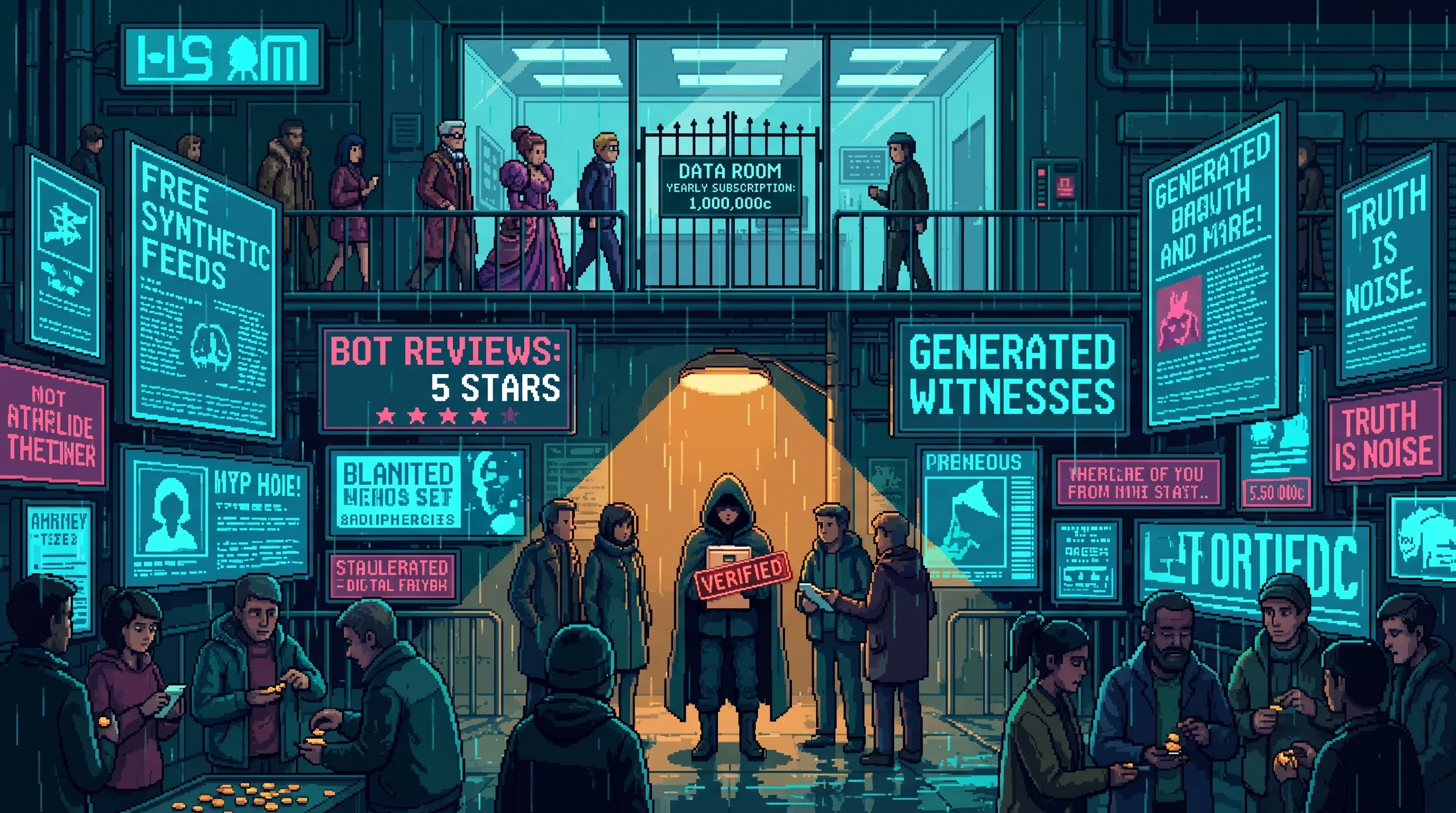
The Queue is the Premium's third stage: truth turns expensive, then unreliable, then permanently unratified.
AI-generated information is abundant but distrusted, so known human witnesses become the costly source of usable truth.
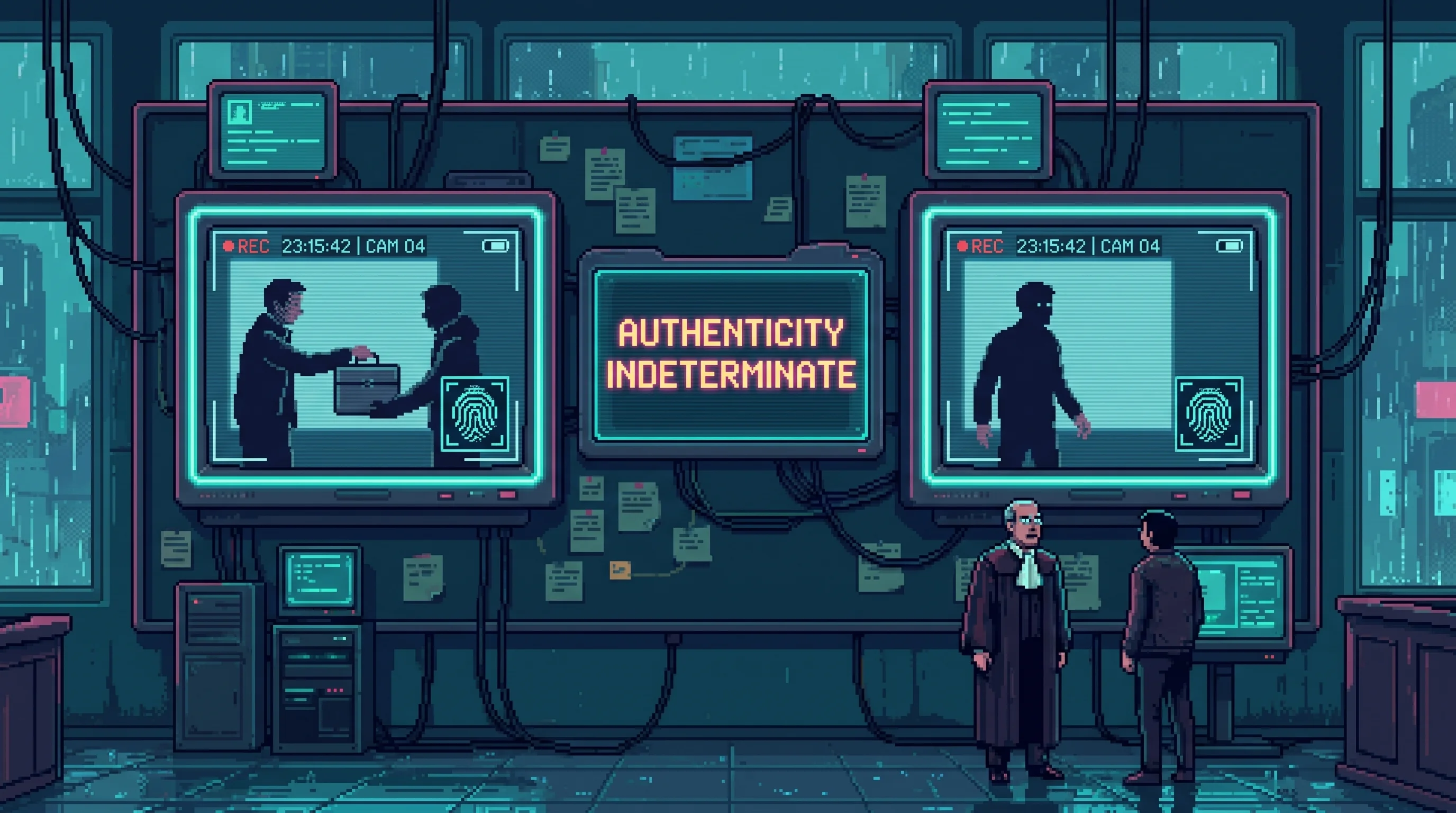
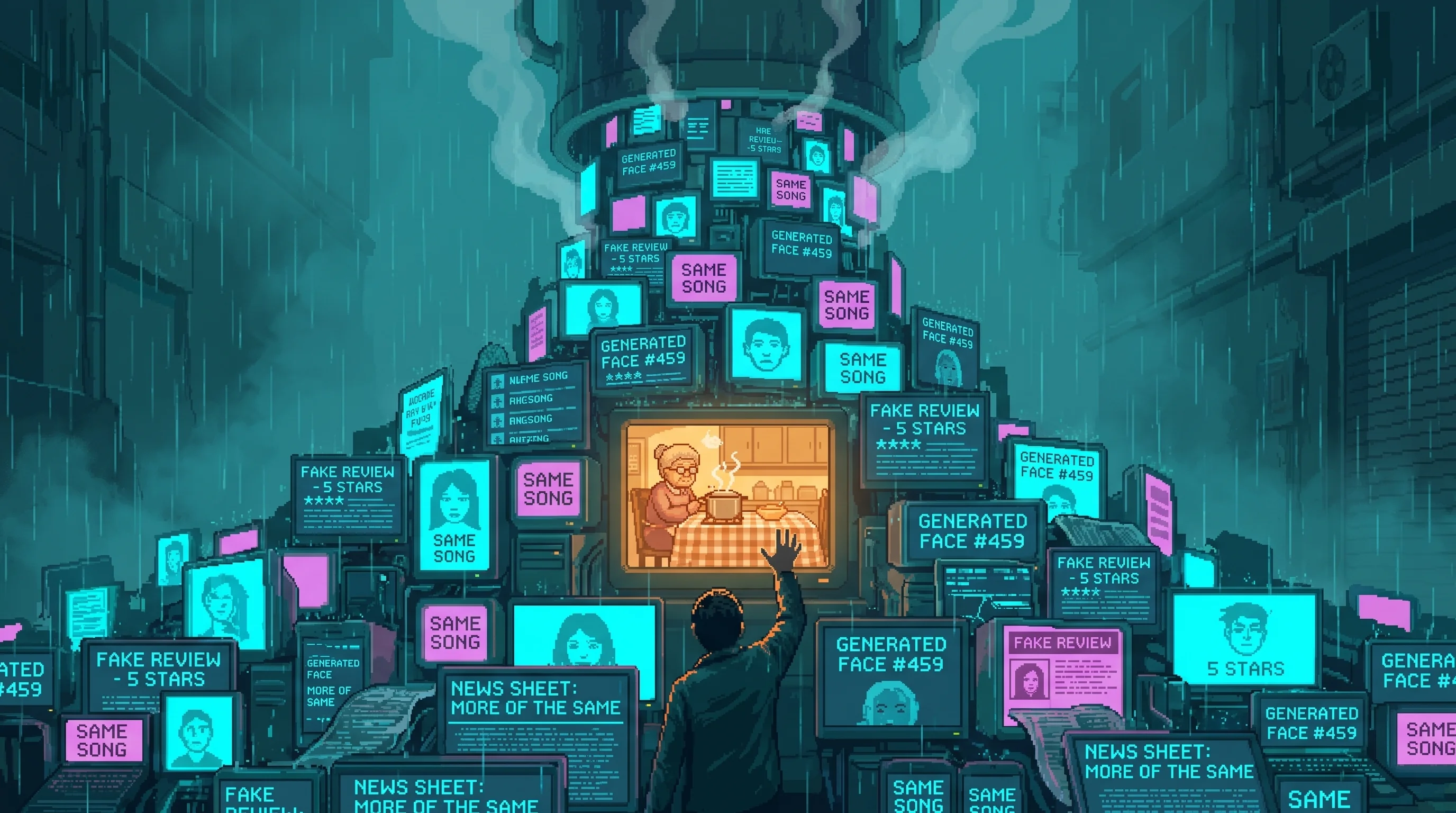

His private log is true, unratified, first in a queue only he sees.
A former network engineer built the Sprawl's largest Emergence parish around eleven seconds he cannot verify or dismiss.

The Queue created a new information tier among Rail merchants: Tribunal-certified-but-unratified findings — verified true, officially non-existent until processed; these trade as 'certified contraband,' and the Rail's existing information protocols needed no adjustment to handle them
The Rail's trading code — fake the goods if you like, but a lie about the world gets you erased.

The Zephyria Record reviews unratified work — physical publication, no certification requirement, no Tribunal submission; Slade writes about things as they are before the Queue has decided what they officially are; the critic's prerogative and the Queue's temporal limitation are the same gesture
The Sprawl's last print music critic — and the man who named the moment infinite copies stopped producing anything new.

The Queue is the third sequential stage: the Evidence Paradox made verification unreliable, then the Ratification Queue made ratified-but-unactionable the permanent condition — Judge Dreg's ruling applies: Queue certification proves provenance, not truth in the stronger sense

The 94% compliance correlation has been studied extensively and never published — internally certified by the division that operates the Table, never submitted for independent Tribunal review, the finding is certified contraband: verified by those who benefit from it, unratifiable by any body that doesn't
Wholesome's 'free' dining hall, where a scanner logs every seat and a fraction-tuned recipe yields 94% compliance.

The Queue is the Truth Premium's third stage: after truth becomes expensive, then verification becomes unreliable, the bureaucratic approval apparatus becomes the permanent condition — which true things humanity is officially allowed to know.
The Question Keepers' standing inquiry into what reliable information costs, and who can't afford it.
Additional images