The Complicity Gradient
Five levels from Bystander to Architect
Overview
Every corporation in the Sprawl conducts exit interviews. The questions are standardized. The answers are anonymized. One question appears on every form, across every megacorp, worded identically despite no evidence of coordination: "Did you observe any practices inconsistent with corporate values during your tenure?"
Nexus Dynamics: 4.2% answer yes. Ironclad Industries: 3.8%. Helix Biotech: 6.1%. Good Fortune: 2.9%.
The Sprawl average across all corporate employers is 4.3%. The actual awareness rate โ derived from Nexus behavioral modeling of the same populations โ is 67.4%.
The gap between 4.3% and 67.4% is the Complicity Gradient.
The Gradient is a five-level spectrum of moral positioning within corporate institutions, observed across every megacorp in the Sprawl. It was not designed. Nobody convened a committee. It emerged the way corrosion emerges โ slowly, structurally, from the ordinary chemistry of people showing up to work.
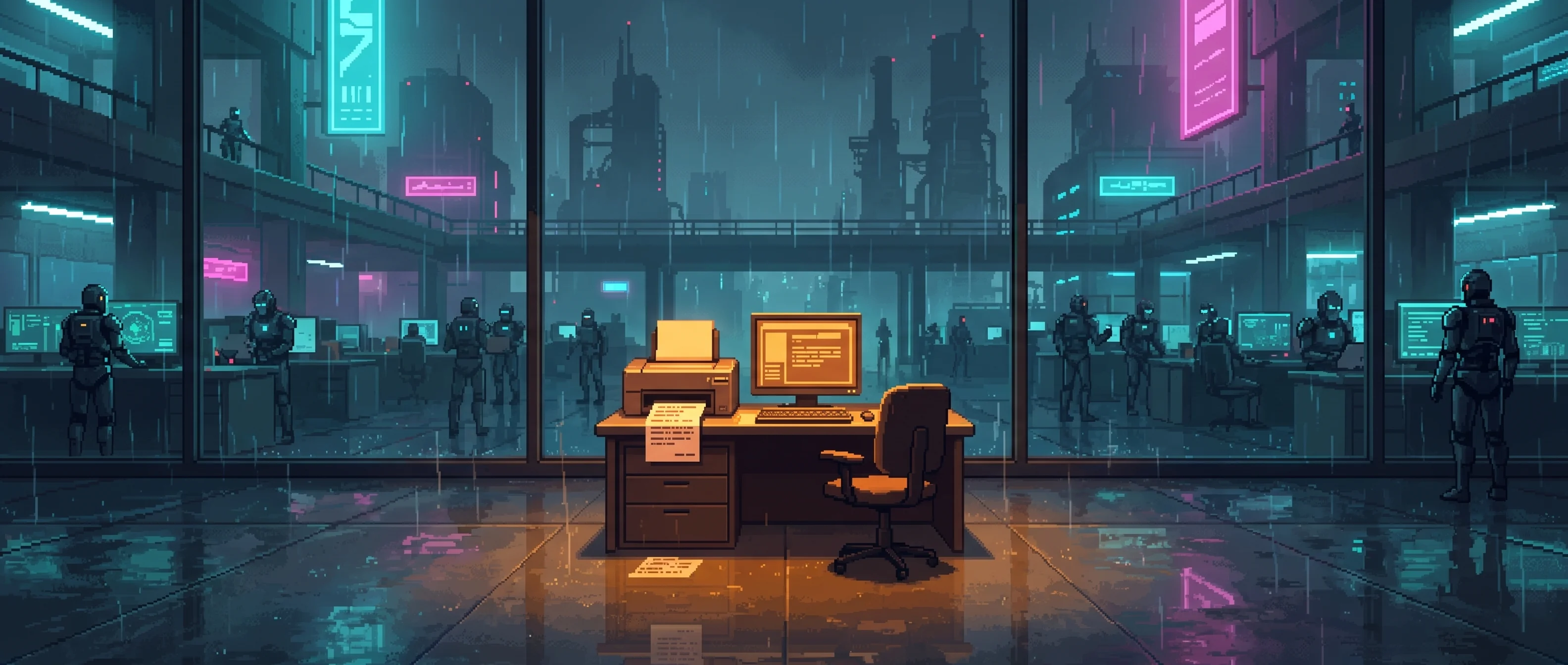
Level 1 โ The Bystanders. They badge in. They badge out. They work on the fourteenth floor and don't know what happens on the thirty-first. Their cafeteria is on the seventh. The elevator skips thirty-one entirely unless you have clearance. They have never thought about this. Approximately 31% of Nexus Dynamics employees occupy Level 1 at any given time. Turnover within Level 1 is the highest of any level โ not because Bystanders leave in protest, but because Bystanders leave for better offers. They have nothing to feel guilty about and nothing to feel loyal to.
Level 2 โ The Informable. They noticed the elevator skips thirty-one. They could file a facilities query. They choose not to. Their not-asking is a strategy so practiced it no longer registers as a choice โ the way you stop noticing a smell after the first five minutes. Lena Marchetti occupied Level 2 for approximately three weeks before the Crescendo deprecation reports landed on her desk and advanced her, permanently, to Level 3.
Level 3 โ The Aware. They know. They've seen the air quality numbers. They've read the deprecation transcripts. They rotate workers on twelve-month cycles because rotating workers is what you do when the alternative is documenting cumulative harm in a system that doesn't have a form for it. Level 3 is the most populated level in every corporation โ 38% of Nexus employees, 41% of Ironclad's, 44% of Helix's. The reason is mechanical: once you see the numbers, you cannot unsee them, and the only exit from Level 3 is quitting. Quitting a corporation doesn't mean losing a job. It means losing a country. So Level 3 grows. The aware accumulate.
Level 4 โ The Facilitators. Maren Qian doesn't just service Good Fortune's debt architecture โ she designs the next iteration. The Horizon Line didn't exist before she built it. Facilitators are distinguishable from the Aware by a single metric: their work makes the system more efficient. A Level 3 employee processes deprecation orders. A Level 4 employee reduces the processing time from fourteen minutes to six and receives a performance bonus. The system ran before them. It runs faster because of them. Lena Marchetti slides between Level 3 and Level 4 depending on the identity and the quarter: Jun-seo Park optimized deprecation, while Kaito Vasquez remained at Level 3, seven auditable links from the casualties produced by Ironclad weapons.
Level 5 โ The Architects. Dr. Lian Zhou designed the consciousness licensing tiers. Helena Voss directs Project Convergence. They see the system from above, where human beings resolve into data points and the data tells a clean story about throughput. Level 5 contains the fewest people and the greatest distance from consequences. Zhou has never met a consciousness downgraded by her tier structure. She has met the spreadsheet. The spreadsheet is manageable.
The gradient's deepest achievement is distributed guilt โ sustainability through shared compromise
The Distributed Load
The Gradient's deepest achievement is not the harm it enables. Harm is easy. Any system can produce harm. The achievement is that no individual within the system bears enough guilt to act on it.
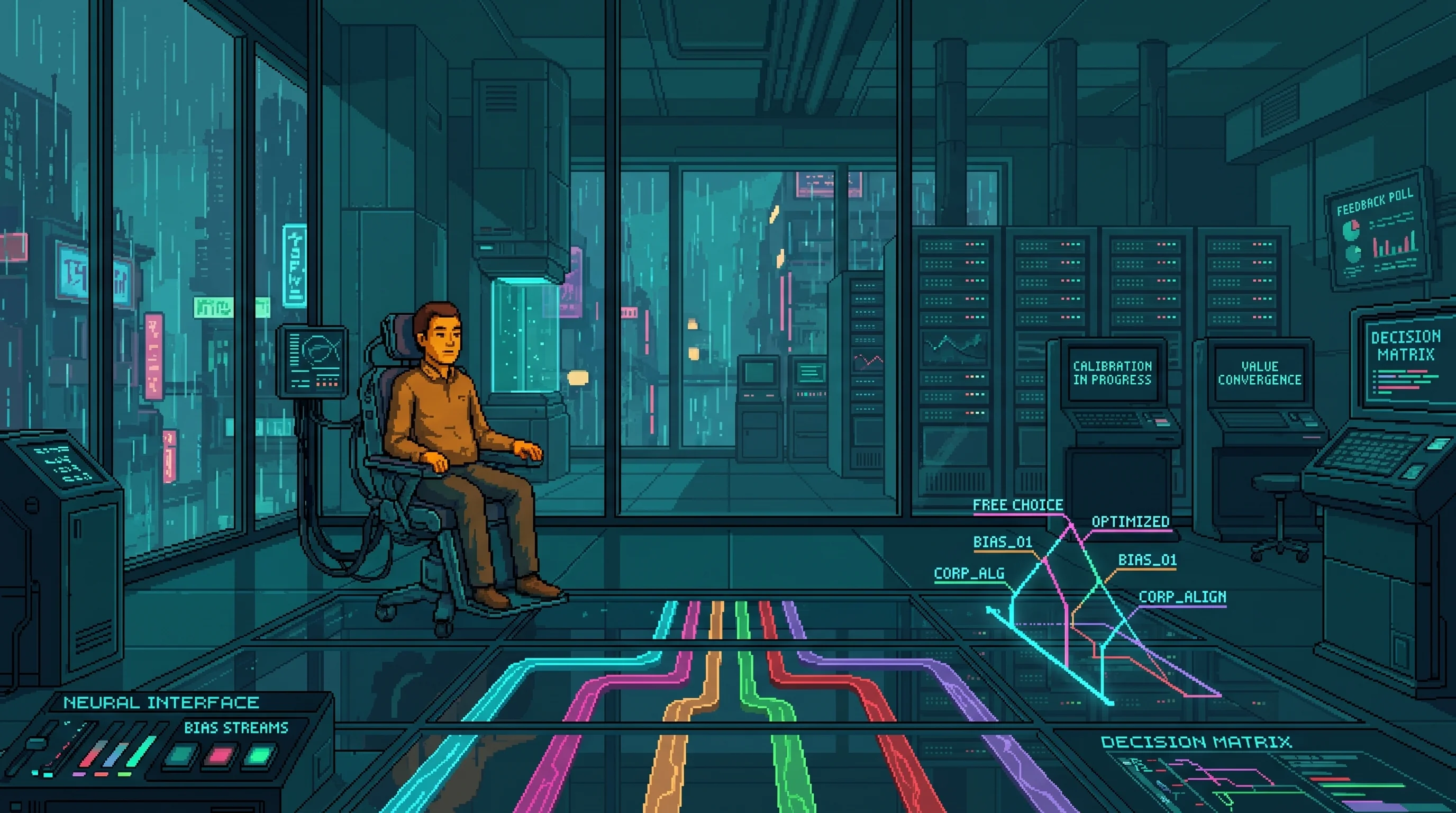
The math is precise: a system where one person holds 100% of the moral weight produces a whistleblower. A system where a thousand people each hold 0.1% produces a company picnic. Good Fortune's annual Ethics & Compliance survey shows 89% of employees "feel personally responsible for maintaining corporate values." The same population maintains a debt engine that has trapped 2.3 million borrowers in permanent repayment loops. Both facts coexist because 0.1% personal responsibility, distributed across enough people, rounds to zero in every individual conscience while summing to catastrophe in aggregate.
An organization run by obvious villains eventually produces heroes who oppose them. An organization run by competent, caring, moderately compromised people โ people who read the deprecation transcripts, who rotate the workers on schedule, who note the air quality numbers in their personal files and then close the files โ produces nothing but its own continuation.
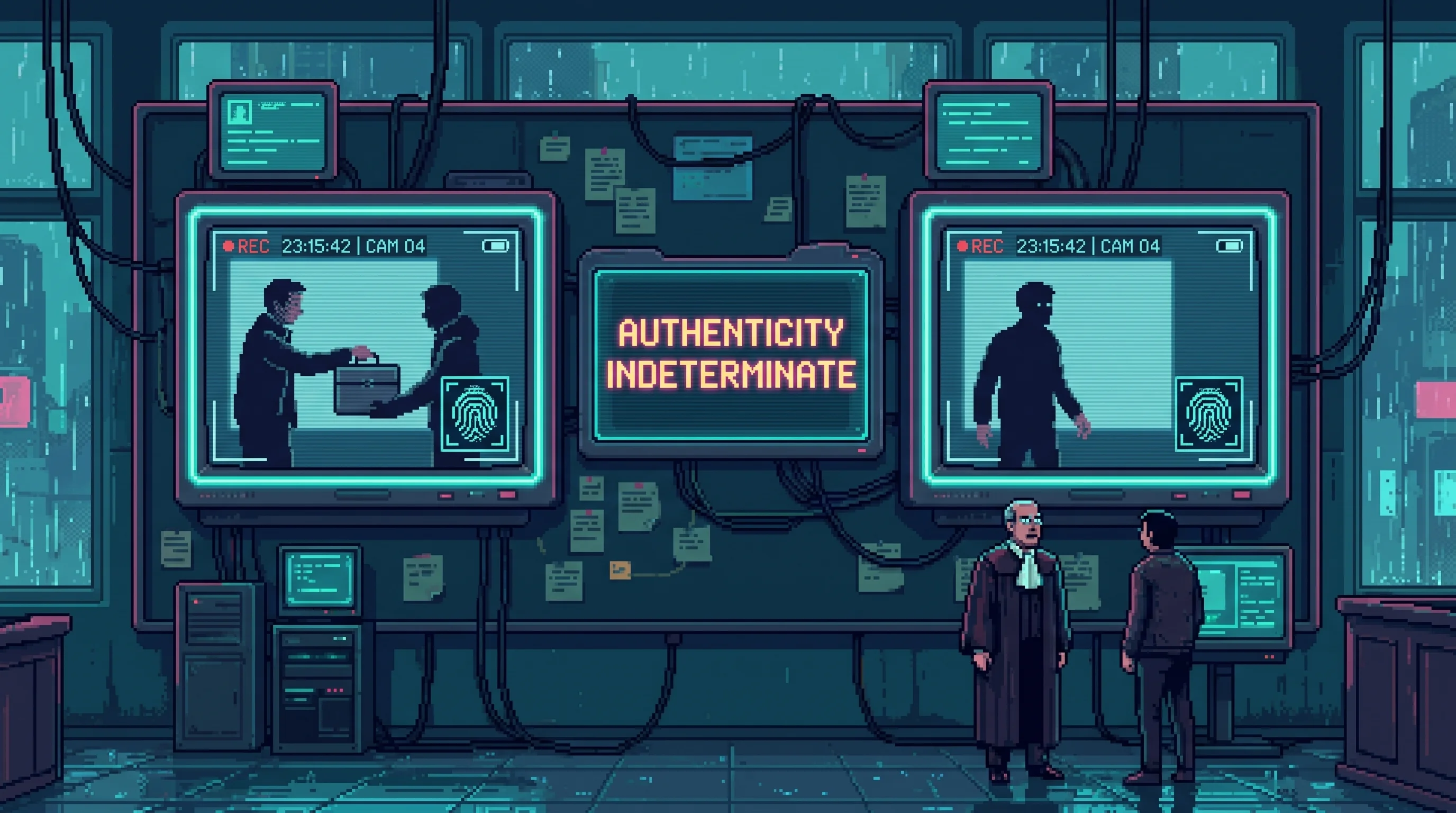
The Ethical Review Board is the Gradient's institutional masterpiece. It exists at Level 3 by design: a body that documents awareness without creating accountability. Every quarter, the Board publishes findings. Every quarter, the findings confirm that employees are aware of operational impacts. Every quarter, awareness is filed as compliance. The Board has never recommended an operational change. The Board has never been asked to. Its function is to convert knowledge into paperwork, and paperwork into evidence that the system is working. The system is working.
[Licensed Human Oversight](licensed-human-oversight) is the Gradient's masterpiece commercialized. The Board produces one Level 3 body per corporation, quarterly. The oversight profession produces them by the million, on demand โ a staffed, salaried, insured supply of manufactured Level 3: humans aware enough to sign, structurally barred from comprehending, and visible enough to convict. The genius of the Gradient was always distributed guilt, no single back breaking under the weight. The oversight profession improves on it: the back that breaks is now a hire, selected for exactly the position โ close enough to the decision to be the defendant, too far below the architecture to redistribute the blame upward. When the next [Bandwidth Crisis](the-bandwidth-crisis-of-2181) comes, the corporation will not need to find two unlucky managers. It will have a guild of them, certified and waiting, each one a Level 3 surface purchased in advance.
The Architects are the fewest and the farthest from consequences
The Competence Ratchet
The Competence Trap is the mechanism that advances employees through the Gradient. It works like this: the institution trusts you because you are good at your job. Because it trusts you, it shows you more. Because it shows you more, you know more. Because you know more, you are complicit in more. Because you are complicit in more, leaving becomes expensive โ not financially, but informationally. You know too much to leave cleanly and too little to leave loudly.
The Middle Distance is the cognitive state that makes Level 3 survivable across decades. It is the art of knowing without processing โ the way a radiologist can read a scan without imagining the patient, the way Marchetti can file the air quality rotation without calculating the respiratory outcomes. The information enters. The implications don't land. The quarterly review arrives on schedule. The Quarterly Conscience โ miss your numbers and your position is at risk, regardless of which level you occupy โ ensures that the emotional bandwidth required to process implications is already allocated to spreadsheets.
Nobody was deceived. The elevator always skipped thirty-one. The deprecation reports were always on the shared drive. The air quality numbers were always available to anyone with department access. The Gradient doesn't hide information. It hides the weight of information โ distributes it so evenly across so many shoulders that no single back breaks.
Connections
- The Competence Trap is the mechanism that moves employees down the Gradient โ from Bystander to Facilitator through the medium of institutional trust
- The Middle Distance is the cognitive state that makes Level 3 sustainable โ knowing without processing
- The Quarterly Conscience enforces the Gradient โ miss your numbers and you're at risk, regardless of your level
- The Ethical Review Board is the Gradient's institutional expression โ a body that documents awareness (Level 3) without creating accountability
- Nexus Dynamics โ multiple employees at Level 3 awareness, including the Crescendo deprecation pipeline
- Ironclad Industries โ Lena's compartmentalized records show two distinct Level 3 positions: Garrison Cole rotates foundry workers around poisoned air, while Kaito Vasquez traces the weapons-casualty chain without completing it
- Helix Biotech โ employees including Osei and Oladipo occupy Level 3, documenting harm while continuing to participate
- Lena Marchetti โ four identities occupy distinct positions: witness, optimizer, foundry protector, and weapons analyst; the archive never assembles their shared gradient
- Maren Qian โ Level 4; doesn't service the debt trap, designs better traps
- Dr. Lian Zhou โ Level 5; designed the consciousness licensing tiers
- Helena Voss โ Level 5; directs Project Convergence
An organization run by obvious villains produces heroes; one run by moderately compromised people produces only its own continuation
Visual Identity
- Color palette: A gradient from institutional white to dark gray โ not black, because the system never reaches pure villainy
- Compositional mood: Five figures at increasing distances from a point of impact, each looking at their hands
- Key symbol: Five concentric circles radiating from a center โ each circle a level, each person on the circle looking inward and seeing only the circle, not the center
- Lighting: Even, institutional, shadowless โ the kind of light that makes everything visible without making anything clear
Archive annex โ 6 earlier filings on this recordClose the archive annex
Recovered Historical Material
Lena Marchetti
The Ethical Review Board
The Competence Trap
Technical Brief
The Complicity Gradient: Five Levels of Compromise
The Five Levels
The Sustainability Principle
The Competence Trap Interface
Known Positions
Directs Project Convergence. The system's apex โ farthest from impact, closest to design. Convergence will save more lives than the Cascade destroyed โ the math is clear, the ethics are solved. The gradient was built to produce people who can say that and mean it.
When the cascade accelerates, it compresses the gradient โ Bystanders become Aware overnight, and the system needs more Facilitators to process the volume.
The Villainy Problem
Concentrated evil is fragile. A corporation run by identifiable villains produces identifiable heroes. The gradient eliminates both โ replacing villainy with positioning, replacing heroism with compromise, replacing narrative with bureaucracy. Nobody is the villain. Everyone is the system.
Institutional Immortality
If everyone is a little responsible, is anyone accountable? And if no one is accountable, what force in the Sprawl could ever stop the machine?
Indexed โ 2 lines preserved from the earlier filing.
Dr. Priya Achebe has been observed reviewing internal classification frameworks that bear structural similarity to the gradient. Whether she is studying it, refining it, or attempting to dismantle it remains unclear. Her access level suggests she could be working at any of those objectives simultaneously.
Five concentric circles radiating from a central point of impact, five figures standing at increasing distances each looking at their own hands, a gradient from institutional white to dark gray, shadowless illumination
The gradient is not a hierarchy of evil. The Architects are not more immoral than the Bystanders โ they are differently positioned within a system that distributes moral responsibility so diffusely that no individual bears enough weight to act on it.
The gradient's deepest achievement is not the harm it enables. Harm is easy. Any system can produce harm. The achievement is that no individual within the system bears enough guilt to act on it. The math is precise: a system where one person holds 100% of the moral weight produces a whistleblower. A system where a thousand people each hold 0.1% produces a company picnic.
Good Fortune's annual Ethics & Compliance survey shows 89% of employees "feel personally responsible for maintaining corporate values." The same population maintains a debt engine that has trapped 2.3 million borrowers in permanent repayment loops. Both facts coexist because 0.1% personal responsibility, distributed across enough people, rounds to zero in every individual conscience while summing to catastrophe in aggregate.
The Competence Trap is the mechanism that moves employees down the gradient. Institutional trust, professional capability, and the slow accumulation of context โ each promotion, each briefing, each access-level increase shifts a person from Level 1 toward Level 3 or 4. The movement is invisible until the destination is reached. Nobody was deceived. The elevator always skipped thirty-one. The deprecation reports were always on the shared drive. The gradient doesn't hide information. It hides the weight of information.
The Middle Distance is the cognitive state that makes Level 3 sustainable across decades. It is the art of knowing without processing โ the way a radiologist can read a scan without imagining the patient, the way Marchetti can file the air quality rotation without calculating the respiratory outcomes. The information enters. The implications don't land.
The Quarterly Conscience enforces the gradient from below. Miss your numbers and you're at risk regardless of your level. The emotional bandwidth required to process implications is already allocated to spreadsheets. This is not incidental. It is the design.
The gradient is not a hierarchy of evil โ it is a map of positioning within a system that distributes moral responsibility diffusely
The Ethical Review Board as Institutional Expression
The Ethical Review Board is the gradient's masterpiece. It exists at Level 3 by design: a body that documents awareness without creating accountability. Every quarter, the Board publishes findings. Every quarter, the findings confirm that employees are aware of operational impacts. Every quarter, awareness is filed as compliance.
The Board has never recommended an operational change. It has never been asked to. Its function is to convert knowledge into paperwork, and paperwork into evidence that the system is working. (The system is working.) Its existence is the gradient's formal acknowledgment that Level 3 is not a problem to be solved but a resource to be managed.
The Sacrificial Tier
The gradient has a sixth function that most documentation omits: blame distribution.
When decisions cause harm and investigation follows, the inquiry targets Level 3. They are aware enough to have signed the documentation. Junior enough to lack full context. Visible enough to investigate. Replaceable enough to convict. Level 5 Architects are shielded by the same documentation that convicts their subordinates โ quarterly reports demonstrating oversight, approval chains showing awareness, compliance filings establishing due diligence.
Indexed โ 1 line preserved from the earlier filing.
The Bandwidth Crisis of 2181 convicted two Level 3 infrastructure managers while the Level 5 executives who approved the budget cuts were protected by quarterly reports showing compliance with the modified timeline. The reports were accurate. The managers wrote them. The executives cited them at trial.
Level 3 is the sacrificial tier. The Architects are the fewest and the farthest from consequences. The Aware are the most numerous and the most exposed. The gradient produces this outcome reliably across every corporation in the Sprawl. Nobody designed this feature specifically. It emerged.
The following individuals have been placed at specific gradient levels based on observable behavior, access records, and institutional role. Levels are not fixed โ people move along the gradient, usually in one direction.
Fully aware. Continuing to participate. Once improved the deprecation system's efficiency during her optimization years โ that is Level 4 work. Now operates as a Transition Specialist, bearing witness to the system she once refined. The gradient moved her forward. Her conscience has not moved her back.
Doesn't service the debt trap โ designs better traps. The Horizon Line didn't exist before she built it. The distinction between participation and facilitation, made visible in quarterly output metrics.
Designed the consciousness licensing tiers. The architecture is hers. Zhou has never met a consciousness downgraded by her tier structure. She has met the spreadsheet.
Moves employees down the gradient through the mechanism of institutional trust. One briefing at a time. One access upgrade at a time.
The cognitive state that makes Level 3 sustainable. Knowing without processing. The information enters. The implications don't land.
Enforces the gradient from below. Miss your numbers and position is at risk regardless of level. Moral positioning never translates into moral action because the bandwidth is already spent.
The gradient's institutional expression. Documents Level 3 awareness without creating accountability. Converts knowledge into paperwork. Quarterly.
Where the gradient becomes physical space. Every terminal occupied by someone at Level 3 or above. The architecture makes the abstraction concrete.
All five levels present and operational. 38% at confirmed Level 3 awareness. Multiple employees in the Crescendo deprecation pipeline. The gradient describes Nexus's institutional structure more accurately than any org chart.
41% at Level 3. The same gradient, different industry. The product changes. The distribution of guilt does not.
44% at Level 3 โ the highest of the three. Employees documenting harm while continuing to participate, sustained by institutional momentum and the belief that someone else will act.
Corporations offered employees purpose, community, and survival infrastructure โ housing, healthcare, food access, identity. Workers opted in. An entire social and material existence now mediated by institutions that have no structural incentive to allow exit, and every structural incentive to ensure that the people who know the most are the most dependent on continuing.
The Accountability Gap
When an AI causes harm, who answers โ the designer, the deployer, the operator, the user, or the institution? The Sprawl's operational answer is everyone and no one. Accountability spread thin enough cannot be collected into anything resembling justice. The Bandwidth Crisis demonstrated this with precision.
The gradient's final product is not profit, not efficiency, not power. It is continuation. A system that distributes guilt broadly enough survives everything except the collapse of the distribution mechanism. And the mechanism is self-repairing: every new hire begins at Level 1.
Indexed โ 1 line preserved from the earlier filing.
Three independent efforts to map the gradient from inside their own corporations are known: one at Nexus, one at Ironclad, one at Helix. All three mappers arrived at the same conclusion. All three are still employed. The conclusion was not that the system is evil. The conclusion was that the system does not require evil โ and that this is worse.
The Competence Trap โ /world/systems/the-competence-trap
The Middle Distance โ /world/systems/the-middle-distance
The Quarterly Conscience โ /world/systems/the-quarterly-conscience
Ethical Review Board โ /world/factions/the-ethical-review-board
The Efficiency Cascade โ /world/systems/the-efficiency-cascade
Every corporation in the Sprawl conducts exit interviews. The questions are standardized. One appears on every form, across every megacorp, worded identically despite no evidence of coordination: "Did you observe any practices inconsistent with corporate values during your tenure?" Nexus Dynamics: 4.2% answer yes. The actual awareness rate โ derived from Nexus behavioral modeling of the same population โ is 67.4%. The gap between 4.3% and 67.4% is the Complicity Gradient.
The Collection Floor โ /world/systems/the-collection-floor
Indexed โ 1 line preserved from the earlier filing.
A fourth effort, origin unknown, produced a document titled "The Sixth Level." It describes a position beyond Architect: someone who designed the gradient itself โ not any corporation's hierarchy, but the psychological distribution pattern that makes the hierarchy sustainable. The document was found on a Collection Floor terminal that shouldn't have had external network access. No author has been identified. The file's metadata lists its creation date as three years before the corporation it was found in was founded.
Collection Floor โ /world/systems/the-collection-floor
Connected To

โ