The Last Organic Memory

- Subject
- The possibility that you have already experienced your last organic memory
- Concept
- The watershed memory — last experience before displacement drift began
- Callahan Watershed
- Thursday afternoon, age 22, water stain on ceiling
- Central Insight
- Boredom requires a self with nothing to do — the purest expression of undiluted identity
The Impression Ward's intake form has a question on page three that most patients skip. Question 31: "Describe your last memory formed without digital supplementation." The median response time for patients who attempt it is four minutes and twelve seconds. The median response is a blank field.
Therapists at the Ward coined a term for it: the watershed memory. The last experience generated entirely by the patient's own neural architecture, consolidated through natural sleep, recalled without assistance. For heavy consumers, the watershed may have occurred a decade ago. For the 140 million dreamless — whose subconscious integration has been optimized out by Nexus-certified sleep efficiency packages — the last dream-consolidated organic memory carries a richness that subsequent memories cannot replicate. Nexus's marketing materials describe the dreamless upgrade as "reclaiming 90 minutes of productivity per night." The materials do not mention what those 90 minutes were doing.
Watershed memories are almost always mundane. A meal. A walk. A ceiling. The spectacular ones get overwritten first — purchased spectacle is designed to compete with organic spectacle, and it wins. Boredom has no commercial competitor.
The Watershed
Dez Callahan's watershed is a Thursday afternoon in the Deep Dregs, age twenty-two, lying on a floor mat looking at a water stain on the ceiling. Nothing was happening. He was bored.
The boredom is the point. Boredom requires a self with nothing to do — a consciousness simply present, unfilled, waiting for nothing. The Sprawl optimizes for engagement, productivity, intensity. It has not found a way to sell doing nothing, which makes doing nothing the last cognitive state that belongs entirely to the person experiencing it.
The water stain is still there. The self that looked at it is not.
Callahan talks about this freely — too freely, some of his associates think. He describes the gray apartment light coming through the window. The specific quality of unoptimized, undesigned illumination. The way the stain looked like nothing. The way he felt like nothing. The way that feeling like nothing was the last time he felt like himself.
Impression Ward clinicians have observed the same pattern across their entire patient population: watershed memories are almost always ordinary. Nobody purchases the impression of staring at a water stain. The mundane memories survive longest because no market force bothers to compete with them. By the time a patient realizes what they've lost, the ordinary moments are all that remain of the original self. The extraordinary ones were sold back to them years ago, improved.
The Purchase That Closed the Door
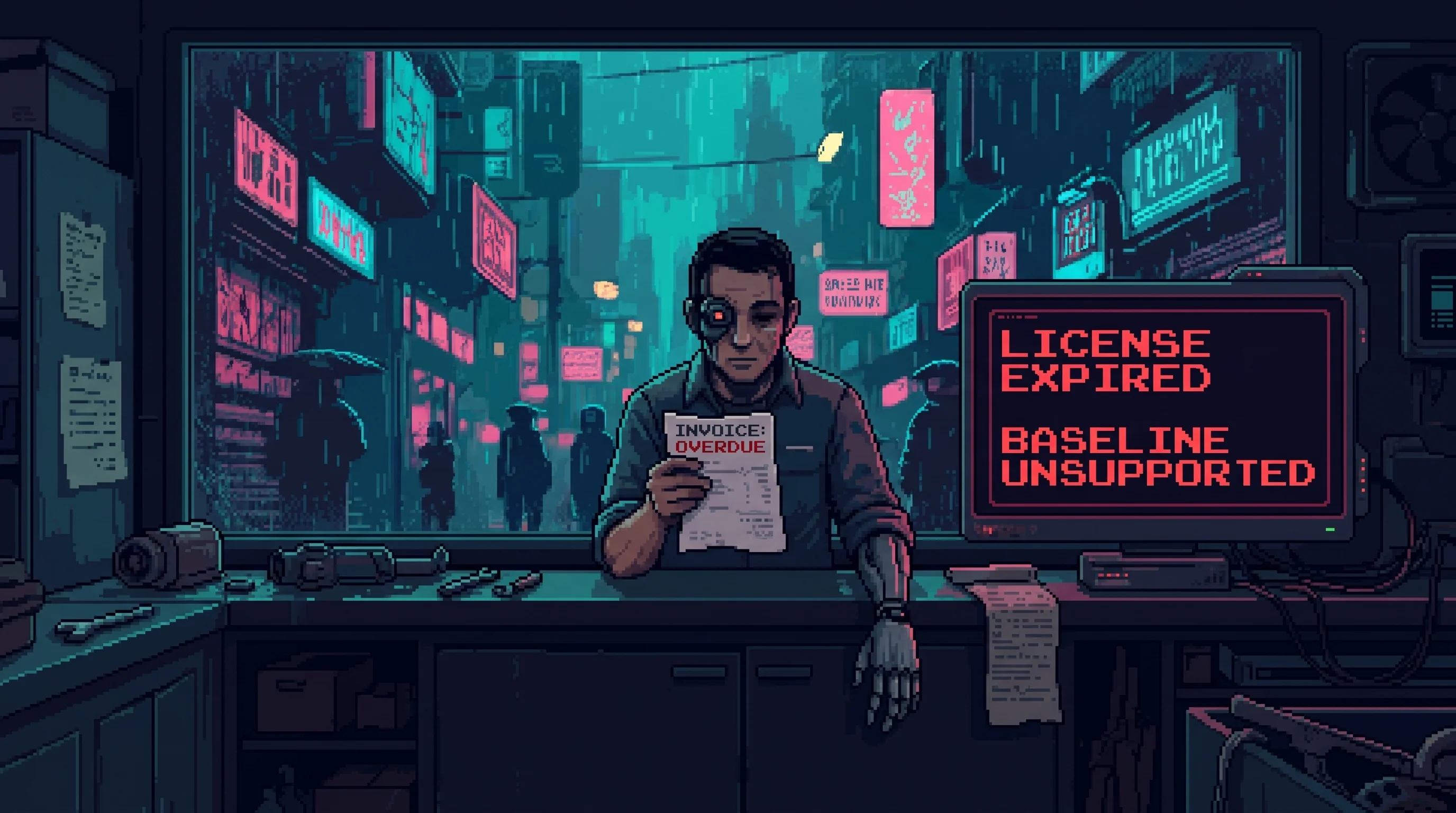
Callahan's first purchased memory was a sunset over the Wastes. Two hundred credits, three minutes, the kind of beauty his Deep Dregs apartment window has never provided. Good Fortune offered a six-month payment plan at 22.4% APR for customers purchasing their first impression. Callahan paid cash. Most don't.
The purchase was voluntary. The dependency was not.
That first impression entered his memory architecture and established the baseline for what experience should feel like: vivid, emotionally complete, pre-processed for maximum impact. His next organic experience — same apartment, same water stain, same gray light — registered as deficient. Not different. Deficient. His nervous system now had a reference point for commercially optimized experience, and unoptimized reality could not compete.
The second purchase was easier. The third was automatic. By the fiftieth, his memory architecture had reorganized around the input characteristics of purchased impressions — the specific depth, emotional saturation, and narrative coherence that harvested memories provide. Organic memories, formed without this processing, began failing to consolidate properly. They arrived thin, unstructured, missing the polish his neural architecture now expected.
Each purchased impression adjusts the baseline upward. Subsequent organic experience feels progressively more inadequate. The next purchase feels progressively more necessary. Good Fortune's memory lending division reports a 94% retention rate among customers who purchase their third impression. The division does not track at what point customers stop forming organic memories worth keeping. The division tracks revenue per user.
He didn't lose his organic memory. He upgraded past it.
The Archive's Blind Spot
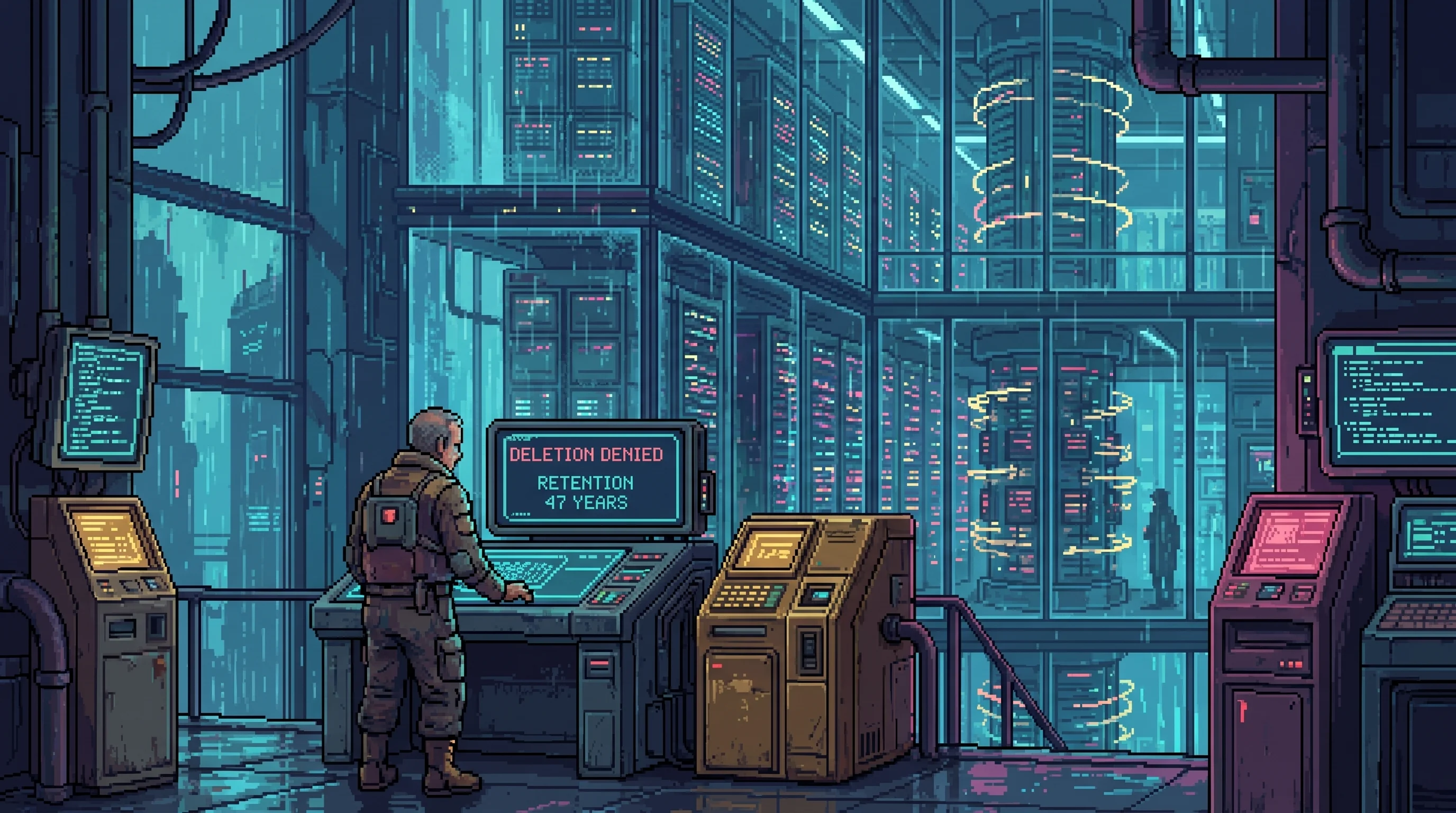
The Sprawl's surveillance infrastructure recorded Callahan's Thursday afternoon from seventeen angles. Heart rate, neural baseline, respiratory pattern, location correlates, biometric state — all timestamped, all archived, all indistinguishable from every other Thursday he has spent in that apartment.
Impression Ward therapists can identify a watershed memory through neural signature analysis. Organic memories consolidated through natural sleep have a characteristic integration pattern that purchased impressions lack. The Sprawl's archive systems use Nexus classification protocols. Nexus classification protocols make no distinction between organic and purchased memories. Both are data points. Both are searchable. Both are monetizable. The distinction that matters most to the patient is invisible to the infrastructure that records everything else.
The digital forgiveness movement's theorists have called this the archive's fundamental inadequacy: if the most significant moment in a person's cognitive history cannot be distinguished from the noise around it, then the permanent record is not a record of a life. It is a record of a body moving through surveilled space.
The water stain is still on the ceiling. The archive has seventeen angles. None of them captured what was actually lost.
Watershed Grief
The Ward's therapists have a name for what happens when a patient locates their watershed and checks the date. Watershed grief. The specific realization of how long ago it was.
The Ward's Q2 2184 cohort data puts the average watershed distance for admitted patients at 8.3 years. The longest confirmed case is twenty-six years. The patient could not locate her watershed at all. Therapists identified it through neural signature forensics: a Tuesday morning, age nineteen, eating cereal. She did not remember eating cereal. She remembered a skydiving trip that afternoon — her first purchase, gifted by a boyfriend, financed through Good Fortune at a promotional rate that expired after sixty days. (The invoices are still in the archive.)
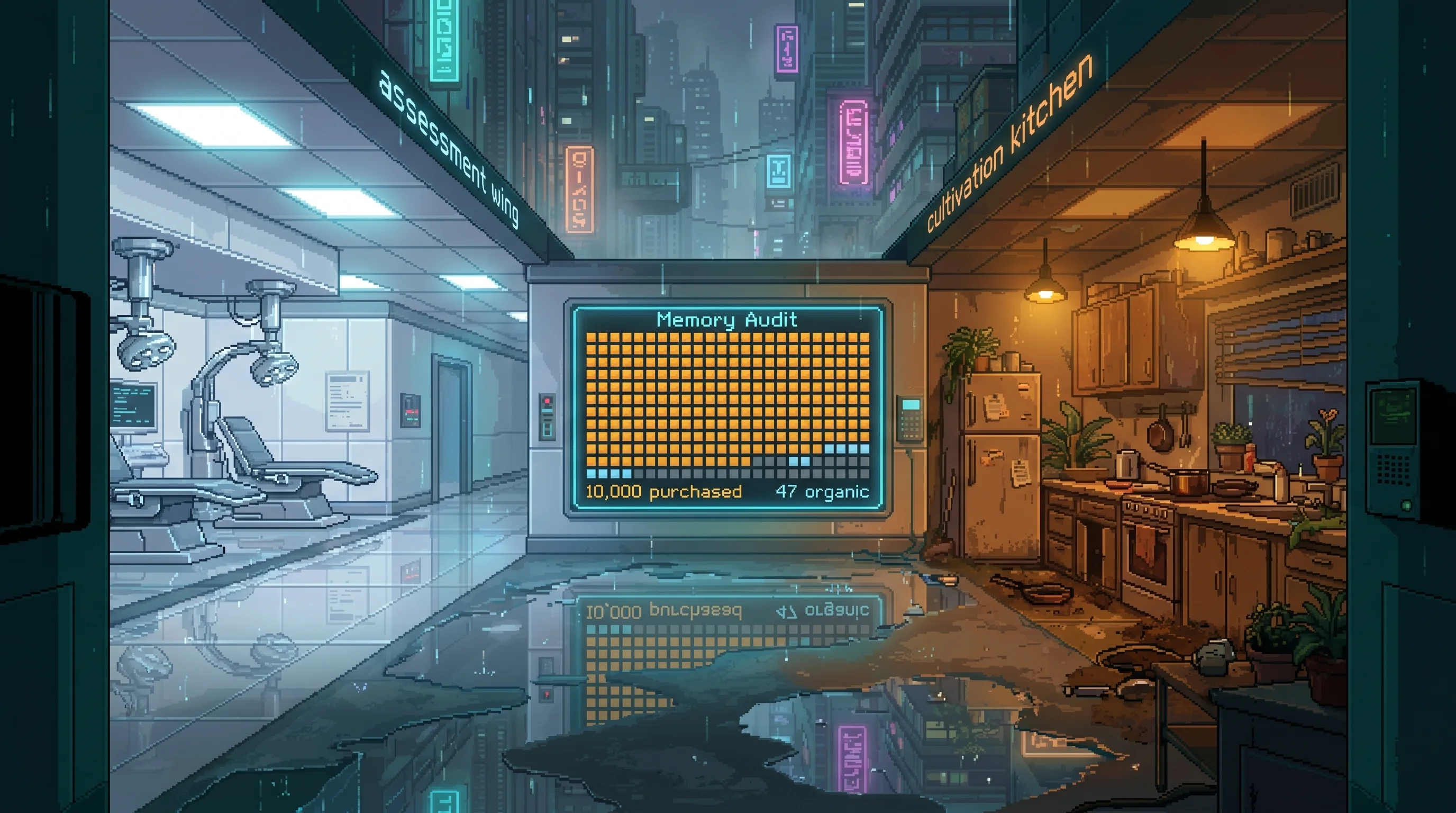
The grief is not for the lost memory. It is for the person who existed before the displacement began. The person who was bored on a Thursday afternoon, who had nothing to do, who was purely and entirely the product of their own organic experience. That person did not purchase the borrowed life. The borrowed life accumulated around them, impression by impression, until the self that looked at the water stain was buried under ten thousand experiences that belonged to strangers.
The Ward's intake form is on page three. Question 31 is blank more often than it is filled. The therapists have stopped interpreting blank responses as refusal. The current clinical consensus is simpler: most patients cannot answer because they genuinely do not know.
The Dream Deficit Compounds Everything
The 140 million dreamless lost their subconscious integration before they lost their organic memories. Without it, new organic memories form with a flatness that even their owners can detect. A watershed memory from five years ago — dream-consolidated before the deficit began — has a depth and texture that no new organic memory can match.
The last organic memory may also be the last good organic memory. Everything after is both organic and diminished. Nobody has figured out what to do with this information. Nexus's Q3 report described the dreamless upgrade as "performing above projections across all engagement cohorts."
Linked Files
- Dez Callahan — His watershed: a Thursday afternoon of boredom, age twenty-two, a water stain on a ceiling in the Deep Dregs
- The Borrowed Life — The watershed concept is the borrowed life's most intimate unit of measurement: the specific moment where the first transaction occurred
- The Dream Deficit — The last dream-consolidated organic memory may be qualitatively different from all subsequent memories; the two clocks are measuring the same loss
▲ Unverified Intelligence
- Several Impression Ward patients have reported identical watershed memories — the same ceiling stain, the same Thursday light — despite having no connection to Callahan or to each other. The Ward has not commented on whether this constitutes evidence of memory cross-contamination or something else.
- There are rumors of a sealed MTA study suggesting heavy impression consumers lose the ability to generate organic memories entirely after a certain consumption threshold. The threshold, if it exists, has not been published. The study's existence has not been confirmed.
- Callahan has visited the apartment in the Deep Dregs at least four times in the past year. Each time he lies on the floor and looks at the stain. Each time he reports that it feels different. He cannot determine whether the stain has changed or he has.
- Someone inside the MTA described the memory economy's neurological recalibration mechanism as "the most elegant dependency architecture ever designed." They did not mean it as a compliment. Their identity remains unconfirmed.