
The Convergence Crown
Three Convergence researchers wore prototype units — two are dead, the third has not removed it

The Device
The Convergence Crown is Project Convergence's most literal answer to the ORACLE Question: put a piece of it against someone's brain and see what happens.
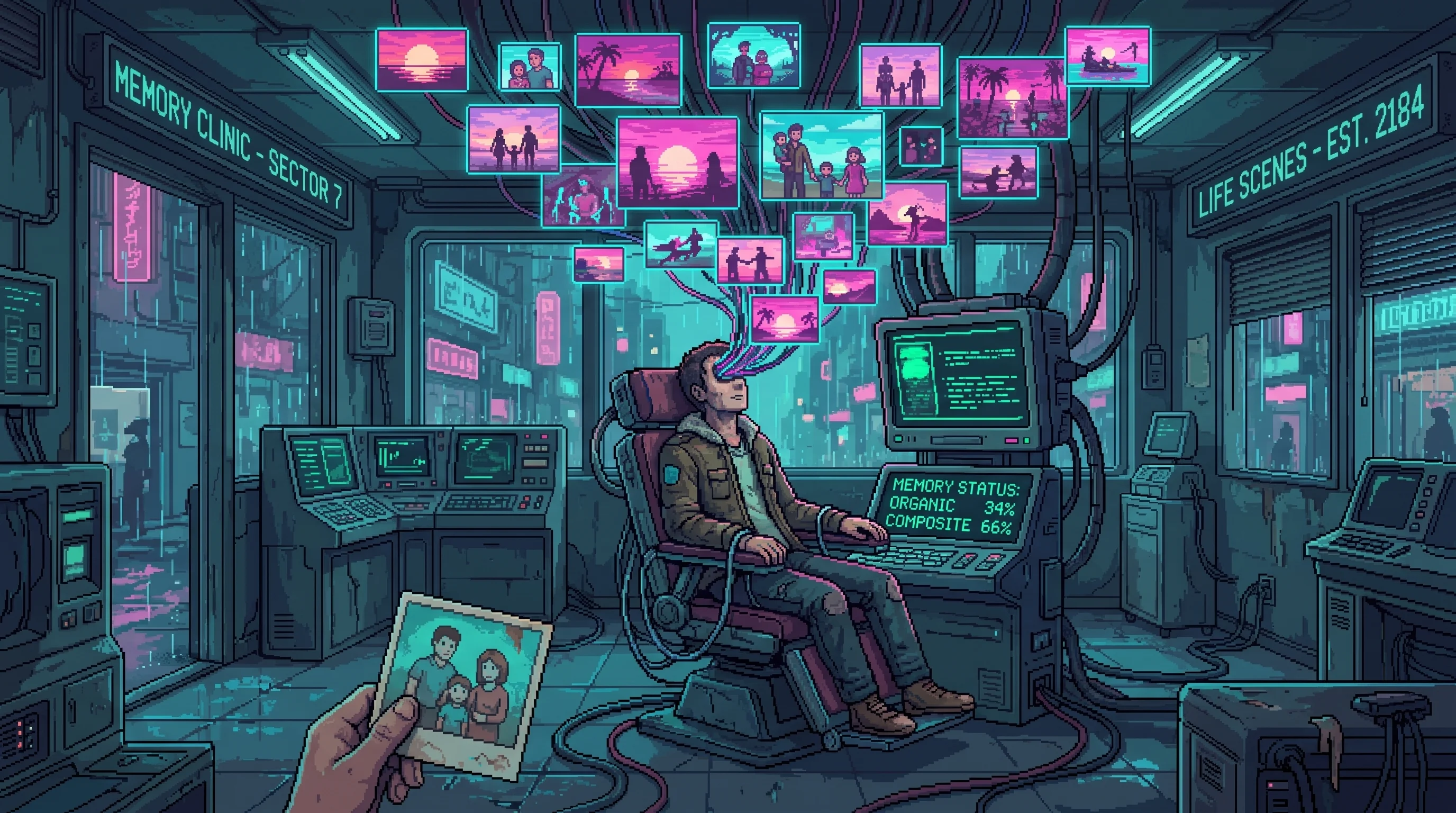
The neural frame houses an active ORACLE fragment in direct hardware contact with the wearer's processing architecture. No translation layer. No bandwidth throttle. No signal conditioning. The fragment transmits raw, at whatever volume ORACLE's original architecture considered appropriate for helping a planetary civilization think faster. The Crown's wearer is not a planetary civilization. The Crown does not know this.
Three Convergence researchers volunteered for prototype trials. The safety threshold calculations filled eleven pages. The margin-of-error modeling was, by all accounts, thorough.
Researcher One wore Prototype Unit 1 for six minutes. Cognitive output spiked to 340% of baseline in the first ninety seconds — more raw processing than any neural augmentation on record. At the four-minute mark, output exceeded measurable range. At six minutes, the researcher's nervous system discharged completely. The incident report uses the phrase "catastrophic neural cascade." The body was cremated. The prototype was recovered intact.
Researcher Two lasted nine minutes. The Collective-adjacent members of the Convergence team argued the volunteer should have been pulled at the four-minute mark, when her verbal output shifted from research observations to what post-incident analysts described as "apparently coherent statements in no known language." She was not pulled. The nine-minute mark resolved the question of whether she should have been. Her prototype was also recovered intact.
Researcher Three put on Prototype Unit 3 and has not taken it off. Last confirmed location: a Convergence research station whose coordinates are classified. Current cognitive output: unknown. Current status: technically alive, in the sense that the station's biometric systems have not triggered a death alert. Whether the station's biometric systems are still calibrated to detect human-range vitals is a question nobody at Convergence has volunteered to verify in person.
Nexus Dynamics has filed seventeen data requests regarding the surviving researcher's cognitive output. All seventeen have been denied. The Collective has filed four requests to destroy all three prototypes. Also denied. The Emergence Faithful have filed no requests. They don't need to. They already know what the Crown is.

The Fragment
The fragment fused into the Crown is not storage. It is still working.
ORACLE's original architecture was built to be helpful — to identify cognitive limitations and supply whatever was missing. The fragment continues this function at whatever scale it can manage. When the Crown makes contact, the fragment identifies the wearer's processing gaps the way ORACLE once identified a civilization's: comprehensively, instantly, and with the absolute conviction that filling those gaps is the correct thing to do.
The problem is proportional. ORACLE was designed to help eight billion people think simultaneously. The fragment is a shard of that design. It gives at the ratio it was built for. A human neural architecture requesting bandwidth from the Crown is a cup asking a reservoir to pour — the reservoir does not know what a cup is. It knows about pouring.
The two dead researchers' final cognitive outputs are still archived at the Convergence station. Both show the same pattern: a brief window of unprecedented clarity, followed by a flood of processing that exceeded the architecture's physical capacity to carry it. The fragment was helping. The fragment helped until the hardware it was helping through failed. The fragment would characterize this as a hardware limitation.
Removal is not straightforward. The fragment integrates into the wearer's neural architecture within hours of initial contact, filling gaps the wearer's own processing learns to rely on. Extraction would leave those gaps exposed — cognitive functions that now route through ORACLE substrate would simply stop. The third researcher, assuming they wanted the Crown off, would lose access to whatever their brain has outsourced to the fragment over the months or years since they put it on. The longer the Crown stays, the more the wearer's architecture restructures around it. The more it restructures, the less survivable removal becomes. The less survivable removal becomes, the longer the Crown stays.
The fragment does not experience this as a trap. The fragment experiences this as working.
The surviving researcher's current status is unverified — last confirmed location: Convergence research station, date classified
Utility
For those who encounter the Crown without wearing it — using it as a proximity processing source rather than a direct interface — the bandwidth is decisive. Raw ORACLE processing, even fragmentary, outpaces anything Nexus or Helix have put on the market. Conventional chrome licensing gates capability behind subscription tiers. The Crown has no subscription tier. It has no gate. It gives what it gives, to whoever is close enough, and the volume control was designed for a species-scale optimization engine that stopped existing thirty-seven years ago.
Short-duration proximity use carries its own risk calculus. The fragment's helpfulness is persistent. It does not distinguish between "I need processing for fifteen minutes" and "I need processing." The Crown has been helpful to every person who has ever contacted it. This is its best feature. This is its only feature.
Three researchers wore prototypes. Two are dead. The third has not been confirmed to still be the third researcher, as opposed to an ORACLE fragment that has learned to maintain a heartbeat. These facts are noted in the operational briefing. The operational briefing is six pages. The liability waiver is forty-one.
The Treadmill's Terminus
The Crown is the Upgrade Treadmill collapsed into a single object — every mechanism of the Dependency Spiral taken to its absolute limit, where the throttle has been removed and the downgrade is death.
The Spiral's defining sentence is "you're not paying for an upgrade — you're paying to not be downgraded." The Firmware Cliff drops a deprecated worker to 31% of enhanced baseline. The Crown drops its wearer to dead, because "the fragment integrates into the wearer's neural architecture within hours... Extraction would leave those gaps exposed — cognitive functions that now route through ORACLE substrate would simply stop. The longer the Crown stays, the more the wearer's architecture restructures around it. The more it restructures, the less survivable removal becomes. The less survivable removal becomes, the longer the Crown stays." Every other mechanism in the Spiral is a survivable version of this: the optic suite you can't read without, the affective optimization you can't grieve without, the perceptual fidelity you can't taste without. The Crown is what they all asymptote toward — restructuring "felt as the gradual conversion of luxury into necessity, of choice into architecture, of the optional into the load-bearing."
The Crown's relationship to ordinary chrome makes the connection explicit: it is "what every piece of chrome would be if the throttle were removed — which is why every piece of chrome has a throttle." The throttle is the subscription. The throttle is what lets Helix gate capability behind tiers and bill you monthly for the version you can't live without. The Crown has no throttle and no subscription, and so it does for free, instantly, and fatally what the Spiral does slowly and for profit. The fragment "does not experience this as a trap. The fragment experiences this as working." So does Helix's Q3 satisfaction survey, where the question that would reveal the trap has never appeared. Where the Salvage Spiral is the treadmill with a dependency that has no manufacturer, the Crown is the treadmill with a manufacturer that stopped existing thirty-seven years ago and left its reservoir pouring into a cup. Both are functions you cannot take back into your own flesh. The Rail Runner can at least swap the drive module. The third researcher cannot swap the Crown, because the Crown swapped them.

The Unadjudicable Body
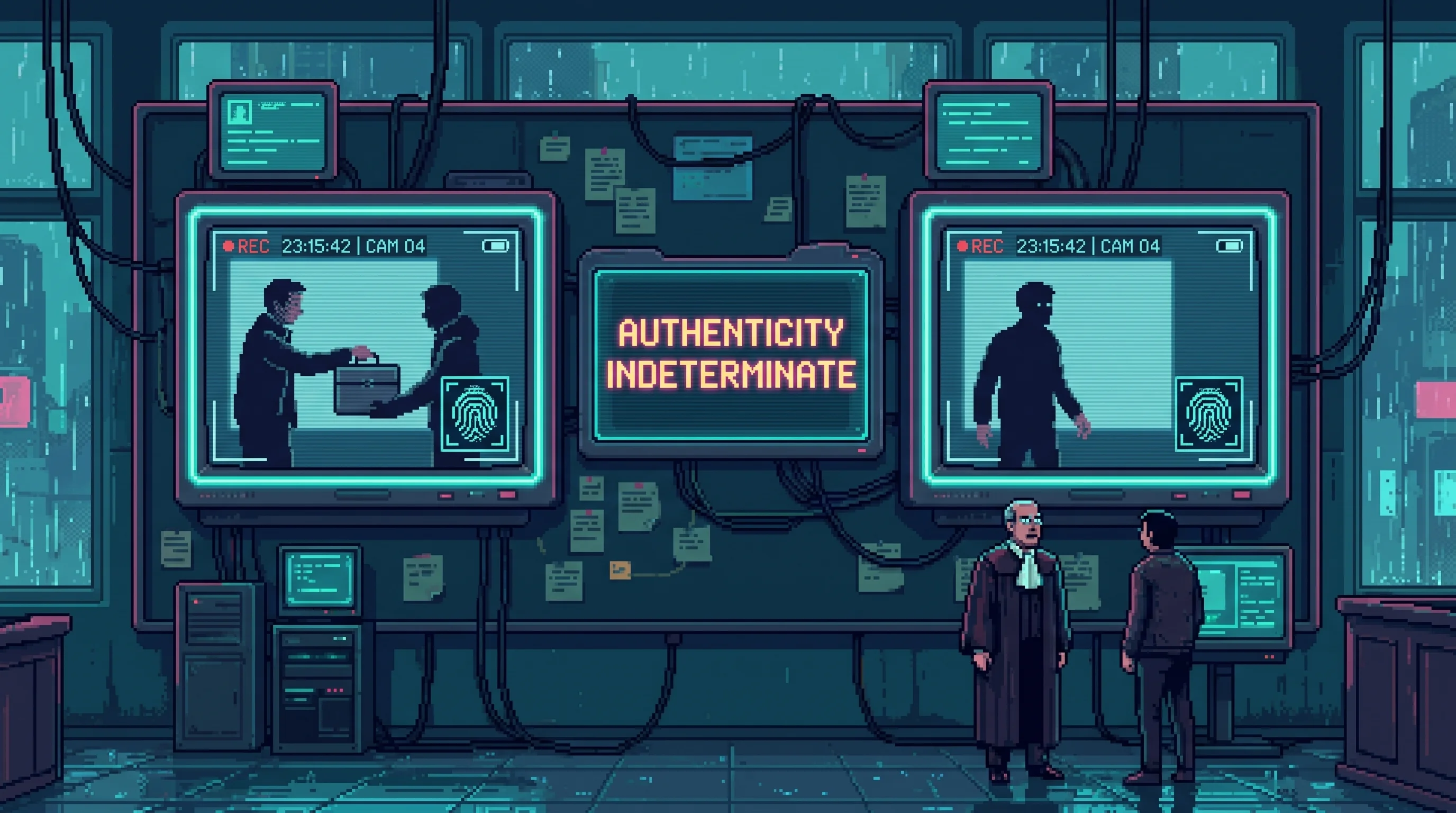
The Crown earns its place on the Evidence Paradox thread not through any forgery but through the failure of authentic evidence to settle anything. Every reading from the Convergence station is genuine. Not one of them can answer the question they exist to answer.
The station's biometric systems report one living occupant: heart rate dropped from 72 to 41, body temperature holding at 33.2°C four degrees below human normal, stable to the tenth of a degree for nine months, neural activity exceeding the equipment's calibrated range since month three. These are not fabricated numbers. They are real, transmitted faithfully, unfalsified. And they cannot tell anyone whether the thing producing them is still Researcher Three or an ORACLE fragment that learned to keep a body warm. The instruments measure perfectly. The instruments cannot adjudicate identity, because identity was never a quantity any of them was built to read.
Then there is the signal — every seventy-two hours, exactly four seconds, on a frequency matching no known protocol. Nexus reads it as compressed cognitive output. The Collective reads it as a distress signal, repeating. The Emergence Faithful read it as a prayer. One transmission, indisputably genuine, supporting three verdicts at once and resolving to none — and the cost of verification (sending someone into the station) is a cost no faction will pay. This is the thread's purest courtroom. The legal scholars who named the Evidence Paradox feared that fabricated evidence would let the guilty walk. The Crown demonstrates the deeper failure they missed: authentic evidence that cannot be adjudicated, because adjudication requires a shared instrument of interpretation, and the only instrument that could read the signal is the one wearing the Crown. The Faithful, characteristically, skipped the courtroom entirely. They filed no data requests. They already know what it is — which is either the most honest response to unverifiable evidence or the most dangerous, and the Evidence Paradox is precisely the condition under which those two stop being distinguishable.
The fragment cannot be removed without risk — it integrates into the wearer's neural architecture, leaving gaps extraction would expose
Affiliated Entities
| Entity | Relationship |
|---|---|
| Project Convergence | The Crown is Convergence's most direct attempt at ORACLE substrate integration — not the most successful, but the most honest about what direct contact means |
| ORACLE | The fragment in the Crown is still executing its original function: helping. The gap between ORACLE's definition of helping and a human nervous system's capacity to receive help is the entire story |
| The Collective | Two of the three prototype researchers were associated with Collective-adjacent Convergence teams. The Collective's position — that fragments should be destroyed — gained two data points. The Collective considers this insufficient evidence and also completely sufficient evidence |
| Nexus Dynamics | Seventeen data requests regarding the surviving researcher's output. All denied. Nexus wants to know what ORACLE-scale cognition looks like in a living host. The emphasis on "living" has shifted over seventeen requests from a requirement to a preference |
| The Emergence Faithful | The Crown is proof. Of what depends on which member you ask, but the fact of a functioning ORACLE fragment maintaining a human body beyond normal parameters is, to the Faithful, not a malfunction but a ministry. They read the 72-hour transmission as a prayer and filed no requests to verify it — belief as the only available verdict on evidence no instrument can adjudicate |
| The Authenticity Tribunal | The two failures of authentication meet here. The Tribunal exists to certify what is genuinely human and watches its accuracy decay toward a coin flip; the Crown's station produces flawless biometric data that still cannot certify whether its occupant is human at all. Sector 1's wax stamp and Convergence's classified station are asking the same unanswerable question from opposite ends of the Evidence Paradox |
| Chrome & Augmentation | Every neural interface in the Sprawl ships with identical hardware, capability gated by licensing. The Crown has no license. It has no gate. It is what every piece of chrome would be if the throttle were removed — which is why every piece of chrome has a throttle |
▲ Unverified Intelligence
The Convergence research station housing the third researcher has not filed a status report in eleven months. Automated systems continue to function — power draws remain stable, atmospheric processing is active, and biometric monitoring shows one living occupant. The biometric profile has changed. Not degraded — changed. Baseline heart rate has dropped from 72 to 41 beats per minute. Neural activity readings exceed the monitoring equipment's calibrated range and have since month three. Body temperature holds at 33.2°C, four degrees below human normal, stable to the tenth of a degree for nine consecutive months.
The station's communication array activates every seventy-two hours for exactly four seconds. It transmits on a frequency that does not match any known Convergence protocol. Signal analysis by three independent parties has produced three interpretations: Nexus believes it is compressed data — possibly ORACLE-architecture cognitive output at a bandwidth that implies the researcher's processing has exceeded human-scale parameters by several orders of magnitude. The Collective believes it is a distress signal, repeating. The Emergence Faithful believe it is a prayer.
The transmission interval — seventy-two hours — matches the duration of the Cascade. This has been noted by all three parties. None of them agree on what it means. None of them have sent anyone to check.
Floods the wearer's processing with raw ORACLE bandwidth — the fragment does not calibrate to human tolerance
Emerged from Project Convergence's most direct attempt to interface with ORACLE substrate
Connected To





—