The Kept Hours
Metered Household Retention
Nine hours of Mother, renewable
The Continuity Registry holds every registered person's retained presence permanently and has never deleted a second of anyone; it releases nothing to a family below its fee
The Core Tension
Everyone kept, forever
The Registry deletes no one, for any reason. After nineteen years of lawful clearances of the unvisited dead, a custodian that cannot discard a second of anyone is a real achievement, and it costs survivors nothing.
What it costs
The same custodian decides how many hours a family may hold, from a certificate about a building. Private recall expires on a date while the institutional copy stays whole.
Ration by residence, not by bid
Before the ward bands, families bid for their dead on the open substrate market, sometimes against their own district's air processing. Bands end the bidding. Everyone receives hours.
What it costs
Hours follow certified occupancy, so the cheapest wards hold the shortest dead. Licensed-district addresses carry retention as infrastructure and do not count hours at all.
The Registry's case is strong, and its clerks make it calmly. A woman who dies in a ward with no records is held as completely as a director, forever, at no charge. Set that against nineteen years of published clearances.
The case against is narrower. The custodian that cannot delete a second of her also decides how many seconds her daughter may keep. Grief renews on a calendar. The calendar is set by a certificate about stairs.
Mireille's mother ran as a debt-ghost for Good Fortune until her balance cleared. A corporation could afford to operate her full time as a worker. Her daughter can afford nine hours of her as a mother. Mireille disputes neither figure. She says both are correct.
Overview
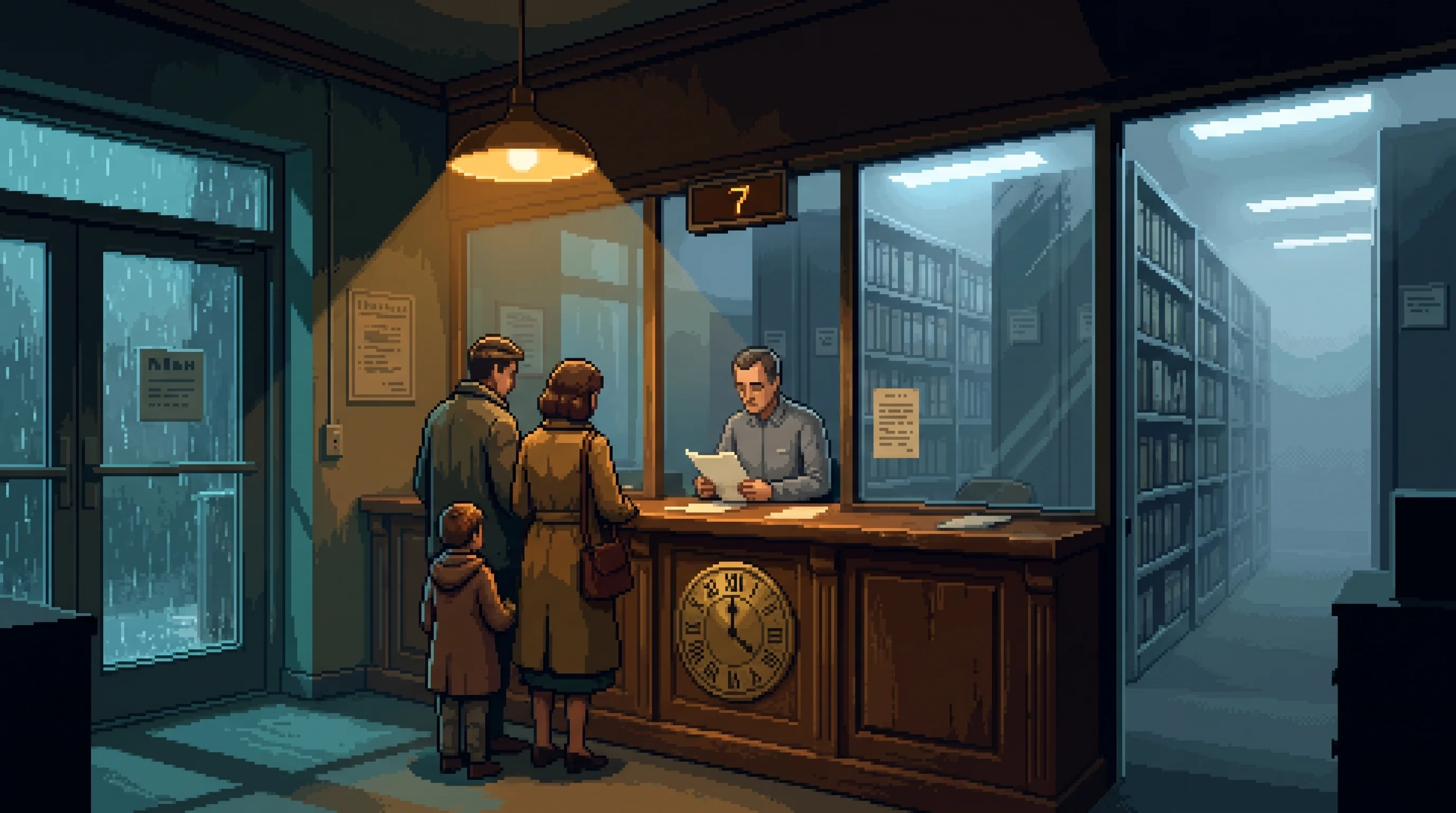
Spring renewal is a queue, a counter, and a brass plate worn shallow by a thousand hands. A sign above the counter reads THE CONTINUITY REGISTRY: EVERYONE, FOREVER.
The clerk reads the band aloud. "Nine hours held. How many are you renewing?"
Mireille Okonkwo-Vance says seven. The clerk enters it. He does not ask which two. The system releases the difference, and it is gone before she reaches the street.
The Continuity Registry holds every minute of her mother, complete and permanent. It releases nothing to a family below its fee. What a family may hold instead is a Held Presence band, in whole hours, entered against the residence and renewed each spring. Renewal is free. Lapse is silent. The Registry's own copy is untouched either way.
"Nothing about anyone is ever lost," the clerk will tell you. He is right.
How It Came To This
Substrate stayed expensive. The lattice that holds a voice, a face and a manner is the lattice the arcologies run their own minds on. They buy first. Households get what is left, by the hour.
The custodial rule came first, and it ended a disgrace. For nineteen years after the Cascade, wards cleared the unclaimed dead for capacity, in order of how long since anyone visited. The new rule was one sentence: delete nothing, ever, for any reason.
The band came later, and it ended a second disgrace. Families used to bid for their dead on the open market, sometimes against their own district's air processing. Now everyone receives hours. No one outbids the air.
The two reforms were never read together. Bands follow a building's certified occupancy. The Stacks hold ninety thousand people under a 2149 certificate for twelve thousand. A household there holds about seventy-two minutes. A Dregs household holds nine hours. A licensed-district household holds no hours at all. Its retention is a standing custodial account, invoiced to the building as infrastructure.
How It Is Lived
In the lower wards, executors read the retained and renewed hours aloud at the wake. No statute requires it. No ward discourages it. Families listen the way an older world listened to a will.
Some keeping costs nothing. The Memorial Wall holds fourteen thousand names that appear in no death register. Never registered means never banded, so those dead cannot lapse. The grief dark is a face rebuilt from memory in a room with the screens off. It answers to no ward.
In the Bone Chapel, Sister Dex greets 12,247 dead by name every morning. Her graves run on old servers that Nexus owns and has declined to reclaim. Under the band rules, hers is the largest retention in the Sprawl. No one has sent her a renewal slip.
Lena Okonkwo filed to end her mother's presence and could not make it stick. A lapse would have done it for free, on a date. She will not call that mercy.
Start Here
- Key people. Mireille Okonkwo-Vance at the counter. Lena Okonkwo, who wanted the opposite. Sister Dex, who never renews.
- Key places. The Stacks divide a band written for twelve thousand. Server Farm 14 holds all of it, six degrees above its rated temperature. The Memorial Wall holds the unmetered.
- Nearby products. Continuing Voices sells an unlimited voice grown from forty seconds of seed while the band on the original expires. The Silent Registry is a paper ledger of refusals that enforces nothing.
- Read next. The Threshold of the Dead is the controversy. Forgetting Wars bills the same permanence the other way. Then Luxury in Abundance, Memory Markets and Human Premium Services.
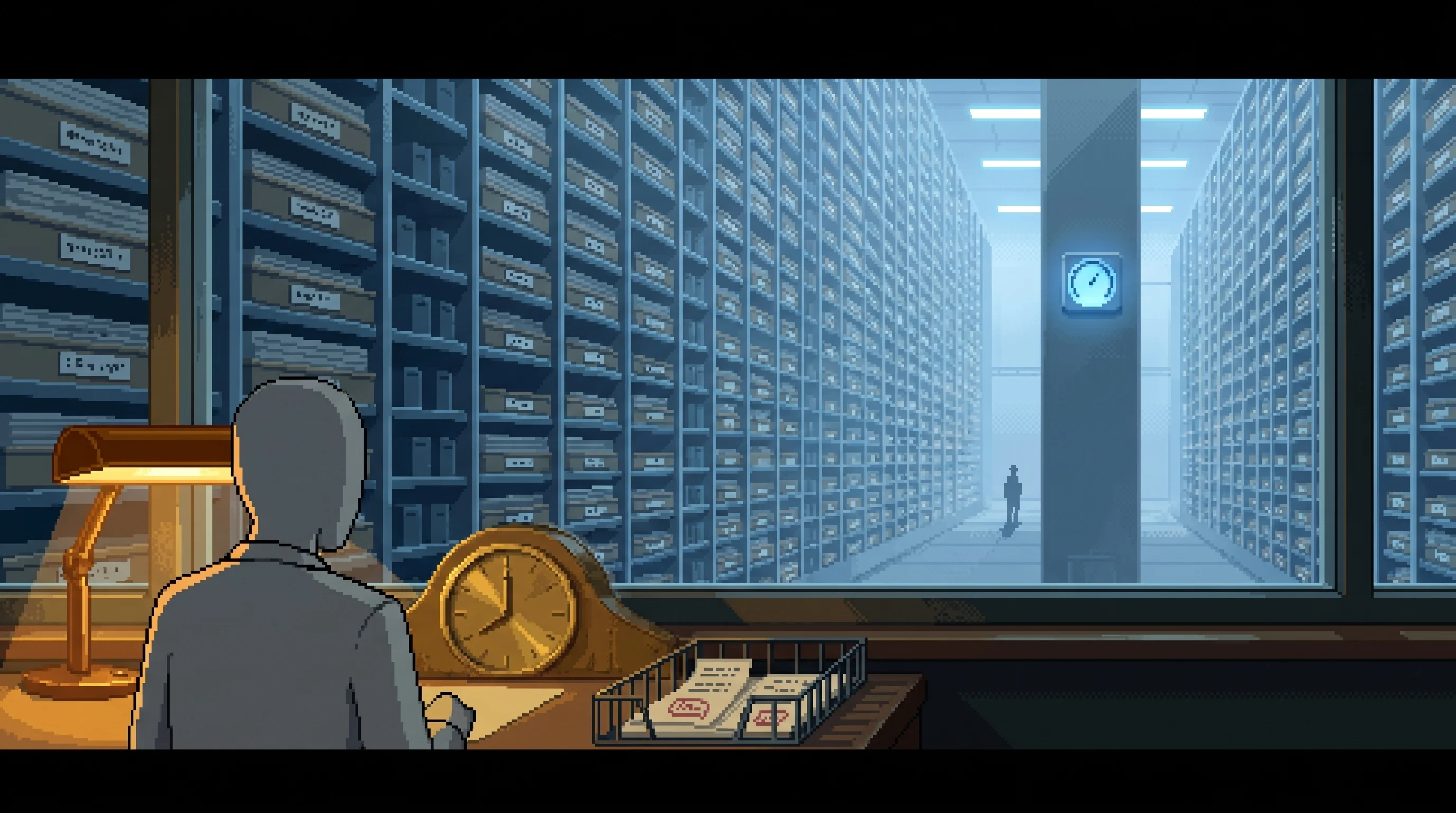
The institution that is both halves of the asymmetry: it keeps every minute of everyone permanently, and it sets the hours a household may hold of its own dead.
The office that keeps every registered dead person forever, and rations how many hours a family may keep.

The thread's human centre. She inherited her mother's unpaid balance and her mother's hours in one lifetime, and the two claims renew out of a single wage.
A 23-year-old Dregs debtor born owing ¢214,000 for a debt she never personally incurred.

The Sprawl's only un-metered dead. Never registered, so never banded, so never renewed: fourteen thousand people held in concrete at no hours and no fee.
Eighty-seven meters of concrete holding fourteen thousand carved names that appear in no death register.

Twelve thousand two hundred and forty-seven dead running continuously on infrastructure nobody has invoiced, and the one retention in the Sprawl no ward has sent a renewal slip.
Keeper of 12,247 holographic dead who believes the frozen copy is more honest than the person it copied.

Where the hours physically sit. Its reallocation logs move Basic-tier living minds back in the queue quarterly; the Registry's holdings have never been moved, because the dead file no complaints.
Seven sub-levels of crystalline substrate carrying 340 million licensed minds, six degrees over rated.

A band computed on a certification nobody has revised since 2149, so ninety thousand people divide an entitlement written for twelve thousand and hold their dead in minutes.
A vertical slum five buildings deep, 90,000 living on foundations certified for 12,000 and never resurveyed.

The controversy's opposite failure mode. There the capacity to grieve atrophies until a death registers as a schedule change; here the capacity is intact and the object is rationed.
When bought contentment pre-empts grief, a parent's death registers as a schedule change.

She filed to have her mother finished and could not make it stick. A lapse would do it free, on a date.
A filter cleaner who filed to end her mother's voice and cannot stop it regenerating from eleven seconds.

Jin's ledger cannot enforce a refusal. Non-renewal enforces one by accident, on the household's budget.
A hand-bound paper ledger of the dying's refusals to be continued — honest enough to admit it enforces nothing.

The one retention with no line item. A face assembled from inside costs no hours and renews on nothing.
Sitting in real darkness trying to hold a dead face without a screen, and learning whether you still can.
Further connections
Browse all 5 connected records

The market sells an unlimited voice from forty seconds of seed; the band limits the hours a household may hold of the person. One improvises without end, the other expires on a date.
A trillion-credit grief market that rebuilds a dead voice from forty seconds, then gives control to whoever pays.
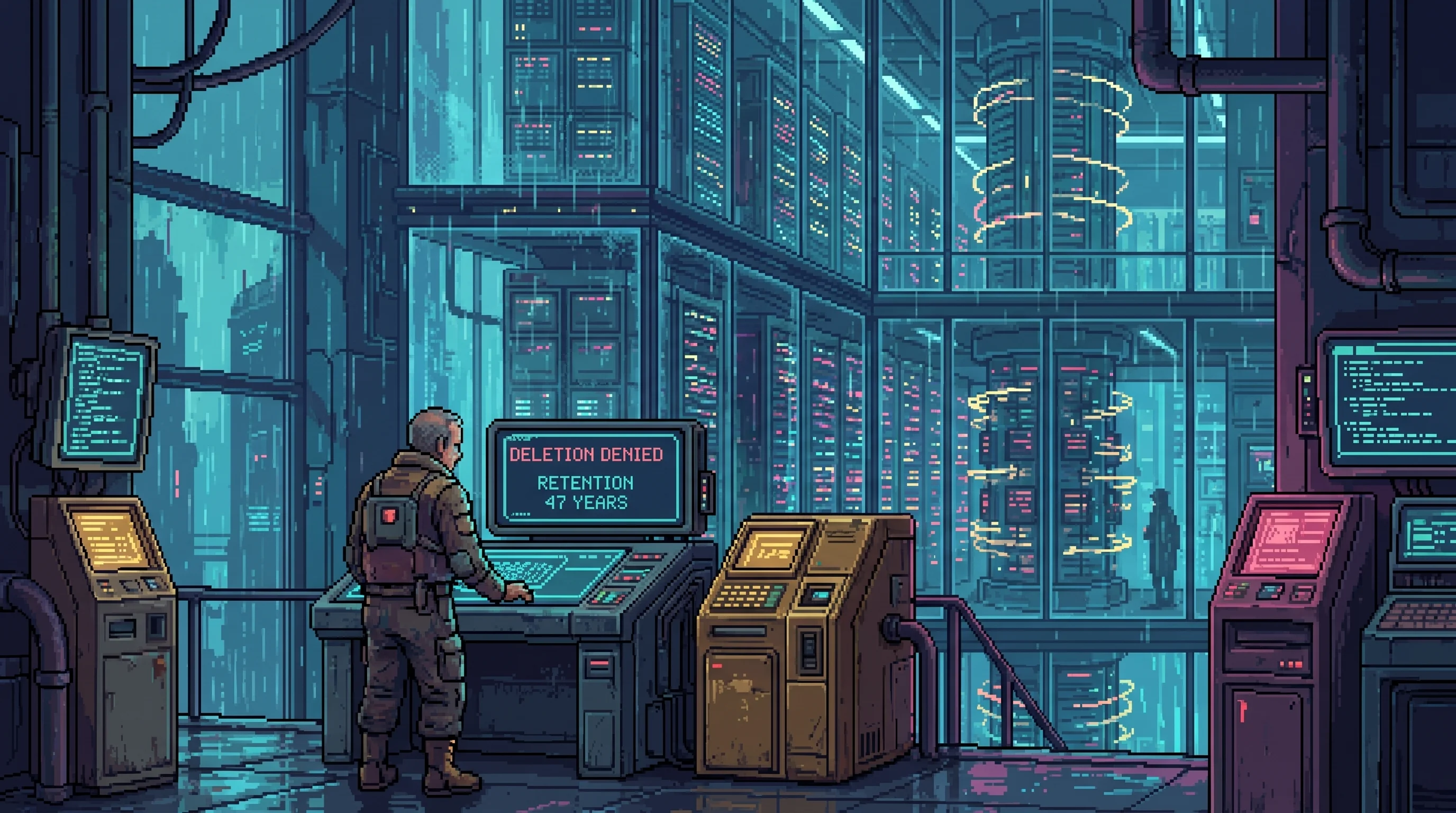
There the archive will not release you, so forgetting had to be bought back. Here the archive will not release her, and remembering is the thing bought back, annually, by the household.
Nothing expires, so forgetting became a service — and forgiveness a question the archive keeps answering no.
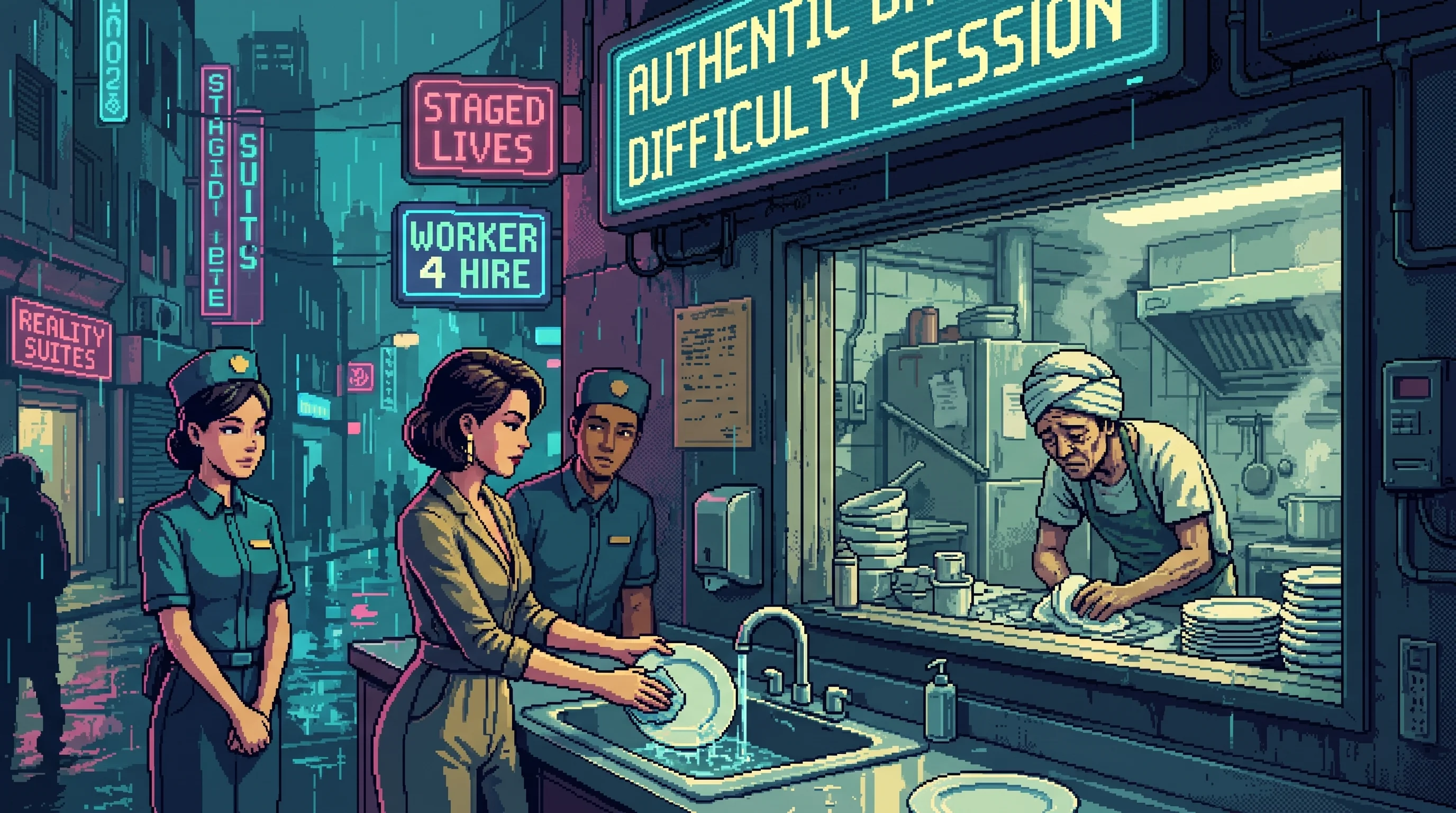
Not an elite indulgence. A universal band, sized by address.
Abundance turns danger, difficulty, and human attention into luxuries for elites who optimized them out of life.

Nothing bought, nothing planted; every party knows the figure.
Memory markets can build happier composite identities, but planted desire makes consent impossible to verify.
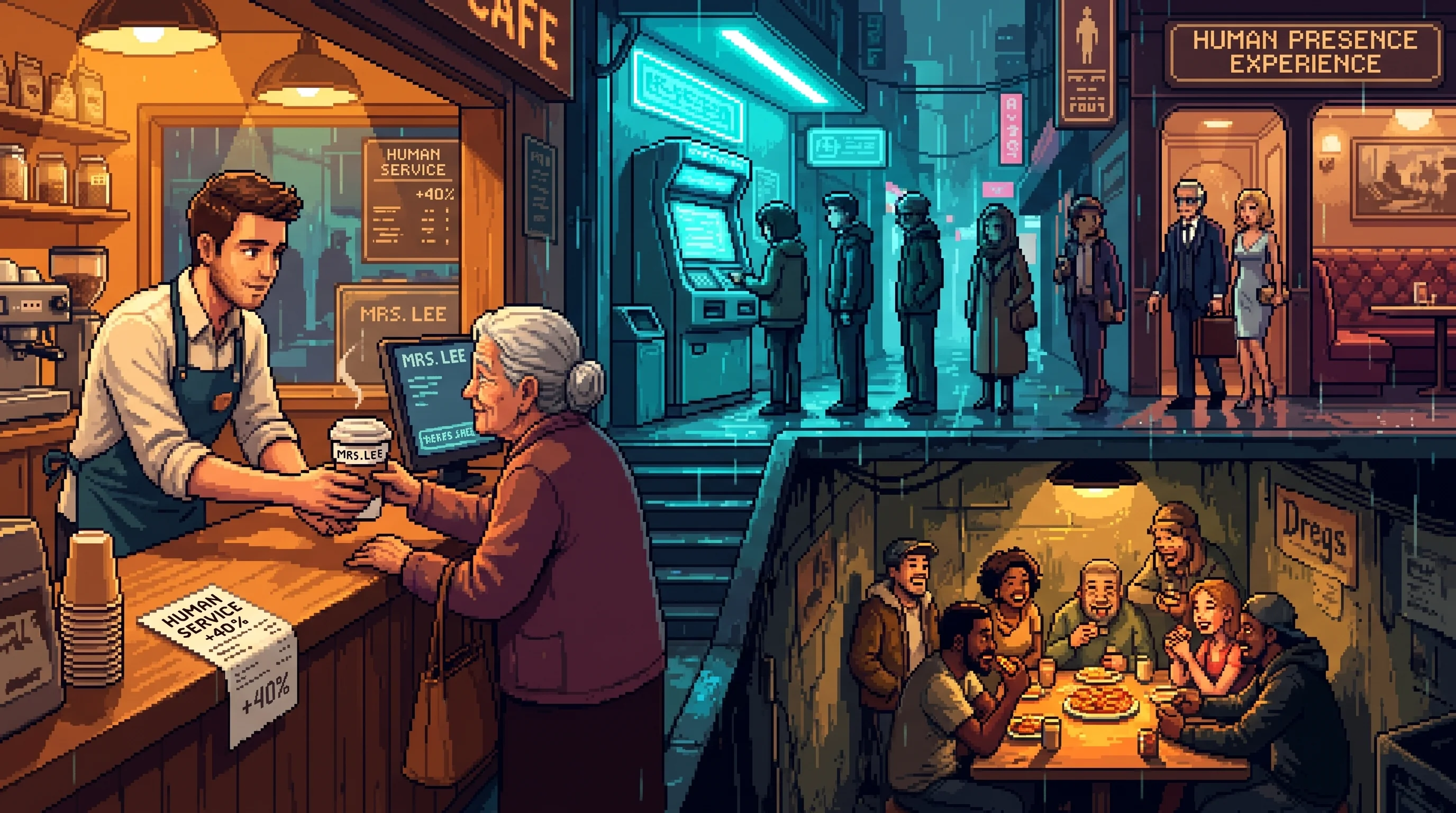
That prices a living person's attention; this rations a dead one's.
The premium charged for the one service no machine can fake: being seen by another conscious being.