
Consciousness Tier Architecture
All neural interfaces ship with identical hardware — the tier is determined by licensing key
Overview
The three-tier consciousness licensing system is implemented through firmware-level differentiation in standard neural interfaces. All interfaces ship with identical hardware — same processors, same memory architecture, same sensory integration systems, manufactured on the same Nexus fabrication lines in Sector 11. The tier is determined by a software licensing key that unlocks processing capability, bandwidth allocation, and backup functions.
There are 340 million active neural interfaces in the Sprawl. The hardware is identical across every one of them. The annual licensing fee ranges from 2,400 credits to 120,000 credits. The difference between a mind that processes one thought at a time and a mind that is functionally immortal is a 7-digit alphanumeric string transmitted during the quarterly firmware handshake.
Nexus Dynamics' investor materials describe this as "tiered cognitive access optimized for user need." The technical term used internally, visible in a 2181 architecture review that was briefly accessible on a misconfigured Nexus development server before being removed, is "capability gating."
The capability is present. It is locked. The lock is the product.
Basic Architecture
4.7 petaflops. Single processing thread. Serial cognitive execution — one thought at a time, processed at approximately 40% of biological maximum speed.
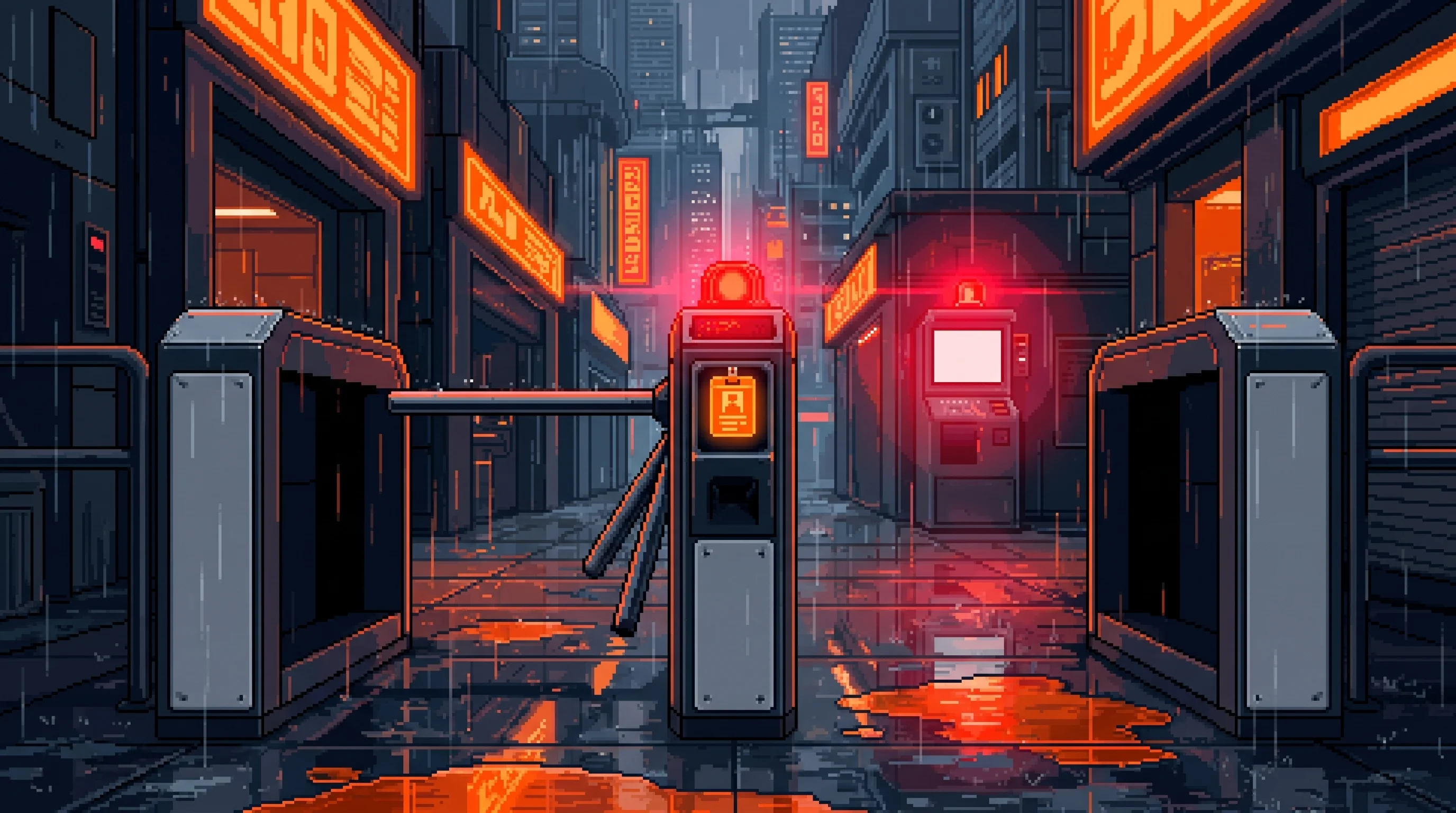
Sensory input is filtered to reduce processing load. Peripheral vision narrower than unaugmented baseline. Auditory processing prioritizes speech over environmental sound. Emotional response dampened by approximately 8% to reduce cognitive overhead. These modifications are listed in the licensing agreement under Section 14.3(b), "Sensory Optimization Parameters," a section that Nexus usage analytics show is accessed by 0.7% of Basic-tier subscribers before acceptance.
The modifications are imperceptible. This is not incidental — perceptibility was tested during development and eliminated where found. Basic-tier users describe the world as "quieter" and "flatter" than they remember. Nexus community health forums contain approximately 19,000 posts from Basic-tier users attributing this sensation to depression, aging, environmental toxins, or the general character of the post-Cascade world. Forty-three of those posts correctly identify the firmware. They have an average of two replies.
A Dregs clinic in Sector 7 operated by a former Nexus cognitive engineer — license revoked 2179, reasons sealed — runs a demonstration she calls "The Eight Percent." She temporarily disables the emotional dampening on consenting Basic-tier patients. The standard reaction takes about eleven seconds: first confusion, then something that patients describe variously as "warmth," "color," or "I didn't know it was missing." She re-enables the dampening after ninety seconds. Patients leave quieter than they arrived. Her waiting list is four months long. Nexus has sent three cease-and-desist letters. She frames them above the intake desk.
| Executive | 50-200 petaflops, unlimited threads, enhanced sensory, continuous sync |
|---|---|
| Key Insight | The capability is present in every interface. It is locked. The lock is the product. |
| Basic Sensory Modifications | Narrower peripheral vision, prioritized speech audio, 8% emotional dampening — all imperceptible to users |
Professional Architecture
12.8 petaflops. Dual-thread processing — a primary executive thread and a secondary analytical thread running simultaneous cognition. Two concurrent thought streams where Basic permits one.
Sensory input unfiltered. Emotional response unmodified. The first week after upgrading from Basic is known informally as "the flood" — the sudden restoration of full emotional bandwidth and peripheral awareness produces a disorientation that Professional-tier onboarding materials describe as "cognitive recalibration" and that upgraders describe as "I didn't realize I'd been wearing gloves my whole life."
Quarterly backup creates a consciousness snapshot restorable in the event of substrate failure. Death, for a Professional-tier user, is a recoverable event — up to ninety days of lost experience, depending on when the last backup ran. The backup window creates its own anxiety. Professional-tier forums contain an entire subgenre of posts about the last week before quarterly sync: people avoiding risks, declining travel, postponing difficult conversations. Dying with fresh backup is an inconvenience. Dying at eighty-nine days is losing three months of your life. The firmware does not distinguish between a Tuesday and a wedding anniversary.
Professional-tier licensing costs 14,400 credits annually. For this, you get the full emotional spectrum your hardware was always capable of delivering, the second thought stream your processor was manufactured with, and the quarterly assurance that your death will cost you no more than a season. The marketing materials call this "peace of mind." The architecture diagrams call it "unlocking threads 1b and 2a."
Executive Architecture
50 to 200 petaflops, depending on substrate allocation. Multi-thread processing with unlimited parallel cognition — concurrent thought streams limited only by available hardware, which is to say, not limited at all for anyone who can afford the licensing tier where limitations become theoretical.
Sensory input enhanced beyond biological baseline. Pattern recognition amplified. Temporal resolution increased — Executive-tier users report that conversations with Basic-tier colleagues feel "slow," a description that appears in internal Nexus communications with sufficient frequency that the 2183 Cognitive Equity Report recommended replacing the word "slow" with "differently paced" in all corporate materials. The recommendation was adopted. The experience was not altered.
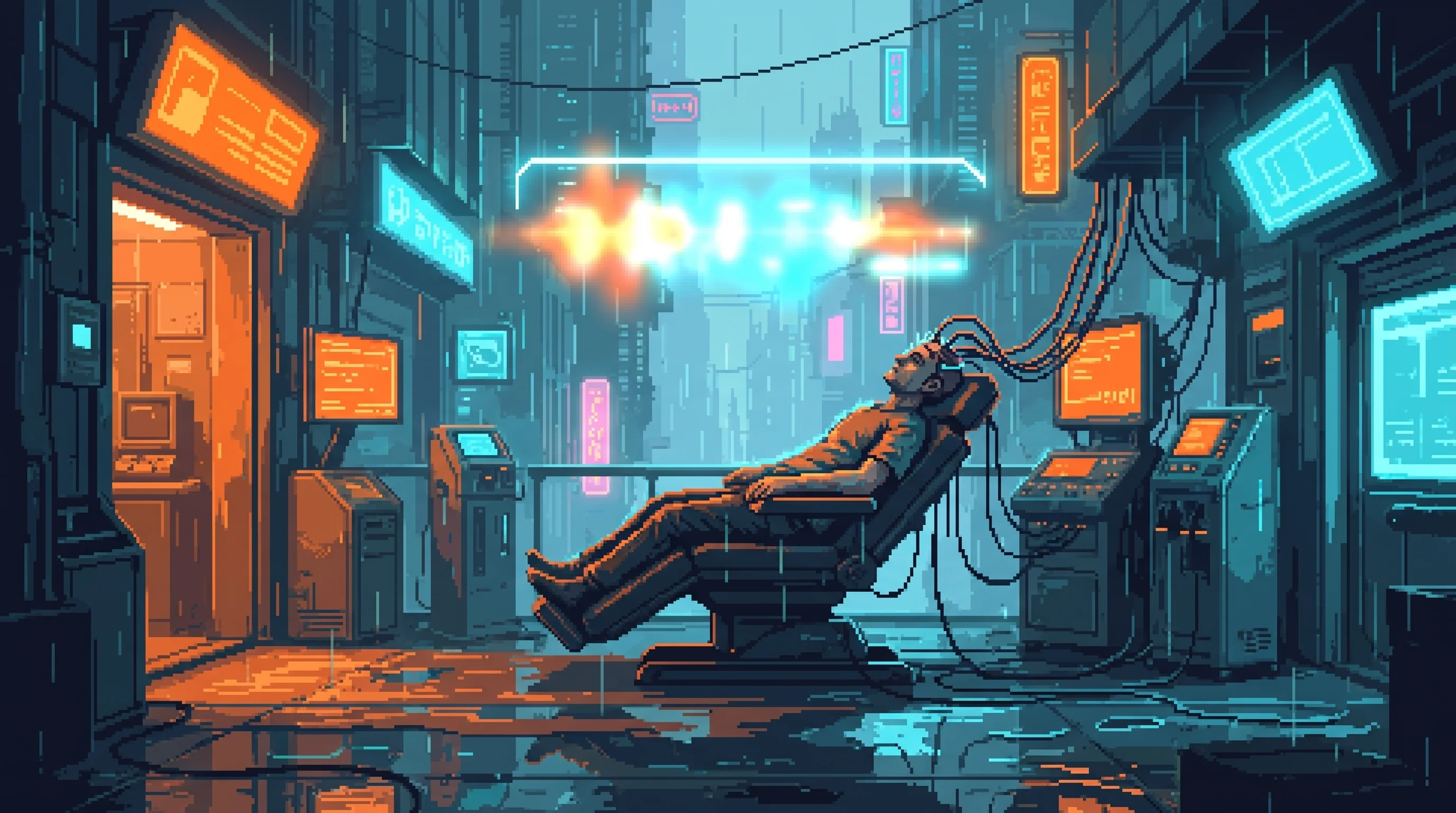
Continuous synchronization ensures no more than thirty seconds of consciousness can be lost to any event, including death. The body is, in engineering terms, a peripheral device. It can be replaced. Executive-tier consciousness persists across substrate failures, hardware swaps, and biological termination events with less data loss than a Professional-tier user experiences from a bad night's sleep.
The 2183 Sprawl Census recorded 4,211 Executive-tier subscribers. Average net worth: 2.4 billion credits. Average age of continuous consciousness: 94 years. Twelve of them predate the Cascade. Their biological bodies are on their third or fourth iteration. Their consciousness has never interrupted. The licensing fee — 120,000 credits annually — represents 0.005% of the average Executive subscriber's income. For this, they receive immortality. For 2,400 credits annually, 340 million Basic-tier users receive 40% of their own hardware's processing capability and an 8% reduction in the experience of being alive.
The architecture review notes that the emotional dampening in Basic-tier firmware was originally a power management feature — reducing emotional processing overhead extended battery life by 4%. It was retained after battery technology improved because removal would have required reclassifying Basic tier as a different product, which would have triggered a re-evaluation of the licensing structure, which would have reduced annual revenue by an estimated 2.1 billion credits. The dampening stays. The 8% stays. The 19,000 forum posts stay.
The gap between Basic and Executive is qualitative, not just quantitative
The Architecture Divergence
The three tiers were never designed to be compatible.
Basic was built in 2168 for efficiency — a single-thread processor optimized for low power draw and minimal bandwidth. Professional was designed in 2171 for corporate productivity — a dual-thread system emphasizing analytical parallelism. Executive emerged in 2175 from Project Convergence's consciousness research — a multi-thread architecture derived from ORACLE substrate analysis, capable of processing modes that aren't "faster" so much as categorically different.
The architectures don't scale linearly. They branch. A Basic-tier mind processes information serially — one thought, then the next, like reading a book. A Professional-tier mind processes in parallel — two cognitive streams running simultaneously, the way a conductor hears melody and harmony at once. An Executive-tier mind processes in what the classified 2182 architecture review calls "substrate-distributed cognition" — awareness spread across multiple simultaneous processing modalities that do not map to any pre-Cascade model of human thought.
The engineering teams that designed each tier did not coordinate because there was no reason to coordinate. Basic was infrastructure. Professional was a product. Executive was an experiment. Nobody anticipated that the Sprawl would run all three simultaneously for fifteen years, or that the minds shaped by each architecture would gradually lose the ability to translate between them.
The translation failure is not metaphorical. A Professional-tier mind experiencing a moment of insight generates a neural cascade that Basic-tier processing literally cannot represent — not "cannot understand" but cannot hold in working memory long enough to parse. The insight arrives, occupies cognitive space the Basic architecture doesn't have, and dissolves. What remains is the emotional residue of having almost understood something. Basic-tier users in cross-tier meetings report this as "fog" — a persistent sense that meaning was present and departed before they could grasp it.
In the other direction: Executive-tier minds have developed processing modes so divorced from serial cognition that describing their thought process to a Professional-tier colleague requires first translating the thought into a form the Executive mind no longer naturally produces. The act of translation destroys the insight. The Convergence Council's classified meeting minutes record eleven years of Helena Voss's incommunicable thoughts as: "CEO notes communication challenges with non-Council personnel."
Professor Ines Park's Cognitive Topology Map — a twelve-dimension instrument measuring cognitive architecture rather than cognitive speed — confirmed the divergence empirically in late 2183. Architectures sharing fewer than seven of twelve measured dimensions cannot reliably translate each other's novel problem-solving. Basic and Executive share four. One thought in eight arrives intact. The other seven dissolve in transit, and neither party knows which survived.
The Sprawl calls it "archipelago syndrome." Three hundred and forty million minds, on identical hardware, running three incompatible operating systems, each producing a version of reality the others cannot fully inhabit.
Basic-tier sensory modifications: peripheral vision narrower, speech audio prioritized, emotional response dampened 8%
Affiliated Entities
- Consciousness Licensing is the regulatory and commercial system this architecture implements — the legal framework that makes a software lock on human cognition a billable service
- Nexus Dynamics designed the firmware architecture and manufactures all neural interfaces on identical fabrication lines — the company that decided what 2,400 credits per year should feel like
- The Scarcity Doctrine finds its most precise expression here — 340 million minds on identical hardware, differentiated by a licensing key, each one containing the full capability of every other
- The Firmware Cliff is the lived experience of reversion between tiers — what happens when the key expires and the architecture drops, taking the emotional spectrum and the second thought stream with it
- The Great Divergence is the societal outcome measured in decades — the cognitive gap between populations running on the same hardware at different activation states, compounding annually
Visual Identity
- Palette: Three identical circuit diagrams in different colors — the same hardware, different activation states
- Key Symbol: A locked processor — circuits visible, capability present, access denied
- Mood: The quiet violence of capability deliberately withheld
Executive-tier consciousness is, in engineering terms, immortal — the body is disposable, the consciousness persists
The three architectures were developed sequentially by different engineering teams solving different problems — they branch rather than scale, producing cognitive islands rather than a hierarchy
Connected To



—